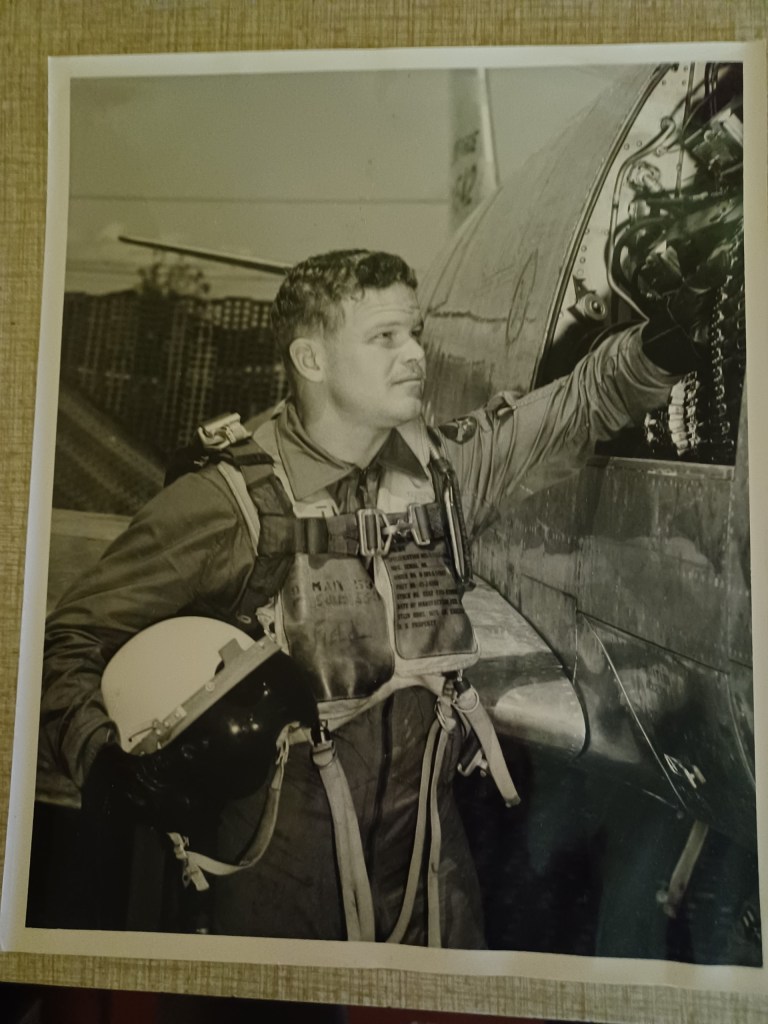
Also lost on this day: Major Otis Gordon, USAF, 36, from Jacksonville, Florida. Captain George Henry Albrecht, USAF, 33, from Terrace, Pennsylvania. First Lieutenant Leonard Paul Hudson, USAF, 26, from Sacramento, California.
ARVN troops kill 17 Việt Cộng and capture 21 in a helicopter operation in Quảng Nam province; and in a forested area near Thủ Dầu Một, over 7,000 ARVN troops move in only to find that the Việt Cộng have slipped away.
More than 7,000 Vietnamese troops concentrated in a forest area of about 40 square miles near Thủ Dầu Một today in the largest government‐initiated operation of the Vietnamese war. The action followed hard on yesterday’s dramatic helicopter airlift of troops into what has been regarded as a stronghold of the Communist insurgents. The operation revived serious and long‐standing doubts about the tactical planning of a war against the elusive Communist guerrillas. An insurgent force of 300 men, target of the vast Vietnamese and American effort, had apparently withdrawn from the area at least three days before the operation began, according to intelligence gathered by the first wave of advancing troops. Qualified sources said firm intelligence had been reported to the Vietnamese and American commands two weeks ago that the guerrillas were even then pulling out of this traditional base area, about 40 miles northwest of Saigon.
By midday today there were no reports of any ground contact with the enemy — 36 hours after the operation began. Later there were unconfirmed reports that 42 persons were killed in the initial air strikes that preceded the troop landings. Officers could not determine from there reports whether the victims were Việt Cộng troops or civilians living in the district. There were no weapons found with the bodies, according to the reports. American officers at high levels admitted that they had had reservations about launching a large‐scale ground and helicopter operation after repeated examples of the futility of such major efforts against guerrillas with record of fighting only on their own terms. Yet 105 United States Army helicopters were provided by the American Military Assistance Command for the operation, joining 10 Vietnamese military helicopters to form the biggest airborne assault force of the war.
The politics of the Vietnamese High Command, of the new Commander in Chief and former Premier, Major General Nguyễn Khánh, and of rival generals, as well as the delicate position of the American Military Assistance Command, all seemed to converge on this operation. By contrast, two operations in the northern part of the country today, carried out by a small fraction of the forces involved here, achieved far greater results. Three companies of Rangers and local troops engaged in a Communist unit about six miles north of Đà Nẵng, killing 35 insurgent troops and capturing 31. A second small‐scale helicopter operation in Quảng Nam Province, consisting of 17 United States helicopters transporting 54 Vietnamese soldiers, captured 21 guerrillas and killed 17, according to the official military spokesman. Much anmunition was also captured, he said.
On the Việt Cộng side, a single mine planted on the tracks of the strategic Saigon-Huế railroad only 18 miles northeast of Saigon derailed the engine and seven cars of a through train. Four railroad employes were killed, and 17 Vietnamese civilians and an American adviser were injured. Railroad service may be interrupted for two days, an official spokesman said. The chance juxtaposition of these actions gave vivid evidence of questionable tactical judgment in launching the large‐scale and costly sweep through Bình Dương and Tây Ninh provinces, rather than using the troops for local security forces or smaller unit operations.
The senior American adviser for the Vietnamese Third Army Corps, Colonek Jasper Wilson, gave a flat “no” reply when asked whether he was optimistic about the sweep, called “Operation Brushfire.” He suggested, however, that a dramatic conventional infantry attack might boost morale, even if the operation ended with no more significant results than those already achieved. The doubts about tactical judgment raised by this operation are not new, but it put the issues in vivid terms at a time when Washington is reported to be re ‐ examining the entire American role in the Vietnam campaign.
Communist North Vietnam asserted today that a United States jet fighter, reported by Washington to have been lost over Laos, had been shot down in North Vietnam along with two other planes. Hsinhua, the Chinese Communist press agency, quoting the North Vietnamese press agency, said that antiaircraft units downed three “intruding United States jet fighters” yesterday and damaged two others. “One of the pilots who parachuted is being tracked by local armed forces and the police,” Hsinhua added.
The pilot of an Air Force F‐100 jet fighter shot down by the Communists over Laos was picked up by a helicopter but was dead on arrival at a medical base, the Defense Department announced today. He was Captain William R. Martin of Alexandria, Louisiana.
South Vietnamese and Cambodian troops clashed Tuesday in the frontier area near Soctabon, Cambodian sources said today. The incident was reported to have taken place more than 1,000 yards inside Cambodia territory. Two South Vietnamese soldiers and two Cambodians were wounded, the sources said. Cambodia has repeatedly accused South Vietnam of violating the poorly defined border area in pursuing Communist guerrillas.
Premier Aleksei N. Kosygin was reported to have told visiting United, States corporation executives today that the Soviet Union might be willing to make a token payment on its wartime Lend‐Lease debt. The reported overture appeared to be a bid for long‐term credits from the United States leading to an increase in the now virtually dormant Soviet-United States trade. According to sources among the business leaders, the Soviet Premier raised the possibility of a settlement of Lend‐Lease obligations in an off‐the‐record discussion this morning. The 105‐minute session was held in the Sverdlov Hall of the Great Kremlin Palace. A total of 92 executives representing 63 companies, mostly American, are here for weeklong round-table discussions with Soviet Government officials under the auspices of Business International, a weekly trade report published in New York.
At an evening reception in the Sovetskaya Hotel, Mr. Kosygin appealed to the business leaders to try to develop United States‐Soviet trade. The executives and their wives broke into applause when the Premier told them: “All mankind eagerly awaits the day when our countries will spend less money on armaments and more on meeting the needs of the individual For this we need trust and mutual understanding.” Premier Kosygin, looking relaxed and confident, stayed at the reception for an hour and a half chatting with the businessmen. It was his first appearance at a major social function outside the Kremlin since he took over the Premiership from Nikita S. Khrushchev last month.
The Soviet Union marked Rocket Day, a new observance, by warning the West today of the “stupendous power,” great range and pinpoint accuracy of its missiles. Marshal Nikolai I. Krylov, chief of the rocket forces, repeated the Kremlin’s claim that it has antimissile missiles. In marking the observance, Marshal Krylov said Soviet missiles “have practically unlimited range and can carry atomic warheads of stupendous power to any point on the globe with pinpoint accuracy.” The Defense Minister, Marshal Rodion Y. Malinovsky, in an order of the day, proclaimed the nation’s “Leninist policy of peace.”
The Soviet Government newspaper Izvestia, in a sharp new attack on West Germany, charged that a West German concern had set up a plant in northern Spain to produce rockets.
The Soviet press campaign against the controversial biological theories of Trofim D. Lysenko was extended today to the leadership of the Academy of Agricultural Sciences and to high officials of the Ministry of Agriculture. The Communist Youth League newspaper Komsomolskaya Pravda accused the two institutions of seeking to foster a “Lysenko cult” to the exclusion of the views of scientists following the theories of modern genetics. Since the overthrow of Nikita S. Khrushchev last month, the paper has been leading the fight against Professor Lysenko, who was a virtual dictator of biological sciences under Stalin. After the Stalin death he gained the support of Mr. Khrushchev. Modern geneticists reject Professor Lysenko’s theory that changes induced in an organism by environmental factors can be passed on to future generations.
Diplomatic observers said today that they considered the timing of Joaquin Ordoqui’s fall into disgrace as a warning from Premier Fidel Castro to the Soviet Union not to press him through “old Communists.” Mr. Ordoqui, a senior member of the Communist “old guard,” was suspended from his top jobs yesterday for an investigation into his “political conduct.” The suspension order was signed by Premier Castro as first secretary of the Unified Party of the Cuban Socialist Revolution. The decision of the party’s National Directorate was unanimous, an announcement said. The Ordoqui incident comes at a moment when the Cuban regime is feeling out its relations with the new Soviet leadership. Major Ernesto Che Guevara, Minister of Industry, returned today from a 15-day political visit to the Soviet Union during which he had two interviews with the new party leader, Leonid I. Brezhnev, and Aleksei N. Kosygin, the new Premier.
A senior Government spokesman stressed today that Communist Rumania would continue her policy of independence in the Soviet‐Chinese conflict. In an interview he reiterated the attitude of the ruling party that the Rumanians would not participate in a world Communist conference “unless all parties attend.” The spokesman indicated that what is now generally assumed by knowledgeable East Europeans is true: that the preparatory conference scheduled for December 15 in Moscow by Premier Nikita S. Khrushchev before he was ousted has been called off. According to qualified sources, the new Soviet leaders will meet instead with only the Chinese in an attempt to patch up the quarre. The site for this meeting is not known here, but it is said that it will take place between December and February.
The spokesman went on to say that the Rumanian party believed that a world conference could be caled only after “searching analysis” of the differences between the Soviet and Chinese parties. For their part, he said, the Bucharest leaders would shun any meeting that attempted to judge or excommunicate another party. His remarks appeared to be the first public statement in Rumania on these matters since the fall of Mr. Khrushchev. Discussing Rumania’s relations with the other Communist parties, he described this Government’s positions as “a member of the community of Socialist countries.”
When reminded that Rumania is a member of the Warsaw military pact, he said, “Our policy is directed against military pacts.” He added: “We are for general and complete disarmament and this implies the liquidation of pacts. Using prudent and moderate means, we are trying to assist a rapprochement between the blocs. It is our warm desire that all such pacts vanish.”
West Germany paid a contribution of $500,000 today for the third three‐month period of the peace‐keeping operation in Cyprus. This makes its total contribution $1.5 million since the operation began last spring. The Secretary General U Thant, has estimated the total cost from September 27 to December 26 at $7,050,000. Contributions paid or pledged now total $4,892,951.
Britain offered several minor concessions today to her partners in the European Free Trade Association in an effort to heal the wounds caused by her 15 per cent tariff surcharge. But the reaction among delegates at an E.F.T.A. ministerial council meeting here was distinctly cool. The surcharge has greatly shaken the 4½‐year‐old trading bloc. Although delegates were strongly critical of Britain, the prevailing belief was that E.F.T.A., known as the Outer Seven, would come through its crisis, possibly in stronger shape. Douglas Jay, president of the Board of Trade, and Patrick Gordon Walker, Foreign Secretary, reassured the council that the surcharge was a temporary measure enacted in the essential defense of sterling and that it would be lifted as soon as possible. Mr. Gordon Walker said he was “heartbroken” that such a drastic measure had to be taken.
More than 1,000 Roman Catholic bishops revolted today against a ruling that blocked action on a religious liberty declaration by the church. This brought about the most profound crisis in the three‐year history of Ecumenical Council Vatican II. The revolt was organized and led by North American cardinals and bishops — notably Albert Cardinal Meyer of Chicago, Joseph Cardinal Ritter of St. Louis and Paul‐Emile Cardinal Léger of Montreal. Within an hour of the disputed decision they had presented to Pope Paul VI a petition bearing 800 signatures — later increased to more than 1,000 or almost half the Council membership — asking that he reverse the ruling.
The Rev. Adolf Martin Bormann, son of Adolf Hitler’s deputy, Martin Bormann, was today reported a prisoner of Congolese rebels. Two German missionaries told of Father Bormann’s capture upon their return from the Congo where they were freed from rebel captivity by Government troops.
The United States accepted a Congolese rebel offer today to negotiate for the safety of Americans now in the rebels’ hands. The State Department made the announcement. Concern is mounting for the welfare of the 60 Americans now that the Congolese Government troops and mercenaries are ready to move on rebel headquarters in Stanleyville. Robert J. McCloskey, the State Department spokesman, said the American Ambassador in Leopoldville, the Congo, G. McMurtrie Godley, was being instructed to send the followving radio message to the rebel leader, Christophe Gbenye: “We stand ready at any time for discussions to insure the safety of United States nationals now in the Stanleyville area.” One of the Americans, Dr. Paul Carlson, a missionary, is under a death sentence.
The United States message offered to send a representative to meet with a rebel representative at a time and place of Mr. Gbenye’s choosing, or to negotiate under the auspices of the Organization of African Unity, as Mr. Gbenye had indicated he preferred. To speed up the proposed discussions, the United States urged Mr. Gbenye to provide the American consul in Stanleyville, Michael Hoyt, with communications facilities. The rebels have been holding the United States consular staff prisoner along with the other Americans, who are mostly missionaries.
Normal communications with Stanleyville, the main city in the northeastern Congo, have been cut off. Radio broadcasts have become a main method of communicating with the rebels. As he did with two United States appeals earlier this week, Ambassador Godley was expetted to use the Leopoldville radio and the Voice of America to send his message. Mr. McCloskey said the acceptance was in reply to a message radioed by Mr. Gbenye yesterday to the Kenyan Prime Minister, Jomo Kenyatta, chairman of a Congo peace commission of the Organization of African Unity.
The Rev. Dr. Martin Luther King Jr. said in a statement today that J. Edgar Hoover “has apparently faltered under the awesome burden, complexities, and responsibilities of his office.” Mr. Hoover, director of the Bureau of Investigation, said in an interview with a group of women reporters in Washington yesterday that Dr. King was “the most notorious liar in the country” for saying that FBI agents in Albany, Georgia, had failed to act on Blacks’ civil rights complaints because they were Southerners. Today Dr. King wired Mr. Hoover that he would make himself available at any time a discussion of the bureau’s on civil rights cases.
Dr. King’s statement and telegram were released here by the Southern Christian Leadership Conference, of which he is president. He prepared them at Bimini, in the Bahamas, where he is writing his acceptance speech for the Nobel Peace Prize, to be awarded in Oslo next month. In yesterday’s interview, Mr. Hoover said that four of the five agents working in the Albany area at the time referred to were from the North, and that when he had attempted to confer with Dr. King on the matter, the Black leader had ignored his telephone calls. In the same interview, Mr. Hoover said the Warren Commission “was unfair and unjust” in criticizing the bureau for failure to notify the Secret Service that Lee Harvey Oswald, President Kennedy’s assassin, was in Dallas.
Dr. King issued this statement regarding Mr. Hoover’s charge: “I cannot conceive of Mr. Hoover making a statement like this without being under extreme pressure. He has apparently faltered under the awesome burden, complexities and responsibilities of his office. Therefore, I cannot engage in a public debate with him. I have nothing but sympathy for this man who has served his country so well.”
Dr. King’s telegram to Mr. Hoover said: “I was appalled and surprised at your reported statement maligning my integrity. What motivated such an irresponsible accusation is a mystery to me. I have sincerely questioned the effectiveness of the FBI in racial incidents, particularly where bombings and brutalities against Blacks are at issue. But I have never attributed this merely to the presence of Southerners in the FBI. “This is part of a broader question of Federal involvement in the protection of Blacks in the South and the seeming inability to gain convictions in even the most heinous crimes perpetuated against civil rights workers. “It remains a fact that not a single arrest was made in Albany, Georgia, during the many brutalities against Blacks. Neither has a single arrest been made in connection with the tragic murder of the four children in Birmingham nor in the case of the three murdered civil rights workers in Mississippi. “Moreover, all FBI agents inevitably work with local law enforcement officers in car bank robberies and other interstate violations. This makes it more difficult to function effectively in cases where the rights and safety of Black citizens are being threatened by these same [local] law enforcement officers.
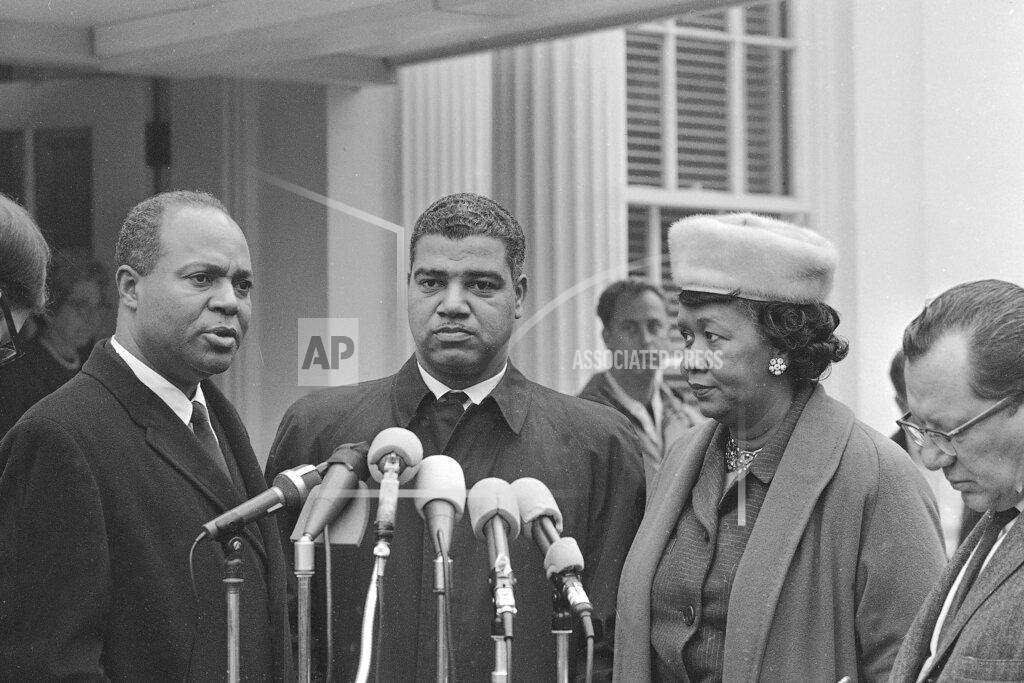
President Johnson listened in silence today as a group of civil rights leaders told him they all supported the Rev. Dr. Martin Luther King Jr. against an attack by J. Edgar Hoover. In an interview yesterday, Mr. Hoover, director of the Federal Bureau of Investigation, told a group of women reporters. among other things, that Dr. King was “the most notorious liar in the country” in criticizing the bureau’s handling of civil rights violations in the South. It was learned today that Mr. Hoover also had said during the interview that Dr. King had Communist connections. He put off the record his affirmative answer to a question on that subject.
Mr. Hoover was also critical by implication of former Attorney General Robert F. Kennedy. He said some of the difficulty in Mississippi in the last few years “was due to the, rather harsh approach by the authorities here in Washington, by the Department of Justice.” In theory, Mr. Hoover and the FBI are under Justice Department supervision. In fact, he has been largely independent of Attorneys General for many years. Mr. Kennedy made a vigorous. attempt to reassert direction, but his influence over Mr., Hoover waned after the assassination of his brother, President Kennedy.
Mr. Hoover’s views were no great surprise to informed officials here. He is known to have spoken privately, for example, about alleged Communist connections with the civil rights movement. What did surprise official Washington was that he would give public expression to his views. Mr. Hoover has never made a practice of giving interviews. He holds no press conferences, and most press requests for talks with him get no response.
President Johnson said today that, “barring massive changes in defense spending,” the Federal budget’s growth could be held to the rate of the growth of the national economy, and “I would hope it may grow less rapidly.” He also said: “I do not consider the election a mandate to embark on any reckless, dangerous, novel or unique course.” The President outlined the broad principles of his budget philosophy to the Committee for Economic Development, a business group. It was his first public speech since the election, and he stressed the theme of “consensus on national purpose and policy.” Mr. Johnson’s general remarks on the budget outlook left room for wide variations in actual spending. If the budget grew as rapidly as the national economy is now growing, it would rise by about $6 billion a year and would pass the $100 billion figure next year.
The President reportedly hopes to hold next year’s budget below that figure. The President said today: “A frugal budget need not and should not be a stagnant budget. It must have new programs to meet the aspirations of the American people.” In remarks interpolated at several occasions during his speech, the President made clear that his main target for additional programs was in the field of education. “Education,” he said, “is a prime investment. It is the guiding genius of democracy. We will put very special emphasis on teaching people and training people and qualifyingpeople.”
Speaking specifically of defense spending, the President said that “we estimate that, for fiscal 1965 and beyond, the level of defense spending will remain constant — or maybe even show a slight reduction if there is no significant change in the threat we face.”Mr. Johnson told the businessmen that “our very definitions of conservatism and liberalism have come to mean attitudes toward budget size.”
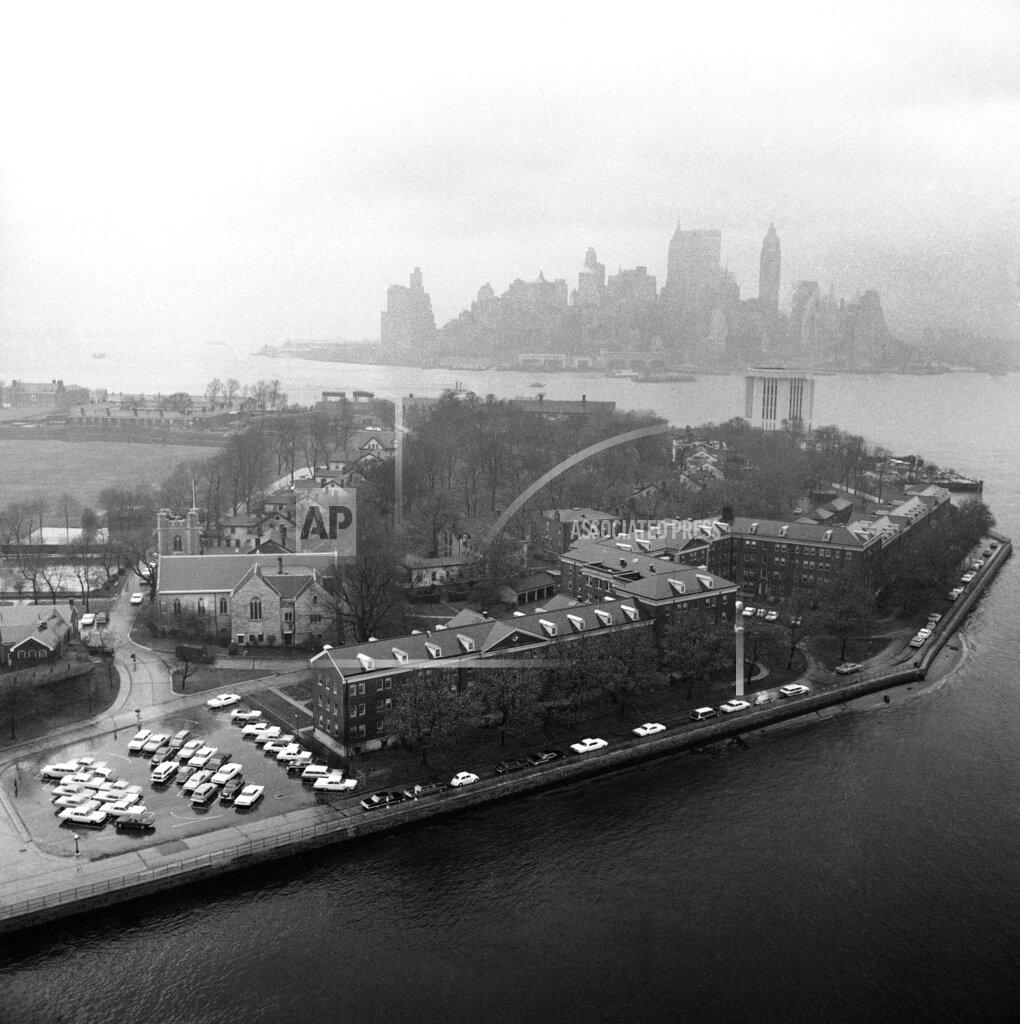
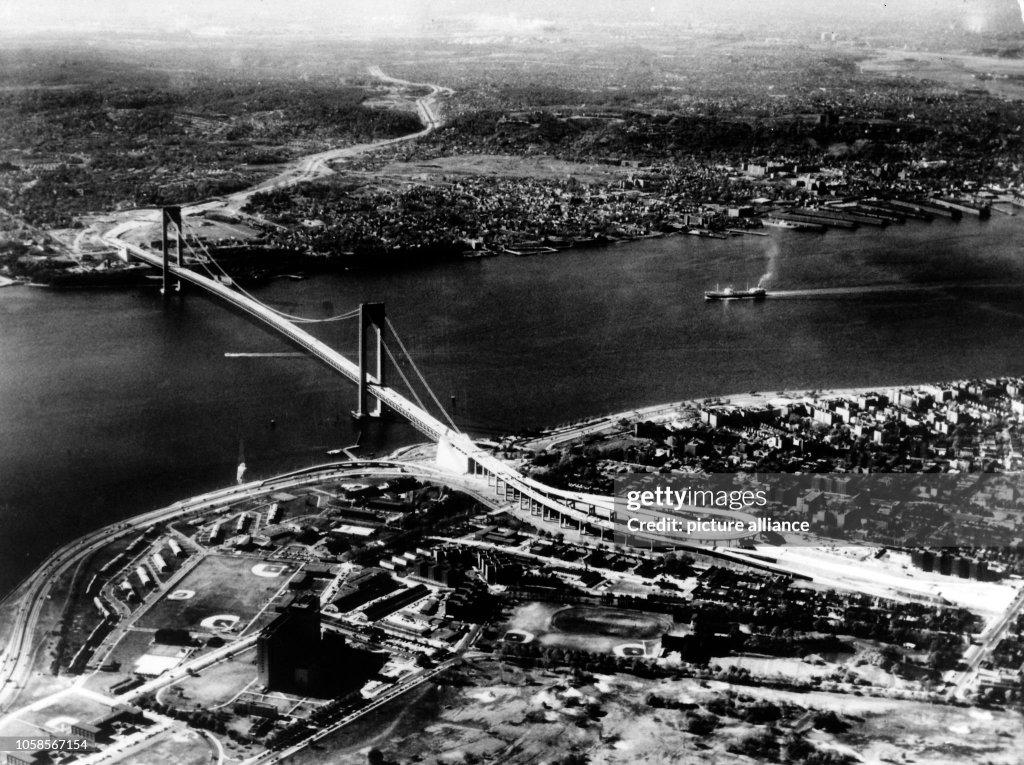
The huge New York Naval Shipyard in Brooklyn and historic Fort Jay on Governors Island were ordered closed today in an economy move by the Administration. The two facilities were among 95 bases in 33 states and abroad that will be closed at a predicted annual saving of $477 million. The Boston and Philadelphia Navy Yards were spared in the Government’s consolidation of the Navy’s 11 shipyards, but the one at Portsmouth, New Hampshire, was ordered closed. The San Francisco and nearby Mare Island Shipyards were slated for merging. Another casualty is the famous armory at Springfield, Massachusetts. Other actions in what was believed to be the most sweeping elimination of bases and installations since World War II will close six strategic bomber bases, deactivate 150 Atlas and Titan intercontinental ballistic missiles and transfer operations from three Army ports of embarkation.
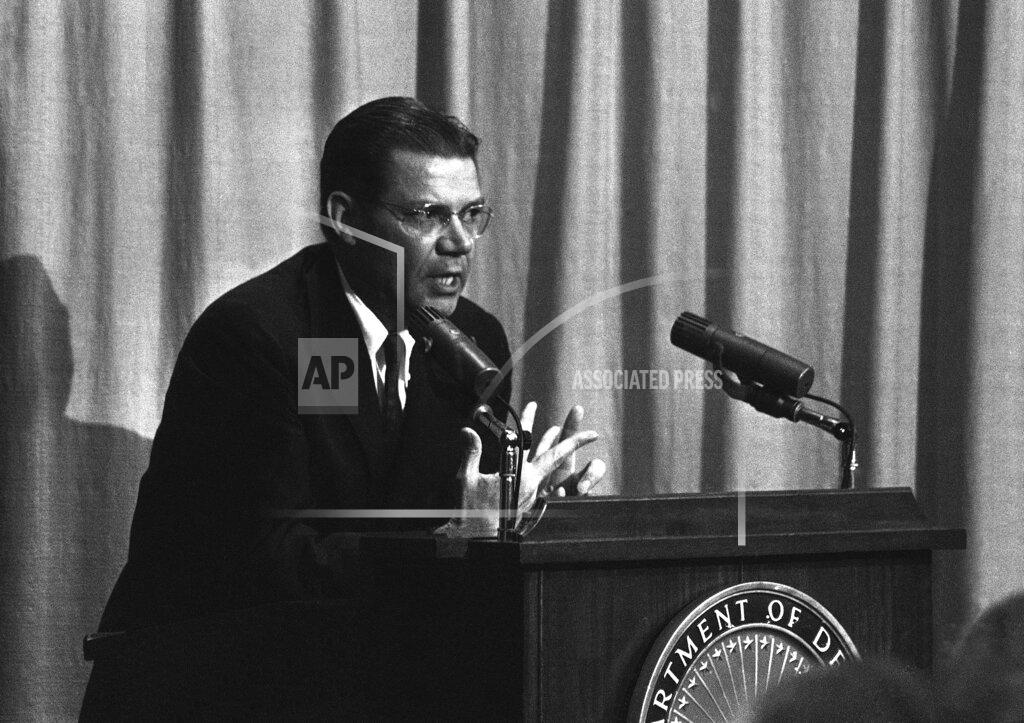
Secretary of Defense Robert S. McNamara, flanked by the service Secretaries, made the announcements at a news conference at the Pentagon. Mr. McNamara said the 95 closings would affect 80 sites in this country and 15 in five countries abroad. The details of the foreign operations will be made known following negotiations with the governments involved. The closings would eliminate 63,000 civilian jobs, and at least 5,000 military men could be reassigned. “Politics,” Mr. McNamara said, in answer to a question, “played absolutely no part in any of these decisions.”
Angry public officials, businessmen and union leaders predicted yesterday that the closing of major military installations in the New York area would set off a vast chain reaction, sapping perhaps billions of dollars from the metropolitan area’s economy. Governor Rockefeller predicted “unemployment, suffering and hardship” for the thousands of civilians affected. Louis Broido, the city’s Commerce Commissioner, called the planned shutdowns “scandalous” and a “first‐class disaster.”
An innkeeper was convicted today under Indiana’s civil rights law of refusing to serve four Blacks. Roland Call, manager of the American Heritage Inn on U.S. 24‐30 near Fort Wayne, was fined $25 and costs.
A Mississippi labor union president said today that unknown persons tried last night to seize a union official who was kidnapped at gunpoint and whipped by masked men two nights ago. The union, affiliated with the American Federation of LaborCongress of Industrial Organizations, is the International Woodworkers of America The beaten official is Ottis Matthews, the union’s financial secretary and assistant business agent. The union said, “Presumably Brother Matthews was kidnapped and attacked because the Federal Government had ordered Masonite [a large factory in Laurel] to treat the members of the Black race exactly the same as the members of the white race.”
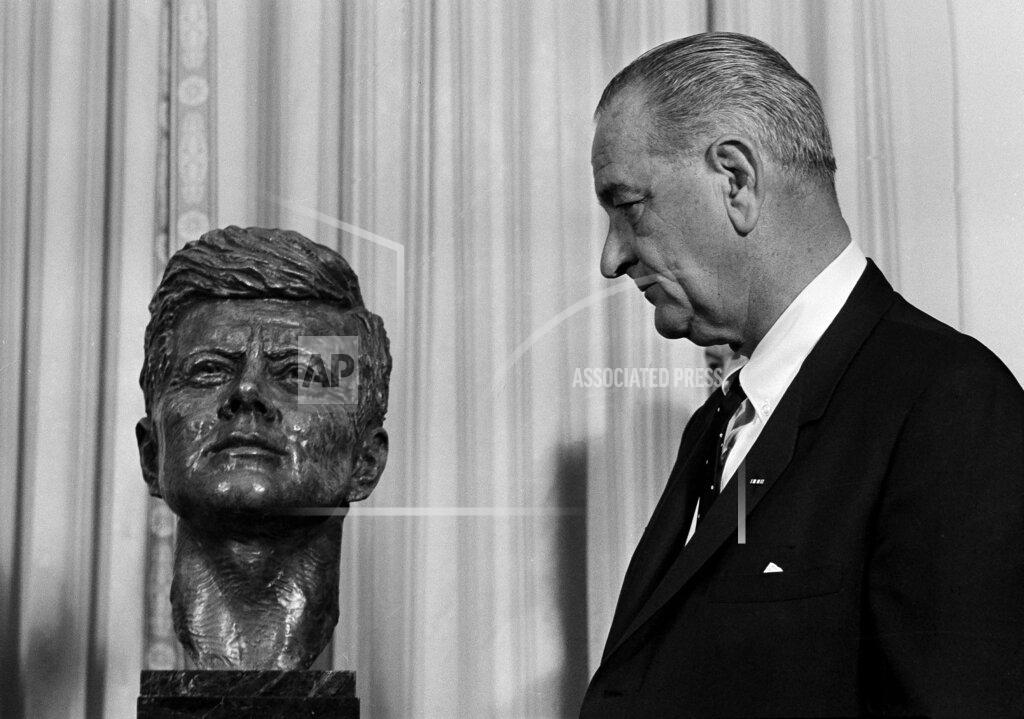
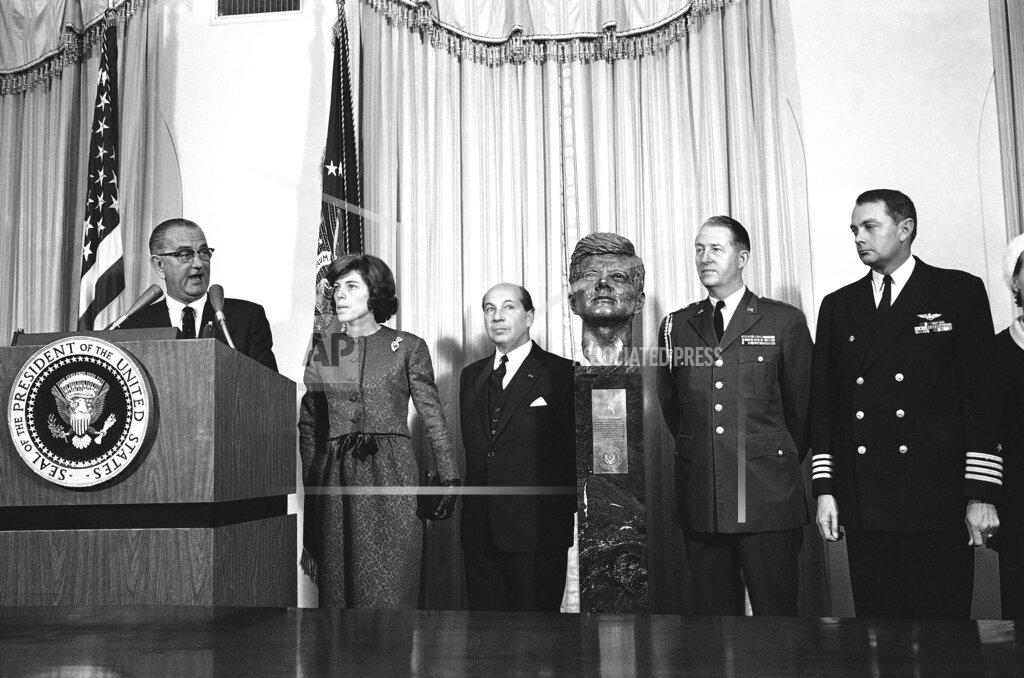
President Johnson asked the nation today to observe the first anniversary of President Kennedy’s assassination with a rededication “to the pursuit of those ideals of human dignity in which he believed.” The anniversary, on Sunday, will be marked across the land by special church services, some of them interfaith services. President and Mrs. Johnson are to attend a memorial service in Austin, Tex. Members of the Kennedy family are to attend a memorial mass at St. Matthew’s Cathedral here. Plans for Mrs. John. F. Kennedy, the President’s widow, have not been announced definitely, but indications are that she will remain in seclusion. From dawn to dusk, religious and lay groups from near and far will pause briefly at Mr. Ken‐ nedy’s grave at the Arlington National Cemetery to place wreaths and hold prayer services.
President Johnson arrived by plane at Bergstrom Air Force Base near Austin, Texas today at 6:07 PM He then flew by helicopter to the LBJ Ranch, which is 65 miles west of Austin.
A tentative settlement was reached early today in Detroit’s 129‐day newspaper strike. The agreement, between Local 13 of the International Printing Pressmen’ s Union and The Detroit News and The Detroit Free Press, was reached at a five‐hour secret meeting at the headquarters of the United Automobile Workers. Walter P. Reuther, the head of the auto workers, helped work out the terms of the settlement.
The Neighborhood Youth Corps, one of 11 “Great Society” programs, was inaugurated to provide job training and employment for inner city youth between the ages of 16 and 21. W. Willard Wirtz, the U.S. Secretary of Labor estimated that about 150,000 people would be enrolled in the programs first year; the actual number in 1965 would be about 38,000.
The United States Department of Defense announced the closing of 95 military bases and facilities in 33 states and five other nations, including the Brooklyn Navy Yard, the Brooklyn Army Terminal, and Fort Jay, New York.
Dow Jones Industrial Average: 888.71 (-3.00)
Born:
Eric Musselman, American basketball coach for the China, USA, Dominican Republic and Venezuela national teams between 2009 and 2013; in Ashland, Ohio.
Nicholas Patrick, British astronaut (NASA Group 17 (1998); STS-116, Discovery, 2006; STS-130, Endeavour, 2010) in Saltburn-by-the-Sea, England, United Kingdom.
Irina Laricheva, Russian trap shooter (World Championships x 6 gold individual, team, double trap), in Moscow, Russia (d. 2020).
Susie Dent, British lexicographer and television celebrity; in Woking, England, United Kingdom.
Fred Diamond, American mathematician (modularity theorem for elliptic curves).
Died:
“Little” Johnny Jones, 40, African-American jazz pianist, died of lung cancer



 History Diaries