General Johannes Blaskowitz, one of the most highly decorated officers in the Wehrmacht (Knight’s Cross of the Iron Cross with Oak Leaves and Swords on 30 September 1939) submits a memorandum to Commander-in-chief Walther von Brauchitsch, who today forwards it on to Hitler. The memorandum complains about the SS and Einsatzgruppen operations in occupied Poland. Apart from everything else, the General complains about the effect that it is having on morale.
For varying reasons, the entire German command structure perceives the memorandum as inappropriate. Hitler himself calls the General’s concerns “childish” and calls it a “Salvation Army attitude.” Blaskowitz is informally blacklisted preparatory to being relieved entirely from his command in Poland.
Artillery pounds German defenses on the Western Front. Nazis report only minor damage. Scouting parties on both sides went through their routine again today on the Rhine-Moselle front, mud notwithstanding, while gunners exchanged shells at various points. No attempted raids by Germans were reported.
The total of Czechs publicly acknowledged to have been executed in the last two days reached twelve this morning when three more, two of them Czech policemen, were shot “because of acts of violence against a German.”
The Nazis closed all the technical schools in the former Czechoslovakia.
The eight-hour day in Germany is to be changed into a ten-hour day without additional compensation, although some allowance will be made for it in taxes.
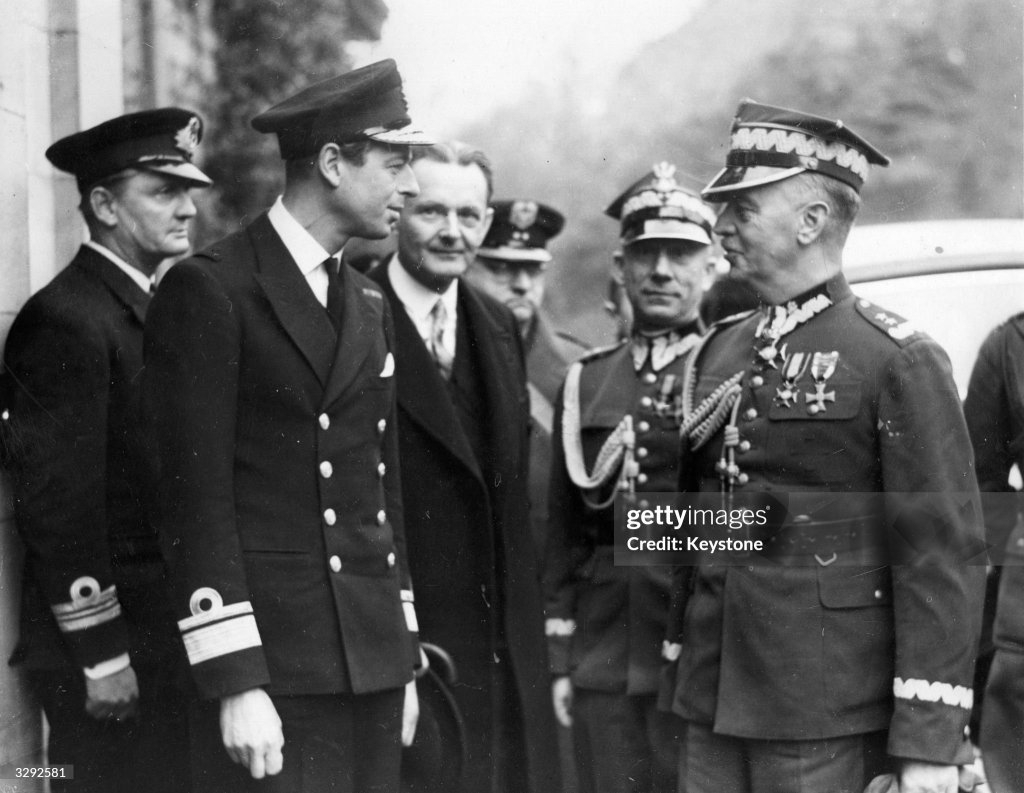
The Polish government-in-exile and Great Britain sign a naval agreement.
The IRA explodes four small bombs in London’s Piccadilly area.
A modified, unarmed Royal Air Force Spitfire PR Mk.IA flies the first reconnaissance mission of the type, from Seclin in France. The PR Mk.IA has cameras with a 5 inch focal length installed in the armament bays, instead of guns. It has also been polished, to increase speed. Later 8 inch cameras are introduced.
There are Luftwaffe aircraft spotted along the east coast of England, including near the Firth of Forth. The Luftwaffe planes apparently violated Dutch airspace to get there, because Dutch fighters fire on them and chase them off.
German planes parachute magnetic mines into British coastal waters for the first time. Four merchant ships are sunk by magnetic mines off the eastern coast. Meanwhile, IRA activists detonate 4 small bombs in London business premises in Piccadilly.
A Dutch passenger liner today became the latest civilian ship to fall victim to German mines, in the North Sea off Harwich, Essex, United Kingdom (51°49′30″N 1°41′00″E). The Simon Bolivar sank with about 400 passengers and crew aboard. It is estimated that 86 people, many of them women and children, have lost their lives. The Dutch believe that the mines are of a deadly new magnetic type. This view was supported today by a Danish skipper, Captain Knudsen, giving evidence in Copenhagen about the sinking of his ship, Canada, off the Humber on 4 November. The Germans, who claim that their U-boats sank 115 ships in the first two months of the war, are clearly putting a further massive effort into the war at sea. The total British tonnage lost so far is small, only around 300,000 out of nearly 18 million tons. No one knows how many mines are already laid.
Public opinion in the Netherlands is outraged because the mine which sunk the Simon Bolivar was in a major traffic lane. International law requires notification of any such mine-laying. The British accused the Germans of laying the mines in violation of Article VIII of the 1907 Hague Conventions, which forbade using mines in circumstances likely to endanger commercial shipping.
The Yugoslavian steam merchant Carica Milica struck a mine at 11.55 hours and sank approximately 4 miles off the Shipwash lightship in the northern English Channel. The 6,371-ton Carica Milica was carrying coal and was bound for Dubrovnik, Yugoslavia. The wreck was later dispersed.
Sailing with Convoy IFC, the 345-ton British fishing steam trawler Wigmore was torpedoed and sunk by the U-22, commanded by Kapitänleutnant Karl-Heinrich Jenisch, off the coast of Scotland in the North Sea (57°59′N 2°06′W). At 23.06 hours on 18 Nov 1939, U-22 fired two G7e torpedoes at the second and third ship in convoy IFC and missed. Four minutes later, the U-boat fired another G7e at the sixth ship and hit. The Wigmore (Skipper Walter Bore) sank within three minutes after being hit. All of the ship’s complement of 16 died.
The British steam merchant Parkhill was torpedoed and sunk by the U-18, commanded by Kapitänleutnant Max-Hermann Bauer, north-northwest of Kinnairds Head in the North Sea (58°07′N 2°18′W). At 21.16 hours on 18 Nov 1939 the Parkhill (Master Eric Charles Middleton) was hit by a G7e torpedo from U-18 and immediately sank after a heavy explosion north-northwest of Kinnairds Head. The ship had been missed by a first G7e at 20.45 hours. All of the ship’s complement of 9 died. The 500-ton Parkhill was carrying coal and was bound for Kirkwall, Orkney Islands.
The British cargo ship Blackhill struck a mine and sank in the North Sea off the Longsand Head Lightship (United Kingdom) with the loss of one crew member. Survivors were rescued by HMS Gipsy.
The Royal Navy merchant cruiser California captures German freighter Eilbeck and the German freighter Borkum in the Denmark Strait.
The Norwegians detain the German supply ship Westerwald whilst the vessel is using Norwegian waters to return to Germany from the North Atlantic.
The crew of the Africa Shell identifies the Admiral Graf Spee as having sunk their vessel near Madagascar.
The Merivoimat (Finnish Navy) auxiliary gunboat Vapaus was lost by grounding at Laatokka.
Convoy OA.37 departs from Southend, and OB.37 departs from Liverpool. Convoy HX.9 departs from Halifax.
Saturday, 18 November
On Northern Patrol were two cruisers between the Orkneys and the Faroes three cruisers and three AMCs between the Faroes and Iceland, and one cruiser and two AMCs in the Denmark Strait.
Light cruisers CALEDON, CERES, CALYPSO arrived at Loch Ewe from Northern Patrol.
Armed boarding vessels NORTHERN PRINCESS, NORTHERN FOAM, NORTHERN ISLE departed the Fair Isle Patrol.
Anti-aircraft cruiser CURLEW departed Grimsby on escort duties.
German merchant ship BORKUM (3670grt), which had departed Montevideo on 9 October, was captured by armed merchant cruiser CALIFORNIA on 18 November in the Denmark Strait. Under a prize crew commanded by Lt Cdr B Moloney RNR, BORKUM headed for Greenock via Kirkwall, but on the 23rd was attacked by U-33 and damaged by torpedo and gunfire near the Orkneys in 59 33N, 03 57W. Four German crew members were killed, but the rest of the Germans and British were rescued by armed boarding vessels KINGSTON BERYL and KINGSTON ONYX. The steamer was abandoned, drifted ashore in Papa Sound on the 25th and refloated on 18 August 1940, but as a total loss. She was taken to Rosyth and scrapped.
German merchant ship EILBEK (2185grt), which had departed Ponta Delgada in the Azores on the 10th, was captured by armed merchant cruiser SCOTSTOUN in the Iceland Faroes-Channel in 58 45N, 14 10W. Destroyer PUNJABI departed Greenock at daylight on the 20th to join SCOTSTOUN as she escorted EILBEK to the Clyde. SCOTSTOUN arrived at midday on the 20th and PUNJABI and the German ship on the 21st. EILBEK was renamed EMPIRE SCOUT for British service.
Following a D/F report, destroyers ACASTA, ARDENT, WINCHELSEA and WALPOLE, on their way to meet a homecoming Halifax convoy, conducted a search 150 miles SW of Berehaven.
Destroyers ECHO and WANDERER were searching for a submarine in 49 40N, 12 00W.
Destroyers ILEX and ICARUS began boiler cleaning at Rosyth.
Destroyer ISIS departed Rosyth to collect tanker ATHELKING (9557grt) at Invergordon and escort her to Methil to join convoy FS.40. ISIS arrived on the morning of the 19th and departed that afternoon with the tanker and destroyer KELLY, en route to the Tyne for refit. Destroyer INGLEFIELD, after delivering MASHOBRA to Rosyth, relieved KELLY.
ISIS and the tanker arrived at Methil on the 20th, while KELLY reached the Tyne on the 21st.
Convoy OA.37 of 24 ships departed Southend escorted by destroyer GRAFTON and ENCHANTRESS from the 18th to 20th. The convoy was dispersed on the 21st.
Convoy OB.38 departed Liverpool escorted by destroyers MACKAY and VIMY to the 21st.
GERMAN DESTROYER MINELAYING OFF THE HUMBER
German destroyers ERICH STEINBRINCK and FRIEDRICH ECKHOLDT of the 4th Destroyer Flotilla, escorted by destroyer HANDS LODY, laid mixed contact and more magnetic mines off the Humber during the night of the 18th/19th. Returning, they were met by light cruiser LEIPZIG and torpedo boats ILTIS, SEEADLER, LEOPARD and WOLF. The British were still not aware that the Germans were using magnetic mines, against which they had no defence or sweeping capability, and it was not until the 23rd that a magnetic mine was recovered at Shoeburyness. Seven merchant ships grossing 38,710 tons were sunk and one more damaged in the field.
On the 19th, Swedish steamer B O BORJESSON (1586grt) in 53 46N, 00 21E; six crewmen were lost, and the survivors rescued by minesweeping trawler ROSE OF ENGLAND (222grt) and trawler FRASCATI (220grt).
On the 19th, French steamer RHUYS (2921grt) 2½ miles south of the Humber Light Vessel; sixteen crewmen were lost and 17 survivors rescued.
On the 24th, steamer MANGALORE (8886grt), 1½ miles 288° from Spurn Light House.
On the 26th, Polish liner PILSUDSKI (14,294grt), 26 miles 314° off Outer Dowsing in 53-15N, 0-30E; ten crewmen were lost, and destroyer VALOROUS rescued 79 survivors.
On the 30th, Norwegian steamer REALF (8083grt) in 53 55N, 00 22E; one crewman was lost and the survivors rescued by Italian steamer SANTAGATA (4299grt). The wreck did not sink until 1 December.
On 4 December, steamer HORSTED (1670grt) in convoy, in 53 48N, 00 16E; five crewmen were lost and destroyer JACKAL picked up the survivors.
An additional vessel of 1270 tons was lost on this minefield. This could possibly be Norwegian steamer GIMLE (1271grt), reported lost on 3 December off the east coast of England, although her sinking is generally credited to U-31
On 28 December, tanker SAN DELFINO (8072grt) was damaged off Holme Ridge Buoy in the Humber Estuary, but refloated and berthed on 1 January 1940.
U-18 sank fishing trawler WIGMORE (345grt) 25 miles N by W of Rattray Head in 57 59N, 02 06W. Sixteen crewmen were lost.
U-22 sank steamer PARKHILL (500grt) in 58 07N, 02 18W.
Force K of aircraft carrier ARK ROYAL, battlecruiser RENOWN, light cruiser NEPTUNE, and destroyers HARDY, HERO, HOSTILE and HASTY departed Freetown to operate south of Freetown along the convoy route.
Battleship RAMILLIES and destroyer DELIGHT joined Force J in the Indian Ocean. RAMILLIES was to relieve battleship MALAYA which was due to go to Malta for rearming. However, these plans were suspended after the sinking of steamer AFRICA SHELL in the Indian Ocean. DELIGHT was also to relieve destroyer DARING which was to return to the Mediterranean for refit, but her return too was suspended.
Aircraft carrier ARGUS, and destroyers STURDY and DOUGLAS departed Gibraltar for Toulon. DOUGLAS arrived back on the 23rd.
Light cruiser CAPETOWN departed Gibraltar and arrived at Malta on the 20th.
French destroyer BORDELAIS and submarines CAIMAN, MORSE and SOUFFLEUR passed Gibraltar westbound.
Convoy HX.9 departed Halifax at 1000 escorted by Canadian destroyers HMCS ASSINIBOINE and HMCS ST LAURENT until they detached on the 20th. Ocean escort was battleship WARSPITE, which detached on the 24th. The convoy arrived at Liverpool on 2 December.
French large destroyer CHEVALIER PAUL and torpedo boats FLORE and BOUCLIER were on patrol in the area of 43N, 13.5W.
President Roosevelt made known his intention today to make available by July, 1941, to research workers and students of his career his personal and official correspondence connected with his public life before and since he entered the White House in 1932. Although the third term question was not mentioned, announcement of his decision caused speculation as to whether he would make all his letters available even to qualified scholars if he had any idea of attempting to succeed himself as Chief Executive. White House sources indicated that political considerations were farthest from his mind when Mr. Roosevelt disclosed his plans.
The announcement, made through the temporary White House offices in connection with the program for the President’s laying of the cornerstone of the new Franklin Roosevelt Library in the north field of his mother’s estate tomorrow, included the information the construction of the library would be completed by next July and that his letters would be available there to authorized persons by July, 1941.
William D. Hassett, acting White House secretary, said the collection of about 6,000,000 documents would cover the President’s career as State Senator, Assistant Secretary of the Navy, Vice Presidential candidate, delegate to three Democratic national conventions and that part of his correspondence as Chief Executive which is not already included in official documents. The Roosevelt correspondence will be housed in the north wing of the $350,000 library, privately built through voluntary subscription by friends and admirers of the President. It was explained that while it would require from ten to twenty years to catalog the collection, qualified persons who knew what they were after would have no trouble gaining access to the papers.
Speculation aroused by the announcement of the Presidential library plans included observations that availability of the letters could be easily postponed should Mr. Roosevelt decide to seek a third term in the White House. However, the announced date of July, 1941, was thought to be significant inasmuch as no previous President is recalled who made his correspondence accessible even to students or biographers while holding the office. The President laughed off suggestions of third-term significance in his speech of yesterday at the laying of the cornerstone of the new Jefferson Memorial in Washington, Wednesday that he hoped to return for the dedication of the building in 1941.
Driven by the hope of returning the first division of 58,000 Chrysler Corporation employees back to work Monday or Tuesday, the spokesmen for the corporation and for the United Automobile Workers-C.I.O. held a night session after having reached a tentative agreement on nearly all disputed points except the union’s wage demands.
The conference adjourned at 10:45 until 2 PM tomorrow. James F. Dewey, Federal conciliator, stated that all phases of the dispute had been settled except that of wages. “The company proposed an adjustment of some of the wage rates which were out of line,” he said. “Then the discussion centered around vacations with pay. and other wage demands.” The company, it was understood, offered wage increases which would add about $3,000,000 to the payroll, but protested that the several wage adjustments requested by the union would increase the payrolls by $8,000,000, and that this would be “out of line” with the wages paid by other automobile companies.
The union, however, insisted that the corporation would have to grant vacations with pay, together with a blanket 5 percent wage increase as well as upward adjustment of wages for skilled men. The corporation was willing to make A blanket percentage increase of about 3 percent, applying it either as a vacation bonus or as a straight wage increase, but was unwilling also to add increases for the skilled men. While the corporation stuck to its refusal of the union shop, a demand which the union finally dropped, the workers finally traded off this point for several other concessions.
One was the elimination of the no-strike clause of the old contract. By this provision the union had been prevented from striking during the life of the contract. Under the new arrangement, the union may strike if it finds itself unable to make progress on major problems, but if it does so, then it also agrees that the contract is at an end. This means the union must permit cancellation of the entire contract covering all the eleven plants. This was inserted to prevent the union from using a strike in one plant as a wedge to force concession in all the other plants.
President Roosevelt turned a deaf ear today to an appeal from Mayor Rossi of San Francisco that he intervene to end the maritime strike that has handicapped shipping on the West Coast.
Representatives of 900,000 C.I.O. unionists in New York endorsed a third term for President Roosevelt yesterday after a one-hour debate in which Communist and anti-Communist forces clashed publicly for the first time in local C.I.O. history.
Despite a sharp decline during the last month, a slight majority of American voters favor a Democratic President in 1940, according to the results of recent surveys made public yesterday by the American Institute of Public Opinion.
Mrs. Fritz Kuhn, wife of the leader of the German-American Bund, may be called as a witness in the trial of her husband in General Sessions on charges that he stole $1,891 of the Bund’s funds and used the money for his personal purposes, counsel for the defense indicated yesterday.
U.S. Parents criticize newer education. Progressive methods are teacher-centered, they say, and the aim is to teach students to get what they want.
Senator Norris of Nebraska, who usually supports Administration legislation, said today that he would oppose increased defense appropriations at the next session of Congress because he believed the money could be spent more wisely for relief of unemployment and agricultural distress. He dismisses the chances of the U.S. becoming embroiled in the war in Europe.
The U.S. Army reverses its decision to switch to slate blue uniforms, bringing back the drab olive color.
Selected College Football Scores:
Arizona 12, Pacific 7
Arizona State 28, New Mexico 6
Auburn 21, @ Louisiana State 7
Baylor 13, @ Centenary (LA) 6
Boston College 19, N Boston University 0
Brown 41, Connecticut 0
Bucknell 25, Muhlenberg 3
California-Santa Barbara 0, @ San Francisco 0
Chicago 25, Oberlin 0
(16) Clemson 21, @ Rhodes 6
Colorado 12, @ Brigham Young 6
(4) Cornell 35, @ (20) Dartmouth 6
Creighton 47, Washburn 0
Davidson 32, Erskine 6
Denver 23, Idaho 0
Detroit Mercy 36, Manhattan 13
(13) Duke 13, (7) North Carolina 3
Florida 13, @ Miami (FL) 0
Fordham 13, Saint Mary’s (CA) 0
George Washington, 14 @ Kansas 7
Georgetown, 14 @ New York University 0
Georgia 33, South Carolina 7
Georgia Tech 6, @ Alabama 0
Gonzaga 27, Eastern Washington 0
Harvard 46, New Hampshire 0
(18) Holy Cross 21, Carnegie Mellon 0
Indiana 7, @ Michigan State 7
(15) Iowa 13, (20) Minnesota 9
Iowa State 10, Kansas State 0
Kentucky 13, West Virginia 6
Marquette 22, @ Texas Tech 19
Michigan 19, @ Pennsylvania 17
Mississippi 46, Memphis 7
Mississippi State, 40 Millsaps 0
(12) Missouri 7, (5) Oklahoma 6
Nebraska 14, @ Pittsburgh 13
North Carolina State 12, @ Furman 7
(9) Notre Dame 7, Northwestern 0
(8) Ohio State 21, Illinois 0
Oklahoma State 0, @ Wichita State 0
(19) Oregon State 21, California 0
Penn State 14, @ Army 14
Princeton 13, @ Yale 7
Purdue 7, @ Wisconsin 7
Richmond 26, Hampden-Sydney 7
Saint Louis 0, @ Tulsa 0
(14) Santa Clara 0, @ (11) UCLA 0
Sewanee 14, @ Citadel 7
Syracuse 7, Colgate 0
(1) Tennessee 13, Vanderbilt 0
Texas 25, Texas Christian 19
(2) Texas A&M 19, @ Rice 0
Texas-El Paso 27, Louisiana Tech 0
(6) Tulane 25, @ Columbia 0
Utah 42, @ Colorado State 7
Utah State 20, @ Wyoming 13
Villanova 12, @ Temple 6
Virginia Military Institute 13, Maryland 0
Virginia Tech 13, @ Virginia 0
Washington (MO) 25, @ Drake 13
Washington State 7, @ Stanford 0
William & Mary 18, Washington & Lee 14
Mohandas K. Gandhi warned Great Britain today that Indian Nationalists cannot long delay a campaign of civil disobedience unless the deadlock over India’s status ends favorably.
Japanese troops overran the Xiaodong defensive line in Guangxi Province, China, advancing toward Nanning. A rapid advance by the Japanese Army from the shores of the Gulf of Tonkin in the vicinity of Pakhoi across a narrow portion of Kwangtung Province and into Kwangsi ProvInce would probably have very important political as well as military effects. The Japanese state that their vanguard is less than forty miles from Nanning, formerly Kwangsi’s provincial capital. They state also that Chinese forces and civilians are fleeing northward in a panicky condition and assert that policemen have abandoned their posts and that the city is being looted by the Chinese prior to the arrival of the invaders.
Japan’s foothold in Kwangsi, if acquired, is expected in Japanese circles here to embolden General Lung Yun, Yunnan Governor, in a recalcitrant attitude toward Chungking. General Lung has long been suspected of friendliness toward former Premier Wang Ching-wei’s peace and new government plans. Recently he has been violently opposed to Generalissimo Chiang Kaishek’s orders to send a portion of the Yunnan provincial armies into Hunan, thus making a place within his province for several divisions of the Central Government troops, which would have tightened Chungking’s hold on Yunnan. The highest official Japanese sources in Shanghai assured this writer that the Kwangsi invasion was no mere diversion and not merely designed to cut off the port of Pakhoi, in South China, from its hinterland. The expedition, it is declared, will develop into a strategic move of the greatest importance, eventually cutting off Chungking from access to supplies via the Haiphong- [French Indo-China]-Yunnan Railway.
This, say the Japanese, would also render virtually useless China’s new Burma highway. If these dual objectives were achieved, China’s only foreign source of war materials. would be the Soviet, using the overland route leading through portions of the northwest, dominated by Chinese Communist forces. Instead of driving against Pakhoi itself, the Japanese invaders pushed north and, they declare, captured the town of Yamchow, on the Yamchow-Nanning highway, and then rapidly seized Taitze, a border town fifteen miles north of Yamchow. They crossed the provincial border at dusk, they report, and entered Nasiao, a small town eight miles north of the border, and stated that they continued another ten miles despite the darkness to capture Tatang.
The Chinese armies’ long-preparedness, in ditching highways and destroying bridges apparently failed to slow up the invaders’ advance and, according to their reports, they easily entered the fifteenth Province of China to experience Japanese occupation since the hostilities began on July 7, 1937. The only other military activity reported today was a new Japanese drive in the extreme north where the army launched attacks in the mountainous region of the junction of Hopeh, Shansi, and Chahar Provinces. At those points the Chinese Communists are reported to be withdrawing and turning over their positions to the newly recruited guerrilla forces.
Blaming American abrogation of the trade treaty with Japan for the stiffening. of the British attitude on Tientsin, General Masaharu Homma, commanding the Japanese forces there, said today that the Japanese blockade of the British and French concessions could have ended three months ago as the British were then showing signs of reasonableness, but that they had become noncooperative when Washington abrogated the trade agreement.
General Homma declared that the blockade would continue until all questions had been settled satisfactorily for Japan. He said he regretted the hardships for third-power nationals, but termed them unavoidable. At present the prices of coal, meat, and vegetables inside the concession are about three times those just outside it. Coal is not admitted unless trucks dump their loads and sift the coal “in order to assure that it does not contain bombs,” General Homma explained.
The commander of the Japanese Army garrison in Tientsin was quoted today by Domei, Japanese news agency, as follows in connection with the Japanese Army’s blockade of the British and French concessions here: “Examination and search might have been abolished three months ago had not the United States resorted to such an unfriendly act. It is highly regrettable that American action has obstructed successful negotiations in the British-French Japanese conversations, which were proceeding smoothly.”
In Tokyo, Japanese Premier Nobuyuki Abe announced today that preparations to establish a new Central China government under Wang Ching-wei were nearly complete. “Preparations to inaugurate a new Central China government are so nearly complete that Japan’s policy in China can be considered as having reached the stage of a new order in the Far East,” General Abe said. “A position of construction has been gained.”
Dow Jones Industrial Average: 151.53 (+0.53)
Born:
Margaret Atwood, novelist (“The Handmaid’s Tale”), poet, and environmental activist, in Ottawa, Ontario, Canada.
Brenda Vaccaro, American actress (“Cactus Flower”, “Midnight Cowboy”, “Capricorn One”), in Brooklyn, New York, New York.
Amanda Lear, French model, actress and singer, in Saigon, French Indo-China.
Tom Johnson, American minimalist composer (“The Four-Note Opera”; “Nine Bells”), in Greeley, Colorado.
John Cheek, Falkland Islands advocate, at Hill Cove, Falkland Islands (d. 1996).
John O’Keefe, American-English neuroscientist (2014 Nobel Prize for Physiology for discovery of place cells), in New York, New York.
Naval Construction:
The Marine Nationale (French Navy) Flower-class corvette La Bastiaise is laid down by the Smiths Dock Co., Ltd. (South Bank-on-Tees, U.K.).
The Royal Navy Hunt-class (Type II) escort destroyers HMS Blencartha (L 24) and HMS Brocklesby (L 42) are laid down by the Cammell Laird Shipyard (Birkenhead, U.K.).



 History Diaries