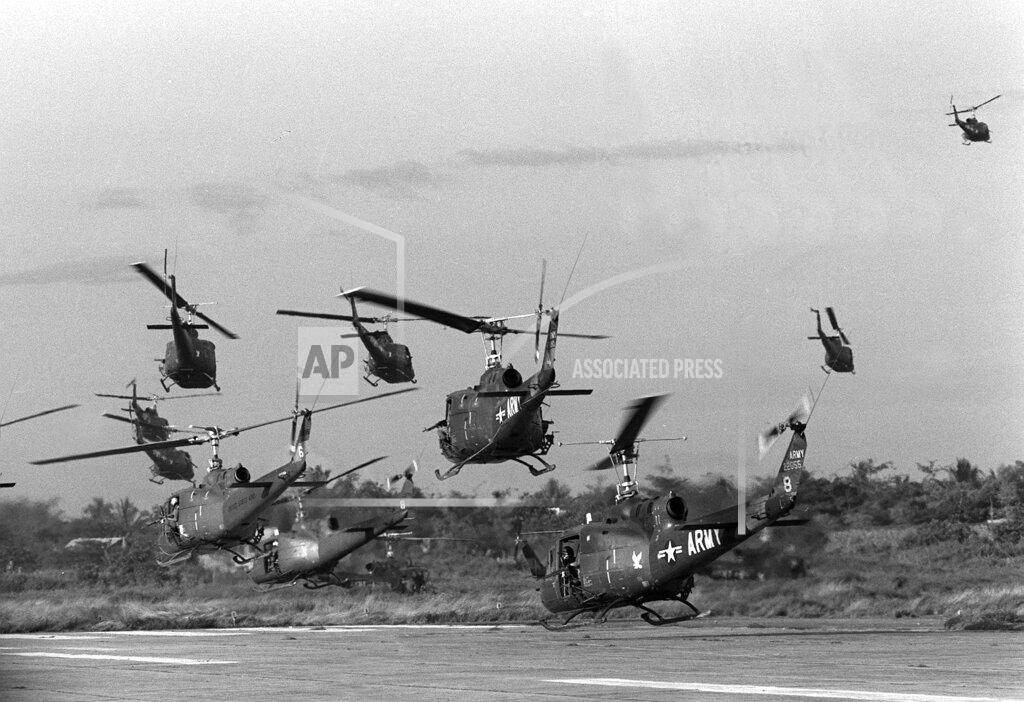
In the largest airborne strike of the war till now, 116 U.S. and South Vietnamese helicopters fly some 1,100 ARVN troops into Bình Dương and Tây Ninh Provinces to take what is claimed to be a major Việt Cộng stronghold; General Nguyễn Khánh personally directs the operation, but it makes only light contact with the Việt Cộng. The United States and South Vietnamese military commands launched today another dramatic and costly helicopter offensive against what was reported to be a guerrilla stronghold. A United States spokesman called it the largest helicopter combat operation of the Vietnamese war against Communist insurgents. Official reports after the crucial initial assaults, in which the planners had hoped to take the enemy force by surprise, indicated that virtually nothing of value had been achieved.
Only light contact with the enemy was made, the spokesman said, and there were no casualties among the government forces. Two guerrillas and a suspected guerrilla were captured and a small quantity of arms was seized. The attack force consisted of 115 United States and Vietnamese helicopters, many of them taken from other missions for the operation. More than 1,100 Vietnamese troops, including marines, paratroops and regular infantry units, were flown into forest clearings in Bình Dương and Tây Ninh Provinces, northwest of Saigon.
At dawn, Vietnamese Air Force fighter‐bombers strafed the woods adjacent to one of the landing zones, near Bến Súc, 35 miles northwest of the capital. Minutes before the first troops were landed, armed United States helicopters descended and hovered just above treetop level to provide covering gunfire. A second wave of helicopter-borne troops was landed near Laithieu, a 15‐minute flight from Saigon’s Tân Sơn Nhứt Airport. The United States spokesman said the operation was continuing but that no further contact with the Communists had been reported.
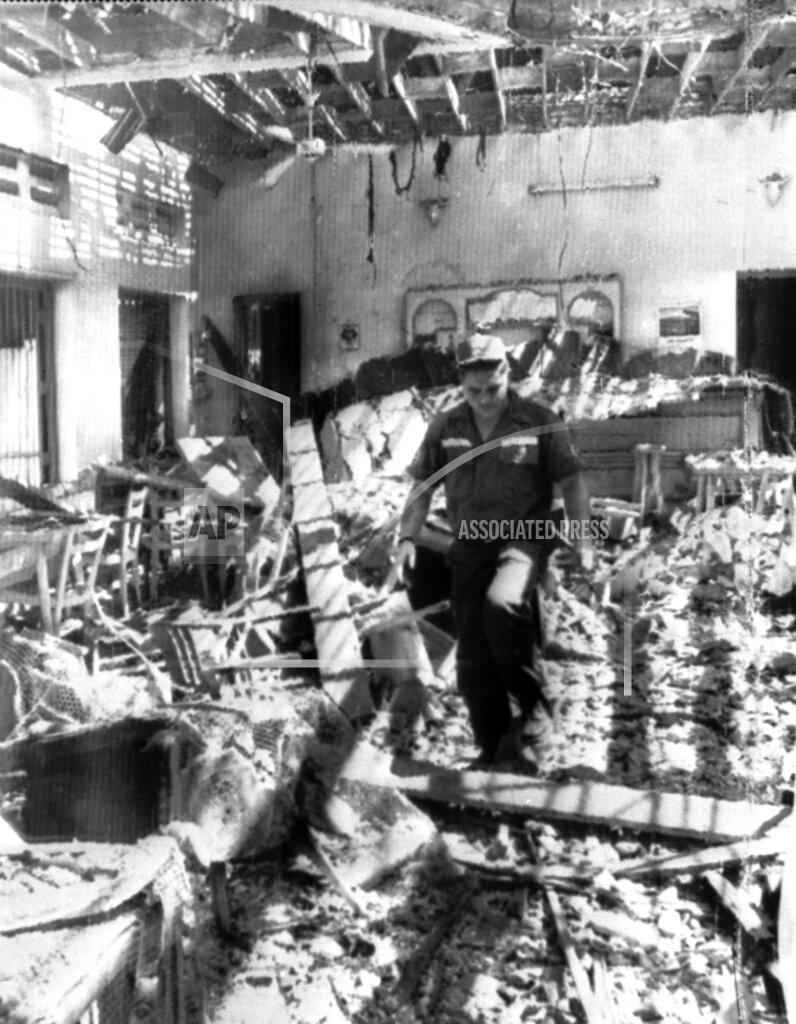
The risk of massing so many helicopters and troops in one place was made vivid by a seemingly isolated act of terrorism at Tân Sơn Nhứt only a few minutes after the last helicopter force had taken off. A bomb exploded in a civilian snack bar at the airport, injuring 18 Americans and one Vietnamese. None were reported in serious condition, though 10 or the Americans were hospitalized. By mid‐afternoon, more than 100 of the assault helicopters were back at Tân Sơn Nhứt, parked close together on the open landing strip.
American commanders have announced increased security precautions at all the major airports of South Vietnam, including Tân Sơn Nhứt, following the Communist mortar attack November 1 on the Biên Hòa base. More than 20 United States aircraft, most of them B‐57 bombers, were damaged in that attack. It was not known whether the civilian snack bar where the bomb exploded was inside the perimeter of tightened security. Major General Delk M. Oden, commander of the United States Army Support Command, observed the helicopter attack and called it “extremely professional.” Officials were unable to estimate the cost of the operation, but in manpower and equipment diverted from other activities it represented a major effort.
The United States Air Force is launching pilotless reconnaissance aircraft from mother planes based in South Vietnam, American military sources reported today. The small camera‐carrying drones have been sent on missions over Communist North Vietnam, these sources reported. The craft are said to be jet‐propelled. The flights were reported two days after Communist China said it had shot down a United States reconnaissance plane with no pilot. The Chinese report said the craft was downed Sunday over South China. Peking said Wednesday that it had established that the downed plane was American, not Chinese Nationalist.
The United States military sources in Saigon said they could not report with certainty that any of the drones had been guided over Chinese territory. They mentioned only North Vietnam. United States Air Force officers here have refused to comment officially on the drone craft. There have been reports that the drone is slung beneath the wings of the C‐130 Hercules transport plane, which has four turboprop engines. Questioned about this, an Air Force spokesman had said only that the drone was a “secret proiect.” Military sources said it was conceivable that the Hercules could launch the drones for flights to China from a position over international waters in the South China Sea.
The United States is known to have flown U‐2 high‐altitude reconnaissance planes on undisclosed missions from the Biên Hòa air base, 15 miles of Saigon. The presence of the U‐2’s was originally kept secret. During a recent visit to the base by Western newsmen, however, photographs of the planes moving along the airstrip were permitted. Nationalist China has acknowledged sending U‐2’s over Communist China but it has denied that any of its planes were shot down in Chinese territory Sunday.
Maxwell D. Taylor, United States Ambassador to South Vietnam, will return to Washington for a series of conferences with President Johnson and other officials starting November 27. Ambassador Taylor’s visit, which has been expected for some time, is to last five or six days. It comes at a time when the Government is undertaking a broad view of policy in Southeast Asia, particularly in South Vietnam. To a large degree planning and decision‐making on Vietnam were suspended during the election campaign. There does not appear to be a clear‐cut or majority opinion here on what to do next. There is little enthusiasm for pulling out or for backing a so‐called neutralist solution since most Washington officials believe such a course would lead quickly to a Communist takeover. Yet there is also cautious feeling about any expansion of the war. People close to the President note that he frequently quotes the advice of General Douglas MacArthur against involving the United States in a shooting war on the Asian mainland.
[Ed: Not Cautious enough.]
South Vietnam’s High National Council today elected the third chairman in its six weeks of existence. The new chairman, Lê Văn Thự, a lawyer, replaced Nguyễn Xuân Chữ, who resigned in protest against the choice of ministers in the Government of Premier Trần Văn Hương.
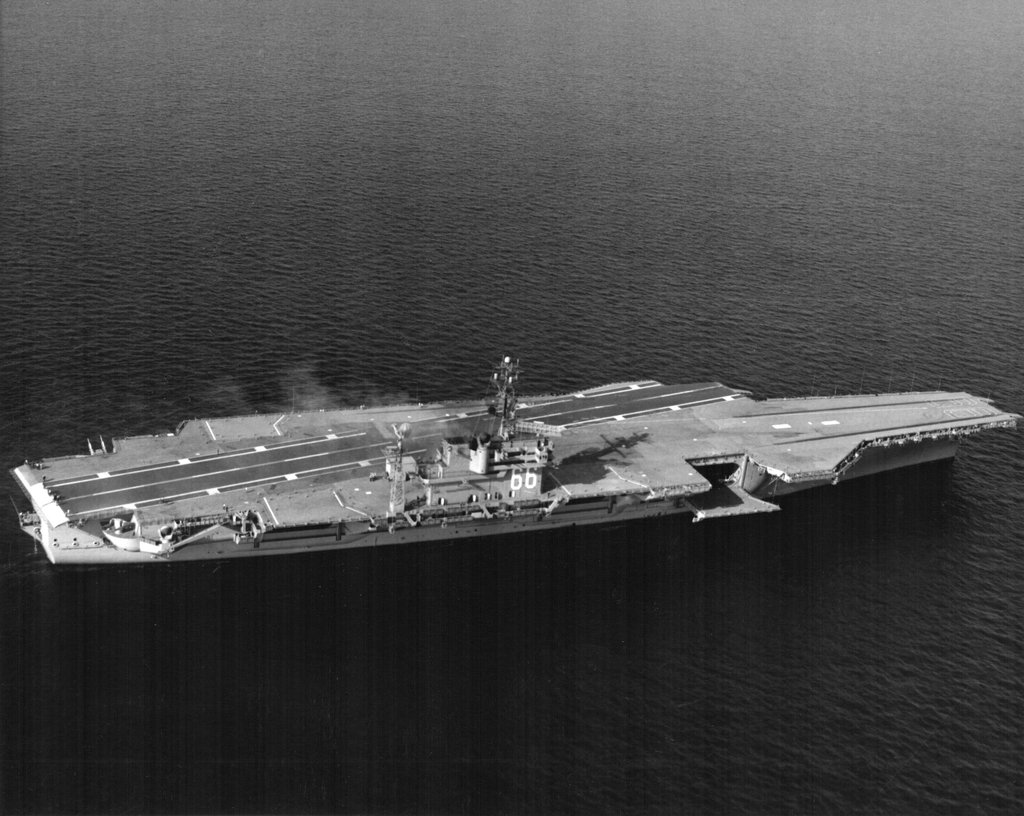
Deputy Premier Nguyễn Xuân Oánh of South Vietnam presented a brass plate today to the men of the United States Navy aircraft carrier USS Princeton for their recent mercy missions to flood victims.
A United States jet fighter plane was shot down by ground fire in south‐central Laos yesterday, Secretary of Defense Robert S. McNamara announced today. He said operations were under way to rescue the pilot, who was not identified. Mr. McNamara did not identify the presumed attackers. They were believed to be forces of the pro‐Communist Pathet Lao, which has been conducting a recurrent guerrilla war against the neutralist Government of Premier Souvanna Phouma.
In a Pentagon news conference the Defense Secretary said that the plane was one of two F‐100 aircraft escorting an RF‐101 photo‐reconnaissance plane in one of a series of such flights “carried out since last May with the concurrence of the Laotian Government.” “The purpose of this flight was to gather information on infiltration of North Vietnamese troops and equipment into Laos in violation of the Geneva accords of 1962,” Mr. McNamara said. “These missions will continue as required,” he added.
The Cambodian chief of state proposed again today a Cuban type of settlement for his country’s war claims against the United States and South Vietnam. The Cubans demanded and received tractors as part of the price for release of Cuban exiles captured after the 1961 invasion of the island. Money for the tractors was raised in the United States. Prince Norodom Sihanouk asked that Cambodia receive one bulldozer or 1 million riels, the Cambodian unit of currency, for each of his countrymen killed in clashes along the South Vietnamese border. The demand was similar to the one Cambodia made last March. The Prince has estimated Cambodian casualties at 100 over the last five years. At the official rate of 35 riels to the dollar, his proposal would cost the United States almost $3 million. As a major Cambodian concession, Prince Sihanouk offered to forego the Geneva conference that he has pressed Washington to accept. He has asked that such a conference guarantee Cambodia’s borders and neutrality.
The new Soviet leadership appears to be planning further changes in Communist party and economic organizations. The Government newspaper Izvestia gave a strong hint of this tonight in an editorial explaining a basic reorganization of the party structure that was announced Monday. That change abolished a division of the Communist party into two organizations, one concerned with agriculture and one with industry. The “stability” achieved in the party by this reform, the newspaper wrote, does not exclude the “necessity” and the “possibility” of further revisions to improve the “institutional forms of the party leadership.”
The next change, informed circles here believe, is likely to be the abolition of regional councils established in 1957 in an attempt to improve the efficiency of industrial production. The abolition of these councils, which are Government organizations, is expected to be decreed by the Supreme Soviet (parliament) in its next session, which will start December 9. This measure is reported to have been discussed by the Central Committee of the party during the last few days. A decision by the party body would precede any action by the Supreme Soviet. The Central Committee has been in session for two or three days.
Monday night, at the end of the first day’s session, the committee announced the party structural revision as well as important changes in the leadership. Frol R. Kozlov was dropped from the Presidium for health reasons; Aleksei A. Adzhubei was expelled from the Central Committee for “mistakes in his work”; Pyotr Y. Shelest and Aleksandr N. Shelepin were made full members of the Presidium and Pyotr N. Demichev was given the post of alternate member vacated by Mr. Shelest.
The United States and the Soviet Union signed the “Agreement on Cooperation Between the Union of Soviet Socialist Republics and the United States of America in the Field of Desalination, Including the Use of Atomic Energy”, was signed in Moscow. The accord, the outgrowth of an informal understanding reached last July in Washington, provides for exchanges of scientific reports, joint technical meetings and reciprocal inspection visits by experts to installations and laboratories. The agreement was signed at the Government’s reception house in Lenin Hills in southwestern Moscow in a genial atmosphere that had political overtones.
At the ceremony Foreign Minister Andrei A. Gromyko said the Soviet Government would do its utmost to solve existing problems between the two countries and then raised his champagne glass “to a solution of unsolved problems” with the United States. Ambassador Foy D. Kohler, replying for the United States, departed from his prepared speech to say: “I am sure we will continue to work together for the improvement of mutual relations in the interest of world peace.”
The Chinese Communists have declared that they will not give up “an inch” of Sinkiang, China’s northwestern province adjacent to the Soviet Union. The statement was contained in a report by Hsinhua, the Chinese Communist press agency, on a meeting of the Provincial People’s Congress in Urumchi, the Sinkiang capital, to elect Deputies to the National People’s Congress, in Peking. Hsinhua said that the participants in the session had unanimously declared that Sinkiang was a “sacred, inalienable part” of China. “We do not want an inch of land from others but will absolutely not permit others to encroach upon one inch of our land,” the Sinkiang representatives added, according to Hsinhua. “Any ignoble scheme aiming to divide the unity of our fatherland and undermine the great solidarity among all our nationalities will be doomed to end in shameful defeat.”
The statements were interpreted in Hong Kong as a warning to the Soviet Union not to attempt to achieve any territorial gains nor to undertake any subversive activities in Sinkiang. Analysts of Soviet‐Chinese affairs said that Peking apparently remained concerned about the situation along the Sinkiang‐Soviet border despite the overthrow of Nikita S. Khrushchev five weeks ago. Hsinhua’s report appeared 10 days ago in the Peking newspapers. The issues containing the report reached Hong Kong today.
Italy expelled today two Egyptian diplomats accused of an attempt to “air express” to Cairo a trunk marked “diplomatic mail” but containing a man who had been drugged, bound and gagged. The two officials are Abdel Moneim el‐Naklawy and Selim Osman el‐Sayed, both first secretaries of the United Arab Republic’s Embassy here. The man in the trunk had been identified as Joseph Dahan, 30 years old, a Moroccan. The man was identified Wednesday by an army officer in Israel as Mordecai Luk, an Israeli renegade. The man told Italian policemen that he was kidnapped in a cafe in Rome and taken to an apartment and that the following day he was drugged and put into the trunk. He was freed after an airport guard heard him moaning as he was being put aboard an Egyptian airliner. Newspapers in Italy speculated that he was a secret agent working for Israel or that he might be a double agent working for both Israel and the United Arab Republic. An Italian investigator said the man had admitted his name was not Dahan.
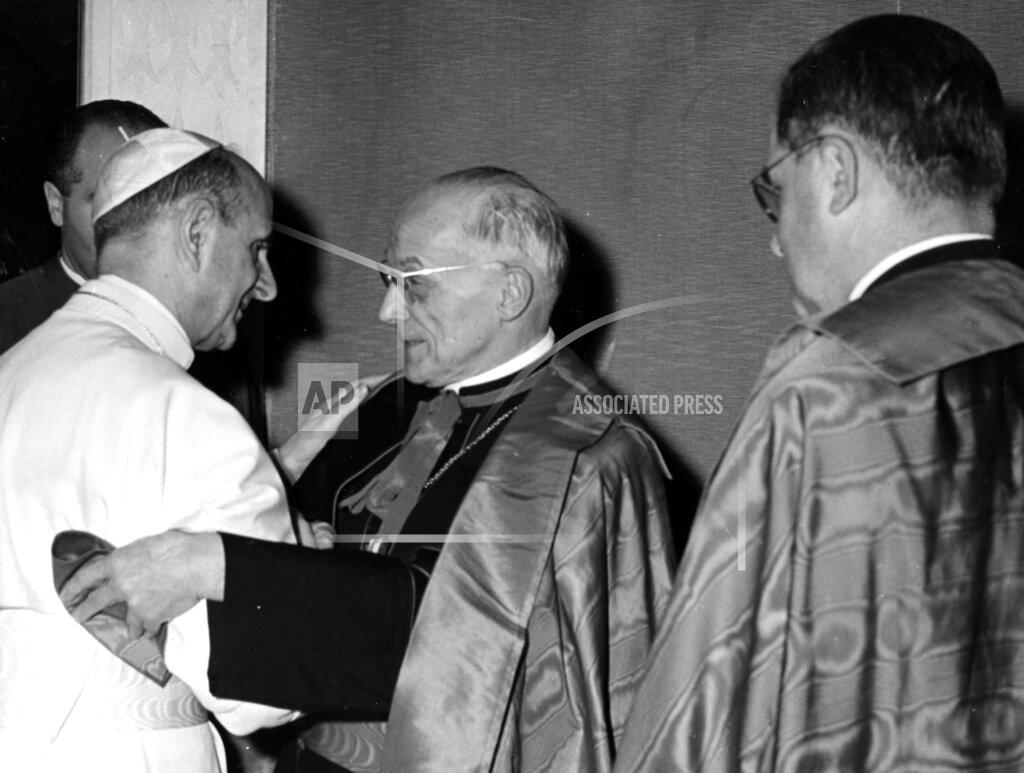
A revised declaration on the Roman Catholic attitude toward non‐Christians, seeking common ground with all worshipers and strongly denying that the Jews were guilty in the crucifixion of Christ, reached the floor of the Ecumenical Council today. Informed observers said the new draft met the principal objections raised by Jewish and Muslim opinion against a previous version. The document is expected to face a preliminary vote on Friday, but final action must await a fourth session of Ecumenical Council Vatican II, expected next year. Earlier versions of the declaration centered on the Catholic attitude toward Jews, with only a few lines devoted to other world religions. The new draft follows an order that its sponsors consider more logical and more equitable.
The text begins with an implicit tribute to all who seek God, even in primitive animist religions. It continues with a recognition of “true and holy” tenets in the Asian religions of Hinduism and Buddhism. Then it acknowledges common ground with Muslims in their belief in one god and in their respect for the sacred figures of Judaism and Christianity. The succeeding section deals with the Jews. It unequivocally rejects the charge of deicide, or the murder of God, and stresses that the roots of Christianity are in the Old Testament. A final section calls on Catholics to work for the brotherhood of all men without regard to race, color, creed or walk of life. According to a full summary, following closely much of the language of the text itself, the document states: “The Jewish people should never be presented as one rejected, cursed or guilty of deicide.”
“What happened to Christ in His Passion,” the summary adds, “cannot be attributed to the whole [Jewish] people then alive, much less to that of today. Besides, the church held and holds that Christ underwent His Passion and death freely, because of the sins of all men and out of infinite love.”
South Korea’s President Park Chung-hee announced its list of 167 companies that the government would financially support in their efforts to increase in “light industries such as textiles, hair goods and knit wear”, primarily because those were the industries “that could readily absorb surplus labor”.
The execution of Dr. Paul Carlson, an American medical missionary, was postponed today until Monday pending further negotiations with the United States, Christophe Gbenye, the Congolese rebel leader, announced in Stanleyville. A broadcast from that city in the northeastern Congo, which is held by leftist rebels, was heard in Nairobi, Kenya. It said that the execution had been put off and it was up to Washington to find a suitable basis for negotiations about the 60 Americans in rebel hands. Dr. Carlson was scheduled to last Monday for what the rebels say was spying, a charge vehemently denied by the United S tates.
Mr. Gbenye addressed his message to Prime Minister Jomo Kenyatta of Kenya, who urged the rebel leader yesterday at the request of the United States to spare Dr. Carlson for humanitarian reasons. Prime Minister Kenyatta is chairman of a commission set up by the Organization of African Unity to try to end the warfare in the Congo between the rebels and Premier Moise Tshombe’s Government. Mr. Gbenye said that in view of Mr. Kenyatta’s message, Dr. Carison’s execution had been postponed.
FBI Director J. Edgar Hoover held a rare press briefing and gave the most vicious public denouncement of civil rights leader Martin Luther King, Jr. during his lifetime. Reporters of the Women’s National Press Club were invited to hear Hoover’s briefing called to respond to King’s statements about the FBI’s assignment of personnel to civil rights cases, and told the women that King — who had been awarded the Nobel Peace Prize for 1964 — was “the most notorious liar in the country” and then told them to “feel free to print that”.
J. Edgar Hoover, the usually taciturn director of the Federal Bureau of Investigation, spoke out publicly today about the Warren Commissions report on the assassination of President Kennedy and about the Rev. Dr. Martin Luther King Jr., the Black civil rights leader. In a meeting with selected Washington newswomen that was as remarkable for its three‐hour length as for its mere occurrence, Mr. Hoover loosed a broadside of uncharacteristic public charges. He denounced the Warren Commission’s criticism of his bureau for not warning the Secret Service that Lee Harvey Oswald was a potential threat to the President. He called the criticism “unfair and unjust” and “a classic example of Monday morning quarterbacking.” He attacked Dr. King, head of the Southern Christian Leadership Conference, as “the most notorious liar in the country.”
[Ed: Nothing shows the stranglehold that Hoover has on Washington through his “blackmail files” on every public figure more than the fact that he got away with doing this and was not fired. The FBI is clearly a threat to liberty and Always Has Been; You Cannot Change My Mind.]
Hoover also observed on the issue of gun control, “I think strong laws should be passed restricting the sale of guns, but when you try, you run head on into collision with the National Rifle Association.”
The desegregation of restaurants, lodging and theaters in McComb, Mississippi took place “without incident” after the NAACP had selected the small town in order to test compliance with the new Civil Rights Act of 1964. A group of 20 African-American men and women were able to get served food, rent motel rooms, and sit where they wished to watch a movie. McComb Mayor Gordon Burt and local business leaders had taken out newspaper advertisements urging residents to peacefully comply with the law, and provided police officers nearby as needed; the group started with dinner at the Continental Motel restaurant across from the police station, and the only response was that “The only three white patrons got up and left as the Negroes entered.” John White, who chaired the McComb City Police Committee, told reporters that the white members of the community had put pressure on businesses to change with the times, and noted that “Any time the power structure of a community takes a stand against violence, it certainly curtails the possibility of trouble.”
A sullen gathering of whites watched silently later as the Blacks fanned through the business area in the first test of public accommodations here under the Civil Rights Act of 1964. There were no disorders. The act prohibits racial discrimination in places of public accommodation that are in interstate commerce. The desegregation of the restaurants, motels and a theater came a day after 650 McComb residents signed a statement calling for re‐establishment of order and respect for law. This town of 14,000 residents has been the scene of frequent bombings and burnings in Black neighborhoods in recent months. In 1961, six Freedom Riders were beaten at a McComb bus station. Charles Evers, state field secretary of the National Association for the Advancement of Colored People, led the Blacks —10 women and 10 men—into the various downtown establishments.
Secretary of Defense Robert S. McNamara announced plans today to close 95 military bases and installations, including some naval shipyards, as an economy move. He did not identify the bases. Mr. McNamara made his plans known at a Pentagon news conference. He will drop the other shoe tomorrow, when he is scheduled to make the list of closings public. He said the delay was necessary to permit official notification of local officials affected by the cutbacks. About 63,000 jobs in 33 states and five foreign countries are involved. The pending cutbacks are clearly the most far‐reaching since the Secretary began his cost‐efficiency program in 1961.
He emphasized that nearly $500 million a year would be saved by the pending base reductions and closings. Similar actions at 574 military bases since 1961 have resulted in estimated annual savings of $576 million. The pending list includes many large, costly installations, Mr. McNamara said. There were contradictory indications on the fate of the New York Naval Shipyard in Brooklyn. Asked whether he had visited all of the 11 Government‐owned shipyards involved in efficiency studies, the Seeretary answered that he had visited “all but the hard core yards.”
President Johnson will fly to his ranch near Johnson City, Texas, tomorrow afternoon on a holiday that will combine recreation with official routine and extend through the Thanksgiving weekend. He is scheduled to depart from the White House in midafternoon after a meeting with his Cabinet and a discussion of foreign policy and defense questions with Secretary of State Dean Rusk, Secretary of Defense Robert S. McNamara and McGeorge Bundy, Presidential Special Assistant for National Security Affairs. The President canvassed a wide range of foreign policy problems today, including the complete agenda for the meeting of the United Nations General Assembly beginning December 1.
A 50‐minute meeting with Secretary Rusk, Adlai E. Stevenson, the United Nations delegate, and Assistant Secretary of State Harlan Cleveland was highlighted by a discussion of the United States position on the developing crisis over the Soviet Union’s refusal to pay its full share of the cost of United Nations peace‐keeping operations in the Congo and the Middle East. The United States has insisted that the Soviet Union lose vote at the new Assembly session unless it pays its $52.6 million share of the cost of peace‐keeping operations. It is awaiting Soviet reaction to a compromise plan to avert a showdown by establishing an emergency fund into which all members would make voluntary contributions toward the $130 million United Nations deficit.
Just before the noon meeting tomorrow on foreign policy and defense matters, President Johnson will accept on behalf of Mrs. John F. Kennedy a bronze bust of the late President by the Washington sculptor Felix G. W. de Weldon. The bust and pedestal of Italian marble is a gift of the Military, Navy and Air Force aides of the former President. It will be placed in the Cabinet room of the executive office for an indefinite period, until its transfer to the Kennedy Memorial Library at Cambridge, Massachusetts.
Two members of President Johnson’s Cabinet made it clear yesterday that the Federal Government supported the controversial social‐action programs of antipoverty agencies that “get something done.” Secretary of Labor W. Willard Wirtz and Acting Attorney General Nicholas deB. Katzenbach expressed this support at a news conference in Harlem. Asked for Washington’s reaction to criticism of rent strikes and like activities by such agencies as Mobilization for Youth and Haryou‐Act, Mr. Katzenbach, acting as spokesman, replied firmly: “I think the community‐action program is an important part of the whole program. And it has been endorsed by Congress. You never get anything done without someone jumping up and hollering. It’s happened to Mobilization. It may well happen to Haryou. The important thing is to get in and get something done. From what I have seen today, this is true here. Things are being done.”
A drive is shaping up in Congress to safeguard the constitutional rights of American Indians. Senate investigators have concluded that the broad interpretation and administration of the guardianship power of the Secretary of the Interior have been used to thwart effective tribal self‐government. Further, they hold, the guardians have been slow to encourage Indian governments to adopt and insure the constitutional guarantees. The findings came from the Senate Judiciary subcommittee on constitutional rights after an inquiry begun in 1961.
The Community Relations Service, established by the Civil Rights act of 1964 to try to settle racial disputes, has handled 69 cases in 23 states so far. It has settled four of them. In a report on its activities today, the agency said it withdrew from 11 of the cases after determining it had no role to play. Nine disputes have been referred to state or other Federal agencies. The service still is working on 45 of the cases. Of the 69 cases, 38 were in the South and 31 in the North and West. None of the communities were identified. The service began operations in August under the direction of former Gov. Leroy Collins of Florida.
James R. Hoffa declared today that striking pressmen in Detroit were “stubborn.” He said the Teamsters union would cross picket lines if the 128‐day newspaper strike continued over the one remaining issue. Hoffa, in an interview on a local television station, said the position of Teamsters’ Joint Council 43 was “simple.” “The strike should be ended,” Hoffa said.
The Grumman C-2 Greyhound cargo airplane made its first flight. Sixty years later, it’s improved variants still serve as the U.S. Navy’s COD carrier aircraft.
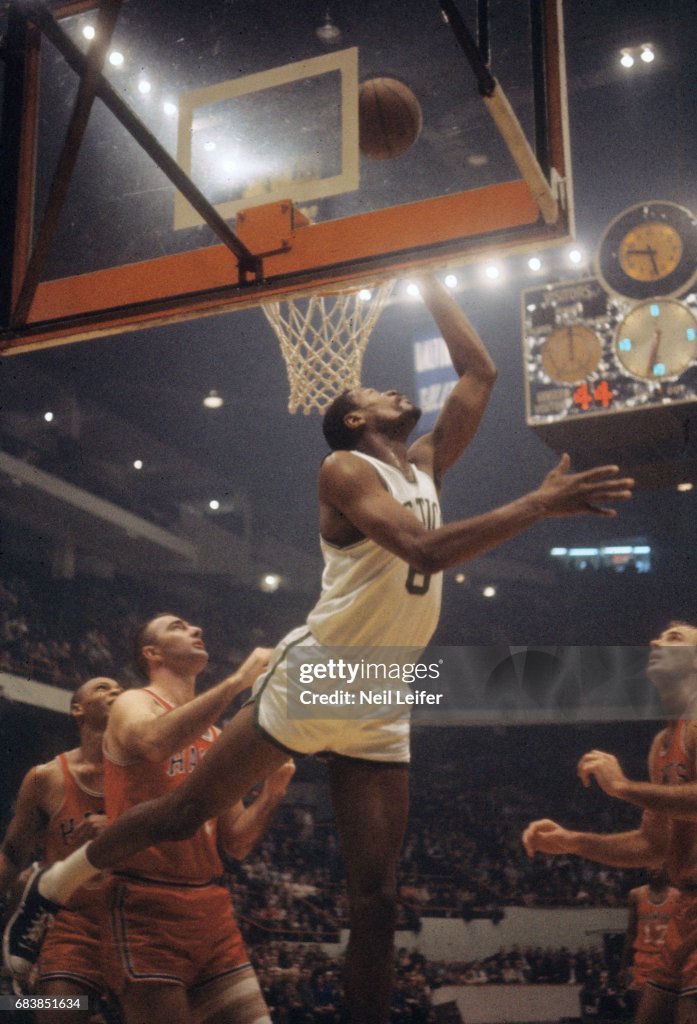
Baltimore Orioles’ third baseman Brooks Robinson is voted American League MVP, outpolling Mickey Mantle 269 to 171. Robinson received 18 of the 20 first‐place votes. Clutch hitting was the main factor in the impression Robinson made on the baseball world this year. Long recognized as an outstanding fielder, his effectiveness at bat was rated no more than “very good” during his first five major‐league seasons as he compiled a .275 career average. This time, though, he batted .317, second only to Oliva’s .324, and led the league with 118 runs batted in. He hit 28 home runs, and produced an inordinate number of game‐winning hits, especially in key games against the Yankees and White Sox.
Dow Jones Industrial Average: 891.71 (+6.32)
Born:
Seth Joyner, NFL linebacker (NFL Champions, Super Bowl 33-Broncos, 1998; Pro Bowl 1991, 1993, 1994; Philadelphia Eagles, Arizona Cardinals, Green Bay Packers, Denver Broncos), in Spring Valley, New York.
Mike Withycombe, NFL center, guard, and tackle (New York Jets, Pittsburgh Steelers, Cincinnati Bengals), in Meridian, Mississippi.
Rita Cosby, American television newsanchor and journalist; in Brooklyn, New York, New York.
Died:
Senator Harrie Wade, 59, Australia’s Health Minister and the senior member of the six Country Party members in the Australian Senate, died of a heart attack suffered while herding sheep at his farm in Horsham, Victoria.
Tommaso Besozzi, 61, Italian investigative reporter, committed suicide.

 History Diaries