The Laotian Air Force, aided by United States reconnaisance planes, has begun systematic attacks on the principai supply routes to the Communist Việt Cộng guerrillas in South Vietnam. Laotian T‐28 fighter‐bombers based at Savannakhet, in central Laos, are harassing supply convoys and bombing depots along the Hồ Chí Minh Trail. The trail is a network of roads and jungle tracks leading from North Vietnam through Laos to South Vietnam. It is understood that the air operations have made movement along the trail more difficult and hazardous, but there is no indication that they have effectively blocked it. The United States reconnaissance jets, which presumably are based in South Vietnam or aboard aircraft carriers, have kept Laos under surveillance since May, when the Pathet Lao undertook a major offensive.
Việt Cộng guerrillas stormed into a Roman Catholic church north of Saigon on Sunday and fired into a congregation of Vietnamese Self‐Defense Corpsmen, killing 9 and wounding 16, a United States spokesman reported today.
The American Red Cross allotted today $15,000 for the relief of victims of the recent disastrous floods in South Vietnam. General James F. Collins, Red Cross president, said the funds would be used for food, shelter and medical supplies, all of which would be purchased in the Far East, to save time.
The Philippine Foreign Office said today that a private group had made a “purely private offer” not authorized by the Government, to send Philippine fighters to aid South Vietnam. A Foreign Office spokesman said that the Reserve Officers Legion had offered to send up to 8,000 Filipino war veterans as volunteers to fight Việt Cộng guerrillas. The offer was carried to Saigon by a reserve officers’ mission now visiting there. Officers of the legion called in the Philippine Foreign Secretary, Mauro Mendez, before their departure and told him of their plans to make the offer, the spokesman said. Mr. Mendez told them the offer would not be sanctioned by the government, he said. The Philippine Government’s policy toward South Vietnam has been to limit assistance to nonmilitary aid.
Prince Norodom Sihanouk announced today that he had agreed to a meeting in New Delhi between delegations of Cambodia and the United States to discuss means of ending the deterioration in relations between the two countries. Reporting over the Government radio, the Chief of State said that the meeting had been proposed by the United States. He did not mention a date. The Prince said he would send Son Sann, director of Cambodia’s National Bank, as his chief representative. Mr. Sann would join Nong Kimny, Cambodian Ambassador to India, for the talks. Until early this year Mr. Kimny served as his country’s ambassador to the United States and delegate to the United Nations. American officials here declined to comment on the Prince’s broadcast. Western, but not American, sources said that the United States chargé d’affaires, Alf E. Bergesen, called at the Foreign Ministry yesterday to suggest the conference. According to these sources, Mr. Bergesen was instructed by Washington to propose such a meeting at a time when Prince Sihanouk was threatening to expel the 33 remaining personnel of the United States Embassy.
The National Assembly was called Monday to discuss clos‐ ing the embassy, but the start of the meeting was delayed and then the whole proceedings were postponed indefinitely. The Cambodian news agency quoted the Prince as having said that the “appropriate moment” had not come for the Assembly to take up the issue. Prince Sihanouk warned, however, that any further incidents along the South Vietnamese border would lead him to reopen the question of closing the embassy. He also announced that two Western correspondents who had been officially censured for their reporting of Cambodian economic and political affairs would not be asked to leave the country before their visas expired at the end of this week. Those involved were François Sully of Newsweek and this correspondent.
Nikolai V. Podgorny, a member of the Soviet Communist party’s ruling Presidium, appears to have assumed primary responsibility for party organizations and local officials, Western specialists on Soviet affairs said here today. Such authority, the specialists said, would make him the second most powerful man in the party leadership, ranking him after Leonid I. Brezhnev, the party’s First Secretary. Diplomatic observers expect Mr. Podgorny to be in charge of the implementation of sweeping reforms of the party structure decided on yesterday by the Central Committee. The reform is to take several weeks. It will culminate in December with the “election” by party conferences of handpicked men as party leaders in most of the country’s administrative regions. The reform eliminates a division of the party organization into separate committees for agriculture and industry.
This issue is believed to have been one of the principal arguments against Nikita S. Khrushchev last month when his major opponents summoned the Central Committee to depose him from the leadership. The division of the party structure was carried out at Mr. Khrushchev’s insistence two years ago in an effort to stimulate both farm and industrial output through tighter management. The division is believed to have been unpopular with many party officials. Mr. Podgorny’s new responsibilities over the party organizations and local officials were held by Frol R. Kozlov until he suffered a stroke in April, 1963. Mr. Brezhnev held this second‐ranking position from last July, when he gave up the post of Soviet chief of state, until the day he took over the chief party post from Mr. Khrushchev.
From April, 1963, to last July he is believed to have shared with Mr. Podgorny some of the responsibilities over party organizations. The new reform also calls for the restoration of party committees at the lowest administrative level, the district. The reform thus is a mammoth task involving the movement of several thousand functionaries and amounting to a fundamental shake‐up of the party organization at the lower levels. Observers here were struck by the fact that the new regime decided to proceed with the reorganization of the party so soon after the October shift of power. They interpreted this as an indication that the experiment with a dual party structure had led to even more inefficiency than had generally been assumed to exist and that a critical stage was reached shortly before Mr. Khrushchev’s removal.
After Mr. Khrushchev’s ouster newspapers and officials denounced the practice of resorting to institutional reorganizations whenever there were economic difficulties. The inefficiency of the dual structure for agriculture and industry is believed to have been the principal reason for the reform. But the new regime also obtained as a by‐product an opportunity to consolidate its power by removing local officials it considered too closely associated with Mr. Khrushchev or with his farm policies. Vasily I. Polyakov, the party secretary in charge of the Bureau of Agriculture at the national level is an example. He was dropped from the Secretariat yesterday. Mr. Polyakov had been in control of the separate party hierarchy dealing with agriculture all the way down to the lowest local level, and in this role he had been widely regarded as Mr. Khrushchev’s protege.
Customs policemen heard cries tonight from a trunk at Fiumicino Airport here and found a man inside, bound to a tiny chair. Investigators accused two men from the United Arab Republic’s Embassy of having tried to smuggle the chained captive to Cairo in an Egyptian airliner. The white diplomatic trunk, bearing labels of the Egyptian Embassy and addressed to the Foreign Ministry in Cairo, had been specially fitted out. It was lined with leather and, besides the chair, had built‐in slippers for the feet, a helmet for the head and metal clamps for ankles and neck. A spokesman at the embassy denied any knowledge of the incident. “We know nothing, we know nothing,” he said.
Police officials told of lastminute suspicions before the trunk could be loaded aboard a plane, of a wild chase after two men trying to flee from the airport, and of finding inside the trunk a nearly unconscious Moroccan‐born linguist who said he had been kidnapped from a cafe on Rome’s brightly lit Via Veneto, the city’s night life center. The man in the trunk was identified as Josef Dahan, 30 years old. He was scarcely able to speak when he was lifted from the trunk. The police quoted him as having said he had worked for a time at the Egyptian Embassy here as an interpreter and that he was approached by embassy functionaries on the Via Veneto last night. Mr. Dahan told the police that the men invited him to a cafe, bought him drinks, then slugged him, injected him with a drug and bundled him into a car. The incident aroused press speculation that the case might involve Egyptian‐Israeli interests. Rome newspapers headlined the case as a story of international intrigue.
The bishops of the Roman Catholic Church affirmed finally today their collective right to share with the Pope the government of the church. It was potentially the hierarchy’s most significant action in almost a century. By a vote of 2,099 to 46, the prelates in Ecumenical Council Vatican II declared themselves to constitute a “college,” competent, under the rule of the Pope, to exercise the “full and supreme” authority conferred by Jesus on the Twelve Apostles. In another debate, on Christian education, Cardinal Spellman of New York appealed for clarity in church schools’ claims to state aid and presented a rewording of the draft decree to avoid later “quarrels.”
A direct appeal to Congolese rebels for the safety of Dr. Paul Carlson and other Americans was made tonight by the United States Government. The appeal was issued by G. McMurtrie Godley, United States Ambassador at Leopoldville, according to Marshall Wright, a State Departmentpress officer. Presumably it was made by radio. It said that Washington was prepared to cooperate in proposed international arrangements “to protect and evacuate innocent civilians.” It said also that the United States held the insurgent leaders “directly and personally responsible” for the welfare of Dr. Carlson, a missionary under sentence of death, and for all 60 American citizens in the rebel‐held territory.
The Congo insurgents charge that Dr. Carlson is a spy and that he is a major in the United States Army. This is denied by the United States. Dr. Carlson is a medical missionary. Mr. Wright said that the United States consular staff in Stanleyville, headquarters of the insurgents, is “prisoner” of the rebels. Members have been unable to communicate with the State Department. For this reason, he said, he could not confirm that the rebel President, Christophe Gbenye, had been negotiating with United States consular personnel about Dr. Carlson. Yesterday Secretary of State Dean Rusk asked the Prime Minister of Kenya, Jomo Kenya tta, to move to save the 36year‐old Dr. Carlson. Mr. Kenyatta is chairman of an African committee to end the civil war in the Congo. Mr. Wright said that tonight’s appeal was made at 8 PM, Eastern standard time, which is 1 AM in Leopoldville.
British Labour Party enacts the weapon embargo against South Africa. The Labor Government announced today an embargo on arms shipments to South Africa because of South Africa’s policy of apartheid. The Government left open, however, the question whether it would permit South Africa to take delivery of 16 jet fighter‐bombers. This contract is “still under review,” Prime Minister Harold Wilson said in the House of Commons. He rejected the suggestion of Sir Alec Douglas‐Home, the Opposition leader, that the embargo could be interpreted as a unilateral denunciation of the 1955 agreement providing for British use of the Simonstown Naval Base at Capetown. In a speech last Saturday, Prime Minister Hendrick F. Verwoerd of South Africa said that failure to deliver the jets would mean the end of the base agreement.
The agreement, Mr. Wilson asserted, can be broken only by mutual consent. He argued that South African withdrawal from the agreement would cast doubt on the base’s value in wartime because “it would mean we could only take those actions in wartime which had the approval of the South African Government.” Sir Alec and other Conservatives questioned the Prime Minister sharply about strategic and economic implications of the embargo. “We are certainly not prepared to feel that the security of this country should be so dependent on the attitude of a government which does not see eye to eye with us on so many international questions,” Mr. Wilson said.
The New Zealand Parliament voted to approve the Constitution of the Cook Islands, to take effect on a date to be approved by the Cook Islands Legislative Council, which would then yield to a new, 24-member Parliament. The islands would become a self-governing territory “in free association with New Zealand, on August 4, 1965.
The Kōmeitō or “Clean Government Party”, was founded in Japan by Daisaku Ikeda.
President Johnson asked House leaders today to seek quick action on two bills — medical care for the aged and economic aid to Appalachia — when the new Congress convenes January 4. The decision to place these measures at the top of his “must” list was disclosed by the President as he met for nearly two hours at the White House with Speaker John W. McCormack of Massachusetts and the House majority leader, Carl Albert of Oklahoma. Mr. Albert said later that the President had asked them to confer with committee chairmen handling the two measures “to see if we couldn’t put them together for quick action” in the new Congress .
Mr. Johnson also asked the two House leaders to survey all committee chairmen to determine what other leftover legislation would be ready for action early in the new Congress. The two are to report back by early in January. No legislation carries over from one Congress to another. Thus, bills pending when the 88th Congress adjourned last month would have to be introduced again. However, some measures on which extensive hearings were conducted would be in a better position to move more rapidly than new proposals still subject to extensive Congressional study.
The conference today was the first of what will be a number of moves by the President to expedite his legislative program. Among Administration bills pending in the House when Congress adjourned were the program of $1 billion in economic aid to Appalachia and a measure to give additional funds to the Area Redevelopment Administration. The Appalachia bill had cleared the House Public Works Committee. The panel will be headed next year by Representative George H. Fallon, Democrat of Maryland.
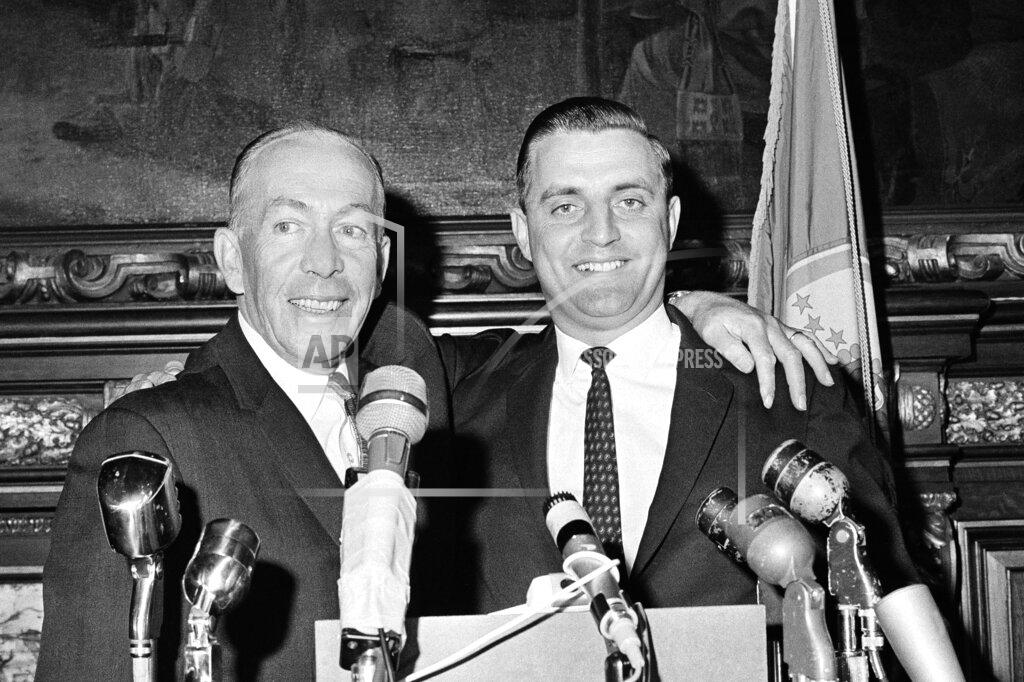
Minnesota Governor Karl F. Rolvaag named Walter F. Mondale, 36‐year-old Minnesota Attorney General, to the United States Senate today, replacing Senator Hubert H. Humphrey, the Vice President-elect. Mr. Mondale will fill the two years remaining in Senator Humphrey’s term, beginning with the Senator’s resignation next month. The Democratic Governor thus ended several weeks of speculation on whether he would name himself to the Senate or appoint one of a handful of leading Democratic contenders. Naming himself would have involved Mr. Rolvaag’s resignation as Governor and his subsequent appointment to the Senate by A. M. Keith, who would have moved up from Lieutenant Governor to the Governor’s chair.
The appointment of Mr. Mondale is certain to create some division in the state’s Democratic‐Farmer‐Labor party, especially among supporters of Representative John A. Blatnik of Minnesota’s Eighth District. Mr. Blatnik, the dean of Minnesota’s Congressional delegation, had openly sought the appointment to the Senate. Last week, he flew to the Virgin Islands, where Senator Humphrey was on vacation, in an apparent effort to enlist the support of the Senator his behalf. But Governor Rolvaag had insisted that the choice would be his, and named Mr. Mondale. Mr. Humphrey will be sworn in as Vice President January 20. Mr. Mondale’s appointment will allow him to gain a few days’ seniority over newly elected Senators who will be taking office next year, since he is expected to be sworn in shortly after Mr. Humphrey’s resignation.
The Republican Governors Association will meet December 4 and 5 in Denver to evolve plans for the party’s future and organize a drive by moderates and some conservatives to replace Dean Burch as Republican National Chairman. Gov. Robert E. Smylie of Idaho, chairman of the association, announced the meeting yesterday after consulting with his fellow Republican Governors. Mr. Smylie said in a teleohone interview from Boise that the five Republican Governors‐elect had been invited to join the 16 incumbents in Denver. Nearly all are associated with the party’s moderate wing. Mr. Burch, who was elected chairman last July on the recommendation of Senator Barry Goldwater, the nominee for President, has said he will request a vote of confidence when the National Committee meets in January.
Senator Goldwater and Representative William E. Miller, the Vice‐Presidential nominee, made it clear last weekend at Montego Bay, Jamacia, that they would join a fight to retain Mr. Burch as chief of the party’s national organization. Both predicted that the National Committee would uphold the chairman. Mr. Smylie said that the meeting of Governors would also propose creating a party advisory council and would set in motion an effort to give Governors a major role in national party affairs.
A survey among leading Republican officials in the West shows that,so far as they are concerned, Senator Barry Goldwater’s chances of maintaining control of the Republican National Comittee are extremely slight. “He has about as much chance as a snowball in hell,” said one high elected official who thought that the Senator had “failed completely” to put across the Republican conservative message. Another influential Republican said he was unable to accept Mr. Goldwater’s judgment that 26 million conservative votes existed in the United States. “He would have been in lots worse shape if Governor [George C.] Wallace [of Alabama] had stayed in the race because he would have got about 5 to 10 million racist votes that went to Goldwater,” this man said.
More than 650 white citizens of the McComb, Mississippi area have signed a statement calling for an end to racial violence and for equal treatment under the law for all citizens. The statement also condemned what it called arrests made by law‐enforcement officials for the purpose of harassing civil rights workers. Both the statement and the names of those signing it were published today as a paid advertisement in The McComb Enterprise‐Journal. A group of about 20 business and civic leaders drew up the statement after The Enterprise-Journal published a series of editorials condemning the more than 30 racial crimes in the McComb area in recent months.
Those who drafted the statement called themselves the Citizens for Progress. They were not identified. Members of the group contributed to pay for the advertisement, which covered one and one‐third pages. The group began circulating the statement last Friday. After it was published, according to Oliver Emmerich, editor of The Enterprise‐Journal, a number of residents called asking to sign it.
This city of 14,000 in southwest Mississippi — 38 percent of whom are Black — has been a center of racial violence for several years. One factor in the decision of the 20 white leaders to sponsor the statement, it was reported, was that the city has suffered economic losses because of its reputation of racial violence. Among those signing the statement were the presidents of McComb’s two banks, leading lawyers, physicians, ministers and businessmen. Mr. Emmerich said the signers represented a substantial part of the city leadership and a cross‐section of the white community.
“Acts of terrorism have been committed numerous times against citizens, both Negro and white,” the statement said. “We believe the time has come for responsible people to speak out for what is right and against what is wrong. For too long we have let the extremists on both sides bring our community close to chaos. There is only one responsible stance we can take and that is for equal treatment under the law for all citizens regardless of race, creed, positions or wealth; for keeping our protests within the framework of the law; and for obeying the laws of the land regardless of our personal feelings. Certain of these laws may be contrary to our traditions, customs or beliefs, but as Godfearing men and women and as citizens of the United States we see no other honorable course to follow.”
As a first step in re‐establishing law and order, the statement said, “all officers should make only lawful arrests.” “Harassment arrests no matter what the provocation are not consistent with impartiality of the law,” it added. This was an apparent reference to the arrest of civil rights workers for cooking meals in the McComb “freedom house” without a health permit and the arrest of others on charges of “criminal syndicalism” in connection with the civil rights movement. The statement said no one should serve as a public official who is a member of an organization declared to be subversive by federal agencies or who takes on “any obligation upon himself in conflict with his oath of office.” This was reported to be an attack on the Ku Klux Klan, which is said to have infiltrated law‐enforcement agencies in this area.
A chancery judge issued a permanent injunction today barring the Mississippi Freedom Democratic party from using the word “Democratic” in its name. Chancellor Stokes Robertson ruled that the party’s arguments that it was the true Democratic party in Mississippi had no bearing on a state law that gives exclusive rights to a name to the first party registering that name. Melvin Zarr of New York, an attorney for the Freedom Democratic party, said the decision would be appealed. “The issues are narrow,” Chancellor Robertson said. “They are whether this group or any group can come in and in direct violation of the statutes, register or attempt to register the name or part of the name of a party already registered.”
The hearing, attended by a group of civil rights leaders and Black voters, lasted less than an hour. No witnesses were permitted to testify. Assistant Attorney General Rubel Griffin rested the state’s case after it was stipulated that the regular Mississippi Democratic party had registered the name “Democratic” and “Democrat,” and that the Freedom Democratic party had applied for registration under that name. Mr. Zarr argued that the Freedom Democratic party’s members “are loyal Democrats, and against them the use of that statute in unconstitutional.” Lawrence Guyot, chairman of the Freedom Democratic party, announced in Washington yesterday that the group would seek to prevent the seating of the Mississippi Congressional delegation next January on the ground that it had been elected illegally.
The lawyer for two of the three men accused of stealing irreplaceable gems from the American Museum of Natural History said today that they would fly to New York tomorrow to surrender on an indictment charging them with grand larceny. The two, Allen Dale Kuhn and Jack Roland Murphy, appeared before United States Commissioner Edward Swan here today on a Federal charge of transporting stolen property valued at $5,000 across state lines. At the request of the government, their arraignment on the charge was continued to December 1.
Walter P. Reuther said yesterday that he was hopeful of an early settlement of strikes at four Ford plants. These have resulted in the lay‐off of 74,000 workers. The president of the United Automobile Workers Union arrived here from Frankfurt, Germany, where he had addressed the Fifth World Congress of Auto Workers Unions. Mr. Reuther said his hopes for an early settlement were based on the fact that Kenneth Bannon, director of the union’s Ford Division, had told him in Germany that he was “optimistic” about the strikes’ early end.
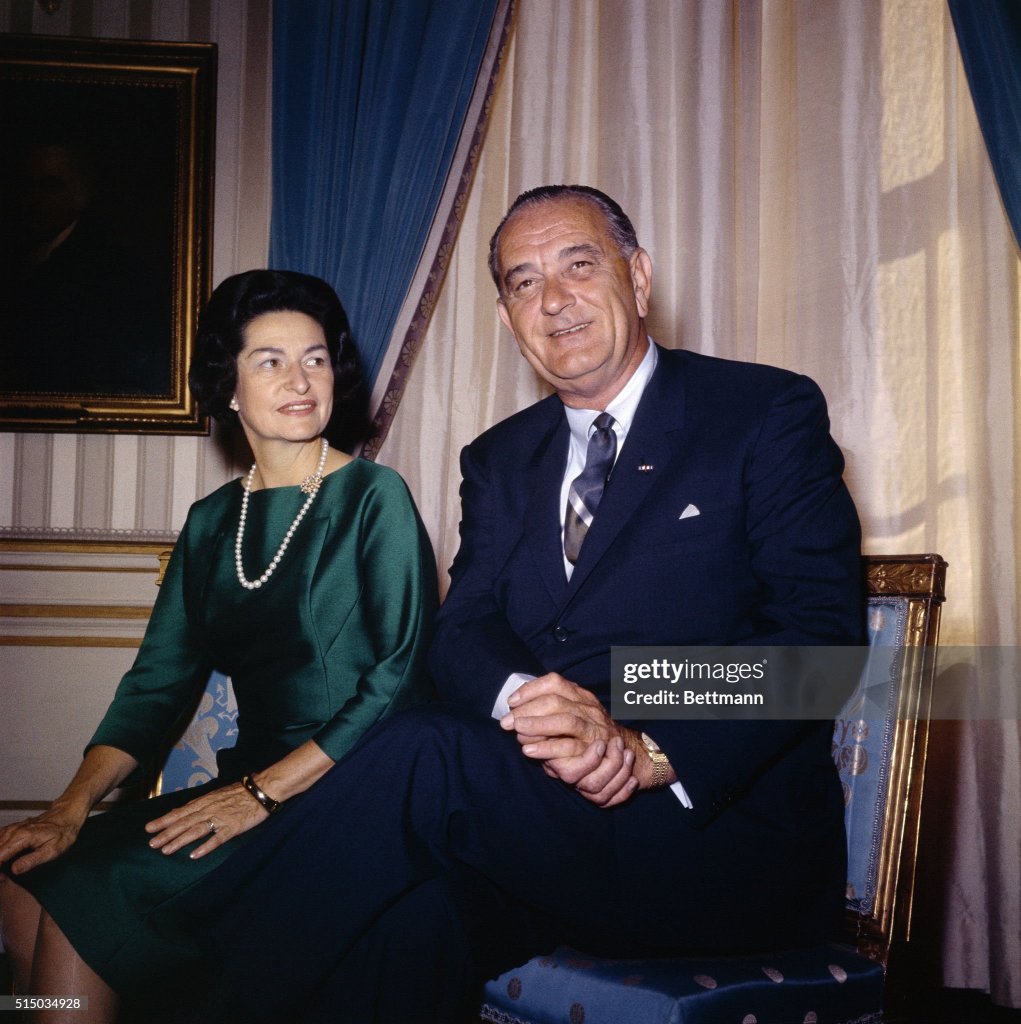
President Johnson sheepishly confessed today he couldn’t remember the hour at which he was married 30 years ago today. But, like many a wife, Mrs. Johnson could. The Johnsons posed in the Blue Room of the White House and on the terrace outside for their anniversary pictures. When the question about the wedding hour was asked of the President, he said: “Lady Bird will have to tell you that because I wasn’t — I wasn’t keeping time.” Then he turned to his wife. “In the evening, about 10 o’clock, wasn’t it ?” he said. Mrs. Johnson smiled patiently. “No,” she said, “about 7.” Today was given over to nostalgia in the White House. On Mr. Johnson’s orders, the Presidential pastry chef, Ferdinand Louvat, baked a surprise 12‐pound sponge cake for the First Lady. It was decorated with entwined wedding rings, white confectionery doves, yellow sugar roses and nine scrapbook photographs.
The Army plane that takes off vertically by whirling huge horizontal fans in its wings has successfully converted to pure jet forward flight and back, it was announced yesterday. The plane is the XV‐5A research plane. The tests were conducted at Edwards Air Force Base, California. Many observers have long believed that the XV‐5A’s unusual approach to vertical flight is one of the more promising of the many that have been tried. The design is considered particularly well suited for subsonic reconnaissance operations in limited conflicts. The success of the plane m making the difficult transition from vertical to horizontal flight has raised hopes that the Army will adopt proposals to build 10 or more improved versions for tests under simulated combat conditions. The prime contractor for the plane is the General Electric Company, which developed the so‐called “lift fan” system. The Ryan Aeronautical Company built the fuselage. The Republic Aviation Corporation is conducting flight tests.
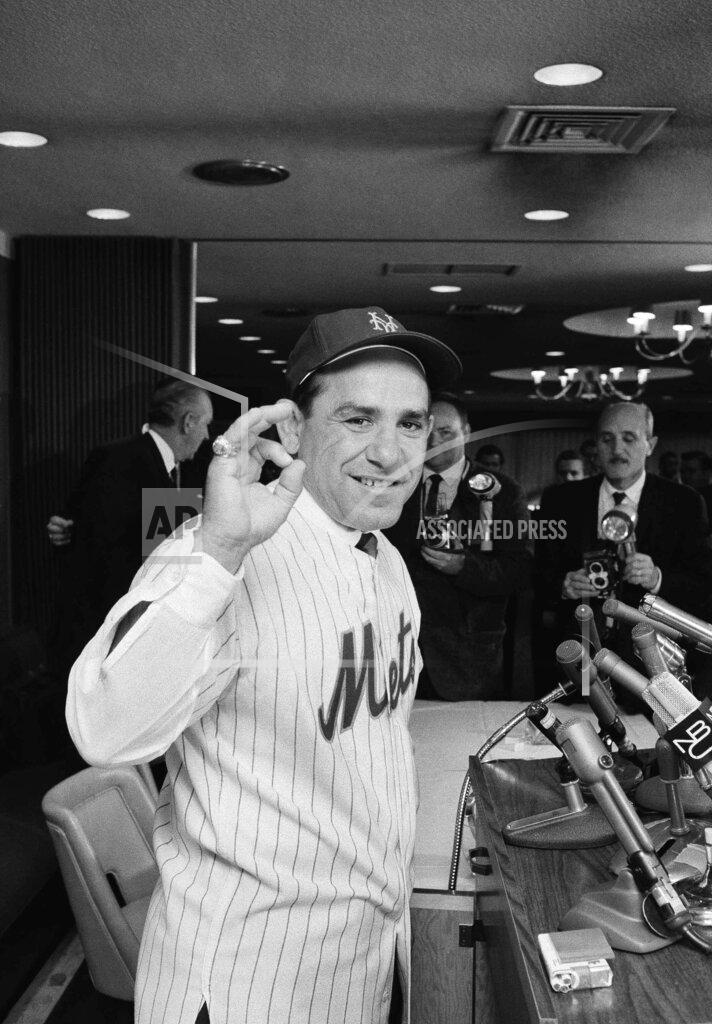
New York Yankees great Yogi Berra signs a two-year contract with the New York Mets as a player-coach, earning $35,000 per season. The recently fired Yankee manager, donning his familiar number 8, will collect two hits in his limited nine National League at-bats. Berra will work under another former Yankee legend, Casey Stengel, who is now the Mets’ manager.
Dow Jones Industrial Average: 885.39 (+5.29)
Born:
Susan Rice, U.S. Ambassador to the United Nations, 2009 to 2013, and National Security Advisor, 2013 to 2017; in Birmingham, Alabama.
Marina Cherkasova, Russian figure skater (World Championship Pairs gold medal, 1980; Olympic silver medal, 1980), in Moscow, Russian SFSR, Soviet Union.
Mitch Williams, MLB pitcher (All-Star, 1989; Texas Rangers, Chicago Cubs, Philadelphia Phillies, Houston Astros, California Angels, Kansas City Royals), in Santa Ana, California.
Byron Ingram, NFL guard (Kansas City Chiefs), in Lexington, Kentucky.
Archie Harris, NFL tackle (Denver Broncos), in Richmond, Virginia.
Ralph Garman, American actor (“The Joe Schmo Show”), and radio personality, in Philadelphia, Pennsylvania.
Marina Carr, Irish playwright, in Dublin, Ireland.
 History Diaries