A meeting is held with Adolf Hitler in Berlin, at which Prague Gestapo chief Karl Hermann Frank and Konstantin von Neurath are also present. When Hitler learns about the riots at Opletal’s funeral, he is furious with him and makes his anger emphatically visible during the meeting. “March 15th was my big mistake. I regret that we did not deal with the Czechs as we did with the Poles. The events of October 28 and November 15 show that the Czechs do not deserve a different fate. I am ordering the suspension of Czech universities for three years. Any demonstrations should be suppressed immediately”
“I will not be shy to put cannons in the streets, for example. Machine guns will be fired into each cluster. If there is any more demonstration, I will raze Prague to the ground!” raged the Reich leader.
The uprising in Prague is quelled. German authorities declare martial law in Prague. There are reports of many arrests, shootings and deportations. Hitler says to end the protests or shoot the protesters and burn the city to the ground.
An offer of mediation made by Rumanian King Carol is rejected by both sides.
Germany proclaims that the end of Britain as a world power is their war goal.
Belgium is the object of a sharp attack by the Voelkischer Beobachter, official Nazi party organ. Tomorrow morning the paper will publish a strong hint that Belgian harbors are being used to transship cargoes from neutral countries to Great Britain.
Sir John Simon, Chancellor of the Exchequer, in reviewing the quietest two weeks of this hibernating war, told the House of Commons today that the Allied position was stronger now than at the first of the month, mainly because of the passage of the United States Neutrality Bill.
The cost of living in Britain is reported to have risen 2.5 percent in October.
The French intensify civilian discipline. Workers are forbidden to change jobs.
The French report that they have seized 203,297 tons of contraband through 10 November 1939.
General Wladislas Sikorski, Premier of the Polish Government, envisioned a free Poland existing “only in a united, consolidated Europe” in a speech today at a luncheon of the London Foreign Press Association.
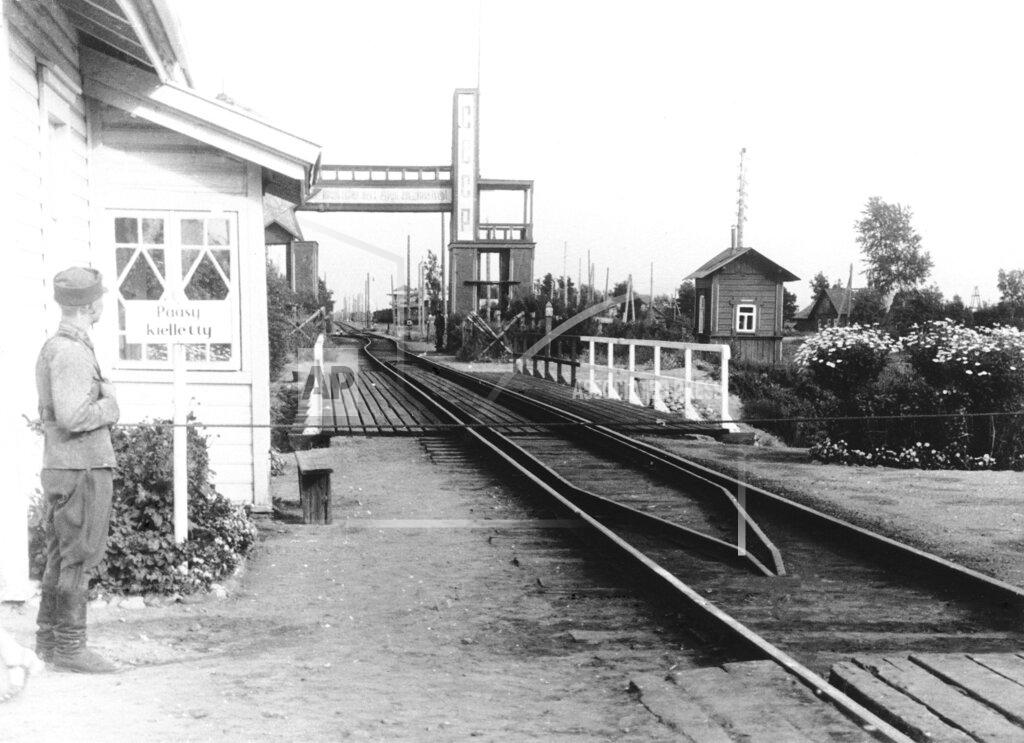
Russia, seeking to protect its naval bases at Leningrad and Murmansk, from possible attack by Germany is demanding the cession of strategic Finnish territory and the lease of Finnish ports in exchange for land in the desolate swamps and forests of Karelia. The Soviet People’s Commissar of Defense, Kliment Vorosilov has already ordered the Red Army to move into attacking positions along the Finnish border. The Finns, fearful that this would merely be the prelude to a Soviet take-over of their country, are refusing. They are preparing to go to war with their giant neighbor. The Soviets berate Helsinki leaders. Radio reports charge the Finn ruling class with “inciting hatred for Soviets and exploiting the masses.”
Russia is warned in this morning’s Gazzetta del Popolo of Turin that Italy will not stand for an invasion of the Balkans. The Tribuna of Rome and the Ferrara Corriere Padano also attacked Russia today.
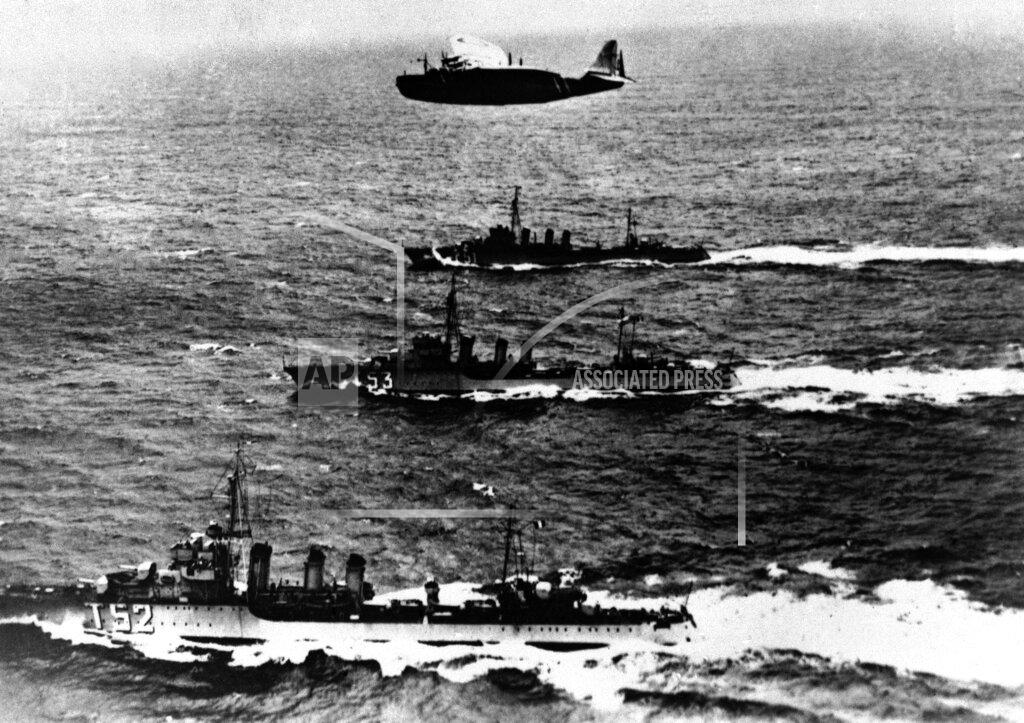
A pack of Allied warships is searching for the Admiral Graf Spee in the South Atlantic, but it has disappeared into the Indian Ocean for the time being.
While sailing south from Madagascar, the Admiral Graf Spee stops the Dutch vessel SS Mapia. Captain Langsdorff allows it to proceed unmolested due to its neutral status. He knows that the Mapia will report his position, but Langsdorff has decided to return to the South Atlantic anyway due to a lack of targets. He figures that the information the ship gives to the authorities about his position will be misleading.
A straggler from Convoy SL.7A, the British steam merchant Arlington Court was torpedoed and sunk by the U-43, commanded by Kapitänleutnant Wilhelm Ambrosius, in the eastern Atlantic Ocean, 230 nautical miles (430 km) southwest of Start Point, Cornwall (48°14′N 11°42′W). At 14.07 hours the Arlington Court (Master Charles Hurst), a straggler from convoy SL.7A, was hit by a G7a torpedo from U-43. At 14.55 hours, the ship was hit in the foreship by a coup de grâce and sank in 30 minutes. Six crew members were lost and the chief engineer died from exposure in one of the lifeboats. The master and 21 crew members were picked up by the Dutch steam merchant Algenib and landed at Queenstown (Cork). Six crew members in a lifeboat were picked up after six days by Spinanger and landed at Dover. The 4,915-ton Arlington Court was carrying maize and was bound for Hull, England.
The neutral Dutch motor tanker Sliedrecht was stopped and after the crew abandoned ship was torpedoed and sunk by the U-28, commanded by Kapitänleutnant Günter Kuhnke, about 200 miles south of Rockall in the eastern Atlantic Ocean. In the late evening on 16 November 1939 U-28 stopped the unescorted and neutral Sliedrecht about 120 miles southeast of Rockall and examined the documents of the ship. They showed that the tanker was ordered by the British authorities in Gibraltar to proceed to Kirkwall for a closer inspection of the cargo. Kuhnke therefore ordered the crew to abandon ship and sank her with a torpedo at 00.20 hours on 17 November. Of the ship’s complement, 26 died and 5 survived. Five crew members in one lifeboat were picked up by the British trawler Meresia and landed at Castlebay, Isle of Barra on 23 November. The other lifeboat with 26 occupants was never seen again. The 5,133-ton Sliedrecht was carrying benzene, kerosene and gas oil and was bound for Svolvær, Norway.
The Royal Navy motor torpedo boat HMS MTB 6 was rammed and sunk by HMS Dainty.
In Egypt, Major General Michael O’Mare Creagh replaced Major General P. C. S. “Hobo” Hobart as GOC of the Mobile Division (Later 7th Armoured).
U.S. freighter Lafcomo is detained by British authorities at Weymouth, England.
U.S. freighter West Harshaw is detained by the British at Ramsgate.
Convoy OA.36G departs from Southend, and Convoy OB.36 departs from Liverpool.
The War at Sea, Thursday, 16 November 1939 (naval-history.net)
Sloop FLAMINGO, escorting convoy FN.37, was damaged in a collision with steamer LOWLAND (974grt) in 54 38N, 0 46W. She arrived at Leith on the 17th and was docked for repair, completed on 10 December.
Destroyer FORESTER completed her refit in the Clyde.
On Northern Patrol were three cruisers between the Orkneys and the Faroes, two cruisers and two AMCs between the Faroes and Iceland, and one cruiser and three AMCs in the Denmark Strait.
Light cruiser CALYPSO captured a merchant ship (SISALMANN ?) and was en route with her to Loch Ewe. She requested a trawler to meet her in West Ray Firth to take over the escort. Armed boarding vessel KINGSTON JACINTH was delayed by weather, but did so, and both ships arrived at Loch Ewe at 1700/17th.
Light cruiser CARDIFF departed Sullom Voe and arrived at Loch Ewe on the 20th to repair weather damage.
Anti-aircraft cruiser CURLEW departed Grimsby on patrol duties and arrived back later the same day.
Destroyer KASHMIR at Scapa Flow was ordered to join Forbes at sea, but had mechanical defects and was unable to sail.
Destroyers KEITH and GIPSY were ordered to rendezvous with destroyer GRIFFIN off Kentish Knock Light Vessel.
Minelaying operation FE was completed on the 15th/16th and 16th/17th between the English end of the Folkestone-Cape Griz Nez field and the shore off Dover by auxiliary minelayer HAMPTON escorted by two destroyers. Survey ship FRANKLIN laid the navigational buoys.
Convoy OA.36G of 19 ships departed Southend on the 16th escorted by destroyers WAKEFUL and WHITEHALL on the 16th and 17th, and destroyers WOLVERINE and VERITY on the 18th and 19th.
Convoy OB.36G departed Liverpool on the 17th, escorted by destroyers WALKER and VANOC, which remained with the convoy until the 19th. Anti-submarine trawler NORTHERN SPRAY (655grt) was with the convoy on the 17th only. The Bristol section of OB.36G was escorted by destroyer MONTROSE which remained until the 20th.
Accompanying OA.36G were anti-submarine trawlers ARCTIC RANGER (493grt), KINGSTON CORNELIAN (449grt), LORD HOTHAM (464grt) and LEYLAND (452grt) on passage to Gibraltar for local anti-submarine duties, which were with the convoy from the 17th to 24th. OA.36G rendezvoused with OB.36G on the 19th and became convoy OG.7 with 43 ships. It was then escorted by French destroyers CHACAL and MISTRAL from the 19th and destroyer KEPPEL from the 20th. The convoy reached Gibraltar on the 24th.
U-43 sank steamer ARLINGTON COURT (4915grt) from convoy SL.7A, 320 miles 248° from Start Point in 48-14N, 11-42W. Five crew were lost, but Dutch steamer ALGENIB (5483grt) rescued 22 survivors from a lifeboat, and on the 22nd, Norwegian tanker SPINANGER (7429grt) picked up another seven.
U-28 sank Dutch tanker SLIEDRECHT (5133grt) 200 miles south of Rockall Bank; twenty-six crewmen were missing but trawler MERISIA (291grt) rescued five survivors during the night of the 23rd/24th.
Italian steamer VELOCE (5464grt) ran aground near Dungeness Light.
When steamer HOPESTAR (5257grt) was attacked by a submarine in 48 47N, 8 28W, destroyers BROKE and ECLIPSE searched in the area.
Destroyer WATCHMAN boarded Italian liner VULCANIA (24,469grt) outside Portuguese territorial waters.
French destroyers TIGRE and PANTHÈRE arrived at Gibraltar for convoy escort duty.
Convoy SL.9 departed Freetown escorted by armed merchant cruiser SALOPIAN. Disabled destroyer HAVOCK travelled with them and detached to Gibraltar on the 25th, arriving on the 27th. At 0800/2 December, destroyers MACKAY, VIMY, ACASTA, and ARDENT met the convoy in Home Waters, which arrived later that day.
French submarine SIDI FERRUCH arrived at Port of Spain after patrol.
Pierce Butler, 73-year-old Associate Justice of the Supreme Court, died today. In 1922 Butler was appointed to the U.S. Supreme Court by President Warren G. Harding on the recommendation of Chief Justice Taft and over the objections of liberal Senators George W. Norris and Robert M. La Follette.
Butler was a strict constitutional constructionist, voting with the conservative bloc of justices Willis Van Devanter, James C. McReynolds, and George Sutherland on many issues. He opposed government control of business, consistently voted against the imposition of state and federal taxes, and joined with the court’s majority in voting down two important New Deal programs, the Agricultural Adjustment Administration and the National Recovery Administration.
With the death of Associate Justice Pierce Butler early today, only one stalwart conservative was left on the Supreme Court bench and President Roosevelt has an opportunity to nominate a fifth Associate Justice — a record exceeded only by President Washington, and equaled only by Presidents Jackson, Lincoln and Taft.
By this appointment the President can assure a Court majority composed of men sympathetic to his ideas on social and economic progress, a goal at which he aimed in his bill to enlarge the Court. That proposal was beaten after one of the sharpest conflicts in our history, but since that time deaths and resignations have brought about the situation which Mr. Roosevelt sought to reach through a legislative measure.
Talk of a successor to Justice Butler began immediately in Washington today. The name of Attorney General Frank Murphy came frequently to the fore, inasmuch as he is a Catholic like Mr. Butler and also is from the Middle West. A liberal and a vigorous supporter of President Roosevelt, Mr. Murphy was regarded as a likely choice, but many other names were mentioned. These other possibilities included:
- Robert H. Jackson, Solicitor General.
- Judge Harold M. Stephens of the District of Columbia Court of Appeals.
- Thurman Arnold, assistant attorney general in charge of antitrust prosecutions.
- Senator Lewis B. Schwellenbach of Washington State.
- Lloyd K. Garrison, dean of the University of Wisconsin Law School.
- John P. Devaney, former Chief Justice of the Minnesota Supreme Court.
- Circuit Judge William Denman of San Francisco.
- Circuit Judge Sam G. Bratton of New Mexico.
- Circuit Judge Joseph C. Hutcheson Jr. of Houston.
- James M. Landis, dean of the Harvard Law School.
Although Mr. Jackson was favored by many, it was thought that his New York State residence would count against him. The consensus seemed to be that he would become Attorney General, should Mr. Murphy be elevated to the Court. White House and Department of Justice officials were reticent, or uninformed, concerning a new justice, but a strong theory persisted that such a man would be a Catholic, a liberal, and probably from the West or Southwest, sections which have been demanding court membership ever since the retirement of Justices Van Devanter and Sutherland. Justice Butler was the only Catholic on the Court.
A sharp repudiation from the Treasury of the tax-raising program of Marriner S. Eccles, chairman of the Federal Reserve Board, fanned into flame again today the smoldering feud between the agencies. John W. Hanes, Acting Secretary of the Treasury, told reporters that Mr. Eccles did not speak for the Administration, Congress or the Treasury when it came to taxes. It was the first break between the agencies since the Treasury was reported to have protested Federal Reserve bond market operations in September. Mr. Eccles has been an advocate of deficit spending as a means of overcoming depression. Secretary Morgenthau has quietly opposed spending except for relief.
President Roosevelt left tonight for Hyde Park, where on Sunday he will lay the cornerstone of the new Franklin D. Roosevelt Library, which is being erected on his mother’s estate. During the day the President conferred with Paul V. McNutt, Federal Security Administrator, on a proposal for broadening the social security program. The Administrator said on leaving the White House that it would be unwise to attempt now to predict what if any recommendations for legislation would be made when Congress convenes in January.
Mr. Roosevelt’s own proposal that the unemployment insurance benefits of the program be extended to seamen was the only point on which Mr. McNutt would commit himself. He agreed thoroughly with the President’s suggestion, he said, particularly because United. States seamen had been hard hit by Neutrality Act provisions restricting shipping operations in the European combat zones. “We reviewed the various activities of the Federal Security Agency,” Mr. McNutt explained. “Much of this material was old but some was new.”
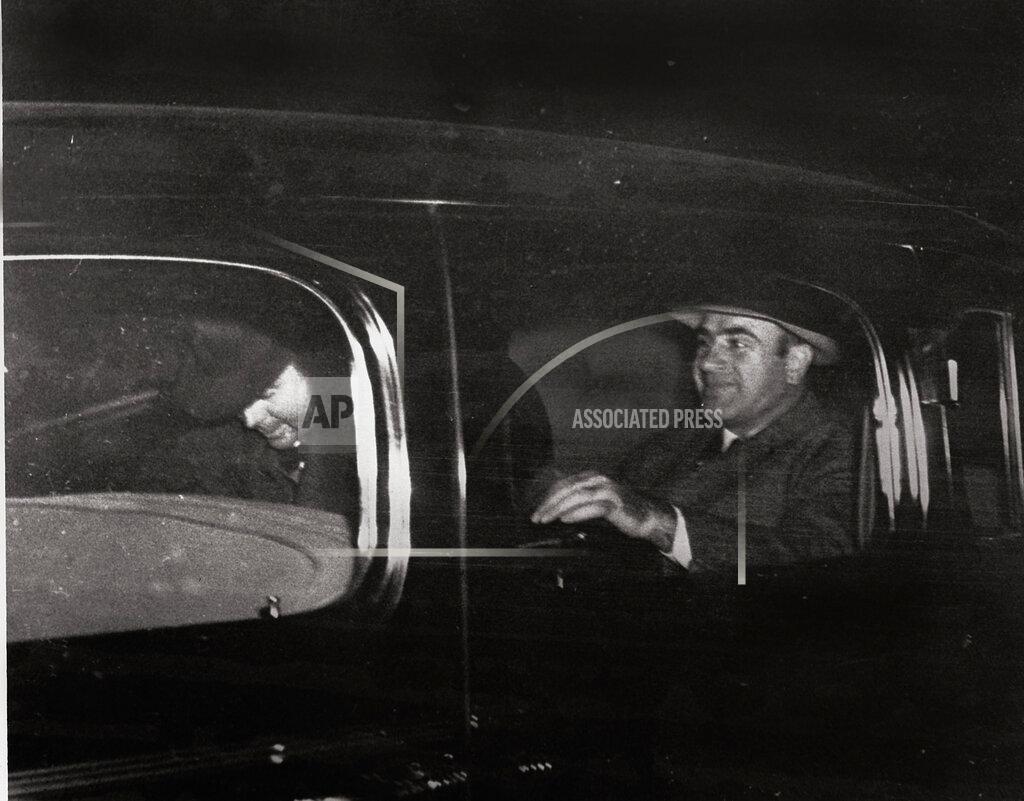
Al Capone is free from prison. Al Capone was released from federal custody after serving seven-and-a-half years of his eleven-year sentence for tax evasion. Capone was suffering heavily from paresis and upon release he immediately went to a Baltimore hospital for treatment. The former gangster will have three weeks of hospital treatment, then leave for Miami under police surveillance.
A plea for harmony in Democratic party ranks to assure success in the 1940 Presidential election was made tonight by Senator Burton K. Wheeler of Montana.
In a surprise move, counsel for Fritz Kuhn prepared last night to call District Attorney Thomas E. Dewey to the witness stand as part of the “bundesführer’s” defense against charges that he stole from the funds of the German-American Bund.
An Indiana jury tonight found four General Motors companies guilty and seventeen individuals not guilty in a criminal action brought by the Federal Government under the Sherman Anti-trust Act.
Wendell L. Willkie, public utilities executive, declared last night that if the government lifted the curb on free capital, the country’s greatest problem — what to do with the 10,000,000 unemployed — would be solved.
Massachusetts boasts a large cranberry crop this year. It is estimated that the country will produce 668,000 barrels.
The Archbishop of Quebec praises the relationship between Canada and the United States, calling it a model for other countries.
Hong Kong reported today that the new Japanese expeditionary force that landed Wednesday near Pakhoi, close to the borders of French Indo-China, had occupied the South China port after heavy fighting in the suburbs. Having taken the last Chinese-held port, the Japanese 21st Infantry Division and Taiwan Brigade now are advancing north toward Nanning. This is known as the Battle of South Kwangsi.
The Chinese noted with interest today the prompt establishment of a Japanese airfield near Pakhoi. It is believed that if the Japanese do not launch a land drive inland to cut Kwangsi Province’s main communication lines with Indo-China, they will utilize the air base near Pakhoi to facilitate aerial attacks against traffic along the roads and rivers of Kwangsi. Day and night strafing and bombing of highways is expected and plans are being discussed in Chungking today for equipping trucks leading motor convoys with radio sets, by means of which caravans would be kept constantly informed of the whereabouts of enemy planes. The Chinese are determined to keep traffic moving despite the new threat.
Recent intense daytime Japanese aerial attacks on transport lanes. in Kwangsi have already forced Chinese truckers to operate only at night. Nevertheless, with new standards of efficiency recently introduced, nearly a thousand trucks, in constant operation, have been moving a large tonnage. Losses from Japanese bombing and strafing in recent weeks have not been considerable, although in September the Japanese destroyed 200 trucks and a number of important depots for imports and exports.
The loss of the port of Pakhoi Itself is of minor importance to China, for with all roads from the city destroyed little cargo had been entering China through that port recently. Severance by the Japanese of the present main Kwangsi highway through Nanning would not halt traffic to and from Indo-China. A new road 100 miles westward has just been finished, but a short section of connecting road within Indo-China is still incomplete.
The Institute of the Pacific in the November number of its organ, The Pacific, will publish an article by Admiral Ryozo Nakamura, retired, in which he analyzes the European war situation and concludes that Germany cannot win.
Dow Jones Industrial Average: 151.15 (+1.62)
Born:
Michael Billington, author and theatre critic, in Leamington Spa, England, United Kingdom.
Henrik Otto Donner, Finnish trumpeter, and avant garde and film score composer, in Tampere, Finland (d. 2013).
Died:
Pierce Butler, 73, Associate Justice of the Supreme Court of the United States.
Naval Construction:
The Kriegsmarine (German Navy) Type IXB U-boat U-105 is laid down by AG Weser, Bremen (werk 968).
The Kriegsmarine (German Navy) Type IID U-boats U-137, U-138, and U-140 are laid down by Deutsche Werke AG, Kiel (werk 266, 267, and 269).
The Royal Navy M 1-class minelayer HMS M 3 (M 53) is launched by George Philip & Sons Ltd. (Dartmouth, U.K.).
The Kriegsmarine (German Navy) Type IIC U-boat U-62 is launched by Deutsche Werke AG, Kiel (werk 261).
The Royal Canadian Navy patrol vessel HMCS Fleur de Lis (Z 31; later J 16) is commissioned.
 History Diaries