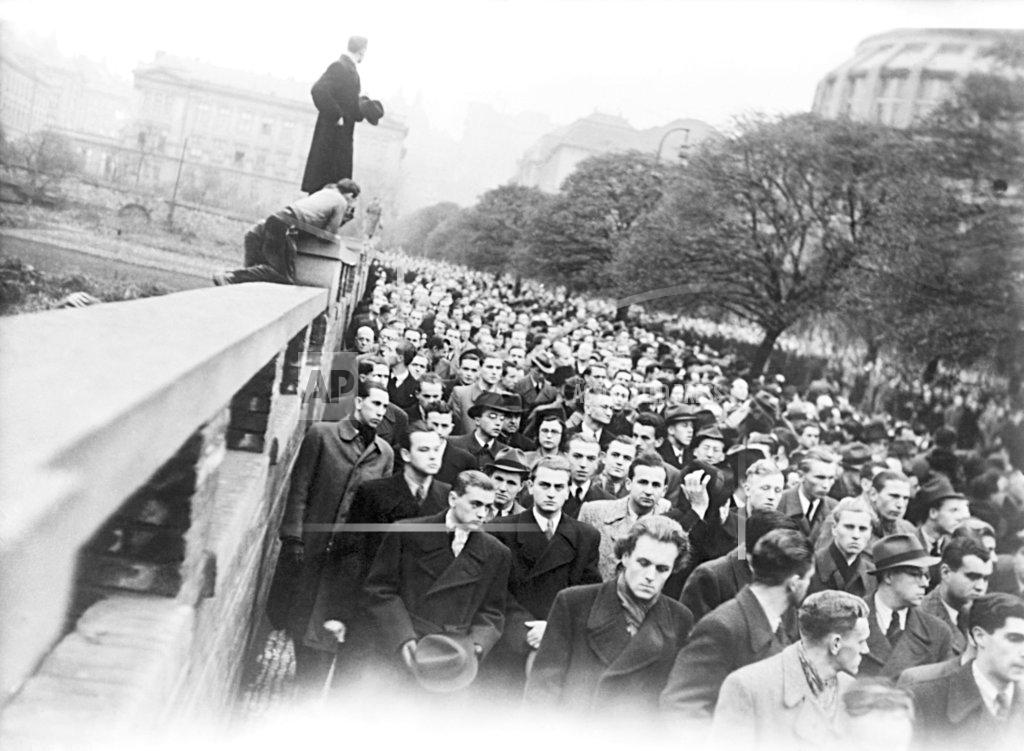
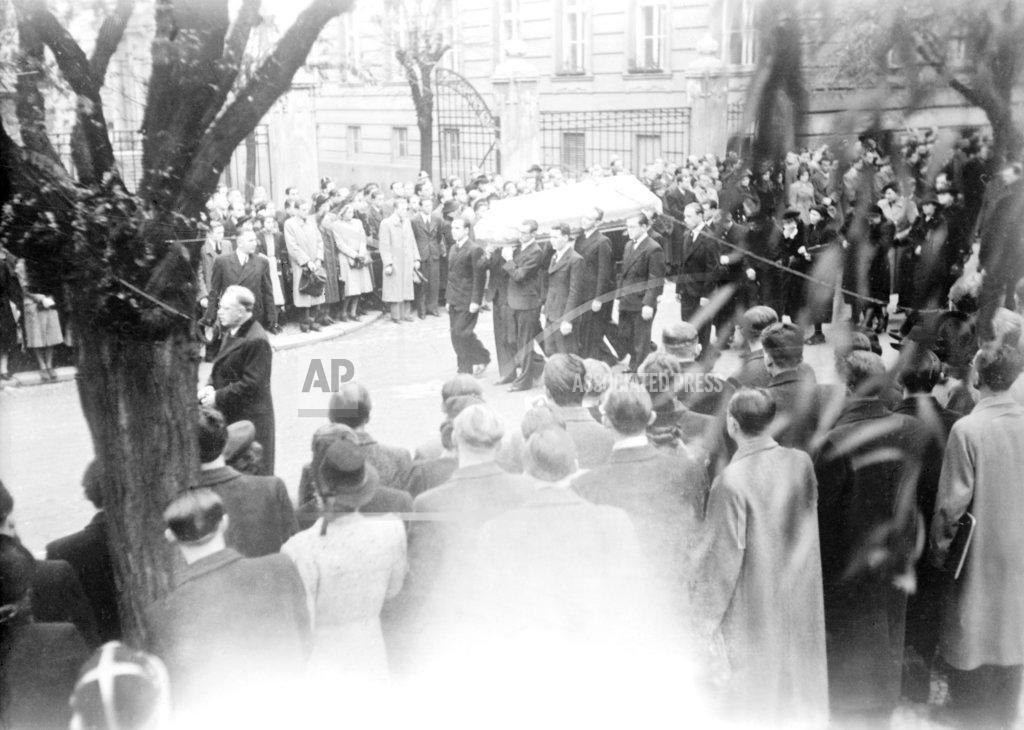
A funeral held in Prague for Jan Opletal turned into another spontaneous anti-Nazi demonstration. He was laid out and driven through Prague. More than 3,000 students were present at the memorial event at the Institute of Pathology and the adjacent chapel. Hundreds of students followed his coffin afterwards, and more and more local people joined the march. His coffin was taken to the station for transport to his native village in Moravia, where the crowd, now thousands strong, intonated the Czech hymn Kde domov můj. The funeral procession continued to Charles Square, where it came into confrontation with Czech police. The students withdrew into the building of the Technical University. They were allowed to leave only in small groups under supervision, but they later joined again to form a procession with several thousand participants, which tried to break through to the city center. It turned into another anti-Nazi demonstration after the silent march of 28 October. As a result, the Reichsprotektor Konstantin von Neurath, the Nazi-representative heading the Protectorate of Bohemia and Moravia, started the so-called Sonderaktion Prag on 17 November 1939. He closed all Czech universities and colleges, had 1,850 students arrested and ordered the execution of nine student leaders, including František Skorkovský. Over 1,200 Czech students were interned in the Sachsenhausen concentration camp. Opletal’s remains were transferred to his native village of Náklo in the Olomouc Region.
Martial law is declared in Prague after alleged shootings by anti-Fascists.
Joachim von Ribbentrop informed the Belgian and Dutch envoys that Germany was turning down their joint mediation offer based on the responses already made from Britain and France. German Foreign Minister Joachim von Ribbentrop formally rejected the offer of Belgium-Dutch mediation made by King Leopold and Queen Wilhelmina. von Ribbentrop announced that as a result of the “blunt rejection” of the German peace appeal by Britain and France, the German peace was now withdrawn.
Johann Georg Elser signs a full confession of his planting of the 8 November 1939 bomb at the Bürgerbräukeller. He does this after days of beatings and other forms of “interrogation.” The confession does not survive the war, though related documents do.
Anticipating Adolf Hitler’s wishes, Erich Raeder asked his staff officers to evaluate the possibility of an invasion of Britain.
Jews living in Reichsgau Wartheland (former Polish territory, annexed into Germany) began to be deported into the General Government region of former Poland.
Three hours are added to the working week in France, making it 43 hours long.
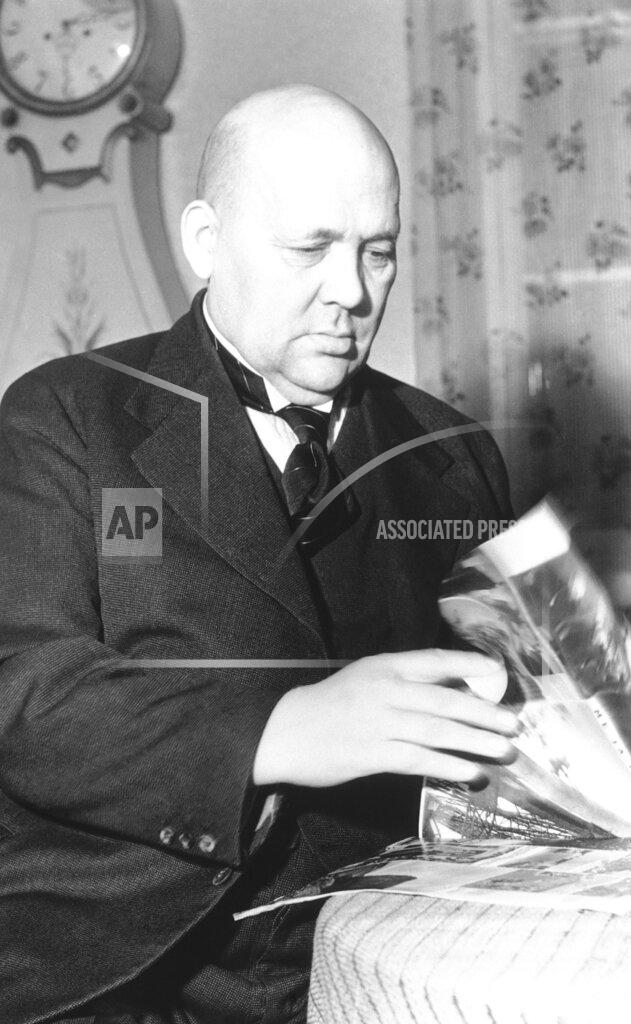
Dr. Paasikivi is back in Helsinki and blames the Soviets for the failure of negotiations. The Soviet media engages in a strong denunciation of Finland. The anticipated animosity toward Finland was displayed in overgenerous measure tonight by the Soviet radio, which let itself go against the Finns for their failure to sign on the dotted line. Stalin orders a huge buildup along the Finnish border.
The formal incorporation of eastern portions of Poland into Ukrainian SSR is completed.
A long article by the well-known Old Bolshevik, Emil Yaroslavsky, head of the Soviet atheist organization — published in the journal Bolshevik — declares that despite ‘treachery” of Social-Democrats the present “imperialist war” is going to mark a great advance toward world triumph of communism.
The tremendous superiority of the Allies’ seapower over Germany, even in submarines, and the great impetus given naval shipbuilding throughout the world by the troubled European situation, even before the war broke out, is graphically illustrated in the new edition of “Jane’s Fighting Ships.”
German armored ship Admiral Graf Spee stops and sinks British tanker Africa Shell 160 miles northeast of Lourenco Marques, 24°45’S, 35°00’E; Japanese freighter Tihuku Maru happens upon the scene of the action but is unmolested.
The German heavy cruiser Deutschland was renamed Lützow, both to confuse enemy intelligence and to avoid the potential damage to national pride that would occur if a ship bearing the name of the country were to be sunk in action.
Convoy HX.6: The French cargo ship Alaska, damaged the day before in collision with Dotterel in the English Channel off the Owers Lightship (50°30′17″N 0°30′35″W), sank with the loss of all hands.
The British cargo ship Woodtown struck a mine and sank in the North Sea north of Margate, Kent. Eight lives were lost.
The Greek cargo ship Georgios struck the wreck of the Canada in the North Sea 2 nautical miles (3.7 km) off Holmpton, Yorkshire (53°40′N 0°17′E) and sank. All 23 crew were rescued by the Grimsby lifeboat.
The Lithuanian cargo ship Nida struck a mine in the Baltic Sea off Tallinn and sank.
The Lithuanian cargo ship Panevezys struck a mine in Baltic Sea 2 nautical miles (3.7 km) south of the Revelstein Reef and sank.
The Soviet cargo ship Baikal struck a rock and sank in the Arctic Sea off Spitsbergen, Norway.
The War at Sea, Wednesday, 15 November 1939 (naval-history.net)
Convoy HN.2 of eight British and one Finnish steamer departed Bergen and was joined by destroyers ICARUS, IMOGEN and IMPULSIVE. The convoy was covered by battleships NELSON and RODNEY and accompanying forces which departed Rosyth on the 12th. ICARUS was relieved by destroyer IMPERIAL and then proceeded to Rosyth for boiler cleaning.
Destroyers ASHANTI and PUNJABI getting underway to join the battleships collided at Rosyth on the 15th, but the damage was not serious, and they and sister ship SOMALI, which departed Rosyth with them, joined the battleships at sea as planned. Destroyer MASHONA departed Loch Ewe on the 16th and joined the Home Fleet in 62-15N, 00-04W and TARTAR, completing the escort of steamer MARYLYN to Stromness, joined them at the same location as sister ship MASHONA.
Destroyers ISIS and KANDAHAR were assigned to escort the three steamers of the west coast section of HN.2 when it arrived off the Shetlands. KANDAHAR had departed on the 15th to join the Home Fleet at sea, but was recalled for this escort duty. Destroyer WALLACE was assigned to escort the Tyne section of HN.2 but because of fog, had to anchor off the Tyne for an hour.
A submarine contact on the 17th did not hamper the convoy’s progress and HN.2 arrived safely on the 18th with IMOGEN, IMPERIAL and IMPULSIVE. The battle force arrived at Loch Ewe on the 17th, departed on the 19th and arrived in the Clyde on the 21st.
On Northern Patrol, three cruisers were between the Orkneys and the Faroes, two cruisers and one AMC between the Faroes and Iceland, and one cruiser and three AMCs in the Denmark Strait.
The deep minefield in the Clyde was begun and completed on the 18th in Operation CP.
Destroyer FURY completed her repairs in the Clyde, but was retained in the Clyde to escort base ship MASHOBRA.
Destroyer INGLEFIELD completed her repairs at Liverpool and departed for Scapa Flow.
Sloop PELICAN and submarine TRIAD departed Rosyth to exercise outside May Island with RAF personnel. Both ships arrived back at Rosyth later that day.
Polish destroyer ORP GROM rendezvoused off North Goodwin Light with destroyers EXPRESS and ESK, which had sailed from Harwich.
Destroyers BROKE and ECLIPSE were submarine hunting in 53‑50N, 5‑25W.
Convoy FN.37 departed Southend for Methil, escorted by sloops GRIMSBY, FLAMINGO, WESTON. Anti-aircraft cruiser CALCUTTA, destroyers JUNO and JUPITER departed Grimsby in support.
Convoy FS.37 departed Methil escorted by escort ships VIVIEN, VALOROUS and sloop BITTERN. Minesweeper TEDWORTH sailed with the convoy for the passage south. VALOROUS developed condenser problems, was replaced by destroyer JAGUAR, and began repairs in the Tyne, which were completed on the 16th.
Convoy BC.15 of ten steamers, including BARON CARNEGIE, BLACKHEATH, DEVON COAST and NIGERIAN (Commodore) departed Bristol Channel, escorted by destroyers VIVACIOUS, VESPER and VANESSA, and safely arrived in the Loire on the 17th.
U-20 was attacked nine miles 90° from Tongue Light Vessel by British aircraft which called up destroyers KEITH and GRIFFIN. Destroyer GREYHOUND later joined in the search, but U-20 escaped serious damage and was able to lay mines off Newarp Light Vessel on the 22nd.
French destroyer SIROCCO attacked a contact in 25‑50N, 7‑20W after a submarine was reported by an aircraft. Destroyers VELOX and VIDETTE, after leaving convoy HG.7, also searched the area.
Australian light cruiser HMAS HOBART departed Colombo and arrived at Bombay on the 18th.
Heavy cruiser SUSSEX arrived at Durban.
German pocket battleship DEUTSCHLAND arrived in German waters and was renamed LÜTZOW to prevent the possibility of a ship bearing the name of the Fatherland being sunk. She anchored at Gdynia on the 17th.
German pocket battleship ADMIRAL GRAF SPEE sank steamer AFRICA SHELL (706grt) 10½ miles SW by S of Cape Zavora Light in Mozambique Channel in 24-40-42S, 35-12E. Submarine OLYMPUS on patrol in the Indian Ocean set off in pursuit, but failed to make contact.
Admiral Wells of Force K transferred his flag to battlecruiser RENOWN, and aircraft carrier ARK ROYAL departed Freetown for England to refit and receive new aircraft. When news of the sinking of AFRICA SHELL reached the Admiralty on the 17th, ARK ROYAL was ordered back to Freetown.
Light cruiser LIVERPOOL departed Colombo on the 15th and arrived at Singapore on the 19th for patrol duties on the China Station. She proceeded to Saigon and arrived at Hong Kong on 10 December.
Canadian destroyers HMCS OTTAWA and HMCS RESTIGOUCHE departed Esquimalt, Canada, for Halifax on the east coast after being relieved in the Pacific by British light cruiser CARADOC. They refueled on the 25th off the Isla del Coco off the Costa Rican coast from Australian light cruiser HMAS PERTH, which had entered the Pacific through the Panama Canal, refueled again at Kingston and reached Halifax on 7 December.
These movements were to allow Canadian destroyers HMCS FRASER and HMCS OTTAWA to join the America and West Indies Station, and Canadian destroyer HMCS SAGUENAY which had been operating in the Caribbean since late September to return to Canada. However, heavy demands for convoy escorts caused OTTAWA to be retained at Halifax and FRASER did not arrive in the Caribbean at Kingston until 31 March 1940.
Canadian destroyer HMCS ASSINIBOINE arrived at Halifax on the 17th from Plymouth, and departed Halifax on 5 December for Jamaica, arriving at Kingston on the 8th to relieve HMCS SAGUENAY.
HMCS SAGUENAY arrived back at Halifax in mid-December and resumed convoy duties from that port.
HMCS ASSINIBOINE remained in the Caribbean until 31 March 1940 when she arrived back at Halifax after being relieved by HMCS FRASER.
German trawler ELSE (141grt) was lost near Skargaard.
Lithuanian steamers PANEVEZYS (1607grt) and NIDA (945grt) were sunk on mines near Tallinn.
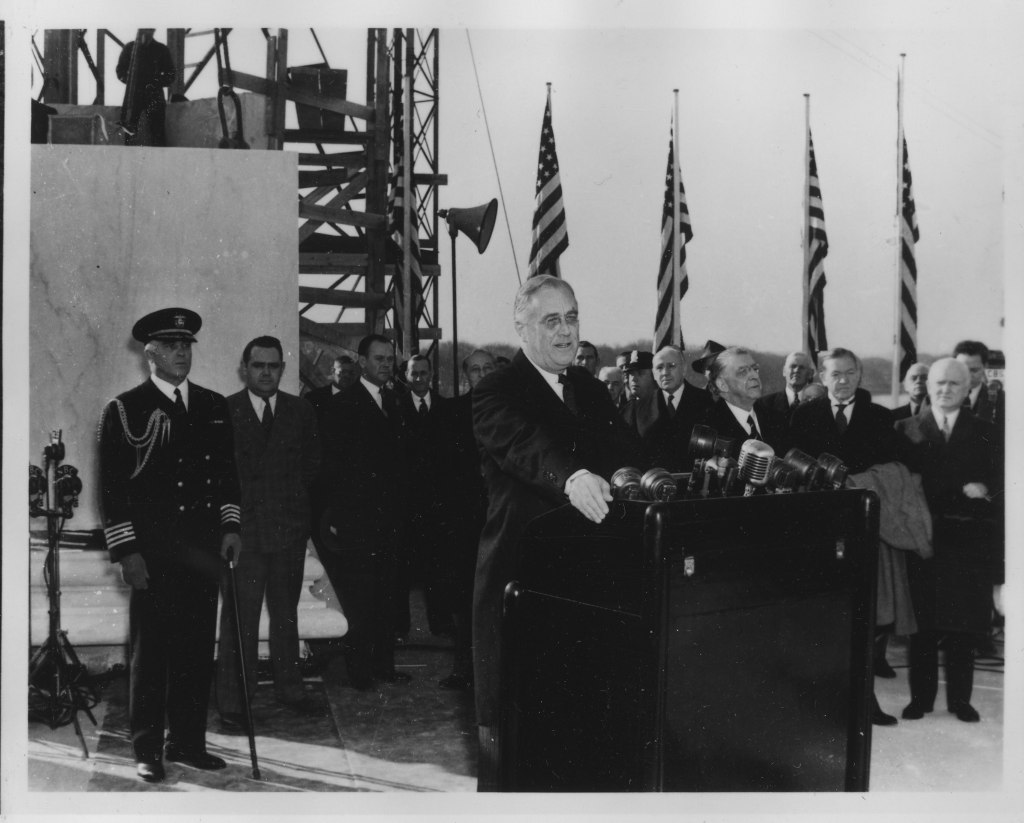
President Franklin D. Roosevelt laid the cornerstone of the Jefferson Memorial in Washington, D.C. President Roosevelt today condemned government by dictatorship and hailed the view of Thomas Jefferson, founder of the Democratic party, that “the average opinion of mankind is in the long run superior to the dictates of the self-chosen.” A few minutes later he laid the cornerstone of the Thomas Jefferson Memorial, a white marble structure now rising on the rim of the Tidal Basin. High above the artificial lake which is to be a reflecting pool, the President stood on the main floor of the memorial structure and, using the words spoken by Washington in laying the cornerstone of the National Capitol, said: “This stone is well and truly laid.”
He used the Masonic silver trowel of the first President and tamped the stone with a wooden gavel from an elm tree planted by Jefferson, the third President, on his Monticello estate. The President digressed from his prepared address, at the outset of his remarks, to say: “This is the second occasion that I have had the privilege of visiting this site and I hope that by January of 1941 I shall be able to come to the dedication of the memorial itself.”
Senator Van Nuys, Democrat of Indiana, who fought President Roosevelt’s proposal to enlarge the Supreme Court, asserted today in a statement that the country and the Democratic party were “entitled to know now” whether the President was gong to run again in 1940. Roosevelt continues to refuse to make any statement or commitment either way.
The United States should keep out of the war, encourage the sale of war supplies to Great Britain and France and strengthen its economic and financial resources to be able to help make an enduring peace, according to Thomas W. Lamont, partner of J. P. Morgan & Co. and trustee of the Academy of Political Science. Speaking at the annual dinner meeting marking the fifty-ninth year of the academy at the Hotel Astor last night, Mr. Lamont, who presided at the after-dinner discussion of “The War’s Effect Upon America’s Economy,” said there could be no world political peace without world economic peace and there could be no world economic stability without American Cooperation.
Mr. Lamont urged support of the idea of an economic United States of Europe — “a great free trade region in Europe” as a counterpart of the free trade area of the United States. In his prepared address as given out in advance, Mr. Lamont advocated that business and labor leaders “put aside their ancient prejudices” and consent to reduce tariffs, but he omitted this from his speech as delivered.
His words brought particular applause when he advocated that the United States go in for “adequate and vigorous” national defense and the “restoration and strengthening” of its domestic economy as “the best bulwark against war,” and when he said that the reluctance with which Great Britain and France had entered the war had “enhanced the sympathy felt for them by so many powerful neutrals, including our own country.” Emphasizing the determination to keep out of war on the part of American businessmen, Mr. Lamont asserted the theory that they favored war for profit motives was absolutely unfounded.
“There is nothing that businessmen the world over fear and detest quite so much as war,” he said. “They know that there is no possible future for any sort of business, big or little, unless we can have peace, orderly means of production and good faith. The whole business world on both sides of the water is clearly appalled at the thought of another war and of the disastrous social, financial and economic consequences that are almost bound to follow it. I wish someone would run down the sources of the idea that business men are inclined to war. For example, in recent years we have seen Japan’s aggression in Asia, and Italy’s in Africa, and Hitler’s repeated forays in Central Europe. Is there any one in his right mind who would suggest that these acts of violence and of armed conflict have been favored or promoted by business interests?”
Mayor of Long Beach, California Louis F. Edwards was assassinated by a police officer who had lost his bid for president of the local Patrolmen’s Benevolent Association to a candidate Edwards supported. Another police guard was wounded.
Economists weigh war effects in the United States. The probable effects of the war on “America’s idle men and idle money” were discussed at morning and afternoon sessions of the Academy of Political Science, holding its annual meeting in its fifty-ninth year at the Hotel Astor yesterday. They hold that private enterprise is needed and warn about public debt.
Thomas Dewey’s presidential campaign is scheduled to start in Minnesota on December 6. District Attorney Thomas E. Dewey will begin his campaign for the Republican nomination for President with a speech in Minneapolis on invitation of the Minnesota Republican State Central Committee. December 6 has been set tentatively as the date for the address.
Support of the “more than 4,000,000 members of the Congress of Industrial Organizations” was pledged to the United Automobile workers of America—C.I.O., in its dispute with the Chrysler Corporation at a mass meeting held in Cadillac Square this afternoon.
A high police official disclosed today that Alphonse Capone, the former Chicago gang leader, whose term in Federal prison officially ends Sunday, had become a patient in a private sanitarium at Villanova, a Philadelphia suburb.
President Roosevelt, in a letter to Keith Morgan, chairman of the Committee for the Celebration of the President’s birthday, approved yesterday plans for the annual campaign to collect funds to combat infantile paralysis.
The first unemployment compensation law, under the Social Security Act, that of the District of Columbia, was approved for grants by the Social Security Board
Plans for two U.S. Navy cruisers, the Columbia and Cleveland, will be altered considerably in the light of developments connected with Germany’s 10,000-ton “pocket” battleships, according to a statement today by Charles Edison, Acting Secretary of the Navy. Construction of the two cruisers is being delayed while their designs are reviewed, Mr. Edison said in a press conference. The navy is “constantly studying types and analyzing what can be found out from the European war,” he said. He hinted that the proposed tonnage of the two vessels and the caliber of their guns might be increased to create a new-type cruiser.
Mr. Edison’s revelation regarding a probable change in cruiser building plans came in answer to a question as to whether the American Navy contemplates construction of craft like the German miniature battleships. Two Nazi “pocket” battleships, the Deutschland and Admiral Scheer, are said to be operating in the North and South Atlantic, providing a serious problem for the British and French fleets because their speed far exceeds that of regular battleships, while their eleven-inch guns and heavier armor make them dangerous enemies for cruisers to attack.
Mr. Edison minimized the importance of the activities of Germany’s small “dreadnaughts” up to this time and was critical of their design, which he said had been determined under restrictions placed upon German naval construction after the war, but he mentioned the high speed and “bigger gun power” of the Nazi craft, in indicating that the designs of the Columbia and Cleveland might be changed. He said that the American Navy feels it can develop “something better.”
“I don’t see that they have done much yet,” Mr. Edison said in speaking of the German ships. “As a matter of practice I don’t believe in trying to build too many things into ships and making them jack-of-all-trades. There just isn’t room to make an aircraft carrier and battleship out of a small craft.” While asserting that he thought the German ships too small to be good aircraft carriers and holding that heavy guns cut the speed of small ships, Mr. Edison indicated that it probably would be possible to follow some of the benefits of this type of craft. In this connection, he noted that tonnage limitations imposed by the London naval treaty have been renounced by all countries.
Interior Department motorship North Star (U.S. Antarctic Service) departs Boston, Massachusetts for Antractica.
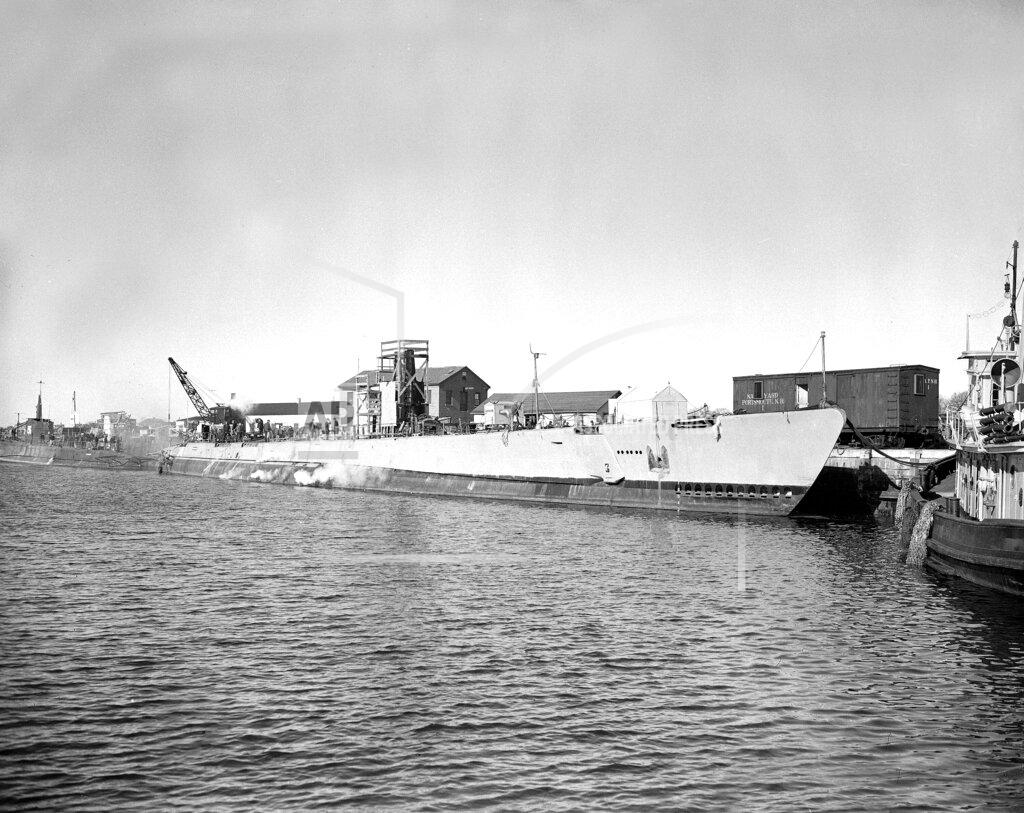
The salvaged submarine USS Squalus (SS-192) was decommissioned from service at Portsmouth Naval Shipyard, Kittery, Maine, United States.
The Canadian lake freighter Brulin (2,241 GRT, 1924) collided with the Canadian Steamship Lines’ Huronic in a dense fog. She was repaired and returned to service.
A revised estimate said tonight that probably fewer than 100 persons lost their lives in the fire that swept the stilt-supported shanty town of Lagunillas, Venezuela on Lake Maracaibo Monday night.
Five “Flying Fortresses” of the United States Army Air Force arrived in Rio de Janeiro today to take part in the celebration of the fiftieth anniversary of Brazil’s republican government. Despite rain, a large crowd gathered at Campo dos Affonsos, the military air field, to cheer their landing.
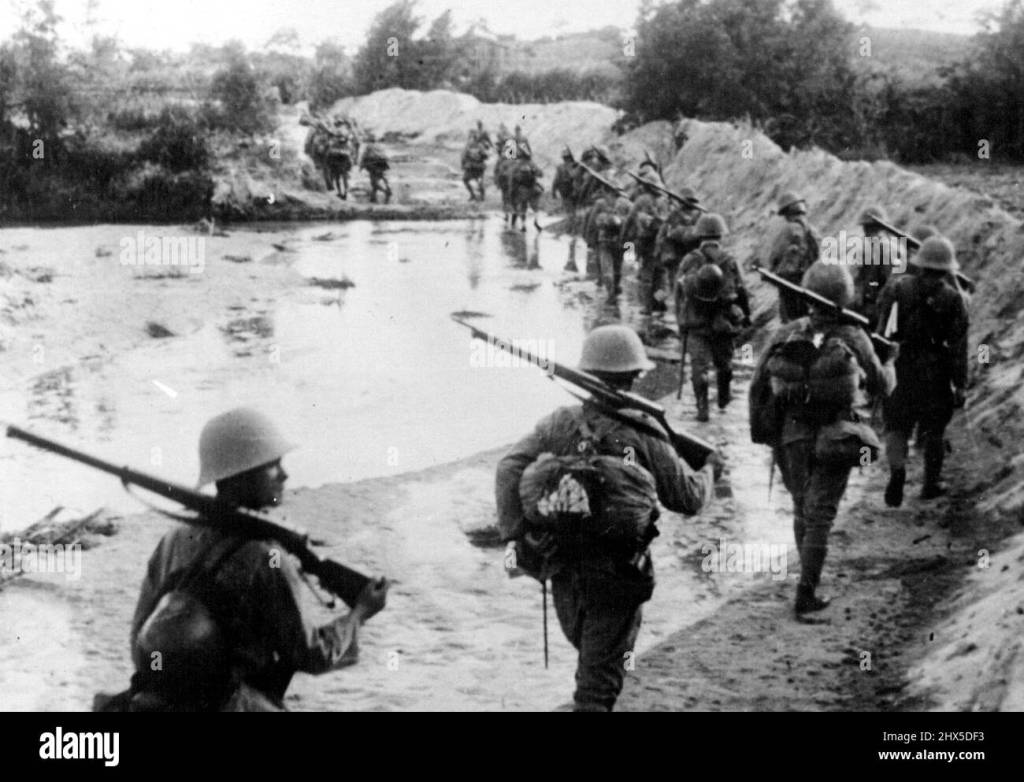
The Battle of South Guangxi began. Japanese forces capture the port of Pakhoi. At 0700 local time, Japanese landing boats under the protection of the guns of IJN units, effect a successful surprise landing on the coast of Guangxi at the mouth of the Yuhung River, near Pakhoi, at Lungmen Island and the eastern shore of Yamchow (Chinghow) Bay. On the south coast, an IJN Special Naval Landing Force (SNLF) lands on Qinzhouwan Bay, near Qusha of Pakhoi city. After overwhelming limited Chinese resistance, the Japanese occupy the port of Pakhoi and push towards Nanning with two IJA divisions and one SNLF brigade. They soon capture Fangcheng and cut off the Nanning-Zhennanguan Pass segment of the Xiang-Gui Railway, but the Chinese ship away locomotives, 7,000 tons of railway materials and 5,000 tons of supplies to Tongdeng before the Japanese take over Mingjiang.
Despite some recent setbacks in the interior, along the coast, the Imperial Japanese Army remains supreme and have captured the entire length since beginning in 1937. This success was accomplished by the Japanese 21st Infantry Division and Taiwan Brigade, which landed in southern Kwangsi province on Chinchow Bay. This collectively is known as the Battle of South Guangxi.
Peiping reports that are received in Shanghai with reserve declare Chinese Communist troops under General Peng Teh-hua exchanged fire with central government troops under General Chu Shao-liang in Eastern Kansu Province.
Great Britain’s gesture in recalling the majority of her armed forces in North China may be regarded as a conciliatory move toward Tokyo, but the Japanese Army at Tientsin evidently considers the move a sign of weakness, for dispatches from Peiping today describe a sudden tightening of the blockade of the British Concession at Tientsin, with renewed insults to Britons. In addition, Japanese sentries are charged with developing the blockade into racketeering by charging fees for passing all kinds of foods. and products, the charges ranging from a few cents for walking coolies to $100 for truck loads of supplies. In Peiping new anti-British posters are appearing on walls, urging the exclusion of Britons from North China.
From Manchukuo come pessimistic reports in regard to the attitude of the Japanese Kwangtung Army, which, a spokesman says, is maintaining a watchful attitude toward the Soviets and continues to be distrustful and suspicious of Moscow’s aims. The same sources declare. there is not the slightest chance of a non-aggression pact. Japan and the Soviet Union now. belatedly admit frankly that the Manchukuoan-Outer Mongolian frontiers are actually the JapaneseRussian frontiers. The Kwangtung Army still openly resents the German-Soviet pact and charges Russia with failing to reduce the armed forces on her borders and with continuing to supply arms and munitions to the “Manchurian bandits”. who harass the Japanese forces.
Chuichi Nagumo was promoted to the rank of vice admiral in Japan.
The Australian Government participates in the Empire Air Training Scheme.
Dow Jones Industrial Average: 149.53 (-0.24)
Born:
Yaphet Kotto, American actor (“Live and Let Die”, “Alien”), in Harlem, New York, New York (d. 2021).
Thalmus Rasulala [Jack Crowder], actor (“Blacula”, “Roots”), in Miami, Florida.
Erik Hansen, Danish canoeist (Olympic gold medal, K-1 1000m 1960; World Championship gold medal, 1963), in Randers, Denmark (d. 2014)
Greg Larson, NFL center, guard, and tackle (Pro Bowl, 1968; New York Giants), in Minneapolis, Minneapolis.
Naval Construction:
The Royal Australian Navy Bar-class boom defense vessel HMAS Kangaroo is laid down by the Cockatoo Docks and Engineering Co. Ltd. (Sydney, New South Wales, Australia).
The Royal Navy Flower-class corvette HMS Azalea (K 25) is laid down by Cook, Welton & Gemmill (Beverley, U.K.).
The Royal Australian Navy Tribal-class destroyer HMAS Arunta (I 30) is laid down by the Cockatoo Docks and Engineering Co. Ltd. (Sydney, New South Wales, Australia).
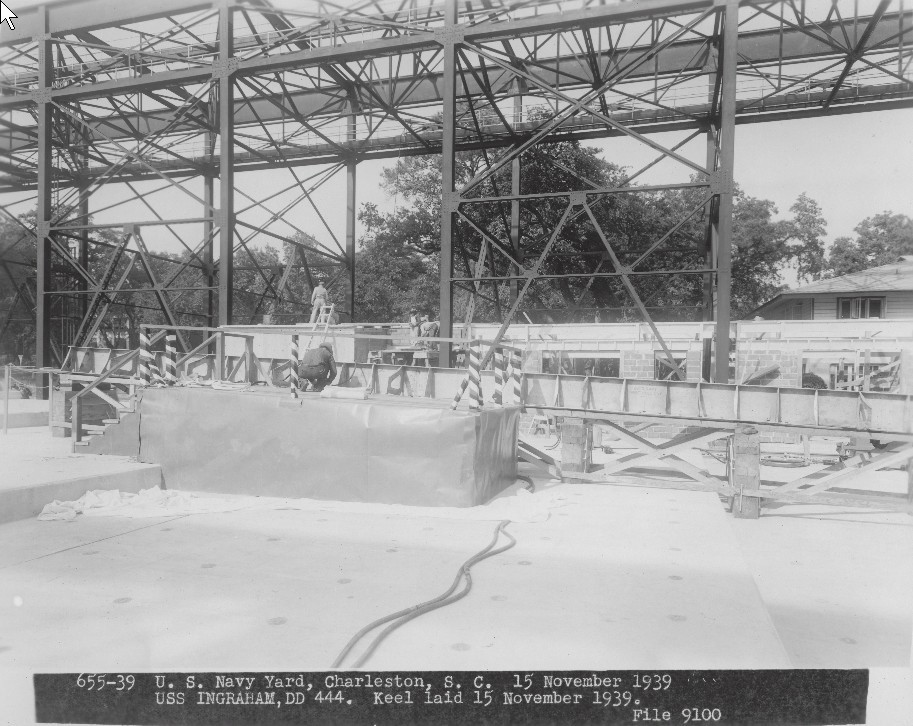
The U.S. Navy Gleaves-class destroyers USS Swanson (DD-443) and USS Ingraham (DD-444) are laid down by the Charleston Navy Yard (Charleston, South Carolina, U.S.A.).
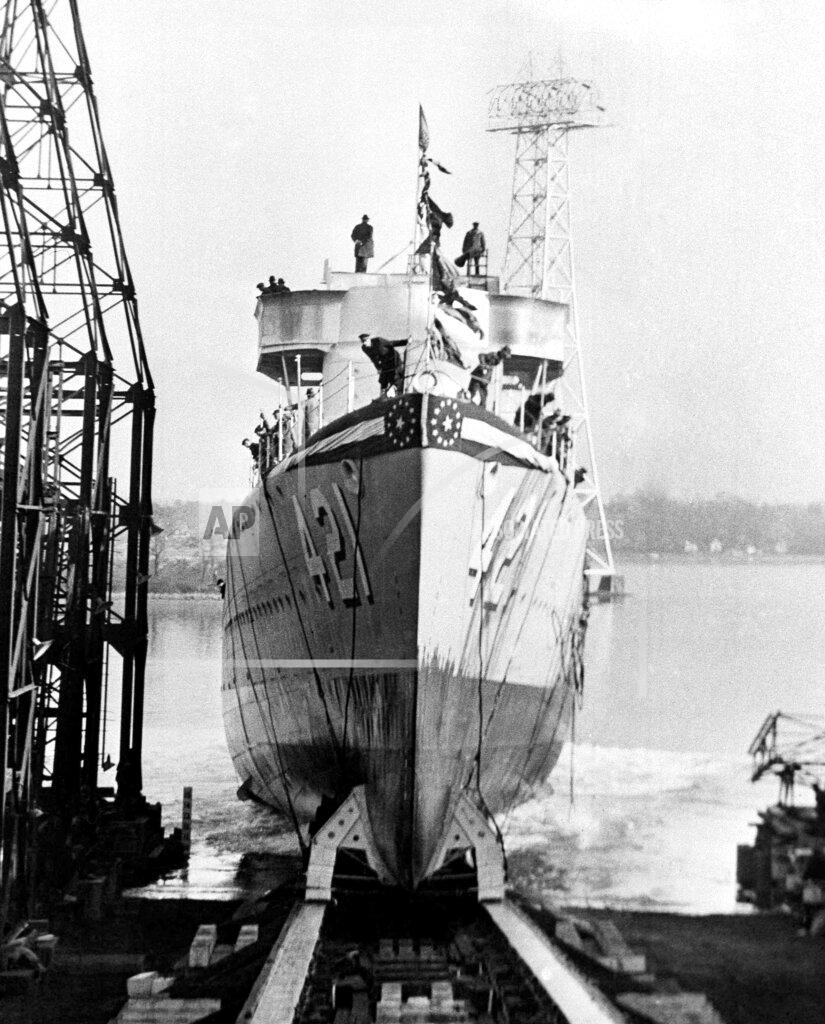
The U.S. Navy destroyer USS Benson (DD-421), lead ship of her class of 30, is launched by the Bethlehem Shipbuilding Corp. (Quincy, Massachusetts, U.S.A.).
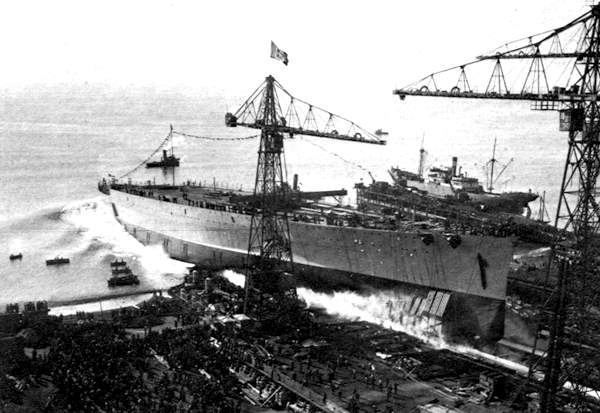
The Regia Marina (Royal Italian Navy) Littorio-class battleship RN Impero is launched by Ansaldo (Genoa, Italy).
The Royal Navy Lake-class ASW whaler HMS Ullswater (FY 252) is commissioned. Her first commander is Skipper Charles Raymond Blowers, RNR.
 History Diaries