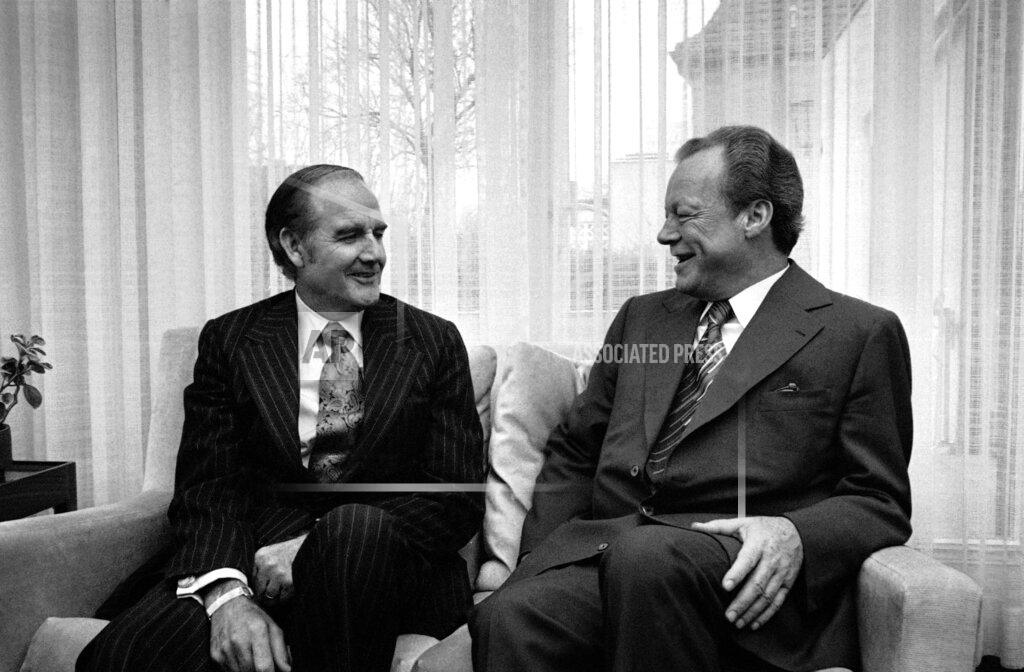
The commander of the Soviet missile forces has asserted that the Soviet Union has done nothing to violate its 1972 interim agreement with the United States on the limitation of strategic nuclear weapons. General Vladimir F. Tolubko, denounced unofficial reports in the West that Moscow may have violated the agreement as “fabrications needed by the enemies of international détente.” “Not a single silo for a ground‐based launching pad has been set up since May, 1972,” he said. “No tests of new intercontinental mobile systems are being made.” General Tolubko, who is also Deputy Defense Minister, was quoted in an interview with the weekly Nedelya.
Recent rulings — affecting South Africa and Israel, for example — by the President of the current General Assembly, Foreign Minister Abdelaziz Bouteflika of Algeria, have caused uneasiness among Western delegates at United Nations headquarters and general disillusionment with the organization. But the President has wide support in his own Arab bloc and among representatives of emerging countries. Delegates from the United States and other countries have formally, if vainly, challenged Mr. Boutefllka’s decisions from the chair this week that suspended South Africa from the Assembly and in effect curbed Israel’s right to speak by limiting the debate on the “Question of Palestine” to one speech from each country. On Wednesday the Assembly President irked some delegates by ordering the protocol honors normally accorded a chief of state — such as a special armchair — for Yasser Arafat, the visiting head of the Palestine Liberation Organization.
And yesterday Mr. Bouteflike, in a decision such as had never been made here before, in effect curtailed the right of a member state — Israel — to speak Many delegates said that such a decision should, if made at all, be reached by mutual consent rather than by an order from the chair. Israel’s delegate, Yosef Tekoah, accused the Assembly President of “bias” and of having muzzled a member state. Both in the South African and Israeli issues, the Assembly has upheld Mr. Bouteflika by large majorities.
Secretary General Kurt Waldheim of the United Nations will meet Monday with Israeli victims of Arab guerrilla attacks to hear their protests against the appearance of Palestine Liberation Organization representatives in the General Assembly this week.
Secretary of State Kissinger’s five‐point plan for dealing with the world energy crisis drew a generally favorable response from oil consuming countries. A number of governments, however, seemed unwilling to commit themselves to the plan, which focused on a proposed new $25‐billion international lending facility, until more details became known. Meanwhile in Paris, the United States and 15 other industrial nations set up an agency for the pooling of energy resources in times of crisis. The new body, called the International Energy Agency, has been boycotted by the French, who have argued that the consuming countries should be talking to the producing nations rather than forming a bloc that might be antagonistic to them.
President Ford has refused to permit the American delegation to the World Food Conference in Rome to commit the United States to a million-ton increase in food aid, though the White House says increased commitments will be met. The decision overshadowed other developments in which progress was reported on plans for more food in the future. President Ford’s decision was announced by Secretary of Agriculture Butz, who criticized three Democratic Senators who had pressed for the increase. In explaining President Ford’s decision, Dr. Butz said the increase “would have a bullish effect on the market.” He cited budget constraints, tight supplies and the possible impact on American consumer prices, ready sharply inflated.
The Ford administration has received reports that Israel has called up one-third of her reserves. American military sources said, however, that this did not necessarily mean preparation for war, but could be in advance of a major border raid. Earlier Secretary of State Kissinger said that war did not seem imminent in the Middle East. But he took note at a news conference of reports from the Middle East over the last 24 hours that suggested that a new war was imminent. “We’re checking into them an urgent basis,” he said.
Premier Yitzhak Rabin charged today that, more than 20 Soviet ships were unloading armaments for Syria in her Mediterranean port of Latakia. “This intervention will not contribute to peace in the Middle East,” the Israeli leader said at a luncheon meeting of the Engineers Club here. He cautioned that Moscow would not benefit from stirring up tensions in the region. “The Soviet Union had better consider her actions in good time and wisely,” Mr. Rabin said. He noted that the mandate of the United Nations disengagement force that separates the Syrians and Israelis on the Golan Heights expires in two weeks. It is not clear whether the Syrians will agree to an extension, Mr. Rabin said, although Israel is ready to renew it.
Mr. Rabin said after the Arab summit conference in Rabat last month it was difficult to believe that the Arab World was ready for peace. Instead, he remarked the prospects were reduced by the Arab leaders decision that the Palestinian Liberation Organization be the sole official representative of the ethinic Palestinian Arabs. “Let nobody entertain illusions,” the Premier said. “Israel will conduct no negotiations with terrorist organizations. With the terrorists we have only a war for life or death.”
Jordan called on the General Assembly today in support the Palestinians in their demands for repatriation and for national independence.
In Egypt, 50 people drowned when an overloaded sailing craft sank in the Nile near the town of Desouk. The craft was reportedly carrying twice its normal load of passengers.
Ethiopia’s Head of State, General Aman Andom, Chairman of the Derg, angered other Derg members, including Lieutenant Colonel Mengistu Haile Mariam, when he sent a message to all military units critical of the Derg government. Andom would be executed eight days later in the Derg’s purge of former government and military officials.
A session of the lower house of the South Vietnamese National Assembly degenerated into tumult today as ashtrays were thrown and a pistol was fired into the air putting a hole in the ceiling of the old French Opera House, now used as a legislative chamber. The disruption occurred during an emotional debate on a bill to relax the ban on Opposition political parties. Anti-government deputies have objected to the measure, which has the approval of President Nguyễn Văn Thiệu, arguing that it does not go far enough and will still outlaw most small parties. The trouble began about noon as a pro-government deputy, Nhữ Văn Úy was delivering a sharp and sometimes obscene attack on the opposition. “You are gulping blood into your mouths and spitting the blood on other people,” Mr. Úy declared in one of his milder rebukes.
North and South Korean troops fought a gun battle yesterday when South Korean troops discovered a tunnel dug by northern forces to a point about 1,000 yards south, of the military demarcation line, a United Nations command spokesman said. The spokesman said a firefight took place after a squad of South Korean soldiers checked the tunnel, 18 inches below the surface. North Koreans opened fire with machine guns at about 8 AM. The fire was returned by the South Koreans and firing continued for an hour and twenty minutes, he said.
This morning, the South Korean Defense Minister, Sub Jong Mal, said that the tunnel and others like it were meant to launch a large‐scale North Korean attack against the South. “Most noteworthy, from a military point of view,” he said, “is the fact that they are not designed to smuggle a few dozen agents or subversives to the South but to stealthily send down a large force and stage a big‐scale surprise attack. “We have intelligence reports that such tunnels exist not only in that particular area but also in other locations.”
South Korea’s opposition party members attempted to stage their first anti‐government street demonstration in years today but they were promptly frustrated. Shortly before noon 54 members of the New Democratic party, led by Kim Young Sam, marched down the corridors of the National Assembly shouting and holding slogans calling for revision of the constitution. A human barricade of pro-government party members blocked them on the ground floor and they were prevented from reaching the streets. The spokesman for the Democratic Republican party said the blockade was formed to prevent the 500 riot policemen outside from nabbing the protesters. An opposition spokesman, hawever, called the blockade a “highly sophisticated tactic” and said it had been directed by “someone very high” in the government.
The James Bay and Northern Quebec Agreement was signed in Quebec City between representatives of the Canadian national government and the Quebec provincial government; the Hydro-Québec electrical utilities corporation; and the governing bodies of the two indigenous tribes whose lands were affected, the Grand Council of the Crees (led by Waskaganish Chief Billy Diamond) and the Northern Quebec Inuit Association.
Brazilians voted today in what was generally regarded as the freest and hardest fought congressional election since the military seized power a decade ago. Congressional elections were held in Brazil for all 364 seats of the Câmara dos Deputados and 22 of the 66 seats of the Senado Federal. With 54 new seats added to the Camara since the 1970 election, most of which were won by the minority Movimento Democrático Brasileiro (MDB), the lead of the ruling ARENA (Aliança Renovadora Nacional) Party changed from 223-87 to 203-161.
A prolonged coal miners’ strike became an increasing possibility tonight when the union’s officers failed unexpectedly for the second day to obtain approval of the tentative contract agreement. Another complication developed when a top union officer, Sam Littlefield, was shot and killed in an apparent burglary attempt in a motel. His death seemed certain to delay resumption of consideration of the contract proposal by the union’s bargaining council until Monday or Tuesday. Mr. Littlefield, widely known in the union hierarchy, had criticized the proposed contract. A spokesman for the U.M.W. had cautioned newsmen “not to jump to conclusions” as the union’s 38‐member bargaining council recessed at 6:30 PM without approving the agreement negotiated by the union president, Arnold R. Miller, and the coal operators. Approval of the contract by the bargaining council had been expected, to take only one day.
The Federal Reserve Board reported that the output of the nation’s factories, utilities and mines all declined in October. The drop, six-tenths of 1 percent in the board’s index of industrial production, added a significant element to the emerging statistical picture of an economy in recession. Until October, industrial production had been essentially stable, even rising somewhat from the sharp drop that it took last winter after imposition of the oil boycott. The relative strength in industrial production had given hope to some analysts—a hope that appears to be dashed now—that the business slowdown would not become a general recession.
The Federal Reserve’s figures on industrial production were foreshadowed, earlier this week, in a statement by the White House press secretary, Ron Nessen, who said that Administration economists now believed that the nation was moving recession. He cited preliminary Statistics on industrial production as one reason why the Administration was willing now to use the term “recession.”
The Chrysler Corporation is seriously considering closing most of its United States assembly plants for the month of December because of a severe decline in automobile sales. Chrysler has six major assembly plants throughout the country employing 30,000 workers. One of the Chrysler plants was closed indefinitely. The shutdown of the assembly plants would affect the other manufacturing and supplier plants of Chrysler, causing 50,000 more blue‐collar workers to be quickly laid off. A number of plans that differ only regarding which facilities would close, are reported under consideration, but the efunder consideration, but the effect of all would be the laying off of most‐ of the workers for the month. The plans are being recommended by top executives as a way of eliminating a severe over‐supply of cars.
Workers who would be laid off would get up to 95 percent of their pay from unemployment and union benefits, except those who have less than one year’s seniority. The auto industry traditionally closes its plants from Christmas Day though New Year’s Day, which would mean that the layoffs would be for three weeks. Another major effect of a December layoff would be on a holiday pay of the workers. If they are laid off up to the day when they begin their Christmas holiday they would not be paid under the contract. A United Auto Workers Spokesman said that this would be a saving of about $20‐million to the company in pay.
President Ford, under strong pressure from the United States sugar industry, is expected to announce within the next few days a new quota system for United States purchases of foreign sugar that in effect continues the provisions of the expiring Sugar Act. The advantage claimed by the administration for maintaining a quota system is that such a system would preclude a rise in the tariff on sugar that would otherwise occur when the Sugar Act expires on December 31. However, the quota will continue to limit foreign access to the American market, where sugar prices have tripled this year.
United States Disrict Judge John J. Sirica today ordered Richard M. Nixon’s lawyer to report back by next Tuesday on whether the former President will resist an independent medical inquiry by three court-appointed doctors.
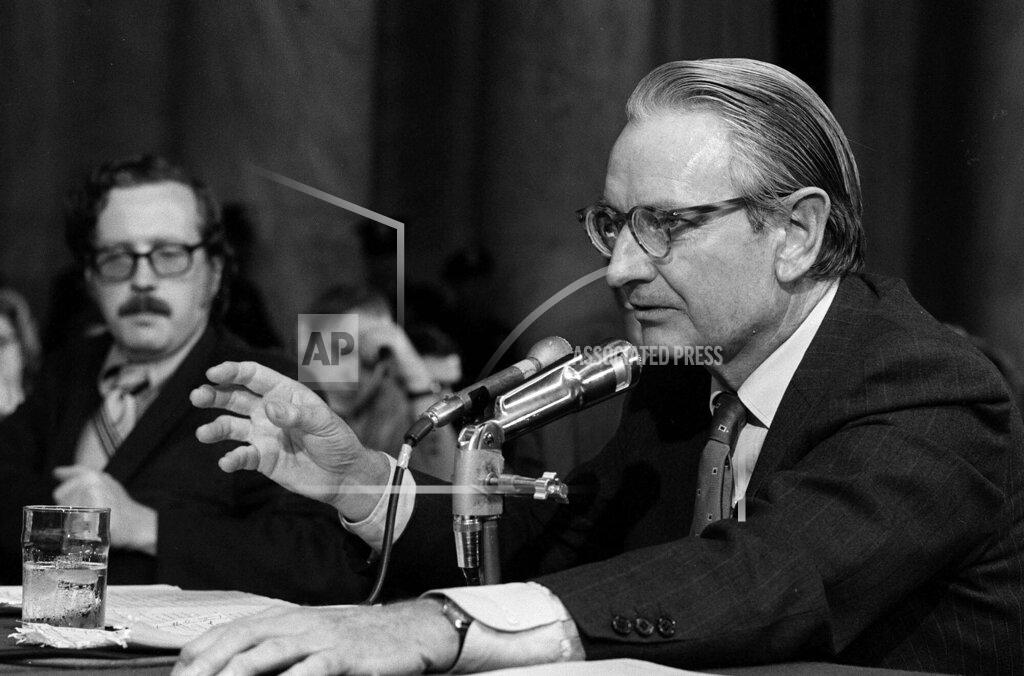
Laurance Rockefeller told the Senate Rules Committee that he invested $65,000 in the publication of an unflattering biography of Arthur J. Goldberg as a business venture in 1970 on the basis of five minutes of conversation and forgot all about the matter until it came under investigation. “This is one investment I wish I had not made, least of all because of the loss involved, but most importantly because it has proved to be an embarrassment to my brother Nelson and Mr. Justice Goldberg, who happens to be someone I personally admire.” Mr. Rockefeller, the brother of Vice President‐designate Nelson A. Rockefeller, was one of nine witnesses — all but one connected in some way with the Goldberg biography — to appear before the Senate Rules Committee today. From their testimony emerged glimpses of a rarefied world largely unknownn, to all but the wealthy, a world of family lawyers, nominees, financial advisers and the routine investment of thousands of dollars.
Lawyers for H. R. Haldeman, the former White House chief of staff, began presenting today one of the major elements of his defense in the Watergate cover-up trial — that his intercession in the initial Watergate inestigation had been justified by legitimate concerns of the Central Intelligence Agency.
A former White House aide, Jack A. Gleason, pleaded guilty today to a misdemeanor in connection with a secret White House-controlled political fund designed to channel up to $3 million to Republican Congressional candidates in the 1970 elections.
Bail was reduced yesterday to $10,000 from $100,000 for Russel Kelner, the Jewish Defense League official who had treatened to assassinate Yasser Arafat, chairman of the Palestine Liberation Organization.
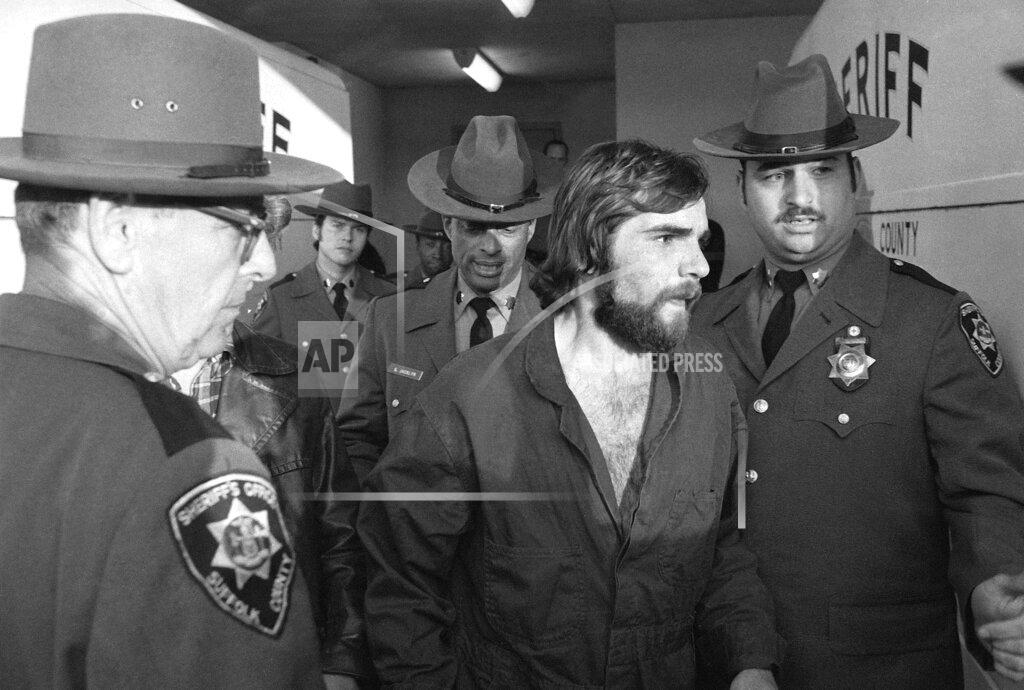
Ronald DeFeo Jr. was under a special narcotics probation when he allegedly murdered all six members of his family Tuesday night in Amityville, Long Island, New York, the police said today.
Attorney General William B. Saxbe is preparing to make public an investigation of Federal Bureau of Investigation counterintelligence programs secretely authorized over 15 years by the late director, J. Edgar Hoover, to disrupt seven kinds of subversive organizations.
At Vandenberg Air Force Base, in the first U.S. launch of three orbiting satellites on the same rocket vehicle, NASA used a Delta rocket to orbit Spain’s first satellite, INTASAT; the NOAA-4 weather satellite; and the AMSAT-OSCAR 7 (AO-7) amateur radio satellite.
Universal Pictures released the disaster film “Earthquake,” starring Charlton Heston and Ava Gardner and directed by Mark Robson. The film was the first to use the “Sensurround” system during screenings, with low-frequency and extended range bass to simulate the feeling of the vibrations of an earthquake.
Dmitri Shostakovich’s String Quartet No. 15 was given its first performance.
Ringo Starr releases singles “Goodnight Vienna” and “Only You” in the UK.
Secretariat, the racehorse who had won the American Triple Crown in 1973, became a sire for the first time with the birth of his first foal, which would be named First Secretary.
Dow Jones Industrial Average: 647.61 (-10.79, -1.64%).
Born:
Chad Kroeger [Chad Robert Turton], Canadian singer and guitarist (Nickelback – “How You Remind Me”; “Photograph”); in Hanna, Alberta, Canada.
Ingrida Šimonytė, Prime Minister of Lithuania since 2020; in Vilnius, Lithuanian SSR, Soviet Union.
Fred Brock, NFL wide receiver (Arizona Cardinals), in Montgomery, Alabama.
Died:
James W. Morrison, 86, American silent film actor (“Wine of Youth”, “Little Detectives”) and educator.
Nathaniel B. Wales, 91, American inventor.


 History Diaries