The Finnish delegation in Moscow refused to accede to Soviet demands and broke off negotiations. The Finnish delegation, headed by Dr. Juho K. Paasikivi, left for Helsinki on the 9:50 train tonight after receiving official instructions to return to Finland. The Finns are especially unwilling to meet the Soviet demand for the cession of Hanko because it would give the USSR complete control over the Gulf of Finland and the most important part of the country. If there is one single stumbling block, it is the Soviet demand for a base at the port of Hanko. The Finnish government somewhat paradoxically relaxes some defensive measures.
Meanwhile, in response to the breakdown of the talks, Stalin orders preparations for war against Finland. As part of a plan of subversion of Finland, the NKVD begins recruiting Finnish expatriates in the Soviet Union to govern the country after the conquest and, perhaps, formulate a casus belli.
The first detachments of 20,000 Soviet troops who, under the recent agreement, are to be established at four bases east of the East Prussian border, will enter Lithuania tomorrow through the newly ceded Vilna territory.
Adolf Hitler again postponed the invasion of France; the next date for decision was to be 22 November 1939.
The Western Front remains mostly quiet. Such military activity as there is continues to be limited to the air, principally in the form of reconnaissances. The Germans, for their part, are making more exploration flights over Northeastern France, while the Allies explore the rear zones north of the enemy lines.
Dutch Prime Minister Dirk Jan de Geer states that there does not appear to be any imminent danger — the (unknown to the public, but not to the Allied authorities) 12 November 1939 date of Hitler’s planned Fall Gelb having passed. Premier de Geer, in a broadcast to the nation and colonies this afternoon, said that the government had not received any reliable information of a nature to shake its faith in the pledges of the belligerents to respect the neutrality of the Netherlands.
Germany is not going to invade the Netherlands and never had any intention of doing so, writes Virginio Gayda today in the Giornale d’Italia in Rome. The entire Italian press agrees with that interpretation.
The Union of Armed Struggle was created from an earlier Polish resistance movement, the Service for Poland’s Victory.
Former Abwehr agent Oskar Schindler signs lease for his private German enamelware factory in Kraków. He uses his contacts to secure contracts to provide cookware to the Wehrmacht.
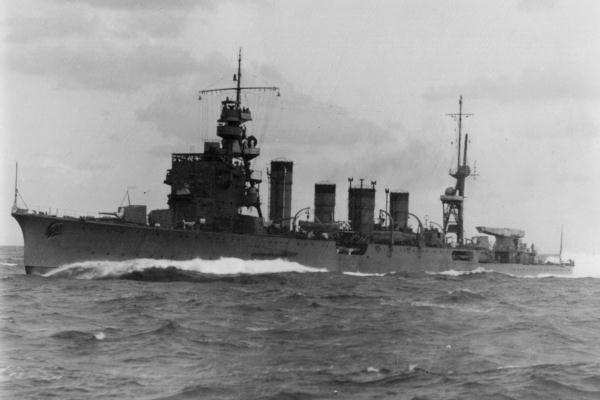
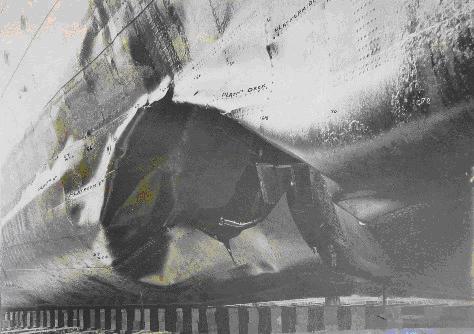
The Royal Navy “B”-class destroyer HMS Blanche struck a mine and sank in the Thames Estuary with the loss of two of her crew. Survivors were rescued by the British tugs Fabia & Lady Brassey and the trawler Kesterel. German destroyers Karl Galster, Wilhelm Heidkamp, Hermann Kunne and Hans Ludemann laid a minefield in the South and Edinburgh channels. Soon after the minefield had been laid, at 0526 hours, the Minelaying Cruiser HMS Adventure (Capt A. R. Halfhide) ran into a mine. Temporally disabled the injured were transferred to the destroyer HMS Basilisk while destroyer HMS Blanche stood by. As the force made its way towards safety at 0820 hours, HMS Blanche was mined and settled by the stern. The tug Fabia went to the destroyer’s assistance but as she was towed the destroyer capsized and sank. HMS Blanche lost two crew killed and twelve injured. She became the first British destroyer lost to enemy action in World War II.
British soil was bombed by the Germans for the first time during World War II, in the Shetland Islands. No casualties were inflicted. Damage was confined to a deserted crofter’s cottage and a rabbit. The bombers missed naval vessels and anchored flying boats. The Germans claimed hits on a cruiser and two aircraft. “This is only the beginning,” said their spokesman. The RAF and anti-aircraft guns help to drive the bombers off. In addition, another raid, on the East Coast, is driven off by the RAF.
There is an air raid warning in Paris, with anti-aircraft guns firing for the first time. It turns out just to be German reconnaissance.
Ireland complained to the State Department today that it had been injured by the United States Government’s action in putting it in a “combat zone” from which American ships are barred. Ireland insists she is neutral.
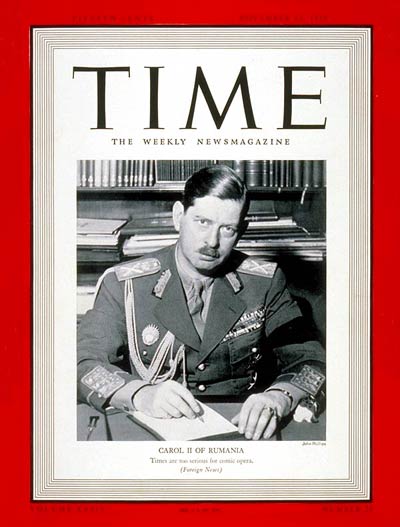
King Carol of Rumania offers himself as a secret mediator between the British and French and the Germans.
The Swiss Government expels Otto Strasser due to anti-Hitler comments made to a foreign newspaper in October. Strasser is an NSDAP member who broke from the majority of the party over Hitler’s dominance and became an exile. This expulsion is undoubtedly due to the ongoing investigation of the 8 November 1939 Munich Bürgerbräukeller bombing. The inference is that the anti-Hitler exile Strasser may have been involved in that bombing, and Switzerland does not wish to be seen as harboring an assassin.
Latvia orders aliens out of certain areas. Foreigners get until December 15 to leave leading cities.
The South African Government forms a South African Seaward Defense Force.
The unescorted French steam merchant Loire was torpedoed and sunk by the U-26, commanded by Klaus Ewerth, Malaga, Spain in the western Mediterranean Sea (36°16′N 2°13′W). All of the ship’s complement died. The 4,285-ton Loire was bound for Dunkirk, France.
U-49 was attacked by a British aircraft. The boat dived to 160 meters and suffered some damage.
The minesweeper M-41 (Kriegsmarine) became stranded in the North Sea.
The minesweeper M-132 (Kriegsmarine) was damaged by the explosion of a depth charge accidentally dropped by another ship in the North Sea off List, Schleswig-Holstein and was beached. She was declared a total loss. There were no casualties.
The British cargo ship Matra in Convoy HXF.7 struck a mine and sank in the North Sea 1 nautical mile (1.9 km) east of the Tongue Lightship (United Kingdom) with the loss of 16 of her crew. The ship was beached.
The German cargo ship Parana was intercepted in the Denmark Strait (65°48′N 25°19′W) by HMS Newcastle (Royal Navy) and was scuttled. The crew was rescued by HMS Newcastle.
The British cargo ship Ponzano struck a mine and sank in the North Sea off Margate, Kent (51°29′N 1°25′E). The crew was rescued by two Norwegian fishing boats. The wreck was subsequently dispersed by explosives.
U.S. freighter Black Hawk is detained by British authorities at Ramsgate, England.
The War at Sea, Monday, 13 November 1939 (naval-history.net)
Anti-aircraft cruiser CAIRO departed Rosyth.
On Northern Patrol were three cruisers between Orkneys and the Faroes, two cruisers between the Faroes and Iceland, and two cruisers and two AMCs in the Denmark Strait.
Two German air raids on Sullom Voe and the Northern Patrol cruisers there did not cause any damage. The air raids and the U-boats reported off Sullom Voe resulted in the 7th and 11th Cruiser Squadron of the Northern Patrol being ordered to Loch Ewe.
Convoy SA.17 of two steamers departed Southampton, escorted by destroyers SKATE and SCIMITAR, and arrived at Brest on the 14th.
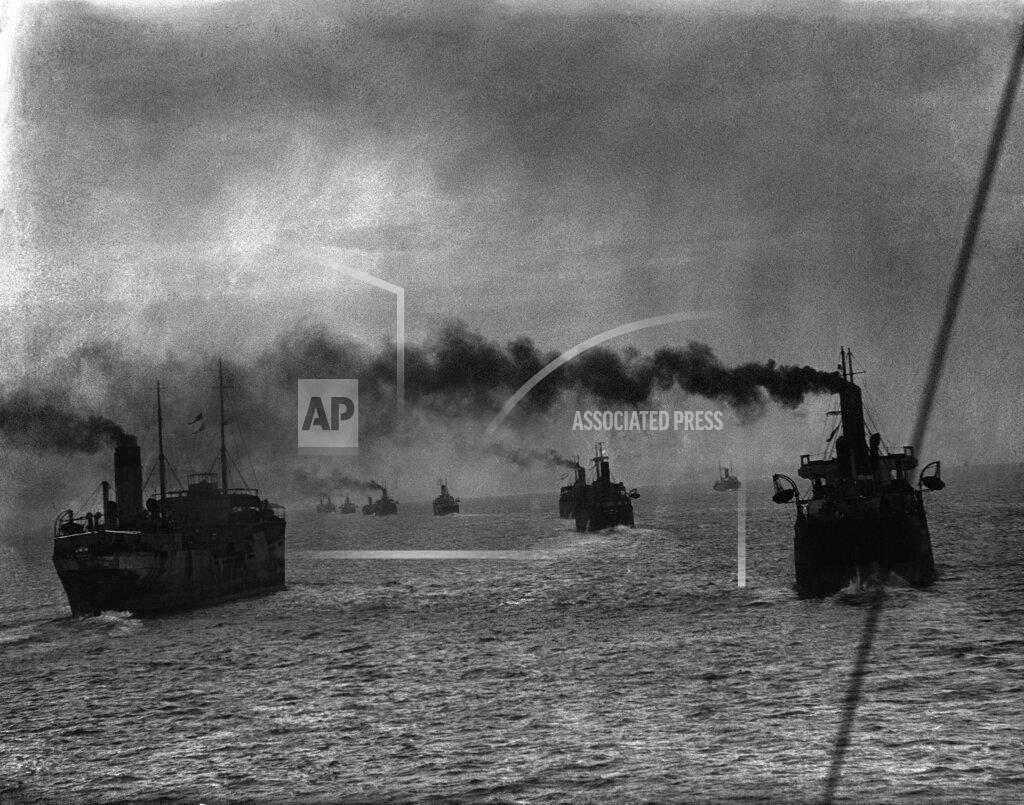
Convoy FN.36 departed Southend, escorted by destroyers WHITLEY, WALLACE and sloop STORK which had arrived from Harwich. The convoy reached Methil on the 15th.
Convoy FS.36 departed Methil, escorted by sloops GRIMSBY and WESTON. Sloop FLAMINGO, which had been on other escort duty, joined off the Tyne, and the convoy arrived at Southend on the 15th.
Sub Lt D Copsey was killed when his RAF Harvard of the RAF No.1 SFTS crashed near Netheravon airfield. Flight Lt T I Hammond of the RAF was also killed.
German steamer PARANA (6038grt), which had departed Buenos Aires on 7 October, was intercepted on the 12th by light cruiser NEWCASTLE west of Iceland in 65 48N, 25 19W, and scuttled herself in 65 14N, 25 22W. The wreck was sunk by gunfire from NEWCASTLE and she left her Denmark Strait patrol station at 2000/13th with the German survivors.
German steamer HUGO OSTENDORFF (3986grt), which had departed San Juan del Puerto on 25 October, was not far astern of PARANA. Hearing her interception, she arrived at Hafnarfjoedr (Hvammasfjord) on the south coast of Iceland, set off again on the 24th and arrived at Stettin on 5 December.
Sloop ENCHANTRESS attacked a submarine contact in 49-40N, 12-04W.
U-28 laid mines in Bristol Channel, on which one merchant ship was lost.
German minesweeper M.132 was badly damaged by depth charges from minesweeper M.61 in an anti-submarine hunt near List in the North Sea, and was beached, a total loss.
Australian destroyers HMAS STUART, HMAS VAMPIRE, HMAS VOYAGER, HMAS VENDETTA and HMAS WATERHEN departed Singapore for Colombo. On the 17th, VAMPIRE and VOYAGER detached to Trincomalee to join Force J (heavy cruiser KENT and the French SUFFREN) in the Nicobar Island area. STUART and WATERHEN arrived at Colombo on the 18th and VENDETTA on the 19th. WATERHEN was attached to Force I, while VENDETTA was employed in anti-submarine patrols off Colombo. On the 25th, STUART departed Colombo for Madagascar to join light cruiser GLOUCESTER and French sloop RIGAULT DE GENOUILLY.
French tanker SAN JOSE (6013grt) was chased by an unidentified submarine in 27 34N, 57 58W, seven miles from Willemstad. The submarine was later identified as one of the French submarines based at Martinique.
Steamer SIRDHANA (7745grt) was sunk on a British defensive minefield in Singapore Roads, 3½ miles 148° from Fort Canning Light; twenty crew were killed.
In operations in the South Atlantic, a Swordfish of 814 Squadron from aircraft carrier HERMES crashed into the sea on landing. Lt J H Dundas and crew were picked up by French large destroyer LE FANTASQUE.
French sloop D’ENTRECASTEAUX reported sighting a submarine in 12-56N, 22-24W.
French large destroyer LION arrived at Gibraltar at 0800 and departed at 1025 eastward.
French submarine L’ESPOIR departed Colombo for Djibouti and Toulon.
French submarine SIDI FERRUCH departed Port of Spain on patrol.
Light cruiser ORION departed Kingston on patrol and arrived back at Kingston on the 25th.
Light cruiser BIRMINGHAM departed Hong Kong on patrol in Chinese waters.
Former Senator William Gibbs McAdoo, returning today from a five weeks’ visit in Washington and New York, expressed the conviction that President Roosevelt would be nominated and re-elected for a third term. He said that he found this opinion was general among leading Democrats with whom he discussed the question. “The people,” said Mr. McAdoo, “will force the Democratic National Convention to nominate him in 1940. Expressing my own opinion, and having no authority whatever to speak for the President, I unhesitatingly say that if the Democratic party nominates him, of course he will accept.
“How could any man decline such a demand from his party and his country in these critical times? The third term tradition is mere dogma anyway. We don’t have to observe it unless we want to. Whenever the condition of the country calls for the service of a certain man, he must submit as a patriot, no matter what personal sacrifice is involved. Personally, I intend to support Roosevelt for a third term. I am confident that he will be overwhelmingly elected.” In 1932, Mr. McAdoo, as head of the California delegation to the Democratic National Convention in Chicago, broke the voting deadlock when he delivered the State’s votes to Mr. Roosevelt. The group had been pledged to John N. Garner, now Vice President.
Mr. McAdoo said that during his Washington visit his chief concern was the Neutrality Bill. Had it passed as first reported by the Foreign Relations Committee of the Senate, he said, “the American flag would have been swept from the largest part of the Pacific Ocean and the great ports of San Francisco and Los Angeles would have found their foreign trade practically destroyed.
“Our West Coast seamen would have been reduced to the unfortunate condition of their fellows on the Atlantic Coast. no jobs and no place to go. The effect of the act as finally passed,” he went on, “is to permit American President Lines, for example, to continue their transpacific service. The bill also permits the continued operation of the Matson liners.” Mr. McAdoo said that the outlook for the Pacific Coast was “exceedingly bright if we can keep our great ports in California open.”
President Roosevelt began crowding his appointment calendar today preparatory to a series of travels which, except for an occasional stop-over, will take him away from Washington for at least three weeks.
Senator Warren R. Austin of Vermont warned Republicans that they could bring about the “calamity” of a third term for the President by interfering with the Administration’s foreign policy as expressed in the Neutrality Act.
U.S. finances are found weak for a new war. The status is precarious when compared to 1914.
Fritz J. Kuhn, the “führer” of the German-American Bund, was shown by testimony in General Sessions Court as a man who indignantly insisted his word was his bond to lawyers he retained and did not pay in full, who headed with “Help! Help!” an appeal for funds to upset “justice prostituted in a political atmosphere by personal hatred,” in which he used the Bruno Hauptmann case for parallel, and who spent some of the money so gathered on a woman to whom he addressed endearing messages.
Kuhn cupped his jaw in his hands. and stared at a blank yellow pad while Assistant District Attorney Herman J. McCarthy read to Judge James Garrett Wallace and a jury of American-born business men, three telegrams that Kuhn conceded were in his handwriting and had been sent to Mrs. Florence Camp at Hollywood, Cleveland and Oklahoma City. The roving nature of Mrs. Camp, who has not yet appeared in the trial, accounted for $717.02 of Bund funds collected under the “Help! Help!” appeal to keep some Bund members out of jail. Kuhn’s counsel, Peter L. F. Sabbatino, conceded that was the amount Kuhn spent in bund checks over his signature, for shipping her furniture around the country.
A capacity crowd of 22,000 Communists and sympathizers filled Madison Square Garden in New York tonight to celebrate the twenty-second anniversary of the founding of the Soviet Union and to hear Earl Browder, general secretary of the party in the United States, defend Russia as a world peacemaker whose role in “crushing the Axis combination” in Europe helped the United States by relieving a dangerous and intolerable international situation.
Browder denounced Pope Pius XII’s recent encyclical as a direct attack on the fundamental American principle of the separation of church and state, although he assured Catholic workers in general that the Communist party “extends its hand” to them and has no desire to interfere in the free practice of their religion. He made no reference to his recent indictment by a federal grand jury on the charge involving a passport technicality. But numerous other speakers defended Browder in the case, holding it was a test of the Bill of Rights. The meeting was as much a defense of him as a celebration of the Soviet Union’s anniversary.
Although conferees reported that progress had been made today toward settlement of the dispute betweeen the Chrysler Corporation and the United Automobile Workers, C.I.O., prospects for an agreement by the end of the week appeared exceedingly slim.
Upholding transportation provisions of Kentucky’s Alcohol Beverage Control Law, the Supreme Court held today in a unanimous opinion by Justice McReynolds that a State has broad powers over traffic in liquor superior even to Federal interstate commerce regulations.
Officials refuse to reveal Al Capone’s location; his release is due on Sunday. Alphonse Capone, who next Sunday will actually be free for the first time since the doors of Leavenworth prison clanged behind him seven years ago, tonight was being carefully guarded somewhere by the Federal authorities.
Through a formal order, the Supreme Court told the city of Atlanta today that it lacked legal standing to test the constitutionality of the Bituminous Coal Act of 1937.
Dr. James Monroe Smith received an added eight to twenty-four years in prison sentences today in his effort to clear from the books a mass of criminal charges arising from his stewardship as president of Louisiana State University.
The North Star, supply ship of the government Antarctic expedition under command of Rear Admiral Richard E. Byrd, will sail tomorrow on the first leg of her voyage to South Polar seas, when the snow cruiser is put aboard.
Pope Pius XII sent a message to the United States, expressing his desire to participate in the Catholic University’s Golden Jubilee celebrations.
Fifteen big exhibitors sign up for the 1940 World Fair. They include General Motors, Edison Consolidated, du Pont, AT & T and Petroleum Group.
General Henry Crerar establishes Canadian military headquarters.
France cuts its garrison in China. It was announced this morning that France had joined Great Britain in the move to reduce garrisons in North China. The Japanese hail victory, but the British in Tokyo minimize the importance of the move.
The United States Government, it was learned today, some time ago declined to promise to defend the British and French Concessions in Tientsin in the event that those Concessions were attacked by Japan. Britain and France announced yesterday that they were withdrawing most of their garrisons from the Tientsin storm center of North China “for reasons of military convenience.” Before the decision to reduce the British and French garrisons was reached, it is stated here, the British and French Governments asked the United States what action, if any, America would take if Japan attacked the rich but helpless allied concessions. Washington replied, according to authoritative quarters, that United States troops in Tientsin could not undertake to protect another country’s concessions, though the United States would do everything in Its power to prevent any such emergency from arising.
British vessel Sirdhana hits a British mine at Singapore and sinks. The British steamship Sirdhana, bound for Hong Kong, blunders into British minefield 3 nautical miles (5.6 km) outside Singapore Harbour (1°14′42″N 103°52′36″E); ten U.S. citizens (a troupe of magicians) are among the survivors. Twenty lives are lost. The liner sinks in full sight of thousands watching from the shore after the initial mine explosion. 137 Chinese deportees, locked in the forward hold, are saved when the British inspector in charge uses his pistol to break the lock just as the hold is flooding. Work to demolish the wreck started in June 1952.
Royal Australian Navy destroyers HMAS Stuart, HMAS Vampire, HMAS Vendetta, HMAS Voyager, and HMAS Waterhen sail for the Mediterranean via the Suez Canal.
Dow Jones Industrial Average: 149.07 (-0.02)
Born:
Wes Parker, MLB first baseman and outfielder (World Series Champions-Dodgers, 1965; Los Angeles Dodgers), in Evanston, Illinois.
Charley Ferguson, AFL tight end (AFL Championship 1964, 1965-Buffalo; AFL All-Star 1965; Buffalo Bills), in Dallas, Texas (d. 2023).
Jan Barrett, NFL and AFL tight end (Green Bay Packers, Oakland Raiders), in Santa Barbara, California (d. 1973; killed on Lake Ming, California, while attempting to break a drag boat world speed record).
Idris Muhammad [Leo Morris], American jazz drummer, in New Orleans, Louisiana (d. 2014).
Robert Whitaker, British photographer whose work was used on Beatles and Cream album covers, in Harpenden, Hertfordshire, England, United Kingdom (d. 2011).
Died:
Lois Weber, 60, American actress and film director, became the first American woman to direct a full feature-length film (“The Merchant of Venice”) and the first to own her own studio, of a stomach ulcer.
Naval Construction:
The Marine Nationale (French Navy) Flower-class corvette La Malouine is laid down by the Smiths Dock Co., Ltd. (South Bank-on-Tees, U.K.). She is completed for the Royal Navy as HMS La Malouine after the fall of France in 1940.
The Royal Navy Tree-class minesweeping trawler HMS Ash (T 39) is launched by Cochrane & Sons Shipbuilders Ltd. (Selby, U.K.); completed by Amos & Smith.
The Royal Navy Tree-class minesweeping trawler HMS Birch (T 93) is launched by Cook, Welton & Gemmill (Beverley, U.K.); completed by Holmes.
The Royal Navy armed merchant cruiser HMS Ausonia (F 53) is commissioned. Her first commanding officer is Captain Charles Thomas Mark Pizey, RN.
[Ed: Safe? Eh. No. A little safer, maybe.]

 History Diaries