The 10‐day‐old civilian Government of South Vietnam passed its first political test today. Premier Trần Văn Hương defended his Cabinet for two hours before the High National Council, the provisional legislature, without giving way to any of the members’ complaints. Despite their speeches criticizing the new Cabinet ministers, the council members declined Mr. Hương’s challenge to undertake a formal vote of no confidence. The Cabinet has aroused opposition on the ground that it consists entirely of civil servants and technicians, rather than politicians. As the council met, several hundred students marched in the streets to protest the Government. Policemen stood by, but did not have to move to curb the demonstration.
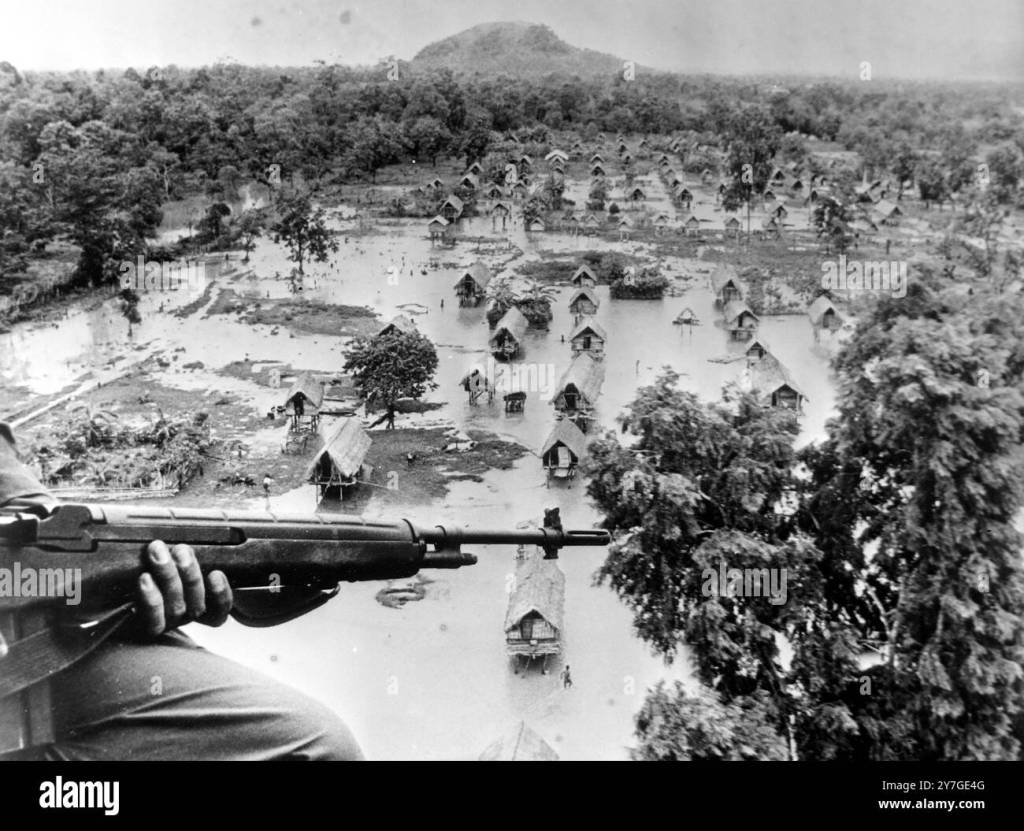
Mr. Hương went before the council after a day‐long tour of flooded provinces in central Vietnam where more than 5.000 people have died and hundreds of thousands have been made homeless in the wake of two heavy tropical storms. “Words cannot describe the suffering of our people that I saw today,” the Premier said. He has set in motion wide relief measures in which Americans and Vietnamese civilians and soldiers are struggling to assist the stricken population.
With characteristic bluntness, Mr. Hương noted the contrast between the plight of the rural population surrounded by war and now natural disaster, and the situation of the government’s critics in Saigon. “When I say my Government must win the hearts of the people,” Mr. Hương told the Council, “I am not thinking so much of the people in Saigon who are taking advantage of the comfort of the capital. I have seen the people in the countryside — I know their aspirations of justice and peace,” he went on. “I am not concerned about winning the hearts of those who say they are serving their country by putting pressure on the government.” Only four members of the 15-man Council spoke at the meeting. Mr. Hương sat patiently, alone at a long table facing his critics.
Mr. Hương’s firmness in the face of a week of attacks has favorably impressed foreign diplomats and, also, many Vietnamese political observers who had planned to assail his government. “I certainly never aspired or expected to see myself sitting here in the place of the Premier,” the former teacher and office clerk told the Council. Mr. Hương conceded that he had experienced difficulties in selecting members of his government. The Premier said the armed forces had exerted no pressure on him as he was forming his government and were standing by him now to put down any demonstrations that threatened public order. A heavy guard of troops surrounded the council’s meeting hall, on the banks of the Saigon River, as students were attempting to organize a fiery demonstration a mile away. Disagreement among the student leaders on how far to go in their demonstrations apparently took some of the steam out of the protest march.
Communist guerrillas advanced south through the flooded provinces north of Saigon today. Refugees said that the Việt Cộng, who escaped the worst of the floods by taking to their mountain hideouts, were moving openly into the valleys.
Seven United States officers and men were awarded the Bronze Star today for “heroism in ground combat” in Vietnam and an eighth received the Soldier’s Medal for noncombatant heroism. Among the Bronze Star winners was Captain Theodore B. Voorhees, 31 years old, of New York.
Laotian Government forces have driven Communist troops from the vicinity of a strategic town near the Plaine des Jarres, the government announced today. A communiqué said Communist Pathet Lao and North Vietnamese troops had been forced to retreat from near Tha Thom, northeast of Vientiane, after suffering heavy casualties. The Government did not indicate whether its troops had suffered any casualties.
In the capital of Vientiane, a Pathet Lao commander who defected said today that he shot a North Vietnamese general last week because the general was “one of the men responsible for bringing ill fortune to my country.” The defector, Boun Hieng, was introduced to newsmen by a Royal Laotian Army general, Thao Sang. The slain general was identified only as General Trưởng.
Thai Foreign Minister Thanat Khoman said today that there was a growing underground movement in Thailand toward neutralism. He asserted that government acceptance of such a policy would amount to surrender to Communist China. In an interview at the Foreign Ministry, Mr. Thanat said the government was combating a tendency toward neutralism that had become manifest in the press and in agitation among students, teachers and Buddhist priests. Neutralist elements have also tried to infiltrate the armed forces, the Foreign Minister said. “The campaign is not wholly effective but it is growing,” Mr. Thanat stated. “It is a very subtle campaign, and they have not dared to come out into the open.”
Most active supporters of neutralism have been members of the outlawed Communist party or are leftists sympathetic to Peking. Others simply believe that a policy of nonalignment would afford their country better protection from Communist China than the present military alliance with the United States. Some well‐informed American observers here estimate that neutralist elements constitute only a small minority in official circles and in the country as a whole.
Chou Enlai, Premier of Communist China, left Moscow tonight amid signs that a great deal of coolness persisted between him and the Soviet leadership. A communiqué described the six‐day series of talks as “frank and comradely.” Of all the carefully graded phrases used by the Communists for such occasions, this is one of the most frigid. A report by Peking on the talks was curt and gave no indication of the outcome. Analysts interpreted this as evidence that discussions had not gone smoothly. The word “frank” is normally used to describe discussions with capitalist officials or with Communist parties with which there are basic disagreements. It was used after a visit by the Rumanian Premier, Ion Gheorghe Maurer, at the height of the Rumanian‐Soviet controversy over economic and ideological issues earlier this year. Yesterday the same phrase was used to describe the talks between the Soviet leaders and North Korean Communists, who are closely aligned with the Chinese.
Albania has declared “open ideological war” on the new Moscow regime. The newspaper of the Albanian Communist party, Zeri i Popullit, published a long article denouncing “modern revisionism.” The paper, as quoted in a Tirana broadcast, said it had been holding up the article since mid‐October, when Nikita S. Khrushchev was deposed. “Meanwhile, the present Soviet leaders have declared more than once that they will continue the revisionist policy of the 20th, 21st and 22d congresses of the Soviet Communist party,” the article declared. Albanian pronouncements are often considered to reflect Chinese Communist opinion.
The United States suggested today that the Soviet Union and other countries could avoid losing their votes in the General Assembly by paying their debts in any form. This suggestion, made in a statement by Adlai E. Stevenson, the chief United States delegate, raised the firmest hope so far for a compromise in the crisis over the Soviet Union’s unpaid assessments. It would mean that delinquent countries could pay their arrears without earmarking the payments for peace‐keeping operations to which they object. Mr. Stevenson said voluntary payments could be made “without prejudice to the Soviet’s, or anyone else’s, legal views.” Moscow objects in principle to paying assessments levied by the General Assembly for peace‐keeping actions; the Soviet bloc maintains that only the Security Council, in which Moscow has a veto, can levy special assessments.
A Soviet economist, R. Belousov, called today for the extension of a profit incentive system to heavy industry and all other branches of the economy. The system has been introduced in some consumer‐goods industries to replace cumbersome‐centralized planning. Mr. Belousov said traditional planning and administration methods, regulating virtually all facets of an enterprise’s activities from above, had ceased to work efficiently. He cited failures in the steel and mining industries and attributed the poor quality of Soviet industrial products to weaknesses in the planning methods.
Syria fired artillery at two settlements on the other side of its border with Israel, with shells fired from the Golan Heights at Kibbutz Dan and at Sha’ar Yishuv. In retaliation, the Israeli Air Force conducted a massive air strike on positions in Syria, “taking the opportunity to destroy the Syrian diversion equipment” that was being used to reroute the waters of the Jordan River away from Israel, and sending “a signal that Israel would not hesitate to use all the means at its disposal to thwart the counterdiversion scheme even at the price of a military confrontation with the Arab states.”
The fighting, which began, according to the Israelis, with Syrian mortar, artillery and heavy machine‐gun fire directed against a mobile Israeli patrol, lasted from 1:30 to 3:30 PM. Then the United Nations Truce Supervision Organization arranged a cease‐fire. Brigadier General Ezer Weizmann, commander of the Israeli Air Force, said Israeli jets went into action at 2:55 PM after the Syrians had fired upon the settlements of Dan and Shear Yashuv. It was understood to be the first time that Israeli planes had attacked entrenched Syrian positions since March, 1962, when Syrian positions on the eastern shore of the Sea of Galilee were bombed. General Weizmann said that his planes had attacked as deep as six miles into Syria. The Israeli jets, he declared, used napalm (jellied gasoline) and rockets and strafed with machine guns, knocking out four Syrian positions, including two dug‐in Syrian tanks, German panzers from World War II.
Syria in a statement today accused Israel of a deliberate aerial attack on Syrian territory and charged that the assault had been made to “poison the atmosphere” before the forthcoming General Assembly session.
“Steady progress” was reported today after a meeting of the eight-nation working group charged with setting up the intenational nuclear fleet proposed by the United States. At the same time a Frecch Government spokesman vigorously attacked the projected force as a “cyst” on the Atlantic alliance that would isolate France, divide Europe and steal all substance from the French‐German Treaty of Cooperation. A reorganization of the North Atlantic Treaty Organization is essential, the source said but it is impossible so long as the United States insists on the nuclear fleet, which would be manned by crews of mixed nationality.
Nevertheless French sources were less optimistic than previously about the chance that the force would be abandoned because of British suggestions for modifications and German moves for a delay. Paris is facing the prospect that with or without Washington’s acceptance of the British suggestions to broaden the force through the inclusion of land-based missiles and bombers, the project stands a good chance of completion in its basic outline. The working group, undeterred by President de Gaulle’s hostility and by delays in final decisions on the force, is gradually eliminating differences over its structure and organization.
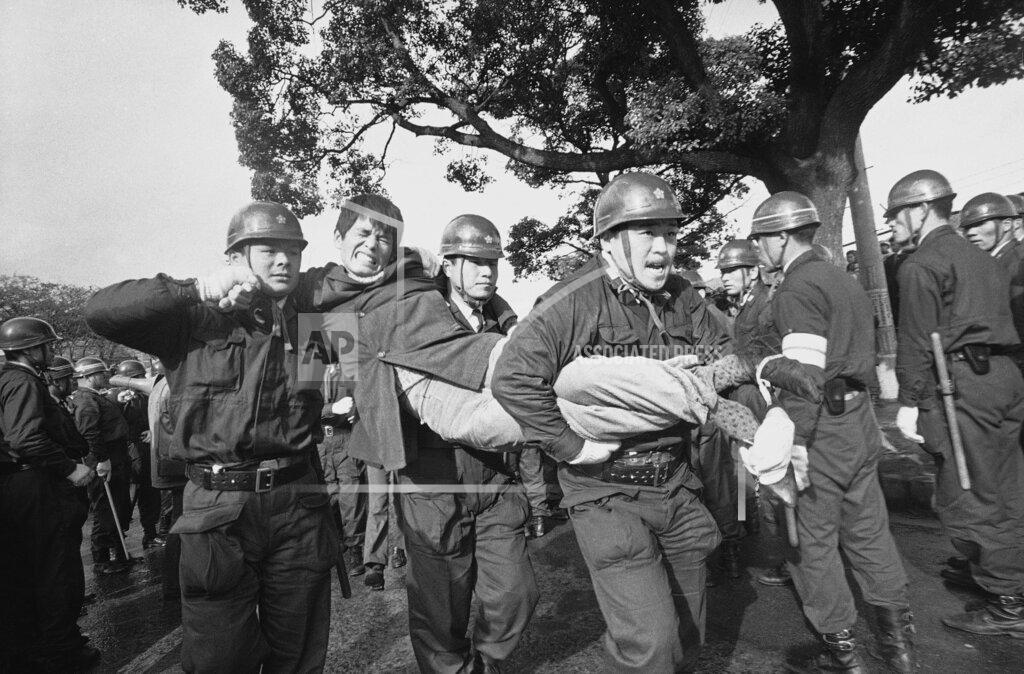
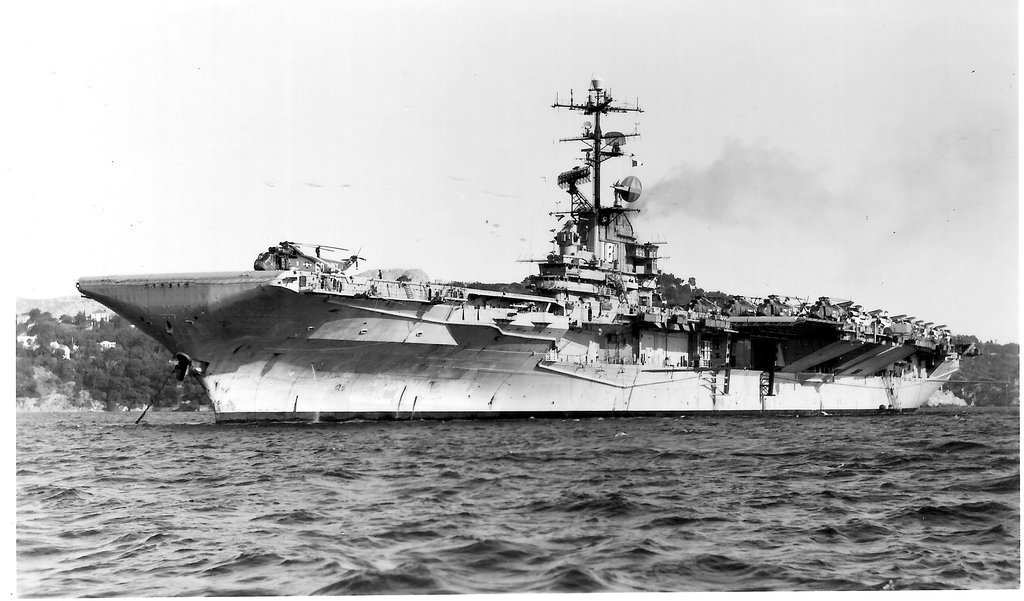
The United States submarine USS Seadragon, first nuclear‐powered vessel to visit Japan, ended a three-day stay in the port city of Sasebo today, with leftist protests dwindling. The black‐hulled submarine pulled out of Sasebo Harbor at 2:03 PM to return to what the United States Navy said would be normal duty in the Pacific. Large numbers of Japanese riot police had been stationed near the navy base in anticipation of a possible last‐minute all‐out demonstration by the Leftists, Only a group of about .30 Communists appeared an hour before the submarine left. They waved their banners, gazed at the line of riot police and then marched away. Leftist prestige had suffered from the fact that organized protests launched on the Seadragoh’s arrival at the United States naval base Thursday failed to come up to the predictions of the Socialists and Communists.
Pope Paul VI gave up the jewel-encrusted gold papal crown, donating it to the poor at a service in Rome. Pope Paul VI gave his bejeweled, three-tiered gold and silver tiara to the world’s poor today in a dramatic gesture before 2,000 bishops at a ceremony in St. Peter’s Basilica. At the close of a solemn liturgical mass in the ByzantineSlavic Rite, the Pope rose from his throne, descended a few steps and placed the gleaming tiara on the altar. An announcement by Archbishop Pericle Felici, Secretary General of the. Ecumenical Council, said the Pontiff had been moved to his symbolic act of charity by discussions of world poverty during the current session of Ecumenical Council Vatican II. It was noted also that many of the Fathers of the Council in nine weeks of debate have urged the church to forgo pomp and “triumphal” clothing and ornament and embrace poverty.
The tiara is a tall, generally conical ceremonial crown of beaten silver with three superimposed, gold circlets encrusted with diamonds, sapphires and rabies. It was given to Pope Paul by the Catholics of Milan, his former archdiocese, for his coronation as Pontiff in June, 1963. It is of more modern design than the tiaras of his predecessors, slimmer, almost like the tip of a projectile, rather than the traditional beehive shape. Estimates of its intrinsic value range between $15,000 and $80,000. But, either sold at auction as a unit or broken up and offered in pieces, the tiara probably would bring even more than the highest estimate of its worth, in the opinion of observers in Rome.
In La Paz, Bolivia, students of the University of San Andres, who had a role in the revolt that toppled the Government of Victor Paz Estenssoro, went on strike today. Their action posed the first open challenge to the military junta they had helped install. The strike came as the leader of the junta, Lieutenant General René Barrientos Ortufio, reiterated his determination to follow a moderate political path despite extremist pressures. The student protest, which was supported by the university authorities, was far smaller in scope than the disorders that culminated November 4 with the overthrow of Dr. Paz. The student walkout was ordered by the powerful university students’ federation which is controlled by the rightist Bolivian Socialist Falange.
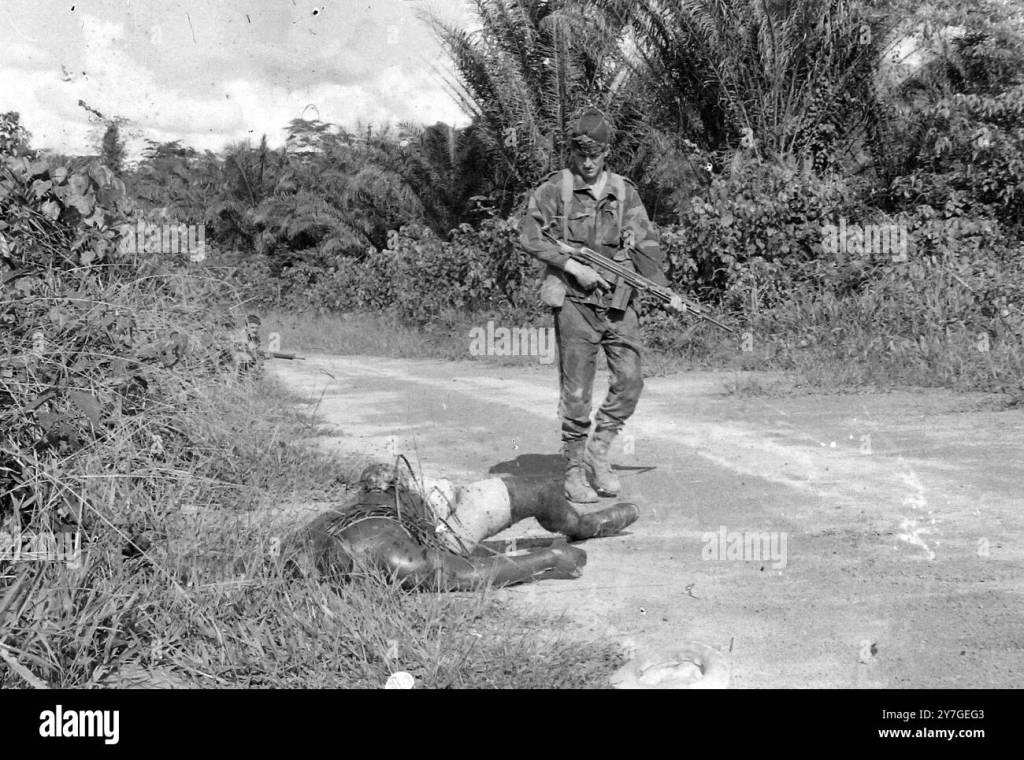
As Congolese Army columns led by white mercenaries press closer to Stanleyville, there is mounting concern in the capital of Leopldville for the safety of the whites held hostage in the rebel capital. Diplomats in the capital put the number of whites in Stanleyville at a little more than 900. There are 31 Americans. Five of them are consular officials and the others are missionaries or teachers at the Protestantsponsored University of Stanleyville. There are 63 Americans in rebel‐held territory: 16 men, 19 women, and 28 children. Most of the Americans in outlying districts probably have been withdrawn to Stanleyville, adding to the 31 already known to be there. Europeans in the rebels’ river port capital include 525 Belgians, 33 Canadians, 25 Britons and about 200 Greeks and Italians.
President Johnson ended his meeting with President‐elect Gustavo Diaz Ordaz of Mexico today and immediately began talks with the Secretaries of Labor and of Health, Education and Welfare. Although Mr. Johnson and Mr. Diaz Ordaz discussed the problem of Communist Cuba they did not appear to have found ways of reducing national disagreements on that issue. Mexico is the only LatinAmerican nation to retain diplomatic relations with Cuba, and she voted against the Organization of American States resolution this year calling for hemispheric isolation of the Castro regime. Diplomatic sources, however, described the informal 27‐hour visit by Mr. Diaz Ordaz and his wife to the President’s LBJ Ranch as unusually successful in its primary aim of creating a personal friendship between the two leaders.
Just before Mr. Diaz Ordaz left the ranch by air this afternoon Labor Secretary W. Willard Wirtz and the Secretary of Health, Education and Welfare, Anthony J. Celebrezze, arrived for an overnight stay. They were the fifth and sixth members of the Cabinet to make the journey to the ranch this week. The associate White House press secretary, Malcolm Kilduff, said that both men would “discuss the goals of their agencies in the coming year, their budget and legislative programs.” Mr. Kilduff also said in response to questions that rumors that the White House press secretary, George Reedy, would resign soon were “without foundation in fact.” Mr. Reedy is now vacationing at Acapulco, Mexico. Mr. Johnson is expected to return to Washington Sunday for the first time since before the election. The Texas deer season opens tomorrow and Mr. Johnson said that after a day’s office work he might go hunting in the evening. The season limit in his area is three deer. Diplomatic and American Government sources stressed the informal character of the Diaz Ordaz visit and said the two men had not tried to make policy since Mr. Diaz Ordaz does not take office until Dec. 1, and is not empowered to speak for his country.
These sources said that President Johnson told Mr. Diaz Ordaz that there was no change and would be no change in the United States position on Cuba, which is that that nation should be isolated and economic sanctions enforced. The Mexican leader replied by explaining and reiterating the Mexican reason for refusing to concur, which one American source described as primarily “juridicial.” It was not felt that Mr. Johnson had been anxious to get any public concession from Mr. Diaz Ordaz because leftist members of the Mexican press had been placing him under pressure with the interpretation that he was going to Texas to get orders from the United States.
Former Vice President Richard M. Nixon said yesterday that the ouster of Soviet Premier Khrushchev posed a danger to the world. He advised President Johnson not “to coast” because of his election victory. Mr. Nixon, leaving Kennedy Airport on a business trip to Japan, said he had seen no indication that the Administration was set to meet the Communist threat. “The change of government in the Soviet Union has not been properly measured by our people or our government in terms of its significance,” he said. “The danger is infinitely greater than it was because the new leaders and the one leader they will pick are younger, hungrier and tougher than Khrushchev.”
Mr. Nixon said Mr. Johnson had been “elected on the most barren program of any candidate in recent history” and might have “a tendency to coast” because of the size of the victory. In asserting that he saw no program to deal with a Communist threat, Mr. Nixon said this was one reason there must be a concerted drive for unity among dissident elements of the Republican party. The party’s task, he said, is to offer a “positive and constructive loyal opposition to the Administration.” “The party,” he said, “is bigger than Rockefeller and it is bigger than Goldwater, but it is big enough for both.”
Mr. Nixon had previously attacked Governor Rockefeller of New York as the party’s “principal divider” in the Presidential campaign of Senator Barry Goldwater of Arizona. To further questions about Mr. Rockefeller, Mr. Nixon said he considered the election “a closed book.” He said Mr. Goldwater was technically titular head of the Republican party and that the extent of his following would depend on how he meets the challenge of unity in the elections of 1966.
Senator Barry Goldwater and his supporters have decided that they will fight, if necessary, to hold the leadership of the Republican party. Representative William E. Miller, after discussing the leadership question with the defeated Presidential nominee, said today that Dean Burch should remain as Republican National Chairman. “I am sure that Barry shares this view,” said Mr. Miller, the Vice‐Presidential nominee. Mr. Burch said, meanwhile, that he would seek an early vote of confidence from the Republican National Committee. Mr. Miller predicted that the vote would back him. Senator Goldwater and the party leaders have been discussing their future course in Jamaica since Tuesday.
Today Mr. Miller told an interviewer at the Half Moon Hotel: “Now that the campaign for President is over, Dean Burch is not a Goldwater man or a Miller man, but the Republican party’s man. He is chairman of the National Committee, and that means chairman of the whole party. His job now is to run the committee so as to elect Republican Governors, Senators and Congressmen in 1966. He is an extremely able and competent man for the job and he should get on with it.” The Arizona Senator, who symbolizes political conservatism, said he would say nothing publicly “for a month or two.” But it was apparent that Mr. Miller spoke for him and for Mr. Burch.
In the aftermath of President Johnson’s victory over Senator Goldwater on November 3 and the accompanying defeat of many Republican candidates for national, state and local offices, many moderate Republicans and some conservatives have called for Mr. Burch’s resignation. A strong counter movement supporting Mr. Burch is expected to get under way shortly. Mr. Miller conceded that the prevailing sentiment in the party “at the moment” was for a change. He contended, that this sentiment prevailed because “the people yelling to make Burch a scapegoat” had so far been more aggressive, than the chairman’s supporters.
The National Mediation Board will intensify its efforts next week to work out a settlement of a dispute that threatens to shut down the nation’s rail system at 6 AM on November 23.
Mayor Janies H. J. Tate disclosed today that 14 or 15 Philadelphia policemen had been found to be members of the John Birch Society. These men will be given limited duty, if they are not dismissed or suspended, the Mayor said. “They have limited their capability and usefulness to the Police Department,” the Mayor said in commenting on an investigation being conducted by Deputy Police Commissioner Edward J. Bell. Thus far, Mr. Tate reported, the investigation has indicated that membership in the rightwing group is limited to 14 or 15 policemen, including two lieutenants, two detectives and two sergeants. Under questioning by Mr. Bell and members of the intelligence squad assigned to check on their activities, 12 policemen said they had joined the society because they were concerned over Communism and what they considered public resentment of the police. All have been described as men with “spotless” service records.
The tomb of John Fitzgerald Kennedy, almost a year in the planning, will be of simple design. It will include decorative stone walks leading up the hill to the gravesite at Arlington National Cemetery. The details will be revealed Monday, when the model for the tomb is unveiled at the National Gallery of Art. But talks today with those who have seen and approved the design indicate that there will be no building and no statue on the President’s grave. The eternal flame lighted there by his widow the day of his funeral, November 25, 1963, will he incorporated into the permanent monument. There will evidently by space around it for people to circulate.
A white school teacher who was arrested in Mississippi on vagrancy charges after taking six Black students to lunch in a Kress Department store filed a $550,000 damage suit against the store owner in Federal Court in New York yesterday. She charged that the police of Hattiesburg, Mississippi, and employes of the Kress store there had conspired to deprive her of her constitutional rights by having her arrested. She is Miss Sandra Adickes of 520 East 12th Street, who teaches English at the Benjamin Franklin High School at 116th Street and the Franklin D. Roosevelt Drive. Miss Adickes worked in the Mississippi Project sponsored by the Council of Federated Organizations, whose purpose is to educate and integrate Blacks, from July 6 to August 14. Her suit was filed here because the defendant, S. H. Kress & Company, has its main office at 114 Fifth Avenue.
A preview of the war of tomorrow ended last night in the pine forests and sand hills of North and South Carolina. The Army’s most ambitious and imaginative field exercise and test—a glimpse of ground warfare of the future‐came to an end near Fort Bragg, North Carolina, with soldiers roaring into mock battle at 80 miles an hour A helicopter assault by more than 100 aircraft, carrying more than 2,000 troops, ended an extensive test of a new tactical unit, the 11th Air Assault Division. It is the first divisional unit in Army history to use both helicopters and fixed‐wing aircraft for its battlefield mobility.
The exercise — Air Assault II, the largest field test ever conducted by the Army was the culmination of about two years of some 79 different, studies, exercises, map analyses and evaluations of the Army’s new concept of air mobility. About 32,000 troops, 589 Army aircraft and 50 Air Force planes participated in the final maneuver. The exercise spread over four and one‐quarter million acres between here and Fort Bragg. The 82nd Airborne Division was the Red “enemy” used by the exercise director, Lieutenant General Charles W. G. Rich, to test the 11th Air Assault Division and the supporting 10th Air Transport Brigade Both of these are experimental units.
In the Carolina test, the Army’s 11th Division operated over an area of 100 by 50 miles. Battalions and brigades, artillery and infantry were shuttled from place to place by helicopter. The division has been greatly slimmed down compared with other types of Army divisions to make it completely transportable by its own aircraft. It has no tanks or tracked vehicles and all heavy weapons have either been eliminated or lightened.
David Russell, a homeless transient, became the first apparent victim of a serial killer who would become known as the “Skid Row Slasher”; Russell’s body was found on the steps of the central building of the Los Angeles Public Library. The next day, the body of 67-year old Benjamin Hornberg, was found in the restroom of a skid row hotel. Both men had been stabbed multiple times before their throats had been slashed, ear-to-ear. For the next ten years, there would be no similar killings; during a two-month period in December 1974 and January 1975, Vaughn Greenwood would murder nine more transients in a similar fashion before being apprehended.
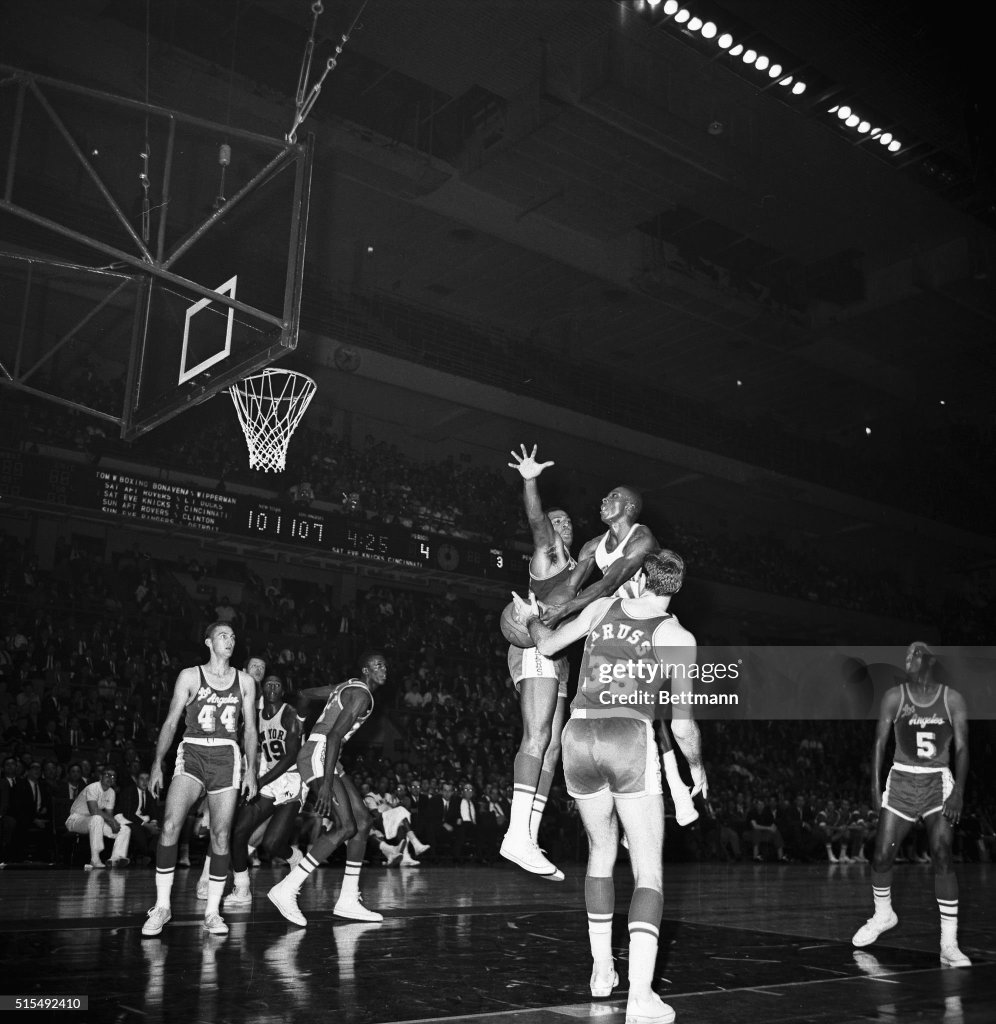
In the United States, Bob Pettit of the St. Louis Hawks became the first NBA player to score 20,000 points, in a 123-106 loss to the host Cincinnati Royals. Pettit, who was in his 11th NBA season and who had 19,993 points going into the game, made a short hook shot with 10:40 left in the second quarter, and would finish with 20,022.
Dow Jones Industrial Average: 874.11 (-0.51)
Born:
Dan Sullivan, American politician (Senator-R-Alaska 2015-), in Fairview Park, Ohio.
Ronald Agenor, Moroccan tennis player (1989 French quarters), in Rabat, Morocco.
Chris Kelley, NFL tight end (Cleveland Browns), in Lorain, Ohio.
Died:
Oskar Becker, 75, German mathematician and historian



 History Diaries