
Premier Trần Văn Hương will fly to central Vietnam tomorrow to help set up coordinated relief operations for hundreds of thousands of homeless in Vietnam’s worst flood disaster in more than two decades. An official announcement said that he would be accompanied by the United States Ambassador, Maxwell D. Taylor, in a daylong survey. Tons of food and relief supplies from the South Vietnamese Government and the American Agency for International Development have been flown in United States aircraft to the inundated provinces despite continuous ground fire from Communist guerrillas at the low‐flying planes, an American military spokesman said. One United States Army helicopter flying at treetop level in the low ceiling of a tropical storm reported it was under ground fire during an entire 40-mile trip.
An American spokesman said there were confirmed reports of 1,100 civilians dead from drowning in one district of Quảng Tín Province. At the height of the storm, tons of water poured out of the mountains into the lowlands. The death toll reached the hundreds in other districts and property damage was estimated at 90 per cent in many areas. The total death toll was officially estimated at 5,000 or more, an Associated Press dispatch from Đà Nẵng said.
Premier Hương’s sudden trip was announced in the midst of political storms around his week‐old government. Student groups were reported to have scheduled a demonstration in Saigon tomorrow to protest the composition of his cabinets, which consists of civil servants rather than active political leaders. One Saigon newspaper criticized the students, suggesting that instead of making things difficult for the government by marching in the streets they should volunteer to go to central Vietnam to help in flood relief, work for their stricken countrymen.
Weather stations gave no hope for a let‐up in the rain. The flooding resulted from two tropical storms in the coastal areas. American meteorologists warned of a third storm detected about 300 miles off the coast that could approach land by early next week. The stricken areas stretched from Quảng Nam Province in the north down to Khánh Hòa Province.
In two attacks in Bình Tuy Province, Việt Cộng kill 34 ARVN soldiers and wound 40. Both attacks occurred yesterday about 75 miles northeast of Saigon in what had been considered one of South Vietnam safest provinces, the Defense Ministry reported today.
Cambodia’s Prince Sihanouk says that if the United States wants to improve its relations with Cambodia, it must get the South Vietnamese to stop their attack on border areas and stop charging that the Việt Cộng are allowed to use Cambodia as a sanctuary and supply route. He claims that the South Vietnamese have killed 100 Cambodians and demands that the United States and South Vietnam pay one bulldozer or one million riels for each Cambodian killed.
The Soviet Union is stronger militarily today than it was at the time of the treaty for a partial nuclear test ban a little more than a year ago, ac‐ cording to experts at allied headquarters in Europe. The assertion was made during one of a series of background interviews with military commanders at Supreme Allied Headquarters near Paris and several subordinate commands in Western Europe. One high officer expressed annoyance over what he called the “euphoria” in the West regarding Soviet military power.
The increased Soviet military strength, it is contended, is not fully reflected in numerical comparisons of intercontinental ballistic missiles. The two‐year‐old estimate that the United States has four times as many major missiles as the Soviet Union is still a useful figure, it is said. The more significant measure of growing Soviet military power, according to Western military authorities, is the job that has been done in outfitting Communist ground forces poised along the Iron Curtain in Eastern Europe. “The Soviet ground forces in the satellite nations are now completely armored or motorized,” an officer said at United States. Army headquarters in Europe. Their organization is tailored to meet the requirements of either atomic or nonatomic combat and their forces are trained and equipped for both, he said.
“The equipment organic to Soviet units in East Germany is modern and includes many armored and amphibious personnel carriers and tanks,” he continued. “In addition, they have a large amount of mobile bridging. The Russians have large stockpiles of supplies and equipment in East Germany. It is estimated that these stocks are sufficient to support the Soviet forces in Germany for at least a month’s combat operations.”
According to an estimate available at the Heidelberg headquarters: “The Soviet ground forces are well‐trained, well‐equipped and maintained at all times in an advanced state of combat readiness. They could attack using nuclear weapons or a powerful assortment of conventional weapons.” At supreme headquarters, similarly, it was said that one of the most recent aspects of the Soviet Union’s modernization of its ground forces in Eastern Europe was the introduction of “a variety of tactical nuclear weapons, some of which are mounted on tracked carriers to give them a high order of mobility.” Estimates of Soviet division strength in Eastern Europe remained unchanged from previous years. The Soviet Army is said said to have 20 divisions stationed in East Germany, two in Poland and four in Hungary. But it is conceded that many of these divisions not only are smaller than their United States equivalents but are at half or at most three‐quarters strength.
Intensive consultations between the Soviet Union’s new leaders and Communists from 12 other countries appeared to be approaching an end today as five more delegations left Moscow. Those who departed were Premier Todor Zhivkov of Bulgaria, Janos Kadar, Premier and party chief of Hungary; Premier Ion Gheorghe Maurer of Rumania, Deputy Premier Kim Il of North Korea and Premier Phạm Văn Đồng of North Vietnam. Three foreign delegations remained in the capital.
Premier Chou En‐lai of Communist China, the key figure in the talks, has now been here a week. He and six other Chinese Communist party and Government officials who accompanied him were believed to be meeting again today with Soviet officials. The other delegates still here were Ernesto Che Guevara, the Cuban Minister of Industry, and Premier Yumzhagiin Tsedenbal of Mongolia. The foreign Communists came here last week to take part in the celebration of the 47th anniversary of the Bolshevik Revolution. The consultations on the ideological rift in the Communist movement followed.
Officially, the secrecy surrounding the meetings between Premier Chou and the Soviet leaders remained unbroken. Privately, some Communist correspondents from Western countries were cautioned by sources in the Soviet leadership against being overoptimistic about the outcome of the talks. The note of caution was consistent with the Soviet attitude from the beginning of the delicate and apparently difficult negotiations between the Chinese and Soviet Communist regimes.
The State Department took the position today that there had been no fundamental change in the desire of the West German Government to establish by early next year an allied nuclear fleet. As interpreted by the State Department, the West German Government was merely seeking a short delay in creating the multinational fleet, partly to study new British proposals for creating a nuclear force within the North Atlantic Treaty Organization. The department’s interpretation of the German position was conveyed by Robert J. McCloskey, the department’s spokesman, in commenting on the surprise move yesterday by the ruling Christian Democratic party to delay consideration of the nuclear‐armed fleet proposed by the United States. Thus far West Germany has been the only staunch, openly committed supporter of the United States proposal, and the State Department, on the basis of some diplomatic assurances, was emphasizing that West Germany could be counted upon as a continuing supporter.
Though the contacts between Poland and the United States are about the closest that Washington maintains with any Soviet bloc country, the increasing irritations of the last year have grown into grievances. These concern United States withdrawal of economic benefits and Polish limitations on political freedoms. Poland’s Communist leaders and American diplomats here accuse each other of retreating from the tacit bargain struck after the “great Polish October” of 1956. That was the political upheaval that brought Wladyslaw Gomulka to power on a wave of resentment against Stalinist repression and Soviet exploitation. It led to an unwritten agreement that the United States would exchange economic and technical help for a degree of Polish independence from Moscow and receptivity to Western culture and ideology. Poland received nearly $600 million worth of United States grain and what amounted to interest‐free, 40‐year loans, plus a dozen other forms of official and private economic assistance.
The Common Market’s Council of Ministers failed tonight to break a stalemate in attempts to draw up a list of exceptions for the Kennedy round of tariff‐cutting negotiations. The ministers decided to meet again Saturday in a last‐minute effort to meet the deadline Monday. Monday is the day set for the opening in Geneva of the Kennedy round — negotiations on industrial goods to be subject to tariff cuts as high as 50 percent. French officials were optimistic that the deadline could be met. “The Germans must understand that it is quite reasonable for us to want to protect our industry,” one French delegate said. In the meantime, a special committee of national and Common Market experts will continue to study the problem of what products should be included in the list.
President Antonin Novotny of Czechoslovakia was re‐elected for a second five-year term at a special meeting of the National Assembly today. The official Czechoslovak press agency Ceteka said that the Assembly members had acted unanimously. Mr. Novotny, who will be 60 years old on December 10, was first elected President in 1957. He also retained the post of First Secretary of the Communist party, which he had held since 1953. The President’s re‐election ended days of speculation about his future. The speculation had been fanned when Czechoslovak newspapers, in pre‐election stories, had avoided saying who the presidential candidate would be.
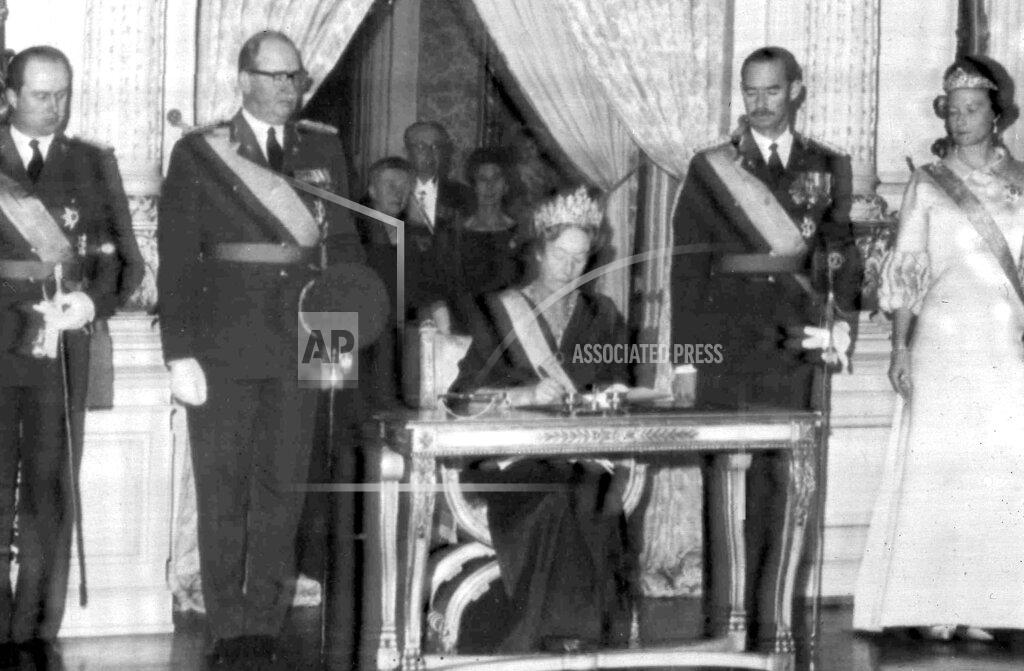
Charlotte, Grand Duchess of Luxembourg, abdicated as the monarch of the small Western European nation of 320,000 people, after a reign of 45 years. Her son Jean, who became the new Grand Duke of Luxembourg. Charlotte had ascended the throne in 1919 after the abdication of her older sister, the Grand Duchess Marie-Adélaïde; Jean would abdicate the throne in 2000 in favor of his son, Henri.
The Secretary General, U Thant, has rejected a move to postpone a fund‐pledging conference for United Nations technical assistance until the storm over the Soviet Union’s unpaid assessments has subsided. Canada, Japan and Italy asked Mr. Thant this morning to postpone the conference, which is to be held Monday. They favored holding it after December 1, when the General Assembly is to convene. It is the Assembly that must deal with the issue of whether Moscow will lose its vote, as Washington demands, over the unpaid debt. Last week a United States spokesman disclosed that Washington, which regularly donates 40 percent of the technical assistance costs, would withhold a commitment at this year’s pledging conference.
President Gamal Abdel Nasser mentioned in a speech today American support of Israel and the United States stand in the Congo as areas of disagreement between Cairo and Washington. He added that the United Arab Republic had “no direct problems with the United States.” President Nasser also mentioned British and American bases in the Middle East as another point of difference. His speech, which dealt mainly with domestic problems, was addressed to the National Assembly.
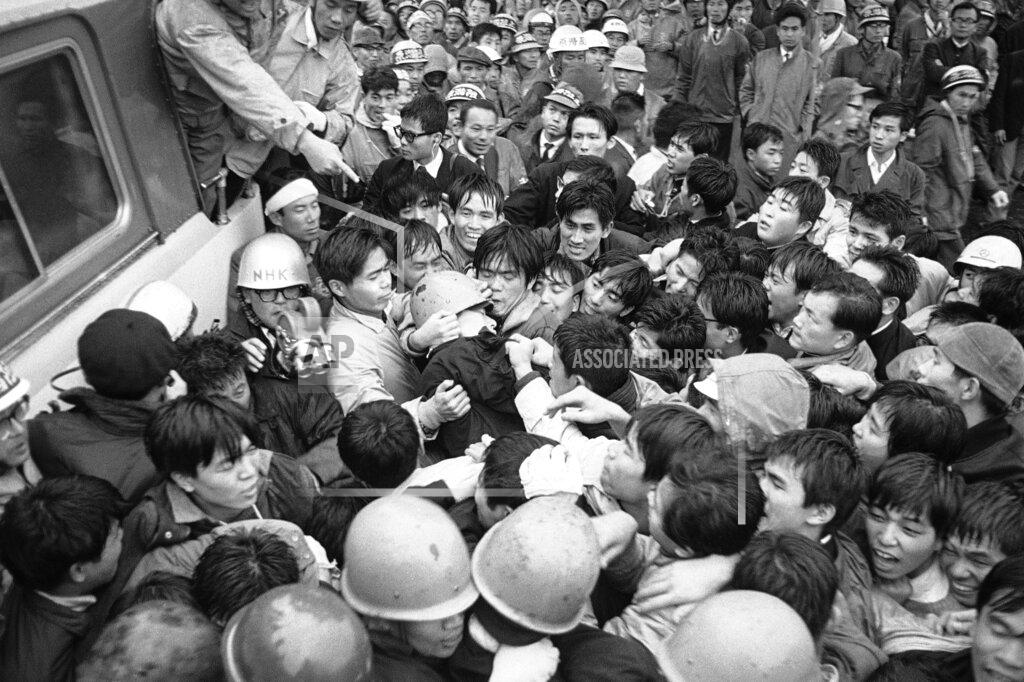
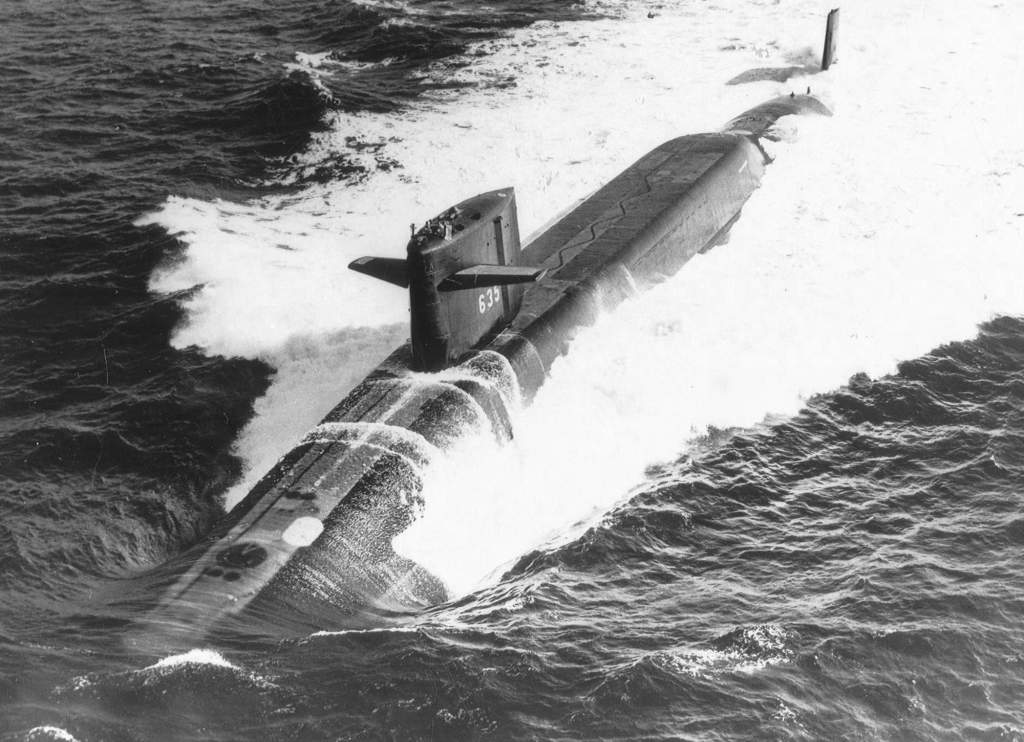
Although placards carried by singing, shouting and snakedancing demonstrators said ”Yankee Go Home,” an American watching the occasionally violent spectacle here today had little feeling that the tumult involved either him or his country very much. About 2,000 leftist unionists and students poured out in a demonstration of protest against the arrival here today of the United States nuclear-powered submarine USS Seadragon. The vessel, whose skipper is Commander Douglas B. Guthe of Scarsdale, New York, is now moored alongside the repair ship Ajax in the harbor. The typical Japanese demonstration — or “demo” as the Japanese call it — is a special kind of local spectacle, like the seasonal parades with portable Shinto shrines.
The announcement of plans for the Seadragon’s visit set off a wave of demonstrations across Japan. Opposition to the visit of nuclear‐powered submarines has been a leftist political weapon since the United States first asked Japan’s approval in January of 1963. Ostensibly, the purpose of the visit is to provide rest and recreation for American crews on long tours of duty. But an important consideration is also said to be to associate Japan a little more closely with the anti‐Communist defense system and to remind a nation strongly influenced by neutralism of its responsibilities. The nuclear question is a particularly sensitive one with the Japanese because their country is the only one to have suffered atomic attack. In August the Japanese Government, after long consideration and safety surveys, approved the visit. It noted that the submarines would carry no nuclear weapons and promised careful cheeks against radioactive contamination of its waters.
Like most demos, the protest seemed to be less against the nuclear submarine or against the United States than against a vaguely felt frustration under the pressure of the times. The demo is an occasion for venting any grievance, whether related to the principal issue at hand or not. Today, for example, mixed in with the antiAmerican banners were some protesting against a Government plan to close an uneconomical coal mine in the area.
President Johnson welcomed the President‐elect of Mexico to his ranch in Johnson City, Texas today, put a five‐gallon hat on his head and took him to a barbecue on the banks of the muddy Pedernales River. The Mexican leader, Gustavo Diaz Ordaz, and Mrs. Diaz Ordaz arrived at noon at the President’s LBJ Ranch, where they will be house guests until tomorrow afternoon. The two men are expected to talk informally about a number of bilateral problems, but the main purpose of the meeting is to give them a chance to develop a personal relationship that will be useful after Mr. Diaz Ordaz is inaugurated December 1. Mr. Johnson told his guest, “Mi casa es su casa” — “My house is your house.” Mr. Diaz Ordaz said the “purpose of my visit is to establish a personal knowledge between President Johnson and myself.”
The televised, public execution of the surviving two members of the Jeune Haiti rebels was conducted by a firing squad on orders of Haiti’s President, François “Papa Doc” Duvalier. Louis Drouin and Marcel Numa had been part of a 13-man guerrilla team that had tried in August to overthrow Duvalier’s dictatorship. Duvalier directed that the schoolchildren of Port-au-Prince be brought to watch the event, which took place outside of the walls of the national cemetery. Channel 5, the nation’s only television station, covered the event for rebroadcast.
The Rhodesian African nationalist leader Joshua Nkomo won today another legal battle against the Government. The appeal court in Salisbury decided that the Government order keeping Mr. Nkomo and 16 other nationalists in prison without trial was illegal. But tonight Mr. Nkomo was still in prison because the Government wants to decide whether it should appeal to the ultimate judicial authority for this self‐governing British colony, the Privy Council in London. The Chief Justice, Sir Hugh Beadle, gave the Government eight days in which to make up its mind.
The crippling impact of the week‐old strikes at eight plants of the Ford Motor Company spread through Ford’s nationwide production system yesterday. The company announced in Detroit that by tonight 33,500 production employees at 24 plants would have been laid off. This figure does not include the 25,500 workers who went on strike last Friday. It was estimated that Ford’s production of cars and trucks would be cut by 75 percent.
Most of the plants where layoffs are being made are in the Middle West. In New Jersey 2,000 workers at the Metuchen assembly plant will be laid off tonight, but the big assembly plant at Mahwah has not been affected. The widened effect of the walkouts resulted from growing shortages of parts and from the lack of outlets for some of the parts that could be manufactured. “There is no use in making glass when you have no cars to put it in and no place to store it in large quantities,” a company official commented.
Workers went on strike originally at nine plants after negotiators had failed to reach local level agreements supplementing the national labor pact on economic issues that was reached on September 18. A tentative settlement of the local dispute at the Louisville, Kentucky, assembly plant was achieved on Wednesday. As the shortage of parts manufactured in five of the struck plants grew more acute in midweek, Ford began to lay off workers. For example, 500 were furloughed at plants in Canton, Ohio, and Rawsonville, Michigan, on Wednesday, and about 2,500 were laid off yesterday at the Ford passenger car assembly plant in Kansas City, Missouri. But the greatest impact of the walkouts, the company said, will come today with layoffs bringing the total affected to 59,000, including the strikers.
The plants still on strike over local issues are the Dallas assembly plant (Ford cars and trucks), the Michigan truck plant at Wayne (Ford trucks), the Wayne assembly plant (Ford and Mercury cars), the Chicago Heights and Buffalo stamping plants (stamped body parts), the Sheffield, Alabama, aluminum foundry (aluminum castings), the Sterling, Michigan, plant (chassis assemblies) and the Ypsilanti, Michigan, manufacturing plant (various parts). A wide variety of local issues are involved in these disputes. They include demands for additional relief and washup time for some workers, problems relating to the allotment of overtime, many seniority questions, requests for improved ventilauon in some areas, and questions related to plant housekeeping and health and safety measures.
Officials of six unions representing 160,000 railroad shopcraft workers today set a deadline for a national railroad strike of 6 AM on November 23. The workers represented by the unions repair and maintain railroad equipment. If they strike, it is expected that their picket lines will be respected by other rail workers, resulting in a nearly complete national tie‐up. Some 187 railroads and terminal and switching companies are involved in the dispute. The unions involved are the International Association of Machinists, the International Brotherhood of Boilermakers, the Sheetmetal Workers International Association, the International Brotherhood of Electrical Workers, the Brotherhood of Railway Carmen of America and the International Brotherhood of Fireman and Oilers.
A three‐judge Federal court upheld today the constitutionality of Virginia’s stopgap poll tax, used in qualifying voters for state and local elections. Attorneys for the plaintiffs said the decision would be appealed to the Supreme Court. Since Breedlove v. Suttles, a decision in 1937, the Supreme Court has consistently affirmed lower court findings that it is not discriminatory to deny the franchise for failure to pay a poll tax. The case decided today presented an issue not brought before the high court since the Breedlove decision — whether a poll tax discriminates against voters who say they are too poor to pay.
The 24th Amendment to the Constitution, ratified last January, prohibts states from requiring proof of poll tax payment in qualifying voters in Federal elections. As a result, states that retain the poll tax, such as Virginia, now have two classes of voters — those with poll tax receipts, who can vote in both state and Federal elections, and those who have not paid a poll tax and are eligible to vote in Federal elections only. Besides Virginia, Alabama, Mississippi and Texas retain the poll tax in state and local elections.
Adlai E. Stevenson, United States Ambassador to the United Nations, asserted here tonight that an “effective partnership” between business and government could end “grinding poverty for the minority among us,” without “adding a single tax.” Mr. Stevenson, speaking at the dedication ceremonies of the Xerox Corporation’s new research and development laboratory, stated that “in an economy growing by $30 billion a year, it is nonsense to say that expanded education, decent housing, an end to urban ghettos, recreation and antipollution measures,” can be secured “only by the sacrifice of private opportunity.” Addressing more than 300 of the nation’s leading scientists, Mr. Stevenson added that if through this partnership “we keep the steady rate of growth. we can add $6 billion in public money,” without the prerequisite of any additional taxation. Mr. Stevenson also warned that the “biggest inflationary pressure — not the only pressure, but the biggest — comes from the wage‐cost push.”
A White House spokesman said today that a report that Clark Clifford, a Washington attorney and adviser to Presidents, would be appointed Attorney General was “completely untrue.” The associate White House press secretary, Malcolm Kilduff, had cast doubt on the report last night, but in less firm language. The National Broadcasting Company reported yesterday that Mr. Clifford was to be nominated for the job, which is currently unfilled. Nicholas de B. Katzenbach is serving as Acting Attorney General. Mr. Clifford had visited the President at his ranch here this week, but sources close to the President said they discussed recommendations on White House and personnel appointments and a possible reorganization of the White House staff.
Senator Barry Goldwater and his closest associates are finding it difficult to concentrate on politics and the future of the Republican party in the lazy, peaceful atmosphere of this island town. The Republican Presidential nominee; William E. Miller, his running mate, and their principal campaign aides were to have conferred on political matters nearly all of today. Instead, Mr. Goldwater went fishing in the morning, and golfed in the afternoon. Mr. Miller lolled on the beach, then, after a long luncheon, spent the afternoon on the golf course. Dean Burch, the Republican National Chairman, and John Grenier, the party organization’s executive director, took it easy, and chatted off‐handedly with visitors about what went wrong in the Presidential campaign.
Mr. Goldwater, who has been at the Royal Caribbean Hotel since last weekend, is talking of leaving Sunday. But friends say he might go to another Caribbean island, perhaps Puerto Rico, instead of to Washington. Mr. Miller, Mr. Burch and Mr. Grenier are registered at the Half Moon Hotel a mile or so down the beach of Montego Bay. Among other guests who exchanged nods and greetings with the Republican leaders were Mr. and Mrs. Stephen Smith of New York.
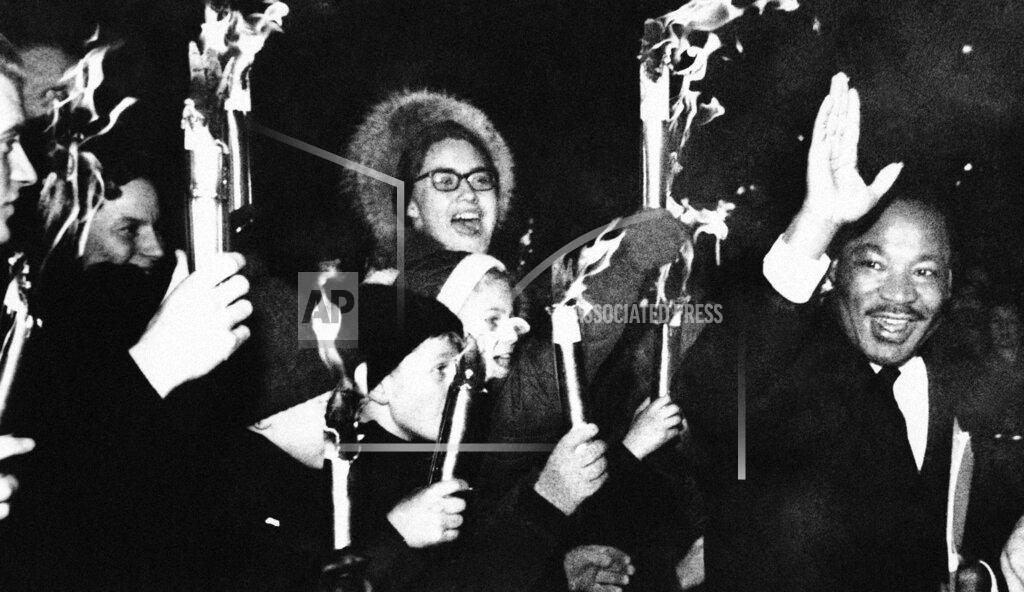
Leaders of seven major civil rights groups have sent a letter to President Johnson congratulating him on his election victory. The letter also asks for a conference to discuss ways in which the leaders, can help implement the Civil Rights Act of 1964 and aid in new programs to promote economic opportunity. The signers of the letter were James Farmer, director of the Congress of Racial Equality; James Forman, executive secretary of the Student Nonviolent Coordinating Committee; Jack Greenberg, director-counsel of the N.A.A.C.P. Legal Defense and Educational Fund, Inc.; Mrs. Dorothy I. Height, president of the National Council of Negro Women; Dr. Martin Luther King Jr., president of the Southern Christian Leadership Conference; Roy Wilkins, executive director of the National Association for the Advancement of Colored People, and Whitney M. Young Jr., director of the National Urban League.
The letter was mailed from Atlanta to the White House Wednesday afternoon by Wiley A. Branton, executive director of the Council for United Civil Rights Leadership, Inc. The seven leaders subscribing to the letter are directors of the council. A copy of the letter was addressed to the President at the LBJ Ranch, at Johnson City, Texas, where he is taking a working vacation. The letter said that America’s 20 million Black citizens wanted to take an active part in helping build the “Great Society” of which the President so often speaks, not merely to share its benefits.
Plans for a nationwide campaign to get dissident Black Republicans back in the party ranks will be mapped at a meeting of top officials of the National Negro Republican Assembly Saturday and Sunday in Baltimore. George G. Fleming of East Orange, New Jersey, president of the group, said, “We are determined to prevent control of the Republican Party by racist elements among the Goldwater supporters, whose strategy in the recent campaign gave clear indications of some wishful thinking and desire to convert the party of Lincoln into a segregated, white man’s party.”
Paula Murphy sets female land speed record 226.37 MPH.
Former Cincinnati Reds manager Fred Hutchinson, 45, dies of cancer in Florida.
Dow Jones Industrial Average: 874.62 (+1.03)
Born:
Erik Howard, American NFL nose tackle, defensive tackle and defensive end (NFL Champions, Super Bowl XXI and XXV-Giants; All-Pro, 1990; New York Giants, New York Jets), in Pittsfield, Massachusetts.
Gerald Perry, American NFL tackle and guard (Denver Broncos, Los Angeles Rams, Los Angeles-Oakland Raiders), in Columbia, South Carolina.
Wilbur Strozier, NFL tight end (Seattle Seahawks, San Diego Chargers), in La Grange, Georgia.
Dave Otto, MLB pitcher (Oakland A’s, Cleveland Indians, Pittsburgh Pirates, Chicago Cubs), in Chicago, Illinois.
Gary Thurman, MLB outfielder and pinch runner (Kansas City Royals, Detroit Tigers, Seattle Mariners, New York Mets), in Indianapolis, Indiana.
Jakob Hlasek, Swiss tennis player (French Open doubles 1992, Hopman Cup 1992), in Prague, Czechoslovakia.
Michael Kremer, American economist (2019 Nobel Prize for Economics), in New York, New York.
David Ellefson, American thrash metal bass guitarist for Megadeth; in Jackson, Minnesota.
Vic Chesnutt, American folk and roots-rock singer-songwriter, in Jacksonville, Florida (d. 2009).
Died:
Fred Hutchinson, 45, manager of the baseball’s Cincinnati Reds died less than a year after being diagnosed with cancer; Hutchinson, in his 13th season guiding a major league baseball team, had managed the Reds through the first 109 games of their 162-game 1964 season before stepping down on August 12.




 History Diaries