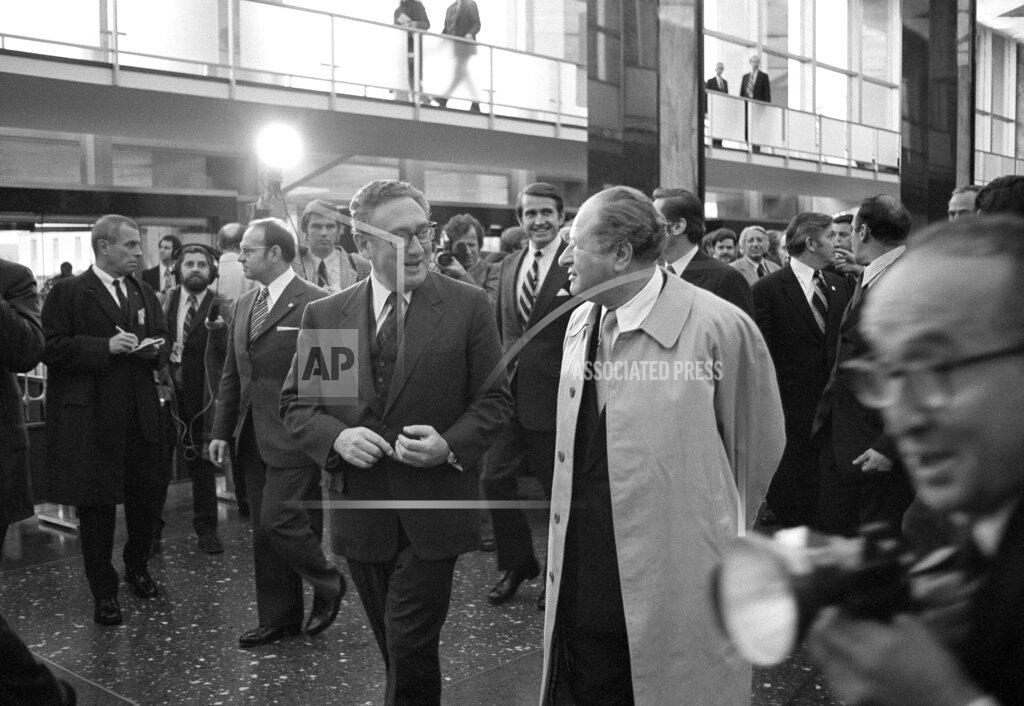
The United Nations General Assembly voted, 91 to 22, to suspend South Africa from participation in participation in Assembly matters for the remainder of the 1974-1975 session. The suspension would remain in effect for almost 20 years until the end of apartheid on June 23, 1994. The decision, unprecedented in United Nations history, did not exclude South Africa from membership. The vote came after the United States had challenged a ruling by the Assembly’s President, Abdelaziz Bouteflika of Algeria. Nineteen members abstained. South Africa’s delegates were not present at the session.
The first appearance of the Palestine Liberation Organization at the United Nations was at a news conference in the Secretariat building with Shefiq al-Hout as spokesman. He announced that the movement’s head, Yasser Arafat, would address the General Assembly tomorrow. Mr. Hout said: “We are here on a serious mission,” and added that the Palestinians “want to be as constructive as possible.” But there appeared to be a mood of militancy against Israel.
Agents of the Federal Bureau of Investigation arrested Russel Kelner, who called himself chief of operations of the Jewish Defense League and had asserted that “we plan to assassinate” Mr. Arafat. The arrest was made at the J.D.L. office in New York. Meanwhile, more than 1,000 city as well as federal agents were deployed around the East Side in the midtown area and at Kennedy International Airport in intense security precautions to protect the Palestinian delegation.
A resolution to end the blockade of Cuba imposed in 1964 by the Organization of American States failed to get the required two-thirds vote at the O.A.S. meeting in Quito, Ecuador. The effect will be that more Latin American countries will disregard the ban and establish ties anyway, although Cuba remains formally an outcast. The United States and five other members abstained from voting.
The Convention on Registration of Objects Launched into Outer Space was adopted for signing by the members of the U.N. General Assembly. It would go into effect on September 15, 1976, after being ratified by five nations.
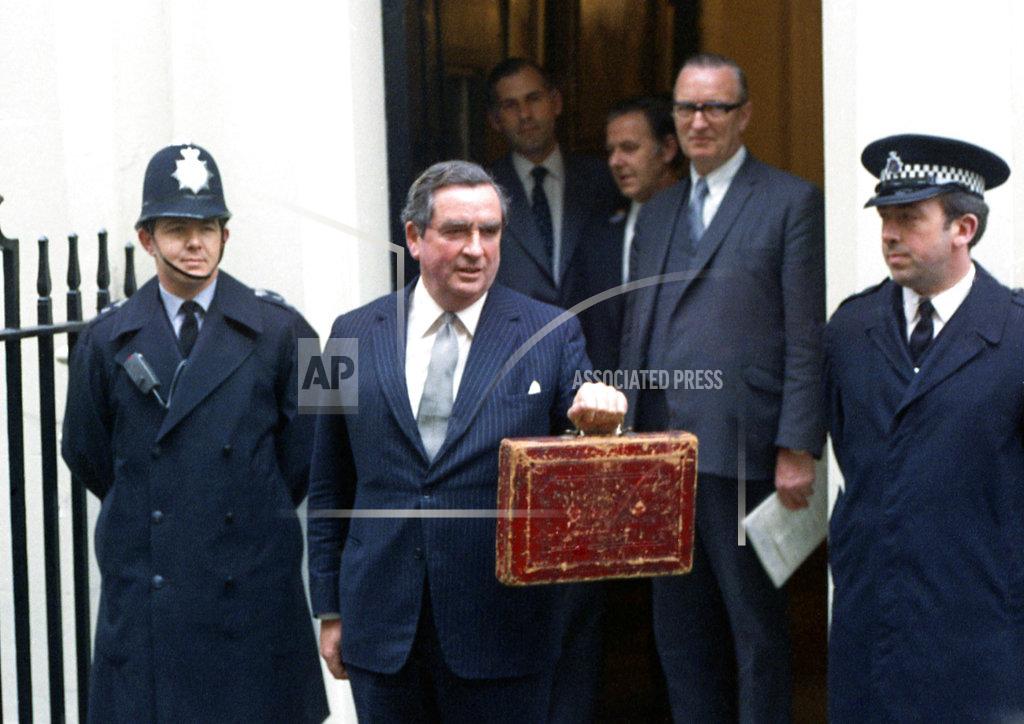
Britain’s Labor government submitted a budget to Parliament with the announcement that a tax on gasoline would be tripled to discourage waste of energy resources. Primary goals of the new budget are to stem rising unemployment, to encourage business expansion and to stimulate the economy in a time of deepening disquiet. The plan to phase out subsidies for most nationalized industries indicates higher prices for rail and air travels, electricity, natural gas and coal. In delivering the budget message to Parliament, Chancellor of the Exchequer Denis Healey indicated, that additional price increases were in store because of the Government’s intention to phase out subsidies for most nationalized industries.
Britain’s effort to renegotiate her terms of entry into the European Common Market entered a crucial phase today as the group’s nine Foreign Ministers, meeting in Brussels, examined a report about which countries gain and which lose financially from community membership. The British Foreign Secretary, James Callaghan, said the report, prepared by the market’s executive commission, supported his argument that Britain would soon pay more into the common budget than she should, given her relative economic strength. Britain wants a system set up under which she would pay less and has made this a key negotiating issue.
An Australian policeman serving with the United Nations truce force in Cyprus and a Turkish Cypriot civilian were killed foday, when their Land Rover hit a mine on a main road in northwest Cyprus, a United Nations spokesman said. The spokesman said another Australian policeman and four young Turkish Cypriots — three of them girls — were injured in the explosion. They were flown in a United Nations helicopter to the British Royal Air Force. Hospital at Akrotiri in southwest Cyprus. Names of the dead are being withheld pending notification of their families. The spokesman could not immediately explain why the Turkish Cypriots were traveling in the United Nations vehicle. Both Greek Cypriots and the Turkish Army are known to have been planting mines since the Turkish invasion of the island in July.
Alexander Panagoulis, who spent five years in prison for attempted assassination of former Greek dictator George Papadopoulos, told how he was tortured to force him to identify his foreign supporters. Panagoulis, 38, a candidate for parliament in the first elections in Greece in 10 years, said most of those who tortured him actually sympathized with his case but acted under strict orders. Six of his former torturers sat with him in Athens and described the threats used against them to make them torture Panagoulis.
Italian police have arrested an Italian who lives in Innsbruck, Austria, for plotting to kidnap a wealthy Swiss drug manufacturer and orchestra conductor, Paul Sacher, Innsbruck police said. They said the suspect was arrested in Italy near the Austrian border. They did not give his name.
The Soviet Union said today that it had surpassed the United States as the world’s leading oil producer but that it still sought American technology to resolve continuing inefficiency in oil extraction.
The United States and the Republic of Algeria restored diplomatic relations after Algeria had suspended the relationship in 1967. Re‐establishment of diplomatic ties was announced simultaneously in Algiers and Washington, following resolution of a number of technical questions last month. Getting on a good footing with Algeria was a prime goal of Secretary of State Kissinger for the last year, not only because of the country’s plentiful oil and natural gas reserves, butt also because he viewed President Houari Boumediene as a major figure in the Arab world. He visited with Mr. Boutnediene as often as possible dining the last 12 months and arranged for him to be invited to Washington to confer With President Nixon last April, even though the two countries still had no diplomatic ties. Mr. Kissinger and President Boumediene arranged most of the details of a resumption of relations during Mr. Kissinger’s stop in Algiers on his seventh Middle East trip as Secretary of State.
Yasser Arafat, head of the Palestine Liberation Organization, who is on his way to New York, stopped in Algiers tonight. He met with Premier Olof Palme of Sweden, who is here on a visit. On his arrival Mr. Arafat was invited by President Houari Boumediene to attend a dinner in honor of Mr. Palme.
The Iranian Government press agency reported today that Iraqi forces fired artillery and machine guns at three Iranian border posts in the last two days but caused no casualties or damage. The agency said that Iranian guards had returned the fire. The dispute began in 1969 when Iran abrogated a treaty on navigational rights in the Shatt-al-Arab waterway, which is Iraq’s channel to the Persian Gulf.
The fear of widespread famine that haunted Bangladesh a few weeks ago has become reality. Officials here concede that they were not prepared for the widespread devastation that has occuired despite a substantial flow of foreign food and economic aid. An of the nation’s planning commission said a several thousand people may already have died and that many thousands might die in the next few weeks because of malnutrition. “The maximum damage has been done,” the official said. “The future seems hopeless.” He compared the present famine conditions with the situation during the great famine of Bengal in 1943, when hundreds of thousands died of starvation.
Prime Minister Mujibur Rahman reportedly is planning to scrap Bangladesh’s British-style parliamentary government on the grounds that it has failed to meet the country’s desperate economic situation. According to a government source the premier will shortly seek approval for one of two models already prepared: a one-party system on Tanzanian lines or a presidential system on the U.S. model but without real power for Congress.
The bodies of 25 persons were recovered from the cabin of a passenger launch that apparently was overloaded and capsized in the Dhaleswari River in Bangladesh. Dacca newspapers said the toll could reach 200, but police sources did not think the figure would reach that high. Because of a shortage of fuel and spare parts many of Bangladesh’s river launches travel overloaded and face official action because of it. Survivors said the 65-foot vessel that capsized, with a passenger capacity of 150, was carrying more than 300 persons and seven tons of cargo.
Members of the political opposition in the South Vietnamese National Assembly accused President Nguyễn Văn Thiệu of wasting 500,000 Vietnamese lives in battle and called for his resignation and new elections. A petition signed by 45 senators and lower-house members also blamed him for continued fighting in Vietnam, inflation and lack of complete democracy.
South Korea’s largest national daily, Dong‐A Ilbo, skipped its regular edition today. The stoppage came this evening following a strike by the paper’s 200 reporters who demanded that an article dealing with Monday’s nationwide Roman Catholic protest masses be given prominent space in today’s edition. The reporters wanted a front page headline, but the management rejected the idea. Reporters and editors here have been agitating for full coverage of anti-Government protests. One of the reasons the publisher of Dong‐A Ilbo is understood to have rebuffed the reporters is that he anticipated that if he yielded he would face other demands including a demand for the right to organize a trade union. There are 3,000 reporters in South Korea but they have no professional trade union.
Australia announced measures tonight to bolster the flagging economy. The Government said it would cut‐taxes on personal and company income, increase import duties on cars and provide more funds for housing loans. The emergency action to stem sharply rising unemployment and to curb inflation was detailed — amid heated exchanges in Parliament — by Prime Minister Gough Whitlam. He said that income taxes would be reduced by an average of 3 percent from the beginning of next year and that company taxes would be cut from 47½ percent to 45 percent.
The Universidad Tecnológica de Santiago was established in the Dominican Republic.
Bolivian tin miners went on strike to protest the government’s five-year postponement of elections promised for next year. The outlawed Bolivian Labor Center also called a 48-hour stoppage to protest the postponement and President Hugo Banzer’s ban on political and labor union activities. The ban followed an abortive civilian and military uprising.
Gunmen defied an Argentine state of siege aimed at ending guerrilla warfare by fatally shooting an army officer near the riverport city of San Nicholas, police reported. Lieutenant Roberto Carbajo, 33, was reportedly gunned down as he was arriving at the home of his mother-in-law near San Nicholas, 60 miles north of Buenos Aires on the Parana River. Police sources said the killing appeared to be the work of the People’s Revolutionary Army. The attackers, in two cars, escaped.
A high government source in Lunda, Angola said today that as many as 100 people have been killed here since last weekend in violence believed to have been sparked by a faction of the Popular Movement for the Liberation of Angola.
President Ford’s press secretary, Ron Nessen, said the United States now appears to be moving into a recession — the first time the White House has acknowledged that the year-long decline in the economy had gone that far. Mr. Nessen said it was “figures just coming in” — not political considerations — that led to this acknowledgement. Without giving figures, he indicated that industrial production had been slipping in October.
An implicit argument for mandatory measures to conserve energy as a way to reduce vulnerability to foreign oil embargoes was contained in a Project Independence report made public by the government. This Federal Energy Administration report lends weight to the case for stronger conservation measures, such as performance standards for automobiles, appliances, and the heating and cooling of buildings.
Treasury Secretary William E. Simon said that “economic and political realities” would eventually force the oil-producing nations to lower their prices. “Over the long run, the question is no longer whether oil prices will come down but when they will come down,” he told oilmen attending a two-day meeting of the American Petroleum Institute in New York City. Simon, former head of the Federal Energy Office, called the Arab oil cartel “a small band of blackmailers” whose policies had caused the quadrupling of oil prices.
President Ford withdrew the name of Andrew Gibson as prospective Federal Energy Administrator at the latter’s request “with the deepest regret.” The action followed disclosures of Mr. Gibson’s lucrative severance contract with an oil transporting company earlier this year.
The United Mine Workers of America (UMWA) began a nationwide strike as 120,000 coal miners walked off their jobs. The strike ended on December 10 after less than a month.
Former President Richard M. Nixon has developed a new problem — sudden episodes of high blood pressure during physical or mental stresses — that threatens to complicate further his course after surgery for phlebitis, Mr. Nixon’s doctor said here today. Dr. John C. Lungren, Mr. Nixon’s physician, expressed “concern” in a bulletin because the former President had developed “labile hypertension” — a blood pressure that fluctuated into the abnormally high range. High blood pressure is a painless condition that affects perhaps 15 percent of Americans. If the patient faithfully takes anti‐high blood pressure pills every day, the chances of strokes, heart attacks and other complications can be reduced. But high blood pressure could pose unusual problems in Mr. Nixon’s therapeutic course because its management hinges largely on the success of the anticoagulation, or blood thinning, drug that he resumed taking last Saturday.
Snipers fired at a school bus for the second straight day in renewed violence in Charleston, West Virginia, and surrounding Kanawha County over an anti-textbook crusade. One school was closed by pickets, some children were kept home by frightened parents and 30 of the county’s 225 school bus drivers refused to operate their vehicles. No students were injured when an unknown gunman fired three shots into the side of a school bus. The attack came on the first day of classes since the school board’s decision last week to return controversial textbooks to classrooms. Opponents charge they are unpatriotic and anti-Christian. A school spokesman said about 30% of the 45,000 pupils were absent.
In San Francisco, Superior Court Judge Joseph Keresh postponed today for three weeks the trial of four young black men accused of murdering three white persons and of conspiring to murder whites at random. Judge Keresh said that the postponement of the case, known as the Zebra killings, was necessary because a defense attorney would be busy in another trial, scheduled in Oakland. He said that he would be conferring with Alameda County Superior Court Judge Harold Hove, who is presiding over the Oakland case, and that as soon as it was completed the trial here would start. The trial of the four men, all members of the Black Muslims, is expected to last two to four months.
Jack Teich, a wealthy 34-year-old U.S. executive and an owner of the Acme Architectural Products company, was kidnapped from his home at Kings Point, New York, and held for captive until a record ransom of $750,000 (worth more than $4.5 million dollars in 2024) was paid for his safe release on November 19.
William Flowers, a 19-year-old student at Monmouth College in Long Branch, New Jersey, died of suffocation during a hazing ritual for pledges of the Delta Rho Chapter of the Zeta Beta Tau fraternity. The pledges were forced to dig “graves” in beach sand and lie in them, and Flowers’ “grave” collapsed in on him. Flowers was the first black student to pledge for Zeta Beta Tau at Monmouth. Seven members who were said to have ordered the rite were charged with manslaughter. The national fraternity subsequently suspended the Monmouth chapter as a result of the incident.
An Air Force F-111A fighter-bomber and a private plane collided over southern Utah. Two military pilots from the F-111A parachuted to safety, but the pilot of the smaller, civilian plane was missing. The Federal Aviation Administration in Denver said the two planes collided at about 17,500 feet over rugged mountains near Kingston, about 180 miles south of Salt Lake City.
The Teamsters Union said it planned a major organizing drive in Arizona’s Maricopa County (Phoenix) to sign up lettuce workers. Teamster official M. E. Anderson said in a news release that organizers would begin signing up 10,000 workers in the area today.
A British court refused to help American authorities recover $1.4 million from the $4.3 million Chicago Purolator Security, Inc., burglary that is believed to be hidden in five banks on Grand Cayman Island of the British West Indies. Efforts to recover the money were dashed when Magistrate F. E. Field of George Town, without explanation, refused to order the five banks to open their records to investigators. Bank officials had claimed that disclosure would violate the code of secrecy under which they operate.
Fuel escaping from outboard motors rapidly kills mussels and somewhat less rapidly kills oysters, according to Robert C. Clark Jr., a chemical oceanographer with the National Marine Fisheries Service. In a report in the November issue of Environmental Science and Technology, Clark says roughly 10% of the fuel from standard engines escapes into the water and that this hazard generally has been overlooked. In a test, 66% of mussels exposed to the pollutants for 24 hours died within 10 days after being placed in uncontaminated seawater, he reported. Oysters, apparently better protected by their shells, had a better survival rate with only 14% dying during the test period, according to Clark.
Nevada’s chief of air pollution standards said it appears that environmental impact statements for two proposed hotel-casinos at Lake Tahoe will be approved if certain modifications are assured. Richard Serdoz estimated construction of the projects will mean an increase in dirty air but not enough to violate Nevada’s air quality standards. He said a meeting was scheduled next week with hotel owners to review their impact statements. Cost of the two projects has been set at more than $40 million.
Floodwaters five feet deep covered most of downtown Nome, Alaska, as winds up to 70 m.p.h. battered western coastal Alaska. The winds pushed sea waves inland, inundating low-lying villages and knocking out most communications. There were no reports of injuries in Nome, but reports from outlying communities were sketchy. In Juneau, Governor William A. Egan declared western coastal Alaska a disaster area. In a telegram calling on President Ford for federal aid, Egan said Nome was “without adequate power, foodstuffs and potable water.”
A salmon is discovered in the River Thames, England, for the first time since 1833.
American composer George Crumb released the first of four volumes of his work for piano, Makrokosmos.
Dow Jones Industrial Average: 659.18 (-13.46, -2.00%).
Born:
Tareck El Aissami, Vice President of Venezuela from 2017 to 2018; in El Vigia, Venezuela.
César Jiménez, MLB pitcher (Seattle Mariners, Philadelphia Phillies, Milwaukee Brewers), in Cumana, Venezuela.
Tyson DeVree, NFL tight end (New England Patriots), in Hudsonville, Michigan.
Tamala Jones, American actress (“Blue Streak”), in Pasadena, California.
Died:
Charles Quinlivan, 50, American actor (“Seven Guns to Mesa”, “Mr. Garlund”), of a heart attack.
Samuel Echt, 86, German historian and teacher.
Guido Piovene, 67, Italian novelist and journalist.




 History Diaries