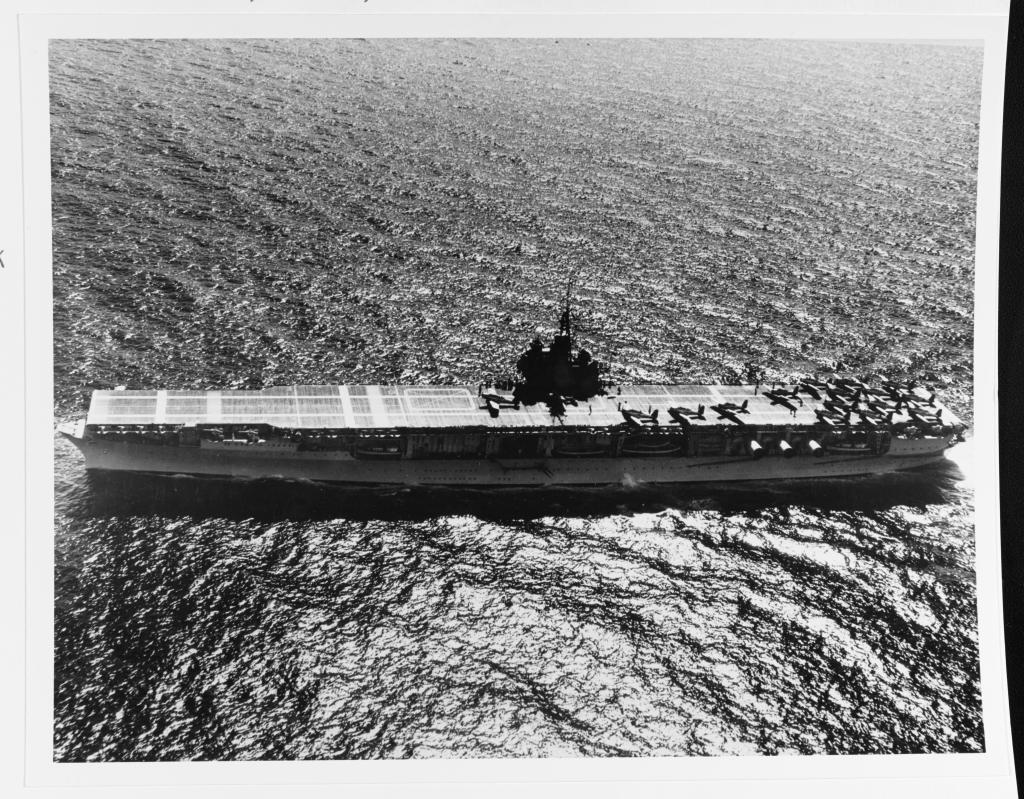
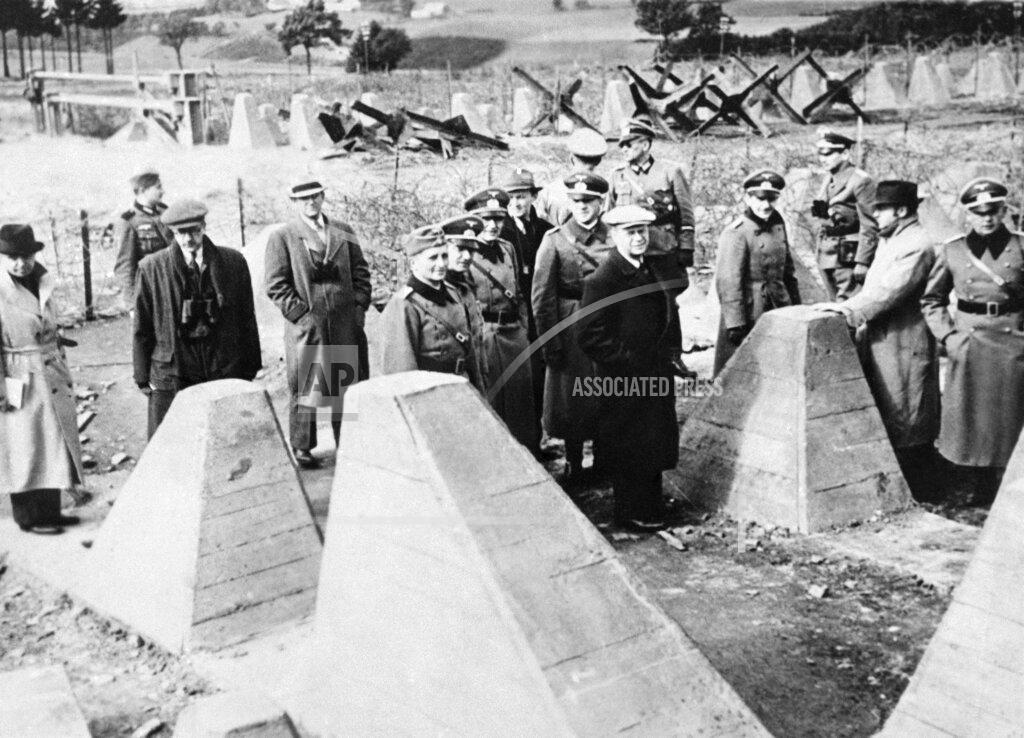
German troops reinforced the Siegfried Line along the French border. German probing attacks were met with infantry and artillery fire.
There are German flights over eastern and northern France. The RAF downs a flying boat off the east coast, while another plane escapes.
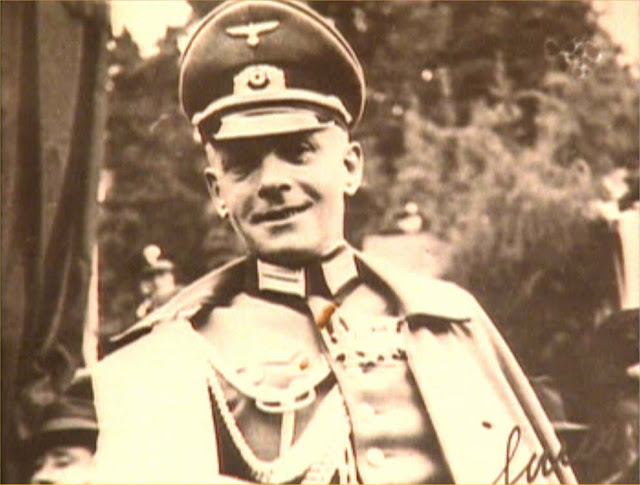
Hitler flew for the first time in his new personal transport plane — an Fw 200A-0 named Immelmann III after the World War I flying ace Max Immelmann.
The fatal border clash at Venlo stirs the Dutch. Defense measures are rushed as a German offensive is anticipated.
The Dutch Army canceled leave and reinforced border defenses, and prepared to flood the “inundation area” by opening sluice gates.
The Dutch ask for an inquiry on the border clash. A coastal blackout is ordered.
The United States urges citizens to leave Holland.
The German war machine may “strike at any moment” with a decisive blow, Chancellor Hitler’s own newspaper, the Voelkischer Beobachter, said today in a long military analysis describing Nazi strength.
Since Hans Oster’s leaks contained out-of-date information pinning the date of the German invasion to 12 November, the Dutch are scrambling as the day approaches. The Venlo Incident — entirely unrelated to Fall Gelb — fed into the paranoia. This is a typical example of solid military intelligence leading to wasted effort and perhaps ultimately a “boy who cried wolf” situation later due to a change in planning by the other side.
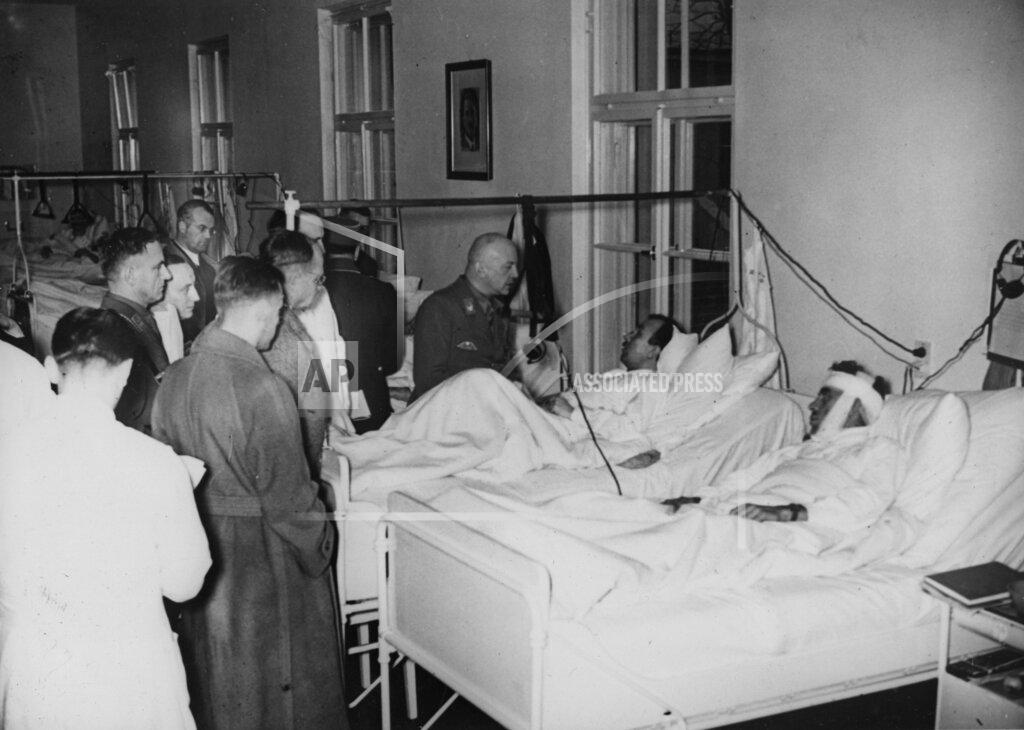
The Papal Nunzio in Berlin delivers the special personal congratulations of Pope Pius on the Führer’s miraculous escape from the assassination attempt of November 8.
The Pope suggested today the formation after the war of “a stable and fruitful international organization.” He expressed this desire during an address to Abel Nicolas Leger, Haitian Minister to the Vatican, who presented his credentials this morning. The Pontiff did not go into details, but it is significant as the first indication that he has something to propose when peace comes. His speech contained another condemnation of “the cult of force employed against law” which is considered to be his third indirect attack against Germany in two weeks. His encyclical and his sermon at St. Peter’s on October 29 were also taken as attacks against nazism. This international organization, he said, “is desired by men of goodwill.”
Prime Minister Chamberlain is in bed with a gout attack; the war Cabinet meets in his bedroom.
British Secretary of State for Dominion Affairs Anthony Eden met with French Prime Minister Édouard Daladier and Commander-in-Chief General Maurice Gamelin in Paris, France, joined by representatives from Australia, New Zealand, South Africa, and India.
Sir Nevile Henderson, former British Ambassador to Germany, whose diplomatic reports on the Nazi mentality have become “best sellers,” told a group of journalists at a press club luncheon today that too-sweeping condemnation in Britain of everything Chancellor Hitler did in the early days of his rule “was not fair.” The man who reported that the German Chancellor preferred war now, rather than when he was five years older, so he could devote his old age to painting, said in his luncheon address that in two and a half years in Germany he had met good Nazis and bad Nazis. He encountered Nazi idealists, he added, as well as “self-seeking adventurers and bullies.”
[Ed: Henderson was, of course, a complete and total idiot. About the worst choice the Tories could have made for Ambassador to Germany in the 1930s.]
Two threats have been made against the life of Prime Minister Eamon de Valera, it was learned tonight, since his statement in the Dail yesterday that the government would not release four hunger-striking I.R.A. political prisoners.
Anticipating a diplomatic clash between Italy and Soviet Rusaia over the Balkans, Rumania has decided to abstain from further steps for the creation of a neutral bloc, it was learned today.
Just a month after a Finnish mission for the first time went to Moscow at Joseph Stalin’s invitation to discuss “certain economic and political questions interesting both countries,” disappointment dashed hope as it was reported that the Finnish and Soviet delegates had failed to establish a common basis for further discussions. Hopes had been raised yesterday by insistent rumors that an agreement had already been reached on the principal points. A communiqué today, however, said: “The negotiations have not yet succeeded in establishing a basis enabling the delegations to reach an agreement.”
According to a statement by Finance Minister Vaino A. Tanner of Finland, there has been no discussion of particular points yet, as most of the principal questions are still open. Thus for the third time within a month Dr. Juho Kusti Paasikivi, head of the Finnish delegation, was obliged to inform the Cabinet in Helsinki that a deadlock had been reached and to ask for further instructions, as his latest reply to the modified Soviet proposals seems not to have met Mr. Stalin’s approval. The Finnish delegation is remaining in Moscow, however.
U.S. freighter Exeter, detained by French authorities since 8 November, is released after 1,400 bales of cottonseed hulk consigned to a Swiss buyer are removed as contraband.
German liner New York, which had been holed up in Murmansk, finishes a dash down the Norwegian coast and makes it to Kiel.
Convoy OA.33 departs from Southend, Convoy OB.33 departs from Liverpool, and Convoy HX.8 departs from Halifax.
The War at Sea, Friday, 10 November 1939 (naval-history.net)
Destroyers GIPSY and GLOWWORM were searching 60 miles south of Milford Haven for a reported submarine.
On Northern Patrol were two cruisers between the Orkneys and Faroes, three cruisers and one AMC between the Faroes and Iceland, and one cruiser and one AMC in the Denmark Strait.
The Northern Patrol, from the 10th to 23rd, sighted 57 eastbound ships and sent 50 into Kirkwall for inspection. Nine German ships were sighted and dealt with.
Light cruisers GLASGOW, SOUTHAMPTON, AURORA and BELFAST and ten destroyers were formed as a Striking Force under the command of Captain E de F Renouf CVO as a Commodore at Rosyth.
Following a refit, light cruiser BELFAST departed the Clyde on the 8th and on the 10th transferred from the 18th Cruiser Squadron to the Humber Force.
Armed merchant cruisers RAWALPINDI arrived in the Clyde after Northern Patrol duty, and CALFORNIA departed the Clyde on Northern Patrol.
Armed merchant cruiser SCOTSTOUN was damaged by an ice flow which buckled her frame and started plates, but she was able to continue patrol in the Iceland-Faroes Channel.
Destroyer IMPULSIVE departed Scapa Flow for Aberdeen to escort steamer MARYLYN (4555grt), but when it was found the steamer would not be ready to sail until the 13th, she returned to Scapa Flow.
Destroyers JUNO, JANUS, JAGUAR and JERSEY departed Immingham.
Convoy OA.33 of 12 ships departed Southend escorted by destroyers WREN and WITCH on the 11th and 12th. Submarines CACHALOT and SEAL departed Gosport and escorted the convoy from the 10th to 15th. The convoy was dispersed on the 15th and the submarines proceeded independently to Halifax where they arrived on the 25th for escort duty.
Convoy OB.33 departed Liverpool escorted by destroyers VERSATILE, VOLUNTEER and MONTROSE until the 13th.
French submarines ORPHÉE and ANTIOPE departed Brest escorted by auxiliary patrol vessel HEREUX.
Heavy cruiser YORK, repairing boiler defects at Bermuda, began repairs to A-turret that were to be completed by the end of the month.
Convoy BC.13S of steamers ATLANTIC COAST, BARON GRAHAM, BRISTOL CITY, BRITISH COAST, CERVANTES, CITY OF DERBY DELIUS (Commodore), DORSET COAST, GRETA FORCE, GUELMA, LYCAON and SANDHILL departed the Loire escorted by destroyers VIVACIOUS and VESPER. The convoy safely arrived in the Bristol Channel on the 12th.
French light cruiser LA GALISSONIÈRE departed Casablanca, escorted by large destroyer CHEVALIER PAUL and later arrived at Brest; her escort being detached at sea.
Convoy HX.8 departed Halifax at 1200 escorted by Canadian destroyers HMCS FRASER and HMCS ST LAURENT, which detached on the 11th. Ocean escort for the convoy was battleship REVENGE, and the convoy arrived at Liverpool on the 25th.
Light cruiser MANCHESTER departed Bombay en route to the Home Fleet, calling at Aden on the 13th 14th and arriving at Port Said on the 17th. Vice Admiral Geoffrey Layton, commanding the 1st Battle Squadron, Mediterranean Fleet, was ordered to the Home Fleet to command the 18th Cruiser Squadron and embarked on MANCHESTER which called at Malta on the 18th 20th. She departed Gibraltar on the 22nd, with destroyer KEPPEL as local escort, and arrived at Portsmouth on the 25th to begin a refit lasting until 21 December. She departed Portsmouth on 22 December, arrived at Scapa Flow on the 24th, and left on the 26th on patrol.
Heavy cruiser CUMBERLAND departed Buenos Aires patrolling en route to Capetown, but was diverted on the 18th to Rio de Janeiro, leaving there on the 22nd for the Rio de la Plata area.
Heavy cruiser EXETER departed Mar del Plata to repair at Capetown, but was recalled for patrol in the Rio area.
New Zealand light cruiser HMNZS ACHILLES arrived at Rio de Janeiro, then left on the 12th for local patrol. She was ordered on the 17th to patrol in the Rio de la Plata area.
Light cruiser DANAE departed Mauritius for Colombo, where she arrived on the 18th.
Heavy cruisers DORSETSHIRE and CORNWALL departed Colombo to join aircraft carrier EAGLE and Australian destroyers HMAS VENDETTA and HMAS WATERHEN on patrol at sea. The Force arrived back at Colombo on the 18th.
Netlayer PROTECTOR arrived at Freetown on the 10th to lay indicator nets. The lay was completed in mid-February 1940 and she departed Freetown on the 17th to return to England.
Two maritime labor leaders who conferred with President Roosevelt today on a relief program for seamen thrown out of work by restrictions of the Neutrality Act left the White House “thoroughly convinced” that he would uphold the Maritime Commission’s approval of plans to transfer eight United States Lines ships to Panamanian registry. A short time before, the President reiterated his position that the transfer plan was entirely legal. He indicated, however, that some method other than the shifting of flags and registry was being sought as a solution of the shipping crisis and gave the impression that there would be no decision on the transfer plan until alternative methods had been thoroughly explored.
The probability that Mr. Roosevelt might ultimately approve the Maritime Commission’s decision was indicated by statements of Joseph E. Curran, president of the National Maritime Union, and Joseph R. Ryan, president of the International Longshoremen’s Association. In his press conference, and later in his talks with the seamen’s representatives, the President gave the impression that he was more concerned with the human problem involved in the shipping industry’s difficulties than with the ships which have been prohibited from visiting belligerent ports. Mr. Roosevelt outlined the following broad program of relief:
- Extension of unemployment insurance features of the Social Security Act to seamen, in a recommendation to the next session of Congress.
- Federally sponsored training courses for officers and seaman with compensation during th three-month period of the course; this program to be supplemented by WPA projects and about New York and other large maritime centers.
- Utilization of some idle ships formerly plying between this country and European ports as transports under the Federal program of purchasing $10,000,000 of strategic materials, including rubber and tin which was covered by the barter deal between the United States and Great Britain.
In connection with the last proposal the President said that discussions were going forward with Great Britain whereby American cotton involved in the barter deal with that country would be carried in British bottoms, American ships being prevented by the Neutrality Act from entering English ports. Mr. Roosevelt denied that the transfer of a number of Standard Oil tankers to Panamanian registry, prior to the enactment of the Neutrality Law, constituted any precedent to guide the government in the application of the United States Lines to place eight of its liners under the same jurisdiction. While discussing this point the President reminded his hearers that he was bound by the law despite suggestions by some columnists that approval of the Panama transfer plan would constitute a circumvention of the neutrality statute.
As to the idea that American interests might be served by the return of ships to the United States Lines at the close of the war, Mr. Roosevelt commented that the vessels were already nearing the end of their serviceable life and would be of little further use after an intensive wartime service under the flag of Panama. He rejected as a beautiful thought of some well-intentioned laymen, a suggestion that the liners proposed to be transferred might be retained in United States registry and put in the South American or Far Eastern trade. The trouble was, said Mr. Roosevelt, that ships could afford to go only where commerce made it profitable for them and there was. not enough business to justify their going into the South American or Pacific routes.
Believing the proposal to transfer American ships to Panamanian registry contrary to our neutrality, the World Alliance for International Friendship Through the Churches called on President Roosevelt yesterday “to prevent the plan from being carried into action.”
The United States Circuit Court of Appeals in Philadelphia unanimously ruled that schoolchildren did not have to salute the American flag if such action conflicted with their religious beliefs.
The U.S. corn crop is 2 percent higher than in 1938.
Forging ahead on his plan to induce the motion-picture industry to move from Hollywood to New York, Mayor La Guardia said yesterday that pictures would be made in this city, after he had talked the matter over in a City Hall conference with a large group of labor union officials interested in the transfer.
The U.S. Navy officially admitted today that some of its newest destroyers lacked sufficient stability and that faults had developed in the construction of some cruisers.
Carrying a cargo of stone, the American barge Ruth Shaw sank in 85 feet (26 m) of water in the North Atlantic Ocean west of Sandy Hook, New Jersey.
The Canadian Government is steadily tightening its control over economic affairs in the interest of the war.
The British have such obligations in India that it is impossible for them to grant the Congress party’s demand for an immediate statement on their intentions of providing Dominion status, the Marquess of Zetland, Secretary of State for India, told American reporters today.
Instances where Japan has settled with American interests in China, through the payment of money or otherwise, were reported tonight by the Japanese Embassy, evidently as a summary of reports from the Foreign Office in Tokyo. The Embassy stated that a “settlement has been reported from Tokyo,” and that some of the cases “date back considerably into the past.” In Washington, announcement of the settlements was taken to illustrate the more moderate policy of the new Japanese Cabinet. Under the settlements, Americans are allowed to return to Shanghai University, money has been paid in connection with bombings of missions and for damages to an American-owned junk and there have been other arrangements.
Passengers of the British airliner Dardanus, who were brought here from Canton today by the American gunboat Mindanao, said that five Japanese planes staged a twenty-minute attack at close range on their ship and continued to fire machine-gun bullets into it even as the pilots landed it. Japanese officials said the plane was forced down on Tuesday at Waichow Island because it flew too low over a prohibited area en route from Hong Kong to Hanoi, French Indo-China.
Dow Jones Industrial Average: 149.09 (+0.34)
Born:
Russell Means, Native American activist and criminal, on the Pine Ridge Indian Reservation, South Dakota (d. 2012).
Andrew Cyrille, American avant-garde jazz drummer (Walt Dickerson; Cecil Taylor), bandleader (Trio 3), and composer, in Brooklyn, New York, New York.
Tommy “Bubba” Facenda, American rock and roll artist (“High School U.S.A.”), in Portsmouth, Virginia.
Ray Ratkowski, AFL halfback (Boston Patriots), in New York, New York.
Died:
Charlotte Despard, 95, Scottish-born Anglo-Irish suffragist.
Naval Construction:
The Kriegsmarine (German Navy) Type IXB U-boat U-104 is laid down by AG Weser, Bremen (werk 967).
The Royal Navy Tree-class minesweeping trawlers HMS Whitehorn (T 127) and HMS Wistaria (T 113) are launched by the Smith’s Dock Co., Ltd. (South Bank-on-Tees, U.K.).
The U.S. Navy Navajo-class fleet tug USS Cherokee (AT-66) is launched by the Bethlehem Steel Corp. (Staten Island, New York, U.S.A.).
The Nihon Kaigun (Imperial Japanese Navy) Kagerō-class destroyer HIJMS Tokitsukaze (時津風, “favorable wind”) is launched by the Uraga Dock Company (Uraga, Japan).
The U.S. Navy Benham-class destroyer USS Rhind (DD-404) is commissioned. Her first commanding officer is Lieutenant Commander Randolph Cooper, USN.
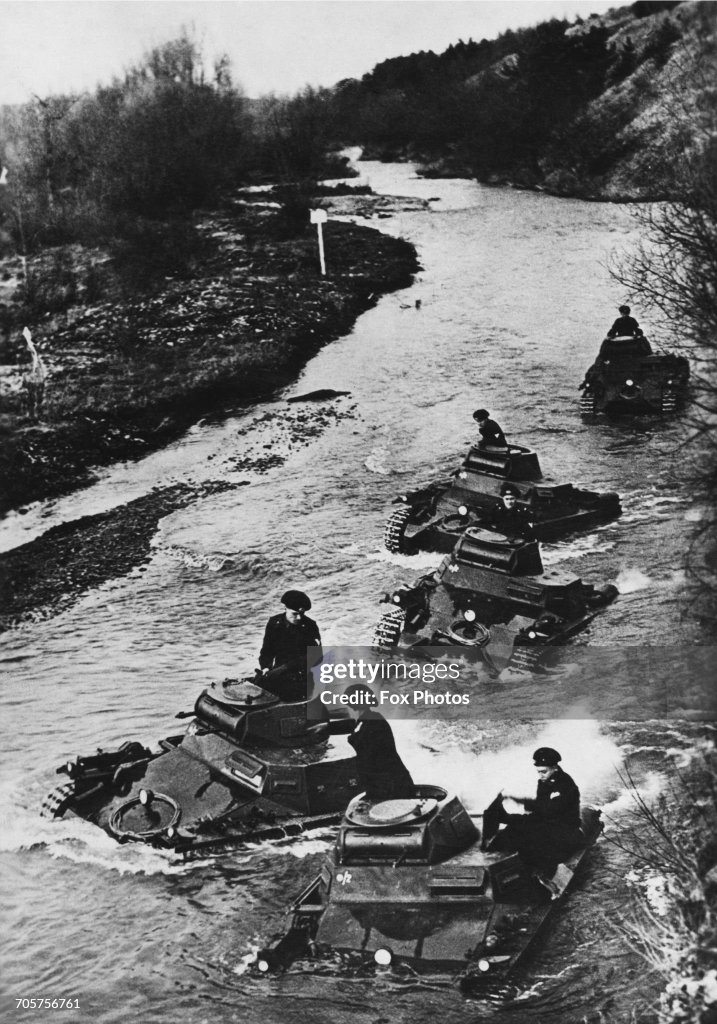

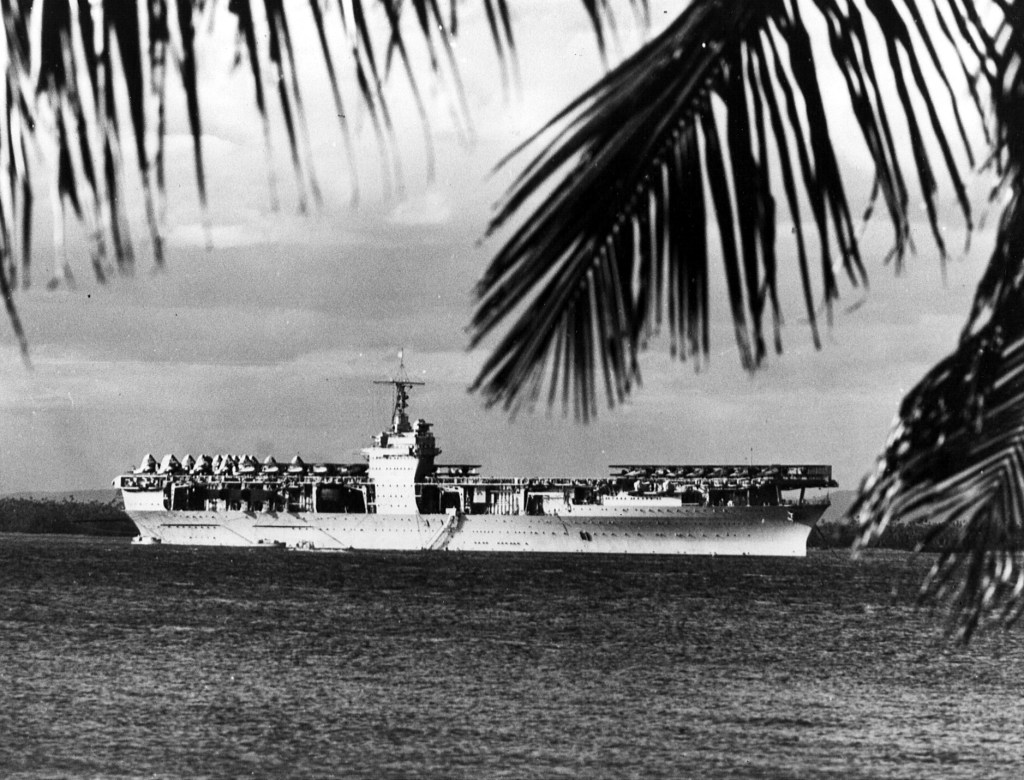
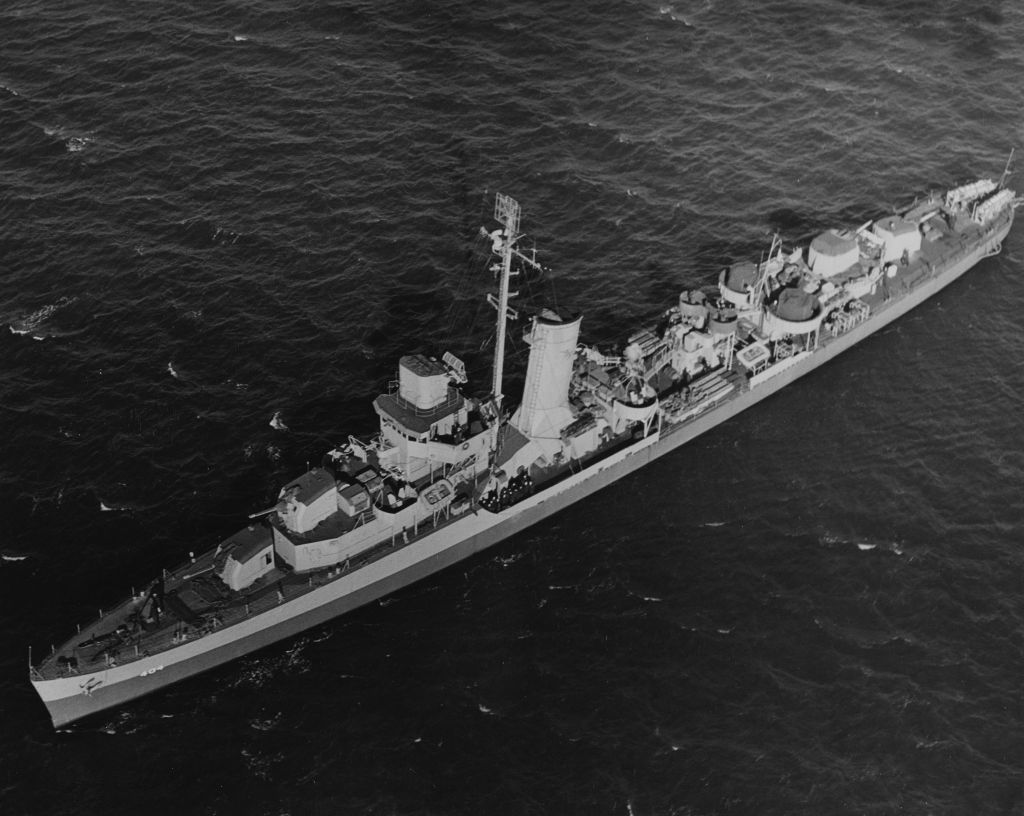
Following an extended shakedown cruise to Brazil and post shakedown availability, Rhind steamed south again and from 5 July to 19 December 1940 conducted exercises in the Caribbean and patrolled off Martinique. Employed as carrier escort and engaged in fleet exercises during the first half of 1941, she joined TF 1 in June and through the summer steamed in the North Atlantic shipping lanes on Neutrality Patrol. In August she escorted Augusta, with President Roosevelt embarked, to Newfoundland for the Atlantic Charter conferences. Then, at their conclusion, she escorted H.M.S. Prince of Wales, carrying Prime Minister Churchill, to Iceland. On 17 August she returned to patrol duty off the Newfoundland coast.
Detached in October, Rhind escorted Yorktown from midocean to Halifax in early November, then joined a Halifax Capetown convoy as escort. Off Southwest Africa 27 November, she was detailed to escort Ranger to Trinidad. They arrived 3 December. Four days later the United States entered World War II
Rhind then steamed north to patrol the waters off Bermuda. In February 1942, she shifted further north and through March escorted Icelandic convoys. In April she shepherded a convoy to the Canal Zone and on the 23d, while en route back to New York, conducted her first depth charge attack on a German submarine. The U-boat had shelled a Norwegian merchantman off New Jersey. Arriving at New York the same day, she departed again on the 30th to escort convoy AT-15 to Iceland. There, on 15 May, she joined TF 99 and for the next 3 months operated with that force and the British Home Fleet in hunting German units operating out of Norway to intercept convoys to Murmansk and Arkhangel.
Rhind returned to the United States in July. In August she escorted coastal convoys between Boston and Argentia, then turned south to conduct ASW operations off the southeastern coast and in the Caribbean. Exercises in the Casco Bay area followed in early October and on the 24th she got underway for North Africa. Screening Massachusetts en route she arrived off the Moroccan coast on the night of 7 November. On the 8th she shelled Vichy vessels attempting to repel the Allied invasion of North Africa and blasted shore batteries. Through the 12th, she supported the troops ashore and screened larger ships in the Fedhala Casablanca area. Back at Hampton Roads 20 November, the destroyer resumed escort duty and into the new year, 1943, guarded convoys to North Africa. On 28 April she returned to New York with convoy GUS-6, which had departed, as UGS-6, 4 March and had lost five merchantmen to a wolfpack between the 13th and 17th. On 10 May, Rhind departed New York again for North Africa, escorting a troopship convoy, and arrived at Algiers 2 June. For the next month she conducted ASW patrols and escorted ships along the North African coast.
On 10 July the invasion of Sicily began. On the 14th Rhind arrived off the coast, in the screen of a reinforcement convoy and joined the antiaircraft defense and fire-support group. Through the 20th she patrolled off Gela, then shifted to Palermo. After screening the mine and patrol craft which cleared the harbor, she remained on antiaircraft station. On the 26th, as she stood by the heavily damaged Mayrant (DD-402) taking off wounded and assisting in salvage work, she sustained several casualties and some damage to her hull from a near miss delivered by a Junkers 88. Through 2 August she continued to patrol off Palermo, then on the 3d, commenced offensive sweeps near Messina, sinking an E boat on the first day, and supported “leap frog” landings along the coast.
Caught in another air raid on the 22d, Rhind gained a brief respite at Oran, but suffered further near misses while escorting a convoy to Bizerte through September. At Bizerte on the 6th, she fought off another raid, an attempt to disrupt the forces staging for the invasion at Salerno. On the 9th, the destroyer arrived in the Gulf of Salerno and continued her war with the Luftwaffe. On the 11th she got underway for Oran whence, for the next month and a half, Rhind escorted reinforcements to Italy. In November she sailed for New York and, after guarding two New York to United Kingdom convoys shifted to coastwise and Caribbean escort duty interspersed with offensive ASW activities. On 26 July 1944 she resumed transatlantic convoy duty with a run to the United Kingdom. A convoy to Naples followed in late September and, in November and December, she screened carrier Shangri La (CV-38) on her shakedown cruise.
Between January and March 1945 Rhind continued coastal and Caribbean escort duty. Then after another run to Britain 23 March to 18 April, she prepared for transfer to the Pacific Theater. Sailing 5 May, she arrived at Pearl Harbor on the 30th; and, after exercises there, steamed westward in the screen of carriers Lexington (CV-16), Hancock (CV-19), and Cowpens (CVL-25). On 20 June, the carriers launched strikes against Wake. Then, minus Cowpens and an escort, the force continued on to Leyte, arriving 26 June. From Leyte, Rhind steamed to Ulithi, whence she escorted cargo and troop ships to Okinawa and conducted ASW patrols in the Carolines. Shifted to Saipan in August, she escorted another convoy to Okinawa after the cessation of hostilities, then on 2 September steamed to Pagan Island where Commodore Vernon F. Grant accepted the surrender of the Japanese garrisoned there.
Returning to Saipan the same day, Rhind accompanied landing craft to Marcus Island. Then, on the 16th, headed north for Iwo Jima, whence she patrolled on air/sea rescue station until 2 November. She returned to Saipan on the 4th and operated in the Marianas until mid-December when she got underway for the United States. Arriving at San Diego 30 December, she was stripped and returned to Pearl Harbor and prepared for experimental testing. On 15 May she joined Joint Task Force 1 for operation “Crossroads,” the atomic test series scheduled to be detonated at Bikini in July. Surviving the tests on 1 and 25 July, but highly contaminated, Rhind was decommissioned 26 August 1946 and moved to Kwajalein where, after radiological clearance had been given and further examinations had been made, she was sunk, 22 March 1948. Her name was struck from the Navy list 5 April 1948.
Rhind earned four battle stars during World War II.
 History Diaries