
In South Vietnam, major floods in the region north of Saigon disrupt military operations this week, while Việt Cộng attack rescue operations and relief convoys. Sixty‐nine United States advisers were flown today from Quảng Ngãi, 330 miles northeast of Saigon, as 10 flooded provinces in central Vietnam were declared a disaster area. Many of the South Vietnamese vessels that patrol the coast against Communist seaborne infiltration were reported destroyed or damaged by recent storms. United States military helicopters are bringing supplies to refugees and evacuating hundreds from the hamlets that were hit the hardest. The Americans removed from Quảng Ngãi were taken to a military headquarters on higher ground. The South Vietnamese Government made $20,000 worth of supplies available to refugees. The United States development mission was providing rice, wheat, and blankets.
Dissatisfaction among student and Buddhist groups over the composition of South Veitnam’s new civilian government is forcing a crucial test of Premier Trần Văn Hương’s strength and nerve after only one week in office. Two main organizations of Saigon university students met today and threatened to march in protest if Mr. Hương did not name more politically minded ministers to his Cabinet, now composed entirely of civil servants and technicians. Vietnam’s leading Buddhist monks debated their position for two hours. They decided to wait and see — neither to order demonstrations against the government nor offer to support it.
The fact that neither students nor Buddhists have staged any demonstrations yet, a small point in Mr Hương’s favor. Meetings that could have turned into protest marches had been scheduled over the weekend, but nothing came of them, in the face of apparent government determination to put down any demonstrations by force. The period of uneasy political probing boiled down to a contest between a Premier insisting that he be given a chance and militant pressure groups still mindful of their success in bringing down a government last August. In all public statements the armed forces, under the new commander in chief, Major General Nguyễn Khánh, promised full support to the Hương Governent, even to providing military force to maintain order. Many observers remain skeptical of General Khánh’s stand, but there have been no hints of disloyal acts or intentions from the armed forces.
The Premier’s firm stand against the pressure groups also gained the reluctant support of leaders of the Roman Catholic minority. They, too, have expressed disappointment with the Hương regime of technicians, but in the last two days they have said it must be given a chance to prove itself. This is the argument put to student leaders yesterday by the Chief of State, Phan Khắc Sửu. He told a group that only after it has been seen whether certain ministers, or even the whole Government, were worthy or unworthy would the students be justified in taking action. United States diplomats see the current maneuvering in more urgent terms. To them the entire war effort against the Communist rebels depends on the creation of a qualified and effective government.
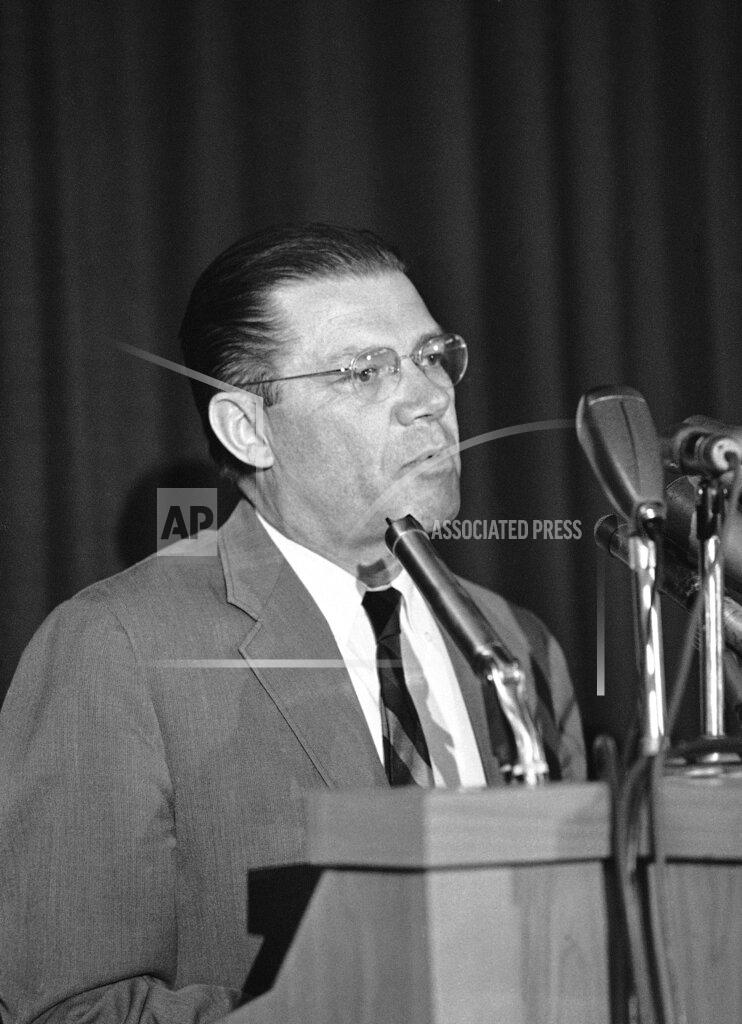
Secretary of Defense McNamara, at a news conference, says the United States has no plans to send combat units into Vietnam; asked whether the United States intends to increase its activities in Vietnam. Mr. Rusk at his own news conference later was asked if he expected a “step‐up” in American activity in Vietnam. He said, “Let’s see what the future brings on that.” Mr. Rusk said that “we would hope very much” that such elements of the Vietnamese population as Buddhists, Roman Catholics and students “would throw themselves behind” the recently formed civilian government of Premier Trần Văn Hương. These groups have expressed dissatisfaction with the composition of the Hương Government.
Despite the steadily deteriorating security situation in the Vietnamese countryside, Mr. McNamara expressed, optimism and said that “today, compared to a month or two ago, we can look ahead with greater confidence.” Mr. McNamara said he thought government forces there had forced “the Việt Cộng into covert as opposed to overt operations” and described this as a “tremendous accomplishment.”
A United States military spokesman said today that a record number of American. servicemen were killed last month in the Vietnamese war. Twenty Americans were killed in action in October and a 21st was missing and presumed dead. Forty‐nine United States servicemen were wounded during the same period, the military headquarters said. A total of 223 Americans have been killed in combat in Vietnam since the beginning of 1961. The military spokesman said South Vietnamese Government casualties in October totaled 3,040, including 755 killed.
The Defense Department said today that four first aid kits containing some unserviceable medical items had been issued for use by United States medical technicians in the Mekong River delta area of South Vietnam. It added that replacements had since been shipped. The Pentagon said 46 other first aid kits had been checked at a field medical depot, and that unserviceable items had been replaced and the kits brought up to standard. The Defense Department made the report after being asked about a published account from Vietnam that American medical corpsmen in the delta area had been issued 28‐year‐old first aid kits containing, among other things, a tourniquet ordered destroyed in 1951 and iodine swabs banned by the Army Surgeon General.
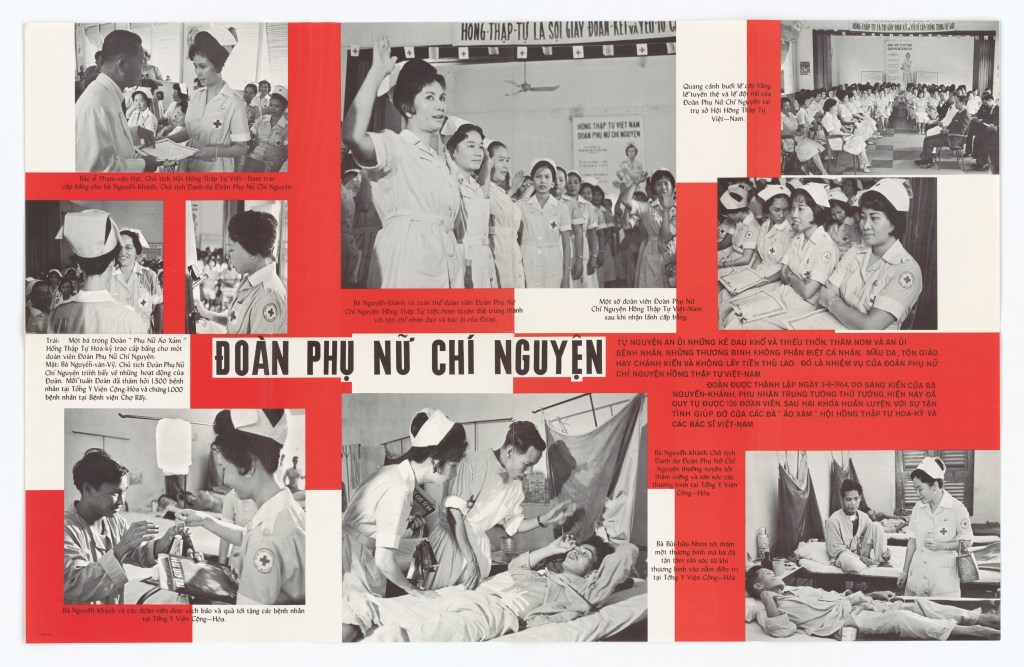
As South Vietnam’s Communist insurgents have grown in manpower and fighting skill, they have built a highly organized system of clandestine medical facilities; according to recent intelligence reports. At least 13 base hospitals, some underground, are operating in Việt Cộng‐held areas of the Mekong River delta. They are equipped for surgery and supplied adequately with smuggled or stolen drugs. Medical corpsmen are attached to each unit down to company level in the Communist main force, the intelligence report showed. These corpsmen are probably not fully qualified as physicians, but medicaltraining centers handling as many as 25 students at a time have been detected in Communist strongholds throughout the country. Casualties in recent battles have included guerrillas presumed to be first‐aid specialists. They have carried well‐printed, detailed manuals prescribing treatment for battle injuries and diseases.
Australian Prime Minister Robert Menzies announces that his country will strengthen its defenses to meet the growing Communist threat in Southeast Asia. Menzie outlined tonight sweeping changes in Australian defense planning for the next three years, including the reintroduction of conscription for the army and the strengthening of bases in northern Australia and New Guinea. Sir Robert, speaking in the House of Representatives in Canberra, said Australia must be prepared to face “increasing risks” over Indonesian attacks on the federation of Malaysia and the growth of Communist influence and armed activity in Laos and South Vietnam.
The first three of 12 foreign Communist delegations to last Saturday’s celebration of the Bolshevik Revolution left Moscow today amid indications that the Chinese‐Soviet ideological breach remained unhealed. The delegates who left were from Czechoslovakia, Poland and Yugoslavia. The East Germans and several other delegations are to leave tomorrow. Premier Chou En‐lai of Communist China, the key figure in the consultations held during and after the anniversary observances, was expected to remain another day or two. He was reported to have held meetings again today with the Soviet leaders and with some Communist party chiefs from Eastern Europe. The talks have been held in secrecy. Few of the meetings were announced and even these were only briefly described.
The meetings between the Soviet leaders and the East European leaders have been termed “friendly and cordial,” while the meetings with tne Chinese and the North Koreans were described merely as “friendly.” The North Vietnamese, to the surprise of many, rated a “friendly and cordial” mention this morning in Pravda, the Soviet Communist party newspaper. The newspaper, in an editorial after four days of talks, gave a strong hint that neither the Russians nor the Chinese had yet changed their positions on the issue of an international Communist conference. Pravda said that the Soviet party, like “the majority” of foreign Communist parties, felt that the time was “ripe” for convening a meeting.
British Prime Minister Wilson’s government survived its second vote of no-confidence in as many days. The second motion, which failed, 294 to 315, was over the Labour government’s proposals for free health care, larger pensions, and higher taxes, “to take from citizens according to their means, to give to citizens according to their means.
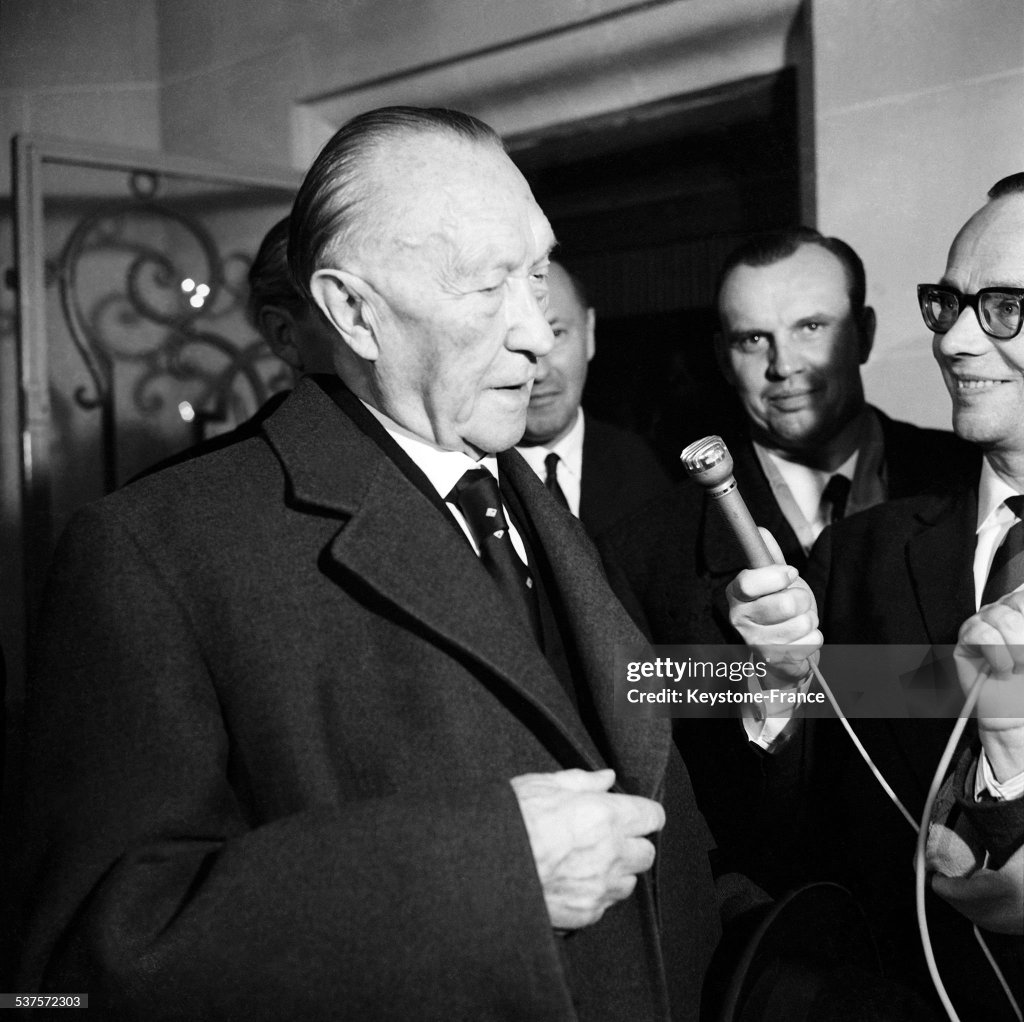
The Common Market made substantial progress today toward settling its internal policy disputes over agriculture and trade. West Germany’s Foreign Minister, Dr. Gerhard Schroder, told the Council of Ministers’ meeting here: “My country is prepared to reach an agreement now on common grain prices.” He did not specify the sort of agreement Bonn would regard as acceptable, but the atmosphere of the meeting seemed to have improved following his statement. No one was prepared to say that the Common Market, or European Economic Community, had resolved the French‐West German differences over grain prices and a common position for the Kennedy round of tariff‐cutting negotiations. But there was considerable agreement that the community was at least back on a path that could lead to a compromise by the year’s end.
Sudanese demonstrators, ignoring Government pleas to go home, were reported tonight to have attacked the United States, British, and United Arab Republic Embassies in Khartoum. The demonstrators pulled down the American flag at the embassy, a spokesman reported on being reached by telephone. But he denied reports that the flag had been burned, and he said no damage had been done to the embassy building. The Middle East News Agency, which originally reported the incidents, said that a British flag had also been burned in the streets. There were no other reports of such an incident. Premier Sir‐el‐Khatim el‐Khalifa, who took office only 11 days ago after civilian rioting had ended six years of military rule, went on the official Omduran radio four times today to appeal for law and order. He warned tonight that his Government was prepared to “use all the power in our hands” to maintain peace and security.
Food riots were reported today from the famine‐stricken Indian State of Kerala. Students stayed out of school and demonstrated before Government buildings. In Quilon and Trivandrum, rioters looted shops and seised rice from warehouses. The government ordered the closing of schools and colleges insome districts until the crisis is over. Food rationing was introduced from the beginning of this month, but the stocks were not adequate to feed the 16 million inhabitants of the state.
British troops clashed with Indonesian guerrillas today in the jungles of Malaysian Borneo, killing three raiders, a spokesman said.
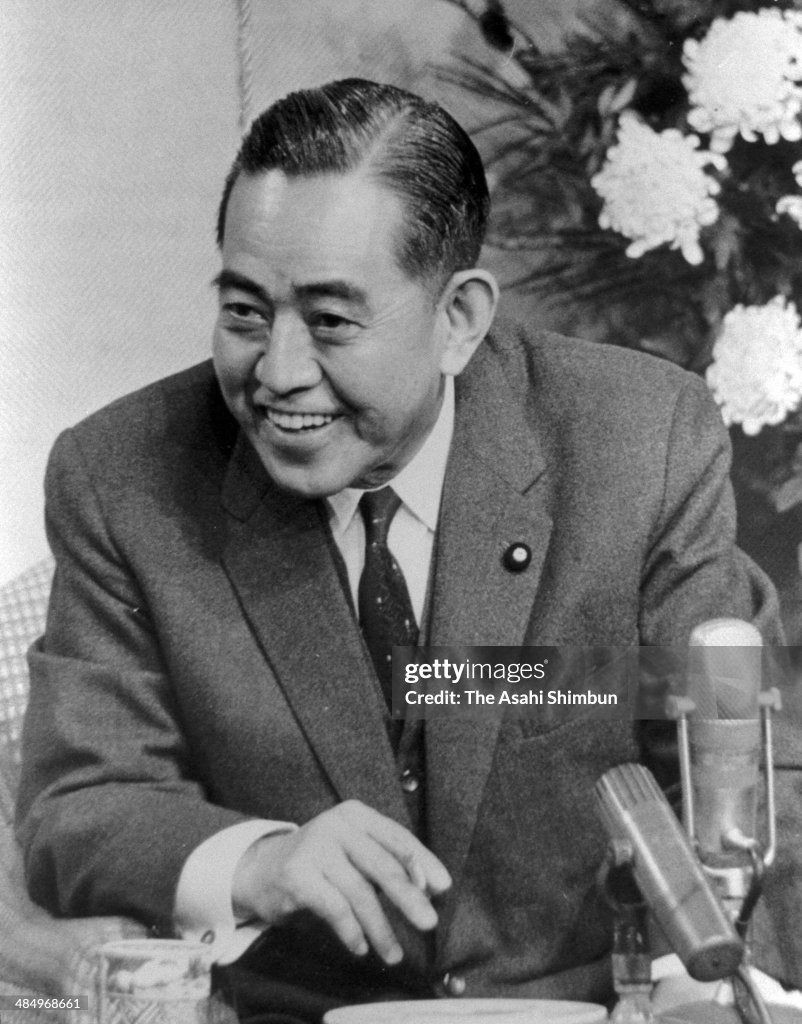
Eisaku Sato, the new Japanese Premier, said today at a news conference that it was time for Japan to have a voice in international affairs commensurate with her status as one of the world’s leading economic powers. The policies outlined by Mr. Sato seemed to forecast vigorous steps to bring Japan out of the shadow of international disgrace imposed by World War II and the country’s defeat. Less than 24 hours after taking office, the Premier indicated that Japan’s progression from the wreckage of 1945 to the successful staging of the Olympic Games last month was not an interlude.
“Japan’s international voice has been too small,” Mr. Sato said. He recalled a favorite saying of his predecessor, Hayato Ikeda, that Japan was “one of the three pillars of the world” — with the United States and the Western allies forming one, and the Soviet Union and the Communist powers forming another. “I think that unarmed nations and nonnuclear nations, such as Japan, should express a more positive voice for the maintenance of peace,” Mr. Sato said. Following Japan’s surrender country was excluded from international exchanges until the peace treaty, signed in 1952, restored sovereignty. For some time after that the memory of Japanese expansionism and wartime deeds continued to cloud Tokyo’s relations with other countries. Careful diplomacy, including trips abroad by leading Japanese, have gradually eased these obstacles.
The Congo mercenaries’ commander, Major Michael Hoare, said yesterday that his mien had killed Nicholas Olenga, the military commander of the Communist‐backed rebels in the eastern Congo.
Congolese troops, led by the mercenaries, are closing in on the rebel capital of Stanleyville. The latest rebel town to fall to them was Opala, 96 miles southwest of Stanleyville. There was; no word in Opala about the fate of 29 German and Austrian priests and nuns and 15 other whites seized by the rebels as they fled another town captured by Government forces last week. The missionaries include the Rev. Martin Bormann Jr., son of the former Nazi leader. Major Hoare said his men shot Olenga in the Lualaba River last week as he clung to a rebel boat leaving Kindu when the city fell to the Congolese Army. The body was not recovered.
Kenya effectively became a one-party state, as the remaining 23 legislators of the short-lived Kenya African Democratic Union (KADU) returned to the Kenya African National Union (KANU).
The “Porsche 901” sports car, introduced at the Paris Auto Show the previous month, was rebranded as the Porsche 911 after 82 of the vehicles had been constructed. French automaker Peugeot had objected to the designation with the claim “that it held all the rights to all car model numbers with zero as the middle digit”, and the West German Porsche company “elected to switch rather than fight French logic.”
American physicist Glenn T. Seaborg was awarded U.S. patent no. 3,156,523 for his development of the chemical element Americium, number 95 on the periodic table; he would receive a patent for Curium on December 15.
Defense Secretary Robert S. McNamara indicated today that the next military budget would probably be kept below $50 billion and that his resistance to the development of a new manned bomber was unchanged. Mr. McNamara and Secretary of State Dean Rusk conferred with President Johnson today at his LBJ Ranch and then held separate news conferences before returning to Washington. Although Mr. McNamara said that it was too early to give “accurate estimates” of Defense Department requests for the fiscal year 1966, he said: “I think we can hold the defense expenditures, including the Military Assistance Program [to foreign allies], to under $50 billion.” He noted that this would be “roughly the same” as military expenditures for the current fiscal year. These are running at $49.8 billion. This is more than half of the total Federal budget.
Both Mr. McNamara and Mr. Rusk stressed that the Administration continued to hope for the creation of a multilateral nuclear force to be made up of surface missile ships manned by crews of mixed nationalities. Mr. Rusk said that the beginning of a new Presidential term was always “a period of reflection and review” and that a review of foreign policy was under way. He added, however, that continuity of foreign policy was “the principal theme of the new Administration.”
Mr. McNamara’s critics, including Senator Barry Goldwater, have argued that a new “follow‐on” bomber is needed on the ground that the B‐58 fleet will be obsolete in the early nineteen‐seventies. Today Mr. McNamara said he did “not interpret the appropriation by Congress as a decision by Congress that a new manned bomber be produced.” He contended that “nobody in the Department of Defense .that I know of has to date recommended that we produce and deploy a successor to the B‐58.” The Air Force Chief of Staff, General Curtis Lemay, is understood to believe that such a plane is needed.
Several prominent Republicans disclosed yesterday that telephone surveys since the election last Tuesday showed more than two‐thirds of the 129‐member Republican National Committee wanted a change in the organization’s leadership. At least 85 committee members strongly backed Senator Barry Goldwater for the Presidential nomination last July. But fewer than 40 can now be counted upon to support the Arizonan’s associates in a showdown over party control, the private and informal surveys showed. Meanwhile, Senator Hugh Scott of Pennsylvania denounced the national leadership, calling for a thoroughgoing purge, an audit of party books and a return to the principles of moderation.
Among those independently checking party sentiment were two persons who were top‐echelon officials in the Eisenhower Administration, a ranking committeeman in the South and a member of Mr. Goldwater’s campaign hierarchy. According to the pulse‐taking Republicans, Charles H. Percy of Illinois and Representative Robert Taft Jr. of Ohio were mentioned by many party leaders as “ideal” prospective national chairmen to replace Dean Burch. Mr. Burch, who had been an aide to Mr. Goldwater, was named to head the committee last summer at the Senator’s behest.
Richard M. Nixon declared yesterday that the Republican party must choose centrist; leadership that will “make a place for all responsible points; of view,” from conservative to liberal, while rejecting rightwing extremism. Asking again for a coolingoff period among Republicans, Mr. Nixon declared that “the blood is still too hot and we’re too close to the disaster” of November 3 to take the right steps toward arranging new party leadership. He said that “the first of the year would be thei time to decide” on such steps. Ideologically, the Republican future has got to be near the center of the political spectrum, he said, and its leaders must be moderates who can draw conservatives and liberals into coalition.
“The center does not try to read anybody out of the party,” he remarked. “But the farther you go in either direction, the greater the inclination to read others out — to say, ‘It’s my way or nothing.‘” Deploring that sort of political “cannibalism,” he warned the party to avoid another massive ideological split of the sort that marked its San Francisco convention. Mr. Nixon charged that after their victory there, the conservatives were unreasonable in “purging” the party apparatus of liberals. “The election will be badly interpreted if it is interpreted as a rejection of conservatism,” the former Vice President declared. “It was a rejection of reaction, a rejection of racism, a rejection of extremism.” He added that he did not believe the defeated candidate, Senator Barry Goldwater, had stood for those things, although he said some of the Goldwater supporters had.
Roman Catholic prelates from the United States and Britain defended today the right of governments to base their defense of freedom on nuclear deterrence. “Let us not too readily condemn those governments which succeed and which have succeeded in keeping peace, however tentative, in the world by the use of such methods,” said the Most Rev. George Andrew Beck, Archbishop of Liverpool, in a speech to the Ecumenical Council, “Millions of people owe them gratitude.” He and Msgr. Philip Hannan, Auxiliary Bishop of Washington, spoke in implied opposition to paragraphs of the current Council draft on the problems of peace that appear to call for total elimination of nuclear arms but are silent on the matter of controls for disarmament.
The Treasury Department and Congressional tax experts are studying the possibility of introducing a graduated withholding tax to replace the present flat withholding rate, which brings large and unexpected tax bills to many families each April. As yet no one in the Treasury or Congress has decided to go ahead next year with a proposal for such a change in the withholding system, which would require legislation. Whether they do so will depend largely on the volume of taxpayer protests next April 15, when the tax bills will be considerably larger and more widespread than usual.
At present, the withholding tax rate is the same for everyone 14 percent — regardless of income. The amount of income to which the 14 percent rate applies varies with the number of personal exemptions that the taxpayer claims. The single nongraduated withholding rate has been in the tax law since 1948. It has always meant that many middle and upper‐middle income taxpayers have not had enough withheld from their paychecks to cover their tax liabilities.
Walter W. Jenkins, a former assistant to President Johnson, was discharged from the George Washington University Hospital yesterday after nearly five weeks of treatment for hypertension and exhaustion. Mr. Jenkins, it was learned, is considerably improved and is now with his wife and six children in their northwest Washington home. Friends who have seen him said that he seems to be doing very well. They also said that while he was in the hospital he had an operation for bursitis in one arm. Mr. Jenkins resigned his White House post on October 14 after it was revealed that he had twice been arrested in Washington on morals charges. In a telecast on October 26 President Johnson had this to say about Mr. Jenkins: “It seems to be a very unfortunate, unpleasant and distressing situation that probably resulted from intense overwork and he has my sympathy and my understanding and his wife and their lovely family have my prayers and my best wishes.”
Two Black men, once sentenced to die and now serving life terms in prison for the rape of a white girl, were granted new trials today because their prosecutor had suppressed evidence concerning the girl. The unusual action by Montgomery County Circuit Judge Walter H. Moorman capped nearly two years of investigation by a group of private citizens trying to free the Blacks. Members of the group are, with a few exceptions, white and include a number of Washington area citizens. Montgomery County is a suburb of the District of Columbia. The spare‐time detective work that resulted, first, in the commutation of the death sentences of James V. and John G. Giles, and, today, in the decision to grant them a new trial, was largely the work of Dr. Harold A. Knapp, a chunky, red‐haired Pentagon mathematician and physicist. Dr. Knapp’s investigation showed that the girl allegedly had a record of emotional instability and that she had charged other persons with rape while the defendants were awaiting trial. It was the prosecutor’s suppression of information that the court ruled today, denied the defendants “due process of law.”
Ed Mendenhall, president of the National Association of Real Estate Boards, declared today that private property rights were more basic to human liberty than the civil rights of minority groups. The statement was made in the keynote address by the High Point, North Carolina, realty man at the 78,000‐member association’s 57th annual convention here. About 7,000 members are attending the sessions. Speaking in a state whose voters last week overwhelmingly enacted a constitutional amendment nullifying all legislation against discrimination in housing, Mr. Mendenhall said: “Those who voted against ‘forced housing’ consider the right of decision in private property a liberty essential to the preservation of their most basic human right — separate and apart from civil lights.”
“Something More!” opens at Eugene O’Neill Theater NYC for 15 performances.
The Braves sign a 25-year lease to play in the new Atlanta stadium.
Dow Jones Industrial Average: 870.64 (-3.93)
Born:
Kenny Rogers, MLB pitcher (World Series Champions-Yankees, 1996; perfect game 1994; All-Star, 1995, 2004-2006; Texas Rangers, New York Yankees, Oakland A’s, New York Mets, Minnesota Twins, Detroit Tigers), in Savannah, Georgia.
Keith Lockhart, MLB second baseman, pinch hitter, and third baseman (San Diego Padres, Kansas City Royals, Atlanta Braves), in Whittier, California.
Shawn Holman, MLB pitcher (Detroit Tigers), in Sewickley, Pennsylvania.
Troy Johnson, NFL linebacker and defensive end (Chicago Bears, New York Jets, Detroit Lions), in Houston, Texas.
Caesar Rentie, NFL tackle (Chicago Bears), in Hartshorne, Oklahoma.
Magnus Scheving, Icelandic athlete, writer and producer (“LazyTown”) in Borgarnes, Iceland.
Died:
Jimmie Dodd, 54, American actor and TV personality known for hosting The Mickey Mouse Club, of lung cancer.



 History Diaries