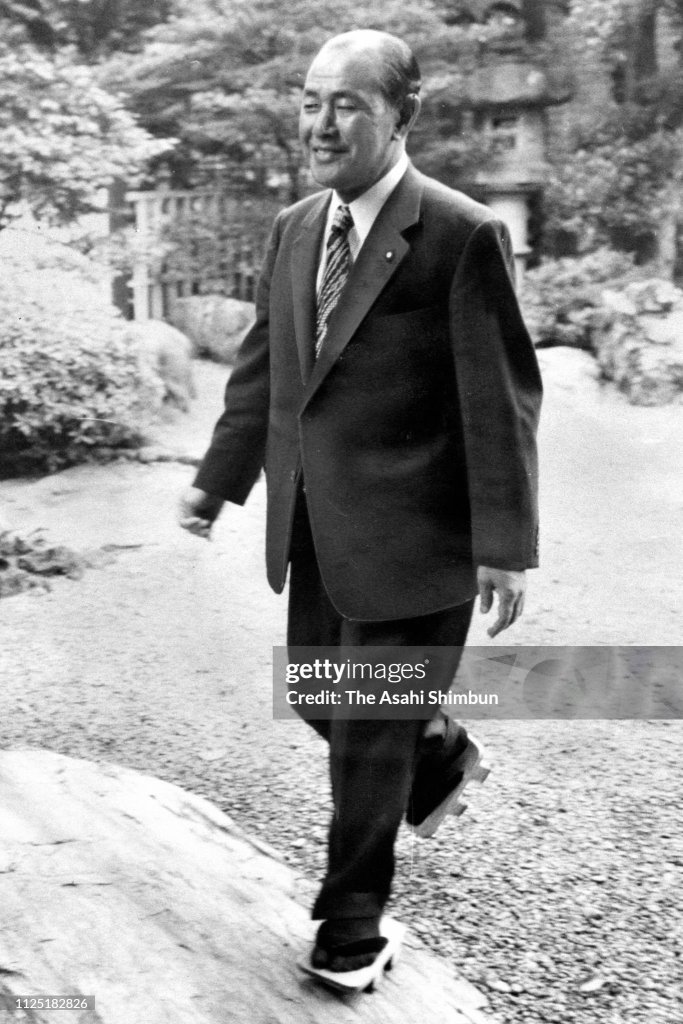
Secretary of State Henry A. Kissinger arrived in Washington after his 17-nation trip, including stops in the Soviet Union and the Middle East. He planned to report to the President at Camp David, Maryland. Secretary of State Kissinger returned home to Washington, hopeful that his 18-day, 27,000-mile trip had opened the way to further agreements on limitation of strategic arms with the Soviet Union and step-by-step peace moves in the Middle East. Newsmen aboard the plane were told that Mr. Kissinger, while preoccupied with the complex Middle East situation, believed that the first four days of his trip, the period in Moscow, might have been the most important. In the Soviet capital, Mr. Kissinger and Leonid I. Brezhnev, the Soviet communist, party leader, laid the basis for announcing a framework for a next‐stage agreement on arms limitation during a meeting of President Ford and Mr. Brezhnev two weeks from today near Vladivostok, the Soviet Pacific port. Much of the next week in Washington will be taken up in preparing for Mr. Ford’s trip.
British coal miners, who played a central role in toppling the Conservatives earlier this year, are locked in another battle — this time with the new Labour Party Government — that could lead to more power losses this winter. The disagreement over productivity has dismayed many Britons, who had hoped for a period of industrial peace under Prime Minister Harold Wilson. It has also refreshed memories of the coal strike last winter that led the then Prime Minister, Edward Heath, to impose a three‐day week on most of industry to conserve electricity. It appears likely that coal shortages will occur again even if the dispute is settled and that more serious consequences may be in store if the National Union of Mineworkers initiates slowdowns or calls another strike. The conflict has raised new doubts about the capacity of the “social contract” between the Wilson Government and the unions to prevent disruptions, curb inflation and keep unemployment low.
A British insurance broker who admitted forging Prime Minister Harold Wilson’s signature on a letter purporting to show Wilson’s approval of a land speculation deal was jailed for three years. Ronald Milhench, who was involved in the deal, tried to sell the letter to the rightwing Daily Mail in an attempt to hurt Wilson’s Labor Party in last February’s general elections. The Labor Party is highly critical of land speculation. Milhench, 37, pleaded guilty to eight charges in the case.
Scotland Yard issued a nationwide alert for the seventh Earl of Lucan in the fatal bludgeoning of his children’s nurse and the beating of his estranged wife. Detectives in London theorized the death of nurse Sandra Rivett, 29, may have come about through mistaken identity. In the dark or from the back, her killer may have believed he was attacking Lady Lucan, 35. The two women resembled each other in looks, height and weight.
General Paul Stehlin, a former French air force chief of staff, said in Paris that shots had been fired at his car four days ago after he asserted that the French Mirage jet was inferior to its U.S. rivals. General Stehlin was not in the car at the time but his 20-year-old son Maro was wounded in the left eye and cheekbone.
A French judge will announce his decision December 18 in the trial of 18 prominent Bordeaux wine traders accused of doctoring or mislabeling about 700,000 gallons of cheap wine. The eight-day trial ended Friday. The prosecution demanded jail sentences for eight defendants while the government and various wine associations asked for about $22 million in damages for the harm done to the industry’s name.
The United States delegation at the World Food Conference in Rome, under pressure from congressional advisers, proposed a resolution urging the reduction of non-agricultural uses of fertilizers. A critical fertilizer shortage was said to be partly responsible for hunger this year in southern Asia. About 15 percent of the fertilizer used in the United States is applied to lawns, golf courses and cemeteries. That amount would have been enough to add two million to three million tons to India’s wheat crop this year, specialists at the conference reported.
A new internal directive of the Soviet Communist Party has called for intensifying the drive to recruit new members among blue‐collar workers, especially in the younger generation, according to Soviet sources. The party leadership is reportedly concerned by the fact that intellectuals, administrative leaders and white‐collar workers outnumber the blue-collar member ship and by ideological apathy and skepticism among some of the educated young people who join the party. For several years, party organizers have waged a recruiting campaign to make.the party once again what the Soviet press calls “the party of the working class” but this has evidently still not borne sufficient fruit.
The Soviet Union, seeking to eliminate what is described as a rash of worthless research, announced a sweeping reorganization of its higher education administration. The Council of Ministers, in a decree published in Pravda, also said that scholars would have to meet unspecified nonacademic standards to be eligible for an advanced degree. The reorganization also appeared aimed at curbing academic abuses ranging from cheating to outright bribing of officials.
An Arab terrorist fatally shot a 62‐year‐old Israeli browsing with his wife and daughter in a bazaar on the occupied, West Bank, the military occupation, command said today. The command sent soldiers and police into the market at Nablus, 30 miles north of Jerusalem. They arrested an undisclosed number of suspects and closed several shops, a command spokesman said. He identified the victim as Maximilian Roth, from a Tel Aviv suburb. Mr. Roth was shot in the head at close range near where a grenade thrown by a terrorist in January blew off the leg of a former military governor of the West Bank, Colonel Eliezer Begev.
Israel devalued her currency by 42.857 percent, from 4.20 to 6 Israeli pounds to one United States dollar. The devaluation announcement followed a six-hour cabinet meeting and was one of a series of measures intended to curb imports, increase exports and combat inflation. The cabinet also decided to reduce special import levies from 35 percent to 15 percent.
The leader of the new military government of Ethiopia, Lieutenant General Aman Andom, said that he had asked the United States for more military aid to defend Ethiopia’s area of the Red Sea, which will increase in strategic importance when the Suez Canal reopens. He avoided a direct answer, however, when asked if more military aid was being sought to offset arms being sent to a hostile neighbor, Somalia.
President Nguyễn Văn Thiệu said today that he was ready to establish diplomatic relations with China, the Soviet Union and North Vietnam under certain conditions, but Western diplomats called his offer a “public relations move.” His statement came a few hours after the Việt Cộng had rejected his demands for unconditional resumption of military and political talks to end the fighting, and called again for his overthrow as a condition for meaningful negotiations. Mr. Thiệu said diplomatic relations could be established with the Communist nations “if those countries will not interfere in the internal affairs of South Vietnam.” He characterized South Vietnam’s foreign policy as an “independent and open” one and said it was “not hostile to any nation if these nations will not be hostile to us.” A Western diplomat said Mr. Thiệu’s statement appeared designed “to demonstrate his flexibility and reasonableness while making the Communists look like hardliners and uncompromising,” Mr. Thiệu has already proposed that officials of North Vietnam and South Vietnam meet at the Foreign Ministry level.
The fiery collision in Tokyo Bay of the Taiwanese freighter Pacific Ares and the Japanese oil tanker Yuyo Maru killed 33 sailors, all but one of them on the freighter. The Pacific Ares had departed from Kawasaki with cargo for Los Angeles and was 4 miles (6.4 km) out to sea when it encountered the incoming Yuyo Maru. Rescue boats saved 34 survivors, and 19 bodies were found, but 14 other sailors listed as missing were not recovered.
In the British Virgin Islands, a fisherman discovered the body of 23-year-old American marine biologist David Drew, who had apparently fallen and hit his head, in a rocky crevice on Cockroach Island. Drew was buried at sea the following day.
A bomb exploded on the second floor of the Organization of American States headquarters in Washington, D.C. No one was injured. A previously unknown group called “Cuba Movement C-4” claimed responsibility for the bombing, stating its opposition to the Cuban regime of Fidel Castro.
Two days after putting down a revolt in Bolivia, President Hugo Banzer suspended the activities of all political parties, labor unions, employer organizations and professional associations and canceled plans for democratic elections until at least 1980. Banzer dismissed his civilian cabinet and formed a new “national reconstruction government”, commenting that “Here and now, a new history will begin for Bolivia.” The move came after the military leadership of Bolivia, led by Air Force General Oscar Adriazola, informed President Banzer in a memo that the generals were “categorically and definitely not in agreement with holding elections or returning to the parliamentary system while the critical period the country is going through internally is not yet over.”
An earthquake shook Lima, Peru for about 60 seconds today, sending some masonry to the sidewalks but causing no casualties, reports from affected districts said. Peru’s Geophysical Institute pinpointed the center of the quake about 80 miles south of Lima, in the same place where a quake occurred on October 3, killing 63 persons.
Leftist guerrillas in Argentina ambushed bodyguards of the newly appointed assistant chief of the national police today, killing a sergeant. The assistant chief, Alevi Elio Rossi, who was not injured, later said his bodyguards had been lured into the ambush by a guerrilla band apparently made up of gunmen from two leftist organizations. Mr. Rossi said a man had alerted the guards about a stolen truck near the Rossi home in suburban Castelar. When policemen sped to the scene, they were attacked by shots from the truck and from a car parked nearby. Sgt. Joaquin Casas, 37, the father of one son, was killed, Mr. Rossi said. One of the guerrillas was shot in the abdomen but was rescued by his comrades, he said.
South African Prime Minister John Vorster offered the nation’s 2 million “colored” people — meaning those of mixed race — a greater say in running their affairs but denied them direct representation in the all-white Parliament. Speaking at a session of the Colored Representative Council, Vorster proposed an official link between the council and his cabinet. He appealed to the council to accept the government’s hand of friendship.
The day after the Democrats won major victory in the Congressional elections, Carl Albert turned to Mike Mansfield and described the result as “mixed blessing.” Mr. Mansfield nodded, in sympathetic agreement. Mr. Albert is the Democratic Speaker of the House. Mr. Mansfield is the Democratic Leader of the Senate. And both, thanks to the voters last Tuesday, are very much on the spot. The 94th Congress, which takes office on January 20 will be overwhelmingly Democratic and predominantly liberal. But whether Speaker Albert and Senator Mansfield can turn their two‐thirds majority in the House and three‐fifths majority in the Senate into a cohesive force for progressive legislation remains to be seen. The rub is that the Democrats control the Congress, but not the government. And in such a situation, recent history may be instructive. The Democrats last enjoyed comparable numerical superiority on Capitol Hill under a Republican President in 1959 and 1960. In the face of constant vetoes from President Eisenhower, the Congressional Democrats split into frustrated factions and failed to produce many accomplishments.
John E. Sheehan, a member of the Federal Reserve Board, said today that the Ford Administration’s proposals did not go far enough in combating inflation. In remarks prepared for delivery before a meeting of the Washington Forum in Boca Raton, Florida, Mr. Sheehan said: “’While I support the Administration’s economic package, it does not go far enough to win this inflation battle.” He said that the economy had moved into a new phase of inflation, which he termed “an income‐cost‐push period.” The starring roles in this phase are being played by those companies that use noncompetitive pricing policies and those workers who can obtain inflationary wage increases despite the weakness of the labor market, he said.
He said that while some moderation in wage and price behavior could be achieved achieved through “jawboning,” the real solution lies in redressing the balance of power in the collective bargaining process and vigorous application of antitrust and other laws to break up the concentrations of price and wage‐setting corporate and labor power in our society.
President Ford violated a Federal Court ruling by attempting to pocket veto three bills while Congress was in recess for the 1974 political campaign, Democratic critics on Capitol Hill believe. The Administration has not decided whether to appeal last August’s ruling by the United States Court of Appeals for the District of Columbia that barred the use of the pocket veto during Congressional recesses. The deadline for filing an appeal with the Suprerne Court is next Tuesday. Solicitor General Robert H. Bork has asked Chief Justice Warren E. Burger for a 60‐day extension “to study the case further,” but no decision on that request has been made. Senator Edward. M. Kennedy, Democrat of Massachusetts, who brought the lawsuit that produced the ruling against the White House, charged that the President would “flout both the spirit and the letter of he court decision by exercising the pocket veto while refusing to carry an appeal to the Supreme Court.”
The lure of time-and-a-half pay — ranging from $62 to $75 for one last Saturday of overtime — before the start of two or more weeks of joblessness softened the immediate impact of a national coal strike that is now inevitable. Thousands of miners reported for a last day of work. Negotiations between the United Mine Workers and the mine operators continued this afternoon, but without a sign that an agreement was likely this weekend. Both sides have said that an agreement by tomorrow night could limit the strike to two weeks, the time necessary to obtain union membership approval of a new contract.
A federal judge in Columbus, Georgia, released William Calley on unrestricted personal bond, making the former first lieutenant for all intents a free man and thwarting an attempt by the Army to retain custody over him by granting him parole. Mr. Calley was convicted in March, 1971, by an Army court-martial of murdering at least 22 unarmed South Vietnamese civilians in My Lai, in 1968. His lawyer said “At long last, he will never have to spend another day in confinement.”
The Secretary of the Army, Howard Callaway, described his parole of former Lieutenant William Calley, who has served almost one-third of his prison term for the My Lai murders, as a “routine action” that followed normal Army procedures. He said that he concurred with the findings of a clemency board that Mr. Calley’s psychiatric condition and behavior qualified him for parole.
At least for the last 10 years, the Atomic Energy Commission has repeatedly sought to suppress studies by its own scientists that found nuclear reactors were more dangerous than officially acknowledged or that raised questions about reactor safety devices. An examination of hundreds of memorandums and letters written by commission and industry officials since 1964 show the extent to which the commission ignored recommendations from its scientists for further research on key safety questions.
Nine people, ranging in age from 2 to 44 years old, were killed in the crash of a single car when their vehicle broke through a guardrail on Interstate 20 near Longview, Texas, and fell 50 feet (15 m), landing upside down. All of the persons killed were residents of Midwest City, Oklahoma, who were traveling to a family reunion when the driver fell asleep and the car went out of control.
Oil profits for 1974, so far running 65% above 1973 levels, still are not high enough to finance needed exploration and development of new energy sources, the industry said. A Texaco senior vice president, Kerryn King, contended that “inflation hurts us as much as anybody” and said, “We need (these earnings) to get more supplies of oil.” The American Petroleum Institute, which charted the 65% profits gain, said in a statement the United States should not hope to become self-sufficient in oil if it was unwilling to pay the price.
Child abuse charges against a woman whose husband and 13-year-old daughter died of carbon monoxide poisoning in their van may be dropped, New Mexico officials said. A spokesman said Lillian Orr of Exeter Township, Pennsylvania, might have been too ill to go for help as she and three other Orr children lay near death from carbon monoxide poisoning and malnutrition in their van, which had run out of gasoline. Mrs. Orr and her three sons were in fair condition at an Alamogordo hospital.
Lung cancer has become the third major cancer killer of American women, the American Cancer Society said, noting that “the message about quitting smoking” had been widely ignored. As a result, it said, 2,100 more women were expected to die from lung cancer in 1975 than in 1974. Breast cancer is the No. 1 cancer killer of women, with cancer of the colon and rectum ranking second. Uterine cancer, formerly the No. 3 cancer killer of women, dropped to fourth place, largely as a result of widespread use of the Pap smear test.
A woman striker was killed and another seriously injured when a nurse drove her car through a picket line at the Cranston, Rhode Island, Institute on Mental Health, police said. The dead woman was identified as Wilma Schesler, 55. Her companion, Marguerite McIntyre, 54, was listed in poor condition at a hospital. The nurse, Tonia Healey, 34, of Warwick was charged with driving to endanger and with leaving the scene of an accident. About 4,000 Rhode Island state employees went on strike Friday to back demands for higher pay.
The Cleveland Press suspended publication, leaving the Ohio city of 750,000 persons without a daily newspaper, The Plain Dealer had closed down November 1 after 230 editorial employees, members of the Newspaper Guild, went on strike when their contract expired. The strike followed rejection of an offer of a three-year contract with a total raise of $62 a week for reporters earning the top minimum. Representatives of the guild and the Plain Dealer were to meet with the regional director of the Federal Mediation and Conciliation Service.
Ultraviolet radiation from the sun can be reduced by as much as 25 to 35% because of air pollution on a typical smoggy day in the Los Angeles area, two government meteorologists reported. Ultraviolet light, though only a small proportion of the total sunshine reaching the earth, is important because its energy produces vitamin D in the human body. Dr. James T. Peterson and Edwin C. Flowers, both Commerce Department weathermen assigned to the Environmental Protection Agency, conducted their studies last fall by sampling the atmosphere continuously at six sites in the Los Angeles area.
“Energy doomsday” could be reached in the United States within 60 years if consumption is not curbed and new sources of energy not found, a Yale physicist said. Professor Arvid Herzenberg, who noted in an interview that his outlook was based on the most pessimistic predictions in a 1972 Cornell University study, said oil supplies will be used up by 1988, gas by 1989 and coal by 2032, if present consumption rates continue. He also said, however, that the study did not anticipate new energy sources such as nuclear fusion or solar power. Herzenberg argued that the safest solution is an immediate cutback in energy use which could extend existing sources for about 500 years.
[Ed: a physicist ought to be better than to buy into this Malthusian Doomer nonsense. But, perversely, gloom and doom sells.]
In Seattle, Washington, the U.S. Navy launched USS Pegasus (PHM-1), the lead ship of the Pegasus-class hydrofoils designated “PHM” for “Patrol Hydrofoil, Missile”.
In college football, Michigan State stunned top‐ranked Ohio State, 16–13, today on an electrifying 88‐yard touchdown run by Levi Jackson and a post‐game ruling by the Big Ten Conference Commissioner Wayne Duke. It took Duke almost 30 minutes to confirm what a delirious, disbelieving capacity crowd of 78,533 had seen — that Michigan State had held on a goal‐line stand with seconds to play and Ohio State, out of time‐outs, had not got its final play off in time from the 1‐yard line. “It was the ruling of the back judge and the field judge that time had expired before the last play,” Duke said of the confusion‐filled final seconds.
The line judge had briefly signaled an Ohio State touchdown but Duke said the Buckeyes would have suffered an illegal procedure penalty on the play had time not run out. According to Herman Rohrig, supervisor of the Big 10 officials, “If the time had not run out, they [Ohio State] had men in motion, and on any offensive foul, the game ends regardless.” Brian Baschnagel, a wingback, picked up a fumbled snap at the final gun and plunged into the end zone. But the play, as it turned out, didn’t count.
Born:
José Rosado, MLB pitcher (All-Star, 1997, 1999; Kansas City Royals), in Newark, New Jersey.
Jeff D’Amico, MLB pitcher (Kansas City Royals), in Inglewood, California.
Beiker Graterol, Venezuelan MLB pitcher (Detroit Tigers), in Barquisimeto, Venezuela.
Joe C. [Joseph Calleja], American rapper (hype man for Kid Rock), in Taylor, Michigan (d. 2000).
Died:
Richard McCoy Jr., 31, an American who had been convicted for the 1972 hijacking of United Airlines Flight 855, and had escaped from the federal prison in Lewisburg, Pennsylvania on August 10, was killed in a shootout with FBI agents who had located him at a house he had been renting in Virginia Beach, Virginia. FBI agents also arrested Melvin Dale Walker, who had escaped from prison with McCoy.
Holger Meins, 33, West German anarchist and terrorist convicted of work with the Red Army Faction, died in prison after a two-month hunger strike.
Paul Tabori (born Pál Tábori), 65, Hungarian-born author and screenwriter.
Egon Wellesz, CBE, FBA, 89, British composer, teacher and musicologist.



 History Diaries