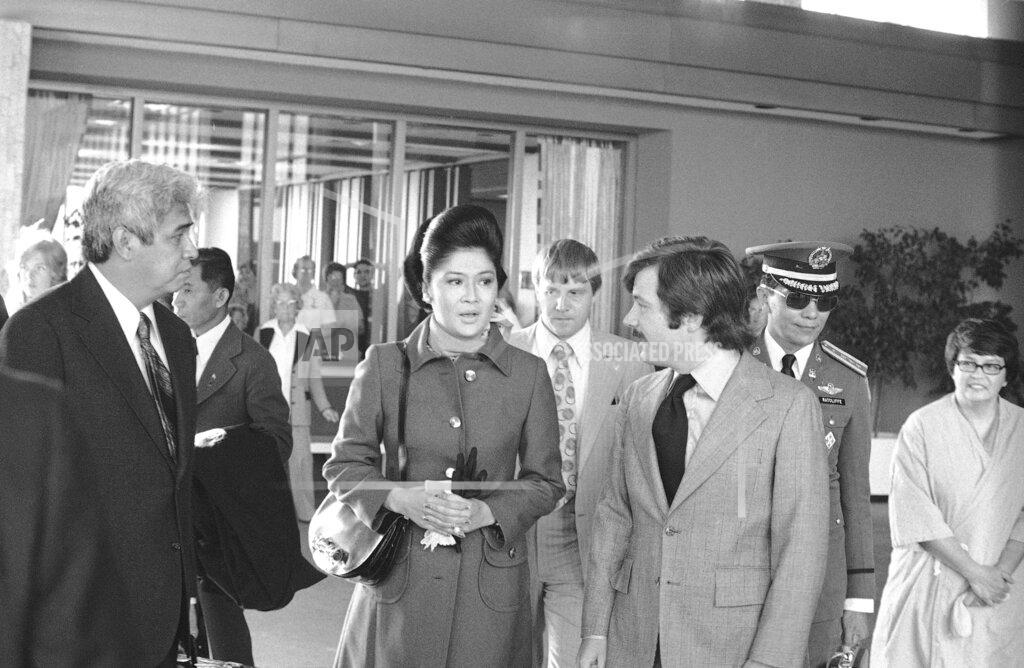
Key members of the American delegation at the World Food Conference in Rome said that the United States expects to double its food assistance to hungry nations for humanitarian purposes, increasing the total in that category to two million tons a year. The delegation cabled President Ford for permission to declare the United States intention publicly. The move was confirmed in an interview by Secretary of Agriculture Earl L. Butz, who has been meeting privately with top representatives of other nations on the urgent problem of aid to prevent famine, as well as on other subjects related to the conference. “If the immediate world hunger problem is going to be solved, it is going to be solved by the nations that have the grain — and some way has to be found to solve this critical problem,” Dr. Butz said. “The grain has to be found in the United States, Canada, Argentina, Australia and the European Economic Community.”
Some 2,500 university students staged an anti‐American protest in Istanbul today, burning an American flag and accusing the United States of “carrying out a two‐faced treacherous policy” over Cyprus. It was the first anti‐American protest in Turkey in several years. Three persons were arrested, but no injuries were reported. Congress has moved to cut off military aid to Turkey, which invaded Cyprus July 20, and has given President Ford a December 10 deadline to show evidence of progress on getting some of the 40,000 Turkish troops on Cyprus off the Mediterranean island. Secretary of State Kissinger was to have arrived in Turkey today to discuss the Cyprus question, but he canceled his visit because Turkish political leaders have been unable to form a new government.
A sudden jump in unemployment in October to 672,000 — 3 per cent of the work force — has caused shock and surprise among Government and private economists in West Germany, where the rate has not been so high for six and a half years. Some increase in the rate, which was 2.4 percent in September, was expected. But the head of the German Labor Office in Nilrnberg, Josef Stingl, called the rise “surprising” yesterday and attributed it to the weather, which has been rainy, as well as to the generally cloudy economic climate. Though there has been no wave of protests here, a high unemployment rate makes West German politicians extremely uneasy.
Tass told the Soviet people tonight that China had sent a message of greetings on the occasion of the anniversary of the Bolshevik Revolution, but the press agency did not say that the message included a proposal for a nonaggression pact. The Tass report, distributed on the agency’s domestic service, quoted the opening and closing paragraphs of the message, which was received yesterday. But it omitted the key central passage that stated the Chinese proposal. Instead, the agency asserted that the message expressed “the well‐known position of the Government of the Chinese People’s Republic on questions of Soviet‐Chinese relations.” The Tass report marked a departure from the usual practice of publishing the full texts of anniversary messages. It appeared to suggest that the clauses had been omitted to give the Soviet leadership time to ascertain what the Chinese had in mind.
The main Communist newspaper of Yugoslavia affirmed today that the country is linked to the Soviet Union by common objectives, despite differences in some policies. The statement was part of an article in the party daily Borba, commemorating the 57th anniversary yesterday of the Bolshevik revolution. The statement appeared significant in light of the recent cooling in relations between Belgrade and Moscow following the trial here of 32 pro‐Soviet dissidents. Describing the revolution in Russia as having been the “inspiration of the entire progressive mankind,” Borba said: “We are connected with the U.S.S.R. by common goals and numerous identical outlooks on most important international problems, although there exist certain differences which, however, are recognized and considered to be normal. They are caused by objective specific features in our general position and by priorities in development or historical legacy.”
The gray sky hung low over the fishing boats bobbing in the harbor of Lerwick in the Shetland Islands, and the only sounds were the screeching of the sea gulls and the pelting of the rain. The people were indoors, taking refuge from the first winter storm. The days are shorter here than anywhere else in the British Isles this time of year, and the winter comes early. London is 600 miles south, Norway is 180 miles east and out in the North Sea beyond Lerwick harbor are perhaps 15 billion barrels of oil. Most of it will come ashore in Sullom Voe not far from here. Big pipelines will snake across the seabed to sprawling storage and shipping depots near picturesque coastal villages like Brae and Graven, and the Shetland Islands will never be the same. Because of the deep natural harbors here and their proximity to the underwater oil fields, the Shetlands will bear the impact of perhaps the most important industrial development currently under way in Western Europe — the extraction of the rich hoard of oil from the North Sea.
It is estimated that more than 1.5 million barrels of crude oil will be pumped ashore here daily by 1980. Huge tankers will take the oil to markets all over the world, providing a major alternate source to the Middle East. The impact here will be enormous. Shetland has an area of only about 550 square miles — about half the size of Rhode Island. Her cultural heritage dates back to the Vikings, who established outposts here in the eighth century and stayed until King James III took possession for Scotland in 1469. Until now these remote and rugged islands have been known for the wool produced by their sheep and the shaggy Shetland ponies ridden by children at fairs and carnivals all over the world. But this will change drastically with arrival of the oil, and not everybody is certain the change will be for the better.
The original Covent Garden market in London closed after 300 years, with a bell tolling at 11 AM to mark the occasion. The Covent Garden had been established in 1671 by King Charles I. The market would reopen the following Monday as the New Covent Garden Market, at a new site 2.5 miles (4.0 km) away.
British peer the Earl of Lucan disappears and is never seen again after his nanny is found murdered in London.
Secretary of State Kissinger, after concluding three days of talks with Arab and Israeli leaders, said today in Israel that “possibilities do exist” for further American‐sponsored diplomatic progress in the Middle East despite the hard‐line decisions of last week’s Rabat summit conference of Arab states. On the next‐to‐last day of an 18‐day visit to 15 countries, reporters aboard Mr. Kissinger’s plane en route to Tunis were told, however, there was no certainty that the Secretary’s latest mediation effort would prove successful, given the large gap that separates Egyptian and Israeli perceptions of the next stage of negotiations about Sinai. A top Kissinger aide insisted that a diplomatic impasse between Israel and the Arab states had geen averted for the time being, that the Arabs and Israel were less tense than week ago and that the possibility of negotiations remained open. “And everyone agrees the United States effort should continue,” he said.
Mr. Kissinger seems to want to keep alive the possibility of a negotiated settlement for the West Bank of the Jordan River, even though the Rabat conference made such talks unlikely, at least for the foreseeable future. A declaration at Rabat gave the responsibility for negotiations to the Palestine Liberation Organization and not to Jordan, of which the West Bank, populated principally by Palestinian Arabs, was a part until seized by Israel in the war of 1967. The Israelis, who might reluctantly have negotiated with Jordan’s King Hussein, refuse to deal with the Palestian Liberation Organization, which they regard as dedicated to the destruction of Israel. Mr. Kissinger seems to believe that over an extended period, if Israel and the P.L.O. do not engage in negotiations, Arab states might produce another formula that might include Jordan’s re‐emergence as a major factor.
Seen from Cairo, Secretary of State Kissinger’s swing through the Middle East fulfilled a vital psychological purpose — stilling fears that the door to negotiation would be shut — but it brought no substantive gains toward a political settlement between the Arabs and Israel. Reports from Jerusalem today made it clear, Egyptians said, that the Secretary has received no new ideas from the Israelis worth submitting to Egypt. Psychologically, Mr. Kissinger’s visit to the Middle East came at a crucial moment, it was felt here, because there was danger that the doors to negotiation might be slammed shut as a result of what were regarded as “false fears” created in the West and in Israel by the recent Arab summit; conference in Rabat, Morocco. Egyptian sources said they thought these fears had been dispelled by Mr. Kissinger’s meetings with President Sadat and King Faisal of Saudi Arabia. There is a general and deep conviction here that if the movement toward a negotiated settlement is permitted to stop altogether, the region will start irreversible drift toward a new war.
Yasser Arafat, the Palestinian guerrilla leader, said that peace in the Middle East would “remain distant” until the United States recognized the right of the Palestinian people to statehood and stopped what he called the arming of Israel for a new war. He said that recognition by the United States of the Palestine Liberation Organization as a party to Middle East peace negotiations “would be helpful if it happens.” During a 90‐minute interview, for which questions were submitted in writing in advance, Mr. Arafat avoided making any commitment that a future Palestinian state would recognize Israel or renounce belligerency.
In Saigon, a group of 44 opposition legislators called on the United States Congress today to use its influence to stop the repressive tactics of the South Vietnamese Government.
Premier Kakuei Tanaka of Japan returned from a 12‐day trip to New Zealand, Australia and Burma tonight to fight to preserve his political position. American officials here said that they expected Mr. Tanaka to remain in office through the visit of President Ford, scheduled to begin November 18. But they were not willing to bet on Mr. Tanaka’s chances after that. For that reason, the officials indicated that President Ford would try to dissociate himself from Mr. Tanaka during the forthcoming visit. They emphasized that Mr. Ford’s trip would not be an exercise in “person-to‐person diplomacy” but a symbolic journey to underscore the importance of America’s relations with Japan.
Judge Frank J. Battisti of the United States District Court for the Northern District of Ohio acquitted 8 former members of the Ohio Army National Guard in the May 4, 1970, Kent State shootings, finding that the prosecution had not proved beyond a reasonable doubt that the guardsmen intended to violate protestors’ civil rights. Battisti stated in his opinion: “It is vital that state and National Guard officials not regard this decision as authorizing or approving the use of force against demonstrators, whatever the occasion of the issue involved. Such use of force is, and was, deplorable.”
The Army announced that former Lieutenant William Calley, who was convicted of murdering 22 South Vietnamese civilians in the Mỹ Lai massacre, will be paroled this month. Howard Callaway, Secretary of the Army, said that Mr. Calley would be freed November 19, when he will have completed one-third of his 10-year prison sentence. He made the announcement soon after the United States Court of Appeals ordered that Mr. Calley be promptly freed on bail. An Army statement said that the Secretary had acted following “a thorough review of Calley’s application for parole and the recommendation of officials at the United States Army disciplinary barracks and the Army and Air Force Clemency Board.”
After exhausting his military appeals, Mr. Calley, who was convicted in a court martial in March, 1971, turned to the civil courts for relief. He was originally sentenced to life imprisonment, but that was cut to 10 years. On September 25, United States District Judge J. Robert Elliott in Columbus, Georgia, where Mr. Calley had once been confined under house arrest, threw out the conviction, largely on the ground of prejudicial pretrial publicity.
Edward Morgan, who in the early years of the Nixon administration was the deputy to the White House adviser John Ehrlichman, pleaded guilty to participation in a criminal conspiracy to establish a fraudulent $576,000 tax deduction for former President Nixon.
White House aides said privately that the nomination of Andrew Gibson as Federal Energy Administrator would not be submitted to the Senate for confirmation because of the conflict-of-interest controversy raised after President Ford announced his selection on October 29.
Hard bargaining between the coal industry and the United Mine Workers continued almost up to the miners’ strike deadline tonight and was scheduled to resume tomorrow. Thousands of miners in eastern Ohio and northern West Virginia left their jobs during the day, apparently in anticipation of a national walkout. The official strike deadline in the coal fields was midnight Monday, but most mines were scheduled to be closed for they three‐day holiday weekend beginning at 8 AM. today. It could not be determined how many, if any, miners reported for the midnight‐to‐8 AM shift. A contract agreement was still a day or more away, however, when thousands of miners in eastern Ohio and northern West Virginia left their jobs yesterday, apparently in expec tation of the national walkout. Arnold R. Miller, the U.M.W. president, told newsmen yesterday that the strike would last at least two weeks — the minimum time required to complete negotiations and then give the 120,000 active union miners a chance to vote on the, proposed agreement.
Former President Richard M. Nixon advanced a step in his recovery from post‐operative complications, but a new X‐ray showed that the pneumonia in his right lung persists, Mr. Nixon’s doctors said in Long Beach, California today. A hospital, spokesman said, meanwhile, that Dr. John C. Lungren, Mr. Nixon’s chief physican, would have no comment on the announcement by Judge John J. Sirica, who is presiding at the Watergate cover‐up trial in Washington, that he would appoint three doctors to examine the former President to see if he is able to provide testimony. Mr. Nixon was readmitted to the hospital on October 23 and then had an operation on October 29. In that operation. Dr. Eldon Hickman put a clothespin‐like clamp across the left iliac vein in Mr. Nixon’s pelvis to prevent a clot from traveling from his leg to his lungs.
Federal Judge John Sirica said that he would appoint a panel of three leading physicians to examine former President Richard Nixon to determine whether he will be able to give testimony at the Watergate cover-up trial. Judge Sirica acted one day after Mr. Nixon’s attorney gave the judge an affidavit saying that Mr. Nixon would not be able to “participate” for at least two or three months in any “activity requiring substantial mental or physical effort.” Presumably, this was meant to indude interviews in California with lawyers in the case. The affidavit also said that it was “indeterminable” when Mr. Nixon would be able to travel. Mr. Nixon’s attorney, Herbert J. Miller, based his affidavit on the opinions of Mr. Nixon’s longtime physician, Dr. John C. Lungren. Judge Sirica said this morning that he hoped to meet with one doctor over the weekend to work out details of how the team would proceed.
According to a number of lawyers, Judge Sirica’s action is well within the discretion permitted judges in such situations. Mr. Nixon is under subpoena to appear at the trial and has asked that the subpoenas be quashed on the ground of his ill health. If he refuses to be examined by the court’s doctors, the lawyers suggested, Judge Sirica will be entitled to deny the motions to quash and then, if Mr. Nixon fails to comply with the subpoenas, to cite him for contempt. Mr. Nixon was subpoenaed by the special Watergate prosecution and by John D. Ehrlichman, Mr. Nixon’s chief domestic affairs adviser at the White House and one of the five defendants in the trial. The prosecution is not pressing its subpoena, but Mr. Ehrlichman is pressing his, and a second defendant—H. R. Haldeman, once Mr. Nixon’s chief of staff at the White House—has said that he also plans to subpoena the former President.
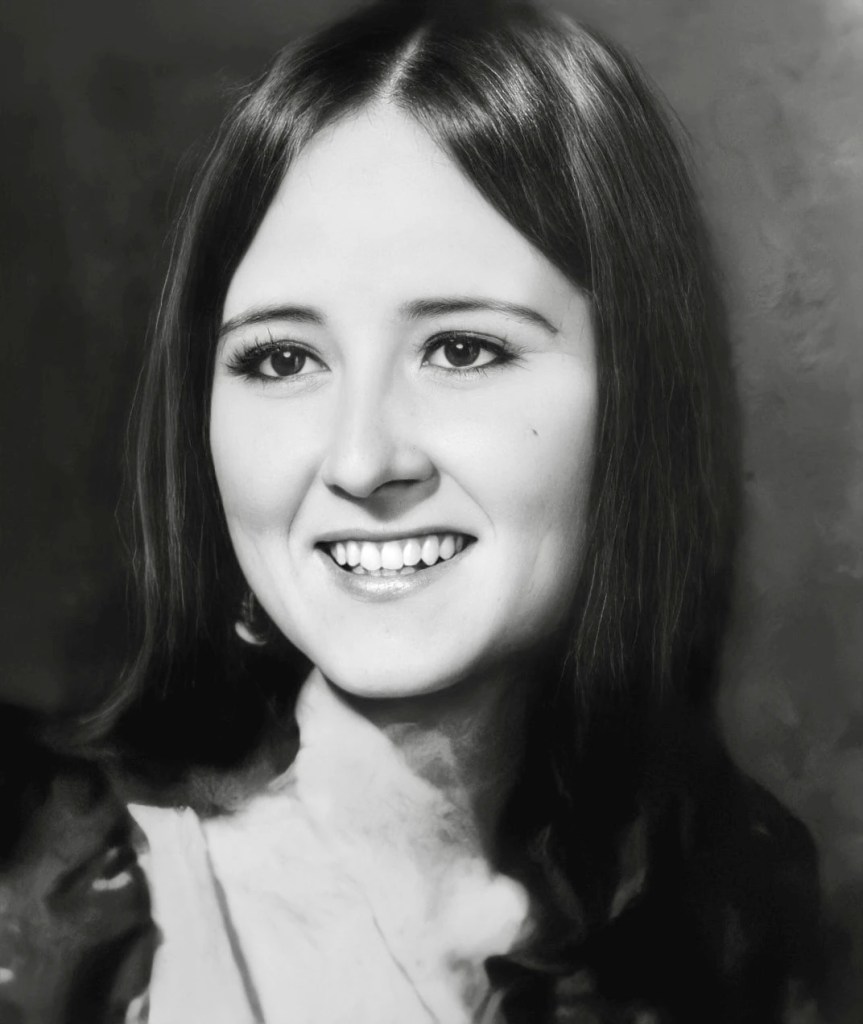
Ted Bundy victim Debi Kent disappears in Utah. Debi was last seen on November 8, 1974, watching a play at Viewmont High School in Bountiful, Utah. She had left at approximately 10:30 pm to pick up her brother from the nearby Rustic Roller Rink. However, she was never seen again. According to witnesses, there was loud screaming coming from the parking lot of the school around the time that Kent was last seen. One person saw a light-colored Volkswagen Bug speeding away from the school. After her parents realized that she had never left the school, they found a handcuff key sitting by the car. This, along with the car seen driving away from the school, was connected to Ted Bundy.
Just before his execution in 1989, Bundy confessed to the murder of Kent. He led authorities to where he claimed to have put Kent’s body in the Fairview Canyon area of Fairview, Utah. Before Bundy would be put to death, he identified where he had hidden the remains by pointing to the area on a map that had been torn from an atlas, according to a 1989 article from The Associated Press. The only human bone found was a patella (knee cap), which was assumed to have been Kent’s and given to her family. However, because investigators were unable to get DNA from the remains, they were unable to confirm the identification. After going through the missing person report, it was noted that Kent’s mother had the kneecap, which authorities at the time didn’t know about. The remains were sent to the University of North Texas and identified as Kent’s in 2015.
American pop singer and actress Connie Francis was raped at knife-point in her room at a Howard Johnson’s motel in Westbury, New York, after performing at the Westbury Music Fair the previous evening. The perpetrator got into her room through a sliding glass door that didn’t lock properly. He raped her at knifepoint, beat her and tied her to a chair. Then he tipped the chair onto the ground and piled two mattresses on top of her before fleeing. Francis subsequently sued the motel chain for failing to provide adequate security and reportedly won a $2.5 million judgment, one of the largest such judgments in history, leading to a reform in hotel security. Her rapist was never found.
The NBC television network broadcast an episode of the police procedural series “Police Woman” involving a lesbian crime ring. In response to protests from gay rights groups, NBC agreed later in the month not to rebroadcast the episode.
“Greatest Hits” 11th studio album by Elton John is released.
They named a street after Muhammad Ali in his hometown of Louisville, Kentucky today, but Mabel Clark still called him “Cassius.” “I taught him how to write his name in the first grade,” said his former teacher, watching the crowds swirl around the world heavyweight boxing champion. “I’m not about to call him different.” Muhammad Ali or Cassius Clay, he was the king today, not only the self‐proclaimed “greatest” for regaining his title from George Foreman last week, but the prodigal son returned more popular than ever. He has been controversial in his hometown, for converting to the Muslim faith and refusing to serve in the Army, but those issues were of the past today. Speaking before a throng of 7,000 persons in a sparkling riverfront plaza, he preached a gospel of youth and pride and progress, sounding like any hometown booster. “Louisville is the greatest,” he said. Then he gave his reason. “It has to be the greatest — mainly because I’m from here.”
Dow Jones Industrial Average: 667.16 (-4.77, -0.71%).
Born:
Penelope Heyns, South African Olympic champion swimmer; in Springs, Transvaal, South Africa.
Masashi Kishimoto, Japanese manga author; in Nagi, Okayama Prefecture, Japan.
Matthew Rhys, Welsh actor; in Cardiff, Wales, United Kingdom.
Died:
John Bingham, 7th Earl of Lucan, 39, a member of the House of Lords in the United Kingdom, disappeared the day after the murder of Sandra Rivett, the nanny of his children, at the Lucan family home at 46 Lower Belgrave Street in the wealthy Belgravia district of London. Accused by his estranged wife, Veronica Duncan, of attacking her and of murdering Rivett, Lord Lucan was last seen alive by a friend in Uckfield, East Sussex. Lucan’s blood-soaked car was found two days later in Newhaven, East Sussex. Named at an inquest seven months later as Rivett’s murderer, Lucan was never located and would be declared legally dead on October 27, 1999.
Ivory Joe Hunter, 60, American rhythm and blues singer, songwriter, and pianist, of lung cancer.

[Ed: The freeway was damaged in the 1989 earthquake and was demolished and not replaced.]




 History Diaries