Hitler postpones his attack on the west, which was scheduled for November 12, due to bad weather. This postponement will be repeated 15 times until May 10, 1940.
German plans for the Western Offensive were passed to the Czechoslovakian government-in-exile in Britain by a double agent. A double agent, Paul Thummel, passes details of the planned German western offensive to the Czech government-in-exile.
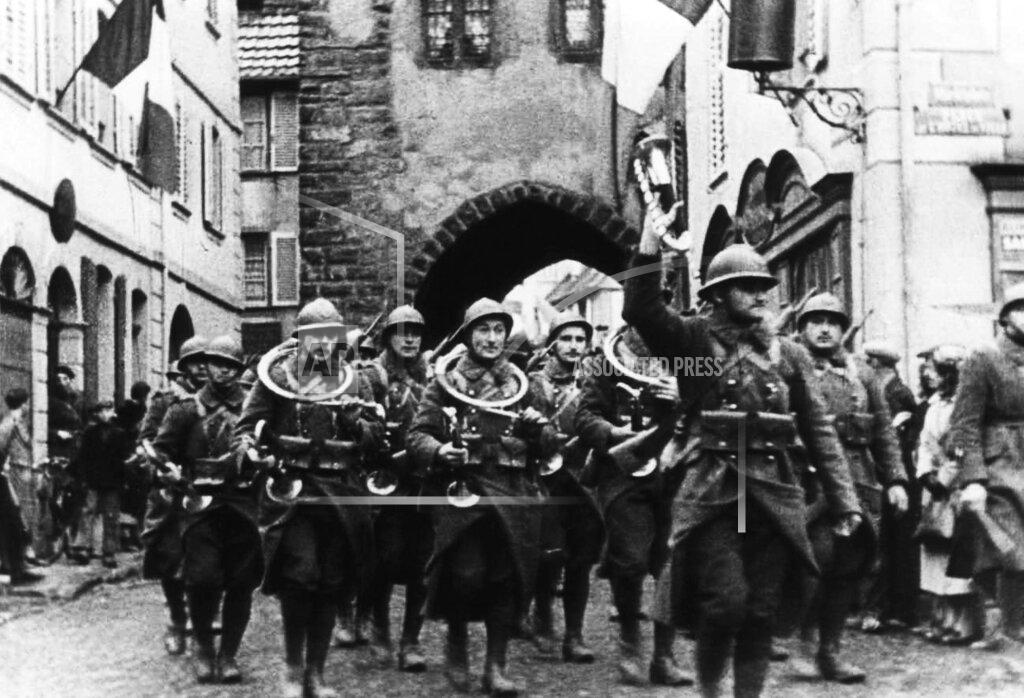
Military dispatches reported tonight that Germany’s big guns of the Westwall, after six days of shelling of the French-held Forbach salient, appeared to have abandoned attempts to drive the French from the strategic position in the Saar Valley.
Queen Wilhelmina of the Netherlands and King Leopold III of the Belgians offered to mediate in the European war. Queen Wilhemina of the Netherlands and King Leopold of Belgium issue a plea for peace to England and France. Belgium and Dutch Crowns stated their neutrality and offer to act as negotiators for peace, which was rejected by Germany, France, and the United Kingdom.
A Belgium-Netherlands peace proposal surprises the Reich. Hitler was described by the Nazi press as “highly skeptical” of of the proposal.
The edict ordering Jews in Warsaw into a ghetto is withdrawn. Meanwhile, deportation of Jews from western Poland begin.
General Władysław Sikorski is named General Inspector of the Armed Forces by the Polish government-in-exile in Paris.
General Sikorski is named Commander-in-Chief of Polish armed forces (in exile) in addition to being Prime Minister. He and the government form a General Staff.
Dalki massacre: 24 Poles, whom they previously imprisoned in Gniezno, including 10 defenders of the nearby town of Kłecko, are massacred by the Germans in Dalki in German-occupied Poland.
Hermann Göring met with American journalists at the Soviet embassy in Berlin, Germany and mocked the quality and quantity of the U.S.-built aircraft that would soon arrive in Britain.
Lord Halifax makes a radio broadcast setting forth Great Britain’s war aims.
The House of Commons unanimously approved today a series of resolutions conferring borrowing powers on the Treasury upon which the National Loans Bill will be founded.
Russia was vigorously attacked by Virginio Gayda in today’s Giornale d’Italia because of the Comintern’s [Communist International’s] manifesto. Other newspapers made similar attacks, while radio commentators also followed suit. Thus ends Italy’s period of caution about the Soviet regime which began when the Russo-German non-aggression pact was signed. It is at last openly admitted that Russia’s pressure in the Balkans is a danger to Italy, and Russia is warned to keep away.
Yugoslavia’s Minister to Turkey, M. Shumenkovitch, who returned last night, is understood to have brought details of an Anglo-Turkish plan to form a neutral Balkan bloc including Bulgaria.
The Finnish government tells its negotiators to tell the Soviets “Nyet.”
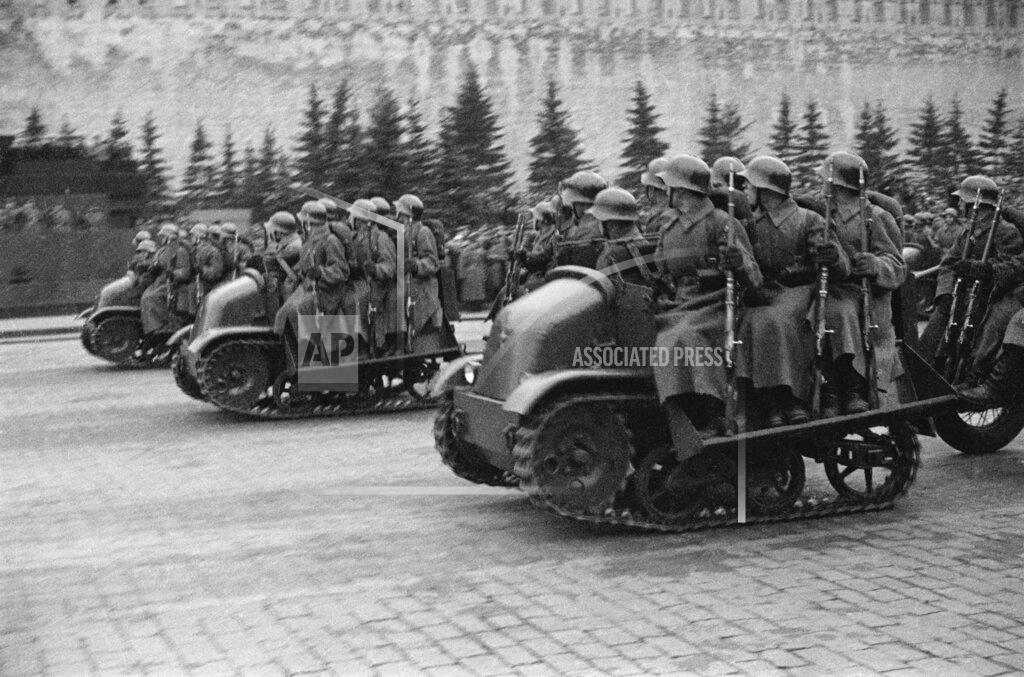
The biggest military show yet put on — according to veteran onlookers — marked today’s Red Square celebrations of the twenty-second anniversary of the October revolution.
U.S. Naval Attaché, Berlin, is informed by an official of the German Navy Ministry that it had been “definitely established that no German U-boat had torpedoed the Athenia.” The German Navy considers the incident “closed as far as the Navy was concerned” and possesses only “an academic interest in how the ship was sunk.” The statement is, of course, a lie.
Two Polish destroyers and other light craft are attacked by the Luftwaffe in the North Sea. There are no losses on either side. Two destroyers flying the still defiant flag of Poland assisted British light sea forces to drive off German airplanes today in one of several air fights over the North Sea, the Shetland Islands, the east coast of England and the German coast.
A Luftwaffe reconnaissance aircraft is fired upon by anti-aircraft batteries and driven off by the RAF. There are scattered other intrusions of British airspace.
The RAF conducts further reconnaissance over western Germany without incident.
The War at Sea, Tuesday, 7 November 1939 (naval-history.net)
Destroyers COSSACK, MAORI and ZULU departed Rosyth for Scapa Flow at 1745 to escort the west coast section of convoy HN.1. COSSACK was damaged in collision with steamer BORTHWICK (1097grt) off May Island in the Firth of Forth at 2015, and five ratings killed. ZULU assisted COSSACK in rescuing one of the crew trapped in plating curled back in the collision. Sister ship AFRIDI took COSSACK’s casualties ashore, while MAORI and sloop GRIMSBY assisted COSSACK. She was towed stern first by two tugs to Leith where she repaired until 15 January. MAORI and ZULU left to escort the convoy, joined later by sloop FLAMINGO.
Destroyers GRENVILLE and GRENADE collided at Devonport during the night of the 7th/8th. GRENVILLE’s starboard side was damaged below the water line and number three boiler room flooded; she repaired at Devonport completing on 1 December. The stem of GRENADE was twisted and the fore peak flooded; her repairs at Falmouth were completed on 9 December.
Light cruiser EFFINGHAM departed Devonport after boiler cleaning, and arrived at Halifax on the 15th.
On Northern Patrol, three cruisers were on patrol between the Orkneys and the Faroes, two cruisers and one AMC between the Faroes and Iceland, and light cruiser NEWCASTLE and two AMCs in the Denmark Strait.
Light cruiser SOUTHAMPTON arrived at Rosyth after Northern Patrol duties.
Destroyer IMOGEN, her defects corrected, departed Liverpool for Scapa Flow, arriving on the 8th.
Minelaying cruiser ADVENTURE departed Rosyth, was met by destroyers JUNO and JUPITER off Inchkeith, and safely escorted to Grimsby.
Destroyer STURDY departed Rosyth, via the Humber for Portsmouth to escort aircraft carrier ARGUS to Toulon.
Convoy HN.1 of six British and one Polish steamer departed Bergen and was joined just outside Norwegian territorial waters by destroyers TARTAR, SOMALI and PUNJABI. Sister ship ASHANTI joined the escort at daylight on the 8th. Four steamers were detached to their destinations on the west coast and the convoy arrived safely at Methil on the 10th.
Convoy FN.33 departed Southend escorted by destroyer VIVIEN and sloops BITTERN and FLEETWOOD. On the 8th, destroyers JERVIS and JERSEY of the 7th Flotilla and KEITH and BOADICEA of the 22nd Flotilla departed Immingham, and Polish destroyers ORP BŁYSKAWICA, ORP BURZA, and ORP GROM from Harwich to reinforce the convoy, which was being shadowed by German aircraft, and to counter an anticipated German surface attack. The convoy arrived at Methil on the 9th without incident. Convoy FS.33 was cancelled due to too few ships being ready.
Destroyers GRENADE, EXMOUTH and WREN were submarine hunting in 49 37N, 5 20W. GRENADE attacked a contact at this location.
Convoy BC.14 of steamers ADJUTANT, BATNA, BELLEROPHON (Commodore), BRIARWOOD, COXWOLD, HARMATTAN, JADE, LOCHEE, OUSEL, PACIFIC COAST and PEMBROKE COAST departed the Bristol Channel escorted by destroyers EXPRESS, VIVACIOUS and VESPER. The convoy safely arrived in the Loire on the 10th.
In bad weather, convoy HG.5A had difficulty making the Downs, and steamer CITY OF MELBOURNE (6630grt) ran aground on the South Goodwins.
Convoy HXF.7 was delayed due to bad weather, and during the afternoon of the 7th, only four ships out of the 13 in convoy were in company. Escorting armed merchant cruiser ASTURIAS sustained minor weather damage which required dockyard repair.
On the 7th, Polish destroyers ORP BŁYSKAWICA and ORP GROM on patrol 70 miles east of Lowestoft were attacked by German torpedo planes. No damage resulted in this first recorded aircraft torpedo attack of the war. Returning to Harwich, they fouled the buoy, GROM’s port propeller was damaged, and she required docking. BŁYSKAWICA was docked for examination after GROM completed her repairs.
Submarine SEAL, returning from Dogger Bank patrol, was bombed by a German seaplane while waiting for submarines CACHALOT and L.26 off Orfordness.
Submarine H.28 reported defects, and was repairing until 11 November.
Heavy cruiser BERWICK departed Bermuda and arrived at Portsmouth for docking on the 14th, where she was under repair until 9 December. She departed Portsmouth the same day to join the 1st Cruiser Squadron.
Depot ship MAIDSTONE departed Malta escorted by sloops ABERDEEN and DEPTFORD, and arrived at Gibraltar on the 10th. On the 12th, they departed Gibraltar, accompanied by light cruiser CAPETOWN. West of Gibraltar, the sloops were detached and proceeded to England for duty in Home Waters. CAPETOWN escorted MAIDSTONE halfway to Freetown where she was relieved by light cruiser NEPTUNE.
CAPETOWN returned to Gibraltar while MAIDSTONE and NEPTUNE proceeded to Freetown, arriving on the 16th.
Sloop FOWEY arrived at Malta en route to England from Alexandria. She was delayed by boiler defects and did not leave for Gibraltar until the 12th, arriving on the 15th. She departed on the 16th, escorting ammunition stores issuing ship (ASIS) PACHECO to Freetown.
Light cruiser BIRMINGHAM departed Singapore for Hong Kong and en route, investigated a Japanese whaling convoy. She arrived at Hong Kong on the 10th.
Light cruiser CAPETOWN departed Malta for Gibraltar where she arrived on the 9th.
French heavy cruiser SUFFREN arrived at Singapore after departing Saigon on the 5th.
French heavy cruiser FOCH, light cruiser LA GALISSONNIÈRE and destroyer LION, passed Gibraltar. The heavy cruiser and destroyer had departed Oran on the 7th and the light cruiser, Toulon on the 6th. FOCH was en route to Dakar, and LA GALISSONNÈRE to Brest for repairs. All three arrived at Casablanca on the 8th. The light cruiser arrived at Brest on the 12th for repairs, completed 3 March, and arrived back at Oran on 7 March.
French submarine SIDI FERRUCH arrived at Trinidad, and departed on patrol on the 8th.
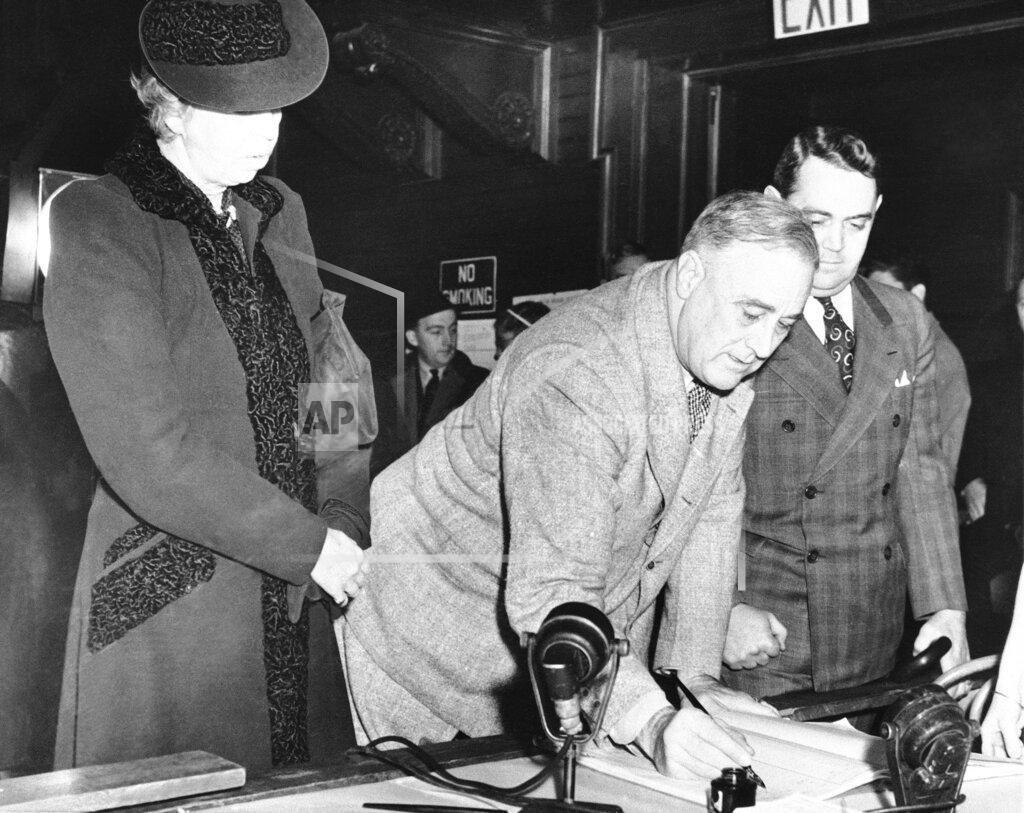
President Roosevelt halts the transfer of U.S. merchant ships to Panama’s flags. With the explanation that there is no present danger of American involvement in the European war, President Roosevelt disclosed today that he had held up transfer of the eight United States Lines ships to Panama registry pending a determination that they were not important to the national defense and that the transaction was not aimed at stifling American competition with foreign lines serving Latin-American ports.
In a press conference just before Secretary Hull condemned the proposed transfer to Panama registry as impairing the integrity of the Neutrality Act, the President said the transaction had no bearing on the neutrality of the United States. If there was any danger of the United States becoming involved in the war the Maritime Commission would not have consented to the transaction, but that danger did not exist today, the President said.
He indicated that final approval of the arrangement under which the liners would fly the flag of Panama had merely been delayed pending a determination of the questions of the national defense and foreign competition. It seemed evident from Mr. Roosevelt’s explanation of the situation that he expected the Maritime Commission to give its final consent to the transfer of registry. He said that although the Federal agency approved the transaction yesterday, it met last night and told the owners of the ships to “hold everything.” pending final confirmation.
When correspondents inquired at the temporary White House offices concerning the conflict of view between the President and his Secretary of State they were told by William D. Hassett of the White House secretariat that the President was unaware of the Secretary’s statement. He sought out the President to tell him of the development. It was not until late in the day that Mr. Hassett reached the President with the information that Secretary Hull had spoken at his press conference against the plan. On his return to the temporary White House office the Presidential aide said only that Mr. Roosevelt knew nothing officially concerning the Secretary’s statement and that he had no comment to make on it.
Mr. Roosevelt volunteered the information that he had ordered a Maritime Commission investigation of the plan to transfer the United States liners to Panamanian registry. He added, however, that there could be no question of the arrangement satisfying the requirements of the Neutrality Act. The nation’s neutral status did not alter the right of its citizens to sell property to a neutral nation or to transfer title in it, the President explained.
The possibility of Federal action against Earl Browder, general secretary of the Communist party in the United States, on charges of conspiracy against the government was hinted in temporary White House circles here today.
Great Britain will buy war supplies in the United States through a purchasing commission in charge of Arthur B. Purvis, it was announced tonight, by the British Embassy, as the first step to eliminate competition in British and French purchasing here.
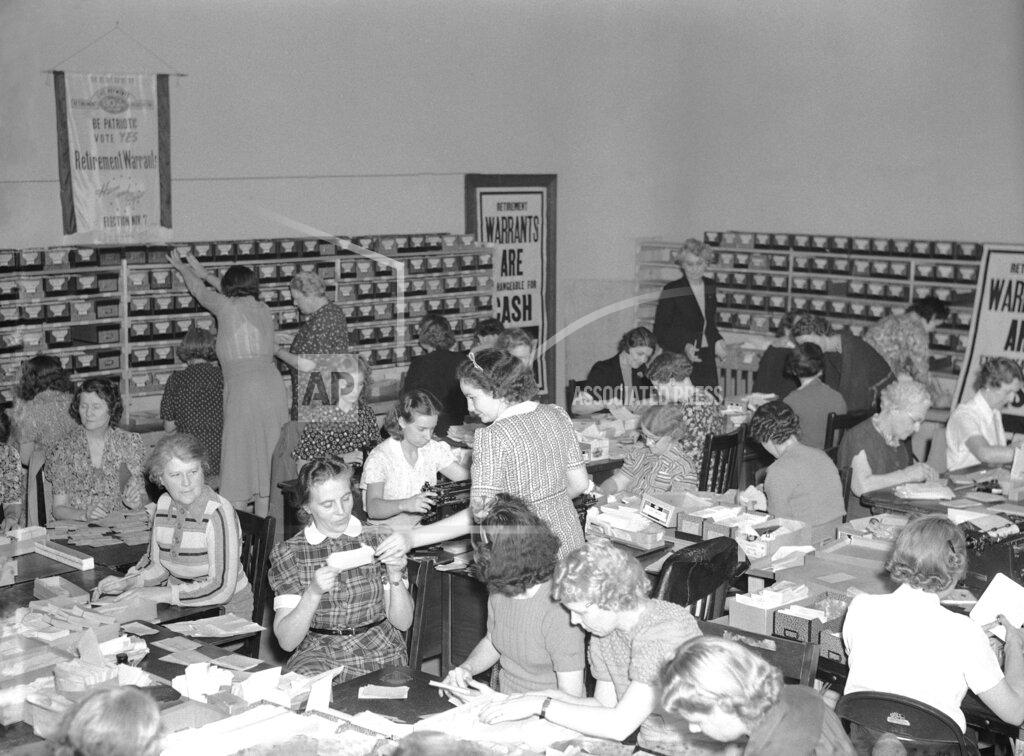
On the basis of incomplete but representative returns from today’s election, California has declined “ham and eggs.” Partial reports from 6,073 of the State’s 11,165 precincts showed a vote of 245,806 yes to 475,990 no, or an almost 2 to 1 rejection for the advocates of the $30-every-Thursday pension plan for needy seniors. In Los Angeles County, from which the pension proponents directed their campaign, incomplete returns from 4,475 of the 4,484 precincts gave 181,468 voting yes to 328,330 voting no.
With the Western Hemisphere a refuge of hope for a sick world, the press of the Americas must do its full share to promote understanding and cultural ties among the nations of the two continents, New York Mayor La Guardia and Dr. Nicholas Murray Butler, president of Columbia University, said yesterday.
A college student arrested for drunkenness explains that he was conducting research for his thesis on alcohol and that he was overcome during his research. The judge gives the youth ten days in jail to recover and to “correlate his data.”
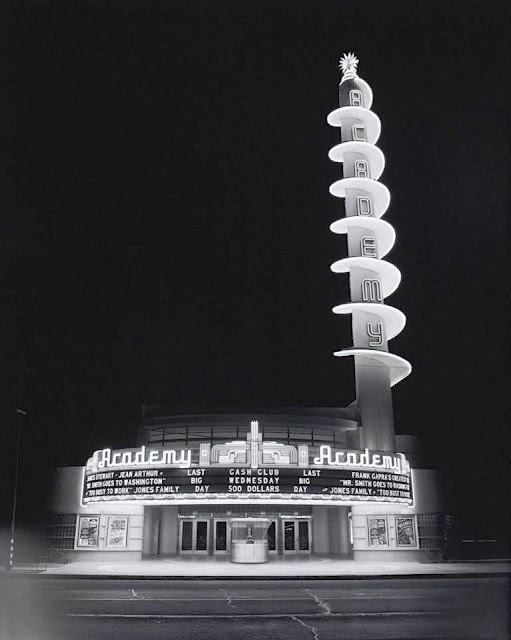
The Academy Theater in Inglewood California opens. It was originally designed to host the Academy Awards but never did. It served as a major suburban theater for the Fox West Coast Theaters chain with many film premieres and showed movies until 1976 when it became a church. Designed by architect S. Charles Lee.
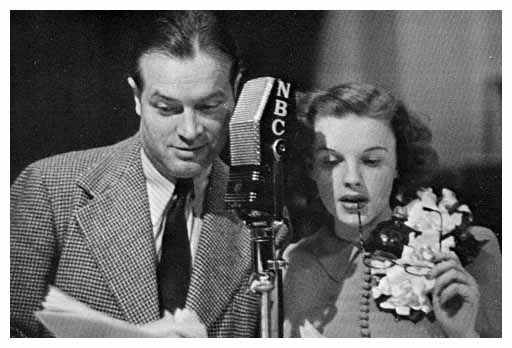
Judy Garland guests on Bob Hope’s “The Pepsodent Show.”
Some forty commercial vessels have been called up for service in the Royal Canadian Navy since the start of the war, a spokesman for the Department of National Defense said tonight in the third of a series of talks on work of the department in wartime.
Parliament’s concern over the situation in India was shown today in questions brought up in both houses of parliament. The answers of government spokesmen indicated there was no hope of soon breaking the deadlock in the negotiations toward an agreement between the India Congress party and the All India Moslem league. The marquess of Zetland, secretary of state for India, told the house of lords that use of emergency powers in various Indian provinces in no sense was a penal measure, but simply a provision for “carrying on the king’s government.”
Zetland said the Congress party refused to consider plans for associating Indians with the central government in the conduct of the European war unless the British government were willing to declare India an Independent nation and unless it would raise no objection to its future form of government being determined by a constituent assembly chosen on the widest possible franchise.
Born:
Barbara Liskov, American computer scientist who has made pioneering contributions to programming languages and distributed computing (2008 Turing Award), in Los Angeles, California.
Daniel Manneke, Dutch composer and organist, in Kruiningen, Netherlands.
Naval Construction:
The Royal Navy armed merchant cruiser HMS Antenor (F 21) is commissioned. Her first commanding officer is Captain (retired) Arthur Bannatyne Arnold Baker, DSO, RN.
The Royal Navy Lake-class ASW whaler HMS Wastwater (FY 239) is commissioned. Her first commanding officer is Lieutenant John Jackson, RNR.
 History Diaries