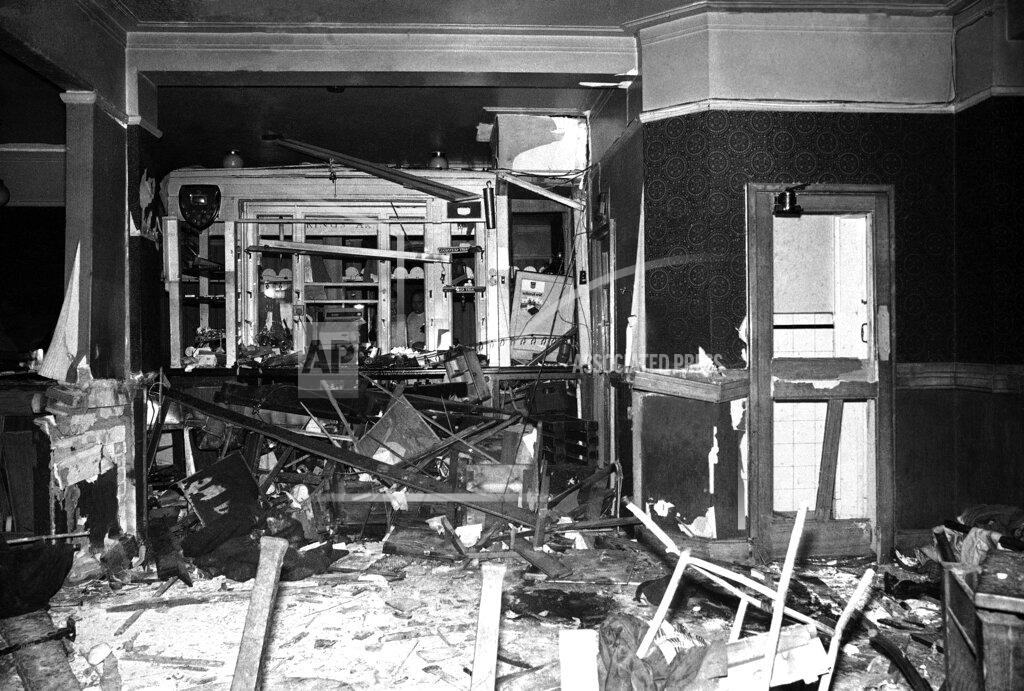
Marshal Andrei A. Grechko, the Soviet Defense Minister, declared today that, in the face of resurgent fascism, and militarism, the Soviet Union would continue to build up and modernize its armed forces. His statement, at the start of the annual parade on Revolution Day, followed press criticism of the United States for placing more missiles in West Germany, and it came at a time when Western analysts are debating the significance of Soviet construction of 150 to 200 new missile silos. In the half‐hour military parade in Red Square, the Soviet Union did not unveil any major new weaponry though it did show for the first time a small, shoulder-held, heat-seeking anti‐aircraft missile used by the Communists in Vietnam and by Arab forces in the Middle East.
Then the nation’s aging leadership, wearing overcoats and heavy raincapes against a cold rain as they reviewed the troops from atop the refurbished Lenin Mausoleum, made a last‐minute decision to cancel the civilian part of the parade. It was the first such cancellation in decades. Bad weather was the reason given, though this year’s rain and above‐freezing temperatures were no worse than last year’s. Great columns of marchers and scores of floats had already been assembled on Gorky Street, Karl Marx Prospect and other thoroughfares and had to be dispensed.
Simas Kudirka, the Lithuanian seaman whose attempt four years ago to escape from a Soviet trawler led to his forcible capture and imprisonment in the Soviet Union, yesterday thanked those who had campaigned for his release and for his right to leave the Soviet Union as an American citizen. “It is as if I left hell and arrived in a sunny new land,” said the 44‐year old seaman, who arrived here two days ago with his mother, his wife and two children. Two months ago he was at the Kuchino prison camp in the central Urals region, with more than six years left to serve on 10‐year sentence.
Mr. Kudirka, who was a radio operator when he attempted to defect, began his day here with a news conference in the Louis XVI Room of the Waldorf‐Astoria Hotel. Speaking in Lithuanian, Russian and German he outlined what followed after his leap on November 23, 1970, from the Sovetskaya Litva to the deck of the Coast Guard cutter Vigilant as the ships were tied together off Martha’s Vineyard for talks by officers on fishing issues. Mr. Kudirka was dragged off the Vigilant by Soviet seamen. Americans reported that the seaman had been beaten and bound with telephone wire. He was taken to the Soviet Union and sentenced to 10 years in prison.
The United States and 13 other industrial nations are wrapping up their work on an agreement establishing an international energy sharing agency November 18. The agency, to operate within the Paris-based Organization for Economic Cooperation and Development, is to oversee an oil sharing and saving pact in the event of new supply cutbacks by petroleum producers. The members will be the United States, Japan, Canada, and all the European Common Market countries with the exception of France, which opposed the idea. Switzerland, Sweden and Austria also have applied to join.
Cyprus President Glafcos Clerides, in a major concession to the Turks, has urged his fellow Greek Cypriots for the first time publicly to accept a federation of Greek and Turkish Cypriot territory as the only solution to the island’s crisis. “I see no prospect of the Turks accepting any settlement that does not include federation and some geographical basis for it,” Clerides said in a speech. “I am sorry to disappoint you, but we must not make the same mistakes as before, confuse what we want with what is possible.”
U.S. Ambassador Robert McCloskey arrived in Lisbon to continue talks on renewing an agreement allowing the United States to use the strategic Lajes Air Base in the Portuguese Azores. The old pact, concluded by the right-wing regime of Marcello Caetano, expired last February but is still in force pending renegotiation. Portugal’s new military government reportedly is seeking $200 million in cash and economic aid in return for use of the base.
The United States and Spain ended a first round of talks for the renewal of an agreement granting U.S. forces the use of Spanish bases in return for military and economic aid. American officials said the talks in Madrid had been exploratory and would be resumed in Washington early next month. Spain is understood to want a formal security treaty with the United States in exchange for continued use of four Spanish bases.
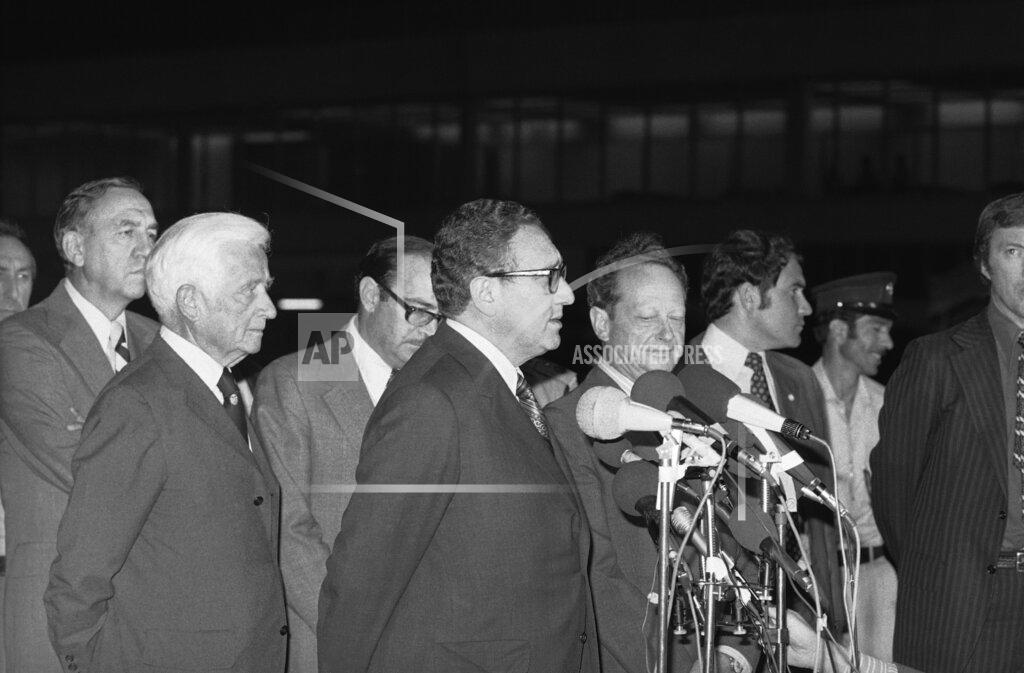
Secretary of State Kissinger began consultations tonight with Israeli leaders on possibilities of starting new Israeli‐Egyptian negotiations. His talks here, which are continue tomorrow, capped a day during which he conferred with King Hussein of Jordan in Amman in the morning, and with President Hafez al‐Assad of Syria in Damascus in the afternoon. On arriving here, Mr. Kissinger sought to assure the Israelis that the United States had not changed its policy toward the Palestine Liberation Organization despite the decision of Arab leaders last week to recognize the guerrilla as the sole legitimate representative of the Palestinian people. American policy has been that the most effective way for making progress on the Palestinian question would be through Israeli‐Jordanian negotiations. This view is shared by Israel.
In Amman, King Hussein presented to the Secretary Jordan’s view of the Middle East future since the Arab leaders, meeting in Rabat, Morocco, last week, gave the Palestine Liberation Organization the right to administer any parts of the occupied West Bank that Israel might relinquish. King Hussein reportedly told Mr. Kissinger that the decisions left Jordan no place in West Bank diplomacy, that he remained involved in keeping economic and administrative links with the area, which has been occupied by Israel since the 1967 war. Mr. Kissinger reportedly left his talks with King Hussein with a personal view that the King should not be counted out completely from the negotiations. It is possible, according to Mr. Kissinger and other American officials, that if the Arab countries realize that Israel will not deal with the Palestine Liberation Organization which she regards terrorist group dedicated to her destruction, Jordan may be asked to take over the responsibility for regaining the territory.
In the Syrian capital, President Assad, who strongly backed the Rabat decisions, was said to have told Mr. Kissinger that the Palestinian Problem had to receive priority in steps toward peace. Mr. Kissinger reportedly insisted that by giving the Palestine Liberation Organization the authority to administer any West Bank areas Israel may yield, the Arab leaders were in effect ruling out the recovery of any of that land, because Israel could not be expected to deal with a group that has consistently called for her destruction.
A U.S. naval task force sailed from Singapore into the Indian Ocean, a move that could jar recently improved U.S.-India relations. The Pentagon said the aircraft carrier USS Constellation was accompanied by three destroyers and a support ship in the first such show-the-flag mission in two months. Indian officials have stated their opposition to U.S. Navy operations in the area and the development of a support base on the island of Diego Garcia.
Japan’s Socialist and Communist parties and 17 affiliated organizations plan to stage a protest rally against President Ford on the eve of his visit to Japan this month. A party spokesman said about 100,000 persons are expected to attend the rally November 17. The demonstration also will demand the resignation of Prime Minister Kakuei Tanaka, the spokesman added.
In what was regarded as a major accomplishment at the World Food Conference in Rome, the principal grain-producing nations — including the United States, the Soviet Union and China — have agreed to consider a program to limit their foreign sales in an effort to free grain supplies for emergency aid to hungry people.
China, in an apparent policy change, informed the Soviet leadership of her interest in a non-aggression pact with Moscow, but linked the idea to the separation of military forces along their disputed frontier. The Chinese message said the idea of a non-aggression pact was part of an agreement between Premier Chou En-lai and Premier Aleksei Kosygin when they last met in Peking in 1969.
The President of Bolivia, General Hugo Banzer, personally led the suppression of a rebellion of Bolivian Army troops who had seized control of the cities of Santa Cruz and Montero, according to government radio broadcasts. A radio broadcast from the capital at La Paz said that Banzer flew to Cochabamba, where he rallied loyal paratroopers, then flew with them to the outskirts of Santa Cruz where, “with the aid of planes, air force cadets and loyal troops in Cochabamba and Santa Cruz, Banzer led the march on the rebel-held city and crushed the uprising.”
Shooting was reported in a suburban slum of Luanda, Angola, when troops were sent into the neighborhood after reports that a white man had been beaten and hacked to death by a gang of bandits. Radio reports said there were some deaths among about 50 persons taken to hospitals. Military authorities and Liberation Movement spokesmen blamed recently released prisoners for the violence.
Uganda’s armed forces were placed on alert and bomber pilots called up for duty as President Idi Amin charged the British diplomatic corps in Uganda with espionage against his nation. Amin ordered Britain to cut its diplomatic staff in Uganda from 51 to five by the weekend. Britain countered by ordering Uganda to trim its diplomatic corps in London from 13 to five by the same deadline. Uganda meanwhile ordered a British military attache, his wife and a British journalist to leave the country immediately.
Federal Judge John Sirica ruled that the special prosecution had provided sufficient proof of the authenticity of 26 White House tape recordings to enable it to introduce them as evidence at the Watergate cover-up trial. His ruling, made over the objections of defense lawyers, was one of several developments in the trial.
President Ford may be having second thoughts about his announced intention to nominate Andrew Gibson as Federal Energy Administrator. Ron Nessen, the press secretary, confirmed at a press briefing that Mr. Ford and his staff did not know on October 29, the day Mr. Ford made the announcement, that Mr. Gibson had a 10-year employment separation contract paying $88,000 a year with a company that operates oil tankers and is half-owned by Cities Service, a large oil company.
“Who said I was optimistic. Do I look optimistic? I’m disillusioned,” George Meany replied at a news conference when he was asked if he was more optimistic about dealing with the expanded majorities in the next Congress. He scorned suggestions that the Democrats will have a mandate in the new Congress and challenged the sincerity of the Senate majority leader, Mike Mansfield, and others for advocating mandatory wage and price controls.
The administration apparently made a major reversal in policy when a Justice Department official said the government now opposed establishing minimum price guidelines for trans-Atlantic charter air fares. The guidelines were one of seven specific steps that President Ford less than two months ago recommended that government take to help Pan American World Airways avoid a serious financial crisis. The guidelines were adopted by the Civil Aeronautics Board two weeks ago.
The government proposed to force food advertisers who assert that their products are nutritional to meet minimum standards of quality and to make extensive disclosures of important ingredients. The proposal, if adopted by the Federal Trade Commission, would require detailed substantiation in advertisements of such phrases as “packed with vitamins” and “more wholesome than brand X.”
At Cape Canaveral, Florida, NASA held a final dress rehearsal for the Apollo–Soyuz mission, scheduled for launch in July 1975. Many of the technicians who participated in the simulation anticipated losing their jobs once the mission flew.
The Atomic Energy Commission disclosed today new security measures it plans to impose on nuclear power plants and fuel shippers to guard against sabotage and the theft of nuclear materials.
Former President Richard M. Nixon’s pneumonia is getting better and his condition “continues to improve” as he remains under subintensive care at Memorial Hospital Medical Center in Long Beach, California, Mr. Nixon’s doctor said today.
An explosion at a black powder plant in Roosevelt, Utah, killed employees Fred Anderson and Lester Holt. The explosion leveled the black powder plant, killing two employes and scattering men and debris over a mile of sagebrush country. The plant was owned by the Western Technology Corporation.
The Mormon Church, whose doctrine bans blacks from its priesthood, has promised that racial discrimination will not be practiced in church-sponsored Boy Scout troops. The assurance led to the dismissal of a federal court suit against the Boy Scouts of America, many of whose troops in Utah are sponsored by the Church of Jesus Christ of Latter Day Saints. Lawyers for the National Association for the Advancement of Colored People and two black scouts who filed the suit agreed that allegedly discriminatory practices and policies have been discontinued and were “not likely to resume.” They had contended that top scout leadership posts had been reserved for members of the Mormon priesthood.
Coal industry and union negotiators narrowed their differences on some economic issues as they worked on a new contract for 120,000 miners preparing to strike. President Arnold Miller of the United Mine Workers said that while they were making progress, a strike “is a foregone conclusion.” He declined to speculate how long a walkout might last but other union officials suggested that progress so far and the 10-day ratification procedure could mean a strike of up to two weeks.
The government’s screwworm program, aimed at creating a protective barrier of sexually sterile flies between the United States and Mexico, is faltering because of inflation and the lack of new appropriations. Beginning November 18, the Agriculture Department said, the screwworm fly production plant at Mission, Texas, will cut back to only 75 million sterile flies a week from 200 million at present. Officials said higher costs of food were among the reasons. Screwworms, larvae of the adult fly, feed on the open wounds of warmblooded animals. Livestock and wildlife are the usual victims.
A federal grand jury in Chicago indicted six men in the $4.3 million cash heist from an Armored Express Corp. vault on October 20, the largest cash burglary in U.S. history. The indictment included charges against two of the alleged principals in the theft, Pasquale Charles Marzano and Luigi Difonzo, the reported mastermind of the plot. The other four men named were Marzano’s cousin, William Anthony Marzano, Peter Gushi, James Maniatis and Ralph Marrera. They all are being held on bonds ranging from $225,000 to $1 million. Officials reportedly have traced most of the loot to five banks on the British island of Grand Cayman in the Caribbean.
Radar systems at U.S. airports are out of operation up to 30% of the time because of a lack of certain tubes and poor performance of tubes, a union official charged. Stanley Q. Lyman, vice president of the National Assn. of Government Employees, wrote to Rep. Harley O. Staggers (D-West Virginia), chairman of the House Commerce Committee. He said the shortage is in type 6503 tubes and that the Federal Aviation Administration was attempting to deal with the situation by using old tubes from its stock depot. He quoted an FAA memo as saying the used tubes “may or may not work.” In fact, Lyman said, “the tubes are failing at an alarming rate.”
Public hearings on the environmental impact of proposed offshore oil and gas leasing have been postponed for about two weeks by the Interior Department. The department’s Bureau of Land Management said the delay will give the public more time to study the massive environmental impact statements. A hearing scheduled for November 18 and 19 in Santa Monica Civic Auditorium has been set back to December 2 and 3.
To relieve a possible electricity shortage in the Tennessee Valley Authority region, the Atomic Energy Commission in Oak Ridge says it is prepared to reduce its power usage for uranium enrichment plants at Oak Ridge and Paducah, Kentucky, by 1,435 megawatts. Such a reduction, if needed, would represent about 12% of the total generating capacity of the plants and would free an amount of generating capacity equal to more power than even the largest city on the TVA system now uses.
Dow Jones Industrial Average: 671.93 (+2.81, +0.42%).
Born:
Kris Benson, Team USA and MLB pitcher (Olympic bronze medal, 1996; Pittsburgh Pirates, New York Mets, Baltimore Orioles, Texas Rangers, Arizona Diamondbacks), in Kennesaw, Georgia.
Glendon Rusch, MLB pitcher (Kansas City Royals, New York Mets, Milwaukee Brewers, Chicago Cubs, San Diego Padres, Colorado Rockies), in Seattle, Washington.
Tarek Saleh, NFL linebacker (Carolina Panthers, Cleveland Browns), in Fairfield, Connecticut.
Jonathan Linton, NFL running abck (Buffalo Bills), in Allentown, Pennsylvania.
Chris Summers, Norwegian drummer (Turbonegro), in Oslo, Norway.
Died:
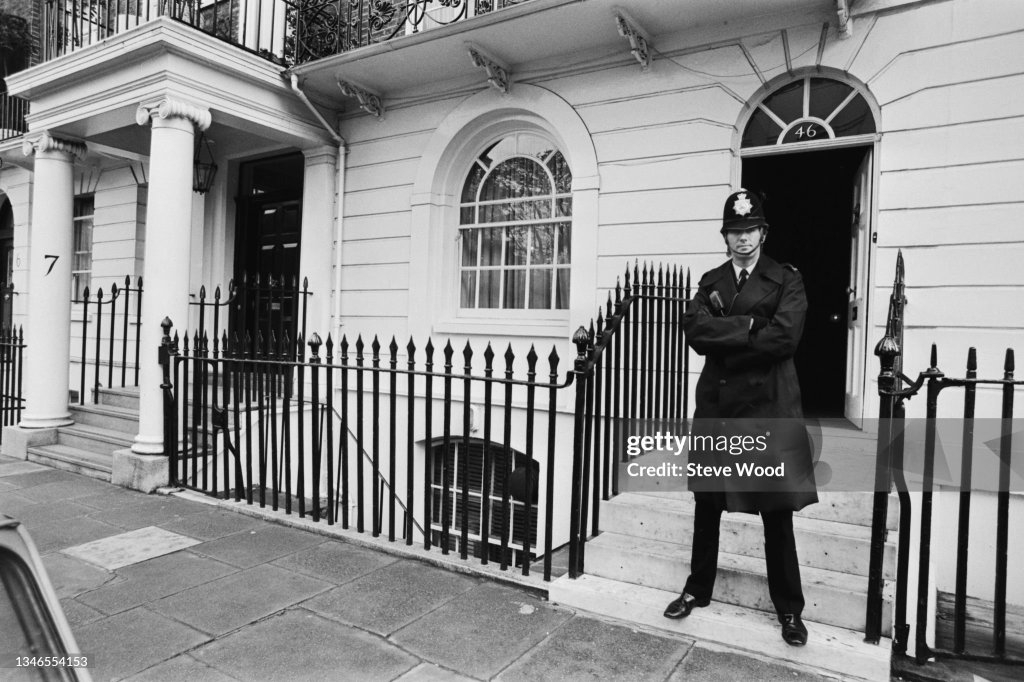
Sandra Rivett, 29, English nanny to John Bingham, 7th Earl of Lucan, allegedly bludgeoned to death by Mr Lucan before he mysteriously disappeared.
Rodolfo Acosta, 54, Mexican-born American actor (“Salón México”, “The Fugitive”, “Littlest Outlaw”), of liver cancer.
Alexander Bickel, 49, American legal scholar and constitutional law expert, died of cancer.
Sherburne F. Cook, 77, American physiologist and demographist, died of cancer.
Eric Linklater, 75, British author, Carnegie Medal recipient for “The Wind on the Moon.”
Helene Thimig, 85, Austrian stage and film actress, widow of Max Reinhardt, died of heart failure.


 History Diaries