In South Vietnam, Buddhists charge that Premier Trần Văn Hương has deliberately denied them any role in the government, students are angry that they will lose their draft exemptions, some charge he has ignored political leaders, while others charge he has appointed ministers who had served under Ngô Đình Diệm and Emperor Bảo Đại. Hương warns he will not hesitate to use force to suppress violent demonstrations, but on the 6th he speaks in a more conciliatory way, admitting his government’s weakness and appealing to all dissident groups to cooperate.
The chairman of South Vietnam’s provisional legislature, the High National Council, resigned today. He complained that the government formed yesterday was too remote from the political realities of the country to win widespread support. Cracks were appearing in the alliance of Buddhist, student and political movements, which had maintained an uneasy peace for two months after demon‐ strations brought steps toward a civilian government. Barely 24 hours after the new Cabinet was installed, the groups that had demanded it were terming it unsatisfactory. Despite official United States expressions of support and confidence, the stable government that is considered necessary to pursue an effective war effort seemed no closer than it did two months ago.
In resigning as chairman of the High National Council, Dr. Nguyễn Xuân Chữ said he supported the appointment of Trần Văn Hương, the new Premier. But he added: “Now that the list of members of the Hương Government has been officially published, I realize that political realities have not been taken into consideration. I am afraid that such a government cannot win the confidence of the population.” Almost all local newspapers, most of which speak for political or religious factions, stridently criticized the decision tc choose as ministers civil servants rather than active politicians. “Our revolution is being betrayed again,” one headline said.
A platoon of heavily armed Communist Việt Cộng guerrillas penetrated to within rifle‐shot range of the United States Embassy in Saigon today in an attempt to kidnap a local Vietnamese official, reliable sources said. They said the 30‐man guerrilla band had entered the village of Ân Khánh, directly across the Saigon River from the downtown district of the capital, in an attempt to abduct the government‐appointed village chief. The village is less than 1,000 yards from the United States Embassy and its cluster of thatched huts is visible from the Saigon waterfront. The guerrillas were said to have been detected by villagers who began shouting and banging on pots and pans to attract government security forces.
North Vietnam said today a number of United States U‐2 high‐altitude reconnaissance planes have been making regular reconnaissance flights over North Vietnam, Laos and Communist China from bases in South Vietnam. The statement was in a Hanoi Foreign Ministry spokesman’s charge of “fresh United States introduction of military planes into South Vietnam.” It was broadcast by Peking’s Hsinhua press agency and monitored here. The North Vietnamese statement said “about 40 B‐57 jet bombers along with a number of U‐2 reconnaissance planes and supersonic planes have been mustered” at United States strategic air bases in South Vietnam such as Tân Sơn Nhứt, Biên Hòa, and Đà Nẵng. Saigon dispatches November 1 about the Việt Cộng attack on the United States Air Base at Biên Hòa said that some U‐2’s had been stationed there for mapping missions within the borders of South Vietnam.
The United States urged the Soviet Government today to honor its treaty obligations on restoring the peace and neutrality of Laos. Secretary of State Dean Rusk expressed United States concern over the deteriorating situation in Laos in a meeting with the Soviet Ambassador, Anatoly F. Dobrynin. Mr. Rusk called him in for a 35‐minute conference on Laos. According to Robert J. McCloskey, the State Department press officer, Mr. Rusk “stressed the importance the United States attaches to the principle that all signatories of the 1962 accords on Laos work to bring about a restoration of those acords,” which were designed to guarantee Laotian neutrality and independence. The 1962 agreements, which were an outgrowth of the Vienna meeting between President John F. Kennedy and Premier Nikita S. Khrushchev in 1961, were reached at a 14‐nation conference in Geneva. As co‐chairman of the conference along with Britain, the Soviet Union has a continuing responsibility for enforcement of the accords.
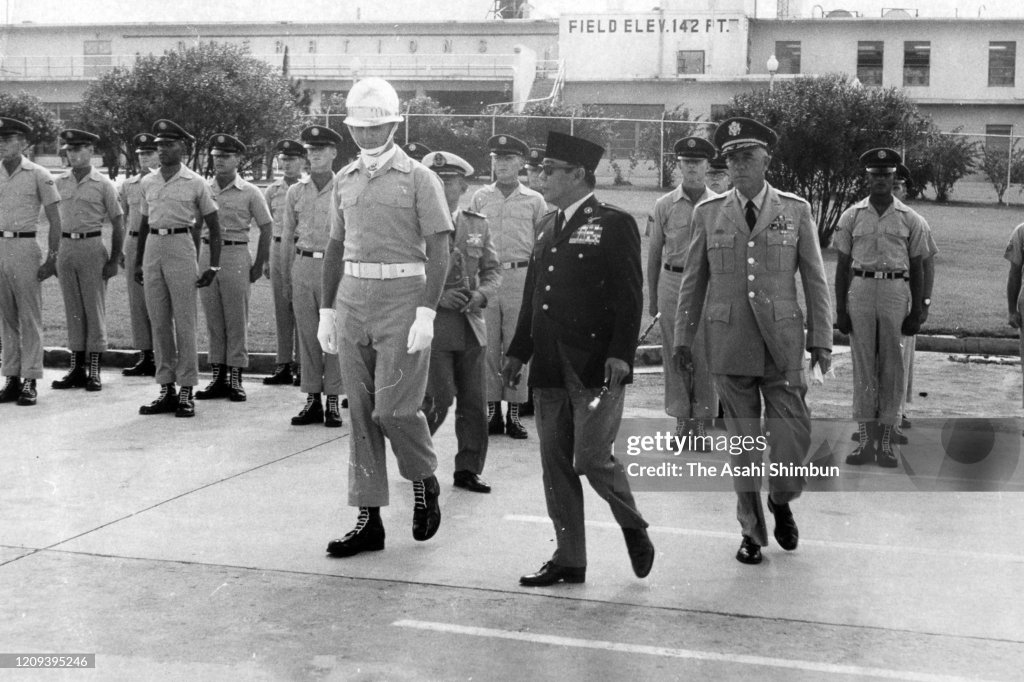
Indonesia’s President Sukarno and Communist China’s Premier, Chou En‐lai, reached “complete unanimity” in recent tallks in Shanghai on matters of common interest, the Chinese press agency, Hsinhua, reported today. The agency said that President Sukarno left Shanghai for home today. He had flown there yesterday after meeting North Korean leaders in Pyongyang. Mr. Chou reached Moscow tonight.
Premier Chou En‐lai of Communist China arrived tonight to take part in the Soviet regime’s celebration of the 47th anniversary of the Bolshevik Revolution. Leaders of the governments and parties of 11 other Communist countries also arrived or were on their way. Their gathering was one of the most illustrious in Moscow since 1961, when Mr. Chou walked out of the 22d congress of the Soviet Communist party. The gathering for the Saturday celebration is regarded by observers as a demonstration of solidarity with the Soviet party First Secretary, Leonid I. Brezhnev; Premier Aleksei N. Kosygin and the other key figures in the “collective leadership” that deposed Nikita S. Khrushchev three weeks ago. Informed observers termed it unlikely that the Russians would attempt to organize negotiating sessions at which all the delegations, including the Chinese and Yugoslavs, would participate. The expectation instead is that the new Soviet leaders will meet individually with some of the visitors and that talks will be held by some of the foreign delegations.
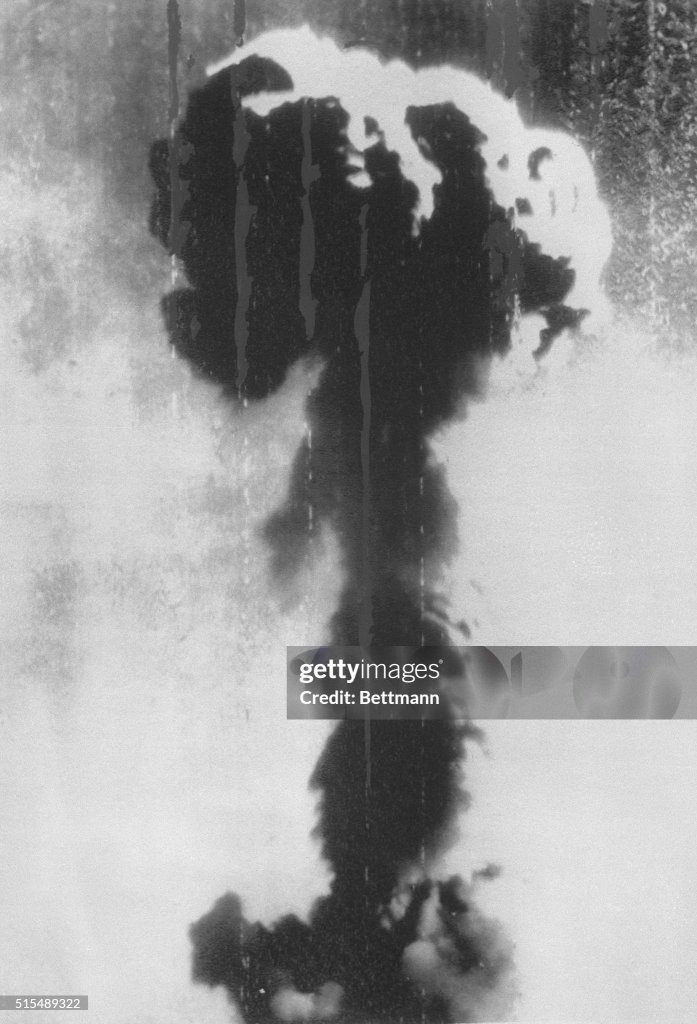
Strengthened by the success of their recent nuclear test and the fall of Nikita S. Khrushchev, their chief opponent, the Communist Chinese seem determined to stick to their position on every major issue in the Chinese‐Soviet dispute. This, at any rate, is what Chinese officials are telling foreigners. Travelers from the provinces report that the same word has been passed down to Communist party officials for dissemination at local political meetings. Most observers in Peking rule out any dramatic reconciliation between China and the Soviet Union.
At the very most, they say, the Chinese and the Russians might agree to stop their public polemics and resume the private interparty talks that were broken off in July last year. State differences, such as a border dispute, might be allowed to subside. On a main Peking intersection, a huge billboard attacking the “modern revisionism” of Moscow has been replaced by slogans of the Chinese party chief Mao Tse‐tung, acclaiming “the unbreakable unity of the two great Socialist countries.” In the Hsin Chiao, the main hotel for foreigners, stacks of anti‐Soviet pamphlets in foreign languages have suddenly disappeared from all the corridors and public rooms. But in the major bookstores, the same pamphlets, in Chinese, are still prominently displayed.
The dispute between France and the United States over Atlantic defense policies entered a new and grave stage today. Premier Georges Pompidou warned that any accord between the United States and West Germany on the nuclear fleet manned by international crews would be incompatible witn the French‐German Treaty of Cooperation of 1963. The French Premier suggested that the force would hurt European unity and provoke some countries, including the Soviet Union, and was directed politically “more or less against France.” The North Atlantic alliance also was severely criticized by Mr. Pompidou. He declared that “its organization, its present strategy do not satisfy us, either for the defense of the West, of Europe or of France.” To the French, he said, a reorganization of the North Atlantic Treaty Organization is “necessary.”
The Soviet Union today threatened the safety of international flights by Western airlines in the three air corridors over East Germany en route to and from West Berlin. The Soviet representative in the four‐power air safety center informed his Western colleagues that he had orders not to accept the registration of international flights operated by Western commercial airlines between Berlin and points outside West Germany. The warning, the first official threat against allied air travel in more than two years, applied to a new direct route between London and West Berlin, introduced by British European Airways last Sunday, and a direct flight between Berlin and New York that Pan American World Airways has run since last June. British and American officials said the West would continue to hold “the Soviet Union responsible for whatever happens in the air corridors.”
Czechoslovakia has begun a radical overhaul of her entire economic system that is certain to produce profound though gradual political changes as well. Under pressure of a severe economic slump and after the failure of other liberal economic reforms, the government has now decreed a total assault upon planning and management techniques developed in the Soviet Union and long held to he synonymous with Communism itself. The economic vocabulary of Soviet‐style Marxism is being completely redefined. So are relations between the ruling Communist party and government ministries, producers and consumers, managers and workers. As now envisioned, central planning will consist of little more than predicting market and production opportunities here and abroad and choosing among major trends of possible development.
Vice President Fazil Kutchuk, leader of the Turkish Cypriot community, appealed in a note to President Makarios today for a meeting of the Council of Ministers, including its three Turkish Cypriot members, to consider the plight of 25,000 refugees. The 10‐member council has not met since last December, when fighting broke out between Turkish and Greek Cypriots.
In West Germany, the cabinet of Chancellor Ludwig Erhard voted against seeking an extension of the 20-year statute of limitations for prosecution of war crimes, though it would not announce its decision until November 11. Without an extension, six months remained for the indictment of former Nazis, who would not face prosecution after May 6, 1965.
As Moscow marks the 47th anniversary of the Bolshevik Revolution on Saturday, Arab leaders will be watching for portents of future relations with the Communist bloc. The Arab governments considered Nikita S. Khrushchev their best friend in Moscow. Marshal Abdel Hakim Amer, second in command under President Gamal Abdel Nasser in Cairo, has been sent to Moscow to meet Mr. Khrushchev’s successors. Other observers with a special interest will include representatives of Arab Communist parties, some of which had only recently maneuvered into line with the Nasser‐Knrushchev reconciliation resulting from Mr. Khrushchev’s 17‐day visit to Egypt last May. This visit brought important political changes: the United Arab Republic shifted sharply to the left and it released Communists who had been jailed for 10 years and allowed them to resume positions in the press and elsewhere. It also embarked on a virulent anti-Washington propaganda campaign.
Royalist and Republicans in Yemen have agreed to a ceasefire in their civil war, effective Monday morning. The two sides will hold a “national conference” in Yemen beginning November 25. The Mecca radio announced tonight that these agreements were worked out at a meeting of Yemeni royalists and republicans last week, at Erkowit, a small resort town in southern Sudan. Ten delegates from each side met last Thursday and Friday with Egyptian and Saudi Arabian diplomats as observers.
Former Bolivian Vice President René Barrientos Ortuño emerged today as head of the military junta that took power yesterday. For a brief period during the day he shared power as a co‐President with Gen. Alfredo Obando Candia, commander in chief of the armed forces. Only one hour after the two men had been sworn in as co-Presidents, General Barrientos announced from a palace balcony that General Obando had resigned his post “to help restore tranquillity to the country ” The two men headed a junta that took control of the Government yesterday after a oneday military rebellion that deposed President Victor Paz Estenssoro. Dr. Paz fled with his family to Lima, Peru.
Congolese Government forces led by white mercenaries recaptured the town of Lueki in the Central Congo today. Lueki is about 30 miles southeast of Kindu.
The Swaziland Railway was opened in a dedication ceremony by King Sobhuza II, with railroad tracks crossing the landlocked South African kingdom for the first time. The railway line did not originally transport passengers and, as the official history states, “was established for the sole purpose of transporting a single commodity – iron ore”, specifically between the Ngwenya Mine (on the western edge of the nation) and the village of Goba, Mozambique (across the border from eastern edge).
Former Vice President Richard M. Nixon attacked Governor Rockefeller yesterday for not having worked for Senator Barry Goldwater in the Republican Presidential campaign. He charged that the Governor’s lack of activity had cost the Republican ticket many votes. Calling the Governor a “party divider” and a “spoilsport,” Mr. Nixon said at a news conference at the Hotel Roosevelt that there now was so much antipathy toward Mr. Rockefeller among Republicans throughout the country that he could no longer be regarded as a party leader outside New York. Mr. Nixon said that if Mr. Rockefeller led a movement to oust the Republican National Chairman, Dean Burch, it would be “the kiss of death” and might ensure continued control of the party’s national organization by Mr. Goldwater’s supporters.
The battle among Republicans over that leadership spread yesterday to many state capttals and county seats throughout the country — and across the Atlantic to Madrid, where Governor Rockefeller is vacationing. The Governor, replying to Mr, Nixon’s criticism, insisted that the party should be recast along moderate lines. Mr. Nixon announced that Mr. Burch would call a meeting of the Republican National Committee in January. He indicated that Mr. Burch and other followers of Mr. Goldwater might then offer to relinquish control of the party’s national organization.
“Legally, Dean Burch cannot be removed,” Mr. Nixon said. “But there will be a full and frank discussion [at the January meeting], and he should ask for a vote on whether he should stay or go.” Noting that he had talked with Mr. Goldwater by telephone before the news conference, Mr. Nixon added: “Senator Goldwater agrees with this.” The struggle for domination of the party machinery, which erupted immediately after President Johnson’s sweeping victory over Senator Goldwater on Tuesday, is centered on the post of national chairman. The chairman controls all key positions in the party organization.
Governor Rockefeller, bristling at criticism yesterday from Richard M. Nixon, accused the former Vice President of making a “peevish post‐election utterance.” Mr. Nixon, in a news conference at the Hotel Roosevelt, had accused the Governor of costing the party votes by not supporting the Presidential nominee, Senator Barry Goldwater of Arizona. He said the Governor had divided the party and called him a “spoilsport.” In his reply, phoned from Madrid and issued by his office here, Mr. Rockefeller termed such a statement “neither factual nor constructive.”
“This is a time for constructive rebuilding of the Republican party as a vital force m the mainstream of American political life,” the Governor asserted. “Mr. Nixon’s latest maneuver is hardly calculated to advance this effort.” Mr. Rockefeller said that his differences “and those of other moderate Republicans with Senator Goldwater were not personal but were matters of principle.”
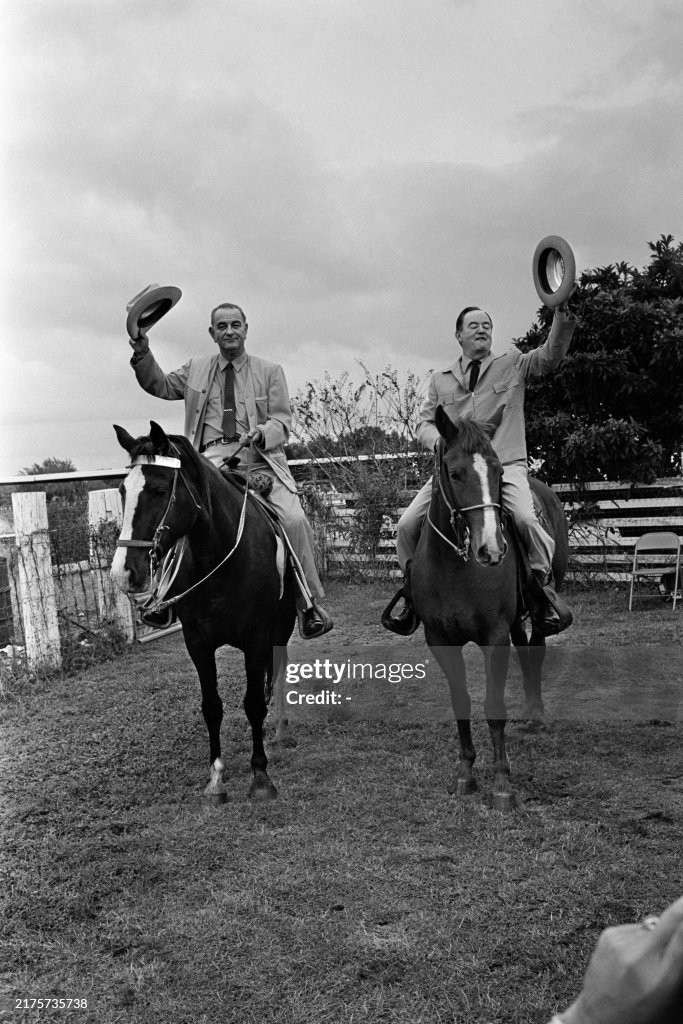
President Johnson and Vice President-elect Hubert H. Humphrey talked past midnight last night and again this morning on a range of Governmental and political questions. This afternoon, Senator Humphrey left the LBJ Ranch near Johnson City, took a helicopter to Austin, and then flew to Washington. Mr. Humphrey, who flew here yesterday for a celebration barbecue, said of last night’s talk: “You shouldn’t go to bed before midnight — it’s not good for you.” Malcolm Kilduff, assistant White House press secretary said this morning that the two men had discussed “such things as the new Vice President’s role as chairman of the Space Council,” a post Mr. Johnson held as Vice President. “They also discussed the economic condition of the country last night and again this morning,” Mr. Kilduff said.
Republican politicians filtering back to their offices today were looking for a man and plan to put the pieces of their shattered party organization back together again. On only one point did there seem to be unanimity among them — that the party’s national chairman, Dean Burch, and his aides would have to go. Next to Senator Barry Goldwater, himself, most of these Republican regulars look upon Mr. Burch as the principal architect of what many regard as the most disastrous political campaign in recent history. Most party spokesmen who could be reached for comment today felt that Senator Goldwater, in his speech yesterday conceding defeat, had taken an adamant stand in respect to his continued leadership of the party. They believe his intention is to preserve the emphasis on extreme conservatism as the dominant aspect of the party’s image, and to continue to exclude moderate and liberal viewpoints from its councils.
Pennsylvania Governor William W. Scranton today called for the Republican party to “return to its heritage” and erase what he termed a widespread impression that it is an exclusive organization. Mr. Scranton, at his first news conference here since September 24, said that Pennsylvania Republican victories in the face of President Johnson’s landslide election demonstrated that the party could win by adhering to its traditional policies. He said that these policies had not been repudiated by the voters Tuesday. The Governor refused to discuss the possibility of changes in the Republican party leadership. He said he would not discuss personalities.
Michigan Gov. George Romney is counting on the nation’s 17 Republican Governors to forge a program that would restore the moderate voter’s confidence in the party without causing a break with the conservative Goldwater wing. The Michigan Republican leader probably will make suggestions toward that end at an upcoming meeting of the Republican Governors Conference. He also may propose steps to strengthen the association and make it a more powerful instrument within the party. Mr. Romney would not spell out his ideas. But associates said he would emphasize conciliation with the conservatives rather than warfare. But they added that he was prepared to fight to broaden the party if the conservatives resisted. Because of his plans to emphasize party harmony, Mr. Romney is expected to hold himself aloof from the bickering that already has broken out between the moderate and conservative wings. He will instead concentrate on striking a balance in the party.
Civil rights activists in the North and the South are now re‐evaluating their strategies in the light of President Johnson’s landslide election. Most appear eager to resume the full‐scale struggle that had been quiescent in the campaign. In both coastal Mississippil and in New York’s Harlem. rights organizations planned conferences this weekend. From sessions are expected to come plans for winter campaigns and summer projects. In the South, the emphasis is still on voter education and organization and on trying to find some way to achieve greater federal involvement in the Black struggle for equal rights. In the North, the emphasis is on obtaining a greater degree of integration in schools, jobs and housing, but particularly in the schools.
The Georgia Supreme Court upheld today the constitutionality of the state’s antitrespass law under which scores of sit‐in demonstrators have been arrested. The court rejected an appeal of Miss Mardon Walker, a white teen‐ager of East Greenwich, Connecticut, arrested in Atlanta last January, and of 13 Blacks arrested last year in Savannah. The court ruled in all 14 cases that the defendants could not gain freedom because of enactment of the Civil Rights Act of 1964 that outlawed racial discrimination in some public eating places. The decision presumably means that Miss Walker must serve a sentence of 18 months confinement and pay a $1,000 fine. She is now free on bond. The Savannah defendants had much lighter sentences and fines.
Judge Durwood Pye of Fulton Superior Court gave Miss Walker, 18 years old, the maximum sentence after her arrest at a restaurant. She had entered the restaurant in company with Blacks and was arrested after allegedly refusing to leave. The appeal for Miss Walker attacked the constitutionality of Georgia’s antitrespass law. This makes it a misdemeanor to refuse to leave an eating place if asked to by the owner or manager. The defendant argued that even if the owner could exclude patrons on racial grounds the law was illegally enforced by the state to maintain racial segregation. Although the 14th Amendment to the United States Constitution prohibits state action that is discriminatory, the Georgia court held, there was no evidence of government action in the sit‐in cases.
Mariner 3, a U.S. space probe intended to make the first flyby of Mars, was successfully launched from Cape Kennedy, but the lightweight heat-shielding shroud that had been used to protect its instruments from air friction had melted and failed to separate after the Atlas/Agena rocket left the atmosphere. Because the protective shroud was stuck to the payload, the $25,000,000 Mariner’s solar panels were unable to unfold and the craft could not be controlled after it achieved solar orbit. The problem with the shroud’s design would be determined in time to prevent the same thing from happening to Mariner 4 three weeks later.
Dow Jones Industrial Average: 873.54 (-0.28)
Born:
Famke Janssen, Dutch actress (“Goldeneye”, Jean Grey – “X-Men movies, “Taken”), in Amstelveen, Netherlands.
Died:
(Edwin) “Buddy” Cole, 47, American jazz and session pianist, Hammond organist, orchestra leader, and composer (“Truth Or Consequences”)
Vasily Nemchinov, 70, Soviet mathematician and economist who provided the groundwork for the Communist theory of a centrally-planned economy
Mabel Lucie Attwell, 85, British illustrator
John S. Robertson, 86, Canadian film director
Lansdale Ghiselin Sasscer, 71, American politician and U.S. Representative for Maryland for six terms.



 History Diaries