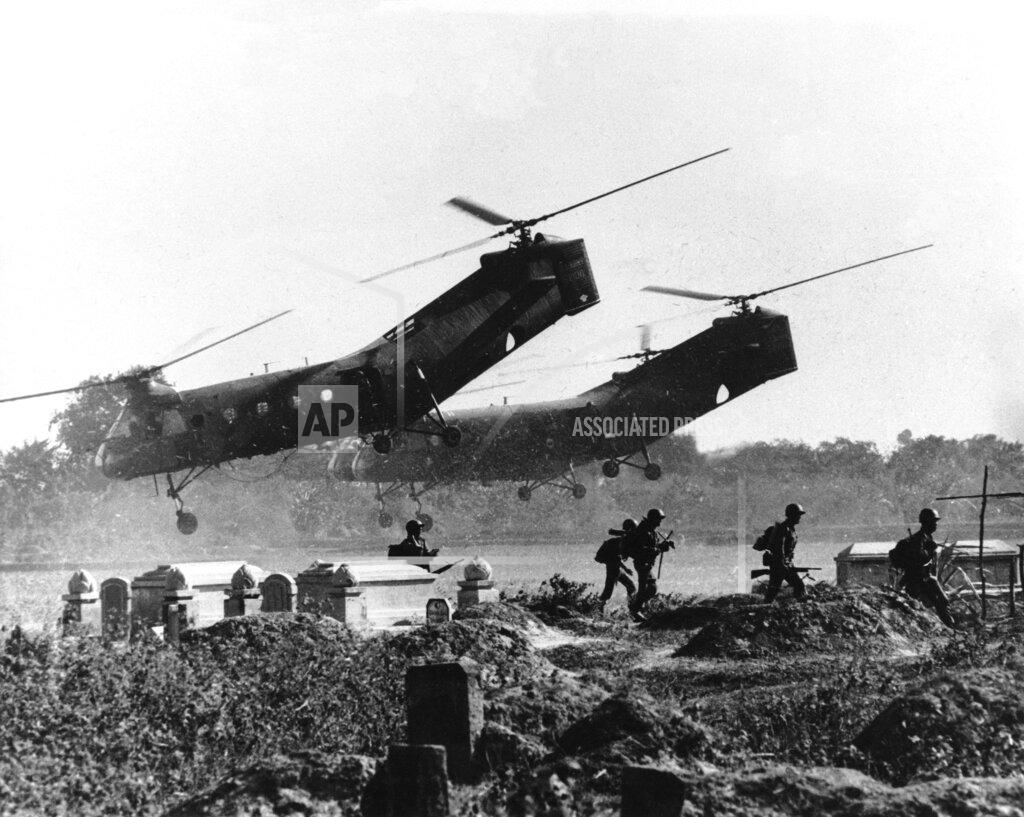
The implications of the stalemated war in South Vietnam require urgent review by the Johnson Administration. High Administration officials have suggested recently that the United States feels a decisive moment may be approaching in Southeast Asia. They have implied that, unless the Communists desist soon from subversion in South Vietnam and Laos, the United States may take strong measures, possibly including the extension of the war to North Vietnam through air strikes or other means.
A Vietnamese Ranger company pounced on Communist guerrillas at a hamlet in the south yesterday and killed 56 in a three‐hour battle. Ranger losses were held to one killed and 16 wounded. The battle was at Khai Quang, on the Cà Mau peninsula 135 miles southwest of Saigon. Helicopters carried 80 Rangers into action against a Việt Cộng force that was dug in after having attacked the hamlet Monday. “Our boys wiped out 15 foxholes one by one and there were Việt Cộng in all of them,” said Lieutenant Robert F. Herrick of Alton, Illinois. A Vietnamese officer commented: “This makes up a little for the knockout blow against us at Biên Hòa last Sunday, but we need a few more of these to even the score.”
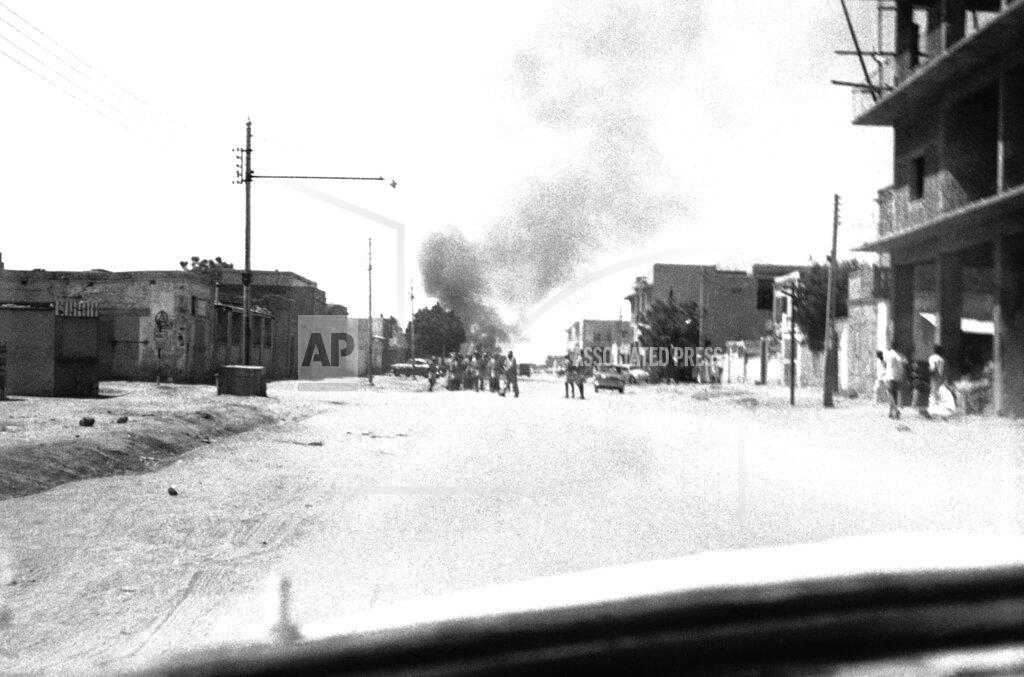
The United States apparently has withdrawn most of its nuclear-capable bomber fleet from the Biên Hòa air base following the disastrous Communist mortar attack of last Sunday, reliable American sources said today. The removal was reported as South Vietnam’s first civilian government in a year was installed by the new Premier, Trần Văn Hương. His 17‐man Cabinet is made up largely of doctors, lawyers and former civil servants. Americans who flew over the Biên Hòa base, 12 miles north of Saigon, said only 2 of the estimated 40 jet bombers usually there were in evidence. About half the B‐57 jets at the base were destroyed or damaged in a mortar bombardment by Communist guerrillas. Four Americans were killed and 72 wounded.
A spokesman for United States military headquarters in Saigon confirmed that “some” of the B‐57’s have been flown to Clark Air Base in the Philippines. But he refused to say whether the United States had removed its bomber fleet from Vietnam. At Saigon’s Tân Sơn Nhứt Airport, United States military aircraft estimated to number 100 were spaced at wide intervals. In the Biên Hòa attack, fire spread rapidly among planes parked wing‐to‐wing. The aircraft were dispersed to such distant positions that Army helicopters were being used to ferry crews from the operations area to their aircraft. General William C. Westmoreland, commander of United States forces in South Vietnam, ordered today a formal investigation of the Biên Hòa raid. It will attempt to fix responsibility for the apparent security failure that accounted for the success of the Communist blow. The board will be headed by Major General Milton B. Adams of the Air Force.
Trần Văn Hương was installed as the new Prime Minister of South Vietnam as part of a civilian government selected by the nation’s military leaders.
A typhoon hit the central Vietnamese town of Quy Nhơn today, destroying buildings of a United States Army aviation unit. No casualties were reported.
The Soviet Union called today for a new international conference to guarantee the neutrality and territorial integrity of Cambodia. The appeal, announced by Tass, the official press agency, was addressed to the nations that signed the agreements reached in the Geneva conference on Cambodia in 1954. It asked them to convene the new conference also in Geneva. The Soviet move, Tass said, was in response to a telegram to President Anastas I. Mikoyan and Premier Aleksei N. Kosygin from Prince Norodom Sihanouk, the Cambodian head of state. The agency said that Prince Sihanouk had asked Soviet support for a new Geneva conference “in connection with another air attack on Cambodian territory from South Vietnam, an attack that resulted in the loss of human life and considerable material damage.”
Mr. Mikoyan and Mr. Kosygin, in their reply, declared: “The Soviet Government has been consistently supporting Cambodia’s efforts to insure the neutrality and territorial integrity of the country and also Cambodia’s request for the convocation of a conference to work out guarantees of her neutrality and territorial integrity.” The Soviet Union and Britain were co‐chairmen of the 1954 conference on Indochina. They acted in that capacity again at the 1962 Geneva conference on Laos. The two countries have kept the continuous responsibility for peacekeeping operations under the terms of both conferences. Last August the Soviet Union threatened to step down from the co‐chairmanship of the 1962 conference, but it has not carried out its threat to date.
The 1954 Geneva agreements on Indochina, which brought to a close the eight‐year war between France and the Vietminh, provided for the partition of Vietnam and the neutralization of Cambodia and Laos. The signers were France, Britain, the Soviet Union, Communist C hina, South Vietnam, the Vietminh (North Vietnam), Laos and Cambodia. The United States took part in the conference but did not sign the agreement. The signers set up an International Control Commission composed of a few hundred Indian, Canadian and Polish officers to supervise the execution of the agreement.
The leaders of the Soviet Union and Communist China have decided to hold a top‐level meeting. The meeting, which will be the first high conference by the two feuding Communist powers in 15 months, was made possible by the removal of Nikita S. Khrushchev from power. Chou En‐lai, the Chinese Premier and one of five deputy chairmen of the Chinese Communist party, has accepted a Soviet invitation to attend the celebration on Saturday of the 47th anniversary of the Bolshevik Revolution. The Chinese leader is to arrive here tomorrow or Friday at the head of a seven‐man delegation, said today’s announcement from Peking.
Gunfire broke out on the Syrian‐Israeli border today for the second consecutive day. Israeli officials said the Syrians opened light arms fire on an Israeli tractor working near the area where the Jordan River flows into the Sea of Galilee. As in the shooting yesterday, the Government said there were no Israeli casualties but Israel filed a complaint with the United Nations armistice commission. Work continued without incident today on a dirt road at Dan, 30 miles north, where a gunbattle was fought yesterday.
Major General Moshe Dayan resigned today as Israel’s Agriculture Minister as a result of political differences with Premier Levi Eshkol. The timing of the resignation of the former commander of Israel’s defense forces came as a surprise although it had been clear for some time that General Dayan was not happy in the Eshkol Cabinet. General Dayan called on the Premier this morning to submit his resignation, which was accepted by Mr. Eshkol. The two conferred for 20 minutes in the Premier’s office. Afterward, General Dayan said that he had resigned because of a lack of “identification,” which he said should exist between a minister and the chief of government.
Mr. Eshkol expressed regret that General Dayan could not find any possibility of continuing in the Cabinet. General Dayan, one of Israel’s more colorful and independentminded political personalities, became Agriculture Minister in December, 1959, in the Cabinet of former Premier David Ben-Gurion. He had served as Military Chief of Staff from 1953 to 1958. An official in the Premier’s office expressed the opinion that General Dayan’s resignation had been motivated by a combination of government and party considerations and personal political ambitions.
Iran’s Ayatollah Ruhollah Khomeini was arrested after denouncing the Shah of Iran, sentenced to exile, put on an airplane in Tehran, and flown to the city of Bursa in Turkey. In the evening, the government issued a statement that “Based on credible information, evidence, and sufficient reasons against Mr. Khomeini and threats imposed by him against the national interest, security, independence, and territorial integrity of the country, he has been exiled from Iran on 13 Aban 1343.” After a year in Turkey, Khomeini would move to Iraq until 1978; he would become the leader of Iran in 1979 after successfully advocating the overthrow of the Shah.
The Johnson Administration was reported today to be considering whether to send Vice Presidentelect Hubert H. Humphrey to Western Europe this month to try to avert a crisis in the North Atlantic Treaty Organization. It was also reported authoritatively that Under Secretary of State George W. Ball would almost certainly fly to Europe soon to open new talks over the disarray in the Western alliance. The plans are for Mr. Ball to visit Paris, possibly to talk with President de Gaulle, who is a key factor in the NATO situation, and to go to Bonn to meet with Chancellor Ludwig Erhard. He may also visit other European capitals.
Anthony Crosland, Minister of State for Economic Affairs in the new British Government, said today that Britain would review her 15 percent surcharge on most imports “within six months.” “In view of the reaction from our friends here,” commented a Labor party member of the British delegation at the Assembly of the Council of Europe, being held in Strasbourg, France, “I’d be surprised if we did not review it at least once a day.” The Member of Parliament was referring to the angry protests against the new British levy that have dominated the present session of the European assembly since it opened yesterday. Mr. Crosland’s defense of his Government’s measure received an attentive hearing from the packed Assembly, but it apparently made no dent in the massive wall of hostility that has confronted the British. Mr. Crosland’s appearance before the Assembly was a result of the shock of the British delegation at the extent and intensity of the bad feeling that greeted them.
West Germany handed over proposals today to its five Common Market partners, dealing with moves toward political union and the intensification of the present European economic integration, according to a Government spokesman here. The proposals will be published in Bonn on Friday. They follow a promise made in July by Chancellor Ludwig Erhard to General de Gaulle that West Germany would take this initiative to break the European stalemate.
Thirty‐three American servicemen were in miltary stockades today after a weekend raid by German police on a narcotics ring centered in the Rhineland Palatinate. A United States Army spokesman said the men, 24 from the Army and nine from the Air Force, would be tried by courts-martial and not by a German civil court if charges were brought against them. Although most of those under arrest were believed to be narcotics users, he said, some were suspected of having sold the narcotics, marijuana and heroin. The United States servicemen were among 100 persons arrested in the police roundup, which was directed mainly at the small towns of Hanau and Kaiserslautern, both near United States bases. Raids also were made in Munich and Stuttgart.
The Soviet Union and the United States have reached agreement for further bilateral cooperation in space activities. Announcement of this was made by Prof. Anatoli A. Blagonravov of the Soviet Union, who came from Moscow to attend the 28‐nation outer‐space committee and also to continue private negotiations with Dr. Hugh L. Dryden, deputy administrator of the National Aeronautics and Space Administtration. The agreement is to be submitted to the Secretary General later this week. It is said to cover a limited area of activities that have been under discussion for as long as two years. One project is said to involve the exchange of weather data obtained from satellites. This is to be exchanged by a teletype circuit between Washington and Moscow, which has been nicknamed the “cold line.”
In Bolivia, the government of President Víctor Paz Estenssoro was overthrown in a coup led by General Alfredo Ovando Candía, commander-in-chief of the armed forces, and was replaced by his Vice-President, General René Barrientos, who had assisted in the plot. The overthrow brought an end to 12 years of rule by the Movimiento Nacionalista Revolucionario (MNR) political party, the Revolutionary Nationalist Movement. Paz was sent into exile in Peru, but would return in 1971 and would become president again from 1985 to 1989.
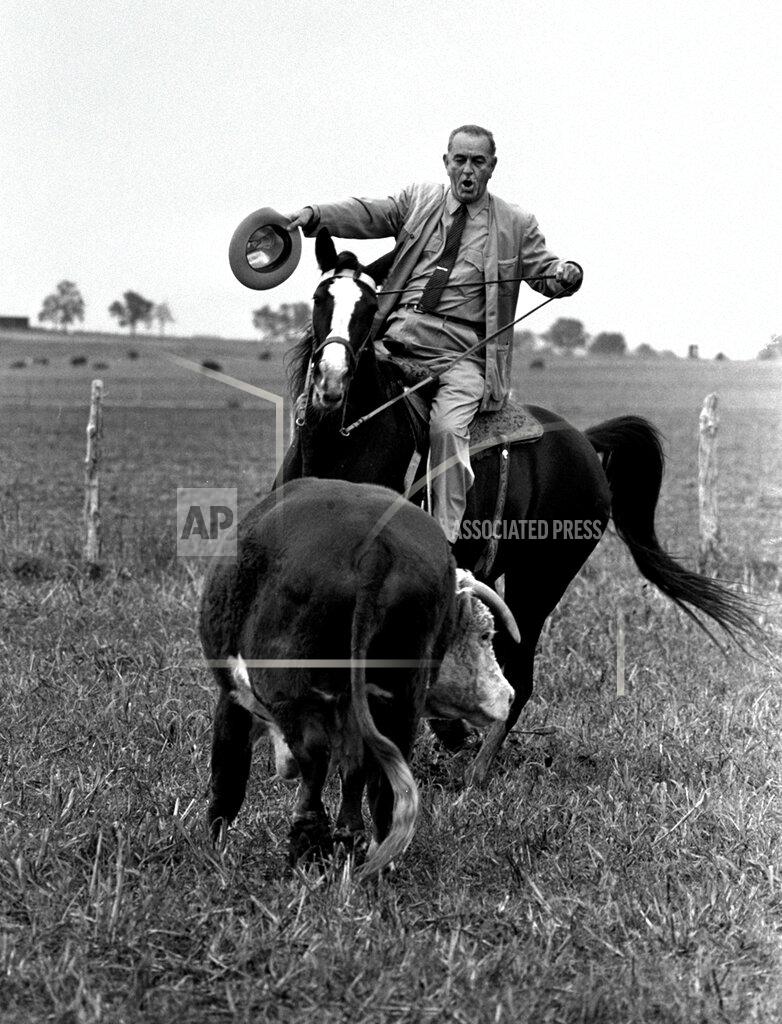
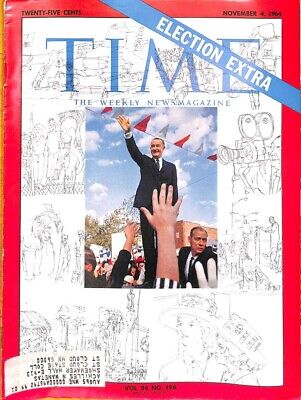
President Johnson is assured of the biggest Democratic majority in the House of Representatives since the high point of the Roosevelt New Deal in 1936. In the Senate, the Democrats improved on their present majority‐64 to 36 — by at least one seat. Sweeping Democratic gains in Tuesday’s Congressional elections promised to give the President and his House leaders easy control on most issues. The once powerful coalition of Republicans and conservative Democrats appeared to have been rendered impotent, or nearly so.
Party leaders forecast action on major Administration programs stalled this year in a House that was narrowly divided between conservative and liberal‐to‐moderate forces. With two races still undecided, unofficial returns indicated that the Democrats had scored a net gain of 39 House seats, despite heavy Republican inroads in the South. Democrats had won 295 seats and Republicans 138. If the two undecided contests should be settled in favor of the parties now holding the seats, the lineup would be 296 Democrats and 139 Republicans in the 89th. Congress, which convenes in January. The division in the expiring 88th Congress, crediting five vacancies to the parties that last held the seats, is 257 to 178.
The high‐water mark for either party was reached in 1936, when President Franklin D. Roosevelt won a landslide second‐term victory that surpassed President Johnson’s sweep of Tuesday. The Democrats elected 333 to the House that year. Only 89 Republicans and 13 minor party candidates were elected. As in 1936, the Democratic Presidential candidate carried numerous House candidates into office on his coattails Tuesday. Despite an unusual amount of ticket splitting, many Republican candidates went down to defeat along with Senator Barry Goldwater, the party’s Presidential candidate.
A preliminary national survey indicated yesterday the presence of a powerful Black political thrust in the overwhelming election victory of the Democratic party. Estimates from New York Times correspondents throughout the country corroborated estimates of the major civil rights organizations that between 85 and 99 percent of Blacks’ votes from state to state were cast for the Johnson-Humphrey ticket and helped elect many other candidates for Federal, state, and local offices. The Black effort was particularly dramatic in the Northern urban and industrial states, such as New York and Illinois.
According to the Vote Profile Analysis of the Columbia Broadcasting System, this was the result largely of increased voter registration and voter participation and a massive transfer of Blacks from the Republican party to the Democratic. In the 1960 election, it was estimated, 60 percent of the Blacks’ votes nationwide were cast for Republican candidates. On Tuesday, it was estimated, 90 percent of the Blacks’ votes went to the Democrats. The Republican party appears to have lost most of the Black vote for a long time, according to the Vote Profile Analysis.
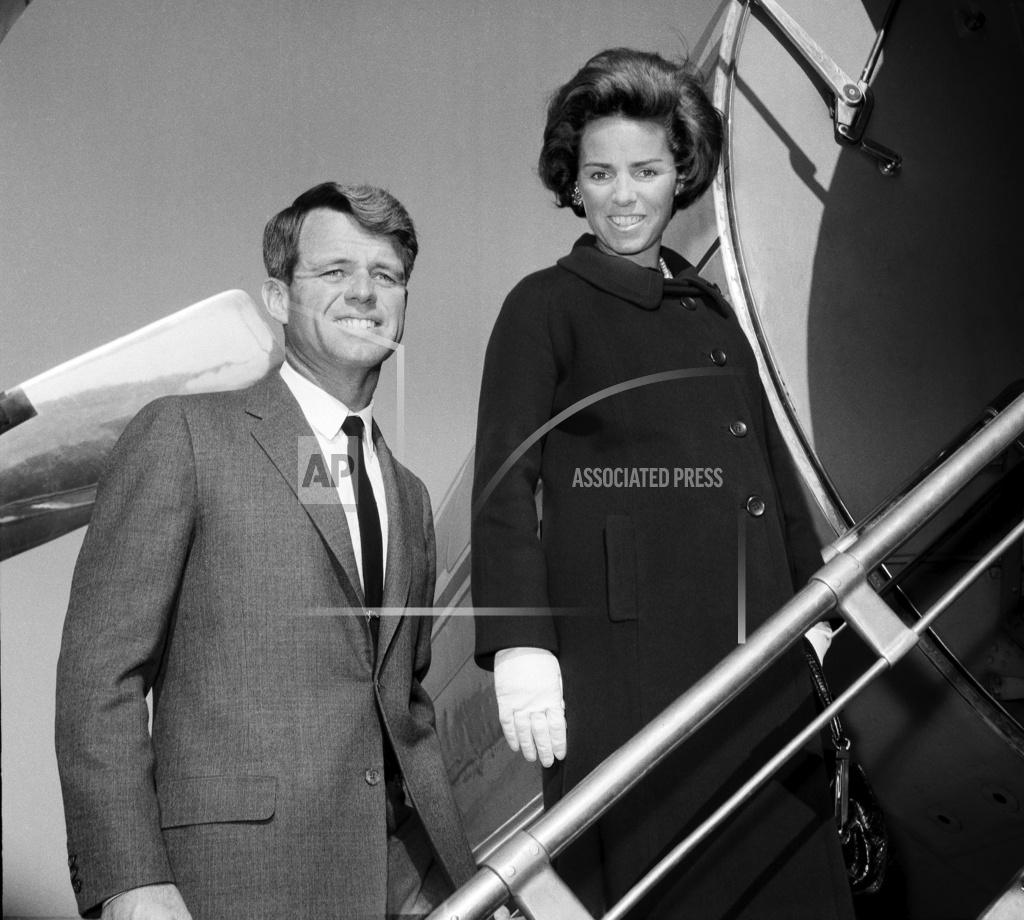
The effect of the Black shift in the North was illustrated in the victory of Robert F. Kennedy over Senator Kenneth B. Keating in the New York Senate race. According to estimates of the National Association for the Advancement of Colored People, there were 580,000 registered Black voters in the state for this election. Of these 508,000 were in New York City. While the Black vote in the state for the Johnson‐Humphrey ticket, estimated by civil rights organizations at 97 to 98 percent, played a relatively small part in President Johnson’s crushing victory in New York, it was a major factor in the Kennedy election. According to estimates. at least 80 percent of the 508,000 Black voters in the city cast ballots. This meant that Mr. Kennedy received about 400,000 votes of Blacks in the city. His statewide plurality over Senator Keating was something over 600,000.
President Johnson is expected to keep most of the cabinet he inherited from President Kennedy. The future of only one member, Anthony J. Celebrezzie, is uncertain. The Secretary of Health, Education and Welfare is known to be unhappy in his job. Labor Secretary W. Willard Wirtz might take over as Attorney General, a post vacated when Robert F. Kennedy quit in August to begin his successful race for the Senate from New York. Other possibilities for the job include Nicholas de B. Katzenbach, Acting Attorney General; Abe Fortas, a Washington lawyer and former Assistant Secretary of the Interior, and Leon Jaworski, a Houston, Texas, lawyer.
Moderate Republican leaders and even a few conservatives, stung by the magnitude and backwash of President Johnson’s victory, began a struggle yesterday to wrest control of the national party organization from supporters of Barry Goldwater. Many Republicans agreed privately that Senator Goldwater’s apparent intention of retaining the leadership of the national organization portended a harsh internal conflict that is not likely to be resolved for months. A caucus of Republican Governors within two or three weeks was called by their chairman, Governor Robert E. Smylie of Idaho, to map out a bigger role for the 17 Republican Governors in reviving the party after Tuesday’s election defeat and in getting a major voice in national councils. There were other calls for conferences of party moderates to work out a reconstruction program.
Among Republican leaders who called yesterday for a reappraisal of party leadership were: Governor Rockefeller; Henry Cabot Lodge; Representative John V. Lindsay of Manhattan’s 17th District; Fred A. Young, New York Republican State Chairman; Attorney General Edward W. Brooke of Massachusetts; John B. Martin, Republican National Committeeman from Michigan, and Charles H. Percy, defeated gubernatorial candidate in Illinois. On the other hand, Governor George Romney of Michigan appealed for unity and urged fellow leaders to avoid hasty action that might split the party.
Southern Republicans could not agree today whether the gains their party made in the Deep South in yesterday’s election would help or harm their chances of building a sound, two‐party system in the region. The Goldwater Republicans said that the large vote given Senator Barry Goldwater of Arizona and other Republican candidates in the “Black Belt” had provided the party with its first real incentive in an area that has traditionally been Democratic. Moderate Republicans, however, said that gains in five Deep South states with 47 electoral votes had been canceled by losses in states bordering the 11‐state region. They said that Mr. Goldwater’s vote in Louisiana, Mississippi, Alabama, Georgia and South Carolina — the five Southern states the Arizonan carried — seemed to be based mostly on the race issue. “If the Republican party fotlows this line,” said Robert Snodgrass of Atlanta, a former Republican national committeeman, “this will lead it down a dead‐end street.”
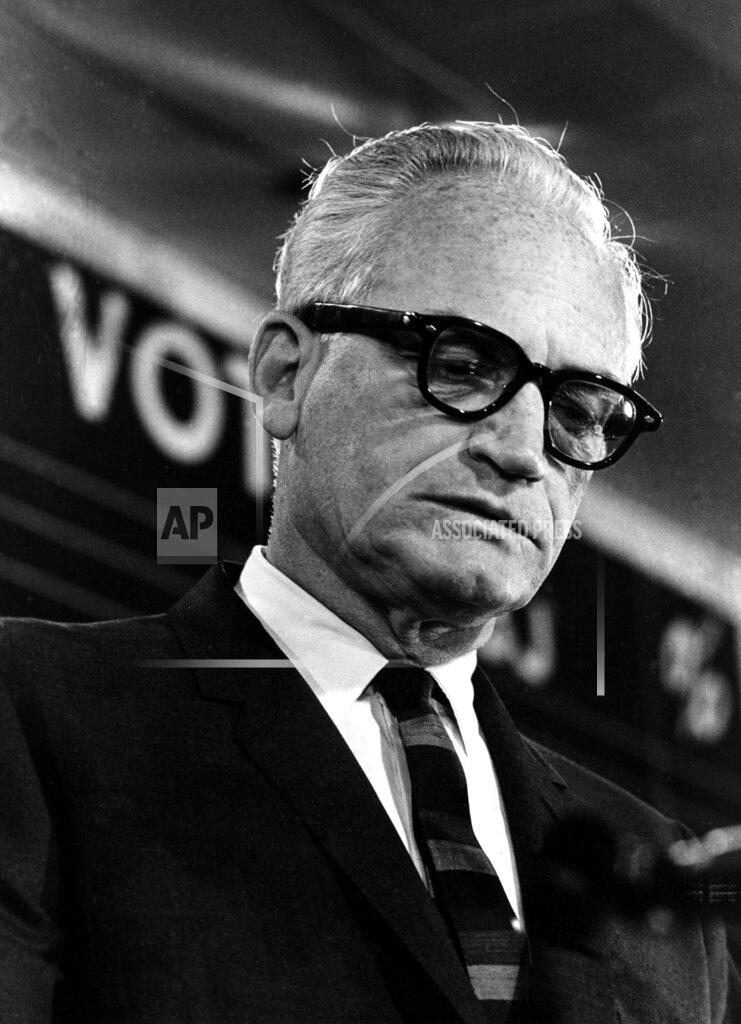
Senator Barry Goldwater, his Presidential ambitions crushed by a landslide, conceded today but did not surrender. Early this morning he sent President Johnson a congratulatory telegram with a sharp cutting edge to it and later, at a news conference, indicated that despite the magnitude of his defeat he had no intention of giving up the fight for his conservative philosophy inside or outside the Republican party. “Congratulations on your victory,” Mr. Goldwater wired the President. “I will help you in any way I can toward achieving a growing and better America and a secure and dignified peace. The role of the Republican party will remain in that temper but it also remains the party of opposition when opposition is called for. There is much to be done with Vietnam, Cuba, the problem of law and order in this country, and a productive economy. Communism remains our No. 1 obstacle to peace and I know that all Americans will join with you in honest solutions to these problems.” Mr. Goldwater also indicated that at least at this time he did not expect to be his party’s Presidential nominee four years from now.
William F. Buckley Jr., editor in chief of The National Review, a biweekly journal of conservative opinion, wrote yesterday that “the undertakers are premature.” In an editorial for Monday’s edition, he went on to say: “One year’s landslide loss, in other words, is not necessarily a permanent thing in a dynamic society, and there is no reason for American conservatives to believe either that their hearts deceived them in telling them he [Mr. Goldwater] was right, or that the time will never come again when the American people can correct our public policies.”
The Rev. Dr. Martin Luther King Jr. said yesterday that he was planning to engage in civil rights demonstrations soon in Alabama and Mississippi. He said that he believed the landslide vote given to President Johnson in the election Tuesday should convince the President that he has “a definite mandate from the American public” to support such demonstrations. Dr. King, who recently won the Nobel Peace Prize for his work in the civil rights effort, said in a telephone interview from his office in Atlanta: “Now that the election’s over, we will naturally move back into some of the areas where we have been working to be sure that the civil rights bill has been implemented in all of its dimensions. We will probably have demonstrations in the very near future in Alabama and Mississippi, based around the right to vote. We hope that through this process we can bring the necessary moral pressure to bear on the Federal Government to get Federal registrars appointed in those areas, as well as to get Federal marshals in those places to escort Negroes to the registration places if necessary.”
A white civil rights worker who drove a Black woman to the polls yesterday was allegedly attacked and then arrested. Arlene Wilgoren, a field secretary for the Student Nonviolent Coordinating Committee, said Frank Cieciorka, 25 years old, of San Jose, California, had been beaten by two white men after being dragged from his car in front of the polling place. Mr. Cieciorka was charged by Police Chief Harold Pearson with failure to yield the right of way and released on $25 bond, according to Miss Wilgoren. Chief Pearson at first described the incident as “just a little scuffle.” He said the two white men, whom he would not identify, were also being held. The office of the Federal Bureau of Investigation in Little Rock said it had been advised of the incident and was conducting an inquiry.
Gene Mauch, who led the Philadelphia Phillies to their highest standing in 14 seasons despite a late-season sump, was named National League Manager of the Year for 1964 yesterday in the annual Associated Press poll.
Dow Jones Industrial Average: 873.82 (-1.69)
Born:
Ron Morris, NFL wide receiver (Chicago Bears), in Cooper, Texas.
Warren Bone, NFL defensive end (Green Bay Packers), in Fairfield, Alabama.
Ian Paul Cassidy, English actor (Cracker Bob – “Highlander: Endgame”), in Harrogate, West Riding of Yorkshire, England, United Kingdom.
 History Diaries