The U.S. House of Representatives voted to end the arms embargo and modify the Neutrality Act.
Official British quarters tonight received with enthusiasm the word that the American Congress had voted to lift the arms embargo. It was stated that as a result it might be expected that the United States would release “hundreds” of reconnaissance land planes, fighters, light bombers. and flying boats awaiting shipment from New York and California.
“It means an unlimited supply of fighting and bombing planes is available to the Allies,” an aircraft expert said. “United States manufacturing facilities in this respect never have been actually tested, but are so far beyond anything ever conceived that there is no limit to the supply available.” Referring to German assertions that the British would have trouble in “getting the stuff across,” it was said that elaborate arrangements had been made to begin transportation immediately.
It was indicated that the flying boats would be flown to Britain and France direct from the United States. Among the planes already ordered and understood to be ready for delivery were eighty twin-engined. Lockheed reconnaissance bombers for Britain. There are 100 twin-engined Douglas bombers and 215 Glenn Martin bombers on order for France.
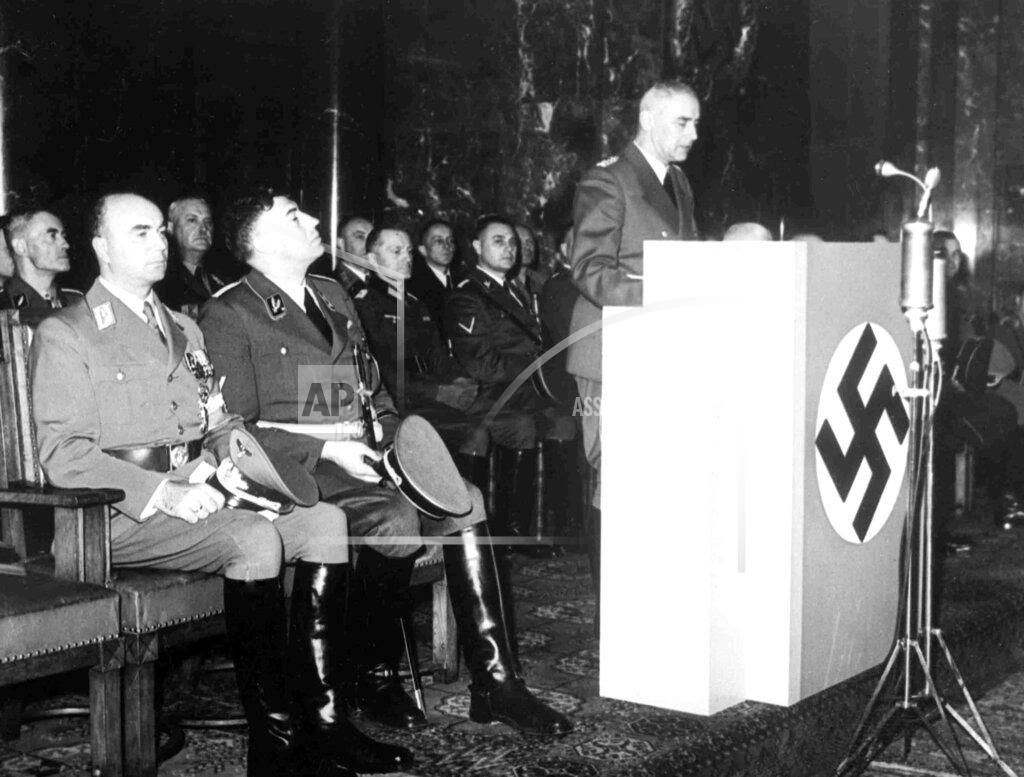
Angry Nazis tonight accused the United States of giving “outright support” to Great Britain and France by repeal of the arms embargo. Official quarters declined to comment for publication until there was time to study the full effects of the legislation, but well-informed individuals left no doubt as to the reaction of the average German to the repeal vote in the House of Representatives. Nazi quarters, foreseeing heavy British and French orders for American arms and munitions, warned that German U-boats probably will intensify their activities in the Atlantic in an effort to sink as many arms-carrying ships as possible.
Both the Foreign Office and the Propaganda Ministry said that the lifting of the embargo “was no surprise and was to be expected.” Official comment will be withheld, it was explained, until there. is time to examine the full significance of the United States Government’s move.
But from the tone of Nazi press comment in recent days on the embargo question it is certain that Congress’s decision will be assailed bitterly by Nazi spokesmen and newspapers in much the same manner that Vyacheslav M. Molotov, Soviet Premier and Foreign Commissar, struck at it in his Tuesday night speech before the Supreme Soviet in Moscow. The Nazi press has charged that repeal of the mandatory arms embargo would favor only the Allies and threatens to “drag the United States into the war.” News of the repeal of the embargo was received in Berlin by radio at 11 PM.
French forces patrol the area between the Blies River, a tributary of the Saar, and the Rhine on the Western Front. The Germans are using shock troops for raids on the French lines. The weather is lousy.
It continues to be a strange war on the Western Front. For one thing propaganda is playing an ever greater part in it. Today, for instance, the French press indignantly repudiates the Berlin broadcast to the effect that “German troops cannot contact the French because they retreated precipitately.”
At the Lodz Ghetto, the Germans executed in Lagiewniki Woods 15 men arrested a day earlier in the Astoria Café. Many others were savagely beaten and tortured. Lodz is under the authority of Gauleiter Arthur Greiser, who believes in complete and quick Germanization.
Part of eastern Poland is incorporated into Belorussian Soviet Socialist Republic, following the results of a plebiscite in which the majority of the inhabitants living in the territory reputedly favored annexation. This completes the incorporation of all Polish territory occupied by the USSR.
The Vatican’s Secretariat of State received confirmation today that Monsignor Andreas Szeptycki, the Archbishop of Lwów, had been killed by Russians.
The speech of Premier-Foreign Commissar Vyacheslav M. Molotov of Russia on Tuesday contained “some truth and a long series of lies,” writes Professor Guido Gonella in his column in today’s Osservatore Romano at the Vatican.
President Joseph Tiso of Slovakia has sent the Pope a message of homage, it was learned today, but since he sent a parallel message to Chancellor Hitler, it is understood that the Pontiff is offended. It is believed in Vatican circles that the Pope will not even answer the telegram. The Vatican regarded Father Tiso’s appointment to the Presidency of the Slovak State with distrust because it did not want to see a priest placed in such a position under present circumstances. Now it is felt that those fears are being justified.
The Polish government-in-exile dissolved the Parliament. A National Council was set up to govern in its place.
The first transport of Polish women arrived at Ravensbrück Concentration Camp in Germany.
Joseph Goebbels visited Lodz, Poland.
Hitler recalls his ambassadors from Moscow and Rome for consultations.
Czechs threaten to strike over Independence Day arrests and demand the release of all celebrants. It is learned from a reliable source here that a deputation of Czech workers called on the Bohemian-Moravian Protectorate office in Prague, threatening a general strike.
It was officially announced in Rome tonight that formal letters had been exchanged between the Greek and Italian Governments “regarding friendly relations existing between the two countries which contribute to the upkeep of peace in this sector of Europe.”
A crowd of several thousand Slovaks rioted and sacked two Hungarian newspaper offices in Bratislava tonight following a public meeting called to protest one of the results of the Munich settlement.
German authorities tonight ordered all German nationals to be ready to leave Turkey “as soon as possible.” The German Ambassador to Turkey, Franz von Papen, is on the way back to Ankara from Berlin, where he has been in conferences with Chancellor Hitler and other Nazi leaders for ten days. Herr von Papen was presumed to have been summoned to Berlin to report on Turkey’s failure to reach a mutual-aid pact with Russia and her decision to enter into such a treaty with Britain and France. Hasty preparations for departure were evident among German residents, the number of whom has increased steadily since the World War, in which Turkey was an ally of Germany. After the suspension of the Turkish-Soviet talks and announcement of Turkey’s pact with Britain and France considerable apprehension was evident among the German residents.
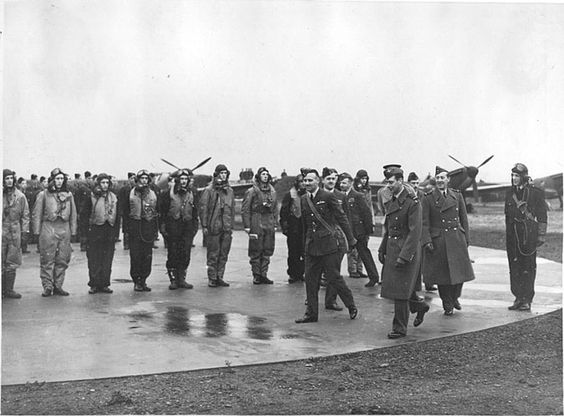
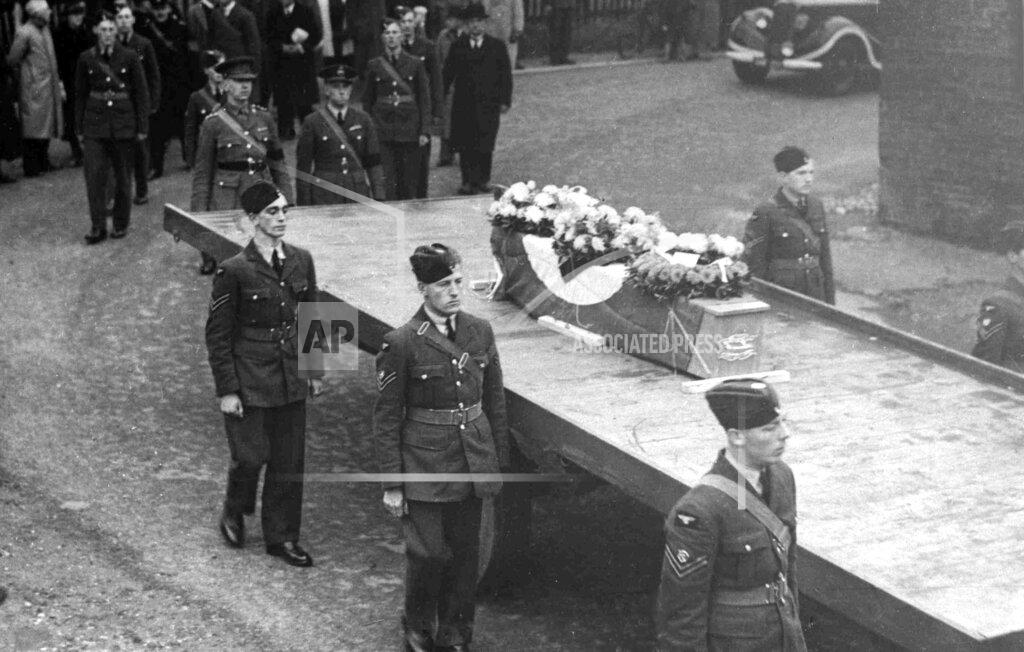
King George VI inspects RAF Digby. King George decorated five RAF pilots, leaders of a raid on the Kiel Canal, during a tour of RAF bases in the North and Midlands.
The RAF in conjunction with anti-aircraft guns below bring down two Luftwaffe planes.
First Lord of the Admiralty Winston Churchill goes to Paris to discuss the work of the British and French Navies.
British admiralty announced officially today that British “light” naval units had sighted the captured American freighter City of Flint proceeding southward inside Norwegian territorial waters.
U.S. freighters Endicott and West Gambo, detained by French authorities since 22 October and portions of their cargo ordered ashore as contraband, are released and clear LeHavre, France.
Convoy OA.29 departs from Southend, Convoy OB.29 departs from Liverpool, and Convoy HX.7 departs from Halifax.
The War at Sea, Thursday, 2 November 1939 (naval-history.net)
Light cruiser GLASGOW located American steamer CITY OF FLINT at 2356/2nd and her escort, Norwegian minelayer OLAV TRYGGVASON, NW of Stavanger inside Norwegian waters. The minelayer illuminated GLASGOW with searchlights and ordered her out of the territorial waters. CITY OF FLINT put into Haugesand almost immediately.
A submarine was sighted east of Margate Buoy and destroyers KEITH, BLANCHE and GURKHA spent some time searching. After the search was abandoned, KEITH and BLANCHE patrolled between North Goodwins and Edinburgh Channel.
Destroyers GREYHOUND and GRENVILLE were searching for a U-boat 17 miles 213° from Start Point.
Belgian steamer BRUGES (4984grt) reported at 1500 that she was stopped in 45-06N, 8-04W by a U-boat with a skull and crossbones painted on the conning tower. At 0230/3rd, Greek steamer KORTHION (2116grt) was stopped in 44-32N, 8-12W and reported she had been stopped by the same submarine.
For East Coast Defence, available ships of the 4th Destroyer Flotilla were ordered to Rosyth for escort duties. MAORI proceeded direct and ZULU and GURKHA departed Grimsby escorting convoy FN.30 en route. Destroyers JERVIS, JERSEY, JAGUAR, JACKAL and JUPITER were in the Humber. Of the 19th, 22nd and 23rd Destroyer Flotillas, eight British and one Polish destroyer were at Harwich, two were on patrol off Lowestoft, two on East Coast convoy duty, and BASILISK, BEAGLE, BLANCHE, BOADICEA, BRAZEN and VANSITTART were proceeding from Harwich to Dover to cover minelaying mission HW which took place at 1400/2nd.
Operation HW was carried out by auxiliary minelayers HAMPTON, SHEPPERTON and PLOVER laying 502 mines between Tail of the Falls and Sandettie Bank. The 5th Minesweeping Squadron swept ahead, screened by the D.19 destroyers.
Light cruisers CALEDON and CERES departed Sullom Voe on Northern Patrol duties, and arrived back on the 9th.
On Northern Patrol, light cruisers DELHI, DUNEDIN and CALYPSO were between the Orkneys and the Faroes, light cruisers COLOMBO, DRAGON, DIOMEDE and AMC SCOTSTOUN between the Faroes and Iceland, and light cruiser SOUTHAMPTON and AMCs CHITRAL, AURANIA and RAWALPINDI in the Denmark Strait.
Anti-aircraft cruisers CALCUTTA and CAIRO departed Grimsby on escort duties and arrived back later the same day.
Anti-aircraft cruiser CURLEW departed Rosyth after covering the Narvik iron ore convoy passage and arrived at Scapa Flow later the same day. She took over the duties of radar direction finding while the Netherbutton radar station was out of service for 24 hours for repair. The radar station resumed operation at 1505/8th.
Convoy OA.29 of 12 ships departed Southend escorted by destroyers WOLVERINE and VERITY from the 2nd to the 7th. Destroyer ARDENT was with the convoy on the 2nd only.
Convoy OB.29 departed Liverpool escorted by destroyers WREN and ESK on the 2nd, and destroyers WARWICK and WHIRLWIND to the 5th, when they detached to convoy HX.6.
Convoy HX.7 departed Halifax at 0700 escorted by Canadian destroyers HMCS FRASER and HMCS ST LAURENT, which detached on the 3rd. Ocean escort was cruiser ENTERPRISE which departed Halifax with the convoy. The convoy was joined on the 14th by destroyer GRAFTON and sloop ENCHANTRESS which remained until its arrival on the 17th. ENTERPRISE arrived at Portsmouth on the 15th and the convoy at Liverpool on the 16th.
Light cruiser DAUNTLESS, now attached to the 5th Cruiser Squadron, departed Singapore on patrol duties.
Light cruiser DURBAN departed Singapore for Hong Kong, arriving on the 6th for refit and docking, which was completed on the 24th.
Light cruiser DANAE departed Simonstown for Mauritius.
Destroyers GRENADE and GRIFFIN departed Gibraltar on 25 October to escort convoy SL.5 to England. However, GRIFFIN returned to Gibraltar on the 26th to await convoy SL.6. GRENADE arrived at Plymouth on the 2nd for duties with the 1st Destroyer Flotilla at Harwich.
The House of Representatives approved the President’s neutrality bill, sending the measure to House-Senate Conference. The doom of the embargo against shipment of arms and munitions to warring nations was sealed late today when the House, by majorities surpassing the hopes of Administration leaders, virtually approved the Pittman neutrality resolution. as passed by the Senate on Friday. The vote on final passage was 243 to 181, which came in rejection of a motion by Representative Shanley, Democrat of Connecticut, to instruct the House conferees to demand a full arms embargo.
Having withstood three assaults from the House’s embargo advocates by favorable margins of 32, 66 and 62 votes, the measure was sent tonight to a conference committee, where the members from the lower body will quickly agree to the basic Senate provisions — repeal of the arms ban and substitution of a modified cash-and-carry plan for future commerce between the United States and belligerents. Senator Pittman, author of the resolution, called a meeting of the conference tomorrow morning. His purpose was to compose the remaining differences between the versions of the two houses so final action might be taken by each body in time to send the measure to the White House for President Roosevelt’s signature tomorrow night or Saturday at the latest.
The measure as sent to conference, and not expected to be substantially altered, is the same as printed in The New York Times of Saturday. Technically the House “disagreed” to the measure, in the form of an amendment to the Bloom resolution as passed in the House last June, but this technicality will not stand in the way of an agreement on its essential provisions tomorrow, inasmuch as the House refused today to instruct its conferees to “insist” on its own language. Administration leaders planned to seek adjournment of the special session as soon as the neutrality resolution has been finally disposed of. They claimed sufficient votes to dissolve the session despite a Republican move to keep Congress in Washington for the duration of the war abroad.
It is expected, however, that the President will renew his request for leaders of the two major parties to remain at the Capital between now and the regular session in January in order that he may consult them frequently “on the course of events. in foreign affairs and on the need for future action in this field, whether it be executive or legislative action.”
Today’s vote in the House, which came after another four-and-one-half hours of debate, ended, for all intents and purposes, Congress’s consideration of a new Neutrality Act, as requested by the President in a message to the special session upon its convening six weeks ago today.
Although it was a weary, worn body which came to the final stage, these semi-final proceedings were among the high spots of the entire session, both in terms of debate and action. More members were on the floor and answered to their names than at any time in months, while visitors crowded the galleries. A score or more of Senators availed themselves of the floor to witness the finish in the House contest.
The votes came on motions of repeal opponents to instruct the House conferees: First, to insist upon retention of the embargo; second, to seek a compromise that would prohibit the shipment of lethal weapons and poisonous gas to belligerents abroad, and third, to demand further safeguards against the credit being extended for the aid of exports from the United States to any nation at war.
The first roll call came on the latter proposal — an amendment by Representative Wolcott of Michigan demanding that the House managers in the conference insist on a provision which would have forbidden the Federal Reserve Banks or other governmental agencies to finance any purchases by belligerents. It went down by a vote of 228 to 196.
The modified embargo was offered by Representative Vorys of Ohio, meeting defeat by a vote of 245 to 179.
Then came the main embargo test on the motion of Representative Shanley to retain the arms ban substantially as in the present law. Its death followed by the division of 243 to 181.
The size of the margins was surprising to the Administration leaders themselves, the most optimistic of whom had predicted no more than 40 majority on the test of the Shanley motion. Several had agreed on a final prediction of 23 majority against this motion and feared less on the Vorys and Wollcott amendments. So happy were they at the outcome, which was the first thumping victory they had been able to turn in for the Administration since the large increase in Republican numbers following the 1938 election, that these leaders did not stop tonight to analyze the reasons.
Observers, however, noted various contributing factors, including the strategy of the leaders, together with the hands-off policy of the White House and executive departments; developments abroad during the last few days, particularly the City of Flint incident and the speech of Premier Molotov in Moscow criticizing the American foreign position; the hard work of Speaker Bankhead, Representative. Rayburn of Texas, Democratic floor leader; Representative Boland of Pennsylvania, the party whip, and Representative Warren of North Carolina, in rounding up the votes, and the speeches in behalf of repeal made to the crowded and solemn House today by Representatives Bankhead and Rayburn, Democrats, and Representative Wadsworth, Republican of New York.
Seldom has the House given to an individual member the ovation it gave to Mr. Wadsworth after he had completed a short analysis of the existing embargo as an unwise foreign policy. Although given time to speak by Representative Bloom of New York, chairman of the Foreign Affairs Committee, Mr. Wadsworth brought members of both sides to their feet with applause, as he wound up with a recommendation of Theodore Roosevelt’s philosophy — “to speak softly but carry a big stick.” The New York member had already caused the Republicans whom he was opposing today, to applaud with a plea that the American people remain calm and “keep their feet on the ground” in the present crisis, and with the added suggestion that “those in high authority in the United States Government should refrain from scolding other nations.”
The problems which the Conference Committee will have to face tomorrow on the neutrality bill will be fairly simple, and it is expected that agreement will be rapid. The president will then receive the bill for his signature.
Also in Washington today, President Roosevelt conferred with Sidney Hillman, vice president of the C.I.O., regarding enforcement of the Wages and Hours Law, and with David Lilienthal, director of the Tennessee Valley Authority, and with Jerry Sadler of the Texas Railroad Commission. He tentatively accepted an invitation extended by Representatives Sabath, McKeough and Kelly of Illinois to attend Army Day exercises in Chicago on April 9.
The Senate met briefly and recessed, convening later to hear a report on House action on the Neutrality Bill and the appointment of conferees. It adjourned at 5:02 PM until noon tomorrow.
The House, after dealing with the Neutrality Bill, adjourned at 4:49 PM until noon tomorrow.
The Monopoly Committee continued its investigation of the steel industry and the Dies committee heard further testimony regarding alleged Communist influences in the National Maritime Union.
A broad investigation of Communist infiltration and control over seamen in the United States merchant marine was voted today by the House Committee to Investigate un-American Activities, coincident with testimony by Frederick C. Phillips, former official of the National Maritime Union, who charged that he was ousted from office because of his opposition to communism.
Phillips, who gave his home as 350 West Fifty-fifth Street, New York City, tended to corroborate William C. McCuistion, another former officer of the N.M.U. Phillips, however, ascribed his difficulties in the union to consistent opposition to Communist control, while McCuistion called himself a former Communist who had turned against the party.
The committee sent Phillips, as it had McCuistion, to the Department of Justice to determine whether his civil liberties had been infringed by the union. The committee also instructed Rhea Whitley, its counsel, to request the Federal Bureau of Investigation to produce for questioning a man identified as George Mink, whom McCuistion had described as agent in the United States for the GPU of the Soviet Government and “a power in shipping on the West Coast.”
The U.S. Department of Justice made known today that it was prepared to crack down on saboteurs on a nationwide scale if repeal of the arms embargo brought an increase in subversive activities.
Addressing more than 1,200 prominent New Yorkers at a dinner in the Hotel Waldorf-Astoria last night, former President Herbert Hoover declared that “at this moment the greatest service America can do for the world is to put our own house in order” and thus “prove the enduring values of free men.” He calls for more aid to jobless youth.
A strike of the International Longshoremen’s Association in the Port of New York against nine steamship lines in the coastwise trades, following a breakdown of negotiations over a new contract, went into effect last midnight.
The Western Union Telegraph Company expressed certainty yesterday that the order of the National Labor Relations Board directing the company to disestablish and withdraw all recognition from the Association of Western Union Employes would not be sustained in the courts.
The Zenith Radio Corporation in the U.S. is making more than 12,500 radios daily.
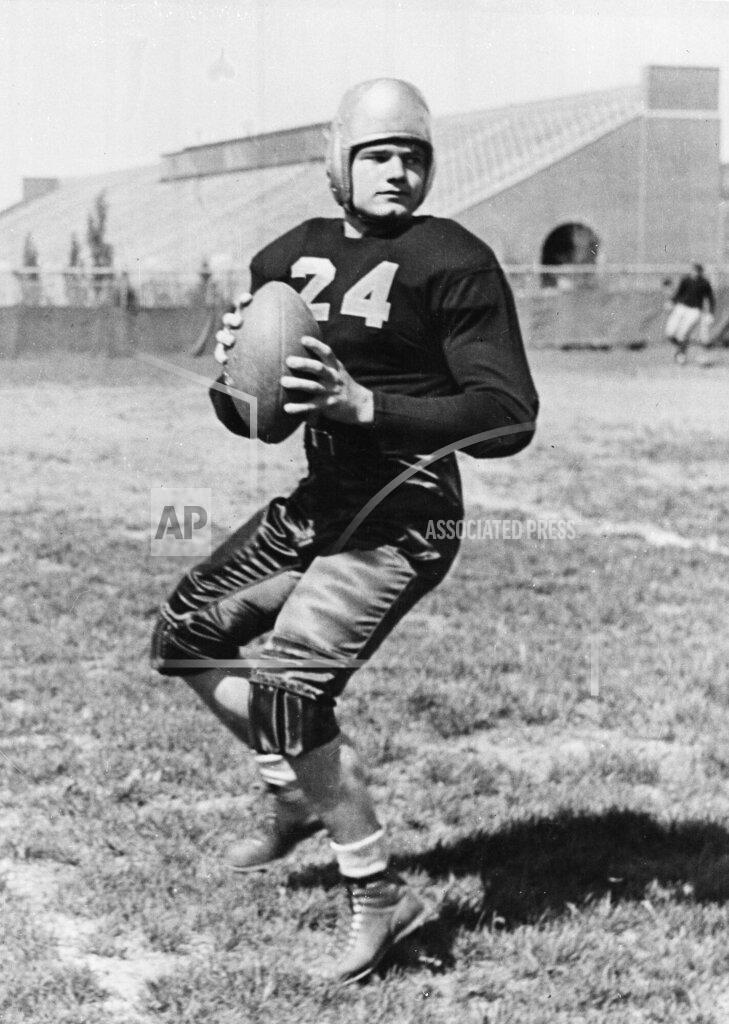
Amputation of the left leg of Donald G. Herring Jr. will be performed at noon tomorrow in Princeton Hospital, his father said tonight. The Princeton football player suffered a terrible knee injury in the game against Brown last Saturday and arteries in the leg were severed.
The Canadian Government was accused today by R.J. Manion, leader of the Conservative party, of “a very regrettable lack of military preparedness.”
In a debate on the status of India in the House of Lords this afternoon, the Marquess of Zetland, Secretary of State for India, declared it might soon be necessary to proclaim the breakdown of popular government in the provinces and take their administration into British hands.
A fourteen-passenger plane of the Chinese-American China National Aviation Corporation arrived in Chungking, China today from Rangoon, completing a round trip inaugurating a weekly service between the capitals of China and Burma.
The Japanese declare that the peace asked by the United States in the East is impossible, saying Washington’s aims perpetuate inequality. The Institute of the Pacific, whose membership includes many high-ranking Japanese, issued a statement today declaring that the United States desires a kind of peace which “not only is undesirable but impossible to maintain.” The statement was published as a reply to the October 19 speech in which United States Ambassador Joseph C. Grew said public opinion in the United States deeply resented actions of the Japanese Army in China.
“The first prerequisite to fair and objective understanding must be recognition that hostilities on a large scale now are in progress in China,” said the declaration. It asserted that the United States was attempting to perpetuate a systemi “which ignores the desire of all peoples of the world to develop by fairly sharing all the fruits and opportunities offered by mother earth.” Therefore, it continued, America advocates peace and the maintenance of the status quo. “Such a peace not only is undesirable but impossible to maintain,” the declaration asserted. “We cannot but note the glaring omission of the word ‘justice’ in the Ambassador’s eloquent plea for peace.”
Former Foreign Minister Kenkichi Yoshizawa, a director, like Premier Nobuyuki Abe, of the Institute of the Pacific, supplemented its declaration in an interview today. He said that he believed the Japanese. Government appreciated the seriousness of American problems and expressed confidence that the Foreign Office would do its best to improve relations.
The Cabinet is preoccupied at present with problems concerning China, particularly the proposed establishment of a Japanese-dominated “central Chinese government” under former Premier Wang Ching-wei. Constantin Smetanin, new Russian Ambassador, was expected to arrive tomorrow from Moscow with detailed instructions bearing on Japanese-Russian relations.
Persons close to Premier Abe said that the government has decided to clarify Japan’s program in China by a series of “unmistakable deeds” and believes that after this clarification the empire’s broad foreign policy can be determined rapidly. The China program was outlined as follows:
- The new Japan-sponsored regime will be launched this month in Nanking and statements will be made to show definitely that this government is to be independent in fact as well as in theory.
- No Japanese political advisers will be attached to the new regime, but Japan will be prepared to furnish financial advisers if the Wang administration so desires.
- Japan will give immediate diplomatic recognition to the new government and will appoint an Ambassador to Nanking at once.
Dow Jones Industrial Average: 151.56 (-0.04)
Born:
Tom Thacker, NCAA, ABA, and NBA point guard and shooting guard (only player to play on NCAA, ABA and NBA Championship teams; NCAA Champions-U. Cincinnati, 1961, 1962; NBA Champions-Celtics, 1968; ABA Champions-Pacers, 1970; NBA: Cincinnati Royals, Boston Celtics; ABA: Indiana Pacers), in Covington, Kentucky.
Frank Buncom, AFL linebacker (AFL champions-Chargers, 1963; AFL All-Star, 1964, 1965, 1967; San Diego Cahrgers, Cincinnati Bengals), in Shreveport, Louisiana (d. 1969).
Howard Wolpe, American politician (Rep-D-Michigan, 1979-93), in Los Angeles, California (d. 2011).
Pauline Neville-Jones, Baroness Neville-Jones, English politician (House of Lords, Life Peerage, 2007; Minister of State for Security and Counter Terrorism, 2010-2011), in Birmingham, England, United Kingdom.
Richard Serra, American sculptor and video artist, in San Francisco, California.
Naval Construction:
The Royal Navy “U”-class (Second Group) submarine HMS Utmost is laid down by Vickers Armstrong (Barrow-in-Furness, U.K.).
The Royal Navy Dido-class (Bellona-subclass) light cruiser HMS Black Prince (81) is laid down by Harland & Wolff (Belfast, Northern Ireland).
The Royal Navy auxiliary minelayer HMS Princess Victoria (M 03) is commissioned. Her commanding officer on commissioning is Captain John Buller Edward Hall, RN.
 History Diaries