South Vietnamese Government soldiers uncovered a Communist supply depot only 30 miles north of the capital yesterday. It contained food and clothing enough for at least 1,000 Việt Cộng guerrillas. The Defense Ministry said soldiers killed two rebels and captured four more when they uncovered the supply dump. They found 120 tons of rice, enough cloth to make loose black uniforms for 1,500 guerrillas, 100 grenades, 200 land mines, a large quantity of soap and storage batteries.
A hint of a rift in relations between Burma and Communist China has appeared in the Government ‐ supervised press in Rangoon. Peking is being criticized for its clandestine support of White Flag Communists who are in, rebellion against the Rangoon Government of General Ne Win. The conflict arose when White Flag Communist leaders sent a message of congratulation to Peking on the occasion of the celebration on October 1 of the 15th anniversary of the Chinese Communist party’s accession to power. The message hailed the Chinese party as the leader of the worldwide revolutionary movement and sided with Peking in the ideological dispute with the Soviet party. The Communist insurgents in Burma are divided between the White Flag group, which is Peking‐oriented, and the Red Flag faction, composed of Trotskyites who denounce both the Chinese and the Russians as too moderate ideologically.
The Saigon Foreign Ministry conceded today that South Vietnamese planes had staged a second attack on the Cambodian village of Anlong Krey but said it had been due to mapping errors. The Ministry’s statement denied a Cambodian charge that two United States Air Force RF‐101 planes carried out the attack last Sunday. It said the Vietnamese planes had been accompanied only by United States reconnaissance planes.
The New York Times opines:
“One of the difficulties of the Indochina struggle, from the airman’s or soldier’s viewpoint, is knowing where one nation ends and another begins. The French who governed the region as a unit left the jungle ‐ shrouded borders defined vaguely or not at all. As a result, Americans, Vietnamese and Laotians who joined forces to blunt the Communist thrust into Southeast Asia have found themselves unwittingly crossing boundaries —and causing incidents.
“Last week incidents on the troubled borders of Indochina were causing new strains between the U.S., South Vietnameseand Laotian governments on the one hand and neutralist Cambodia and Communist North Vietnam on the other.
“The friction with Cambodia stemmed from the long‐standing use of Cambodian border areas as a base, sanctuary and supply route by the Vietcong. South Vietnamese air and ground units, sometimes including U.S. advisory personnel, have found themselves on occasion in Cambodian territory while pursuing Vietcong raiders.
“Cambodia’s Prince Norodom Sihanouk has each time denied the presence of the Vietcong on his soil. Each time he has charged the U.S. with collusion in a South Vietnamese plot to dismember Cambodia.
“Eight days ago the U.S. reported the downing of a U.S. Air Force transport in the Cambodian border area, with the death of all eight Araericane aboard. Last Wednesday a U.S. spokesman in Saigon conceded that the plane had inadvertently crossed the border into Cambodia, and a Cambodian communiqué indicated that the craft had been shot down by Cambodian batteries.
“Cambodia also handed the U.S. Embassy four protest notes, over this and other recent incidents — in one of which the Cambodians admitted a retaliatory raid against a South Vietnamese border post.
“As for the altercation with North Vietnam last week, Hanoi charged Friday that two days previously planes and naval craft of the U.S. “and its agents” had bombed a frontier post just inside the North Vietnamese border and shelled the country’s coast. U.S. officials denied that there had been any U.S. attacks on North Vietnam since the bombing of coastal installations Aug. 5 in retaliation for North Vietnamese torpedo boat attacks on a U.S. naval patrol in international waters. Observers believed that if there had been any air attack, as Hanoi alleged, it had been made inadvertently by U.S.donated planes of the Royal Laotian Air Force, which has been operating against the Communist Pathet Lao units in eastern Laos bordering on North Vietnam. At the weekend, however, neither North Vietnam nor Communist China appeared to be making a major issue of the incident, and Washington hoped they would let the matter drop.”
A number of experienced foreign diplomats here believe that President de Gaulle is considering France’s withdrawal from both the North Atlantic Alliance and the European Common Market. Their view is that General de Gaulle feels that the mixed-manned nuclear fleet proposed by the United States will be established and that it will link Europe, particularly West Germany and Britain, more closely with the United States. France’s only choice then, according to the diplomats, will be to assert her independence, withdraw from the North Atlantic Treaty Organization and set up shop as the leader of what General de Gaulle calls the “third world” — those countries not linked with the Soviet Union or the United States.
These sources also believe that the general sees France’s dispute with West Germany over wheat prices as a test of the West Germans’ willingness to sacrifice in the cause of European unity by lowering the Bonn‐supported wheat price. The French price is much lower and the inability to find a compromise level is blocking efforts to organize an agricultural policy for the six‐nation Common Market. Two years ago the President saw Britain’s attitude on the of her preferential economic ties with the Commonwealth in the same light.
When the British Government disclosed that it wished to maintain these ties over a considerable period, General deGaulle judged Britain unfit for association with the European bloc and cast France’s veto against her admission to the Common Market. Behind the diplomats’ interpretation of French policy is the conviction that General de Gaulle really believes at the moment that an opportunity exists for France to lead the third world of Latin America, Asia and Africa against what he has called “the two hegemonies,” the United States and the Soviet Union. This belief persists, the sources said, even though American leadership of the West and Soviet leadership of the East are demonstrably less authoritative.
The Soviet Communist party newspaper Pravda called today for “free, businesslike criticism and broad publicity of state and party activities” as opposed to “boasting and phrase‐mongering.” The newspaper, in an editorial, thus reiterated some of the earlier indirect charges official Soviet journals have been making against Nikita S. Khrushchev. “Boasting and phrase‐mongering” were among the accusations Pravda leveled against Mr. Khrushchev, without identifying him by name, in its first editorial following his dismissal October 14. A long summary of the editorial was carried by Tass, the Soviet press agency, shortly after midnight. The newspaper will reach its readers in the early morning.
The editorial criticized the idea that a country’s economic problems could be solved by “administrative measures” and by making changes in the structure of state and party organizations. This, too, echoed a charge made against Mr. Khrushchev earlier. The editorial came out strongly for “collective leadership” and against the cult of personality. One of the charges made against Mr. Khrushchev was that he had revived the cult. In a wide‐ranging review of the Communist party’s 1964–65 program, the editorial pledged that the Soviet leadership would work for peace and “peaceful coexistence.” This pledge, too, has been part of every major declaration made by the new Soviet leaders during the last two weeks.
The East German Government is following a policy of almost total blackout on news and comment about the Soviet leadership change. Experienced Western observers in Berlin believe the extraordinary reserve of official and unofficial sources reflects continuing uncertainty about the consequences of the personnel shifts in Moscow for SovietEast German relations. There may also be concern that Moscow’s emphasis on “collective leadership” could bode unwelcome pressure on East Germany’s one‐man style of government. For the record, officials deny any uneasiness. The “line” in East Berlin is that the downfall of Nikita S. Khrushchev changed nothing in relations between East Germany and the Soviet Union.
The behavior of the East German Socialist Unity (Communist) party since October 15 offers little to support the “everything normal” line. Since publishing a communiqué declaring its “deep emotion” at the retirement of Mr. Khrushchev, the party has said nothing about the Soviet upheaval. Neither Mr. Khrushchev’s name nor that of Leonid I. Brezhnev, his successor as party chief, was printed in East German newspapers for two weeks.
Nearly 80,000 West Berliners crossed the Berlin wall today on the second day of the first period for visits with relatives in East Berlin, under the recently-concluded East-West German arrangement for such trips.
Foreign Minister Feridun Cemal Erkin of Turkey pressed home his country’s view of the Cyprus situation today in two talks with Foreign Minister Andrei A. Gromyko, Turkish sources said. They said there were hints of Soviet economic aid to Turkey, a member of the North Atlantic Treaty Organization. They added that economic aid probably would be discussed fully when the talks resume next week. Under Nikita S. Khrushchev’s regime, the Soviet Union promised military aid to the Greek concern for the Turkish Cypriote minority. The Soviet aid pledge appeared to be a likely stumbling block in efforts to improve Soviet‐Turkish relations. Mr. Erkin is the first Turkish Cabinet minister to visit Moscow in 25 years.
The ouster of Nikita S. Khrushchev as Soviet leader has unsettled and frightened the leaders and people of Czechoslovakia and, for the first time in years, created a bond between them. Ordinary citizens in Prague speak of a certain tension because of doubts about continuation of the more popular policies associated with the Khrushchev era. Usually wellinformed Communist party officials are said to be trading in rumors that betray their uneasiness more than their knowledge about events. The feeling can be sensed at the movies, where nervous giggles and murmurs greet the newsreel pictures of the three latest Soviet astronauts being received by their new leaders — without the familiar Mr. Khrushchev. It can be sensed in government offices, where people self‐consciously assert their confidence that “there is no way back” — meaning back to terror at home and unrelieved tension with the West.
Czechoslovakia has denied Bolivian charges of “interference in the internal affairs of Bolivia by the Czechoslovak legation” in La Paz, according to a Foreign Ministry statement issued through the Ceteka Press agency here tonight. Bolivia has broken off diplomatic relations with Czechoslovakia. The statement said that the Bolivian chargé d’affaires in Prague, Angel Jemio Ergutta, had been asked to leave the country and was expected to depart tomorrow.
Six years of military rule in the Sudan came to an end today with the swearing in of a civilian Premier and his Cabinet.
A delegation of Yemen royalists departed from Jeddah, Saudi Arabia, by air yesterday for Erkwit, in the Sudan, for a meeting with Yemeni republican leaders, their adversaries in the civil war.
A tornado caused the collapse of the hangar of the Primero Gruppo Elicotteri (First Helicopter Group), Italian Navy, at the Naval Air Station at Catania, destroying five Sikorsky SH-34G Seabat helicopters.
London’s notorious Windmill Theatre closes after 32 years of “Revudeville” programs featuring vaudeville, comic, and nude tableaux vivants.
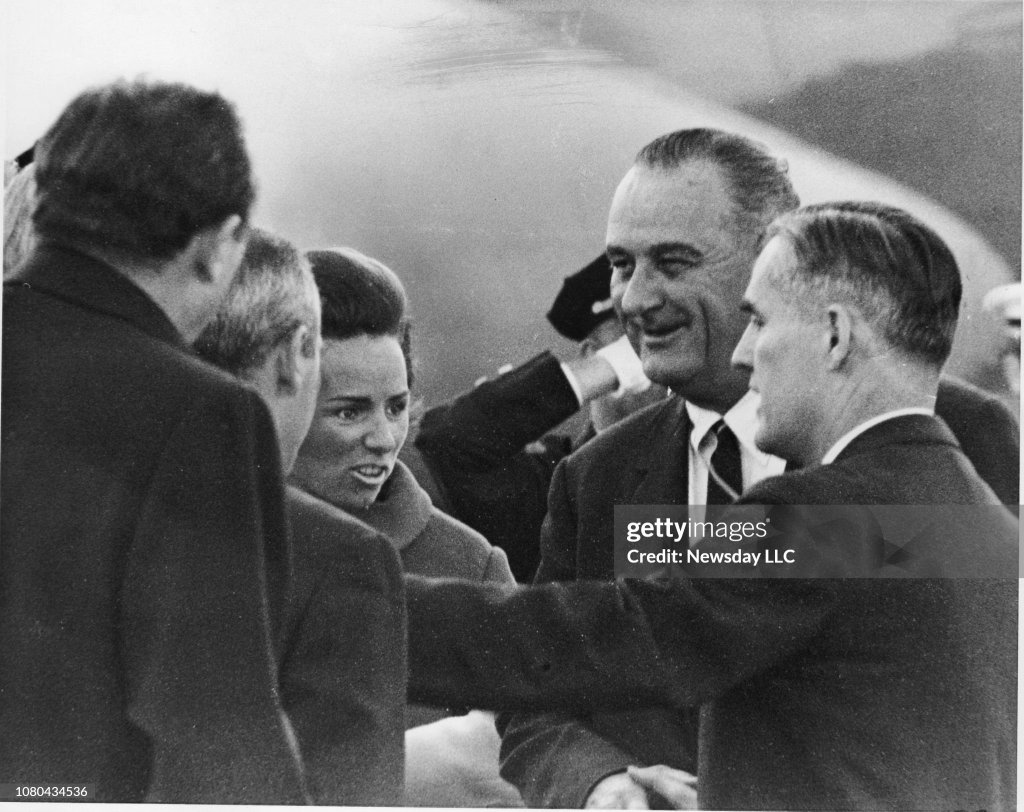
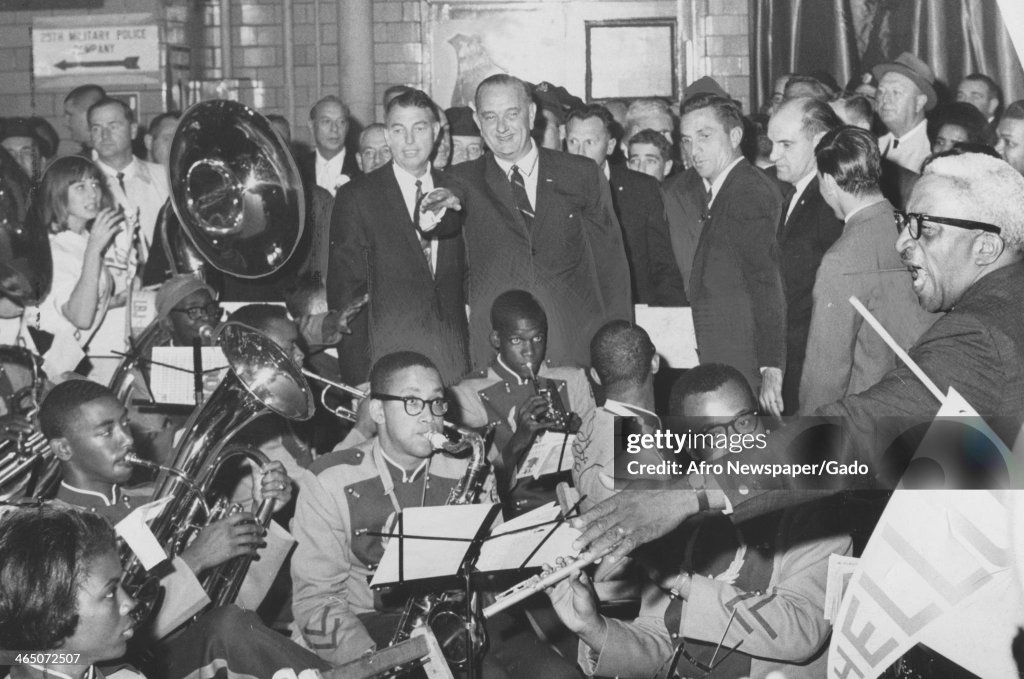
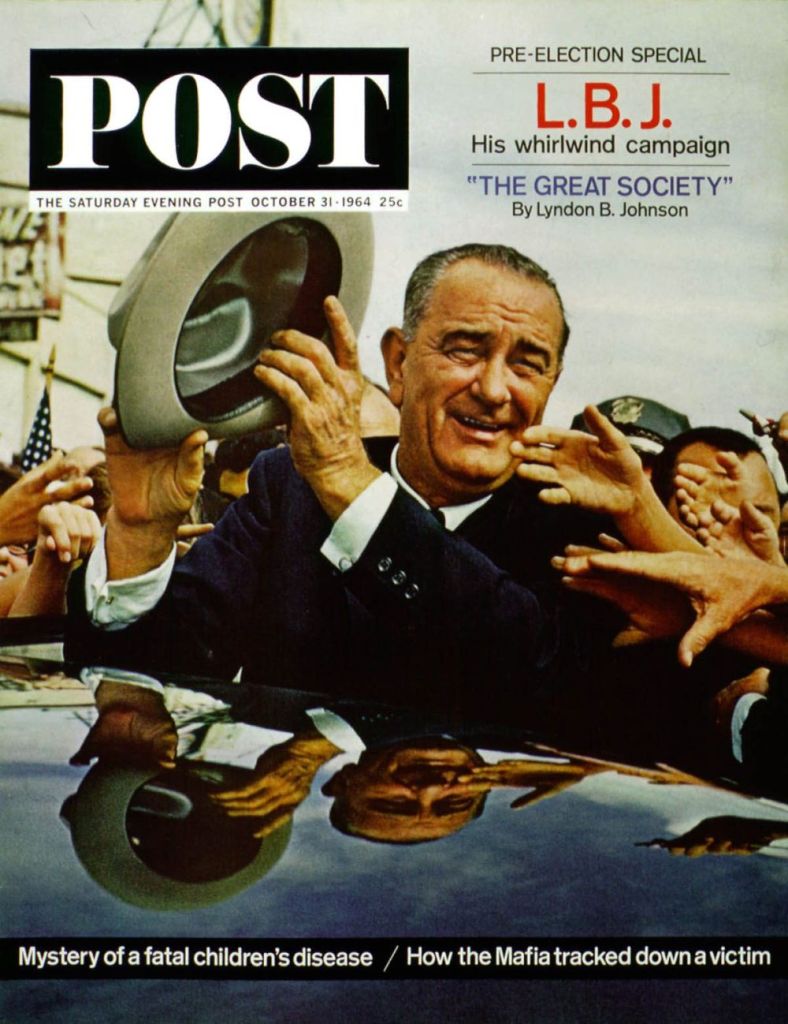
Making a final campaign stop three days before the U.S. presidential elections, U.S. President Johnson addressed a rally at Madison Square Garden in New York City, strongly criticized his Republican opponent, U.S. Senator Barry Goldwater, and told his audience, “This Nation, this people, this generation, has man’s first opportunity to create the Great Society”, which he described as “a society of success without squalor, beauty without barrenness, works of genius without the wretchedness of poverty.” In a twist on Goldwater’s declaration that “extremism in the defense of liberty is no vice… moderation in the pursuit of justice is no virtue”, Johnson said, “as far as the American people are concerned, extremism in the pursuit of the Presidency is an unpardonable vice, and moderation in the affairs of the nation is the highest virtue.”
Despite the overwhelming evidence of the polls and other soundings to the contrary, Senator Barry Goldwater thinks he will win the election Tuesday. A source in the best position to know the Republican Presidential candidate’s views says that Mr. Goldwater is willing to concede only five states and the District of Columbia to President Johnson. The states are Massachusetts, Rhode Island, Connecticut, Alaska and Hawaii. With the District, they account for only 36 of the 270 electoral votes needed for victory. Although Mr. Goldwater does not believe that he will carry all of the 45 other states, the source said, he believes he will do very well in them. The Republican nominee’s view is that he is moving up throughout the nation in much the same way that brought him what had seemed an unlikel ‐ victory in the Republican Presidential primary in California in June. The impetus, he was said to feel, will enable him to win.
Senator Barry Goldwater came to Columbia, South Carolina today for a last effort to nail down the electoral votes in the South that he must have to win Tuesday. He was greeted by a roaring, shouting, cheering outpouring of support and affection. The demonstration was one of the most enthusiastic of the Republican Presidential candidate’s campaign. The speech he delivered at a rally here was almost identical to the one he made at Cleveland last Tuesday. A substantial section of it was devoted to an attack on the Civil Rights Act of 1964. Mr. Goldwater voted against the act. This has made him a hero to many southern whites. Mr. Goldwater was met in downtown Columbia by a tumultuous crowd, which appeared comparable in size to that which President Johnson attracted when he was here last Monday. That numbered roughly 50,000.
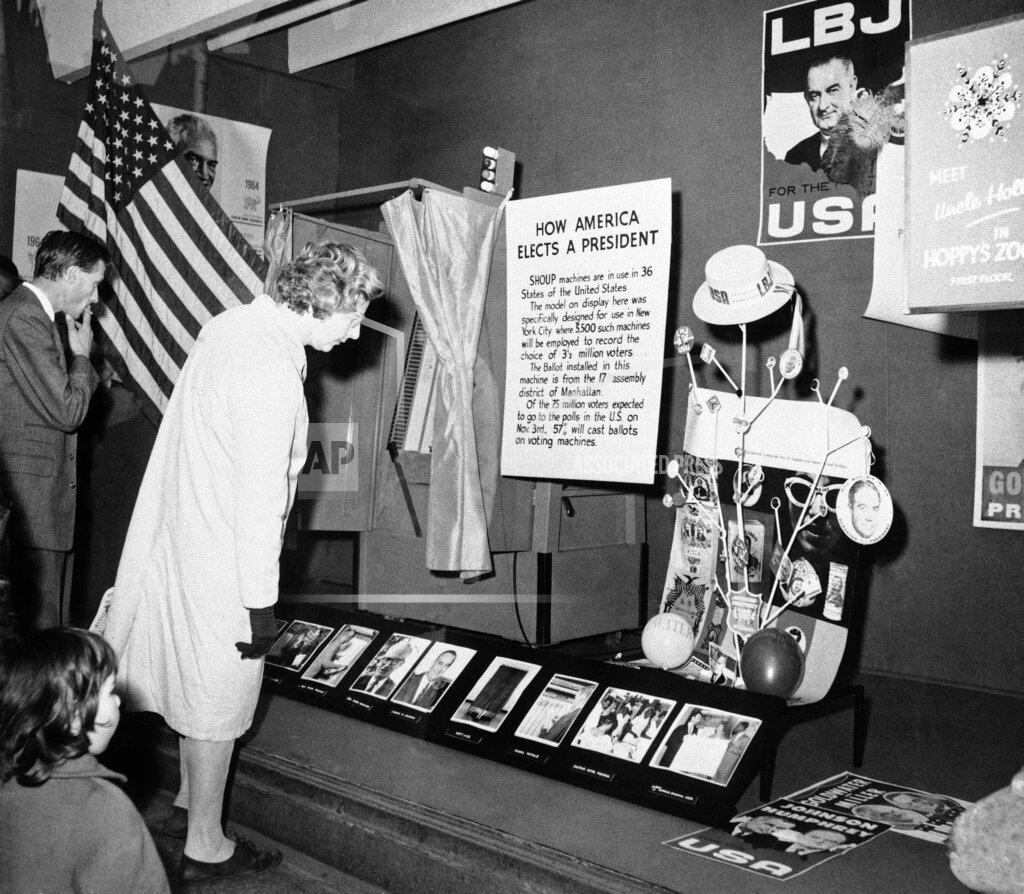
Next Tuesday evening, for the first time, the country’s news media will pool their resources to report the Presidential election as fast and as comprehensively as modern highspeed communication makes possible. About 130,000 men and women will collect the raw vote totals for President, Vice President, Governor, Senator and Representative in the precincts and report them to tabulating centers. The cooperative effort combines the country’s two major wire services, the Associated Press and United Press International, and the three major networks, the American Broadcasting Company, the Columbia Broadcasting System and the National Broadcasting Company. The pool organization is called the Network Election Service. Most of the country’s newspapers, news magazines, broadcasting stations and newsreels are affiliated with one or more of the wire services and networks.
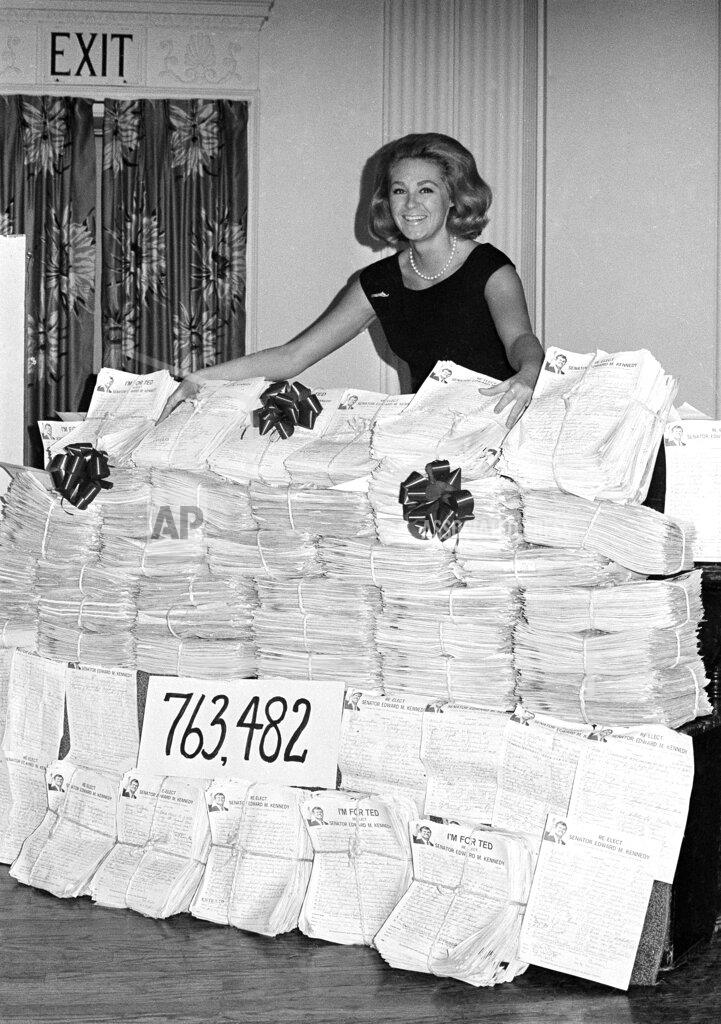
Democratic and Republican leaders joined professional pollsters yesterday in predicting that President Johnson would win New York’s 43 electoral votes in the election on Tuesday. This state has the nation’ s biggest bloc of electoral votes; California is second, with 40, and Pennsylvania third, with 29. While several Republican officials expressed the belief that Senator Barry Goldwater of Arizona, their party nominee, had been gaining in New York — and one said he might publicly predict victory “for morale purposes” — no major figure in the New York Republican organization indicated, in private, any confidence that Mr. Goldwater would win the state. In fact, a New York Times survey found that the principal difference between the state’s major Democratic and Republican leaders was over the estimated size of Mr. Johnson’s plurality. James A. Farley, Democratic National Chairman in the first two Presidential campaigns of Franklin D. Roosevelt, predicted that Mr. Johnson’s margin in the state would be “well over 1.5 million, and could go to two million.” He also predicted that President Johnson’s margin would be large enough to insure the victory of Robert F. Kennedy over Kenneth B. Keating, the Republican incumbent, in the senatorial contest.
A highly confident Hubert H. Humphrey moved into southern California today and offered a package of promises of better things for the elderly. The boldest suggestion made by the Democratic Vice‐Presidential candidate was that after Social Security benefits are raised to a “decent” level, “we hope to modify the Social Security benefits structure so that it is responsive to economic changes and fluctuations of the cost of living. Mr. Humphrey’s proposals were contained in a speech originally scheduled for Florida weeks ago. That appearance was canceled when Senator Humphrey was called to Washington after the leadership change in Moscow and the Chinese nuclear explosion. Southern California ranks with Florida as a haven for the retired. Mr. Humphrey’s Social Security suggestion implied some kind of cost of living escalator clause for benefits, but he did not touch on the question of how extra benefits under this system would be financed.
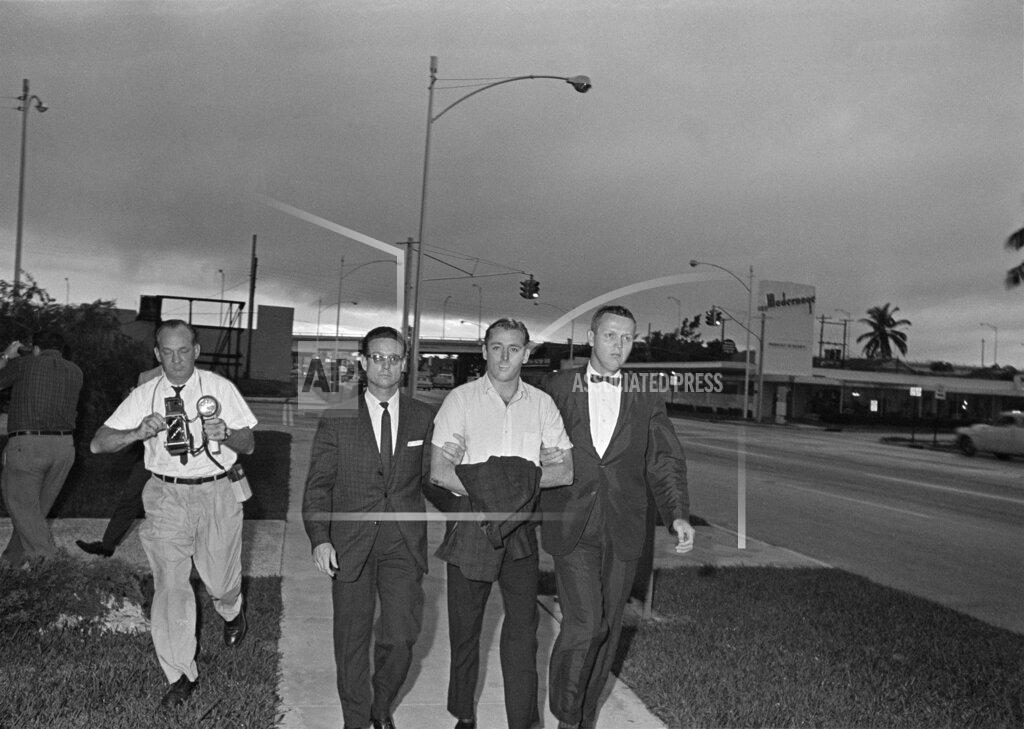
Jack Roland Murphy, known as “Murph the Surf,” was arrested in Miami, along with an accomplice, and charged with the October 29 theft of the Star of India and other priceless gems. Two unemployed Florida beach boys and a skindiver known as Murph the Surf were charged yesterday in Thursday’s daring theft of $410,000 in gems from the American Museum of Natural History. The precious stones, including the world’s largest star sapphire — the 563‐carat Star of India — and the 100‐carat DeLong ruby, have not been recovered. Two of the suspects, described as “professional aquatic acrobats,” were arrested in Miami by agents of the Federal Bureau of Investigation. One of them, Allan Dale Kuhn, 26 years old, owns a white Cadillac, a twomasted yacht and a speedboat. The other is “Murph the Surf” — Jack Rolland Murphy, 27. The third man, Roger Frederick Clark, 29, was arrested by city detectives and FBI men at 2:30 yesterday morning as he returned to a plush three-bedroom suite at the Cambridge Hotel on West 86th Street.
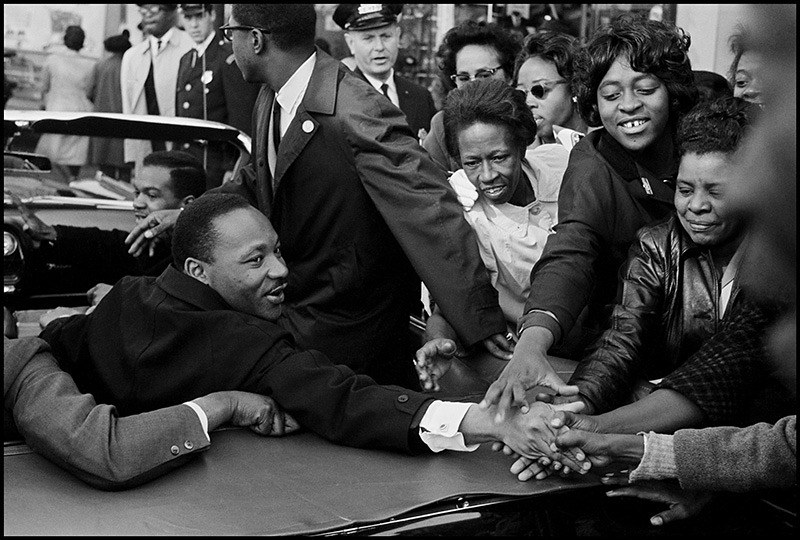
Roy Wilkins, executive director of the National Association for the Advancement of Colored People, estimated yesterday that six million Blacks were registered to vote Tuesday. The estimate, he said, was based on his organization’s survey of Black registration in 47 states and in the District of Columbia. N.A.A.C.P. units in all parts of the country participated in voter registration campaigns that enrolled nearly 700,000 Blacks since the beginning of the year. “Particularly significant,” Mr. Wilkins said, “is the greatly expanded Black vote in the South. More than 2 million Blacks have qualified to vote in that region compared to no more than 1.3 million four years ago. Substantial gains have also been made in other sections of the country.”
The Freedom Democratic party in Mississippi, aided by 75 Eastern and Middle Western college students, is conducting a four‐day mock Presidential election to give unregistered Blacks a chance to express their political choices. Harassment and intimidation of the Freedom party workers in several parts of the state has been charged in a protest to the Democratic National Committee by Lawrence Guyot, chairman of the party. Ballot boxes for the “freedom vote” have been set up in barber shops, cafes, cleaning establishments, churches and even in automobiles to reach backwoods areas. A tabulation of the unofficial votes cast in the mock election will be made Monday night at a rally here and used as a basis for a protest in Washington in January against the seating and seniority of Mississippi’s Democratic Congressmen. The Black‐dominated Freedom party expects the freedom vote to show that Blacks in Mississippi overwhelmingly favor President Johnson.
A fire before dawn destroyed a rural Black Baptist church near Ripley today, hours after the Mississippi Freedom Democratic party had held a meeting to encourage voting next Tuesday. The origin of the fire was not determined. The Antioch Baptist Church, a frame structure, was used earlier this summer as a“freedom school” by volunteers of the Council of Federated Organizations, a federation of several civil rights groups. About 200 persons, mostly Blacks, rallied at the church last night to hear Mrs. Fannie Lou Hamer of Ruleville, a Freedom Democratic candidate. The church‐burning was the first in five weeks in Mississippi. A Federal‐state crackdown on racial violence in McComb, Natchez and other areas had brought relative calm in the state. Earlier this summer, at least 33 houses of worship, mostly rural Black churches, were damaged or destroyed by fires.
A twoyear‐old dispute between the Justice Department and District Judge W. Harold Cox of Jackson, Mississippi, has been brought into the open in a contempt case now before the United States Court of Appeals for the Fifth Circuit. The case involves the federal judge’s insistence that the government prosecute for perjury five or six of its witnesses — including Blacks and white civil rights workers — who had testified in three separate civil rights cases in the federal courts of Mississippi. The Justice Department refused to do so. Judge Cox held the United States Attorney for the Southern District of Mississippi, Robert E. Hauberg, in contempt and ordered Acting Attorney General Nicholas deB. Katzenbach to show cause why he should not be convicted of contempt also. A three‐judge panel for the Court of Appeals stayed the contempt order until it can hear the case on its merits, at a date and place to be set.
The disagreement dates to December, 1962, when the Government was trying a suit before Judge Cox designed to secure the voting rights of Blacks in Clarke County, Mississippi. Two Blacks, the Rev. W. G. Goff and a Mr. Kendrick, testified that seven years earlier they had attempted, unsuccessfully, to register at a temporary registration booth in the town of Stonewall. Judge Cox said from the bench, “I want to hear from the Government about why this court shouldn’t require this Black, Rev. W. G. Goff, and his companion Kendrick to show cause why they shouldn’t be bound over to await the action of the grand jury for perjury. I think they ought to be put under about a $3,000 bond each to await the action of a grand jury. Unless I change my mind, that is going to be the order.”
The Justice Department asked the Federal Bureau of Investigation to investigate for perjury violations. The investigation was completed in March of 1963 and the department subsequently advised Judge Cox that the matter presented no basis for a perjury prosecution. Judge Cox, according to the Government brief, “stated his view that the matter was clearly one for the grand jury and he, Judge Cox, would be inclined to an outside attorney to present the matter to a grand jury.” The Justice Department concluded, however, that it had no authority to appoint a special prosecutor. Judge Cox told Mr. Hauberg he intended to instruct the grand jury that would be impaneled in September 1963, to look into the periury charge.
Banished for eight years under a state court injunction, the National Association for the Advancement of Colored People returned to Alabama today and pledged to resume a full‐fledged fight for racial justice. About 100 Black leaders, the remnants of the state organization, held the first association meeting since the injunction was issued on June 1, 1956. Roy Wilkins, the association’s executive director, told those attending that an office staff would be established immediately to press for enforcement of the new civil rights law. After a circuitous and lengthy court fight, the association resumed its Alabama operations under a Supreme Court order that became effective a few days ago. The court held unanimously last June that Alabama had no constitutional basis for outlawing the organization.
Captain Theodore C. Freeman, an American astronaut, was killed today when his T‐38 jet trainer crashed. irst reports indicated a goose might have caused the crash. Workers at the crash scene were reported to have found feathers amid the wreckage. Several flights of geese had been observed flying close to the ground at the time of the crash. The 34‐year‐old Air Force officer had taken off after a thick morning fog lifted. Low‐hanging clouds remained in the area of Ellington Air Force Base where the plane went down at 8:50 AM. Witnesses said the craft was 300 to 500 feet high when the canopy left the aircraft. It was not clear whether Captain Freeman had ejected or had been thrown from the plane on impact. His body was discovered about 100 yards from the wreckage, his parachute partly opened. The plane did not burn.
Satellite laser ranging (SLR) was first demonstrated as a laser pulse was fired from an observation station on Earth (NASA’s Goddard Space Flight Center in Greenbelt, Maryland) to a retroreflector on an orbiting satellite (the recently launched Explorer 22). Fifty years later, an international network of 40 SLR stations would track multiple orbiting space missions.
Barbra Streisand’s “People” album goes #1 for 5 weeks.
In college football, undefeated Notre Dame scored its sixth victory of the season yesterday by routing Navy, 40–0, before 66,752 fans at John F. Kennedy Stadium in Philadelphia. John Huarte threw three touchdown passes, two of them to Jack Snow. In other games, Yale defeated Dartmouth and Ohio State beat Iowa.
AFL Football:
Boston Patriots 14, New York Jets 35
The New York Jets, putting on their most explosive offense of the American Football League season, routed the Boston Patriots, 35–14, last night to bounce back into Eastern Division title contention. A crowd of 45,033 sat in 50degree weather at Shea Stadium and watched Dick Wood and his teammates shred Boston’s vaunted defenses for 464 yards. Wood, enjoying the finest game of his third professional season, threw three touchdown passes and completed 22 of 36 for 325 yards. While New York’s offense was riddling Boston, the Jet defensive unit turned in a sparkling effort. It was led by Billy Baird, who broke up Patriot marches three times with interceptions. Baird’s thefts of Babe Parilli’s aerials gave him seven for the season and put the safetyman second in the league behind Pete Jaquess of Houston, who has eight. The Patriots, battling to overhaul Buffalo’s undefeated division leaders, attempted to upset the Jets’ aerial game with their customary blitz. But Wood, mixing his passes long and short, kept the Patriots off balance.
Born:
Sanjeev Bhaskar, British actor, comedian (“Goodness Gracious Me”; “The Kumars at No. 42”), and chancellor (University of Sussex, 2009–present), in Ealing, England, United Kingdom.
Amanda Sandrelli, Italian actress (“The Key”), in Lausanne, Switzerland.
Colm Ó Cíosóig, Irish drummer (My Bloody Valentine; Hope Sandoval & the Warm Inventions), in Dublin, Ireland.
Darryl Worley, American country singer (“Hard Rain Don’t Last”), in Memphis, Tennessee
Steve Rosenberg, MLB pitcher (Chicago White Sox, San Diego Padres), in Brooklyn, New York, New York.
James Shibest, NFL wide receiver (Atlanta Falcons), in Fort Riley, Kansas.
Marco van Basten, Netherlands soccer football forward and manager who played for Ajax Amsterdam and for Milan in a 15-year career, as well as the Netherlands national team; he later managed the national team; in Utrecht
Died:
Theodore Freeman, 34, American astronaut in training for the Gemini program, was killed in a collision with a goose that smashed through the cockpit canopy of his T-38 Talon jet during a routine flight at Ellington AFB near Houston. Flying shards of plexiglas from the canopy entered the jet engine intake, causing both engines to flame out. A report concluded that Freeman apparently attempted to land the crippled jet at the air base and, failing that, tried to avoid colliding with the buildings on the base; and that Freeman ejected only 100 feet from the ground, leaving insufficient time for his parachute to fully deploy.


 History Diaries