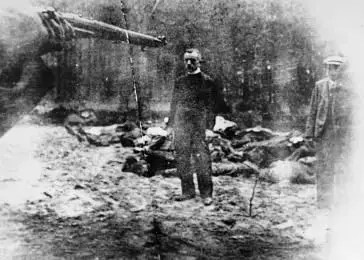
Executions in Poland continue. This stage is known as the Intelligenzaktion, a second phase of the Unternehmen Tannenberg directed by Heydrich’s Sonderreferat from Berlin.
Intensive German patrolling on the western front signals the intention of an upcoming offensive.
There are reports of German troops massing in the Saar, along the Belgian, Dutch and Swiss frontiers and along the German North Sea coast.
Hitler again commands his generals to prepare for the western offensive. Hitler dismisses concerns expressed by Heer C-in-C Brauchitsch and others that the Wehrmacht is not ready to attack in the West, particularly given the worsening weather.
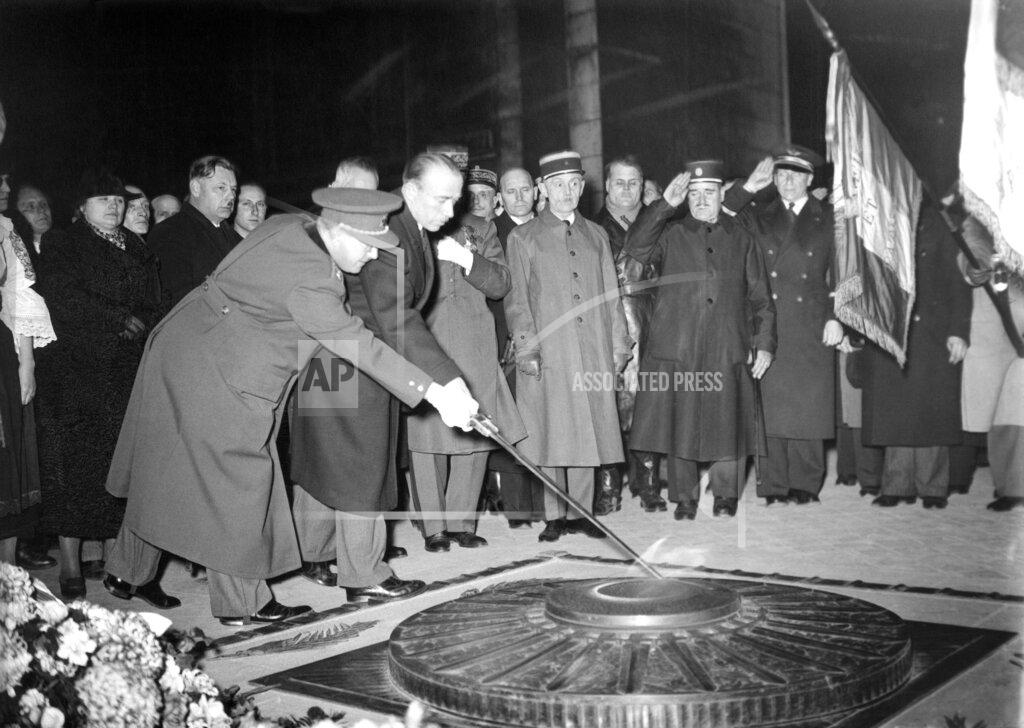
The Reich forbids any Czech celebration of their national day. Leaders of patriotic groups in Prague urge all to secretly mourn independence. Strongly worded warnings have been issued to the Czech population against any overt demonstration tomorrow, which is the national Independence Day.
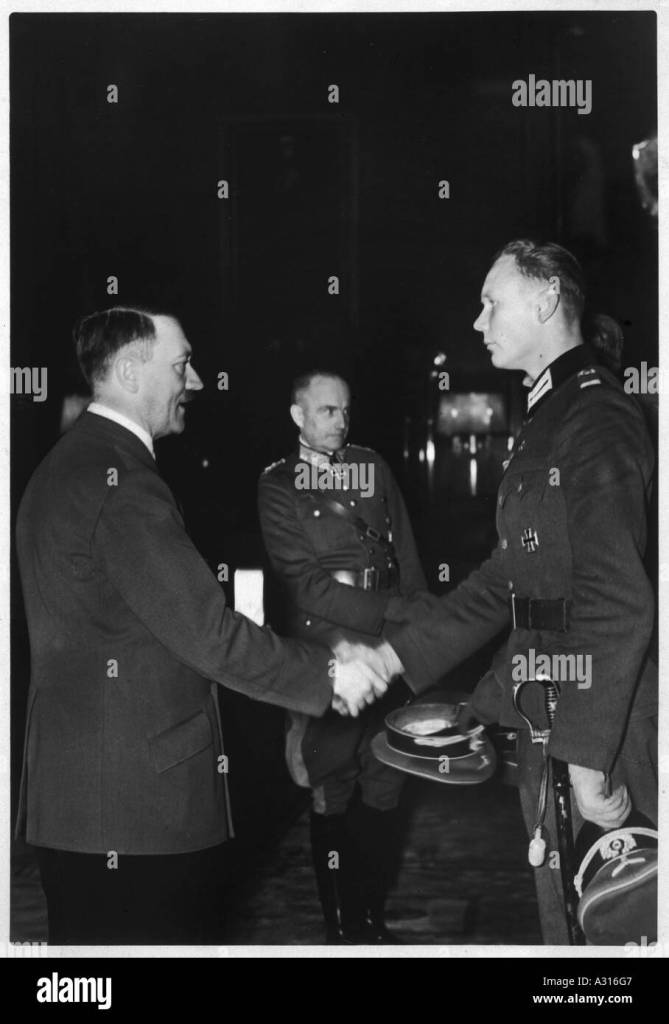
Heinz Guderian was awarded the Knight’s Cross to the Iron Cross.
Marshal Rydz-Smigly, interned in Rumania, resigns as Commander-in-chief of the Polish armed forces.
Belgium’s King Leopold III, in a broadcast to the USA, declares that Belgium is determined to defend its neutrality.
Newspaper commentaries complain about anti-Nazi propaganda in Belgian newspapers and suggest this is a breach of Belgian neutrality.
The Pope Pius XII encyclical “Summi Pontificatus” was published, denouncing totalitarianism. Pope Pius XII calls upon rulers to follow Christian ideals in governing. The encyclical expressed compassion for displaced Poles but avoided condemning Germany by name.
Vatican police take extreme steps to keep the contents of the Pope’s encyclical secret.
Franco orders Republican soldiers to court by November 1 or face arrest.
U.S. freighter City of Flint is again placed under German naval prize crew from armored ship Deutschland. The Soviet authorities have decided to treat the situation as a legal, as opposed to political, matter, and announce that the ship must be released in the same condition in which it arrived – i.e., as a German prize ship with its prisoners. However, the Soviets retain the Captain of the City of Flint, Joseph Gainard, because he is an inactive US Naval Reserve officer. The Germans sail west back to Norway, but it remains unclear if they can evade British patrols which caused them to seek safe haven in Murmansk in the first place.
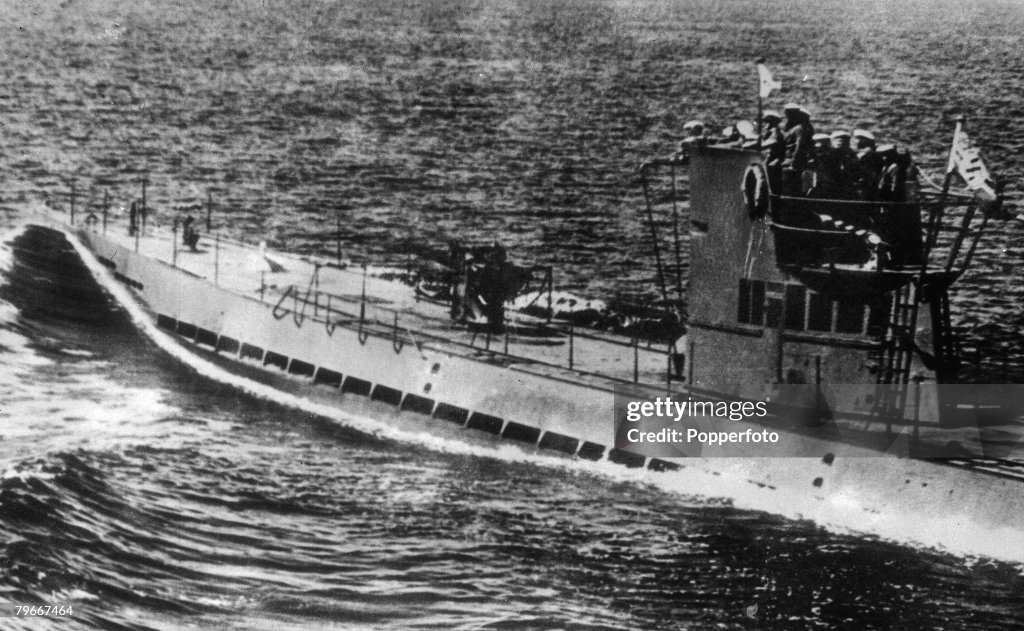
Eighty German seamen were landed at a Scottish port today and it was disclosed that the bodies of more than fifty Germans were taken from the shattered Nazi submarine that lies on Goodwin sands off the Kentish coast. The captured German sailors were brought ashore by an armed British merchant cruiser and the landing stage was closely guarded by the military and police. It was stated by Admiralty officials that the German seamen were members of the crews of the German ships Phoebus of 8,863 tons; Gloria of 5,864 tons; Bianca of 1,375 tons; Poseidon of 5,864 tons and Biscaya of 6,369 tons, whose capture was announced yesterday by Prime Minister Chamberlain in the House of Commons. Tugs brought the prisoners ashore. They were guarded by soldiers with fixed bayonets and bundled into buses and taken to a Scottish internment camp. Their ships presumably will be added to Britain’s merchant fleet.
American consul William Chapman continues his discussions about British detainment of U.S. vessels, this time speaking with the British Colonial Secretary. The stakes are rising because one of the ships detained was carrying diplomatic pouches. Consul Chapman’s low-key approach to the British admiralty bears fruit. Exporter, detained since 14 October, is released later that day, as are freighters Oakman (detained since 13 October) and Meanticut (detained since 21 October).
Sailing with Convoy OB.25, the British steam merchant Bronte was torpedoed and sunk by the U-34, commanded by Kapitänleutnant Wilhelm Rollmann, 180 miles west of Lands End, England in the eastern Atlantic Ocean (49°30′N 12°15′W). She was taken in tow by Englishman ( United Kingdom) but was scuttled on 30 October by HMS Esk ( Royal Navy) at 50°07′N 10°36′W. Of the ship’s complement, all 42 survived and were picked up by the destroyer HMS Walpole. The 5,317-ton Bronte was carrying general cargo, including chemicals and was bound for Rosario, Argentina.
U-31 laid a very successful field of 18 mines in Loch Ewe. This minefield later accounted for two ships sunk and one damaged.
Convoy OA.26 departs from Southend, and OB.26 departs from Liverpool.
The War at Sea, Friday, 27 October 1939 (naval-history.net)
Two cruisers were on Northern Patrol between the Orkneys and the Faroes, one cruiser between the Faroes and Iceland with three cruisers en route to the area, and one light cruiser and two AMCs in the Denmark Strait. Between 27 October to 9 November, 26 eastbound ships were sighted and 20 sent into Kirkwall for inspection. Light cruisers COLOMBO and DIOMEDE departed Sullom Voe for Northern Patrol duties, both arriving back on 3 November.
Light cruiser CERES departed Plymouth for duty with the Northern Patrol, and arrived at Kirkwall on the 31st.
Anti-aircraft cruiser CAIRO departed Grimsby on escort duties and arrived back later the same day.
Submarine TRIDENT departed Oban for patrol off the west coast, and arrived at Rosyth on 11 November.
Convoy OA.26 of nine ships departed Southend escorted by destroyers WITCH and WIVERN from 27 October to 2 November.
Convoy OB.26 departed Liverpool escorted by destroyers WINCHELSEA and WITHERINGTON until the 30 October.
U-24 laid mines in Hartlepool Bay, on which one steamer was sunk.
U-34 badly damaged steamer BRONTE (5317grt) from convoy OB.25, west of Ireland in 49 30N, 12 15W ; no crew were lost. U-34 also attacked another merchant ship but did no damage. Destroyers WHIRLWIND dropped depth charges on the 28th on a contact near the convoy, and WALPOLE of the escort also searched. BRONTE was taken in tow by tug ENGLISHMAN, but on the 30th, destroyer ESK of the 12th Destroyer Flotilla from Plymouth scuttled her in 50-07N, 10-36W.
French large destroyer VAUQUELIN departed Casablanca escorting submarine CENTAURE, and arrived at Brest on the 30th.
Heavy cruisers SUSSEX and SHROPSHIRE departed Simonstown and Capetown respectively, to sweep towards St Helena. They returned to Capetown on 7 November.
Light cruiser CAPETOWN departed Malta on patrol, and arrived back on 3 November.
Destroyers HUNTER and HYPERION arrived at Dakar at 0700/27th, refueled and sailed to Trinidad.
President Roosevelt today in Washington described as “a sordid procedure” the release by the Dies committee of the list of members and the mailing list of the American League for Peace and Democracy; the President also said that he favored scaling down the Latin-American debt to United States investors.
The Senate debated the Neutrality Bill all day, finally passing the measure by a vote of 63 to 30 tonight, adjourning until noon Tuesday.
The House heard a debate on the action of the Dies committee; heard Representatives Dirksen of Illinois and Smith of Ohio support the arms embargo, and adjourned at 3:12 PM until noon tomorrow.
The U.S. Senate approves amendments to the Neutrality Act, repealing the arms embargo provision. The first step in the Administration’s effort to revise its wartime policies to fit the realities of conflict in Europe was successfully completed tonight when the Senate adopted, by a vote of 63 to 30, the Pittman resolution repealing the arms embargo and placing commerce between the United States and belligerent nations on a “cash-and-carry” basis. The measure will be reported on Monday to the House where, despite a close division, Democratic leaders hope for ratification next week, and after that adjournment of the special session of Congress.
Passage of the measure came a short time before 9 PM, at the end of a momentous Senate debate, lasting four weeks less a day, in which nearly seventy Senators put more than 1,000,000 words into the record. More immediately, passage followed a final test on the embargo, which had centered a few minutes before on an amendment offered by Senator Clark of Missouri.
This amendment, which would have written the doomed embargo into the Pittman resolution, went down by a vote of 60 to 33. Senators Reed of Kansas, Johnson of Colorado and Gillette of Iowa, joined with the “isolation” group in support of the Clark embargo effort, but joined with the majority in passage of the resolution.
The embargo would be repealed by a section of the resolution wiping out entirely the vestiges of the neutrality acts of 1935 and 1937. Party lines were shattered in the final vote, eight Republicans joining with the fifty-four Democrats and one Independent (Norris of Nebraska) to support the resolution; and twelve Democrats lining up with fifteen Republicans, two Farmer-Laborites and one Progressive (La Follette of Wisconsin) against it.
Just before the vote, Senator Barkley, the majority leader, announced that the Senate would stand in a series of extended recesses until the House had acted on the measure, which in technical form was an amendment to the Bloom bill passed in the House toward the close of the last session. He expressed the hope that the legislation might be completed and sent to the White House by next Thursday or Friday. While recognizing the desire of many members to keep Congress in session during the war emergency abroad, Senator Barkley said the sentiment of the Senate as a whole was for adjournment immediately upon disposal of the neutrality issue.
Opposition to repeal of the embargo collapsed in the first real tests on the issue yesterday, and action today simply confirmed that fact. The forces allied with the White House and State Department in this fight moved relentlessly forward during the day, leaving in their wake a series of defeated amendments, each beaten by an overwhelming majority. One was the La Follette-Ludlow referendum resolution proposing an “advisory election” before the declaration by Congress of any war in which American troops might be sent overseas.
After nearly two hours of the most eloquent and fervent oratory heard during the neutrality debate, in which Senator Norris, the veteran liberal who voted against the last war, took the floor to oppose the proposal offered by Senator La Follette, the son of his colleague of earlier days, the Senate smothered the resolution by a vote of 73 to 17. An amendment offered yesterday by Senator Clark of Missouri placing armed merchant ships of belligerent nations in the same category as submarines or other naval craft, so far as the privileges of American ports and territorial waters are concerned, went down by 65 to 26. In the fourth test on the embargo itself, offered in a substitute bill introduced by Senator Nye of North Dakota, the isolationist leaders. were unable to muster more than 22 votes as against 67 for the repeal forces. A proposal of Senator Austin to limit the Neutrality Law to the present war, by providing that all of its provisions should cease to be in force when the President revokes the proclamations authorized by the law, was shouted down by a lusty chorus of “no’s.”
Defeat by a margin of 60 to 30 overtook an amendment proposed by Senator Danaher of Connecticut to require payment in actual cash in lawful “currency of the United States” for all foreign purchases before they should leave these shores under the cash-and-carry system. After all of these amendments were disposed of, and final passage had been announced, the Senate continued for many minutes while Senators haggled over a preamble stating the purpose and intent of the measure. Representing a composite of a number of “declarations of policy” proposed by various Senators and presented by Senator Connally of Texas, the preamble was objected to by Senators Clark and Wheeler as an erroneous statement of the intent of the measure in that it presented the purpose to preserve the “neutrality” of the United States. Continuing the arguments which they had set up during the entire course of debate, these isolation leaders contended that the resolution was not intended to maintain America’s neutrality but in fact to aid one side in the present European conflict.
President Roosevelt assails the question of a “Red list,” calling it a sordid procedure. Publication by the House Committee to Investigate Un-American Activities of a list of purported members of the local branch of the American League for Peace and Democracy was declared today by President Roosevelt to be a “sordid procedure.” His description was given at a press conference in response to a question as to his opinion on the action by the committee, which was taken on Wednesday on the ground that the league is a Communist “front.” The President replied that he was not sufficiently acquainted with the details to discuss this “sordid procedure,” but when reporters asked if they might quote his description he said they might.
The President’s remark served principally, for the time being, to accent Republican efforts in the House to make a direct issue of the alleged Communist control of the league in the political campaigns next year. In carrying forward this program, Representatives Mason of Illinois and Hoffman of Michigan took the floor today to suggest courses of action to clear this alleged “Communist influence” from the government. Mr. Mason, who started the movement to publish the league list, called on Federal employees to resign from the league or resign from government positions.
Congressman Martin Dies defends his Red list as fair. Responding to President Roosevelt, he calls it his duty to name U.S. employees favoring aliens. Dies, chairman of the House committee investigating Un-American Activities, defended the action of the committee in an address given before the annual convention of the New York City Federation of Women’s Clubs in New York. While refusing to enter into a controversy with the President, Mr. Dies said that “government employees who belong to organizations controlled by a foreign power ought to be exposed.”
President Roosevelt held out new hope today to holders of defaulted Latin American securities for some more expeditious adjustment of these debts when he reiterate his stand in favor of scaling them down.
Nothing has yet developed in the European war to change the policy of the United States Government as to the kind of a fleet the country should build and maintain, said Charles Edison, Acting Secretary of the navy, in a Navy Day address today. That policy, he added, was “a homogeneous fleet, with battleships as its backbone, supported and defended by a strong sea air arm.” Mr. Edison, who spoke over a network of the Columbia Broadcasting System, said that never before in the country’s history have Americans been more conscious of the effect of sea power and what a major factor that power is “in ensuring the peace, the safety and the mental ease of the citizens of this country.”
“This interest has quickened since the outbreak of the holocaust in Europe and continues to grow,” he went on. “Free men are determined that this country shall never be invaded by a foreign foe. “The well-informed realize that the speed of surface ships and airships compel the navy to meet a foe on far sea frontiers-there an enemy must be stopped and defeated.”
The United States Coast and Geodetic Survey hydrographic survey launch USC&GS Mikawe was destroyed by fire in a fueling incident at Norfolk, Virginia.
Margaret Mead publishes “From the South Seas,” a study of adolescence and sex in primitive societies.
Four Soviet submarines arrive by rail in Vladivostok, the USSR’s main Pacific naval base.
Negotiations for the adjustment of several hundred cases in which Americans allege that Japanese armies in China have trampled on American rights will open in Tokyo shortly, according to the newspaper Asahi. In a further move that may lead to more friendly relations with Western powers, a renewal of British-Japanese conversations for the settlement of Tientsin questions was definitely arranged last night by Sir Robert Craigie, British Ambassador, and Masuyaki Tani, Vice Minister for Foreign Affairs.
Accepting the recent speech of United States Ambassador Joseph C. Grew as an intimation that the United States will not tolerate further delay, Admiral Kichisaburo Nomura, the Foreign Minister, has discussed the position with Premier Nobayuki Abe, as well as Foreign Office authorities, and is prepared to open conversations. The parley’s immediate business will be disposal of concrete instances of injury inflicted on American interests in China by Japan’s armed forces. All the cases are not equally serious and if agreement on general principles is reached. Japanese authorities believe many might be disposed of rapidly.
The “military necessity” under which most of these actions were perpetrated no longer exists acutely, and the Tokyo government is prepared to exercise its authority so that foreign relations may be. improved as the new order enters upon a constructive stage. The principles on which Japan’s policy is to be based during the coming negotiations are described by the Asahi as threefold. First, Japan’s supreme policy establishing the new order must be kept in view. Second, within the framework of this general policy Japan will discuss all reasonable proposals the United States makes regarding safeguarding of American rights and interests. Third, should the United States insist on imposing conditions derived from the Nine-power treaty or threaten trade embargoes or abrogation of the trade treaty, Japan will be prepared to face the worst situation that can arise.
It is expected the American conversations will be conducted by Mr. Grew, assisted by Frank Williams, United States commercial counselor, reports Asahi’s New York correspondent. Jealousy of Japan’s increasing strength is the main cause of the present antagonism in the United States to Japan, Yakichiro Suma, Foreign Office spokesman, told the Osaka Chamber of Commerce yesterday, as reported in Asahi. Sympathy for China accounted for a part of the American ill-feeling toward Japan, he said, but the main cause was jealousy. According to press reports, which were very brief, Mr. Suma considered abrogation of the trade treaty as a challenge to Japan, who is remaining silent on grounds of goodwill.
Dow Jones Industrial Average: 153.46 (-0.59)
Born:
John Cleese, English actor (“Monty Python’s Flying Circus”), comedian, writer and film producer, in Weston-super-Mare, Somerset, England, United Kingdom.
Dallas Frazier, American country music songwriter (“Alley Oop”; “Elvira”; “There Goes My Everything”), in Spiro, Oklahoma (d. 2022).
Robbie Brightwell, British track and field athlete (Olympics, silver medal, 4x400m relay, 1964), husband of Ann Packer, in Rawalpindi, British Raj (now Pakistan).
Naval Construction:
The U.S. Navy Barnegat-class small seaplane tender USS Biscayne (AVP-11) is laid down by the Puget Sound Navy Yard (Bremerton, Washington, U.S.A.).
The Royal Navy Flower-class corvette HMS Aubretia (K 96) is laid down by George Brown & Co. (Greenock, Scotland); completed by Kincaid.
The Royal Navy Lake-class ASW whaler HMS Thirlmere (FY 206) is commissioned. Her first commander is Skipper John Main, RNR.
The Royal Indian Navy auxiliary patrol vessel HMIS Lilavati is commissioned.



 History Diaries