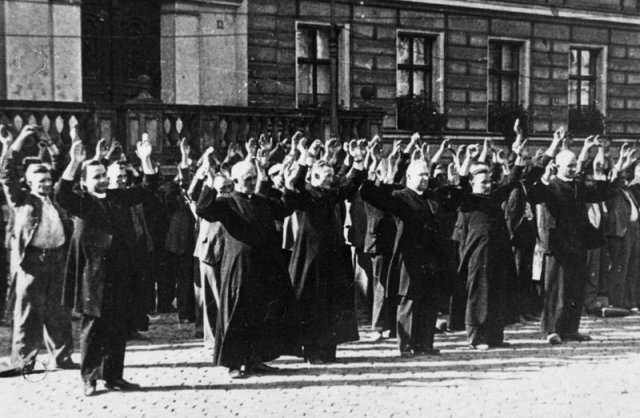
The administration of Włocławek in Nazi-occupied Poland ordered the city’s Jews to wear a yellow badge on their clothes. An ancient custom with terrible implications is revived when Włocławek, Poland becomes the first town in Europe to require Jews to wear yellow Star of David badges.
Aktion Tannenberg officially comes to an end. SS special task forces (Einsatzgruppen) have murdered hundreds of Jews and members of the Polish intelligentsia, burned down dozens of synagogues, and waged an all-out campaign of terror against non-German, Polish civilians. Under this operation, Secret Police (Einsatzgruppen der Sicherheitspolizei und des SD) have been using carefully compiled lists of victims. The targets have been influential Poles from all walks of life, both in Germany and in Poland. It is estimated that there have been 20,000 deaths in 760 mass exterminations (the figures vary by source). Over 400 Polish villages have been “cleared of undesirables” during this operation.
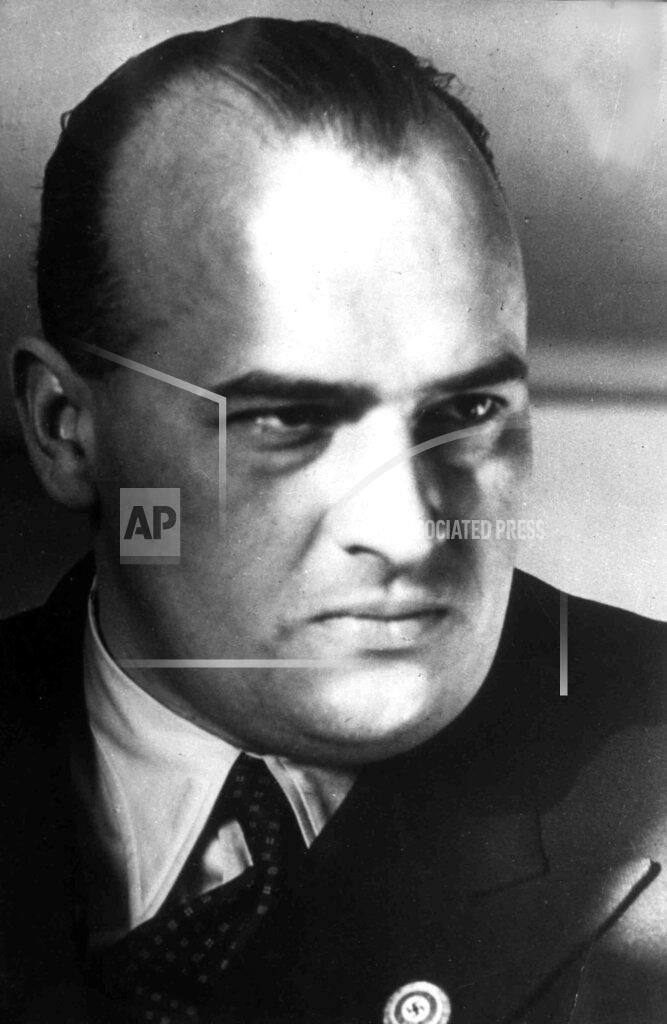
While Jews have been included, the victims have included Catholics and members of other groups deemed expendable. The primary targets have been people deemed security risks who are Polish, not necessarily Jewish Poles. Ethnic Germans living in Poland have helped to compile the lists. Operation Tannenberg has been administered by the Reich Main Security Office (Reichssicherheitshauptamt). This is but the first in a continuing series of such operations, and another stage of the operation follows immediately upon this one. After Nazi Germany established a civilian occupation under general governor Hans Frank, Frank revived anti-intelligentsia killing with his new campaign, the Extraordinary Pacification Action (AB-Aktion). This campaign’s violence shocked Poles and provoked the resistance it was intended to prevent.
Hitler has a meeting with the army commander-in-chief General Walther von Brauchitsch and Heer chief of staff General Franz Halder. Hitler sets a date of 12 November 1939 for the invasion of France. This is completely unrealistic in terms of preparation time and the weather.
General List, one of the successful Generals in Poland, is appointed to command the 12th Army.
The Soviet Union challenges Britain’s blockade. The contraband list is declared to be illegal and destructive to international trade.
French troops reportedly repulse a German detachment in the region close to the Moselle. As a whole, conditions on are reported to be quiet.
Czechs stage an anti-German riot. Stores are smashed when the city is left temporarily without troops.
Crown Prince Michael of Rumania, coming of age today on his eighteenth birthday, was feted at a palace banquet tonight. He assumes a seat in the Senate and becomes full heir to the throne.
The Danzig speech of Joachim von Ribbentrop, German Foreign Minister, was strongly supported in the Italian press today.
Italy and Greece have agreed to start negotiations in the near future on a pact of friendship and non-aggression, it was reported authoritatively tonight. The pact would replace the present treaty of friendship and arbitration which expires this year. Negotiations for a new accord were seen as following Italy’s desire for a Balkan bloc under Rome’s leadership to prevent Soviet expansion into Southeastern Europe. Italy and Greece recently agreed to reduce their armed forces on the Greek-Albanian frontier. Since Greece is a military ally of Turkey, diplomats expressed belief that Greece might help promote good relations between Italy and Turkey.
Istanbul reports said representatives of Turkey, Iran, Iraq, and Afghanistan were conferring there today. The four States are united in a pact designed to block Soviet expansion through one of their countries to the Dardanelles or the Persian Gulf, both of which have figured in traditional Russian aims.
While awaiting the return tomorrow morning of Finland’s negotiators, Dr. Juho Paasikivi and Finance Minister V.A. Tanner, with a comprehensive report on the latest Soviet proposals, the Cabinet examined the main points at issue today.
Full mobilization in Finland is completed.
Finns mine waters off the southern coast. The chief of the Finnish naval forces announced today that mine fields had been placed in the outer parts of Finnish territorial waters along the whole southern coast from Utoe Island off the western mainland and from Styrs Point southward in the eastern Gulf of Finland, but leaving the Aland Archipelago outside the minefield. There are three entrances on the southern coast for shipping in a chain hundreds of miles long, outside the main ports of Helsingfors, Hangoe and Lovisa. Ships are warned to take orders from Finnish pilots when moving in the Northern Baltic and the Gulf of Finland. Of these ports Helsingfors is the only naval base.
In all the discussion of British diplomacy in the House of Commons today — and there was considerable — there was not the slightest reference to last night’s oration of Joachim von Ribbentrop, German Foreign Minister, who is described in one afternoon newspaper as “Bismarck the Little.”
The RAF conducts reconnaissance flights over Berlin, Hamburg, and Magdeburg.
The HP.573 prototype of the Handley Page Halifax bomber makes its maiden flight from RAF Bicester. It only flew with two Vulture engines. This configuration was changed to four Merlin engines by the time it entered combat service.
French cruiser Dupleix, destroyer Le Fantasque, and destroyer Le Terrible attacked and captured German freighter Santa Fé west of French West Africa.
German vessel Rheingold is captured by the Royal Navy cruiser HMS Delhi.
The U-16, commanded by Kapitänleutnant Horst Wellner, ran aground on the Goodwin Sands trying to avoid a depth charge attack and was sunk by depth charges from the ASW trawler HMS Cayton Wyke (FY 191) and the British patrol vessel HMS Puffin (L 52) in the English Channel near Dover. All of the ship’s complement of 28 died.
The Greek cargo liner Amvrakia ran aground on Euboea Island and was wrecked. Seven passengers died.
Three U-boats are dispatched to the Mediterranean; only U-26 arrives and has no success.
Three days after leaving Kiel, U-60 had to return to the base due to serious engine trouble.
U.S. freighter Sundance, detained at London, England, by British authorities since 11 October, is released.
U.S. freighter Nashaba, detained at Le Havre by French authorities since 14 October, is released.
U.S. freighter West Hobomac, detained by the British since 18 October, is released.
Convoy OA.25 departs from Southend. Convoy OB.24 departs from Liverpool. Convoy HX.6 departs from Halifax for Liverpool.
The War at Sea, Wednesday, 25 October 1939 (naval-history.net)
German steamer RHEINGOLD (5055grt), which had departed Bahia on 27 September, was captured in the Iceland-Faroes Channel by light cruiser DELHI, west of the Orkneys in 64 00N, 11 40W. RHEINGOLD arrived at Kirkwall with the prize crew, commanded by Lt Cdr FG Emley, on the 27th and later renamed EMPIRE MARINER for British service. DELHI arrived at Sullom Voe on the 28th.
Light cruisers COLOMBO, CARDIFF, CALEDON departed Sullom Voe, with CARDIFF and CALEDON arriving back on the 31st.
Two cruisers were on Northern Patrol between the Orkneys and the Faroes, four cruisers between the Faroes and Iceland, and one cruiser and two AMCs in the Denmark Strait. Light cruiser SOUTHAMPTON was sailing to relieve sister ship SHEFFIELD in the Denmark Strait.
Anti-aircraft cruiser CALCUTTA departed Grimsby for Harwich, and arrived on the 26th.
Destroyer MASHONA was docked at Newcastle for repairs from 25 October to 10 November.
Destroyer PUNJABI brought Panamanian tanker PHOEBUS (8863grt) into the Clyde, but after examination, she was allowed to continue.
Destroyer FURY was damaged by heavy weather, and repaired in the Clyde, completing on 17 November.
Convoy OA.25 of 19 ships departed Southend escorted by destroyers ANTELOPE and VISCOUNT from the 25th to 28th.
Convoy OB.25 departed Liverpool escorted by destroyers WHIRLWIND and WALPOLE until the 28th.
Convoy BC.11 of steamers ADJUTANT, BALTARA, BARON CARNEGIE, BATNA, BLACKHEATH, BOTHNIA, BRIARWOOD, COXWOLD, ERATO, FRAMLINGTON COURT, HARMATTAN, JADE, LLARNARTH, LOCHEE, LOTTIE R, LURIGETHAN, MARSLEW, NIGERIAN (Commodore) and PEMBROKE COAST departed the Loire escorted by destroyer EXPRESS, and arrived safely in the Bristol Channel on the 28th.
At 0600/25th, a convoy departed Portsmouth consisting of submarine TRIDENT for Oban, steamer BONIFACE (4928 tons), and base ships MANCHESTER CITY and MASHOBRA, escorted by destroyers SALADIN, VANSITTART, VENOMOUS and SCIMITAR as far west as the Eddystone Light. Destroyer VANESSA relieved the Portsmouth destroyers at 1650 and was joined by sister ship VIVACIOUS after a short delay. On the 27th, TRIDENT and VIVACIOUS detached to Oban.
Destroyer WIVERN had escorted convoy SL.4A into Dover with trawlers ARCTIC RANGER and KINGSTON CORNELIAN, before leaving Southend on the 27th in company with destroyer WITCH as escort to convoy OA.26. When a submarine was reported, WIVERN was detached to search for what was later determined to be TRIDENT.
Destroyer VIVIEN completed conversion to fast escort ship, and following working up, was attached to Convoy C in the Rosyth Command.
French battlecruiser STRASBOURG, heavy cruisers ALGÉRIE, DUPLEIX, destroyers LE TERRIBLE and LE FANTASQUE and British aircraft carrier HERMES departed Dakar to carry out a sweep to the southwest. They arrived back on the 29th.
Convoy HX.6 departed Halifax at 0800 escorted by Canadian destroyers FRASER and ST LAURENT. They detached on the 27th and the convoy continued with battleship RESOLUTION as ocean escort. On 6 November, destroyers WHIRLWIND and WARWICK joined HX.6 from OB.29, and destroyers GRENVILLE, GRENADE, GIPSY and GLOWWORM from Plymouth. Next day, RESOLUTION, GRENVILLE and GRENADE detached to Devonport, and the convoy reached Liverpool on the 10th.
Battleship RAMILLIES and destroyers DAINTY, DIANA, DEFENDER departed Alexandria on a 15-inch gun shoot, with the Queen Bee target operated from light cruiser PENELOPE. The exercise was repeated on the 27th with the same ships less DAINTY.
Heavy cruiser DORSETSHIRE departed Colombo on patrol duties, and arrived back on the 28th.
Three U-boats were assigned for operations in the Mediterranean between 25 October and 15 November – U-25 which departed Wilhelmshaven on the 18th October, U-53 on the 23rd, and U-26 on the 26th. Only U-26 was able to enter the Mediterranean for a patrol lasting from 8 to 18 November. A planned minelaying off Gibraltar was prevented by gales, and at 0015 and 0150/12th she carried out attacks off Oran. Then at 0300/13th, she claimed to have sunk a steamer in 36-16N, 2-13W, but this is not confirmed. However French steamer LOIRE (4285grt) departed Oran for Dunkirk on 12 November and was not heard from again, possibly a victim of U-26, which arrived back at Wilhelmshaven on 5 December. Of the other two submarines, U-53 left her patrol area off Gibraltar on 13 November to refuel, and U-25 after patrolling off Gibraltar, reached Wilhelmshaven on 27 November in a damaged condition.
German steamer SANTA FE (4627grt), which had departed Rio de Janiero on the 13th, was captured in 5N, 34W by French large destroyers LE FANTASQUE and LE TERRIBLE, supported by Force M heavy cruiser DUPLEIX. Battlecruiser STRASBOURG, British aircraft carrier HERMES, heavy cruisers ALGÉRIE, DUPLEIX together with LE FANTASQUE and LE TERRIBLE put to sea from Dakar to search for SANTA FE from the 23rd to 29th. She was renamed SAINT ANDRE in French service, but returned to German service after the fall of France.
German steamer TOGO (5042grt) departed Duala, and evading patrols by French submarines AJAX and CENTAURE in the vicinity, reached Hamburg on 23 November.
Destroyers THANET and THRACIAN laid mines off Hong Kong in the West Lamma and North Lantau Channels, and again on the 26th and 27th. THANET carried out a lay southwest of Papai Island on the 31st.
At the White House, President Roosevelt was handed a personal message from King Leopold of Belgium by Georges Theunis, former Premier, and discussed with him Belgium’s economic difficulties resulting from the war. The President also conferred with Jesse H. Jones, Federal Loan Administrator, on the drought and flood relief program and lunched with Edward J. Flynn, Federal Commissioner to the New York World’s Fair.
Senate consideration of the Neutrality Bill is retarded as controversial amendments are debated; passage is now seen by Friday. The Monopoly Committee concluded questioning of William S. Farish in a study of the oil industry. The Senate recessed at 6:15 PM until 11 AM tomorrow.
The House heard a debate over the propriety of its Dies Committee making public the names of followers of the American League for Peace and Democracy, heard Representative Gifford discuss the neutrality issue, and adjourned at 3:45 PM until noon tomorrow.
The U.S. Senate supported giving Roosevelt power in the Neutrality Bill, rejecting an amendment to deny the President any discretion in the state of war. In striking contrast to the burst of speed of yesterday, when it moved to within striking distance of final action on the Pittman neutrality resolution, the Senate slowed down to a snail’s pace today in the face of a series of amendments offered as a prelude to a vote on the all-important issue of repeal of the arms embargo. Although holding their forces intact against the onrush of amendments, offered by individual Senators, Administration leaders began to doubt that they would be able to dispose of the resolution finally before late tomorrow or Friday.
Easy passage, apparently, was only a question of time, however, as such leading isolationists as Senators Borah and Nye gave up all hope of preventing repeal of the embargo. They doubted their ability to muster more than thirty votes to retain the automatic arms ban, under which President Roosevelt already has been compelled to stop shipments of arms, ammunition and implements of war to Germany, Poland, France and Great Britain, and their dominions and possessions.
So confident were the Administration spokesmen that the Senate would act favorably on the resolution before the week-end, that tentative plans were made for a meeting of the House Rules Committee on Monday to discuss tactics for rushing it through that body. The measure will go to the floor in the form of an amendment to the Bloom resolution, which was adopted by the House at the last session. The pro-repeal forces held solidly throughout a six-hour session. They beat down by overwhelming majorities two amendment’s offered by Senator Johnson of Colorado, designed to take from the President discretionary power to determine when it is necessary, in order “to promote the security or preserve the peace of the United States,” to invoke the proposed new cash-and-carry plan for commerce between this country and belligerents; and another by Senator La Follette to place quota restrictions upon all exports from this country to warring nations.
Toward the end of the day, however, the strong Administration line-up began to buckle to some degree under the force of a proposal offered by Senator Tobey of New Hampshire to prevent, under pain of penalty, the use by any foreign vessel of the United States flag, or other signs or markings, to make it appear that such vessel is an American craft.
Senator Barkley, majority leader, practically agreed to accept the Tobey amendment provided some satisfactory provisions for penalties and enforcement could be worked out. He moved recess of the Senate until tomorrow to allow time for such a compromise. Under the amendment as offered by the New Hampshire Senator, any foreign ship violating the prohibition against using American designations would be forfeited to the United States, together with its equipment and cargo, and the master would be fined up to $20,000 or imprisoned up to two years, or both.
Secretary of Agriculture Henry A. Wallace says war means a third term for Roosevelt, pointing out the President’s 45 years of contacts abroad. A third term for President Roosevelt, in the light of the European war, has become a necessity, Secretary Wallace told a press conference today on his arrival in Berkeley, California for a series of events which will keep him in the Bay Area until Saturday.
Secretary Wallace declared that he made his statement “without qualification.” He said: “The war situation obviously makes it clear that the President’s talents and training are necessary to steer the country, domestically and in its foreign relationships, to safe harbor. The President’s experience and foreign contacts, which have extended over a period of forty-five years, put him in a very unusual position to understand what is up in foreign fields.”
Secretary Wallace is the second Cabinet officer to declare for a third term for Mr. Roosevelt. Secretary Ickes made his declaration months ago. “It is to be assumed,” Secretary Wallace added, “that the President will continue his efforts to keep this country out of war.” Neutrality legislation, Mr. Wallace went on, may force changes in Agricultural Adjustment Administration financing but not in methods of operation. War has sent wheat and cotton exports up, he added. There is danger of a war boom in the United States, he said, which is necessitating “very careful study” in the Department of Agriculture.
Secretary Wallace’s advocacy of a third term for President Roosevelt, coming at a time when the Administration has asked adjournment of politics and nonpartisan consideration of neutrality problems, irritated some Republicans and Democrats in Congress today.
Administration leaders as a rule refrained from public comment. Senator Minton of Indiana, Democratic whip, however, observed that this was no time to discuss such matters, that there would be plenty of time to do so next year. Senator Thomas of Utah, an Administration supporter who heads the Senate Labor Committee, observed: “This is the very worst time to be talking about politics, while the Senate is discussing a non-partisan neutrality measure. Therefore, I have nothing to say at the present time.” hen word of the statement reached Capitol Hill, Representative Martin of Massachusetts, minority leader, said that he regarded it as public confirmation of forecasts that there would be a third term candidacy.
The Dies Committee puts out a list naming 563 federal aides as part of the “Red Front.” The list is met with protests. Publication by the House Committee investigating Un-American Activities today of 563 names of Federal employees purported to be members of the American League for Peace and Democracy, in conjunction with a statement labeling this a Communist “front” organization, aroused sharp controversy within and without Congress. Representative Dies of Texas, chairman, won a majority of the committee to the support of his effort to publish the names, but only over the protests of Democratic Representatives Voorhis of Texas and Dempsey of New Mexico.
A subsequent effort by Representative Thorkelson, Republican, of Montana, to insert the list in the Congressional Record by unanimous consent of the House was balked by Representative Coffee, Democrat, of Kansas, who precipitated a debate which became lively despite the fact that only about forty members were present. The list was made available for the early editions of afternoon newspapers, but by this evening challenges were being made both by persons named in it, by the league itself, and by members of the committee which issued it.
Many of those named said in response to inquiries that they were not and never had been members of the league. Others just as definitely challenged the committee statement that the league either fostered or abetted communism.
And the Dies committee itself could not agree whether the list, which was among records obtained from the league’s local headquarters, included members only or a combination of members and persons on the league’s mailing list. As prepared for issuance to reporters the committee’s list was headed:
“American League for Peace and Democracy
“Washington, D. C.
“Membership and Mailing List.”
However, a pencil was used to delete the words “and mailing” from the heading before the list was distributed. Representative Dempsey declared that he knew “that some of the persons on that list are not Communists” and described the committee’s action in voting to release the list, action taken in his absence, as “most damnable.”
Among names on the list were those of Oscar Chapman, Assistant Secretary of the Interior; Louis Bolch, member of the Maritime Labor Board; Edwin S. Smith, member of the National Labor Relations Board, and Mordecai Ezekiel of the Agricultural Adjustment Administration. Other high-ranking members or former members of federal departments and bureaus listed were Nathan Witt, executive secretary of the Labor Board: Lincoln Fairley, senior economist for the WPA; L. C. Vass, former WPA statistical expert; Milton Cohen, former WPA attorney; Merrill G. Murray, director of the Analysis Division of the Social Security Board; Ward B. Freeman, coordinator engineer, and Foster Adams, chief research statistician for the REA; Willard W. Beatty of the office of. Indian Affairs of the Interior Department; Robert Marshall, administrative officer of the Forest Service; Helen Wood, director, and George S. Wheeler, economist of the Wage-Hour Division of the Department of Labor, and Milton Kramer, principal attorney for the Railroad Retirement Board.
With the list the Dies committee issued the following statement: “As a result of testimony which has beer. presented to our committee at intervals for more than a year it has been established conclusively that the American League for Peace and Democracy was organized and is controlled by the Communist Party. More than a year ago the committee pointed this fact out in connection with the Washington branch of the American League for Peace and Democracy. which is largely composed of government employees.”
Herbert Hoover urges the United States to prepare for peace, not war. He says that assuring a just peace settlement in the aftermath, not joining the fight, is our task.
The necessity for the collaboration of democracies in a world threatened by totalitarian war was stressed last night in terms of historical precedent, by the Marquess of Lothian, Great Britain’s Ambassador to the United States, in a speech at The Pilgrims annual dinner at the Hotel Plaza in New York.
Secretary of the Interior Harold L. Ickes warned against the depletion of the country’s natural resources in the form of liquid fuel and defended the Guffey act that provides for fixing coal prices, in his first public pronouncement yesterday as head of the Bituminous Coal Division of the Department of the Interior.
U.S. Alcoholic deaths are halved over the past 30 years, according to census bureau information.
William Saroyan’s “Time of Your Life” premieres in NYC.
Joe DiMaggio wins the Most Valuable Player award in the American League.
A general election was held in the Canadian province of Quebec. The Quebec Liberal Party led by Adélard Godbout crushed the incumbent Union Nationale led by Maurice Duplessis. French Canada voted an emphatic “non” today to the suggestion that it should remain aloof from the rest of Canada in standing by the British Empire in the war. The National Union Government of Premier Maurice Duplessis, who called a general election in protest against the alleged infringement of Quebec’s autonomy by the war measures of the Federal Government, was swept out of office in one of the most remarkable overturns in the history of this province. His tremendous majority, seventy-one seats out of eighty-six, was wiped out and his Cabinet was riddled by defeat of members. The Liberal landslide was confirmed late tonight, when the returns then recorded showed that the party had won sixty-eight seats, more than sufficient to control the Provincial Legislature of eighty-six members. The Liberals were leading in the contest for six other seats.
In Mexico City, Leon Trotsky is reported to have said that “Stalin is afraid of Hitler, and is right to be so.”
After a year of occupation of Canton by the Japanese, Chinese resistance in the Province of Kwangtung is far from suppressed. Guerillas at Sheklung and north of Canton are stronger than ever. The Japanese recently strengthened their garrison at Canton by probably 10,000 troops, and it is thought that they may essay the capture of Wuchow, which has not hitherto been attacked. It is almost inaccessible by the river in the dry season.
Foreign missionaries confirm that Japanese air raids at Kweilin, Lluchow, Hwaihsien and Lungchow this past week have been very severe. Likewise, attacks on Chinese fishermen by the Japanese, near Hong Kong, are recurring.
Japanese troops today began a “peace offensive” by means of huge loudspeakers. They called Chinese troops in the vicinity of Hangchow to abandon their anti-Japanese sentiments and listen to the stop-war plea of Wang Ching-wei, former Premier of China who now is cooperating with the Japanese. The loudspeakers were set up on the mile-wide Chientang River, which the Japanese have not been able to cross.
The Japanese Army organ, Sin Shunpao, said today that the United States’ attitude on the question of controlling roads outside the international settlement was a hindrance to working out a solution and that Japanese authorities had decided to “remove this hindrance.”
What is called by its promoters the “New Asia Anti-Comintern Round-Table Conference” opened in Tokyo today. Self-appointed representatives of eight unnamed Asiatic countries attended, with twenty Japanese, but the delegates from India, Burma, and the Philippines had not arrived. The conference, which is interested in preventing the spread of communism in Asia, heard reports on the anti-Comintern activities of its members, which the Japanese press did not consider it necessary to report.
Mitsubishi delivered the second A6M Zero carrier fighter prototype to the Japanese Navy for testing.
Dow Jones Industrial Average: 155.48 (+1.41)
Born:
Zelmo Beaty, NBA and ABA center and power forward (Hall of Fame, inducted 2016; ABA Champions-Utah, 1971; NBA All-Star, 1966, 1968; ABA All-Star, 1971-1973; NBA: St Louis-Atlanta Hawks, ABA: Utah Stars, NBA: Los Angeles Lakers), in Hillister, Texas (d. 2013).
Pete Mikkelsen, MLB pitcher (New York Yankees, Pittsburgh Pirates, Chicago Cubs, St. Louis Cardinals, Los Angeles Dodgers), in Staten Island, New York, New York (d. 2006).
Reggie Carolan, AFL tight end (AFL All-Star, 1962; San Diego Chargers, Kansas City Chiefs), in San Rafael, California (d. 1983, drowned after an epileptic seizure).
Sonny Gibbs, NFL quarterback (Detroit Lions), in Graham, Texas.
Robin Spry, Canadian filmmaker and producer (“Action: The October Crisis of 1970”), in Toronto, Ontario, Canada (d. 2005).
Naval Construction:
The Вое́нно-морско́й флот СССР (ВМФ) (Soviet Navy) “M” (Malyutka)-class (3rd group, Type XII) submarines M-111, M-112, and M-113 are laid down by Krasnoye Sormovo (Gorkiy, U.S.S.R) / Yard 112.
The Royal Navy Flower-class corvette HMS Bluebell (K 80) is laid down by Fleming & Ferguson Ltd. (Paisley, Scotland).

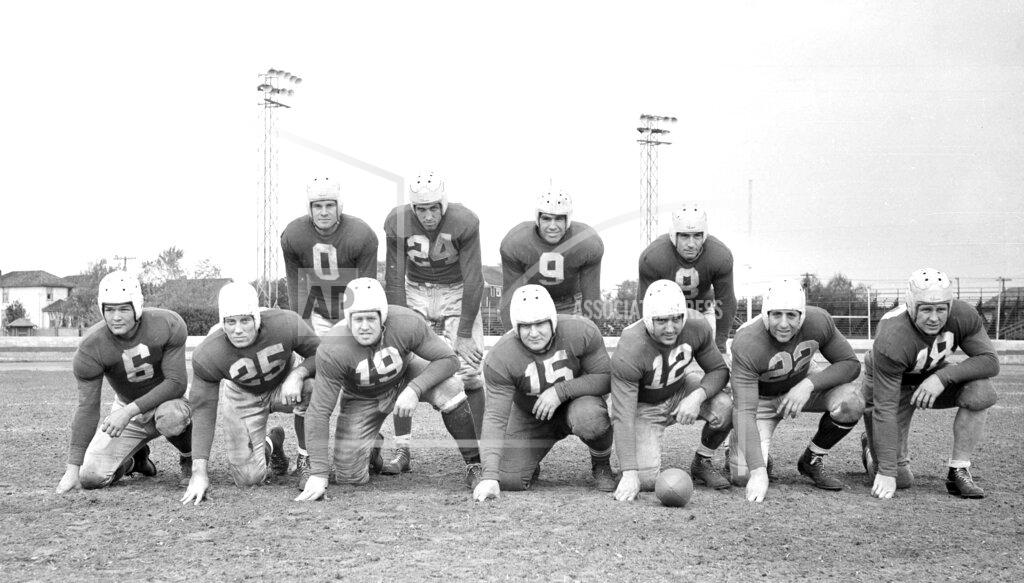
The Brooklyn Dodgers were an American football team that played in the National Football League from 1930 to 1943, and in 1944 as the Brooklyn Tigers. The team played its home games at Ebbets Field of the baseball National League’s team, the Brooklyn Dodgers. In 1945, because of financial difficulties and the increasing scarcity of major league–level players because of the war-time defense requirements at the height of World War II, the team was merged with the Boston Yanks and were known as the Yanks for that season.
 History Diaries