Leonid I. Brezhnev and Aleksei N. Kosygin, the top leaders of the new Soviet administration, traveled to the Polish border recently for a meeting with Wladyslaw Gomulka, the Polish Communist chief, Tass announced tonight. The official Soviet press agency said they met Mr. Gomulka in the Belovezhskaya Forest in “the last few days.” Premier Jozef Cyrankiewicz of Poland was also present. It was taken for granted by foreign observers that the purpose of the meeting was to brief the Polish leaders on the reasons for the removal of Nikita S. Khrushchev and the circumstances in which it was brought about. The Tass announcement, however, merely said that relations between the two parties and the two countries were discussed in “an atmosphere of friendship and cordiality.”
Mr. Gomulka, who was closely associated with Mr. Khrushchev, had praised the latter’s “many merits” in a public speech immediately following the announcement of the removal of Mr. Khrushchev as Premier and party leader. The Polish leaders, like many other leading members of the international Communist movement, are believed to have been critical of the way Mr. Khrushchev’s removal was handled. They are said to have objected particularly to the secrecy surrounding the ouster and to public statements citing old age and ill health as the reasons.
Foreign observers here believe the meeting was held yesterday or last Wednesday, although Wednesday was considered less likely because of the phrasing of the announcement. Wednesday and Saturday were the only two days of the week on which the Soviet leaders were not attending official functions in Moscow. The Belovezhskaya Forest is one of the last primeval forests left in Europe. A small part of it lies in Poland, the rest in the Soviet Union. The meeting is thought to have taken place on the Soviet side in a hunting lodge that has been used for similar meetings in the past.
Meanwhile, it was announced that two more Communist parties had decided to send delegations to Moscow to ask for an explanation of the circumstances of Mr. Khrushchev’s displacement. The chairman of the Communist party of India, S. A. Dange, and the secretary of the Communist party of Denmark, Knut Jespersen, are due tomorrow. Mr. Jespersen will be accompanied by Willi Karlson, editor in chief of the newspaper of the Danish Communist party, Land og Folk. Their coming follows reports from New Delhi that the Indian Communists, already split by the Chinese ‐ Soviet conflict, have been profoundly shaken by the sudden ouster. The Danish party newspaper has been openly critical of the manner of the change. A high‐level French Communist party delegation arrived last night; an Italian party delegation is due on Tuesday and a delegation from the Communist party of Austria is expected tomorrow.
The independent reaction of Eastern European countries to the downfall of Nikita S. Khrushchev has persuaded expert Western observers that the once‐rigid Soviet bloc is slipping into oblivion. Specialists on Eastern Europe here believe that the last 10 days have borne witness to a basic change in the nature of the political grouping formed after World War II by the Soviet Union and the Eastern European states. Munich is a major Western center for study of the Communist world. Two United States-financed broadcasting organizations, Radio Free Europe and Radio Liberty, have elaborate research staffs, as do West German scholarly institutes. The corps of resident specialists was augmented last week by a group of experts from the United States, Britain and other European countries. The latter came to attend a symposium on Soviet strategy and foreign policy organized by the Institute for the Study of the U.S.S.R.
From the discussions of these experts there emerged the broad conclusion that the Soviet Union, especially after the disappearance of the powerful personality of Mr. Khrushchev, had been. required to accept a less dominant relationship to its formerly servile satellites. What was once a bloc of countries bound by a centrally directed ideology is said to be better described now as a coalition of national states held together by geography and the economic‐and military preponderance of the Soviet Union. The practical consequences of this evolution upon the future course of countries in the coalition is regarded by Western experts as unpredictable.
[Ed: You will see how “independent” the Soviet satellites will be allowed to be, in 1968, in Czechoslovakia.]
Mikhail A. Suslov, the chief Soviet ideologist, is ill and has taken himself out of any competition for the No. 1 spot in the Kremlin, reliable sources said today. A tall and gaunt 62‐year‐old, Mr. Suslov is said to be suffering from a recurrence of a chest ailment — possibly tuberculosis — and to be resting in his suburban country home. According to reliable sources, Mr. Suslov helped bring about the removal of Nikita S. Khrushchev as Premier 11 days ago, and then bowed out of consideration for the post of First Secretary of the Communist party. This left the field clear for Leonid I. Brezhnev, it was reported.
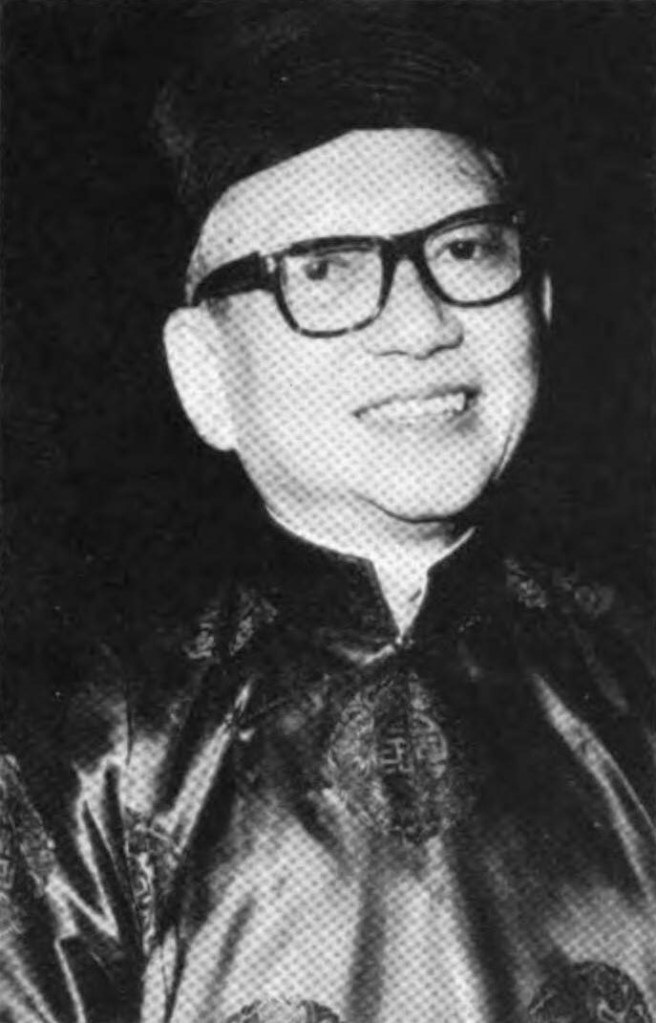
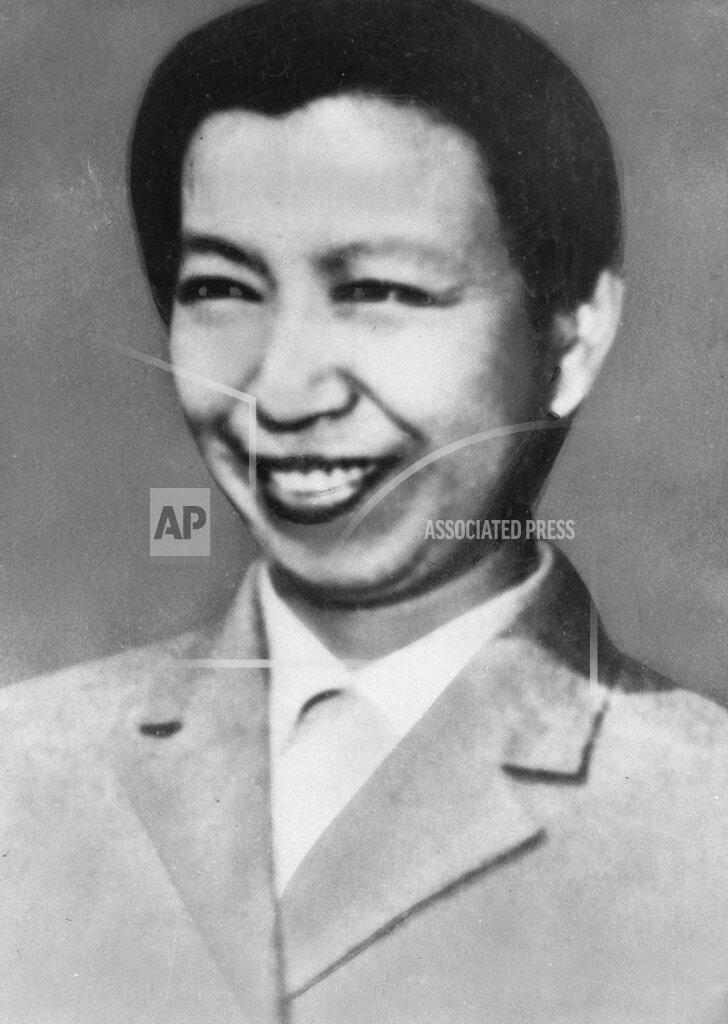
Phan Khắc Sửu was installed as the new President of South Vietnam as part of the military leaders’ promise to make the transition to a civilian government. He would serve less than eight months before being ousted on June 14.
Ambassador Maxwell D. Taylor and the American mission welcomed today the naming of a civilian elder statesman, Phan Khắc Sửu, as South Vietnam’s chief of state. After his official installation, scheduled for tomorrow, Mr. Sửu is to name the new Premier and a civilian government will be established in South Vietnam after a year of military rule. On the eve of their return to what they call purely military tasks, the leaders of the nation’s armed forces gathered in Cap Saint‐Jacques, a seaside resort 45 miles southeast of Saigon, to sort out their new roles in directing the war effort against the Communist insurgents. Major General Nguyễn Khánh, the outgoing caretaker Premier, was host to his colleagues in Cap Saint‐Jacques, which he has established as an alternative military headquarters. Barring unforeseen developments, it appeared that the long‐promised transition to civilian rule would be smooth and would be achieved by the designated target date of October 27.
The New York Times opines:
“The election of a respected elder statesman, Phan Khắc Sửu, as head of state in South Vietnam is good as far as it goes. The situation is so complicated, so chaotic and so clearly incapable of a swift solution that it is realistic to avoid a showdown and to try a compromise until a permanent constitution can be drawn up. Mr. Sửu’s great virtue in the circumstances is that he is a civilian and he has few enemies. His weaknesses are that he is apparently reluctant, unambitious and in frail health. Therefore, his appointment solves nothing. It is one step in an intricate, Oriental game of power politics. What no one can know is whether the many contending forces in South Vietnam — military, civilian, Buddhist, Catholic, student, peasant, oligarchical, pro‐United States, pro‐Communist — are all going to calm down enough to give Mr. Sửu a chance to be even a nominal chief of state. Since President Diệm was overthrown a year ago no man and no cohesive group has been able to wield consistent, effective power in South Vietnam. But Mr. Sửu’s election can help to gain time for more steps toward stability and this, at least, is all to the good.”
The Chinese Communist detonation of a nuclear device heralds a period of increasing tension and danger in Asia, some scientists and military officers believe. The apparent complacency with which Washington greeted the test has disturbed some experts, who noted that the United States has consistently underestimated Communist nuclear capabilities. A number took issue with the assessment by Secretary of Defense Robert S. McNamara that China’s primitive nuclear device represented no military threat and that it would be many years before Peking had the capability “to inflict nuclear damage on this country or our allies.”
There is general agreement that the nuclear device detonated by China was bulky and large and not a finished weapon. Its exact size and weight are unknown, but it is probably too large and heavy to be carried, in its present form, by any Chinese plane or missile, except possibly the TU‐4. The TU‐4 is the Soviet version of the United States World War II bomber, the Boeing B‐29. It is noted that the first United States Atomic bombs were “crude” devices, and that the bomb‐bay of the B‐29 had to be modified to accommodate the first one dropped. The Chinese device released about the same explosive power — the equivalent of 20,000 tons of TNT — as the first United States device.
A relief unit sailed for Cyprus today in a move that has been in dispute for two months. The Turkish transport vessel Basharan left the port of Iskenderun with 335 soldiers bound for the Cypriot port of Famagusta. The dispute about the rotation of the Turkish contingent began in August when the Cypriot President, Archbishop Makarios, refused to admit the relief unit onto the island unless the Nicosia‐Kyrenia road was evacuated by Turkish troops. An agreement was reached last week.
Three persons were killed and hundreds were reported arrested in new demonstrations in the Sudanese capital of Khartoum tonight. A large number of injured were said to have been taken to hospitals. Tanks and army units patrolled the streets of the tense capital. The new violence broke out despite an appeal by President Ibrahim Abboud to the people to return to work and help the security forces maintain law and order. The demonstrators also defied a 7 PM‐to‐5 AM curfew that was imposed on the capital after the rioting began last week.
Congolese Government troops have recaptured the town of Boende to block a move by rebels to cut the Congo in two. Radio messages reaching Leopoldville said that Boende, 200 miles east of Coquilhatville on the road to the rebel capital of Stanleyville, fell yesterday to Congolese Government troops who entered the town without firing a shot. The messages gave no indication of the fate of nine Roman Catholic missionary priests and 10 nuns of the Order of the Sacred Heart at Boende. All are Belgians.
The Chilean Congress today proclaimed Senator Eduardo Frei Montalva the republic’s 31st President, for a six‐year period beginning Nov. 3.
Soviet newspapers attacked today Soviet coaches and sports officials for their team’s performance in the Olympics and said if a lesson was not learned, the Russian team might do even worse at the 1968 Games in Mexico City. “Our Tokyo losses cannot be explained away only by the improved skill of other athletes. The training system in such sports as track and field, sailing, shooting, soccer and cycling is causing serious doubts,” the authoritative trade union organ, Trud, said: “What will the leading officials of the Sports Union say?” It asked. “Where are those 45 to 50 gold medals and 720 points they had promised? The results leave much to be desired.”
The USSR performs a nuclear test at Novaya Zemlya.
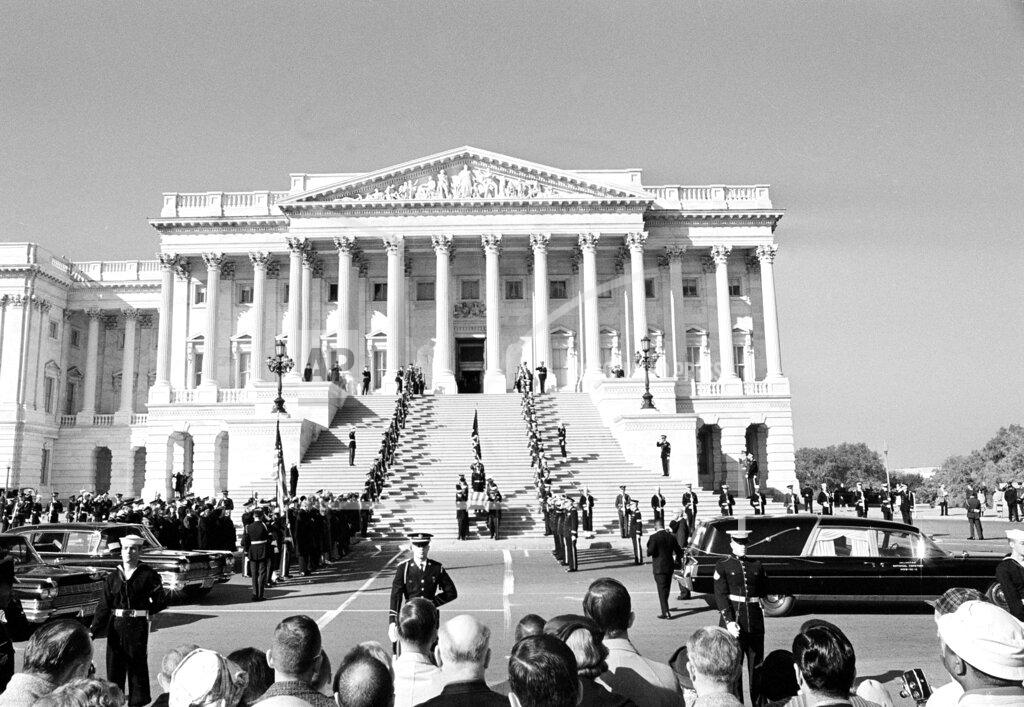
As some 75,000 mourners stood in silent tribute, Herbert, Clark Hoover was buried today in a grassy knoll overlooking the two‐room cottage where he was born 90 years and 76 days ago. The simple, 20‐minute graveside ceremony reflected the Quaker faith of the 31st President of the United States. The only spoken words in the final rites were a prayer and eulogy by Dr. D. Elton Trueblood, professor of philosophy at Earlham College in Richmond, Indiana, a family friend who interrupted a world cruise to fly here from Saigon, South Vietnam, for the brief service. Dr. Trueblood praised the elder statesman as a man of firm faith, hard work, moral strength and a compassionate servant to mankind who “stood above the possibility of corruption and self‐seeking.”
“He has demonstrated an ethic which is identical with that which made America great,” the Quaker clergyman said. “There are some who suppose that we have outgrown it, or that we ought to outgrow it, but a life like that which we honor today is the best refutation of their position.” Then an Army bugler, silhouetted against the sky in brilliant sunshine, sounded taps and the body of the former President was returned to the Iowa land he loved in boyhood. Only 1,400 yards from the grave site, in the gleaming limestone Hoover Presidential Library dedicated two years ago by the former President, is a museum full of mementos of a life of humanitarianism.
Authorities estimated the throng in the 28‐acre memorial park today at 75,000 to 80,000. Among those at the graveside were Senator Barry Goldwater of Arizona, Representative Robert Taft Jr. of Ohio, Governor Frank B. Morrison of Nebraska, Governor Harold Hughes of Iowa and former Senator William F. Knowland of California. Prominent in the huge, colorful horseshoe of flowers banked around the grave was a red, white, and blue wreath of carnations from President Johnson, who had attendted services for Mr. Hoover in New York Thursday and Washington Friday. Mr. Hoover died in New York Tuesday. His body was flown from Washington to Cedar Rapids, Iowa, this afternoon. The Air Force plane was accompanied by two others carrying the Hoover family and a funeral party of 64, including Mr. Goldwater.
The New York Times opines:
“How little respect Mississippi’s closed society exhibits for Negro rights was made glaringly clear by two court developments there last week. One was the freeing, under suspended sentences, of nine white men who had pleaded guilty or no contest to charges growing out of the bombing of three Negro homes — charges that could have brought the death penalty. The other was the action of a Federal judge in Jackson in holding a United States Attorney in contempt for refusing to draw up perjury indictments voted against Negroes by a runaway grand jury. The Negroes had testified in a civil rights suit brought by the Justice Department.
“The county judge who freed the bombers extolled them as the flower of the community and said they deserved a second chance because they had been provoked by the “unnerving and unwanted” presence in McComb of civil rights workers—people he denounced in terms he might have borrowed from Goebbels or Streicher. However, there was one perversely redeeming note in the proceedings. The judge, in effect, made the paroled men hostages for the community’s future good behavior. He warned that clemency would be revoked if new racial violence erupted in the area, whether or not the defendants were directly involved. Dubious as is this concept of justice, it at least has the merit of acknowledging the extent to which terror against Negroes has been rooted in the community, rather than in individual bigots.
“The contempt citation in Jackson arises out of the Justice Department’s unwillingness to be forced into partnership in a case it clearly believes stems from the same kind of local hostility to the exercise by Negroes of their civil rights. The department contends that it can refuse to prosecute indictments it considers unfair, even when—as in this case — the district judge upholds the grand jury. The basic questions raised for our judicial system lend national interest to the review proceedings, now to begin before the Court of Appeals for the Fifth Circuit.”
A purported eyewitness account of the murder of the three civil rights workers in Mississippi in June was published yesterday by Ramparts, an independent Catholic laymen’s magazine. Louis Lomax, the Black author, wrote the account of the deaths of James Chaney, Andrew Goodman and Michael Schwerner. He said that witnesses had identified at least six members of the mob that killed the three civil rights workers. Edward M. Keating, publisher and editor in chief of Ramparts, came to New York with the intention of announcing an offer to turn over the evidence to the Justice Department in exchange for a guarantee to protect the lives of the witnesses. Mr. Keating said yesterday that this had been rendered futile and dangerous by the recent procedure of Federal District Judge Harold Cox in Mississippi of seeking federal indictments against government witnesses in civil rights cases.
The Circuit Court of Appeals in Jacksonville, Florida, is scheduled to hear today a request from the Justice Department to stay a decision by Judge Cox ordering United States Attorney Robert Hauberg to jail for five, days. The sentence was ordered, because Mr. Hauberg refused to sign indictments against two Black witnesses in a federal case involving the denial of voting rights. Judge Cox demanded an indictment charging the witnesses with perjury.
A record turnout of more than 71. million voters in the national elections a week from tomorrow is foreseen by political observers. Some election analysts estimate the turnout could climb to 75 million if two factors are overcome in the closing campaign days. One is the evidence of voter apathy in several states that stems from lopsided victory forecasts for President Johnson, the Democratic nominee. The other is a “plague‐on‐both-your‐houses” attitude toward Mr. Johnson and Senator Barry Goldwater, the Republican candidate, especially among liberal Republicans outside the South. The largest Election Day outpouring to date was in 1960, when 68,838,000 ballots were cast in the Presidential contest. John F, Kennedy, Democrat, got a plurality of 118,550 votes) over Richard M. Nixon, Republican. Contributing to the voter turnout expected next week are:
- The population increase, which makes for 4.9 million more potential voters this year than in 1960.
- Unusually vigorous campaign activity in the South, heretofore the region of lowest proportionate voting in general elections, Aggressive drives for Mr. Goldwater among white residents and for Mr. Johnson among Negroes and traditional Democrats should produce a much higher total vote than in 1960, when the turnout in the South ranged from 25 per cent of the eligible adults in Mississippi to 54 per cent in North Carolina. By comparison, voter participation in the Northeast that year ranged from approximately 70 per cent in New York, Pennsylvania and New Jersey to 80 per cent in New Hampshire.
- A recently adopted constitutional amendment abolishing the poll tax in Federal elections. In Virginia, for example, political leaders list that as a “prime reason” for predicting a turnout of up to 1 million, or 23 per cent more than the vote in 1960.
- Another constitutional amendment permitting District of Columbia residents to vote for President, which should add at least 250,000 popular ballots to this year’s total.
- Strong feeling against Mr. Goldwater by leaders in the labor and civil rights movements — and equally strong pro-Goldwater sentiment among conservative elements. This has generated unusually intensive get‐out‐the‐vote activity within these groups.
Although the Presidential race has traditionally been the main drawing card in Presidential election years, contests at the state level may overshadow the appeal of the Johnson‐Goldwater race in several areas. Political observers believe races for Senator and Governor, like those for the Senate in New York and Ohio, may well influence the size of voter turnout in some states.
President Johnson held out hope today that the Federal Reserve System might be able to continue a policy of relatively easy credit. In a special statement on monetary policy, the President said a “steadily expansionary” credit policy which, he said, had been followed for four years, could be continued if “private and public moderation” is maintained. Although the President did not spell out what he meant, the reference to moderation was apparently intended to encompass continued restraint in spending on the part of the Government and abstinence from inflationary price or wage increases on the part of business and labor. There have been indications that the Federal Reserve Board felt it might have to move toward a more restrictive credit policy if the present economic expansion continues strongly. No decision appears to have been made on this point yet, however, beyond a slight tightening of credit, in terms of the reserves available to banks, that appears already to have begun. The President did not mention this slight shift. He noted, however, that “our monetary system must remain flexible, and not be bound by any rigid, mechanical rules.”
The United Automobile Workers ended its month‐long nationwide strike tonight against the General Motors Corporation. Leonard Woodcock, U.A.W. vice president and director of the union’s General Motors department, announced that more than half its 350,000 members at the company had voted in local meetings to ratify the national contract and return to work. The union constitution requires that a contract be ratified by a majority of the members involved.
Louis G. Seaton, General Motors’ personnel vice president, said some maintenance workers returned to work tonight to prepare for resumption of automotive operations. But he observed that 28 plants would remain on strike pending settlements of local disputes, and said this would limit initial production to only 23 percent of auto, capacity. Mr. Woodcock said that all but two of the first 98 of its 130 General Motors bargaining units to report today had approved the new contract by “overwhelming majorities.” He and Mr. Seaton said they would press for settlements at the 28 strike‐bound plants, and both expressed hope these walkouts could be resolved within the week.
Striking newspaper pressmen, rejecting a contract settlement endorsed by President Johnson and the Federal Mediation and Conciliation Service, voted tonight to, continue their strike against Detroit’s two major newspapers. Freeman Frazee, president of Local 13 of the Newspaper, Printing Pressmen’s Union, announced the decision at a news conference after a four‐hour union meeting. He said the vote was 230 to 17. The pressmen and Local 10 of the Paper Handlers and Plate Handlers Union have been on strike against The Detroit Free Press and The Detroit News for 105 days. The walkout has made about 3,000 workers on the two papers idle.
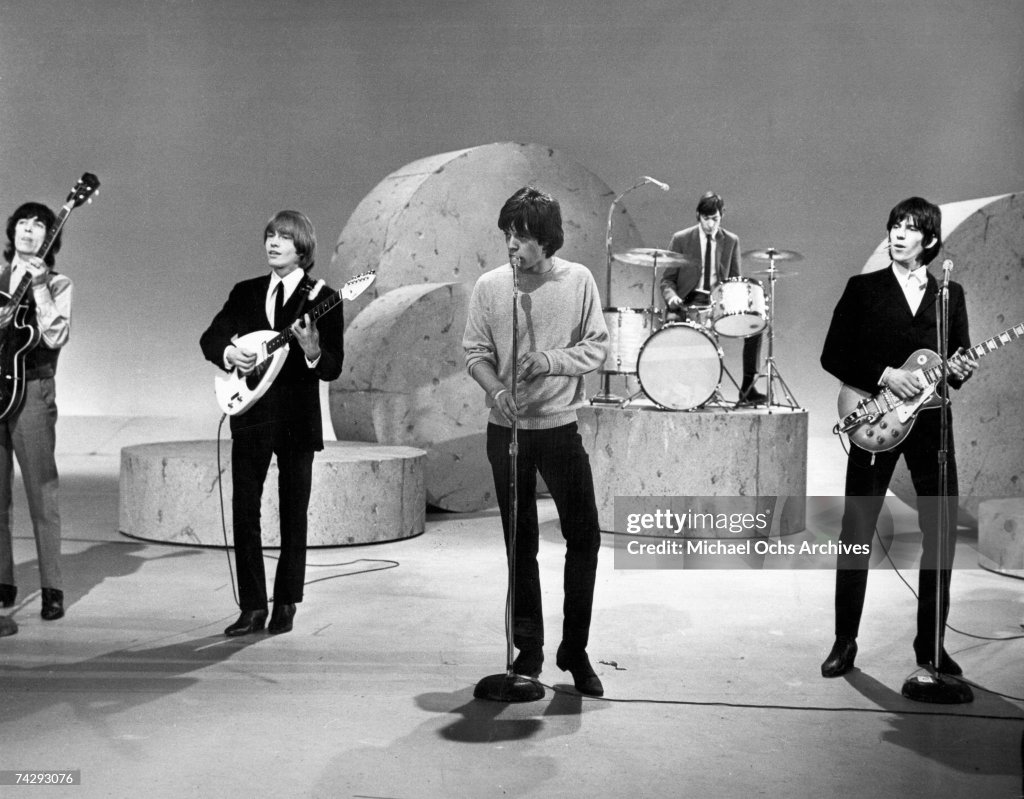
The Rolling Stones made their first appearance on “The Ed Sullivan Show.” They perform a cover of Chuck Berry’s “Around & Around,” and their own hit “Time Is On My Side.” While the studio audience was enthusiastic, television viewers had a different reaction. Unlike The Beatles, who had appeared in February dressed in jackets and ties, the Mick Jagger wore a sweatshirt, prompting the show’s producers to tell the Stones’ manager later, “We were deluged with mail protesting the untidy appearance — clothes and hair of your Rolling Stones. Before even discussing the possibility of a contract, I would like to learn from you, whether your young men have reformed in the matter of dress and shampoo.” Nevertheless, the band would return six months later.
The World Driving Championship, awarded to the best overall driver of Formula One race cars in the season’s series of Grand Prix motor racing events, came down to the 10th and final event of the 1964 Formula One season, the Mexican Grand Prix. After nine races, Graham Hill had 39 points, John Surtees 34, and Jim Clark 30 under a “9-6-4-3-2-1” scoring system that gave points to the six highest finishers in a race (nine points for first place, six points for second, down to one point for sixth place). Hill needed only to be one of the six top finishers; Surtees had to finish first or second; Clark (who won the pole position in qualifying) had the potential to tie for the series championship if he won in Mexico and neither Hill nor Surtees finished in the top six. Hill completed 44 of the 65 laps in the 300 kilometres (190 mi) race before developing engine trouble, and got no extra points; Clark led most of the way until 10 laps from the end when he had an oil leak, and would say later, “I did what I could but half a lap from the end the motor just ceased and that was the end.” Dan Gurney crossed the finish line first in Mexico, and in the final minute, the race for second ended up as a duel between Surtees and Lorenzo Bandini; Surtees crossed the finish line at 2:10.59.26, just 0.69 seconds ahead of Bandini. On the strength of the six points for second place, Surtees finished the season with 40 points, Hill with 39, to win the 1964 championship by a single point
NFL Football:
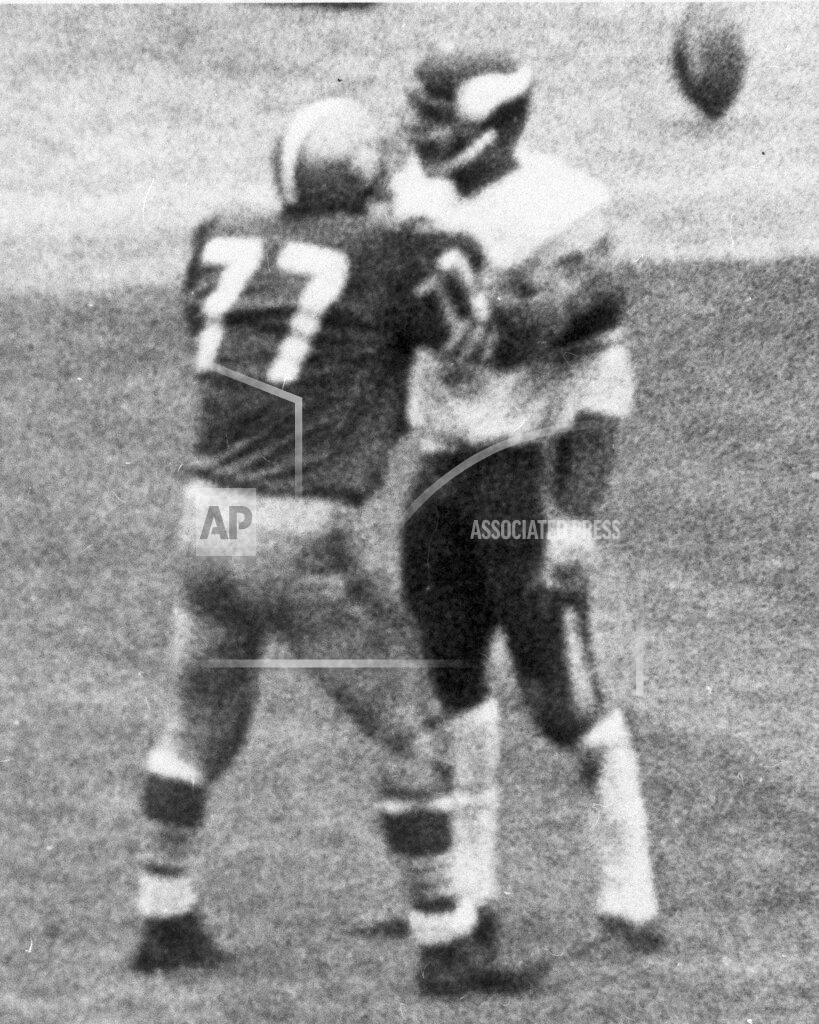
In one of the more notable mistakes in National Football League history, Jim Marshall of the Minnesota Vikings scooped up a fumble made by the San Francisco 49ers, was twisted around in the process, and ran 66 yards with it to the end zone “for what he thought was a touchdown”; Marshall had actually run towards his own end zone, and throwing the ball out of bounds in a celebration resulted in a safety and two points for his opponents. Late in the fourth quarter, the Vikings had been ahead of the 49ers, 27–17, and the mistake cut the lead to 27–19; Marshall and his teammates were able to keep the 49ers from the end zone for the rest of the game, and limited them to one more field goal in a 27–22 win. Roy Riegels, whose wrong-way run in the 1929 Rose Bowl helped the University of California to lose the game, joked the next day, “I think I’ll drop him a line saying, ‘Welcome to the club.’ Take it from me, he’ll get a lot of kidding for the rest of his life, so he’ll just have to learn to take it and laugh with the crowd.”
Baltimore Colts 34, Detroit Lions 0
Chicago Bears 20, Washington Redskins 27
Dallas Cowboys 31, St. Louis Cardinals 13
Los Angeles Rams 27, Green Bay Packers 17
Minnesota Vikings 27, San Francisco 49ers 22
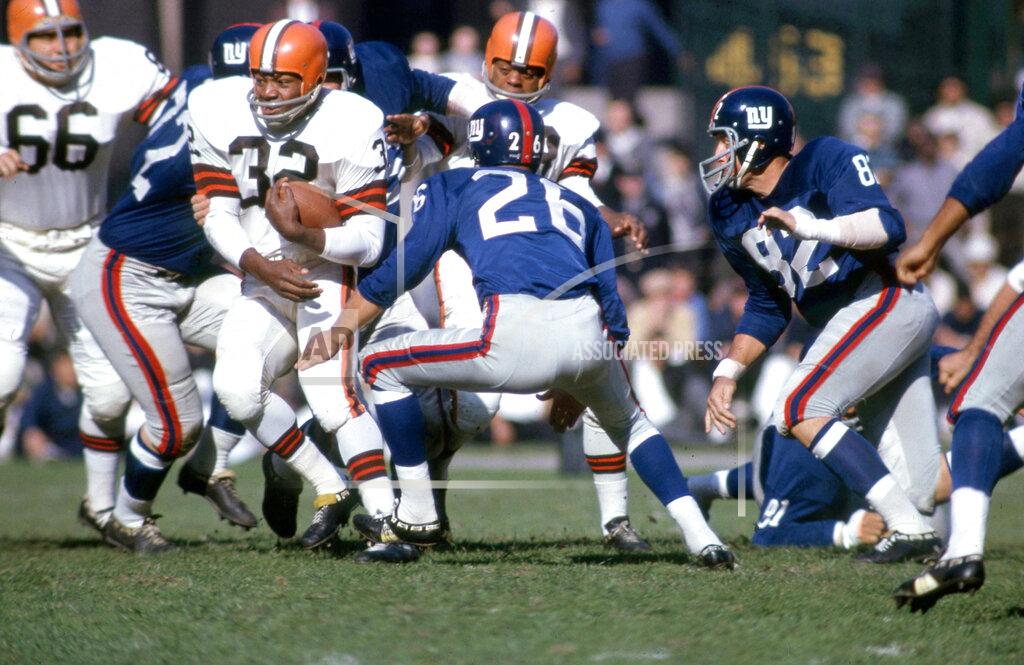
New York Giants 20, Cleveland Browns 42
Philadelphia Eagles 34, Pittsburgh Steelers 10
The Baltimore Colts, with their powerful and balanced attack, completely cracked the previously strong defenses of the Detroit Lions today and won, 34–0, in the battle for first place in the Western Conference of the National Football League. Today’s victory came about because Unitas is passing better than any quarterback in the league. Once the Baltimore running game became established in the first period, Unitas used it well to keep the defense off his back and completed passes with regularity. He passed for two touchdowns, Lenny Moore ran for one and Lou Michaels kicked two field goals. Baltimore’s defenders, as powerful in their way as was the offense, registered a touchdown and set up another. Jerry Logan picked off one of Milt Plum’s third‐period passes and returned the ball 25 yards for 6 points. All day, the defenders were in on Plum or spoiling his aim. It was Plum’s first starting assignment in four weeks as he replaced the injured Earl Morrall, who is out for the season with a broken shoulder.
The Washington Redskins drove 80 yards for a touchdown in the last three minutes today and defeated the Chicago Bears, 27–20. Billy Wade, who connected on 33 of 57 passes for 321 yards and three touchdowns, had passed the Bears to a tying touchdown a few minutes before Sonny Jurgensen directed Washington to its winning drive in 10 plays. The touchdown came on a 15‐yard pass to Preston Carpenter. Neither team worked well on the ground. The Redskins netted 9 yards rushing in the first half. The Bears had a net loss of 2 yards. The Redskins finished with 48 yards, the Bears 16.
The Dallas Cowboys rode the passing of Don Meredith to a 31–13 victory over St. Louis today, knocking the Cardinals out of a first‐place tie in the Eastern Conference of the National Football League. The Cardinals dropped into second place behind the Cleveland Browns, who beat the New York Giants, 42–20. Meredith, who threw for 192 yards on 12 completions in 19 attempts, led two first‐half drives for touchdowns that proved decisive. Late in the first period, Meredith tossed 36 yards to Frank Clarke, who was caught from behind on the St. Louis 4. Don Perkins went over from the 2. Racing the clock in the final moments of the half, Meredith completed five passes for 73 yards. Three of the tosses were to Clarke, including an 18‐yarder for the score with 37 seconds remaining.
The Los Angeles Rams spotted Green Bay 17 points and then stormed back in electrifying fashion today for a 27–17 victory, which virtually buried the Packers’ Western Conference title hopes. The Rams picked up a pair of touchdowns in two minutes !late in the second period as Les Josephson sprinted 53 yards and Roman Gabriel hit Bucky Pope on a pass play covering 55 yards. Los Angeles nailed down the decision in the third period when Ed Meador partlally blocked Paul Hornung’s 37‐yard field goal attempt and Bobby Smith caught the ball and raced 94 yards for the decisive touchdown. The Packers, who had dropped three of six previous starts by a total of 5 points, were outplayed after capitalizing on Los Angeles errors and surging to a 17–0 lead. Green Bay recovered three fumbles and intercepted two passes in the first half before the Rams settled down and rebounded for their first victory over the Packers since 1960.
The Minnesota Vikings’ alert defense, despite a 60‐yard wrong‐way run by Jim Marshall, set up touchdowns in the last quarter on an interception and a fumble recovery to whip the San Francisco 49ers, 27–22, in a National Football League game today. With the 49ers leading, 17–13, going into the final period, Roy Winston intercepted a pass by George Mira on the San Francisco 11 and three plays later the Minnesota quarterback, Fran Tarkenton, rolled around end for a touchdown. Moments later, Carl Eller, a tackle, recovered a fumble by Mira and ran 45 yards to score. At this point Marshall made his wrong‐way run. With the 49ers on the move, Mira passed to Billy Kilmer. Kilmer caught the ball, took a couple of steps and fumbled. Marshall picked, up the ball on the run and just kept going — in the same direction as the 49ers march was going. San Francisco got a 2-point safety on the play. Winston intercepted three passes during the game. John Brodie of the 49ers had four intercepted — bringing his total to seven in the last two games.
The New York Giants played their best football of this unfortunate season, but still lost, 42–20, to the Cleveland Browns. The Giants, who had won five of their last six games here going back to 1958, entered the fourth quarter down by only a point, 14–13. Then came the disasters. Within the span of 4½ minutes, the Browns scored three touchdowns as a result of two fumble recoveries and an interception. First, Dick Lynch intercepted a pass by Frank Ryan, Cleveland’s unimpressive quarterback, on the New York 3‐yard line as the third period ended. On third down, Dick James swept left end, but fumbled the ball backward as he attempted to leap over a Cleveland tackler. Paul Wiggin, the Browns’ defensive end, scooped up the ball on the 2‐yard line and rolled his large body into the end zone for the score. Next, Jim Houston, a Cleveland linebacker, intercepted a pass by Y. A. Tittle that had bounced off the shoulder of Steve Thurlow a rookie Giant halfback. lt was Tittle’s third interception of the game, but more of a bad break than an error. Houston returned 44 yards to the Giant 31 and then Jimmy Brown, the Cleveland star, made his only big offensive gesture of the day, running 22 yards to the 9. From there, Ryan passed to Gary Collins for a touchdown, putting Cleveland ahead, 28–13. Then it was Clarence Childs’s turn to fumble, and he did on the ensuing kickoff return at the New York 23. Charlie Scales, who has the effortless job of being Jim Brown’s understudy, picked up this fumble and raced 32 yards for another score.
Red Mack’s pass‐catching and Ollie Matson’s running carried the Philadelphia Eagles to a 34–10 triumph over the Pittsburgh Steelers today in a National Football League game. Mack, an ex‐Steeler, grabbed three passes for 104 yards and one touchdown. The 34‐year‐old Matson picked up 73 yards in 16 carries. Matson also caught three passes for 63 yards. By winning their second straight this year from the Steelers, the Eagles moved into third place in the Eastern Conference with a 4–3 won‐lost record. The day’s biggest gainer before a crowd of 38,393 at Pitt Stadium was a 94‐yard touchdown run on a pass interception by Irv Cross of the Eagles with 1:10 left in the final quarter.
AFL Football:
San Diego Chargers 20, Houston Oilers 17
Denver Broncos 7, Oakland Raiders 40
The passing artistry of John Hadl, the running of Lance Alworth and a pass interception good for a touchdown gave the San Diego Chargers a 20‐point second quarter today that held up for a 20–17 American Football League victory over the Houston Oilers. The triumph gave the Chargers a two‐game lead in the Western Division with a 4–2–1 wonlost record and plunged the Oilers deeper into the cellar in the East. George Blanda, passing with remarkable accuracy in the closing moments of the game as the rain blew into his face, took the Oilers to the Charger 20‐yard line before a field goal attempt failed. Hadl hit 19 of 31 passes for 226 yards. Blanda, injured the first time Houston had the ball, came back to connect on 22 of 37 attempts for 312 yards. Keith Lincoln led the Chargers in rushing with 65 yards on 12 attempts. Charlie Tolar of Houston gained 48 yards in 10 attempts.
Cotton Davidson, having one of his greatest days in a 10‐year pro football career, passed for five touchdowns today while leading the Oakland Raiders to their first victory of the season, a 40–7 rout of the Denver Broncos. Davidson broke the club record by accounting for 417 yards. He completed 22 of 34 passes. Clem Daniels, the Raiders’ halfback, gained 167 yards. Davidson passed for two touchdowns apiece to Billy Cannon and Art Powell and one to Jan Barrett.
Born:
Pat Swilling, NFL linebacker and defensive end (1991 NFL AP Defensive Player of the Year, Pro Bowl, 1989-1993; New Orleans Saints, Detroit Lions, Oakland Raiders), in Toccoa, Georgia.
Dwight Garner, NFL kick returner and running back (Washington Redskins), in San Francisco, California (d. 2022, from prostate cancer).
Jim Hendley, NFL center (Atlanta Falcons), in Valdosta, Georgia.
Kevin Michael Richardson, American voice actor (Joker – “The Batman”), in The Bronx, New York, New York.
Melinda McGraw, American actress (Macenzie – “Pursuit Of Happiness”), in Nicosia, Cyprus.
Michael Boatman, American actor (Carter – “Spin City”), in Colorado Springs, Colorado.
Nick Thorp, British pop-funk bassist (Curiosity Killed the Cat), in Sunbury-on-Thames, Surrey, England, United Kingdom.
Nicole [Nicole Hohloch Seibert], German pop singer (Eurovision Song Contest, 1982), in Saarbrücken, Germany.
Died:
General Terentii Shtykov, 57, Russian officer who was the military administrator of the Soviet occupation of the Korean peninsula above the 38th parallel from 1945 to 1948 and guided the establishment of the Stalinist government of North Korea.
Belle Montrose, 78, American actress and vaudeville performer (Mrs Harrison – “Hathaways”, “The Absent-Minded Professor”), mother of Steve Allen.

 History Diaries