The High National Council chooses Phan Khắc Sửu, a 63-year-old engineer, as chief of state. Although a figurehead, he at least represents a break with the strong military influence on the government. Nguyễn Khánh resigns as premier on the 26th, and on the 29th, Trần Văn Hương, former mayor of Saigon, is named premier. The council, a 17‐man body appointed last month to set up a government for Saigon, maneuvered for days before naming a chief of state.
After several false starts, the council rejected Major General Dương Văn Minh, the popular officer who, almost until the last minute, was considered the most likely choice. To Mr. Suu falls the task of naming a premier and overseeing a civilian government. If he is successful, South Vietnam will end a year of military rule that began last Nov. 2, when a council of generals overthrew President Ngô Đình Diệm. Mr. Sun is designating Trần Văn Hương, a 61‐year‐old nationalist politician and former Mayor of Saigon, as Premier. Mr. Hương replaces Major General Nguyễn Khánh, who has led a caretaker government since he was forced to step down amid rioting and confusion in Saigon late in August.
Cambodia shot down an American C-123 cargo plane that was part of a convoy of three U.S. Air Force transports flying over the Cambodian border village of Dak Dam in the Mondulkiri Province. All eight crew members on board were killed. The action came four days after the neutral nation’s leader, Prince Norodom Sihanouk, had protested to the United Nations about the bombing of a Cambodian village by a South Vietnamese airplane.
A U.S. Air Force Fairchild C-123B Provider (#55-4549) from the 309th Troop Carrier Squadron, the lead aircraft in a three-ship formation, had departed Nha Trang Air Base on an aerial resupply mission to an isolated U.S. Special Forces camp at Bu Prang near the Cambodian border. The Provider, carrying ammunition for the troops at Bu Prang, began dropping smoke grenades as it approached the drop zone, indicating that it was taking ground fire. Smoke was then observed coming from its right engine. The aircraft commenced a shallow left turn and then a sharp right turn and crashed. No one was seen to have left the aircraft by parachute or otherwise before going down. The wreckage came to a stop imbedded in the woods and was completely destroyed. Subsequent evaluation revealed that the formation was mistakenly over the Cambodian camp of Dak Dam and the aircraft was shot down by Cambodian groundfire. Six USAF crewmen and two Special Forces passengers were killed. They included pilot 1LT Valmore M. Borque, co-pilot 1LT Robert G. Armstrong, navigator CAPT Edward S. Krukowski, SSG Theodore B. Phillips, SSG Ernest J. Halverson, A1C Eugene Richardson; and passengers SSG Lawrence Woods and PFC Charles P. Sparks. A search team recovered seven of the eight personnel but reported they were unable to locate SSG Wood’s remains. A 1997 and 1999 investigation of the crash site revealed that the wreckage was on the Vietnam side of the border. In 2009-2010, U.S. and Vietnamese teams excavated the site and recovered human remains which were later identified as Woods.
A delegation of French Communist party leaders arrived in Moscow tonight to demand explanations from the new Soviet regime over the removal from power of Nikita S. Khrushchev. Its arrival was seen by Western diplomats as the most dramatic demonstration to date that the Soviet Communist party, regardless of who are its leaders, is no longer able to control the international movement and to impose its will on foreign Communist parties. The Italian Communist party and the Austrian Communists have announced that they also will send delegations to seek explanations for the abrupt ouster. They are due to arrive in Moscow Monday and Tuesday. The French decision to send a delegation to Moscow was made at a session of the party’s Politburo last Wednesday. An unusually blunt statement at the time said the delegation would seek more information and “necessary explanations” concerning the “conditions and methods” involved in the Kremlin shake‐up.
Greece is fighting a powerful Communist campaign in Cyprus aimed at alienating the 500,000 Greek Cypriots from their aspirations for enosis — union with Greece. John Tsouderos, a Deputy of the ruling Center Union party, flew to Nicosia today, heading a mission of experts who will study the economic problems that might arise from such a union. Mr. Tsouderos, a 41‐year‐old University of Minnesota Ph.D., is known for his studies of Crete’s economy, which is comparable to that of Cyprus. He represents Crete in Parliament. This is first of series of Greek missions to Cyprus to explore integration problems in such fields as agriculture, production and banking.
The missions were ordered by the Enosis Committee, a unit set up by the Greek Government following reports that Communist propaganda in support of complete independence for Cyprus rather than enosis, was making headway. Cypriote Communists were reported to be planting the idea in the minds of the island’s business community that enosis would make them mere provincial agents for Athens’s business magnates and that Cyprus would become a “poor‐relation” province of Greece. Officials here said that the Cypriote Communists feared being brought under a regime that has banned Communism. They also fear Cyprus would automatically become a NATO territory, it was said.
Premier Moïse Tshombe, who once fought the United Nations and accused its troops of atrocities, praised the organization today for having defended the Congo’s right of self‐government and independence. In a broadcast marking United Nations Day, Mr. Tshombe said the United Nations had “spared neither lives nor money” in defending the Congo’s integrity. Less than two years ago Mr. Tshombe, as head of secessionist Katanga province, fought and lost to United Nations troops helping the central Government reunite the country. The broadcast was the strongest indication so far of, his intention to cement relations with the United Nations.
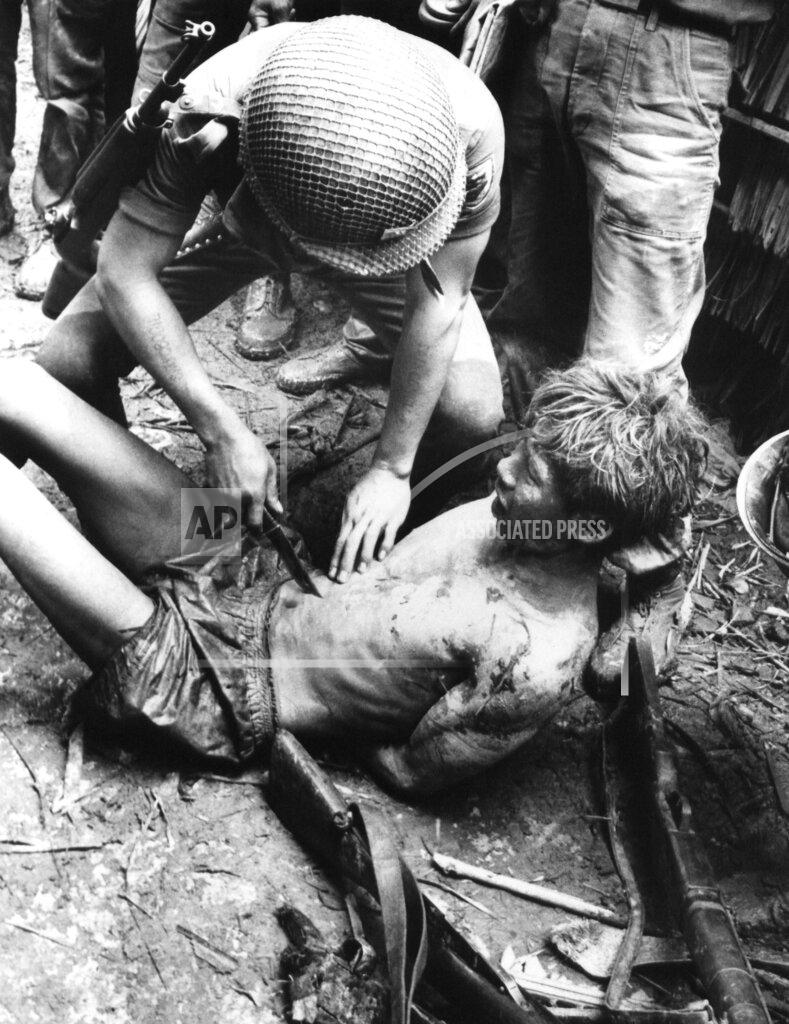
Last week, as 24 white mercenaries and two Congolese Army companies fought their way into the key Congo River port of Rumba, they came upon a wounded rebel living by the roadside. The rebel’s foot had been blown off. A Congolese sergeant demanded custody of the man. There are no live prisoners in this war; to be a prisoner of the Congolese on either side means death by slow torture. Lieutenant Garry Wilson, a gaunt Sandhurst graduate and the mercenary commander, drew his pistol, took aim at the wounded rebel and counted 10. But he could not bring himself to shoot. A 21‐year‐old Rhodesian mercenary nicknamed Ugly stepped up in the lieutenant’s place and fired a burst of six rounds from his automatic rifle. As Ugly walked away, he muttered over and over again: “It’s mass murder, it’s mass murder.” His words summed up the feelings of most of his compatriots here. Few feel this more sensitively than Lieutenant Wilson, an English‐speaking South African whose views on racial integration would be heretical to many of his countrymen who practice apartheid.
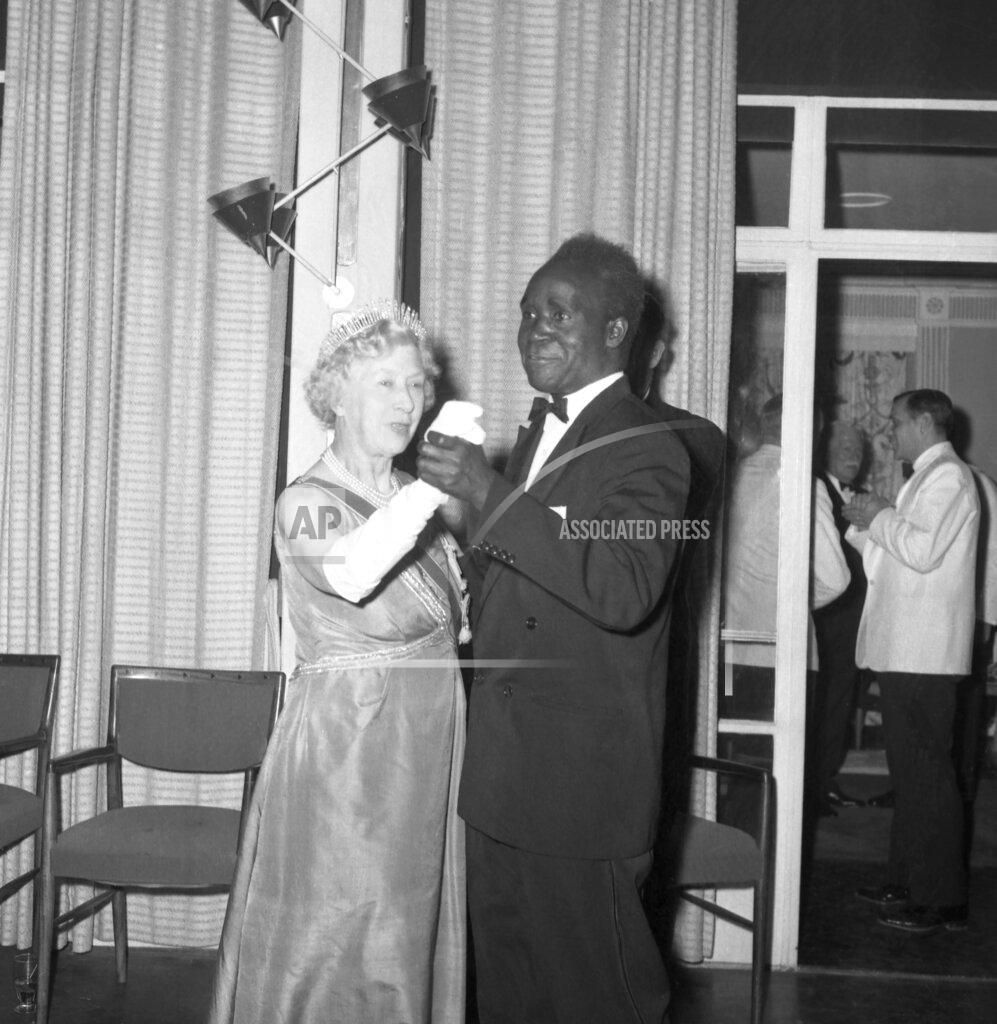
The Republic of Zambia became independent at 12:01 a.m. local time (2201 UTC October 23) after having been the British protectorate of Northern Rhodesia, ending 73 years of British rule. At 11:56 p.m., the Union Jack had been lowered at Independence Stadium in Lusaka by the last Governor, Sir Evelyn Hone, who was accompanied by Commonwealth Secretary Arthur Bottomley, and by Victoria Alexandra, Princess Royal, who was appearing on behalf of her niece, Queen Elizabeth II. Kenneth Kaunda, who had been Prime Minister of Northern Rhodesia for ten months after the breakup of the Federation of Rhodesia and Nyasaland, was inaugurated as the first President of Zambia. A wave of jubilation swept the country, which takes its name from the Zambezi River, Zambia’s border with Southern Rhodesia for hundreds of miles. Cries of “kwacha!” (freedom) rang again and again through Independence Stadium here as at least 38,000 persons gathered to watch the ceremonies.
Prime Minister Ian D. Smith has cleared the way for a unilateral declaration of independence from Britain by retiring the chief of Rhodesia’s armed forces, Major General John Anderson, and refusing Prime Minister Haword Wilson’s invitation to fly to London for talks on a new Constitution.
Premier Hayato Ikeda, 65 years old, announced today that he will resign because he must undergo prolonged treatment for a throat tumor. The Premier expressed his decision to resign at a conference with officials of Japan’s ruling Conservative‐Liberal party in his hospital room in the National Cancer Center. Mr. Ikeda has led the Government since July 19, 1960. His departure from office will probably set off a struggle for power among the party leaders.
South Korea’s political opposition to the Government of President Chung Hee Park is generally believed to have been seriously weakened in recent months. The major cause has been factional split — the traditional evil of Korean politics.
Yemen is a country being rudely awakened by the military, economic and political impact of the outside world from centuries of slumber. The jealous guardian of Yemen’s slumber was the old Imam Ahmed, who actually carried around his waist the keys to warehouses in which he had tucked away a wide variety of modern devices, most of them military, that he did not trust his people to use. The Imam’s son, Mohamad al‐Badr, who had ideas about opening up and reforming the kingdom, traveled around the world and ordered factories and weapons, particularly from behind the Iron Curtain. As fast as these arrived, the old Imam had them locked up and dispersed. He kept the keys and when he died in September, 1962, the secret of where he had hidden his son’s modern toys died with him. Mohamad al‐Badr ruled only a week before he was overthrown by Colonel Abdullah al-Salal, who was backed by President Gamal Abdel Nasser of the United Arab Republic.
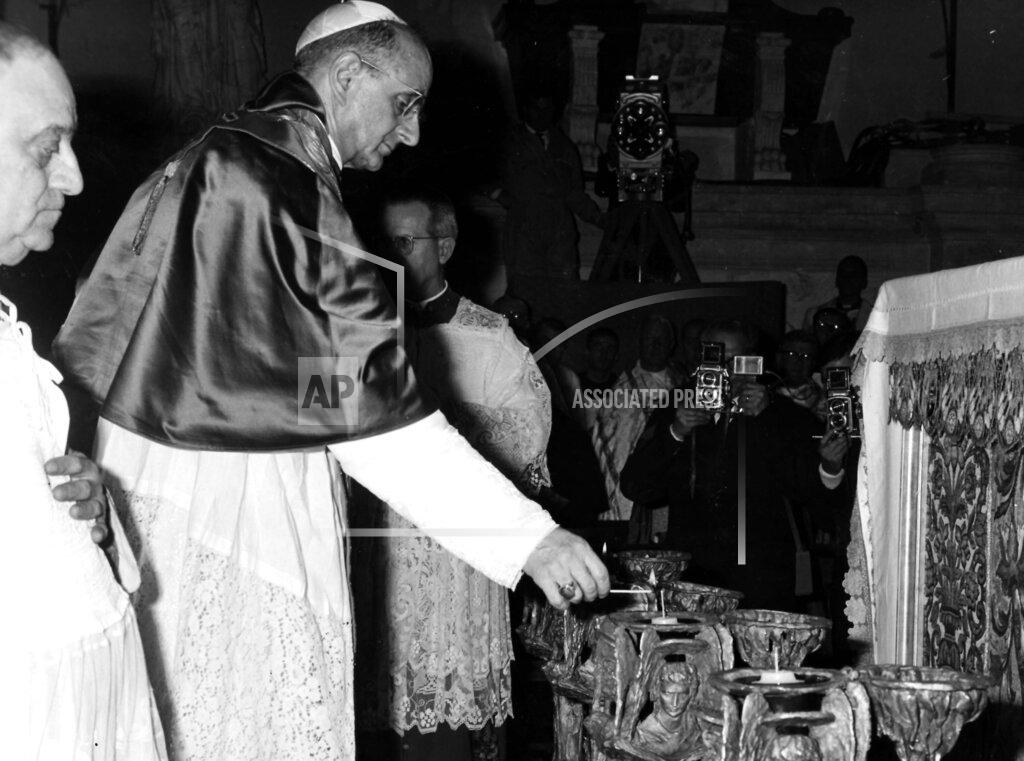
Pope Paul VI rededicated to peace and European unity today the sixth‐century Benedictine abbey of Monte Cassino, destroyed during World War II and later reconstructed on its hilltop site. The Pope also formally declared the abbey’s founder, St. Benedict of Nursia, the patron saint of Europe. Benedict set afoot the great movement that spread monasteries throughout Europe. It was in those monasteries that monks kept alive the traditions of classical learning while the rest of the Roman Empire sank into the barbarism of the Dark Ages. “May this eminent saint thus fulfill our wishes,” the Pope said, “and, as he once succeeded in overcoming darkness and spreading the gift of peace with the light of Christian civilization, may he now preside over all European life and. with his intercession, develop and increase it ever more.” Driving rain and thunderstorms forced the Pope to abandon his plan to come here from the Vatican by helicopter. Instead, he left Rome in his special Mercedes‐Benz limousine, acompanied by members of the papal court and half a dozen cardinals.
Black leaders reacted angrily today to a county circuit judge’s action in suspending sentences and granting probation to nine white men in the bombing of three Negro homes. “Mississippi justice is a disgrace to the nation,” said Charles Evers, state field secretary of the National Association for the Advancement of Colored People. “Such a decision simply gives a license to lawlessness and violence.” The nine went before Circuit Judge W. H. Watkins and entered pleas of guilty and nolo contendere (no contest) to charges stemming from the bombings at McComb. Judge Watkins, appointed by former Governor Ross R. Barnett, gave the nine a 30‐minute lecture, then suspended sentences and placed them on probation. Citing their youth and “good families,” he said they were “unduly provoked and undoubtedly ill advised.”
President Johnson’s next budget is virtually certain to rise from the $97.3 billion budget of this fiscal year, but there is a good chance that it will be held below $100 billion. The Government is not aiming at a balanced budget next year, but neither will it want a large deficit. This was the outlook described today by authoritative Government sources on the eve of an intensive budget review that will begin next week. The general dimensions of the budget are shaped by laws already on the books and by existing spending commitments.
Mr. Johnson said, meanwhile, that his Administration would propose new “carefully timed” tax cuts to keep the economy healthy. He said that he would consider such a cut if a recession appeared to be threatening but that the Government might also increase spending if a recession were under way. The budget, which will go to Congress in January, will cover the fiscal year 1966, beginning next July 1. It will be prepared by President Johnson regardless of who wins the election because, if defeated, he would not leave office until after the budget was submitted. His aim is to hold the budget below $100 billion. The exact amount of increase in the budget, falling within a range of $3 billion, is not of overriding importance in an economy that is expected to have a $540 billion output next year.
President Johnson promised tonight that health care for the aged under Social Security would head his list of “must legislation” next year if he is returned to office November 3. He made the pledge and covered a wide range of other issues, including the Robert G. Baker and Walter W. Jenkins cases, in a half‐hour paid political program on the television network of the National Broadcasting Company. The program, which was taped Thursday in the Oval Room of the White House, was in conversation format. Five youthful supporters took turns asking him questions. The President’s questioners, two women and three men, ranged in age from 23 to 26. “Mr. President, is medicare going to be on the list of your ‘must’ legislation?” he was asked. “Just top of the list,” was the reply.
The President commented on the Baker and Jenkins cases when one of his questioners observed that some people believed “a kind of gray cloud seems to be hanging over the White House.” Mr. Baker resigned as secretary to the Senate Democratic majority last year when his outside business activities came under fire. Mr. Jenkins resigned as a Presidential aide last week when it was disclosed that he had been arrested twice on morals charges.
President Johnson described Mr. Baker as “a very faithful and dedicated and competent employe during the eight years I was [Senate Democratic] leader.” He noted that the former aide’s outside interests were now being investigated by a Senate committee, the Federal Bureau of Investigation and the Internal Revenue Service. Mr. Johnson said he was sure that if any laws had been violated “the matter will be presented to the proper authorities and in our own American way with the sense of justice that we all have — Mr. Baker will be called to account and his side of the case will be heard and appropriate action will be taken.”
The President, warmly praising Mr. Jenkins, said he had never known “a better man, a more diligent worker, a more competent or faithful person.” The President described the Jenkins case as “a very unfortunate and unpleasant and distressing situation that probably resulted from intense overwork.” “He has my sympathy and my understanding, and his wife and their lovely family have my prayers and my best wishes,” he added.
Richard M. Nixon used to time his campaigns to reach a “peak” in the final few days just before an election. Robert F. Kennedy, when he was managing his brother’s campaign against Mr. Nixon, scoffed at the notion of a peak and preached the doctrine of getting out front as soon and as far as possible. James A. Farley, the old fox of New Deal days, propounded “Farley’s Law” that campaigns do not change voters’ minds at all. Lyndon B. Johnson, in his frequent tries for office, always, has sought to stage a strong finishing “kick” to wind up his campaign. And just this Wednesday, Barry Goldwater told the fat cats of Philadelphia’s archRepublican Union League that he had thought all along that if his campaign “started moving up” by October 15, he would win the Presidency.
Drawing the political sabre of ridicule, President Johnson scoffed at the foreign and defense policies of Senator Barry Goldwater today. “We live no more in the age of the cavalry charge,” he said. Mr. Johnson told an audience at Memphis, Tennessee, that 400 times the population of that city, or more than 200 million persons, would die in the United States and the Soviet Union in a first exchange of nuclear bombs. In an extemporaneous postscript to his prepared speech in Memphis, Mr. Johnson slashed back at Senator Gold water’s frequent attempts to make public morality and integrity a top campaign issue. He said that “men don’t talk about their integrity and women about their virtue — if they have it.”
Mr. Johnson campaigned today at Memphis, Chattanooga and Baltimore. He planned to sleep tonight at the White House. Tomorrow he will travel to Florida. In introducing the President in Baltimore, Mayor McKeldin told about 10,000 cheering persons at the Fifth Regiment Armory that the President’s basic beliefs “are the basic beliefs which guide my actions and the actions of legions of others with whom I proudly share the political heritage bequeathed by Abraham Lincoln.” The Mayor added, “And in our hearts we know we’re right.”
The President’s Baltimore speech was briefly interrupted by a procession of sign carrying Goldwater supporters who tramped through the hall. In response the President said that polls showed that he had from 30 to 37 percent of Republican voters on his side in such states as Pennsylvania, and he predicted that many of his hecklers would change their political views. In a motorcade through Baltimore streets, Mr. Johnson stopped a half dozen times and, exuding good spirits, thanked the sidewalk crowds for their welcome. He told one such group that on election night, when he got the results from Baltimore, “I want to shout hallelujah.”
Senator Barry Goldwater believes he has a chance to win, but “not an overwhelming chance.” The strategy of the Republican Presidential candidate has always been built around four big states — Illinois, Ohio, California and Texas — which together represent 117 of the 270 electoral votes needed to win. Right now, according to one in the best position to know the Senator’s views, Mr. Goldwater is confident of taking Illinois and Ohio. He thinks he can carry California, though he concedes he has a way to go in the final week of the campaign to make victory certain.
Texas, where Mr. Goldwater campaigned today, is even-Steven, he believes, but he thinks he is benefiting from the strong race there. by George Bush, the Republican Senatorial candidate, who is Senatorial candidate, who is given a good chance of defeating the Democratic incumbent, Ralph W. Yarborough. Similarly, Mr. Goldwater feels he is being helped by the gubernatorial campaign of. Charles H. Percy in Illinois, and also from the fact that all candidates for the House in the state Legislature must run at large this year.
As a campaigner for the presidency against heavy tangible odds, and the psychological handicap created by the sample polls, Senator Barry Goldwater is bucking what is perhaps the strongest opposition tide ever encountered by a candidate who was the free-will, overwhelming choice of his party’s national convention. With every day that brings nearer the Presidential election of 1964 the critical assault on Goldwater increases from his own party; from a large majority of the metropolitan press which generally supports Republican nominees; from leaders of the politically independent, academic, professional and foreign policy groups who normally divide on Presidential candidates; and from leaders of the business‐financial communities who usually favor the Republican nominee. The pounding Goldwater is taking from these in combination would discourage any candidate for office.
Herbert Hoover will return for the last time tomorrow to the quiet village of West Branch, Iowa that was his boyhood home, where he is to be buried in a simple graveside ceremony. When the future President was born here in 1874 it was the west branch of the Quakers’ Red Cedar Meeting at nearby Springdale. It had been settled only a generation earlier by Quakers, including the Hoover grandparents, who came from Ohio in covered wagons. The population has trebled since 1874, to 1,050, but West Branch remains the peaceful, unpretentious agricultural town it was when Mr. Hoover lived here. That was only for the first 10 years of his life, because his parents died when he was a child and he was sent to live with relatives in Oregon.
“Cambridge Circus” closes at Plymouth Theater NYC after 23 performances.
The 1964 Summer Olympics came to an end in Tokyo. In as spectacular and good‐humored a show as anyone could ask, the 18th modern Olympics, the first ever held in Asia, were brought to a close early this evening before a crowd of 72,000 or so in National Stadium, the huge concrete tureen in which the proceedings had begun two Saturdays ago. Many in the crowd had a voice in the proceedings; near the end of the hour‐and‐20‐minute ceremony they joined, in a wide variety of languages, in the singing of “Auld Lang Syne.”
Jonquieres D’Oriola of France won the individual grand prix equestrian jumping event on the final day of competition and Germany captured the equestrian team title. The United States wound up with the most gold medals — 36 — and won a total of 90 gold, silver and bronze awards. The Soviet Union finished with 30 gold medals for a total of 96.
AFL Football:
New York Jets 24, Buffalo Bills 34
Daryle Lamonica, Buffalo’s No. 2 quarterback, came off the bench in the second half tonight to guide the undefeated Bills to a convincing 34–24 victory over the New York Jets. Before a near‐capacity crowd of 39,621 fans, the Bills came from a third‐quarter deficit of 24–10 to gain their seventh victory of the American Football League season. The triumph in War Memorial Stadium gave Buffalo a gameand‐a‐half lead over secondplace Boston. The Jets, who failed to muster any sustained drives in the second half, went down to their second loss of the campaign against three victories and one tie. This was a game that New York regarded as a “must” victory and at the half the Jets looked as though they might pull off the upset of the campaign. They left the field with a 14–10 margin, and had played the vaunted Buffalo offense almost to a standstill. But after Lamonica replaced Jack Kemp, Buffalo’s top quarterback and passer, the Bills’ defensive unit clamped down hard on Dick Wood and his mates. Still it took Lamonica until the final play of the third quarter to put the Bills within range of a victory. By then the Jets had capitalized on two breaks to run their margin to 14 points. Lamonica found the touchdown touch when he handed off to Bob Smith, a rookie from North Texas State, on the 13‐yard line. Smith burst off his right tackle and twisted and squirmed his way over the line. Two long passes to Elbert Dubenion and Ernie Warwick, good for a total of 57 yards, sparked the touchdown drive that began on the Buffalo 20 and ended six plays later in the end zone. At 7:16 of the final period the Bills took over on their 44 following Curley Johnson’s punt. On the first play, Lamonica faded back and threw on a 46‐yard pass‐run play to Dubenion for the score. Pete Gogolak, Buffalo’s right‐footed, angle placekicker, kicked his third of four successive extra points to bring the Bills all even at 24–all. Within four minutes the Bills took over the lead for good. They marched 35 yards in seven plays, Lamonica plunging for the final 3 yards.
Born:
Patrick Hunter, NFL cornerback (Seattle Seahawks, Arizona Cardinals), in San Francisco, California.
Anthony Anderson, NFL defensive back (San Diego Chargers), in Rustin, Louisiana.
Doug Lee, NBA shooting guard (New Jersey Nets, Sacramento Kings), in Washington, Illinois.
Ray LeBlanc, NHL goaltender (Chicago Blackhawks), in Fitchburg, Massachusetts.

 History Diaries