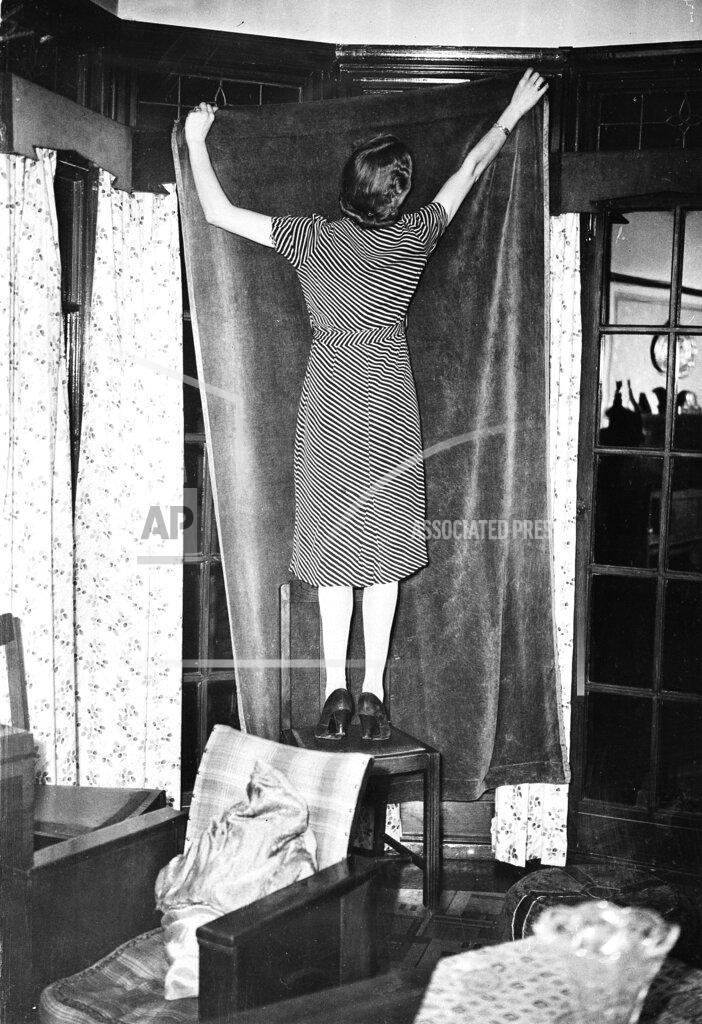
With an offensive on Germany’s western front looking increasingly unlikely before next spring, French Prime Minister Édouard Daladier announced that French soldiers would receive eight to ten days’ leave every four months. Blackout regulations were also eased in many French cities.
Patrolling units engage in combat on the Western Front in the region west of the Saar. German demonstration attacks in the Saar. The weather is turning, the days are growing shorter, and activity is light. It is not good campaigning weather.
Mass executions of Poles and Jews in German-occupied Poland continued by the Einsatzgruppe VI in Kościan and Śmigiel.
The area not annexed to Germany or to the Soviet Union was placed under the control of a German administration led by Hans Frank. This administration was called the General Government, and contained approximately one and a half million Jews.
Paris eases blackouts; Premier Daladier permits unmenaced areas to light up again.
Sir Eric Phipps, the retiring British Ambassador, leaves Paris.
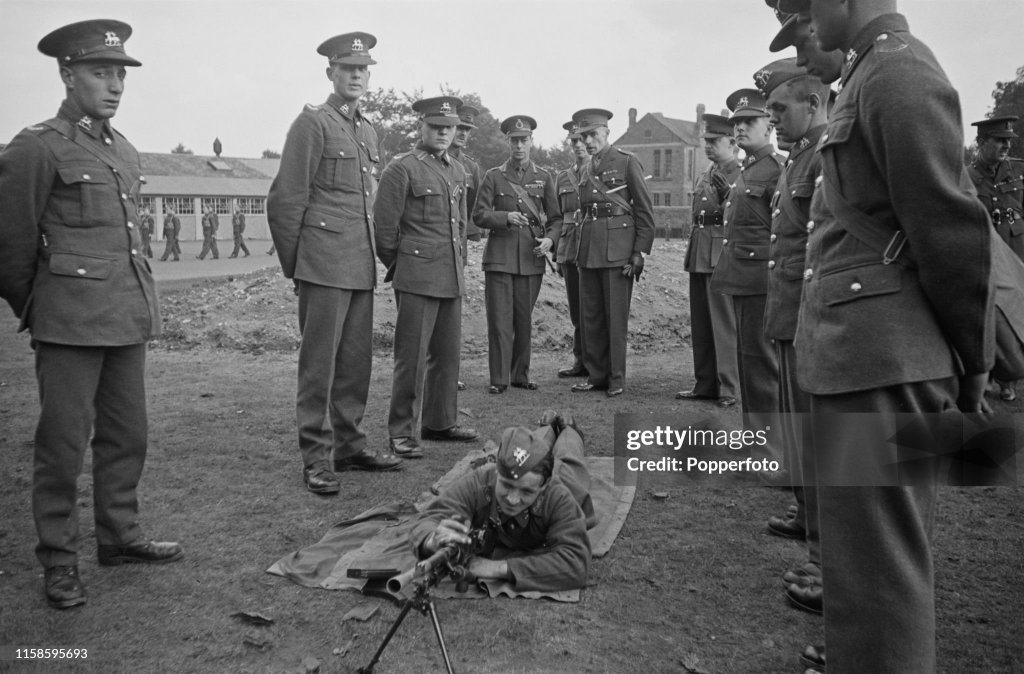
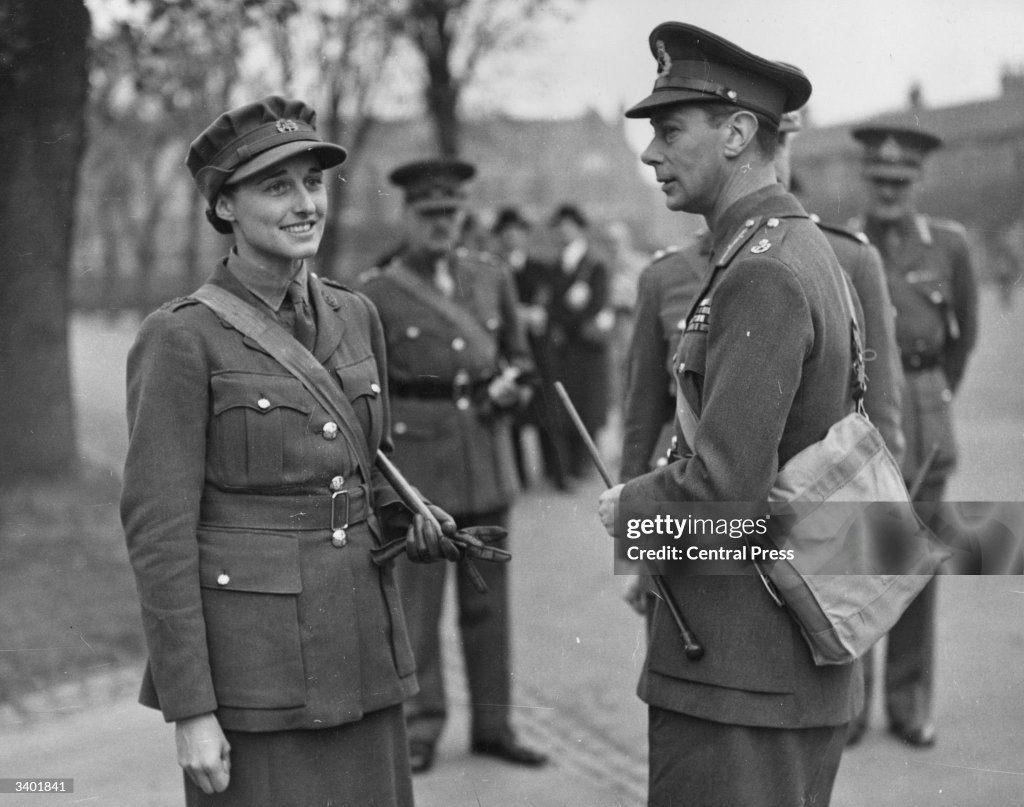
In the khaki service uniform of a Field Marshal, King George spent most of today inspecting his troops of the eastern command “somewhere in England.” Since the outbreak of the war the King has not been out of uniform. Today the King saw for the first time officially some “militiamen,” young men of 19 and 20, who were conscripted before the war broke out.
The British Home Fleet escorts an iron ore convoy from Narvik, Norway (arriving on October 31st).
Attention is turning to Norway on both sides of the conflict. Admiral Raeder already has suggested that Norway would provide excellent U-boat bases. There also are large nickel deposits in the north near Murmansk, along with the Narvik iron ore. Sweden controls the rail line from Narvik after which it would have to be loaded on ships anyway, so shipping the ore down the Norwegian coast whilst avoiding Swedish interference completely is highly valued. It is Norway’s geographic location and natural resources that make it extremely attractive to nearby large powers.
Norway, for its part, knows all too well how important it would be as an asset to both sides. Aircraft and vessels from the warring parties have been violating its neutrality routinely. It is remaining studiously neutral – though one can detect hints here and there of favoritism to the Allies, albeit under heavy political pressure from them due to its own reliance on sea supply lines. However, there are influential forces in Norway that are adamantly pro-German or at least not pro-Ally.
Finns watch Estonia policy, fearing a change following Soviet occupation of the land.
Soviet and Finnish representatives met again in Moscow to discuss border revisions. The Finnish delegation was led by Juho Kusti Paasikivi, a Minister without portfolio, and Foreign Minister Vaino Tanner. The Soviets rejected Finland’s offers. The secrecy veiling the talks gives an ominous note to negotiations.
The Daily Mail reported in an Ankara dispatch today that Soviet Armenia had demanded that Turkey surrender her easternmost province, which includes the towns of Kars and Ardahan.
Nazi minister Joseph Goebbels’s speech is cleansed for broadcast in English; furious adjectives are removed. He attacks Churchill as a liar and accuses Britain of sinking Athenia to get the United States into war.
British light cruiser HMS Orion, destroyer HMS Caradoc, and Canadian destroyer HMCS Saguenay intercepted German tanker Emmy Friedrich in the Yucatán Channel, Gulf of Mexico; Emmy Friedrich’s crew scuttled the ship to avoid capture.
German freighter Bianca captured in the Atlantic by Royal Navy armed merchant cruiser Transylvania.
The Swedish cargo ship Albania struck a mine and sank in the North Sea 4 nautical miles (7.4 km) off the Humber Lightship (53°37′07″N 0°20′00″E) with the loss of two crew. Survivors were rescued by British ship Channel Fisher.
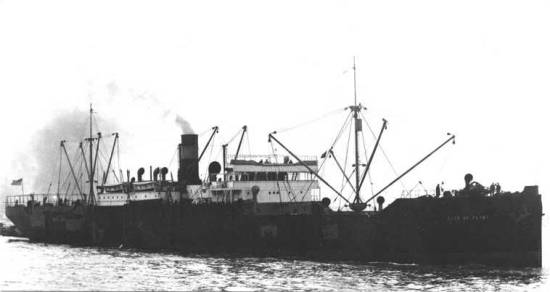
The City of Flint arrived in the Russian port of Murmansk to escape the heavy fog in the Barents Sea. Initially, the Russians arrested the German prize crew and told the American captain that his ship could leave freely as soon as the proper documents were ready, but this changed after Berlin applied heavy pressure. The local Soviet authorities are confused by the American ship flying a German flag and at first, imprison the German crew and give The City of Flint back to the detained American Captain. They then have second thoughts and decide to maintain the status quo in the interest of friendly relations with the Third Reich. However, the situation is still fluid and no final decisions have been made by Moscow, which must consider its relations with the United States as well.
U.S. freighter Tulsa is detained at London by British authorities.
U.S. steamship President Hayes, detained by British naval authorities at Alexandria, Egypt, the previous day, is released, but not before a consignment of rubber earmarked for delivery to Genoa, Italy, is unloaded. The cargo is held at Alexandria for about two weeks, and then reloaded on board steamship President Polk. The President of the shipping concern involved (American President Lines) subsequently requests the Department of State to protest methods employed by the British naval authorities at Port Said and Alexandria in searching that company’s vessels. “The fact that [the] British…allowed this eventual delivery,” the shipping company executive complains, “indicates that [the] shipment ought never have been interfered with in [the] first place.”
Convoy OA.24G departs from Scotland, and SL.6 departs from Freetown for Liverpool.
The War at Sea, Monday, 23 October 1939 (naval-history.net)
Aircraft carrier FURIOUS and battlecruiser REPULSE with destroyers BEDOUIN, PUNJABI, FORESTER, FIREDRAKE left Loch Ewe for the Clyde, arriving on the 25th.
Anti-aircraft cruiser CURLEW and destroyers FURY, FOXHOUND, FEARLESS and MASHONA departed Loch Ewe for Scapa Flow. The destroyers were assigned for convoy escort.
Light cruiser SHEFFIELD departed Loch Ewe for Northern Patrol and arrived back on the 26th.
Light cruiser AURORA sailed from Loch Ewe and destroyers SOMALI, ASHANTI, TARTAR and FAME from Scapa Flow to escort an iron ore convoy from Narvik.
Light cruiser EDINBURGH departed Rosyth to rendezvous with Commodore D in light cruiser AURORA 20 miles north of Muckle Flugga.
Anti-aircraft cruiser CAIRO departed Grimsby on escort duties, and arrived back on the 25th.
Destroyer GALLANT attacked a submarine contact 90° off the Lizard, and was joined in the search by destroyers KANDAHAR, ACASTA, ARDENT, which made an attack 20 miles south of Portland. At 0828/23rd, ACASTA was missed by a torpedo in 49-48N, 5-22W, and on the 24th, she and ARDENT were searching for a reported submarine in 49-30N, 4-45W.
Convoy OA.24G departed Southend escorted by destroyers ESCORT and ELECTRA, while OB.24G departed Liverpool escorted by destroyers VANOC and WARWICK. They merged on the 26th as OG.4.
Convoy SA.14 of two steamers left Southampton, escorted by destroyers VANSITTART and VENOMOUS, and arrived at Brest on the 24th.
A Roc fighter of 803 Squadron from aircraft carrier FURIOUS, but based ashore and flying from Hatston, failed to return from patrol off Wick. Petty Officer L R Tregillis and Naval Airman R E Eason were lost.
Convoy SL.6 departed Freetown escorted by destroyers HYPERION and HUNTER, which left the convoy at 0400/26th to take twelve ships into Dakar where they arrived at 0700/27th. Before then, on the 26th, French light cruiser DUGUAY TROUIN left Dakar to join SL.6 on the 27th, not arriving back until 2 November, while destroyer GRIFFIN left Gibraltar on the 30th and joined on 8 November in Home Waters, escorting the convoy to the UK. In the Western Approaches, the convoy split into SL.6, escorted by destroyers ELECTRA and ESCORT, and SL.6B, escorted by WALPOLE and VANOC, the latter transferring to SL.6 on 8 November. Dispersed ships of the main convoy arrived at Liverpool starting on the 10th.
German steamer CURITYBA (4969grt) sighted Norwegian destroyer DRAUG off Bergen where she arrived on the 24th. Setting out again, she arrived via Drogden, at Hamburg on the 30th.
Heavy cruiser BERWICK departed Bermuda, and arrived back on the 26th for docking where she underwent repairs until 3 November.
Heavy cruiser SHROPSHIRE departed Capetown on escort duty, and arrived back on the 24th.
U-37 conducted a reconnaissance of the Straits of Gibraltar during the night of the 23rd/24th.
In Washington today, President Roosevelt conferred with Vice President Garner, Secretary Barkley, majority leader, and Senator McNary, minority leader, on the legislative situation following his return to the White House from Hyde Park. The President saw Mayor La Guardia of New York. Myron C. Taylor, vice chairman of the Intergovernmental Committee on Refugees; John J. Pelley, president of the American Association of Railroads and conferred with Rear Admiral Harold R. Stark, Chief of Naval Operations, and Harold Smith, Director of the Budget.
The Senate debated the Neutrality Bill, received additional amendments and recessed at 6:42 PM until noon tomorrow. Republicans blocked a move to limit debate. The special Committee on Wool Marketing resumed hearings.
The House heard Representative Leland M. Ford of California support repeal of the arms embargo and Representative Engel of Michigan oppose it, adjourning at 2:29 PM until noon tomorrow. The Dies committee questioned Dr. Harry F. Ward of the American League for Peace and Democracy.
Despite another failure tonight to obtain a unanimous consent limitation in the Senate’s debate of the arms embargo issue, Administration leaders held strongly to a prediction they made to President Roosevelt this morning that the neutrality resolution would be passed and on its way to the House before the weekend. The administration faction expected to get an agreement tomorrow to confine further discussion of the matter by each Senator to an aggregate of forty-five minutes on the bill and a similar time on any one amendment. Senator Barkley, the majority leader, warned the Senate that if this arrangement were not found agreeable to the isolationists at a meeting of that group called for tomorrow, he would demand morning and night sessions until the measure reaches a final vote.
The second unsuccessful attempt to curb the debate — unsuccessful because Senator McNary objected, on behalf of Senator Johnson of California, to a decision before the isolationist conference tomorrow — came at the end of the liveliest day of the current special session. One high point was reached when Senator Clark of Missouri, and later Senator Nye of North Dakota, brought into the debate the incident yesterday at Hyde Park when the President listened to a prayer by the Rev. Frank R. Wilson, his pastor, that King George of England might be strengthened to “vanquish and overcome all his enemies.”
A second came late in the afternoon when a half dozen or more Administration supporters, led by Senator Minton of Indiana, the Democratic whip, leveled a barrage at Senator Nye for his opposition to lifting the embargo. They accused the North Dakota Senator of inconsistency in his position and quoted various excerpts from the remarks he had made a year ago. advocating repeal of the Spanish embargo on behalf of the then Loyalist Government. The exchanges between Senators Nye, Clark and Holt of West Virginia on one side and Senators. Minton, Connally, Schwellenbach, Barkley, Pepper, Hatch, Lee and McKellar on the other served up a brand of running fire which the Senate had not witnessed before during the debate. It ended with an announcement from Senator Holt that he was having prepared the record of every Senator on the embargo issue and that “now that the question of consistency has been raised,” he would read that dossier into the permanent record. of the Senate as soon as it was completed. Senator Connally objected to Mr. Holt’s request for unanimous consent to insert his catalog of Senatorial embargo views into the appendix of the Congressional record, explaining that he did not intend to allow the matter to pass until he had seen it.
The young West Virginian replied that if he did not get the required consent he would read his compilation from the floor. He turned to Mr. Connally with the remark that he would read certain statements that the Senator had made as recently as May of this year. “The Senator is at liberty to read my record as he chooses,” the tall Texan snapped. “I have already told the Senate that I was sorry that I voted for the embargo when it was first passed — that I made a mistake and I don’t mind anybody knowing that I intend voting to correct that mistake.”
The first reference to the prayer to King George at the President’s Hyde Park church was made by Senator Clark just after he had finished outlining to the Senate steps which he said would be taken to mobilize the country’s industry in case of war. He had been criticizing the Administration again for moves and remarks by officials which he charged were “tending to show an absolute lack of neutrality on the part of the government.”
“Mr. President,” he said, “I refer to the action of the President on yesterday, being present at a service, having his picture taken with the pastor who had been praying for the triumph of the King of Great Britain over all of his antagonists. Mr. President, I pray for a real neutrality. It does not make any difference where the sympathies of any individual may lie in this controversy abroad. We all have sympathies, but I do say that every step which is taken in an official capacity — every step showing partiality on the part of the government or its high officials — brings us simply one step closer to war, and I have taken the trouble to stand here on the floor today and in a more or less tedious way to read some of the provisions of this industrial mobilization plan to demonstrate what we are heading into if ever we do let our sympathies lead us into the war.”
Earl Russell Browder, general secretary of the Communist Party of the U.S.A. and its candidate for President in 1936, was indicted yesterday by a Federal grand jury, which accused him of twice using a passport originally obtained on the basis of a false statement. The 48-year-old Kansan, facing a maximum penalty of ten years in prison and a fine of $4,000, spent last night in the Federal detention pen in New York after efforts to bail him out proved too late for the necessary legal preliminaries. He is expected to be bailed out tomorrow morning.
Congressman Martin Dies urges action against Reds. He asks the Department of Justice to prosecute them under registration laws. Representative Martin Dies of Texas, chairman of the Committee Investigating un-American Activities, today urged the Justice and State Departments to move immediately in prosecution of Communist and Bund organizations for violations of the registration laws. His request was made when he was asked for comment on the indictment of Earl Browder in New York. At the same time Mr. Dies said that if the prosecuting arms of the government did not act on their volition the committee would move through the placing of complaints with the office of the Federal attorney in Washington.
“I urge the Departments of State and Justice,” Mr. Dies said, “to proceed without further delay to prosecute the Communist Party, the German-American Bund, and all organizations controlled by the Communist Party for violation of the registration law. This is not in criticism of the departments, but the evidence is now so conclusive that there is no cause known to me for further delay. If there is any further delay not necessitated by strong reasons, I will request the committee to authorize me to place the whole case before the District Attorney for immediate action.” At about the same time Secretary Cordell Hull gave implied confirmation that the State Department was investigating the issuance of passports and charges that false ones had been used by members of groups working on behalf of foreign governments.
In the meantime, the Dies Committee experienced a small storm in its own ranks over a statement issued yesterday by Representative J. Parnell Thomas of New Jersey, asking the Department of Justice to explain its “delay” in prosecuting Browder. Mr. Dies termed the statement. “most inappropriate,” and added that “the chair condemns the action of any member of this committee to inject partisanship into these hearings.” Siding with the chairman was Representative Mason of Illinois, who, like Mr. Thomas, 1s a Republican. He said, “I also protest the action of any member of this committee in making this in any sense a partisan matter.”
Majority Leader Senator Barkley assails a movie, “Mr. Smith Goes to Washington,” calling it “silly and stupid.”
Another Gallup poll result was published in the United States, this time asking, “Which side do you want to see win the war?” 84% of Americans surveyed said the Allies, 14% expressed no opinion, and only 2% said Germany. The same poll asked, “Do you think the United States should do everything possible to help England and France win the war, except go to war ourselves?” 62% said yes, 38% said no. The results suggest there is strong isolationist sentiment, but also a desire to see Germany stopped – as long as someone else does it.
Armed men, often a factor in the coups of Huey Long, reappeared dramatically in the Louisiana political scene today when Governor Earl K. Long’s troopers swiftly seized the offices of two State officials. Governor Long maintained the never-a-dull-moment tradition in State politics by striking at Attorney General David M. Ellison and James O’Connor, first assistant attorney general, only a few hours before the midnight deadline on qualifications for next January’s gubernatorial primary. The final day found five candidates in the lists, all except Mr. Long pledged to break the ten-year hold of the machine built by the spectacular tactics of the slain “Kingfish” Long.
Governor Long announced he was removing Messrs. Ellison and O’Connor because he had discovered they were holding office “illegally.” Mr. Ellison qualified yesterday to run for Attorney General against Francis Burns, City Attorney of New Orleans, named for that post on the administration ticket which Mr. Long heads. Governor Long named Lessley Gardiner second assistant attorney general to succeed Ellison.
Brigadier General Louis F. Guerre, commandant of the State Patrol, directed six troopers’ noonday seizure of Mr. Ellison’s office in the latter’s absence and the Attorney General had not been reached tonight for comment. Other troopers took over Mr. O’Connor’s office in New Orleans and New Orleans police were “protecting” the office of District Attorney Charles A. Byrne there. Later today the force at Mr. Ellison’s office was increased to eight men and four troopers came to the Executive offices as a special. guard indicating that Mr. Long. feared a possible counter-coup. Members of a National Guard compartly rushed to their barracks late today and changed into uniforms in what was officially described as “nothing but a drill” unrelated to the ousters and a possible counter-coup.
Buses were stoned, a bus driver and a striker were pummeled and twenty-two buses carrying school children were placed under motorcycle police escort in a strike of Green Bus Line employes in Queens, New York City. The bus lines, which serve about 100,000 persons daily, were still in operation tonight.
American western author Zane Grey died suddenly in Altadena, California. He wrote more than 50 novels, most dealing with western adventure. Grey, who published more than 50 novels, suffered a sudden fatal heart attakc.
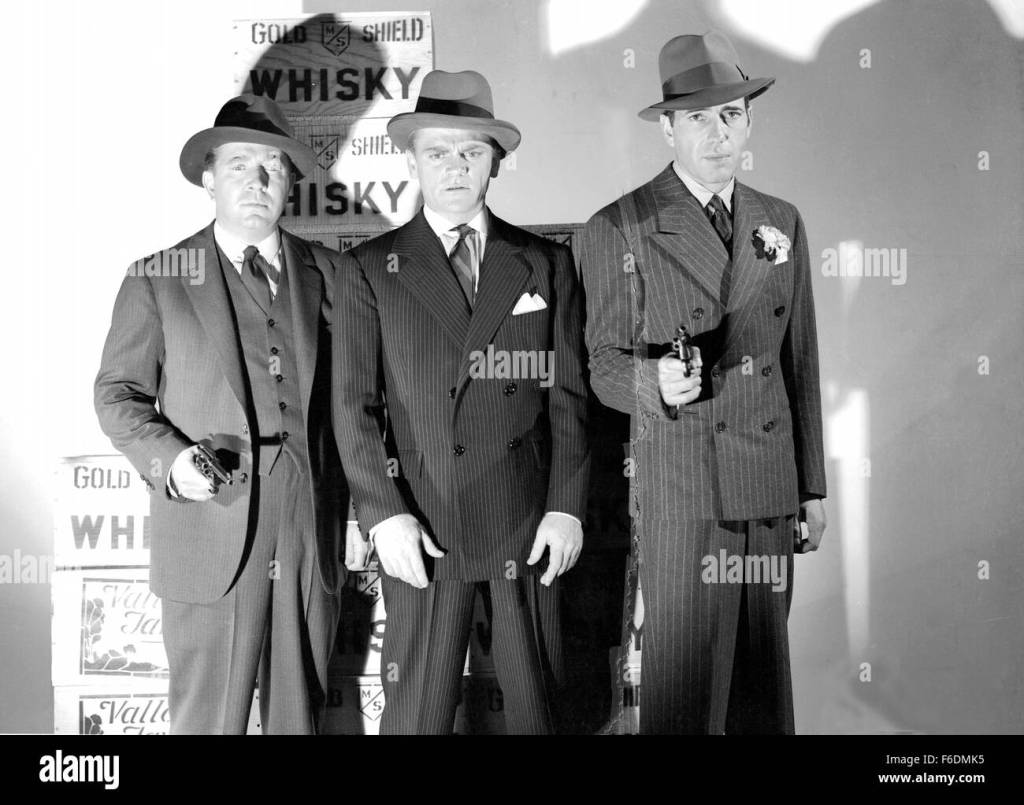
The crime thriller film “The Roaring Twenties” starring James Cagney, Priscilla Lane, Humphrey Bogart and Gladys George was released. It is a retrospective about the end of the First World War and how disaffected soldiers turned to crime. “The Roaring Twenties” is the only time that Humphrey Bogart and James Cagney star together. The timing of the release is excellent because late 1939 is a good time for summing up the past as international events appear to be lurching in radical new directions. The movie is an instant classic.
Russia increases support to China. Recent air successes are held to be due to new planes and pilots. Increasing numbers of Soviet Russian planes, guns and military technicians have appeared in China during the recent weeks that have witnessed new success by Generalissimo Chiang Kai-shek’s armies against Japan and revived strength in his air force.
Asked point-blank if yesterday morning’s pitched battle on the Shanghai International Settlement roads between municipal police and armed supporters of Wang Ching-wei would impair Mr. Wang’s political usefulness and value to the Japanese Army, the Japanese Embassy spokesman today replied that “this is one of the many phases of this affair that are under investigation.”
It is considered highly probable here that the Japanese will use this episode for gradually jettisoning Mr. Wang, whose candidacy for the head of the proposed Central China regime based on Nanking has not brought any measure of public support or enthusiasm and is even still opposed by several Japanese Army groups. The Japanese Army spokesman declares that there are still ten groups of Mr. Wang’s “special service bodyguards” involved in yesterday’s battle that are being detained and questioned, but meanwhile the Italians have withdrawn their forces from the troubled area, while a majority of those who battled the Settlement Police have returned to their headquarters building.
The breakdown of the attempt of the Settlement’s municipal council to have a foreign consular body adjudicate the outside roads issue was explained tonight by the Japanese Embassy spokesman. He said that about a month ago the Settlement’s municipal council. asked Japanese Consul General Yoshiaki Miura to use his good offices to mediate, whereupon Mr. Miura agreed to act as a go-between. However, on October 12 the Settlement’s municipal council asked the consular body to handle the case without previously notifying Mr. Miura that his good offices were no longer required. Because of this fact Mr. Miura refused to attend or to sanction the meeting of the consular body summoned for last Thursday.
Since the consular body cannot act without the attendance of all members and then only upon unanimous agreement the Japanese spokesman announced tonight that for the time being” the consular body would find itself unable to consider the outside roads questions. The spokesman added that before calling Thursday’s meeting the various members of the consular body had encouraged Mr. Miura to use his good offices to effect a settlement.
The Japanese Foreign Minister, Admiral Kichisaburo Nomura, will invite Ambassador Joseph C. Grew this week to open conversations looking toward a general clearing up of American-Japanese relations, according to reports appearing in several newspapers here this morning. Important concessions to the United States — along lines not hitherto publicly advocated — including the reopening of the Yangtze and Pearl Rivers and consideration for several hundred cases involving American rights, are considered possible in the prospective conversations.
In contrast to the broadsides that the Japanese press fired after Mr. Grew’s speech Thursday, frankly stating the critical opinion of Japan that prevails in the United States, the tone of today’s articles is conciliatory. They announce that Admiral Nomura is preparing to seek a comprehensive settlement of issues with Britain as well as the United States. That settlement, it is asserted, must come within the framework of Japan’s “new order,” which Admiral Nomura has just declared would not be anti-foreign. In choosing that definition, the Foreign Minister is believed to have intended to prepare for another approach to the adjustment of all concrete grievances of which Mr. Grew spoke.
Admiral Nomura’s policy, it is stated, would proceed toward the creation of the new regime in China while removing foreign reasons for actively opposing this new order. “The new diplomacy intends to respect the rights and interests of Britain and America in China, restore conditions within the occupied zone to normal as quickly as possible,” the Nichi Nichi says, “and induce America and Britain then to cooperate in the construction of the new order.” The Yomiuri says Admiral Nomura was firmly convinced that Japan’s “new order” policy would in no way conflict with what America was seeking. The paper declares that he meant to create in China a regime friendly to Japan and believed that course entirely. compatible with America’s interests in China.
Admiral Nomura’s policy with regard to the United States is defined by the Yomiuri as “seeking to discover the point of harmony between Japan’s immutable policy to build the new order in East Asia and the Far Eastern policy of the United States.” Such anticipations that the new Foreign Minister’s policy would start with concessions to the American viewpoint would have been impossible, political observers believe, if Mr. Grew’s speech had not shocked the Japanese public into realizing the real status of opinion. in the United States toward Japan.
Dow Jones Industrial Average: 153.71 (-0.15)
Born:
Charlie Foxx, American soul songwriter, guitarist, and singer (“Mockingbird”), in Greensboro, North Carolina (d. 1998).
Stanley Anderson, American actor (“The Drew Carey Show”), in Billings, Montana (d. 2018).
George Williams, MLB second baseman (Philadelphia Phillies, Houston Colt .45s, Kansas City A’s), in Detroit, Michigan (d. 2009).
C. V. Vigneswaran, judge and politician, in Hultsdorf, British Ceylon.
Died:
Zane Grey, 67, American western author (“Spirit of the Border”).
Naval Construction:
The Royal Navy corvette HMS Heliotrope (K 03) is laid down by John Crown & Sons Ltd. (Sunderland, U.K); completed by N.E. Marine. Ordered for French Navy but taken over with the fall of France. Transferred to the U.S. Navy under Reverse Lend-Lease at Hull, England, on 24 March 1942. Commissioned as USS Surprise (PG-63) on the same day. USS Surprise was decommissioned by the U.S.N. on 20 August 1945 at Chatham, England and returned to the Royal Navy on 26 August 1945. Sold into Merchantile service and finally ended up in the Communist Chinese Navy as Lin I.
The Royal Navy “M”-class destroyers HMS Marne (G 35) and HMS Martin (G 44) are laid down by Vickers Armstrong (Newcastle-on-Tyne, U.K.); completed by Parsons.
The armed merchant cruiser HMS Ranchi (F 15) is commissioned. Her first commander is Captain (Retired) Heneage Cecil Legge, DSC, RN.
The Regia Marina (Royal Italian Navy) Marcello-class submarine Comandante Faà di Bruno is commissioned.
The U.S. Navy Sargo-class submarine USS Seadragon (SS-194) is commissioned. Her first commanding officer is Lieutenant John Graham Johns, USN.

 History Diaries