Sporadic artillery exchanges take place on the Western Front. The no-man’s-land on the Moselle-Rhine is described as a sea of mud. The ground is too muddy from the recent rains for operations.
Western Byelorussia, Western Ukraine, and the Soviet-occupied areas of Poland held elections. Elections to the People’s Assemblies of Western Ukraine and Western Belarus were held to provide an appearance of legitimacy for the Soviet annexation of Poland.
The propaganda minister, Josef Goebbels, calls Winston Churchill a liar in a radio broadcast. Propaganda Minister Joseph Goebbels makes a radio address and calls Winston Churchill a liar. He accuses the British of deliberately sinking the SS Athenia in order to provoke the United States against the Germans. In his version of events, the Athenia was sunk by British destroyers and also was intended to be outfitted as a raider (which are somewhat contradictory arguments).
Goebbels knows this is not what happened and that U-30 sank the Athenia. The captain of the U-boat has told him the exact sequence of events and shown his superiors the U-boat log proving it (which was quickly suppressed). Goebbels chooses to continue the false narrative for propaganda purposes anyway, knowing that the British cannot disprove the lie and making their denials sound suspicious simply because they are unprovable and sound reflexive. The Kriegsmarine, in particular, Admiral Doenitz, is put out by these blatant falsehoods (or so they later claim), but nobody does anything to correct the story until after the war when Admiral Raeder finally sets the record straight.
Polish currency was replaced with Soviet rubles, Polish Industries moved into Russia, and the Soviet Union began phasing out Polish education, language, and religion.
Soviet General Boldin is appointed to the prestigious position of the Odessa Military District.
Soviet destroyer Minsk and seven Soviet submarines arrive in Tallinn to establish a base pursuant to the recent basing agreement between Estonia and the USSR.
The Soviet cruiser Kirov makes port at Riga in Latvia.
While the Finnish delegation was en route to Moscow today to continue its negotiations with Soviet Russia, the Cabinet sent to the Diet a new budget, made necessary by the expense of Finland’s crisis.
British General Wavell and French General Weygand leave Ankara at the conclusion of successful talks with the Turkish General Staff.
A Luftwaffe intruder is shot down over Southeast Scotland.
The breaking up of the Sicilian landed estates, which was hailed here as one of the greatest social reforms ever undertaken by the Fascist regime, and the Italo-German accord on the Upper Adige monopolized the attention of the Italian press today and have relegated all war news to the inside pages.
The Pope opened his heart to villagers in Castel Gandolfo today and, in revealing the deep sorrow caused him by the European war, urged them to pray to God in order that He may grant peace to the belligerents.
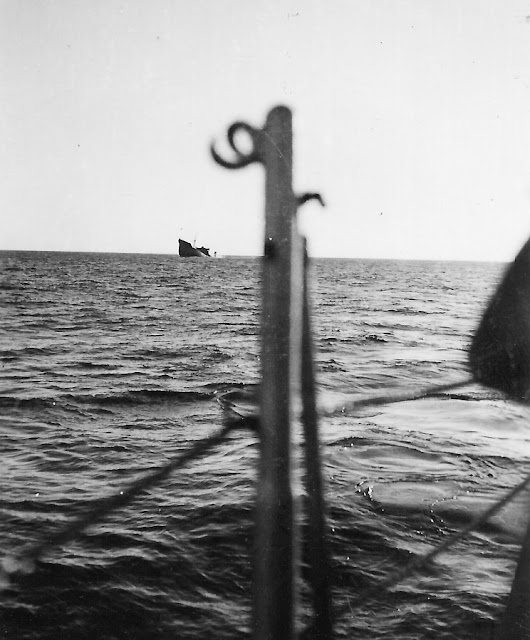
German armored ship Admiral Graf Spee stops the British 5,299-ton freighter Trevanion, embarks her crew, and sinks the ship at 19°40’S, 04°02’W.
The British cargo ship Whitemantle struck a mine and sank in the North Sea 5 to 6 nautical miles (9.3–11.1 km) off the Withernsea Lighthouse with the loss of 14 crew.
German vessel Poseidon is scuttled to avoid capture by the RN armed merchant cruisers Transylvania and Scotstoun.
U.S. freighter Patrick Henry, detained by the British since 10 October, is released.
U.S. freighters Endicott and West Gambo are detained by French authorities and portions of their cargo ordered ashore as contraband; 750 bales of carbon black from West Gambo and 2,276 bars of copper and 1,796 bags of carbon black from Endicott.
U.S. steamship President Hayes is detained by British naval authorities at Alexandria, Egypt, and searched for contraband.
Convoy HG.4 departs from Gibraltar for the UK.
The War at Sea, Sunday, 22 October 1939 (naval-history.net)
American merchant ship CITY OF FLINT, captured by German pocket battleship DEUTSCHLAND on the 9th, arrived at Murmansk.
Light cruisers DUNEDIN, DELHI and CALYPSO departed Sullom Voe for the Northern Patrol, CALYPSO proceeding to the Iceland-Faroes Channel. This brought the numbers of ships on patrol to two cruisers between the Shetlands and the Faroes, four cruisers between the Faroes and Iceland, and one cruiser and two AMCs in the Denmark Strait.
Destroyer JAVELIN was badly damaged at 0200 in collision with steamer MOIDART (1262grt) off Whitby. Destroyer AFRIDI, escorting convoy FN.24 nearby, was sent to assist, and two tugs and two anti-submarine trawlers left the Tyne at 0400. JAVELIN was towed by destroyer JUPITER to Middlesbrough and repaired until 1 January.
Convoy FN.25 departed Southend and escorting destroyer GURKHA attacked a submarine at 2130 contact 13 miles 68° from Orfordness on the 22nd. The convoy arrived at Methil on the 24th.
Convoy FS.25 departed Methil, escorted by destroyers MAORI, WHITEHEAD and sloop WESTON and arrived at Southend on the 24th.
Admiral Forbes arrived at Loch Ewe with the Main Fleet at 0800.
Battleships NELSON, RODNEY, battlecruiser HOOD, and destroyers INTREPID, IVANHOE, ICARUS, KELLY and KINGSTON sortied from Loch Ewe at 1830/22nd to cover the movement of convoy NV.1 of twelve British iron ore ships from Narvik.
Destroyers IMPULSIVE left Plymouth on the 23rd, reached Scapa Flow on the 25th, and left next day to join Forbes at sea, KINGSTON detached from the force to Scapa Flow with defects, and FIREDRAKE joined on the 29th.
Light cruisers EDINBURGH departed Rosyth on the 23rd and joined the escort off Muckle Flugga at noon on the 24th, and AURORA departed Loch Ewe, also on the 23rd, and joined off the Norwegian coast at 0130/26th. Destroyers SOMALI, ASHANTI, TARTAR and FAME also joined from Scapa Flow.
En route to the Firth of Forth, destroyer FAME and two merchant ships were detached to join an Atlantic convoy.
At 0630/30th, SOMALI depth charged a submarine contact near Kinnaird Head in 57 45N, 1 02W. TARTAR also joined in the attack before catching up with ASHANTI which by now was shepherding the convoy away from the area. FAME later rejoined, stood guard on the contact which remained stationary and dropped more depth charges at 0915/30th. NV.1 arrived safely on the 31st.
Convoy BC.12 of steamers ANGLIAN COAST, BALTRADER, BARON NAIRN, CISCAR, CITY OF KEELUNG (Commodore), CLAN MONROE, DEVON COAST, FABIAN, KERMA, MARGALAU, PACIFIC COAST, PIZARRO, RONAN, TREVERBYN and YEWMOUNT departed the Bristol Channel escorted by destroyer EXPRESS and WESSEX, and arrived safely in the Loire on the 24th.
Convoy AXS.2 of one steamer departed Fowey, escorted by destroyer WAKEFUL, and reached Brest on the 24th.
German destroyers MAX SCHULTZ, FRIEDRICH IHN, ERICH STEINBRINCK, HANS LODY, BERND VON ARNIM and ERICH GIESE carried out an anti-shipping sweep in the Skagerrak from the 22nd to 24th.
U-16 laid mines in the Straits of Dover, on which one auxiliary minesweeper was sunk.
Destroyers GRAFTON and GALLANT departed Gibraltar for Alexandria on the 15th and after calling there, returned to Gibraltar. Sister ships GREYHOUND and GLOWWORM, also sailing from Alexandria to Gibraltar, called at Toulon on the 18th, after which all four left Gibraltar on the 19th for the UK. En route they were ordered to search for a lifeboat from CLAN CHISHOLM (7256grt), lost on the 17th, and reached Plymouth on the 22nd. Assigned to duty at Harwich, they were due to be joined by Polish destroyers ORP GROM, ORP BURZA and ORP BŁYSKAWICA.
Convoy HG.4 of 41 ships left Gibraltar, escorted by destroyers GRENVILLE, GIPSY and minesweeper LEDA, and by French destroyers BOURRASQUE and FOUDROYANT from the 22nd until their arrival at Brest on the 29th. Destroyers WISHART and VIDETTE provided local escort, detached on the 23rd and patrolled off Cadiz. The convoy arrived at Liverpool on the 29th, with GRENVILLE, GIPSY and LEDA arriving on the 30th.
French battlecruiser DUNKERQUE, light cruisers GEORGES LEYGUES, GLOIRE, MONTCALM and large destroyers MOGADOR, VOLTA, L’INDOMPTABLE, LE MALIN and LA TRIOMPHANT left Brest, escorted in the local approaches by destroyers CYCLONE and MISTRAL, which arrived back on the 25th. The main force then patrolled the Antilles-English Channel route, to cover the movement of convoy KJ.4 until the 30th when they arrived back at Brest.
Heavy cruiser YORK departed Halifax to support convoy HX.5 which had left on the 17th, and to search for German battleship DEUTSCHLAND.
Light cruiser ENTERPRISE departed Halifax on patrol duties and arrived back on the 29th.
Heavy cruiser NORFOLK departed Alexandria and arrived at Malta on the 23rd.
Australian light cruiser HMAS PERTH departed Bermuda.
German pocket battleship ADMIRAL GRAF SPEE sank steamer TREVANION (5299grt) in the South Atlantic in 19 40S, 04 02E.
German steamer EMMY FRIEDRICH (4372grt) departed Tampico, Mexico, during the night of the 19th/20th to act as a supply ship for German pocket battleship ADMIRAL GRAF SPEE. Allied warships began a search for her in the Gulf of Mexico, and joined by US aircraft carrier RANGER (CV.4) as part of the Neutrality Patrol, in the Caribbean. Light cruiser ORION, which departed Kingston on the 21st and Canadian destroyer SAGUENAY sighted EMMY FRIEDRICH on the 22nd in the Yucatan Channel and she turned away, back into the Gulf of Mexico. The contact report from ORION enabled light cruiser CARADOC, which departed Bermuda on the 20th, to intercept her early on the 23rd. EMMY FRIEDRICH was scuttled and CARADOC picked up her crew of 33 and took them to Bermuda, arriving on the 27th. ORION got back to Kingston on the 26th.
The U.S. Senate debate on the Neutrality resolution will enter the home stretch this week with prospects of an Administration victory undimmed although the margin of victory may not be as great as some Administration strategists have predicted. A vote on final passage of the bill was believed today to be certain not later than Saturday. Advocates of the measure predicted passage by a majority of twenty-five votes. Isolationists were refusing to concede defeat publicly, but all surveys indicated that they would lose.
Before a vote is reached on final passage Administration leaders will have to stave off passage of amendments that will be offered from the floor. This they are confident of their ability to do. If the efforts of Senator Barkley, the majority leader, are successful, voting on amendments will begin not later than Wednesday. Mr. Barkley, after failing yesterday to get an agreement for limitation of debate, will renew the attempt tomorrow. During the sixteen days of debate that have passed Senatorial decorum has been maintained even more punctiliously than is customary. This has been largely because the debate has been conducted thus far almost entirely through set speeches, a procedure not common to Senatorial discussion.
When discussion of amendments preliminary to voting begins, however, the debate may shift from the bouquet to the brickbat stage and attain an intensity hitherto lacking. Two of the leading isolationist Senators made radio addresses tonight the vehicles for assaults upon the Neutrality resolution and its provision for repeal of the embargo upon shipments of arms and munitions of war, which is the crux of the present controversy. Senators Borah and Nye spoke over National Broadcasting Company networks. Each of these leaders in the fight to maintain the arms embargo as a fundamental of American policy contended that abandonment of that policy would be the first step toward involving the United States in a European war. Each scorned the argument that fundamental Democratic ideals were at stake, arguing instead that the current struggle in Europe is merely power politics and that participation by the United States could not in any way cure the economic and political ills of the Old World.
Senator Borah assailed the Marquess of Lothian, the British Ambassador, whom he quoted as having called the neutrality policies as set forth in existing legislation a “house of cards,” which “was fatally undermined during the last week in September.”
“With some degree of pride,” Senator Borah said of Lord Lothian, “he must look down from the Senate gallery, if he deigns to visit that humble scene, and note the progress toward repeal of a law he so early and so boldly denounced.”
The addresses of Senators Borah and Nye were regarded as a last-minute effort to stir public sentiment to further protests against repeal of the arms embargo such as deluged the capital during the early days of the debate. Isolationist leaders were still counting upon reaction from the country to crystallize anti-repeal sentiment in the House. Senator Clark of Missouri and Senator Nye are scheduled to speak in the Senate tomorrow, but it is not believed that any great number of others are desirous of delivering long set speeches. Senator Alexander Wiley of Wisconsin, as yet uncommitted, also is expected to speak tomorrow and perhaps announce how he will vote.
The Administration leaders believe that they have spiked the guns of those who would attempt to amend the law by abandoning the ninety-day credit clause and by proposed modifications of the restrictions on American shipping. Numerous other amendments have been suggested and others are expected, but the leaders express little concern about them.
A possibility that the program drafted by Democratic members of the Foreign Relations Committee might encounter obstacles, however, was seen in reports that shipping interests were not satisfied with the provision which would make all of Europe a closed zone for American ships. Important shipping agencies are said to feel that to be barred from trade with established European outlets for American products in non-combat areas imposes upon them unnecessary hardships and gives to other neutrals an unfair competitive advantage. This viewpoint may be expressed during debate on the amendment in the Senate, and it was reported that lines were being formed for a further fight on the “carry” clauses of the “cash and carry” provisions of the bill when the measure reaches the House.
Senator Borah asserted in his radio address that the arguments advanced during the Senate debate that “we should send arms and munitions to Europe to destroy nazism and do away with its leader” were fallacious. “We may send munitions and arms to Europe but they will not. be used to destroy nazism,” he said. “They will be used to settle the questions of territory and power.
“In reading the replies of Daladier, the Prime Minister of France, and of Chamberlain, the Prime. Minister of Great Britain, to Hitler’s proposal for peace, the issue becomes perfectly clear. It is territory; it is political power, not nazism. Nazism has had no better friend since coming into power than the Government of Great Britain. I do not include France because France he often held back in favoring nazism. Neither do I mean to say that the English people believe in the philosophy of nazism. But I do mean to say, and most sincerely assert, that from the first entrance of Hitler and his theory of government upon the scene in Europe, they have had the kindliest support of the British Government until the break came over questions of territory and power.”
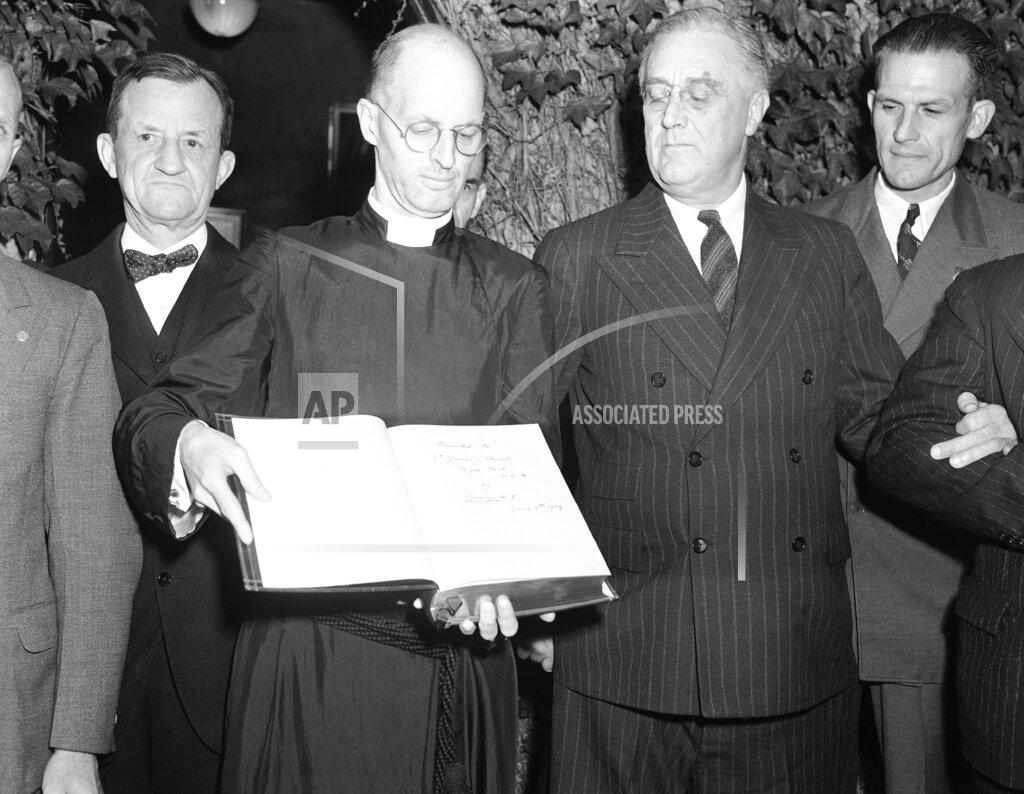
President Roosevelt heard a prayer today that King George of England might be strengthened to “vanquish and overcome all his enemies.” His head bowed, Mr. Roosevelt sat with the congregation of St. James Episcopal Church as the Almighty’s blessing was asked on the head of England’s Church and, also, that his enemies might not prevail against him. It was a special service and a special prayer which the Chief Executive heard, for there is no such supplication in the American version of the Episcopal prayer book, which mentions only the President among civil authorities for whom divine aid and guidance are asked. But the prayer for the British sovereign was to be found in a Canadian prayer book brought by the Rev. Frank R. Wilson, the President’s pastor, from Campobello Island, New Brunswick.
An estimate that 690,000 wage workers would receive pay increases after tomorrow as a result of the mandatory wage schedule increase of the Wages and Hours Act, and that 2,382,500 workers would have their working hours reduced from forty-four to forty-two a week was made in a statement which the Labor Department issued today.
“Decisive action in a few hours” against Earl Browder, general secretary of the American Communist party, for his admitted use of a false passport when traveling abroad was declared at hand by the Department of Justice today, with steps believed likely tomorrow in the Federal Court for the Southern District of New York.
A proposal that the American League for Peace and Democracy condemn the Soviet-Nazi pact and Russian “aggression” in Poland was voted down fourteen to one by the league’s executive committee, Dr. LeRoy E. Bowman, a member of the staff of the United States Office of Education, disclosed today.
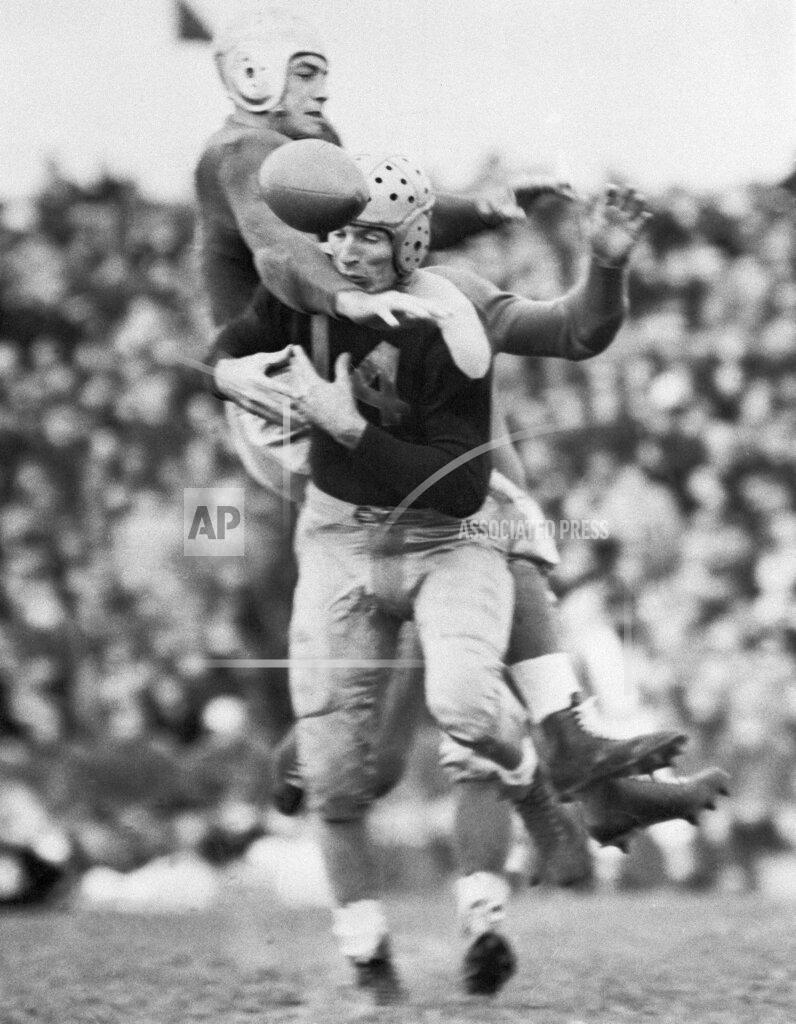
American pro football was televised for the first time when NBC broadcast a game between the Philadelphia Eagles and the Brooklyn Dodgers. The telecast was available to the approximately 500 television sets in the New York area and was also shown on monitors at the New York World’s Fair. The hometown Dodgers won, 23–14.
Argentina agitates to get the Falklands. he Falkland Islands are again putting a heavy strain on the friendship between Argentina and Great Britain. Argentina’s most serious political question in international affairs is her dispute with Britain over the sovereignty of these islands which lie within 200 miles of Argentina’s Patagonian coast. A committee is formed to press for reclamation while the British recruit a defense force.
The Congress Party in India declines to support the British war effort and condemns British imperialism. The Congress Party called upon all Congress ministries to tender their resignations. The unilateral protest resignation was supported by Jawaharlal Nehru, but less so by Mahatma Gandhi, who felt that it would strengthen both unwanted British wartime militarization and the Muslim League. Both Viceroy Linlithgow and Muhammad Ali Jinnah were pleased with the resignations.
Between 15,000 and 20,000 Australian men will be called up for compulsory military training in January. This corresponds to the estimated loss, of volunteer militiamen through enlistments in the expeditionary force, medical unfitness, elimination of men in reserved occupations, and release of married men.
Born:
Joaquim Chissano, 2nd President of Mozambique (1986-2005), in Gaza Province, Portuguese Mozambique.
Ray Jones, British rock bassist (Billy J Kramer & The Dakotas), in Oldham, England, United Kingdom (d. 2000).
Tony Roberts, actor (“Annie Hall”, “Edge of Night”, “Lucie Arnaz Show”), in New York, New York.
Suzy McKee Charnas, American science-fiction writer (“Walk to the End of the World”), in Manhattan, New York, New York (d. 2023).
Kelton Winston, NFL defensive back (Los Angeles Rams), in Corsicana, Texas (d. 1980).
Naval Construction:
The armed merchant cruiser HMS Dunnottar Castle (F 34) is commissioned. Her first commander is Captain (retired) Henry Edmund Harvey Spencer-Cooper, RN.
The Вое́нно-морско́й флот СССР (ВМФ) (Soviet Navy) Project 7-class (Gnevny-class) destroyer Bditelny (Бдительный, “Watchful”) is commissioned.
The Вое́нно-морско́й флот СССР (ВМФ) (Soviet Navy) Project 20-class flotilla leader Tashkent (Ташкент), sole ship of her class to be commissioned, is completed.
 History Diaries