Hostile troops from Cambodia crossed into South Vietnam early today and captured an American Special Forces officer, the United States Military Assistance Command announced. The hostile force withdrew toward the frontier with its prisoner. Military and diplomatic spokesmen charged that Communist Việt Cộng insurgents were being “regularly supported in military operations from installations and gun positions inside Cambodian territory.” Previous South Vietnamese charges of collusion have been vehemently denied by the Cambodian head of state, Prince Norodom Sihanouk. He has insisted that Cambodia is maintaining a position of neutrality between the Việt Cộng and the Saigon Government. The spokesmen were unwilling to say definitely whether the intruding unit of several dozen troops was Cambodian or Việt Cộng. “They were wearing loose black uniforms,” a spokesman for the Special Forces, or antiguerrilla troops, said. He noted that Việt Cộng also wore such uniforms while Cambodian border guards were garbed in brown.
The spokesman said that men in both kinds of uniforms had been seen together just across the Cambodian frontier for months. On the basis of field reports, the spokesmen could not say for sure that the captured United States officer had been taken into Cambodia, but that was the implication. He was alive and apparently uninjured when last seen. His identity was withheld pending notification of his family. The incident occurred in the Mekong Delta Province of Kiến Phong, 80 miles west of Saigon. During the present rainy season, the entire area is under two to six feet or more of water. When the officer was seized, government forces, consisting of about 125 men operating in small flat boats called sampans, had just engaged a Việt Cộng concentration, also in sampans, maneuvering among low dikes built up as defensive position The main engagement was about 300 yards inside South Vietnam.
After about 20 minutes of heavy fire, a spokesman said, “eight manned sampans crossed from the Cambodian side, encircled the Vietnamese force and ultimately cut off the rear boat.” The United States officer in this boat was seen being dragged into one of the eight sampans, which then turned back toward Cambodia, the spokesman said. This stretch of border is delineated by the So Ha River, he added, and is “clearly discernable.” The Special Forces spokesman said that during the engagement the South Vietnamese troops were fired upon by machine guns and a mortar from an outpost about 150 yards inside Cambodia. He declared the outpost “has offered regular artillery support” for Việt Cộng maneuvers ust inside South Vietnam.
It is reported that Hanoi’s government radio is increasing its propaganda broadcasts into South Vietnam and is repeating with approval the criticisms of the Johnson administration’s handling of the war being made by various U.S. senators including Barry Goldwater. Charges by the Republican Presidential nominee have been repeated approvingly by Radio Hanoi each time he has denounced United States policy in South Vietnam. The North Vietnamese have quoted him as saying that the United States is “sustaining setback after setback in South Vietnam” and that the situation “seems to have deteriorated from confusion to chaos.” In one recent broadcast the commentator said that Senator Goldwater “squarely speaks out what President Johnson tries his best to conceal.” No mention is made in the broadcasts of Senator Goldwater’s demand for a stronger policy toward the Communists, in Southeast Asia.
Instead his criticisms have been cited, along with those of Senators Wayne Morse of Oregon and Ernest Gruening of Alaska, both Democrats, as proof that the United States should withdraw from South Vietnam. The Communist radio offensive is carried on two beams. With a 70 to 100 kilowatt transmitter in North Vietnam, Hanoi sends programs in Vietnamese, Chinese, French and English. They can be received throughout the country. On another frequency, often much weaker, the National Front for the Liberation of South Vietnam also broadcasts daily.
Its announcers say they are operating clandestinely within South Vietnam. Western authorities here believe some programs are broadcast from mobile transmitters in the south, but that others are beamed directly from North Vietnam. The contents of commentary from Hanoi and the National Front are always well coordinated. Under the expanded campaign more broadcasts have been beamed at the cities and provincial capitals that are generally Government‐held. “Dear compatriots,” one National Front broadcast began earlier this month, “we are riding a high wave and nothing can keep us from doing so.”
Students and Buddhists have, been frequent targets. In some programs Communists have attempted to breed suspicion of Roman Catholics. Shortly afterward the same announcers have accused the United States of trying “to set one religion against another.” “The inconsistencies do not seem to bother the commentators,” one British analyst said, “so long as the end result discredits all authority in the south.” He said that the latest target for broadcasts had been the Chinese in South Vietnam, most of whom are considered partisans of Taiwan. Western experts are not certain how effective the unceasing propaganda has been among South Vietnam’s 15 million restdents. They suggest that the Vietnamese have become so inured to exaggerated claims and counterclaims that they scarcely listen.
The new Soviet regime published today its first fairly explicit accusations against Nikita S. Khrushchev. The editorial was the sharpest attack so far on the former leader. It caused foreign observers to wonder whether the time was approaching when Mr. Khrushchev’s name would be mentioned in printed attacks. In effect, the charges were that the deposed Premier and Communist party chief had revived Stalin’s personality cult and applied it to himself. The charges were in an editorial in the Communist party organ Partiinaya Zhizn. The editorial is the first of a series of explanations planned on the removal of Mr. Khrushchev from power last week.
Mr. Khrushchev’s successors said that no Communist, no matter how highly placed in the party, could be permitted to get away with nepotism, inefficiency and defiance of control by the proper authorities. They accused Mr. Khrushchev, by implication, of having neglected to take the advice of his colleagues in the leadership and, generally, of having failed to live up to the “moral” standards required of a Communist. Partiinaya Zhizn is a biweekly journal of the Communist party’s Central Committee. The issue containing the antiKhrushchev editorial went to press Saturday, the day after the official announcement that Mr. Khrushchev had been relieved of power, ostensibly because of age and health.
The Secretary General, U Thant, electrified a news conference here today by saying he thought it would be “helpful and even desirable” if Nikita S. Khrushchev “were able or inclined to make a public statement on the circumstances leading to his exit” from power. He also voiced warm praise for the ousted Soviet leader as an effective worker for world peace and expressed confidence that the new regime would continue Mr. Khrushchev’s policy of reduced cold war pressures and efforts to improve relations with the West. Mr. Thant paid compliments to the new Soviet Communist party chief, Leonid I. Brezhnev, and the new Soviet Premier, Aleksei N. Kosygin. He said he had met them on a number of occasions and he described them as able and unpretentious.
Mr. Thant declared that Nikolai T. Fedorenko, chief Soviet representative at the United Nations, had assured him the new regime would continue to base its policy on peaceful coexistence, disarmament, peaceful, settlement of disputes and strengthening of the United Nations. “Both Mr. Brezhnev and Mr. Kosygin have a realistic appraisal of the world situation,” Mr. Thant said, “and it is unlikely that they will reverse the course of history by taking the Soviet Union back to the pre-1953 era,” the Stalinist era. About 100 correspondents listened with interest as the Secretary General spoke of his past meeting with the new Soviet leaders. They sat up straighter as he said: “As regards Mr. Khrushchev, I have, as you know, made my personal assessment on more than one occasion.”
The Secretary General suggested today that the five nuclear powers, including Communist China, meet next year to discuss a prohibition on all nuclear tests, measures to prevent the spread of nuclear weapons and other phases of disarmament. U Thant said at a news conference that he considered China“ recent nuclear test deplorable and that he found “some merit” in former Governor Alfred M. Landon’s suggestion that the nuclear powers meet. The 1936 Republican Presidential candidate made the suggestion Tuesday in a speech in‐Columbus, Ohio. Mr. Landon said: “Since 1948 I have urged the recognition of Red China and its admission to the United Nations. I have said that discussions of limitation of world armament, a World Court, even the United Nations, were useless without including China, with a fourth of the world“ population.”
“I feel,” Mr. Thant said, “that it could be very worthwhile if attempts were made to have a dialogue between the United States, the Soviet Union, the United Kingdom, France and the People“ Republic of China, perhaps sometime in 1965.” “In my view,” he added, “1965 will be a more congenial year than previous years for the conduct of such a dialogue. Of course, there are protocol and diplomatic considerations, but I feel very strongly that they should be secondary. The primary consideration should be that of nuclear destructibility and radioactivity.”
The Secretary General observed that China“ nuclear test last Friday, which established it as a nuclear power, was “particularly regrettable” in the light of the treaty under which the United States, Britain and the Soviet Union agreed last year to halt all except underground tests. He did not refer to the refusal of Communist China and France to sign it or to the United States’ rejection of China“ call for a worldwide summit conference to prohibit nuclear weapons. The call was issued in the announcement of the test. Mr. Thant remarked, however, that the Chinese test was in conflict with a General Assembly resolution, adopted in 1962, condemning “all tests, including underground tests.” That condemnation “still stands,” he added.
Communist China asserted today that its explosion of an atom bomb had bolstered the morale of revolutionary movements. It coupled a statement of its nuclear policy with a commentary warning the United States against extending the war in Indochina. Jenmin Jih Pao, in a 2,700word editorial, declared that Communist China had “finally gained the means of resisting the United States nuclear threat.” The official newspaper rejected suggestions made last Sunday by President Johnson that Communist China sign the nuclear test ban treaty and join in efforts to prevent the spread of nuclear weapons. Jenmin Jih Pao asserted that statements this week by Mr. Johnson deploring the Chinese nuclear test “boiled down to this: the United States alone can have nuclear weapons, China should not.”
United Nations headquarters here announced today that it had negotiated an agreement to reopen the Nicosia‐Kyrenia road. Most of the vital road has been under the control of the Turkish Cypriots since fighting broke out last December. An agreement on the rotation of soldiers of regular Turkish contingent here was also announced. The issues have been interlocked. The road is expected to be opened to Greek Cypriot traffic in the next few days. The United Nations said it would “assume control” of the road and would organize daily two‐way convoys with escorts. The convoys will bypass the embattled Turkish‐held northern half of Nicosia.
The European Parliament, comprising representatives of the six nations of the Common Market, overwhelmingly supported to day France’s demand for an early agreement on grain prices. The assembly, meeting at Strasbourg, adopted a resolution demanding that the Ministerial Council of the Common Market, or European Economic Community, fix the prices by December 15. Yesterday, General de Gaulle’s Government warned that France would withdraw from the market unless differences with Germany over the prices were reconciled. French officials here said that the dispute on grain prices was delaying progress on three other pressing items: quicker tariff reduction on nonfarm products, proposals for European political unity and the Kennedy round of negotiations between the Common Market and the United States on tariffs. The French Government’s statement has strained the fabric of European cooperation, according to diplomats here.
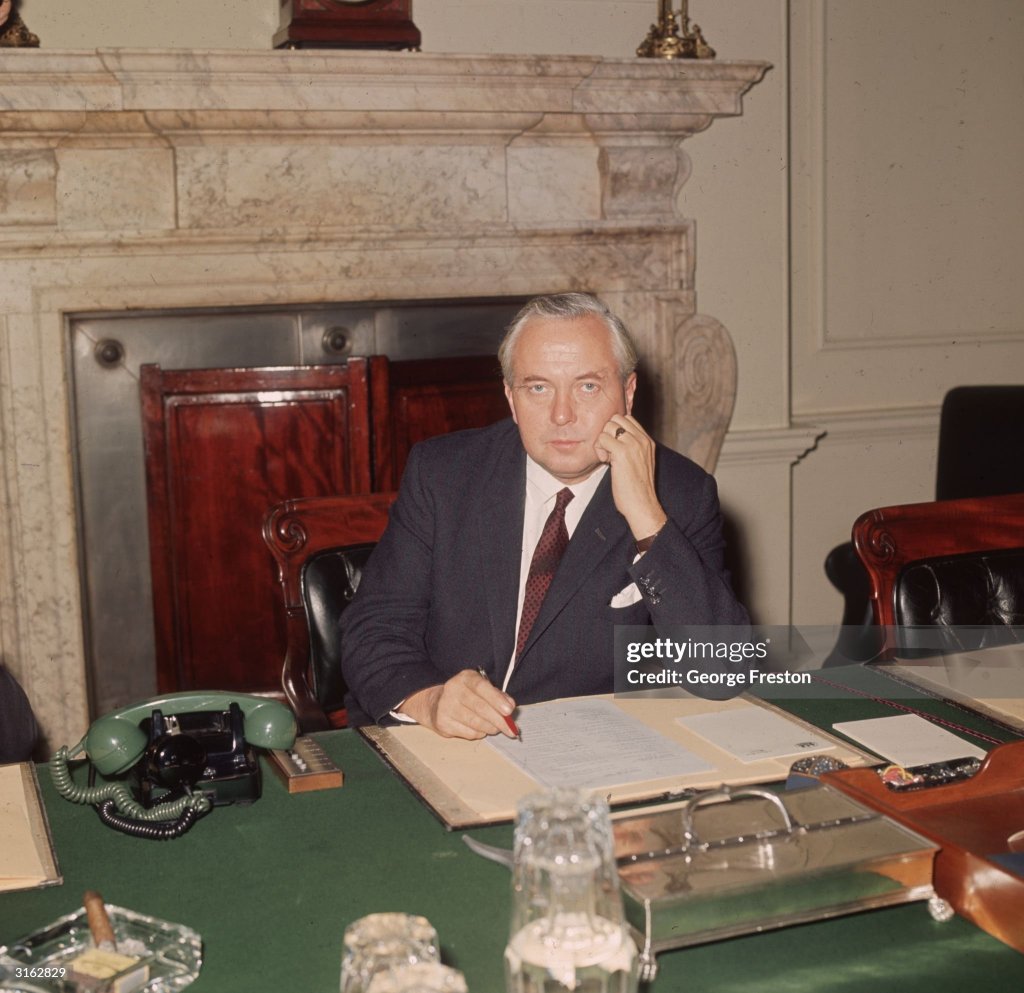
Prime Minister Harold Wilson plans to make a television address Monday night on the economic state of the nation. The message will describe measures the new Labor Government will take to try to narrow the widening gap between what Britain buys and sells overseas. The message originally had been planned for this week, but the burden of work, coinciding with the hectic reshuffling of personnel to staff a new Ministry of Economics, has forced the delay. George Brown, the new Economics Minister, who is working now in the old Ministry of Defense building overlooking St. James’s Park, and James Callaghan, Chancellor of the Exchequer, will hold a news conference the day of Mr. Wilson’s broadcast.
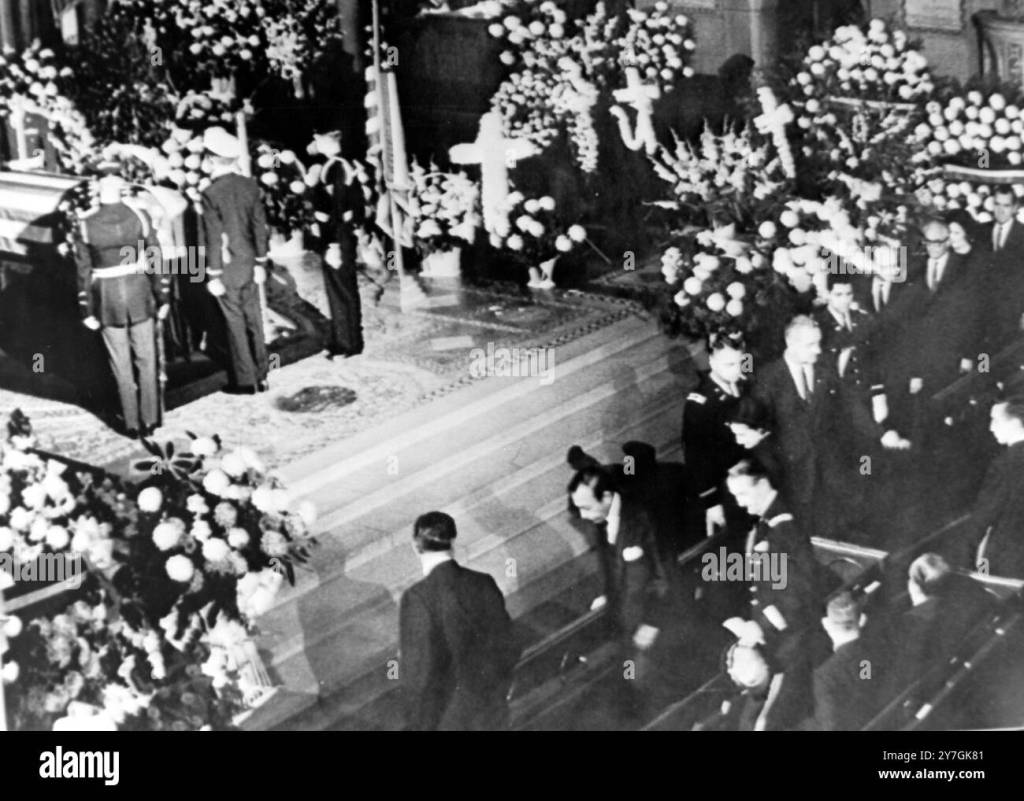
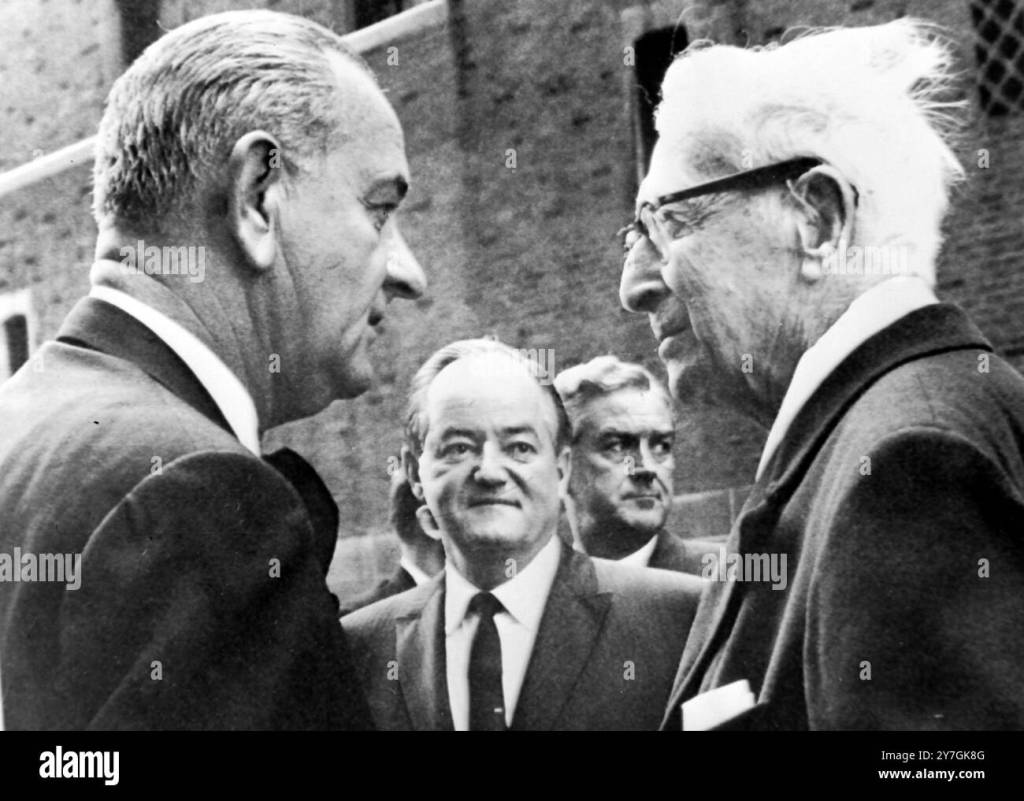
Led by President Johnson and Senator Barry Goldwater, the city of his last years bade goodby to Herbert Clark Hoover in a solemn funeral service yesterday. It was the simplest form of the Episcopal service from the Order for the Burial of the Dead. Only 14 minutes long, it was expanded by a 158‐word special prayer that recalled Mr. Hoover’s “concern for the needs of all mankind.” For the day, the bitterness of the political campaign was stilled. Not only both. of the major Presidential candidates, but also some of their most redoubtable campaigners, went to St. Bartholomew’s Episcopal Church to pray for the nation’s 31st President, who died here last Tuesday at the age of 90.
Former President Dwight D. Eisenhower, who is 74 years old, was unable to attend the service when he suddenly became ill at his home in Gettysburg, Pennsylvania. General Eisenhower went to Washington, where he was admitted to Walter Reed General Hospital for what was described as a painful cough and inflammation of his windpipe. The illness may keep him there a week or 10 days. Former President Harry S. Truman, who is 80, left a Kansas City, Missouri, hospital for his home in Independence, Missouri, yesterday after receiving treatment for injuries suffered in a fall at home on October 13. Mr. Truman designated his daughter, Margaret, and her husband, Clifton Daniel, the managing editor of The New York Times, to represent him at the memorial ceremony here.
In addition to President Johnson, Senator Hubert H. Humphrey, the Demoeratic candidate for Vice President, attended. On the Republican side, in addition to Mr. Goldwater, were Representative William E. Miller, the Vice‐Presidential nominee, and two former Presidential candidates, Thomas E Dewey and Richard M. Nixon. There were only about 500 persons in the great domed church on Park Avenue at 50th Street, and there were empty expanses on the main floor. With balconies, the church seats 1,400. But those admitted had been limited to a special invitation list of about 1,000. Three hundred more places were reserved for diplomatic and consular representatives.
There were two periods during the day in which the public at large could pay respects to the former President, who lay in state in a closed, flag‐draped coffin guarded by men from the five military services. From 9 AM to 3 PM, 13,800 persons filed past the bier before the church was closed for a security check and then reopened for those who could attend the service. Beginning again at 5:20 PM, new visitors were admitted — a total of 6,500 until 9 PM, when the doors were closed. The crowds appeared thoughtful and solemn. They could recall a man who had lived a full life of many careers — engineer, humanitarian, Cabinet officer, President, administrator of new relief efforts after World War II, and Government reorganizer.
The Federal Bureau of Investigation reported to President Johnson tonight that an extensive investigation had revealed no information that Walter W. Jenkins had “compromised the security or interests of the United States in any manner.” J. Edgar Hoover, director of the bureau, made public a summary of the agency’s findings. The full report went to the White House early tonight.
Mr. Hoover said that more than 500 persons had been interviewed since the investigation was ordered by Mr. Johnson on October 14, within an hour after the first press reports that Mr. Jenkins was arrested October 7 on a morals charge. Mr. Jenkins resigned October 14 as special assistant to the President. It was subsequently disclosed that he had been arrested January 15, 1959, on a similar charge. Mr. Jenkins has been in the George Washington University Hospital here since his resignation. The Jenkins case has been used and undoubtedly will be pressed right up to Election Day as an important campaign issue by the Republicans.
While Mr. Hoover’s summary did not disclose a finding that Mr. Jenkins had been involved in any breaches of security, it also did not sustain suspicions, voiced by some White House sources, that he had been entrapped or lured into the October 7 incident. “Mr. Jenkins was interviewed by the F.B.I. on October 18, 1964,” Mr. Hoover’s summary said, “and admitted having engaged in the indecent acts for which he was arrested in 1959 and 1964.” The summary said that Mr. Jenkins asserted he was “enticed” by the arresting officer in 1959. Of the incident this year, the summary said Mr. Jenkins had told the F.B.I. that “his mind was befuddled by fatigue, alcohol, physical illness and lack of food.”
A 5.3 kiloton nuclear device was detonated in Mississippi in the underground Tatum Salt Dome, 2,700 feet (820 m) below Lamar County near Baxterville. The shock wave from the blast “lifted the ground 4 inches in a ripple that rolled across the countryside for miles”; prior to the blast, a U.S. Atomic Energy Commission employee placed a humorous sign near the instruments over the blast site, with the words “The South shall rise again”. The test was the “Salmon” phase of the U.S. Atomic Energy Commission’s Project Dribble, part of the Vela Uniform program.
A Federal District judge in Mississippi ordered contempt proceedings today against Justice Department officials for refusing to draw up indictments at the request of a grand jury and the court. Judge Harold Cox ordered a jail term for United States Attorney Robert E. Hauberg and directed Acting Attorney General Nicholas deB. Katzenbach to show cause why he should not go to jail for contempt. The Justice Department issued a statement in Washington saying it was not obligated to draw indictments in cases it does not choose to prosecute and announced it would appeal the ruling.
The 23‐man grand jury had been investigating alleged violation of civil rights laws at the request of United States attorneys but apparently went off on its own and sought indictments that the government did not wish to pursue. The nature of the indictments sought by the jury was not disclosed, but they were believed to involve the civil rights movement in Mississippi and were not at all the kind of indictment that the Justice Department had been seeking. The jury had met in Biloxi earlier last month and conducted a two‐week investigation into alleged violation of the civil rights of Blacks in the Philadelphia, Mississippi, area. The jury returned indictments against Sheriff Lawrence Rainey of Neshoba County, Deputy Sheriff Cecil Price, two Philadelphia policemen and a former sheriff, charging them with unlawfully detaining and beating several local Blacks on two occasions.
Neither incident, however, in volved the detention and slaying of three civil rights workers in Philadelphia last June. The government asked for but did not get indictments in this case and several others it presented to the jury. The jury met in Jackson yesterday to resume deliberations and the government was reported to have had no plans to pursue the civil rights matter further. Any additional prosecutions will have to come from the state, which has jurisdiction in murder or kidnapping charges. But the jury sought to return indictments that the government had not requested. After United States attorneys refused to prepare the indictments the jury went to Judge Cox. The judge called the jury and attorneys into the courtroom today and ordered Mr. Hauberg, attorney for the Southern District of Mississippi, to draw up the indictments. Mr. Hauberg replied that Mr. Katzenbach had directed him not to “prepare or sign indictments in matters now being heard.” The judge then ordered him confined to jail “until you decide to comply with the order of the court” but delayed the effective date of the sentence for five days.
State and Federal authorities announced the arrest today of four white men on charges of assault and battery with intent to kill two civil rights workers. Taken into custody at Natchez, Mississippi, were Ernest Henry Avants, 34 years old, Frank Hyman Thurman, 30; John William Barber, 33, and James Kenneth Greer, 33. They were arrested in connection with the beating in 1963 of Bruce Payne, 22, a white civil rights worker from Arlington Virginia, and George Green, 21, a Greenwood Black. The incident took place when Mr. Payne and Mr. Green allegedly were followed from Natchez to Port Gibson and accosted by the four white men at a service station. The four allegedly beat Mr. Payne with their fists.
Federal Judge Thurgood Marshall was urged today to return to the general convention of the Protestant Episcopal Church after walking out on Tuesday night. Judge Marshall, the first Black to represent the Diocese of New York at the Church’s triennial gatherings, left they convention after its House of Deputies rejected a civil disobedience resolution that would have recognized the right of persons to disobey segregation laws that are in “basic conflict with the concept of human dignity under God.” The plea to return emphasized that in other actions the convention had in effect approved interracial marriage and condemned discrimination in housing.
Senator Barry Goldwater efforts to tuck away the electoral votes of the conservative traditionally Republican states of the Great Plains are stumbling. General of the Army Dwight D. Eisenhower ran up huge pluralities from Texas to North Dakota in 1952 and 1956. Richard M. Nixon swept the Prairie States from Oklahoma to the Dakotas by overwhelming margins in 1960. Kansas, Nebraska, and the Dakotas have not gone Democratic in a Presidential election since the Roosevelt landslide of 1936. But with Mr. Goldwater as the Republican nominee, there has been a drastic change. Even in strongly conservative Nebraska, which gave Mr. Nixon 62 percent of its vote, the highest in the nation, political observers believe President Johnson now enjoys a slight edge. Polls find, and informal soundings reinforce the conclution, that for the first time since 1936 the Democratic Presidential candidate could sweep the 53 electoral votes of the Plains States in the north-south tier from Texas to North Dakota.
The State Department denied today that the United States had given Indonesia materials with which it could make atomic weapons. Senator Barry Goldwater was quoted as saying yesterday that United States aid in setting up an Indonesian research reactor would enable that country to explode an atomic device if it wanted to. The State Department said that the reactor involved “is a small experimental type of 250 kilowatts designed for research only.”
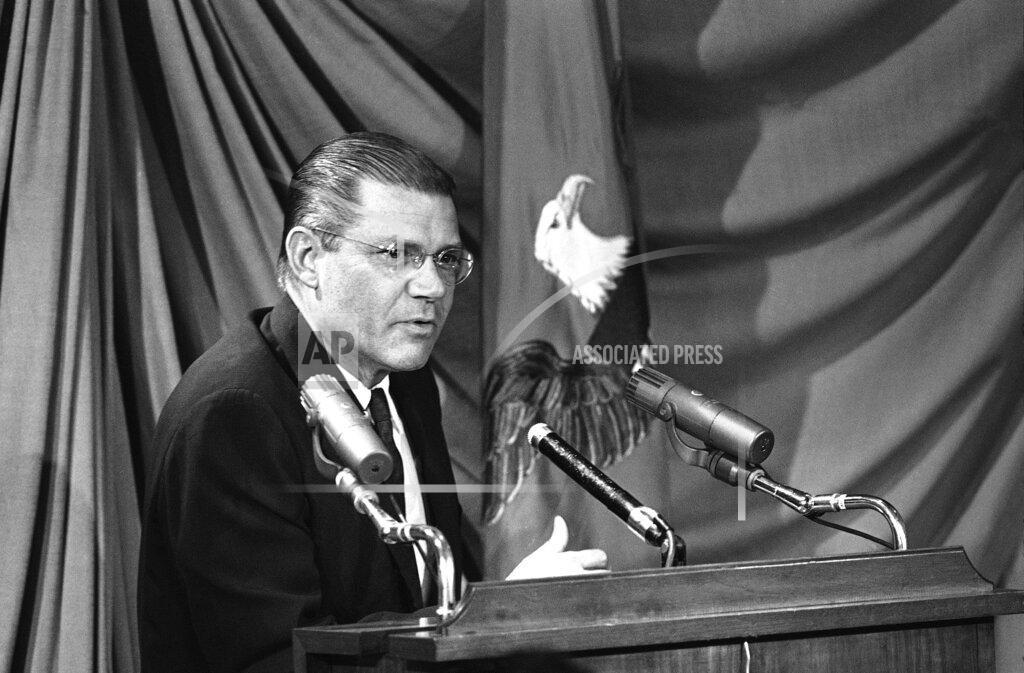
Mrs. Lyndon Johnson will leave Saturday on a trip that will take her to five states. It will be her final campaign trip on her own before the election November 3. With her on the 10‐stop four-day trip will be three Cabinet wives. They are Mrs. Robert S. McNamara, wife of the Defense Secretary; Mrs. Orville L. Freeman, the Agriculture Secretary’s wife, and Mrs. W. Willard Wirtz, wife of the Secretary of Labor.
The Nobel Prize for Literature was awarded to French philosopher Jean-Paul Sartre, despite the fact he had declined it in advance.
EMI rejects audition by “High Numbers”; they go on to become “The Who.”
Dow Jones Industrial Average: 877.01 (-2.71)
Born:
Amit Shah, Indian politician and leader (since 2014) of that nation’s second largest political organization, the Bharatiya Janata Party; in Bombay (now Mumbai), India.
TobyMac (Kevin Michael McKeehan), American Christian rapper, in Fairfax, Virginia.
Dražen Petrović, Croatian Yugoslavian National Team and NBA shooting guard (Basketball Hall of Fame, inducted 2002; Olympics-Yugoslavia, bronze medal, 1984; silver medal, 1988; Olympics-Croatia, silver medal, 1992; Portland Trailblazers, New Jersey Nets); in Šibenik, Croatian SR, Yugoslavia (killed in auto accident, 1993).
Gerald Young, Honduran-American MLB centerfielder (Houston Astros, Colorado Rockies, St. Louis Cardinals), in Tela, Honduras.
Carl Woods, NFL running back (New England Patriots), in Gallatin, Tennessee.
Jeff Gaffney, NFL kicker (San Diego Chargers), in Washington, District of Columbia.
Paul McStay, Scottish soccer football player who appeared for 17 seasons and 515 games for Celtic between 1981 and 1997; in Hamilton, South Lanarkshire, Scotland, United Kingdom.
Died:
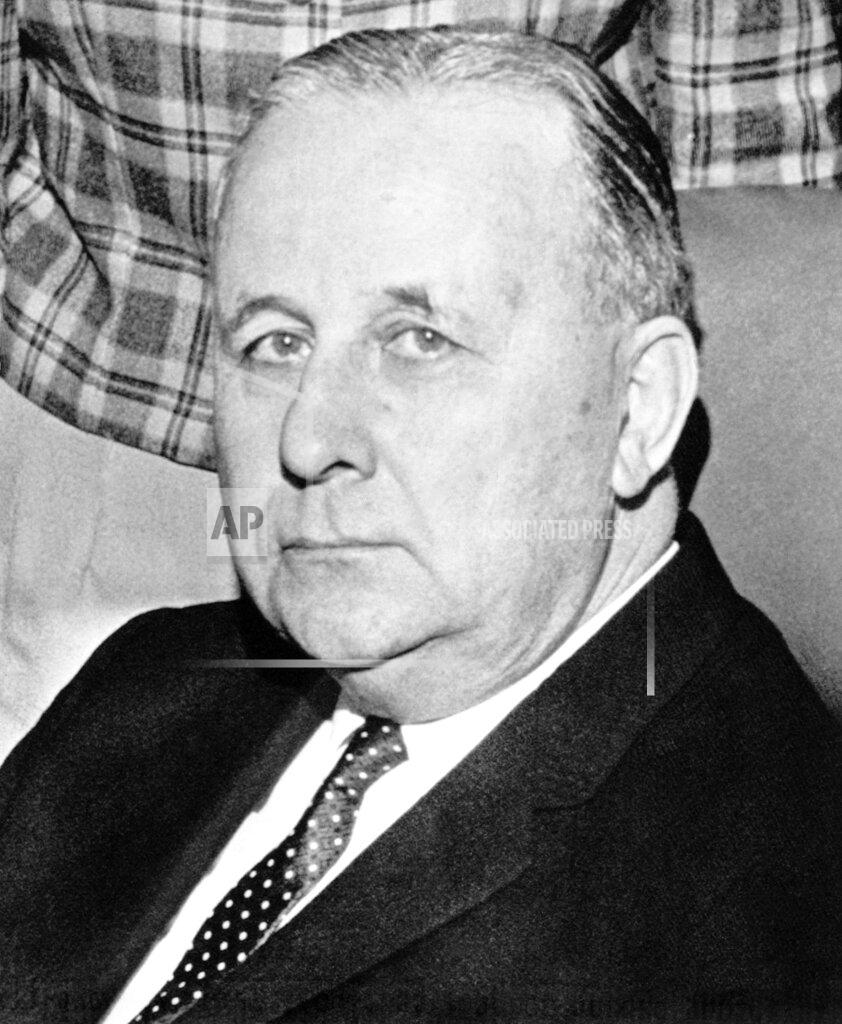
Khawaja Nazimuddin, 70, 2nd Prime Minister of Pakistan and President of Pakistan Muslim League.
Whip Wilson (Roland Charles Meyers), 53, American western film star in the 1940s and 1950s, died of a heart attack

 History Diaries