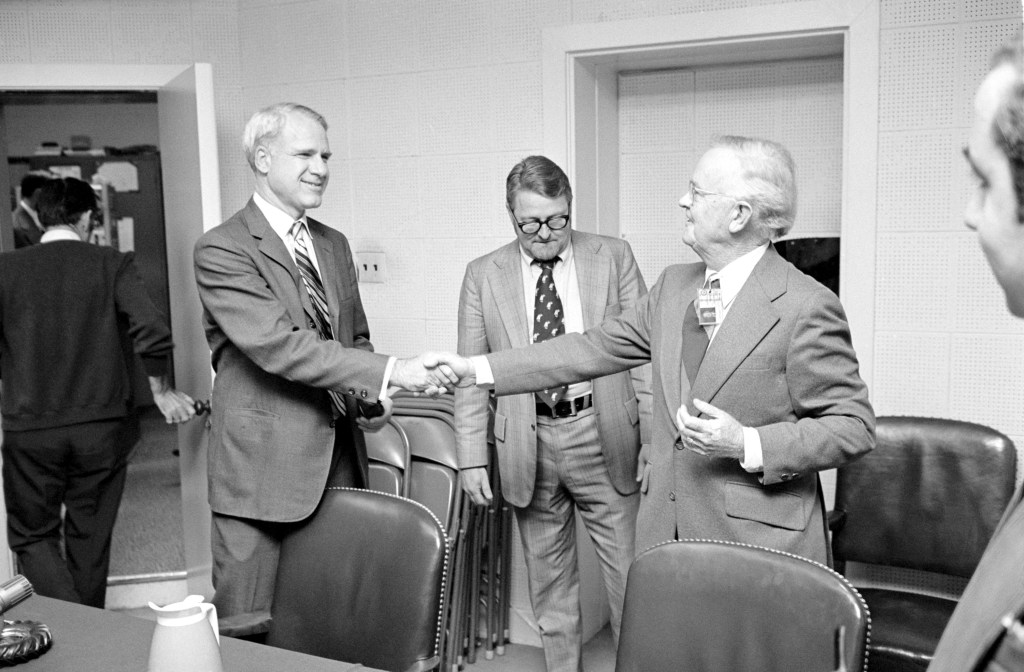
Mikhail Suslov, chief ideologist of the Soviet Union, told a Tashkent audience that the economic crisis in the West had strengthened Communist and other leftist parties in a number of countries. Domestically, he mentioned “quite a few shortcomings” in the economy and lingering nationalist influences in the republics. Mikhail A. Suslov, a national party secretary, mentioned specifically leftist successes in Portugal and Greece, where rightwing regimes have been toppled. It was not clear whether he also had in mind the large Communist parties in Italy and France. Moscow has refrained from urging such parties to take advantage of economic disarray to avoid jeopardizing its relations with Western governments.
Mr. Suslov offered a somewhat subdued endorsement of the Soviet policy of accommodation with the West, mentioning détente with the United States, France, and West Germany. The gray‐haired, bespectacled Mr. Suslov, who is considered one of the conservative members of the ruling Politburo asserted that the economic and political problems of the West revealed the lack of future prospects for Western capitalism.
The explosion of an IRA bomb thrown into a dining room at Brooks’s gentlemen’s club in London injured 3 wine stewards. A bomb exploded in an exclusive social club on London’s fashionable St. James’s St. and Scotland Yard said three people were injured, two of them seriously. Former Conservative Prime Minister Edward Heath was dining in another building just 50 yards away when the explosion ripped the Brooks Club. He was uninjured. The Brooks Club is 400 yards from the Army and Navy Club, which was damaged in a bomb blast 10 days ago. More than 100 bombs have exploded in England in the past 20 months, killing a total of 25 people. The Irish Republican Army has been blamed for most of the attacks.
East German head of state Willi Stoph called for the third stage of the 35-nation European security conference to be held in Helsinki, Finland, as soon as possible and at the highest level. He underlined the importance of the conference in talks with Finnish President Urho Kekkonen at the start of a four-day visit, sources said, his first to a non-Communist country. Improved trade relations also were discussed.
A crack in one of three small packages containing radioactive material destined for West German chemical firms allowed radiation to be released aboard a British transport plane, an airport spokesman at Düsseldorf said. A German Health Ministry spokesman said the material contaminated clothing of workers unloading the plane but there was no danger to their health.
A compromise solution to Italy’s almost three-week-old government crisis appeared to be near as Premier-designate Amintore Fanfani prepared to hold talks with prospective coalition partners. Earlier pessimism about his getting the four parties to agree on a common platform faded after a letter from Fanfani, in answer to a 10-point manifesto by the Socialists, appeared to go a long way to meeting their demands. Only the government’s relations with unions was left as a bone of contention.
A Palestinian delegate, Faruk Kaddoumi, made the only speech from the floor before a meeting in Rabat of Arab League foreign ministers went into closed-door sessions to prepare a conference of Arab leaders. Mr. Kaddoumi stressed the Palestinian right to set up an “independent authority” on the West Bank of the Jordan River, disputing Jordan’s position on this issue. He spoke in favor of an 11‐point program worked out by the leadership of the Palestine Liberation Organization, the main guerrilla group. The program included a rejection of all “partial solutions” of the Arab conflict with Israel.
A fire in a pipeline link at the Kuwait Oil Company’s installations in Umm al-Aish killed 9 people, including one American and one British oil expert.
Negotiations are under way for India to receive about 300,000 metric tons of U.S. wheat over the next eight months under a Food for Peace agreement, Washington sources reported. Payment would be made over 40 years at 2.5% interest for the wheat which is valued at about $49 million. Arrangements will likely be completed before Secretary of State Henry A. Kissinger arrives in New Delhi Sunday for talks there. India stopped accepting U.S. food aid about three years ago but recently asked for help to relieve a grave shortage.
Two opponents of the Saigon Government said today that the police had recently arrested 14 students involved in an anti‐Government organization — the first indication that the police had suspended their hands‐off policy since protests began to gather momentum in September. The students, whose names were made public by Hồ Ngọc Nhuận, an Opposition deputy in the lower house, and by the Rev. Chân Tin, chairman of the Movement for Prison Reform, were said to have been working behind the scenes and were not participants in street demonstrations. Mr. Nhuận said the arrests indicated how fearful the Government was of the possibility that students would mobilize to support the growing protests, which have centered on corruption and press censorship.
Nguyễn Văn Thiệu, who has led South Vietnam for nine years, has suddenly found himself embattled on the political front as never before. An emerging opposition coalition — stimulated by dissatisfaction with the military situation and economic problems — has begun to call for President Thiệu’s resignation. Although the opposition appears small and divided and Mr. Thiệu appears quite powerful, many sober‐minded Vietnamese have become convinced that he is nearing the end of his long leadership. Few are willing to guess how much longer he will remain in power, but it is almost impossible to find anyone who believes that he will be able to run for a third term next October.
“If he is smart, he can stay on until the end of his term,” commented one Vietnamese, who is not given to hasty judgments. “If he is unlucky, he may go fast.” A prominent opposition leader, known for his caution and reticence, offered a similar appraisal: “It is only a question of time.” However, Mr. Thiệu, a tenacious and supple man, is an adroit politician who has surmounted crises that would have overwhelmed a lesser personality. Some foreigners still class him among the best politicians in Asia. One European diplomat argued that the President’s situation is “still far from catastrophic.” “But,” this man added, “the fact is that in this country it suffices for enough people to believe that a process is under way for it to happen. Once people believe he is tottering, he begins to totter.”
In the view of many Vietnamese and foreign onlookers, the graying, 51‐year‐old President now faces a challenge of exacting subtlety. He must confront his opponents firmly enough to show that he is still in control, but gently enough not to furnish martyrs or stir mass hostility. While maneuvering in the public sphere, he must also keep the loyalty of the armed forces, whose morale has lately been jarred by successful Communist military thrusts and by shrinking American assistance. For their part, the Communists, who have begun to demand Mr. Thiệu’s ouster as a condition for a political settlement, are expected to step up their attacks.
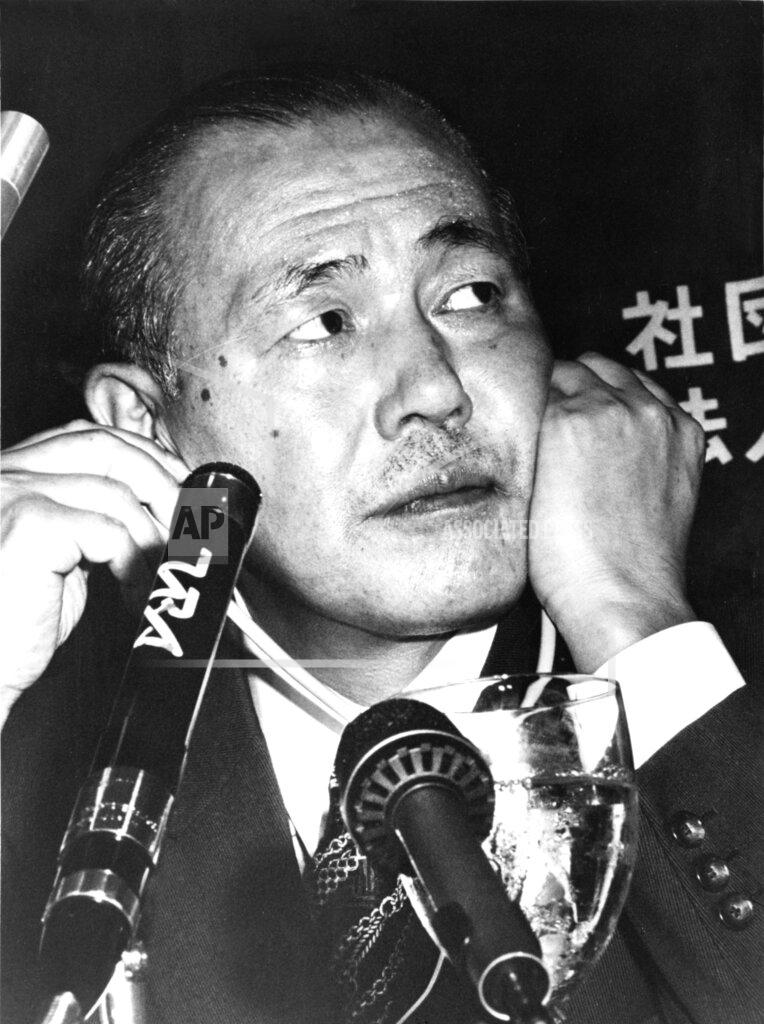
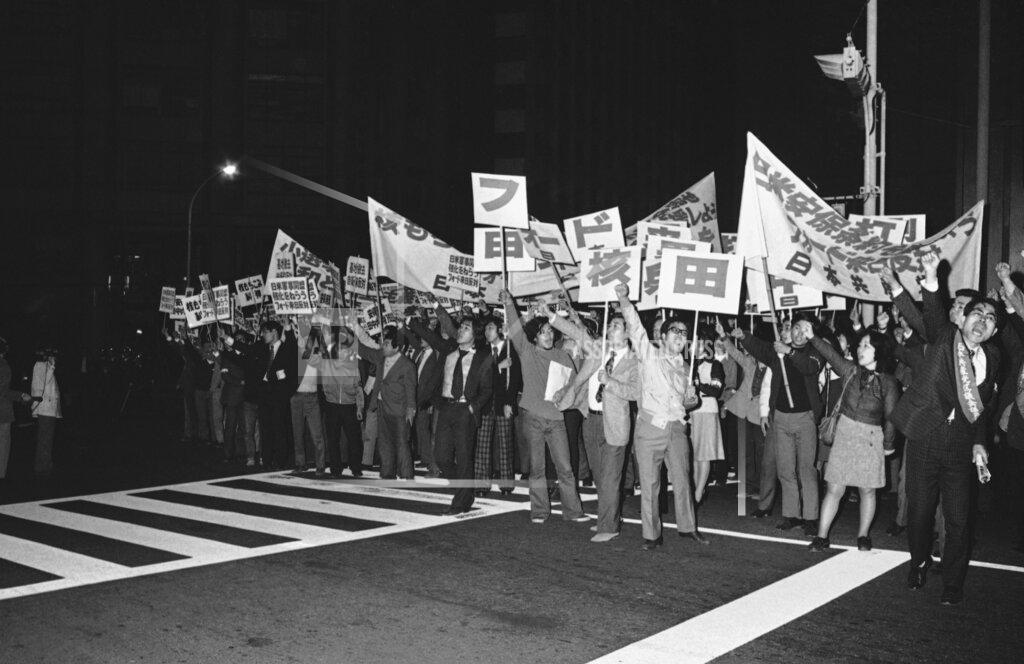
Premier Kakuei Tanaka acknowledged today that he had continued his private business activities throughout his 27‐year political career and did not deny charges of financial irregularities that were made against him in a recent magazine article. Mr. Tanaka, in response to questions from foreign newsmen here, said: “I come from the world of business and so far as it does not interfere with political activities, I have continued my business activities.” He asserted that “the sources of my income and how I have paid my income tax have all been made public.” Mr. Tanaka, who started his career in the construction business before entering politics, was first elected to Parliament in 1947, nine days before his 25th birthday. He has been a member of the lower house ever since and became Premier in July, 1972. But the Premier, who was obviously irritated by persistant questioning from foreign newsmen, declined to deny accusations in a monthly magazine, Bungei Shunju, that he had enriched himself by using political funds for personal expenses, especially to buy land just before prices rose all over the country. The article in Bungei Shunju, a highly respected and widely read magazine, was the work of a 20‐man investigating team and has reverberated through both the Liberal‐Democratic party, which Mr. Tanaka heads, and the Opposition. The November issue in which the article appears has been sold out.
The Canadian government announced tighter regulations for new immigrants. They are designed to make entry more difficult for the prospective settler who does not have a job waiting for him. The principal impact is expected to be on the flow of non-white immigrants. The government has been concerned over steeply rising numbers and changing racial patterns in the flow of immigrants. Canadian Immigration Minister Robert Andras introduced interim regulation changes designed to curb the flow of immigrants into Canada. All applicants for landed-immigrant status now must prove that they have a bona fide job or are going to a designated occupation. The new rules will apply until new legislation is introduced, probably in 1976.
Sixty tons of supplies are being distributed daily to victims of Hurricane Fifi in Honduras but more aid is needed, according to Major Ruben Humberto Montoya, chief of the supply section of the Honduran emergency committee. He said that about 2 million pounds of medicine, clothes and food have been distributed and 5 million pounds remain for an estimated 162,000 homeless people. He said reports that supplies were being hoarded were “a bunch of lies.” The hurricane struck Honduras September 19, killing thousands.
“Angola is not quite the colony it was a few months ago and yet it is still not independent,” a young white businessman recently observed in that Portuguese colony’s capital city of Luanda. Reflecting a concern that is common to black, white and racially mixed Algolans, he said: “It could easily become the Brazil of Africa as a racially mixed nation rich in natural resources with a growing industrial base, or it could just as easily become Africa’s Vietnam where death and violence become our only predictable condition.”
Angola’s potential for either great prosperity or conflict has worried black African leaders in recent years. Unlike the relatively poor and underdeveloped Portuguese African holdings of GuineaBissau and Mozambique, Angola last year had a gross national product of $1.5‐billion, spurred by exploitation of oil, diamonds, coffee and iron. The other two colonies each had a single, strong guerrilla movement capable of taking over the administration from the Portuguese. Angola, because of its larger population, greater diversity and wealth, has three main guerrilla movements and a white community of more than half a million permanent settlers. All four groups, plus a growing array of splinter movements, want whatever emerges as the new and independent Angolan regime to reflect their interests.
Portuguese and black nationalist troops toured the wreckage-strewn Streets of Mozambique’s capital today appealing for calm after a night of racial violence in which at least 49 people were killed. Shops, offices and restaurants, were open only hours after the rioting — but the bloodstained sidewalks, wrecked cars and still‐smoldering suburban homes revealed the extent of the night’s clashes. The city’s main hospital, filled with casualties, said that 33 whites and 15 blacks had been killed. One body was so badly burned and mutilated that it was impossible immediately to distinguish its race.
The adjusted Consumer Price Index rose 1.2 percent in September. Food led the way with 1.9 percent, while other commodities showed their smallest increases of the year. The index reached 151.9 percent of average prices compard to the base year of 1967, according to the Labor Department. “Real” spendable earnings of typical workers rose slightly after adjustment.
President Ford contended in a political speech in Oklahoma City that a wide Democratic margin in Congress after the November 5 election would threaten chances for a bipartisan foreign policy and could jeopardize peace. But Republican leaders in cities he visited in a two-day swing acknowledged that he had not stirred the enthusiasm they sought to help faltering Republican candidates. Since World War II, he said, there has been a tradition of a bipartisan foreign policy. But he added:
“Unfortunately, this Congress, dominated by the opposition, doesn’t seem to understand this and I’m concerned that if we get a Congress that is vetoproof or a Congress that is the wrong philosophy, both domestically and internationally, the possibility for the next two years, when our country faces the challenges in the Middle East, the challenges in the Mediterrean, the challenges in the Caribbean and Latin America, the challenges in the Pacific — as we try to work to broaden détente, as we try to continue the normalization of relations with the People’s Republic of China, as we, in the White House, and those in the Congress who understand bipartisanship and who believe that partisanship should end at the water’s edge — if we get the wrong kind of Congress, peace could be in jeopardy. So I end my remarks here today by pledging with you to give to America — not to me — a Congress that will be farsighted, visionary, imaginative and cooperative, so that we can have peace abroad, so we can work on our problems at home.”
President Ford announced in Cleveland that he was exercising a pocket veto on a bill aimed at preserving national wildlife refuges from encroachment by power lines and pipelines. Mr. Ford said he believed existing law provided adequate protection against disruption of the environment. In a message to the House, he said he was returning the legislation “without my approval” and that Attorney General William B. Saxbe had agreed “that the absence of my signature from this bill prevents it from becoming law.” Thus, he challenged a new technique whereby Congress recessed instead of adjourning, as required for a pocket veto, and appointed officers to receive official messages during its recess.
John Dean, testifying under cross-examination in the Watergate cover-up trial, admitted that he had withheld damaging information for many months after he said he had told the authorities everything he knew. He acknowledged concealing his destruction of two notebooks of E. Howard Hunt. The questioning was by John Wilson, lawyer for H.R. Haldeman. Mr. Wilson sought to imply that Mr. Dean was not a credible witness now in the current trial.
Vice President-designate Nelson Rockefeller said he would not answer press questions requiring research until after he appears before congressional committees weighing his nomination. He said it was “physically impossible” to do such research and fulfill his obligations to his family and to the committees for which he must complete his preparation.
The Federal Energy Administration’s unpublished analysis of ways to achieve national self-sufficiency in energy suggests a strong conservation effort including mandatory federal standards for cars, appliances and buildings. It supports drilling in the Atlantic for oil and gas rather than crash programs to tap new sources such as shale oil and solar heat. It suggests forbidding oil heat for new homes, to encourage demand for electricity generated by steam boilers, fueled by the country’s tremendous coal reserves.
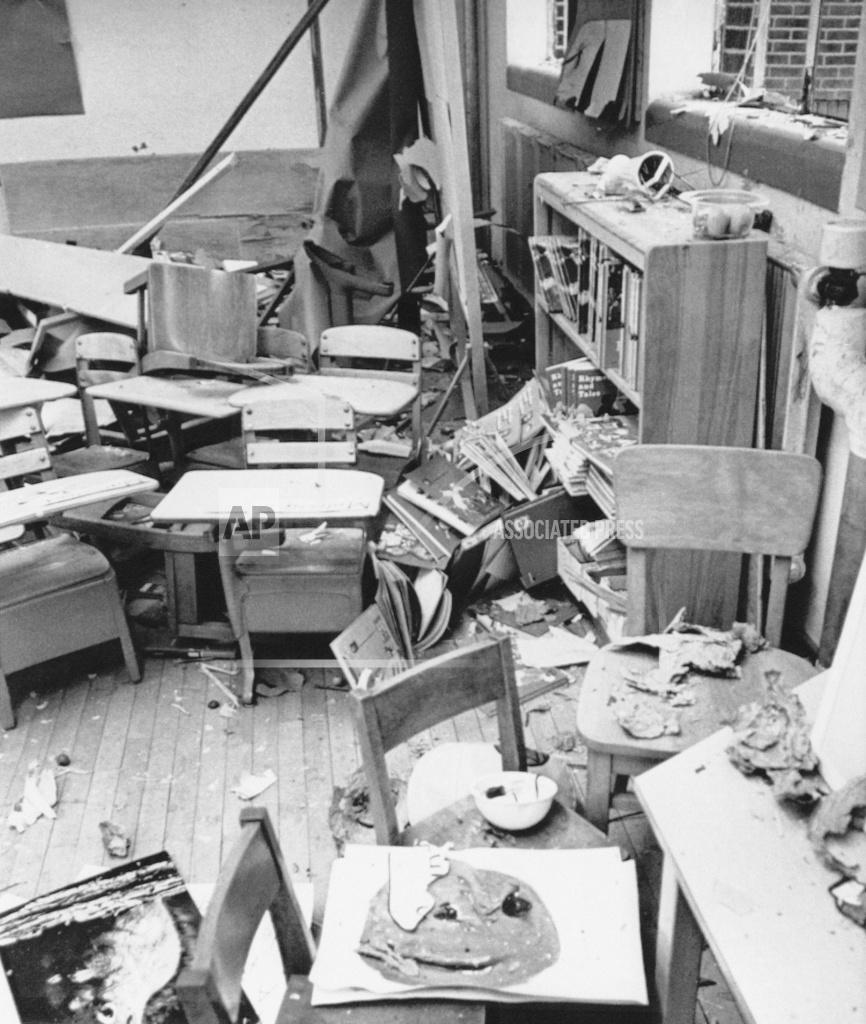
A 3:30 AM bombing caused $1,500 in damage to a room at the Midway Elementary School southeast of Charleston, West Virginia, a continuation of the violent protests over textbooks in Kanawha County. There were no injuries. The bombing occurred less than a day after a Presidential aide announced that the White House was seeking a “constructive compromise” to end the violence, which has included several shootings. A stick of dynamite thrown through a window of the Midway Elementary School on Campbells Creek, southeast of Charleston, caused damage to furniture, windows, and eouipment officials said. Damage was confined to one room and the school was opened for classes today, but no pupils attended classes.
School buses made their regular runs today, despite the presence of a few scattered pickets at some garages. Sheriff’s deputies served as escorts for some buses in the southeastern part of the county, where most of the protest has been centered. The protesters, led by a small group of Fundamentalist ministers, are attempting to force the Kanawha County Board of Education to remove from the classrooms books they consider detrimental to the morals and religious beliefs of their children. Roger Semerad, a special assistant to President Ford for education and labor, met with a group of protesting West Virginia parents and ministers yesterday and told them the White House would do “whatever we can to help forestall additional violence in Charleston.”
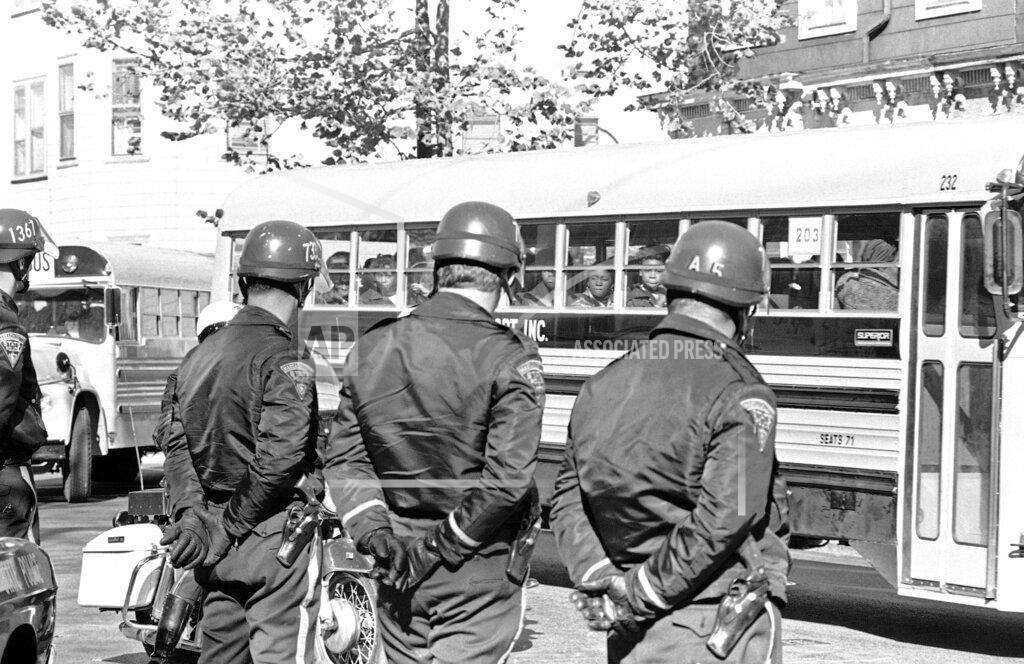
Students in Boston were searched with metal detectors today as officials tried to prevent them from taking weapons into two racially troubled high schools. There were no report of serious trouble at the city’s 200 schools, which have been disrupted by sporadic violence since they opened September 12 under a court‐ordered busing program. Six knives were found in the yard of Hyde Park High School, where students apparently threw them when they saw their classmates being searched, a police spokesman said. At South Boston High, students were also checked with the metal detectors, similar to those used at airline terminals. Two knives were found outside the school.
Georgia Governor Jimmy Carter said huge gambling operations were being run by organized crime in metropolitan areas of his state, making it a half-billion-dollar-a-year business. Carter made the assertion at a news conference in Atlanta and in a 41-page report in which he offered recommendations to bypass corrupt or complacent public officials in fighting organized crime. There is also evidence that five or six syndicate “families” are represented in Georgia, he said. Carter said existing laws and limitations on local prosecutors allowed criminals to operate with impunity, knowing that prosecutors were not equipped or allowed to track them across the state.
The Federal Government dismissed charges today against five men arrested in the 1971 bombing of school buses in Pontiac, Michigan. Assistant United States Attorney William Ibershoff said a key prosecution witness, Charles Sims, had been severely beaten by another inmate at the Federal penitentiary in Terre Haute, Indiana, and no longer had the mental capacity to testify. Mr. Ibershoff said the assault on Mr. Sims was not connected with the Pontiac case. He said the defendants, who included a former head of the Michigan Ku Klux Klan, could not be tried without Mr. Sims’s testimony.
The United States is being swamped by a flood of illegal Mexican aliens — 4 million last year — and the U.S. government does not have the money or manpower to stop them, said Commissioner Leonard Chapman Jr. of the Immigration and Naturalization Service. Speaking to graduates of the U.S. Border Patrol Academy in Los Fresnos, Texas, Chapman said that 6 to 7 million Mexican aliens were displacing American workers — some in jobs paying $4.50 to $6 an hour. The commissioner said the 1,610 agents now in the field were “far short of what is needed to do the job.”
John C. Sawhill, the federal energy administrator, said he is not being pressured to quit his job but he added that the Administration “seemed to have a little concern that I was a little too outspoken about the need for energy conservation.” Sawhill’s comments were in response to questions about a published report that President Ford, Secretary of State Henry A. Kissinger, Treasury Secretary William E. Simon and Interior Secretary Rogers C. B. Morton want Sawhill removed. The report in Newsweek magazine said the Administration was angered by Sawhill’s public advocacy of a new gasoline tax and other tough energy-saving steps.
With the United Mine Workers Union threatening to strike November 12, most utility companies say they have enough coal stockpiled to cope with a cold winter for a period of from 45 to 90 days. But big steel companies say a coal strike would seriously hamper their operations. However, even utilities executives with large reserves of coal indicate that a strike would make energy conservation a must. U.S. Steel Corp. estimates its production would be cut in half within two weeks after the start of a strike and Bethlehem Steel Corp. says a strike of any duration would shut down the industry. The miners’ strike of 1971 lasted 45 days.
Federal money may be on the way to help U.S. ports clean up air and water and improve worker safety and cargo security. This was the report of a special committee to the annual convention of the American Association of Port Authorities in San Juan, Puerto Rico. The report noted that other modes of transportation receive federal money to “develop, operate and improve their facilities” and that ports may be in line for some of that money. About 800 port administrators from the Western Hemisphere are attending the convention, which started Monday and ends Thursday.
The makers of the American children’s television series “Sesame Street” filed a copyright infringement suit against Bergen Liquidators, Inc., of New Jersey, charging that the company had planned to sell defective hand puppets of characters from the series.
The Giants and Yankees swap popular star outfielders: Bobby Bonds goes to the Yankees and Bobby Murcer heads to San Francisco. Bonds will play just one season in New York, hitting 32 home runs and stealing 32 bases, before leg injuries slowed him. Murcer swore he would never forgive the Yankees for trading him, but later he will relent when the Yankees reacquire him.
Dow Jones Industrial Average: 662.86 (-6.96, -1.04%).
Born:
Miroslav Šatan, Slovak ice hockey forward (World Championship gold medal, 2002 [captain]; NHL Champions, Stanley Cup-Penguins, 2009; NHL All Star 2000, 2003; Edmonton Oilers, Buffalo Sabres, New York Islanders, Pittsburgh Penguins, Boston Bruins), in Jacovce, Czechoslovakia.
Jeff McInnis, NBA point guard and shooting guard (Denver Nuggets, Washington Wizards, Los Angeles Clippers, Portland Trailblazers, Cleveland Cavaliers, New Jersey Nets, Charlotte Hornets), in Charlotte, North Carolina.
Tim Kinsella, American musician (Cap’n Jazz; Owls), and visual artist, in Chicago, Illinois.
Died:
Loyd Wright, 81, American attorney, former president of the American Bar Association.
 History Diaries