General Erich von Manstein, Chief of Staff of Army Group A, obtained a copy of Plan Yellow whilst passing through Berlin, Germany on his way to set up Army Group A Headquarters at Koblenz. He found little to admire in the plan, considering it to be too much like the strategy of 1914, and even predicting that the advance would bog down at the same place – on the Somme River in France.
General Gamelin, the Allied Commander-in-Chief, says that he has no intention of attacking the Germans. He has issued orders that if the Germans attack in strength, the French should retreat behind the Maginot Line fortifications.
The opposing forces on the Western Front exchange artillery fire in heavy rain.
Joseph Goebbels publicly accused Winston Churchill of ordering the passenger liner Athenia attacked so that he could blame Germany and persuade the United States to join the Allies.
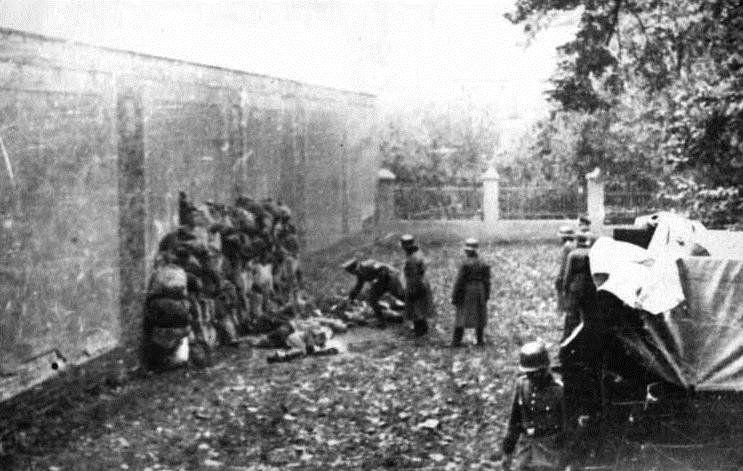
Mass executions of Poles in Greater Poland are continued by the German police and Einsatzgruppe VI in Gostyń, Krobia, Leszno, Osieczna, Poniec, and Włoszakowice.
Arthur Greiser was named the Gauleiter of Reichsgau Posen.
Hitler summons Gauleiters to Berlin for consultations.
Germans began deporting Poles from Poznan to make the province “Germanic”.
Hitler promises to return Slovakian territory that has been “taken from it” by Poland.
Germany and Italy made the South Tyrol Option Agreement. An agreement is signed by the German and Italian governments for the transfer to the Third Reich of ethnic Germans in South Tyrol. Ethnic Germans in the region would be allowed to emigrate to the Reich or remain and be Italianized.
Great Britain and France were reported in reliable quarters tonight to have followed up their mutual assistance pact with Turkey with a 60,000,000 credit.
Negotiators return to Moscow for the second round of talks. Finns send a reply to the Soviet terms; a new trade offer is the likely response.
RAF fighters shoot down 4 out of 9 He115 seaplanes attacking a British convoy. No casualties are suffered by the British aircraft, nor is any damage done to the convoy or escorts. A flight of Luftwaffe He 115B seaplanes flying at sea level to avoid detection attacks a convoy near the Humber. RAF fighters out of RAF Digby shoot down 4 of the nine or twelve (depending upon the source) attacking planes. British forces incur no casualties or damage. Squadron Leader Barwell and Pilot Officer Plummer both received credit for victories.
The Hawker Hurricane begins to prove its worth today. Hurricanes compose the “A” Flight of 46 Squadron that intercepted the Heinkels on the Lincolnshire Coast. Two 72 Squadron Spitfires also engaged the Heinkels, but the Hurricanes got all four kills. On the other hand, the Heinkel He 115s are not suitable for operations in contested airspace. There was some over-claiming in this incident, as the Spitfires claimed two victories but got none, whereas the Hurricanes claimed five downed planes but were determined to have only gotten four. Both sides of the conflict will be very studious about disallowing pilot claims that have no backing evidence.
The French Force de raide (including the world’s fastest destroyers) escorts a large Atlantic convoy (until October 30th) and intercepts the German SS Sante Fe.
The French steam merchant Capitaine Edmond Laborie struck a mine and sank two miles east of the Inner Dowsing Lightvessel off the east coast of England in the North Sea (53°19′50″N 0°38′20″E). Her crew were rescued by the Gorleston Lifeboat Louise Stephens ( Royal National Lifeboat Institution). The 3,087-ton Capitaine Edmond Laborie was carrying ballast and was bound for Tyne, England.
The Norwegian motor tanker Deodata struck a mine and sank 1.5 miles off the Inner Dowsing lightvessel off the east coast of England in the North Sea (53°21′00″N 0°36′09″E). Of the ship’s complement, all 23 survived. Her crew were rescued by the Gorleston Lifeboat Louise Stephens ( Royal National Lifeboat Institution). The 3,295-ton Deodata was carrying ballast and was bound for Grangemouth, England.
The British steam merchant Orsa struck a mine and sank approximately 15 miles from Flamborough Head, England in the North Sea. Of the ship’s complement, 11 died and 4 survivors were picked up by the sloop HMS Woolston. The 1,478-ton Orsa was carrying coal and was bound for Bordeaux, France.
The British cargo ship Lake Neuchatel was scuttled as a blockship in Kirk Sound, Scapa Flow, Orkney Islands. She was refloated in June 1948 and scrapped..
The German cargo ship Poseidon was captured in the Denmark Strait (67°08′N 21°18′W) by HMS Scotstoun. She was taken in tow by HMS Transylvania on 25 October but scuttled by her two days later after the towline parted in a blizzard.
The Kriegsmarine (German Navy) vorpostenboot V 701 Este struck a mine and sank in the Baltic Sea off Møn, Denmark with the loss of 70 of her 75 crew.
British light cruiser HMS Orion and Canadian destroyer HMCS Saguenay locate German tanker Emmy Friedrich in the Yucatan Channel. Destroyer HMCS Saguenay will subsequently intercept the Emmy Friederich on October 23rd. The German ship will scuttle herself before she can be captured.
U.S. freighter Meanticut is detained at Gibraltar by British authorities and ordered to proceed to Oran to discharge certain cargo earmarked for delivery to Italy.
Convoy OA.23 departs from Southend.
Convoy OB.23 departs from Liverpool.
The War at Sea, Saturday, 21 October 1939 (naval-history.net)
The crew of the Norwegian steamer LORENTZ W HANSEN arrived on Norwegian tanker KONGSDAL (9959grt) at Kirkwall and brought news proving that both German pocket battleships ADMIRAL GRAF SPEE and DEUTSCHLAND were at sea. It had been thought that all the sinkings to date had been due to a single battleship.
Light cruisers GLASGOW and NEWCASTLE, at sea since the 12th, were sent to escort convoy KJ.3, then en route from the West Indies. They detached on the 24th and the convoy arrived at Land’s End on the 25th. NEWCASTLE reached Portsmouth on the 26th and GLASGOW on the 27th.
Destroyer FORESIGHT was boiler cleaning at Scapa Flow until the 26th.
Anti-aircraft cruisers CAIRO and CALCUTTA departed Grimsby on escort duty and arrived back the same day.
Anti-aircraft cruiser COVENTRY departed Immingham to support a convoy under air attack, and at sea, joined sister ships CAIRO and CALCUTTA with the convoy, which was escorted to Flamborough Head. COVENTRY experienced a steering gear defect and returned to Immingham, docking on the 26th for repairs completed on 14 November. She then left next day for duty at Sullom Voe.
Four former British anti-submarine trawlers arrived at Brest for duty as the French 13th Patrol Squadron. They were CANCALAISE (ex-ST AMANDUS, LV R R L Birot), HAVRAISE (ex-ST ATTALUS, EV Harduin), LORIENTAISE (ex-ST ANDRONICUS, LV F Drogou) and NANTAISE (ex-ST ARCADIUS, LV L M A Jaume). They went into service on 17 January 1940.
German steamer GLORIA (5896grt), which had departed Buenos Aires on the 6th, was captured by light cruiser SHEFFIELD on Northern Patrol in the Denmark Strait, six to ten miles off the north coast of Iceland in 65 30N, 22 05W. As GLORIA was being taken to Kirkwall by a prize crew commanded by Sub Lt S Phillips, three of her crew escaped in a lifeboat, but were later picked up and landed at Methil on the 28th. GLORIA was renamed EMPIRE CONVEYOR in British service.
German steamer POSEIDON (5864grt) departed Rio de Janeiro on 1 September to return to Germany, but was forced to put into Mar del Plata on the 5th to avoid contact with light cruiser AJAX. She was finally able to leave for Germany on 1 October, but was captured during the afternoon of the 21st by armed merchant cruiser SCOTSTOUN north of Iceland in the Denmark Strait in 67 08N, 21 18W. Heavy weather prevented a boarding party from being put aboard at that time, and it was not until the afternoon of the 22nd in 66 27N, 22 09W that Py/Lt C W Armstrong RNR and his men were able to go across. SCOTSTOUN then escorted POSEIDON for 29 hours before losing touch in thick snow. Armed merchant cruiser TRANSYLVANIA finally found the missing ship early on the 25th, but she was incapable of steaming, taken in tow and proceeded towards Reykjavik with cruiser SHEFFIELD in company. When Icelandic waters were reached, SHEFFIELD detached and returned to Sullom Voe, being relieved on Northern Patrol by light cruiser SOUTHAMPTON. However, before reaching Reykjavik, TRANSYLVANIA’s tow line parted in a gale and she was forced to sink POSEIDON with gunfire on the 27th.
Light cruiser DIOMEDE departed Sullom Voe for Northern Patrol between Shetlands and Faroes, and arrived back on the 25th.
Destroyers KELLY and KINGSTON arrived at Loch Ewe for operations with the Home Fleet.
Destroyer VALOROUS attacked a submarine contact six to seven miles east of Scarborough.
Minesweeper/escort vessel JASON attacked a submarine contact 2 miles 105° from South Rock Light Vessel, Belfast.
Convoy OA.23 of 15 ships departed Southend escorted by destroyers ACASTA and ARDENT from the 21st to 23rd, and the convoy dispersed on the 26th.
Convoy OB.23 departed Liverpool escorted by destroyers VOLUNTEER and VERSATILE, which detached to KJ.3 on the 24th.
French steamer CAPITAINE EDMOND LABORIE (3087grt) was sunk two miles E of Inner Dowsing Light Vessel on a mine laid by U-19 on the 17th.
Norwegian steamer DEODATA (3295grt) was sunk 1½ miles off Inner Dowsing Light Vessel in 53-19.50N, 00-38.20E, by a mine laid by U-19 on the 17th, without the loss of any crew.
Steamer ORSA (1478grt) was sunk 15 miles 150° from Flamborough by a mine laid by U-15 on 6 September, with the loss of 16 crew.
Light cruiser DAUNTLESS departed Aden en route to Colombo, and was ordered to examine the Cargados, Carajos, Chagos groups for German activity.
Hunter Force M with French heavy cruisers DUPLEIX and FOCH, and Force N with French battlecruiser STRASBOURG and British aircraft carrier HERMES, were reassigned to cover the Dakar to Pernambuco route:
(1) Force X, which became effective in mid-November, consisted of HERMES, DUPLEIX and FOCH, while
(2) Force Y had STRASBOURG, with French light cruiser DUGUAY TROUIN and the British NEPTUNE.
As the U.S. Senate completed today three weeks of general debate on the Administration’s proposals for revising the Neutrality Act, Senator Barkley, majority leader, asked for, but failed to obtain, unanimous consent to limit debate so as to bring the issue to an early vote. When the request was made Senator McNary, minority leader, rose and with “extreme regret” declared his inability to concur with the proposal. He suggested, however, that possibly some arrangement could be made Monday. Mr. Barkley then called the Senate to meet at 11 o’clock instead of noon on Monday.
The Administration forces hope to complete action on the pending resolution by the end of next week. The amending stage should be reached by Tuesday or Wednesday and, under Mr. Barkley’s proposal, made today, each Senator would be limited to one hour of speaking on the bill and thirty minutes on each amendment. Since Administration leaders are prepared to accept amendments liberalizing the original shipping provisions so as to permit American vessels to ply trade routes apparently safe, such as California to Australia, and to delete the provision for ordinary 90-day commercial credits in connection with “cash-and-carry” trading, the principal issue will continue to be the arms embargo.
Senator Downey introduced today what may form the rallying point of the opposition forces in the shape of an amendment to the existing resolution which would set up a rigid arms embargo from the moment the proposed legislation should become law. The California Senator’s proposal is worded in more drastic language than the present law, to which the Administration objects, in that it would forbid all exports of arms from the United States except to American States, and then only after they had become involved in war against a non-American State.
With such an amendment pending, a parliamentary situation may arise such as confronted the House of Representatives last June. There were many provisions of the Bloom resolution which attracted the favor of certain members who were, at the same time, in favor of retaining the arms embargo. The Bloom resolution did not mention arms, ammunition or implements of war but placed all commerce with belligerents, without qualitative distinction, on the “cash-and-carry” basis. Representative Vorys of Ohio presented an amendment adding to the Bloom resolution a modified arms embargo, and it carried. Thus the Downey amendment in the Senate might afford an opportunity to borderline members who want “cash-and-carry” as well as the arms embargo to vote for the resolution, if the amendment should be inserted.
A sharp difference of opinion between Colonel Charles A. Lindbergh and his mother-in-law, Mrs. Elizabeth C. Morrow, acting president of Smith College, over repeal of the munitions embargo was disclosed when it was announced that Mrs. Morrow had joined William Allen White’s Nonpartisan Committee for Peace Through Revision of the Neutrality Law. Mrs. Morrow joined the committee on October 3, the day after she had received a form telegram signed by Mr. White declaring that “by repealing the arms embargo our country is no longer aiding Hitler to the disadvantage of the democracies who are resisting the spread of dictatorship.”
On October 13 in a radio address that has raised a storm of controversy in Canada and England as well as throughout the United States, Colonel Lindbergh said: “I do not believe that repealing the arms embargo would assist democracy in Europe, because I do not believe this is a war for democracy. This is a war over the balance of power in Europe-a war brought about by the desire for strength on the part of Germany and the fear of strength on the part of England and France. The more munitions the armies obtain the longer the war goes on, and the more devastated Europe becomes the less hope there is for democracy. That is a lesson we should have learned from our participation in the last war. If democratic principles had been applied in Europe after the last war, if the ‘democracies’ of Europe had been willing to make some sacrifices to help democracy in Europe while it was fighting for its life, if England and France had offered a hand to the struggling republic of Germany, there would be no war today.”
The federal government, it was learned, is investigating past and present members of the Communist Party leadership with the purpose of prosecuting those who have violated the passport laws in their travels abroad. While close secrecy was being maintained, there was intense activity in at least two Federal agencies concerned in the inquiry. The lead was being taken by the State Department, which has been concentrating on passport frauds ever since the disclosures in the Robinson-Rubens case of 1937-38.
On Friday afternoon agents of the State Department visited the New York office of World Tourists, Inc., the treasurer of which is Alexander Trachtenberg, member of the governing committee of the Communist Party. Their purpose was not disclosed, but it was believed the agents were seeking records by which the fraudulent passports of Communist leaders could be traced. A guard was established in the hall outside the office of World Tourists, which is on the third floor of the Flatiron Building on Fifth Avenue. This afternoon five men were there, including Ashley J. Nicholas, State Department agent, who took a leading part in the Robinson-Rubens case and helped to convict three of the men who obtained false passports through the office of former County Clerk Albert J. Marinelli.
The men were evidently arranging a shift and meal time schedule among themselves and within a few minutes all but one of their number left the building. The guard left behind sat in a chair. On the floor was a pile of magazines for whiling away long hours of watching. None of the men would say what their mission was. Prominent Communists and former Communists have appeared before the Dies Congressional Committee on Un-American Activities recently and either admitted using forged passports or refused to testify concerning their passports on the ground that it might incriminate them.
In Washington it was established that a working arrangement has existed for several months whereby the State Department has obtained considerable information on the forged passport traffic. Some of this material has come out in public hearings, but a great deal of it is being used confidentially by the State Department for the present. it was said. By his own admission before the Dies Committee, Earl Browder, general secretary of the Communist party, traveled abroad in the last two years on a false passport bearing a fictitious name. On the advice of counsel he refused to disclose the pseudonym on the “constitutional ground” that it would tend to incriminate him.
The U.S. Chamber of Commerce assails a cut in work hours. A 42-hour workweek means hardship for many, it declares. The United States Chamber of Commerce said today that the new wages and hours standards effective next week would increase “difficulties and hardships brought on by the law,” and create particular problems for concerns which have attained a high rate of industrial production.
Gallup revealed the results of an American public opinion poll, revealing that while 95% of the U.S. population was against participating in the war, 62% agreed that the U.S. should aid the Allies in other ways, largely by means of supplying weapons, steel, and the likes.
Federal intervention in the dispute which has made 55,000 Chrysler Corporation employes idle may be expected soon, it was reported today as James F. Dewey, “ace” Labor Department conciliator, began informal week-end conferences with both sides.
Cotton growers and striking pickers fought in the county park in Madera, California today until scattered by State highway patrolmen using blank cartridges and tear-gas bombs.
The Army Air Corps seeks college youth as pilots. They hope to get those between ages 20 and 26 to train, as hundreds are needed.
First meeting of the United States Advisory Committee on Uranium under Lyman James Briggs of the National Bureau of Standards, authorized by U.S. President Roosevelt to oversee neutron experiments. The committee had a budget of US$6,000 at this time. In attendance were Lyman Briggs, Briggs’ assistant, Adamson for the Army, Hoover for the Navy, Alexander Sachs, Leo Szilard, Eugene Wigner, Edward Teller, and Richard Roberts. Teller represented Enrico Fermi who refused to attend because of a dispute with the Navy Department.
Revival of Sidney Howard’s Pulitzer Prize-winning 1924 stage drama “They Knew What They Wanted”, closes at the Empire Theatre, NYC; after 24 performances.
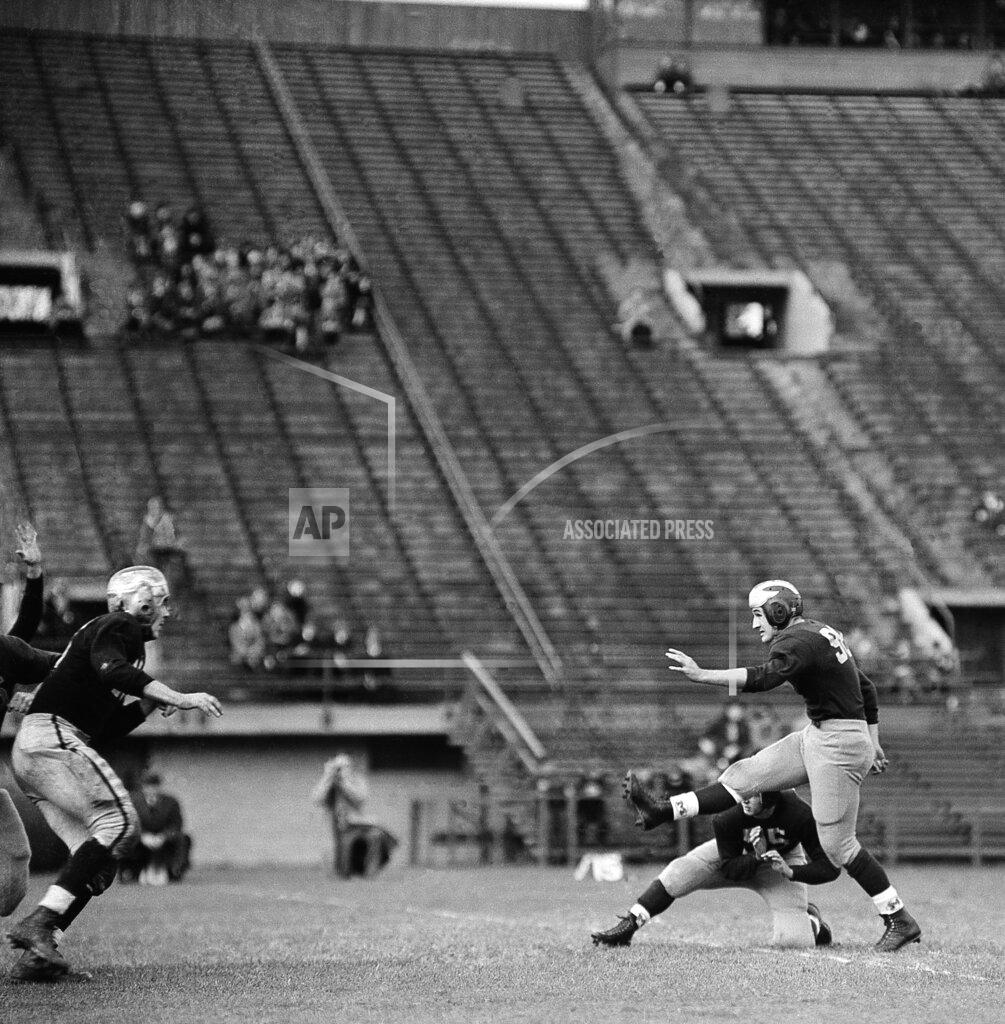
Selected College Football Scores:
Amherst 32, Rochester 0
Boston College 19, Temple 0
Bradley Tech 33, L. I. U. 0
California 13, Washington State 7
Colgate 31, St. Lawrence 0
Cornell 47, Penn State 0
Dartmouth 14, Lafayette 0
Detroit 21, N. C. State 6
Drake 7, Iowa State 0
Duke 33, Syracuse 6
Duquesne 21, Pittsburgh 13
Georgetown 13, Bucknell 7
Georgia Tech 14, Vanderbilt 6
Holy Cross 20, Brown 0
Indiana 7, Illinois 6
Kentucky 13, Georgia 6
Lehigh 22, Buffalo 0
Manhattan 7, Auburn 0
Michigan 85, Chicago 0
Mississippi 42, St. Louis 0
Missouri 9, Kansas State 7
Nebraska 20, Baylor 0
N.Y.U. 6, Carnegie Tech 0
Northwestern 13, Wisconsin 7
Notre Dame 14, Navy 7
Ohio State 23, Minnesota 20
Oklahoma 27, Kansas 7
Oregon State 13, Washington 7
Panzer 12, Brooklyn 6
Penn 22, Harvard 7
Princeton 14, Columbia 7
Purdue 20, Michigan State 7
Rutgers 25, Maryland 12
Southern Methodist, 16 Marquette 0
Susquehanna 14, C.C.N.Y. 6
Tennessee 21, Alabama 0
Texas 14, Arkansas 13
Texas A. & M. 20, Texas Christian 6
Tulane 14, North Carolina 14
Wesleyan 56, Haverford 6
Williams 0, Bowdoin 0
Yale 20, Army 15
Claire Chennault, who resigned from the U.S. Army in 1937, departs for Hong Kong to organize the Chinese Air Force.
Chinese troops have scored notable victories over Japanese forces near the borders of Hunan Province, Chinese military dispatches reported today. The Chinese claimed the recapture of several strategic positions near Tungcheng in Southern Hupeh Province, near the Hunan boundary. Chinese who surrounded and attacked Tungcheng ambushed Japanese reinforcements on their way to the city, the military dispatches said. They inflicted heavy losses on the Japanese column.
Nobutake Kondo was named the deputy commander of the Imperial Japanese Navy General Staff.
Reactions that can be provisionally described as responsive to Ambassador Joseph C. Grew’s plea for Japan to cease antagonizing Americans are developing under the surface as the amazement at his undiplomatic frankness wears off. In political clubs and other centers where influential public opinion is generated he is getting full credit for his friendly motives. That may seem a small matter to Americans, conscious of their good intentions, but its absence has heavily handicapped Sir Robert Craigie, the British Ambassador, during every phase of the negotiations over Tientsin. It ought to be recorded that no other foreign Ambassador during this writer’s twenty years in Japan could have made such an address without arousing a whirlwind of impulsive opposition in which the merits of the case would have been lost.
The first item on the favorable side is the fact that Mr. Grew has obtained a nearly unprejudiced hearing for charges that the Japanese dislike to hear and which they have not tried to understand. Members of both houses of Parliament revealed that they welcomed the speech because it told the public things that Japanese statesmen, because of their inhibitions where patriotic causes are concerned, have hesitated to say publicly.
These men regret that the speech was not published in full. They hold that one of the reasons American grievances in China had not been remedied was public ignorance. The rigid rationing of news has caused the Japanese public to believe that the injuries inflicted on Americans from the Panay incident onward were unavoidable and virtually accidental accompaniments of warfare. Mr. Grew has forced them to realize that American antagonism is not due to an abstract “misunderstanding” of Japan’s policy, but because of hundreds of violations of Americans’ rights. This is the presentation of a concrete case, the remedy for which is now squarely put up to Japan.
This is favorable item No. 2 in the opinion of those Japanese when they try to estimate the ultimate effects of Mr. Grew’s speech. They point out that a clearing up of relations with the United States is part of the new Cabinet’s policy of concentrating on a speedy settlement in China. The appointment of Admiral Kichisaburo Nomura as Foreign Minister was interpreted as evidence that the Premier, General Nobuyuki Abe, intended to make an effort to remove the major difficulties between Japan and the United States and Mr. Grew’s speech helped create conditions in which Admiral Nomura can make a big effort to meet the United States halfway. In reporting these hopeful signs it should be added that though Mr. Grew scrupulously refrained from waving a big stick, a large number regard his words as the last warning that the United States will not in the future rest content with protests. This speech, delivered at the earliest possible moment after Mr. Grew’s return from Washington, is regarded as a signal that the United States is about to pass from speech to action.
The nature of the action is believed to be indicated by Mr. Grew’s references to the advantages Japan derived from the Open Door in China and to the impending termination of the trade treaty between the United States. and Japan. This unmistakable hint that a closed door in China may close a still more profitable open door in America is language that Japanese statesmen and soldiers understand and without its stimulus it is doubtful whether any Tokyo Government could develop the energy needed to bring effective redress to American injuries in China.
Meanwhile, the Japanese Navy responds angrily. “Intolerable pressure” is the way a high Japanese naval officer in Shanghai characterized the United States policy toward Japan. “First came abrogation of the trade treaty, now comes Ambassador Grew’s astounding Tokyo speech,” the officer said bitterly. “But most serious is the gradual massing of the United States fleet at Hawaii plus continuous increase of the number of American submarines based at Manila. Japanese naval authorities consider the continuing increase of American submarine strength in the Far East as a threat to Japan’s position on the East Asia mainland. With thirty submarines in these waters Japanese transports to China and all supply ships would be in jeopardy, the Japanese army in China would be under the threat of being deprived of essential munitions and supplies, Japanese factories in the homeland would be deprived of raw materials and the Japanese people would be cut off from essential bases and foodstuffs.”
The American cargo ship New Mathilde foundered in the South China Sea 3 nautical miles (5.6 km) off Kwangchowan, French Indo-China.
The new U.S. High Commissioner, Francis B. Sayre, arrives in Manila. A hearty, open-handed welcome was given to Francis B. Sayre, new High Commissioner to the Philippines, on his arrival today.
Australia widens military service; compulsory training is to begin in January.
Dow Jones Industrial Average: 153.86 (+0.86)
Born:
Ted Uhlaender, MLB centerfielder (Minnesota Twins, Cleveland Indians, Cincinnati Reds), in Chicago Heights, Illinois (d. 2009).
Boro Jovanović, Croatian tennis player (Wimbledon doubles 1962 runner-up [Nikola Pilić]), in Zagreb, Croatia, Yugoslavia (d. 2023).
Naval Construction:
The Royal Navy Bar-class boom defense vessel HMS Barnehurst (Z 84) is launched by Blyth Shipbuilding & Drydock Co. Ltd. (Blyth, U.K.).
The Koninklijke Marine (Royal Netherlands Navy) submarine HrMs (HNMS) O-21, lead boat of her class of 5, is launched by Koninklijke Maatschappij De Schelde (Vlissingen (Flushing), The Netherlands).
The Royal Navy armed boarding vessel HMS Chakla is commissioned. Her first commanding officer is Commander Leslie Charles Bach, RD, RNR.


 History Diaries