
Britain is embattled to a degree unparalleled since Margaret Thatcher became Prime Minister five years ago. Not even during the war in the Falkland Islands in 1982 was there a mood of unease, even apprehension, like the one that seems to have spread over the country this month. October in Britain is usually a month of political calm and meteorological turbulence; this year the reverse has been true, with ominous developments piling one atop the other and the skies too blue to be true. With the State Opening of Parliament, the start of the new political year, only two weeks away, Mrs. Thatcher is confronted with a violent, seemingly endless miners’ strike; with a plunging stock market; with a currency that is worth less than ever; with a bold new Irish terrorist threat symbolized by the bomb in Brighton last week that almost took the Prime Minister’s life, and with an emerging national consensus that something must be done about unemployment.
The country is confronted, in addition, with an opposition so fragmented, and in the case of the principal opposition group, the Labor Party, so far out on the ideological margins, that alternative approaches to the problems are not being put forcefully and clearly to the public. Mrs. Thatcher retains her immense majority in the House of Commons; the Conservatives can pass very nearly any bill they care to, and no general election need be called for at least three years. Her party retains a one-point edge in the latest opinion poll — by no means a bad showing for the party in power at this stage in the political cycle in Britain — and she herself emerges from the poll as the most credible party leader.
But behind those signs of stability lurk the problems, and none of them appear to have easy solutions. A Cabinet minister, known as a fierce Thatcher loyalist, said this weekend, “There is no doubt in my mind that we have reached the crunch — the crisis, if you will — in the life of this Government.” It is the miners’ strike, now almost eight months old, that is imposing the greatest stress on the Prime Minister and the country. The violence continues, with savage clashes at one colliery or another almost every day. An all-out effort by the independent Arbitration, Conciliation and Advisory Service to effect a compromise collapsed this week, and no new initiatives are in sight.
The Polish press agency said today that the Rev. Jerzy Popiełuszko, a prominent supporter of the Solidarity movement, was abducted Friday from an automobile near Torun. “Unknown perpetrators, one of whom was dressed in a traffic police uniform, stopped the car under the pretext of checking the driver’s sobriety,” the agency said. “Then Father Popieluszko was taken away in an unknown direction.” The agency said the driver of the car had escaped and informed the police. An officer on duty at the Torun police station said by telephone: “An investigation is under way, the prosecutor is questioning witnesses and I cannot tell you anything more.” The officer was contacted by telephone and refused to give his name.
[Ed: Rev. Popiełuszko, of course, has been murdered by the Polish secret police.]
Titleholder Anatoly Karpov and challenger Gary Kasparov agreed to a draw in the 15th game of their world championship chess match in Moscow. Karpov, playing white, offered the draw to his 21-year-old opponent after 93 moves in the game that began Friday and was later adjourned with play resuming the next day. Neither player captured a single piece throughout the 52 moves each made in the resumed portion. The 33-year-old Karpov leads in the current title match 4-0. Draws do not count, and the first man to score six victories takes the chess crown.
The staff at the U.S. Embassy in Lebanon will be drastically reduced as a result of continuing security threats, according to State Department officials. One official said the number of official American personnel would be cut to about 30, compared to the 99 on staff when the building in East Beirut was bombed on September 20.
Kuwait’s defense minister, Sheik Salim al Sabah al Sabah, was quoted as saying his country has acquired the Soviet equivalent of U.S. Stinger anti-aircraft missiles following Washington’s decision not to sell any to Kuwait. In an interview with the London-based Arabic-language newspaper Ash Shark al Awsat, Salim said the number of Soviet military experts now in Kuwait is “less than 10.” Diplomatic sources believe that the Soviet team consists of advisers sent to assemble new equipment and supervise a training and maintenance program.
The treaty of union signed last August between Libya and pro-Western Morocco has not yet resulted in any change in foreign policy by Libyan leader Muammar Qaddafi, according to roving U.S. Ambassador Vernon A. Walters. The retired general, in Cameroon for talks on bilateral and international issues, told reporters that so far, there has been no indication that Kadafi will “pursue wiser policies than in the past.” On bilateral issues, Walters said U.S.-Cameroon relations are excellent.
More than 50 representatives of both sides in Chad’s 20-year-old civil war met in Brazzaville, Congo Republic, for talks aimed at ending the conflict. The meeting followed a summit of African leaders and French President Francois Mitterrand last week and the Sept. 16 Franco-Libyan agreement for withdrawing troops from Chad. France backs the government, and Libya backs the rebels. Colonel Denis Sassou-Nguesso, President of Congo, gave an opening speech and then the talks adjourned until Sunday. He has said that if the talks made serious progress, he would seek a peace conference that would be the first meeting between Mr. Habre and Mr. Goukouni in more than four years. The last attempt to organize peace talks to end the Chadian conflict collapsed in January in Ethiopia.
An Afghan court sentenced French journalist Jacques Abouchar to 18 years in prison after convicting him of spying and other charges, Afghanistan’s official radio said. Abouchar, 53, a reporter for a French television network, was captured Sept. 17 in southern Afghanistan when the anti-Communist guerrillas he was traveling with were ambushed by government and Soviet forces. France quickly denounced the sentence.
Vietnamese are escaping by a dangerous land route through Cambodia. According to the International Committee of the Red Cross, more than 1,300 Vietnamese who are unwilling or unable to flee their homeland by sea have made the arduous and risky overland trip since July, only to be turned back from Thailand, which does not want to encourage this migration.
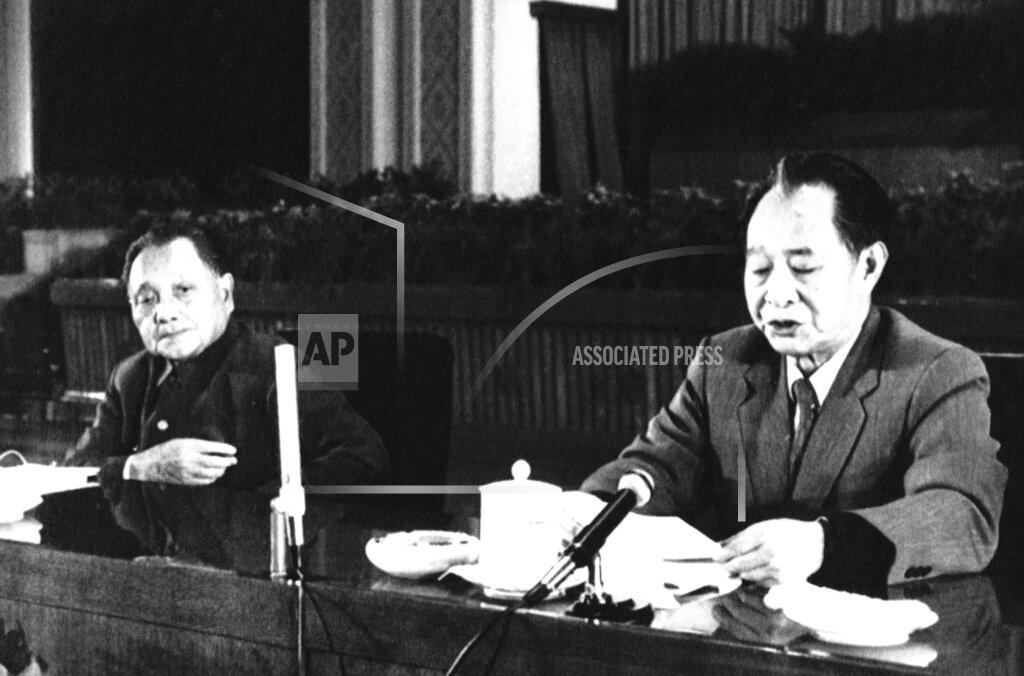
China approved a freer economy in which market forces will largely determine prices, competition will be stressed and plant managers will be given greater autonomy. The economic plan was approved by the Communist Party’s Central Committee.
Airline mechanic Celso Loterinia appeared on state-run Philippine television to dispel rumors that he was seized by the military after retracting his testimony implicating them in the August, 1983, assassination of opposition leader Benigno S. Aquino Jr. Loterinia had told a government commission that Aquino was shot on an airline staircase at the Manila airport as he was escorted by government forces. Loterina now says he saw nothing. The military says Aquino was killed on the tarmac by Rolando Galman, who was then shot to death by soldiers.
An American Peace Corps volunteer on the central Philippine island of Cebu was shot and killed at his beachfront cottage during an apparent robbery this week, the authorities said today. Charles Turner, a 40-year-old former Air Force officer from Omaha, Neb., was found at dawn Wednesday with a bullet wound in the back of his head, the officials said. Investigators said cash, an electric typewriter, a fan, a ring and two cameras were missing. The United States Embassy in Manila said the incident was under investigation. “There’s no evidence this was a political incident,” Alan Croghan, a spokesman for the United States Embassy in Manila, said.
Grant Notley, leader of the New Democratic Party in Alberta, and five other people were killed in the crash ot their twin-engine plane, the provincial government reported today. It said among the four survivors of the accident Friday night near High Prairie, Alberta, was the provincial housing minister, Larry Shaben. A spokesman for Wapiti Aviation, the plane’s owner, said the cause of the crash had not been determined. Mr. Shaben was taken to the general hospital in Slave Lake, about 60 miles southeast of the crash site, where he was treated for minor injuries and released. The other three survivors were hospitalized in Edmonton. Mr. Notley, 45 years old, had been leader of Alberta’s New Democratic Party since 1968 and was one of the 2 New Democrats serving in the 79-seat provincial legislature.
American advisers in El Salvador are moving about more freely, but are still abiding by rules barring them from combat areas, according to Reagan Administration officials. American diplomats in San Salvador said Friday that the rules governing advisers appeared to have become more flexible.
Possibly illegal CIA activities in Nicaragua have raised questions in Congress about the extent of the White House’s knowledge of the agency’s actions, members of Congress and their aides said. One of the disclosures was of a classified Defense Intelligence Agency report saying that American-backed Nicargauan guerrillas were committing political assassinations as early as 1982, the year after the United States began financing their activities. An executive order signed by President Reagan in 1981 prohibits Government personnel from taking part or assisting in assassinations. In an interview today, Edgar Chamorro, a director of the rebel Nicaraguan Democratic Force, said: “Frankly, I admit we have killed people in cold blood when we have found them guilty of crimes. We do believe in the assassination of tyrants. Some of the Sandinistas are tyrants in the small villages.”
A Vatican-mediated treaty aimed at ending a century-old border conflict between Argentina and Chile at the frigid tip of South America awards three disputed islands to Chile. It also preserves the principle of Argentine sovereignty in the Atlantic area of the Beagle Channel and Chilean authority in the channel’s Pacific zone. Terms of the treaty were made public after it was signed at the Vatican last week. It awards the islands of Picton, Nueva and Lennox to Chile.
President Reagan has signed the $292.9 billion defense spending bill for fiscal 1985, a compromise measure he said would mean preserving the peace “at a reduced pace” because he got substantially less than he wanted. The measure leaves the fate of the MX missile unresolved until next spring. At that time, the House and Senate will each have to vote twice on the program, once to authorize $1.5 billion for 21 more missiles and again to hand the money to the Pentagon. If the issue fails on any one of the four votes, the MX would be dead.
President Reagan makes a radio address to the Nation about foreign policy issues. President Reagan and Walter Mondale exchanged final pre-debate broadsides Saturday, criticizing each other’s competence in foreign affairs and warning that the nation’s security is at stake in the coming election. In a combative exchange of political radio addresses, Reagan accused Mondale of putting the national security at risk throughout his political career by being “possessed” by the idea that U.S. strength is “a threat to world peace.” Mondale, who normally speaks in a radio address on Sunday, rebutted Reagan a short while later in a broadcast in which he charged that the president had not carried out the responsibilities of foreign policy. “Virtually every day brings new evidence that nobody’s in charge,” he said. He particularly questioned Reagan’s competence on limiting the arms race. “When it comes to arms control,” Mondale said, “a president cannot be a genial chairman of the board. He cannot delegate the mastery of this most decisive of all subjects.” Reagan criticized Mondale’s record as senator and vice president as one of “unilateral concessions” on arms to the Soviet Union. He contended that his rival was part of a “defeatist spirit” that necessitated his own administration’s military buildup.
President Reagan, overriding the pleas of several Republican Senators who supported the bill, has vetoed an $85 million measure designed to improve Federal health care programs for American Indians. The President vetoed the bill Friday at the urging of the Department of Health and Human Services, the Office of Management and Budget and the Justice Department. Mr. Reagan said in a statement that he objected to a provision in the bill that would have changed the status of the Indian Health Service from a bureau of the Department of Health and Human Services to an agency. Supporters of the bill contended that the provision would have given the Indian Health Service a stronger voice in making policy. Mr. Reagan, however, called the move “unconstitutional” and said it would hamper the ability of the Health and Human Services Department to administer the Indian service.
President Reagan speaks with William F. Buckley, Editor in Chief of the National Review, New York, New York.
President Reagan practices his closing statement for the upcoming second presidential debate.
Preparations for the second debate between President Reagan and Walter Mondale were completed, as recent foreign policy developments have dramatically expanded the topics in an already charged political confrontation.
The future of the Supreme Court will be strongly affected by the outcome of the Presidential election. Five of the Court’s nine Justices will be at least 76 years old by Inauguration Day and while all may stay on the bench into their 80’s, retirement or death are likely to create vacancies in the next term.
Differences in foreign affairs separate President Reagan and Walter F. Mondale even more sharply than domestic issues. Tonight’s debate will reflect philosophical differences on the dynamics of arms control, the proper approach to relations with Moscow, and the underlying causes of revolution in the third world.
Inquiries into Senator Paul Laxalt’s political and business background in his home state of Nevada are severely testing his power as one of the President’s closest advisers.
The Justice Department has decided that more than 125,000 refugees from Cuba’s Mariel harbor boatlift may become permanent U.S. residents under the 1966 Cuban Adjustment Act. The Immigration and Naturalization Service will process applications from Mariel Cubans who have lived in the United States for a year and want to become permanent residents, the first step toward citizenship, an INS spokesman said. The decision was disclosed in a document filed in federal court in Miami in response to a class-action suit by three Mariel Cubans.
A Delta Air Lines L-1011 jumbo jet and a chartered French DC-8 narrowly missed colliding over the ocean off Long Island last week, Federal Aviation Administration spokesman Edmund Pinto said. The planes came within three-tenths of a mile horizontally and 300 feet vertically before air traffic controllers at John F. Kennedy International Airport warned them, Pinto said. He said the trouble apparently stemmed from the Delta pilot’s delay in climbing as directed by the controller.
The Army and the Environmental Protection Agency have agreed on a $500-million plan to detoxify the Rocky Mountain Arsenal, which some call the “most contaminated piece of ground in the free world,” Rep. Ken Kramer (R-Colorado) said. Kramer said the plan to eliminate the residue of nerve gas and pesticide production at the 42-year-old facility northeast of Denver is subject to approval by Governor Richard D. Lamm.
The scheduled execution of a convicted murderer, Frederick Kirkpatrick, in Louisiana’s electric chair was stayed by a federal judge. “All I was told is that they had a stay until further notice,” said Frank Blackburn, warden of Louisiana State Penitentiary. Kirkpatrick, 29, had been scheduled for execution between midnight Monday and 3 AM Tuesday and earlier in the day had been moved from Death Row to the prison’s isolated Death House. He was convicted of murdering Jerry Radoste, 61, of Pearl River, Louisiana, by plunging a butcher knife in his chest in 1982.
The authorities blame a struggle between two drug gangs in south-central Los Angeles for 25 murders since March, including the “drive-by” slayings of five youths October 12, according to a published report. The slayings were a “planned execution,” unidentified law-enforcement officials told The Los Angeles Times. The newspaper reported today that the authorities identified the drug syndicates as Whitey’s Enterprises and Third World, both of which are controlled by former street-gang members who moved into larger crimes as they outgrew the gangs. The syndicates reportedly control about 130 houses where drugs are sold, with each house grossing thousands of dollars a day. Thousands of teen-age gang members are employed by the syndicates, officials said.
Oregon’s chief elections officer testified that a “strong probability” of voter fraud prompted a blanket rejection of new voter registrations in Wasco County, where followers of an Indian guru are at odds with opponents. County residents claim that Bhagwan Shree Rajneesh’s commune has imported street people from across the country to help it win county elections in November. The Rajneeshees challenged the blanket rejection in federal court. Secretary of State Norma Paulus testified that she recommended rejection because of the “strong probability” of voter fraud, although she said she had no specific evidence of fraud.
About 15 members of the Ku Klux Klan gathered in Claxton, Georgia, to protest the NAACP’s investigation of a murder case involving a black man sentenced to life for slaying a white woman. Racial tension in Claxton was intensified by the slaying in February of Rebecca Futch. The white divorcee’s 17-year-old daughter, Sherry, had been dating a black man, Michael Moore, who is serving a life prison term for Rebecca Futch’s murder. Moore, convicted by an all-white jury, has maintained his innocence and testified during his trial last June that Sherry Futch killed her mother.
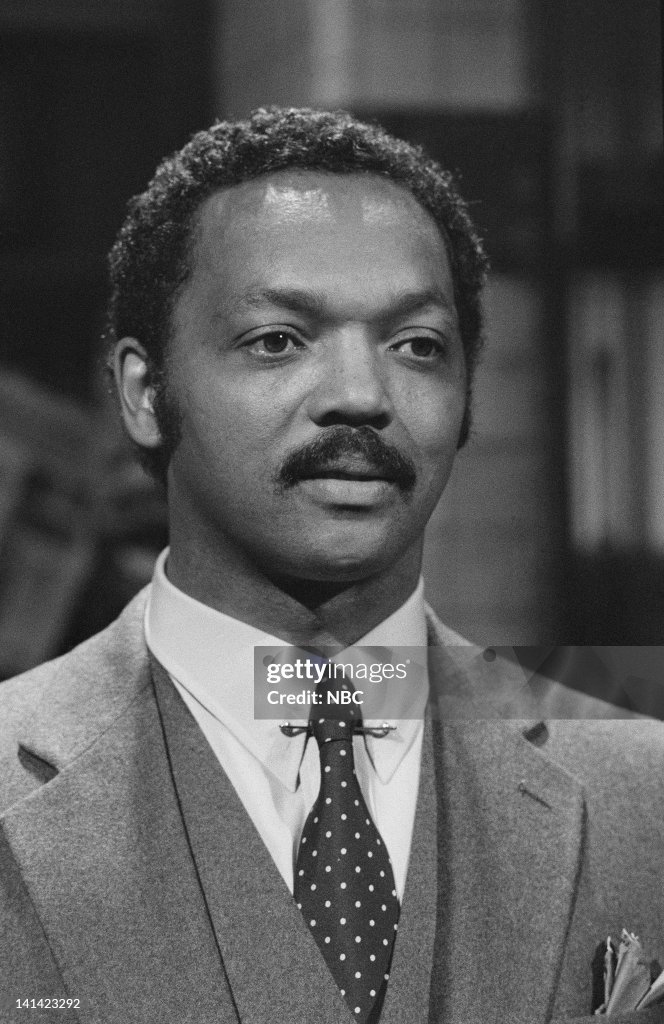
The battleship USS Iowa is a “holocaust machine” that must be banned from New York Harbor because of its potential to carry nuclear weapons, Jesse Jackson said at a New York dockside rally protesting the ship’s visit. “These cruise missiles are magnets for other missiles” that might be fired by an enemy, he told an audience of anti-nuclear demonstrators.
A patient’s wish to die has become the focal point of the “right to die” movement. William Bartling is suffering from five fatal diseases, but Glendale Adventist Hospital in California refuses to honor his request to turn off his breathing machine. As the case moves through the courts, doctors and hospitals watch for medical, moral and legal precedents.
The Monterey Bay Aquarium opens in Monterey Bay, California.
Recent cases of AIDS reported in New York City show that proportionately larger numbers of intravenous drug users and fewer homosexuals are contracting the deadly immune disorder, according to the city’s Health Commissioner. The Commissioner, Dr. David J. Sencer, attributed the shift to more conservative sexual life styles of New York homosexuals and the difficulty of persuading drug users of the risk of getting AIDS from contaminated needles.
Waves of thunderstorms rattled the southern Plains yesterday after more than 18 inches of rain fell in parts of southern Texas, forcing more than 1,400 people from their homes. Elsewhere, the third storm to roll out of the northern Pacific in a week broke up over the Rockies after its predecessors dumped up to three feet of snow on parts of Utah and Colorado. Hundreds of homes remained without electricity in Salt Lake City, the result of a heavy snowfall that knocked down branches and power lines. At the height of the storm Thursday, up to 100,000 customers were without power. The death toll from the week’s storms is now at eight. One person was killed yesterday in a traffic accident in Oklahoma, and on Friday night a Texas man who was using a tractor to help flood-stranded cars hit a highway washout and was killed. North of Dallas, wind gusting to 80 miles an hour raked the Grayson County Airport, ripping the roof from a hangar.
The New York Islander’s Mike Bossy’s 30th career hat trick, in his 6th career 4-goal game, an 8–3 win over visiting Los Angeles Kings.
Born:
Andrew Trimble, Northern Irish rugby player (Irish national team), in Coleraine, Northern Ireland, United Kingdom.
Died:
Paul Dirac, 82, English physicist (quantum electrodynamics, Nobel 1933).
Carl Ferdinand Cori, 87, Czech-American bio-chemist (Nobel 1947-discovery of how glycogen (animal starch) – a derivative of glucose – is broken down and resynthesized in the body, for use as a store and source of energy).




[Ed: The Soviets had a term: “полезные дураки.” It means “useful idiots.”]






 History Diaries