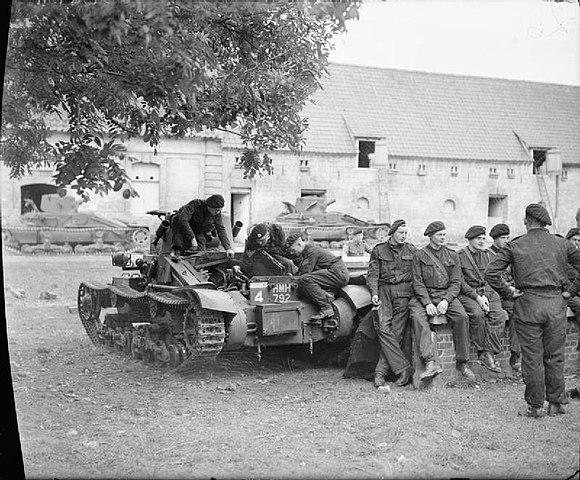
The German High Command issues Fall Gelb (Case Yellow) in response to Directive No. 6 issued by Hitler on October 9, 1939. The OKH at Zossen issues a preliminary plan for the invasion of France, which is still expected to take place in 1939. It calls for a Schlieffen Plan-like right hook through the low countries. It provides for a holding action on the French border with the main attack being sent through central Belgium and some attention being devoted to the Dutch.
The weather turns sour along the Weseern Front on 19 October 1939, and there are floods along the line.
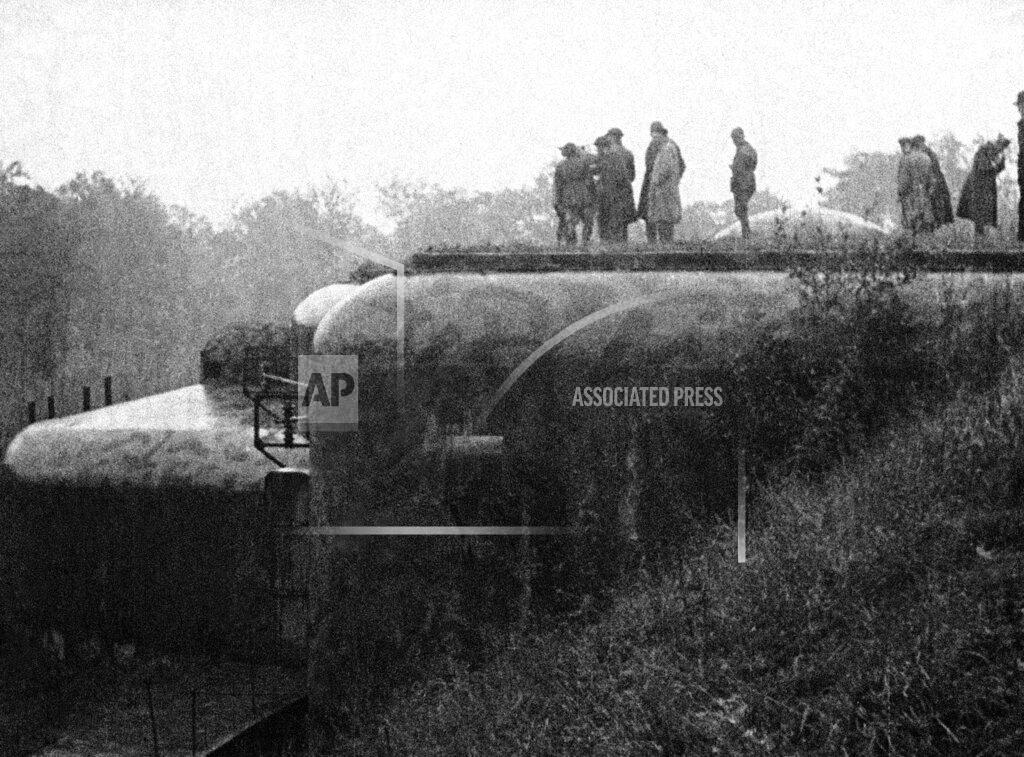
Under persistent, heavy rain the Germans today strove to organize their positions on the Rhine-Moselle front at the points where they were halted Monday evening in their progress toward the French line of resistance.
In order to coordinate the seizure of property from Jews and other Poles in Poland, Hermann Göring creates the Haupttreuhandstelle Ost (HTO), or the Main Trustee Office for the East. It is staffed by officials of the Deutsche and Dresdner banks.
The Kristallnacht “Atonement fee” for Jews is increased to 1.25 billion RM and has to be paid by November 15, 1939.
Western Poland was incorporated into the Großdeutsches Reich, but not Germany itself, as the General Government.
The first Jewish ghetto is established in Lublin, the center of a Jewish “reserve” in eastern Poland.
The Haupttreuhandstelle Ost was created to co-ordinate the confiscation of Jewish and Polish assets in Nazi-occupied Poland. Hermann Göring begins the plunder through the Nazi’s occupied areas.
Adolf Hitler’s personal pilot Hans Bauer has told the Führer that he would like a fast Focke Wulf 200 Condor in place of the slow Junkers Ju 52 that Hitler has been using. Today, a specially outfitted Fw 200 is delivered to the Führer’s private air force Fliegerstaffel des Führers. It includes such amenities as an ejection seat with parachute for Hitler.
The German Consul General defends German strength in a New York speech. He says the nation is not nearing collapse.
The British Ministry of Transport announces that in September, first month of the black-out, the total number of persons killed on the roads of Britain was 1130, compared with 617 in August.
Contraband seized by the Royal Navy for the week ending 14 October 1939 totals 23,000 tons.
Two German airmen, half the crew of a bomber shot down over the North Sea on Tuesday, drifted ashore in a collapsible rubber boat near Whitby.
Sir Kingsley Wood returns to London after inspecting RAF operations in France.
Soviet Union and Finland both mobilize more of their military.
Germans are advised to leave Finland. The legation suggests they return to the Reich voluntarily before they get ordered to do so.
An Anglo-French-Turkish Treaty of Mutual Assistance is signed. Allied commanders General Maxime Weygand and General Archibald Wavell represent France and Britain respectively. The term of the treaty is 15 years. The Turks pledge to aid the Allies if the war reaches the Mediterranean, but not if such aid could bring Turkey into conflict with the Soviet Union. In return, Turkey receives control of the disputed Sanjak of Alexandretta from French Syria.
U-48 attacks the British steamer Rockpool with gunfire at 1332hrs. The steamer fires back, forcing the U-boat to crash dive. When it surfaces and opens fire once more, a destroyer arrives, sending the U-boat into a second dive .
The British coaster City of London collided in the River Thames with a Dutch vessel and was beached at World’s End, Tilbury, Essex.
The Shchuka-class submarine ShCh-424 collided in Kola Bay with the Soviet trawler RT-43 and sank. Ten crewmen survived, including the commander. She sank in 3 minutes to a depth of 250 meters.
Gunboat Erie (PG-50) arrives off Manzanillo, Mexico, on neutrality patrol; she will monitor movements of German freighter Havelland until 11 December. Commander Special Service Squadron (Rear Admiral John W. Wilcox Jr.) commends the gunboat’s work as “the outstanding event” of offshore patrol work conducted by the Squadron.
Convoy OA.22 departs from Southend.
Convoy OB.22 departs from Liverpool.
The War at Sea, Thursday, 19 October 1939 (naval-history.net)
While in dock at Devonport, destroyer KEMPENFELT was transferred to the Canadian Navy as HMCS ASSINIBOINE. She had been there since 29 September repairing collision damage from the day before. As ASSINIBOINE, she departed Plymouth for Halifax on 7 November.
Light cruisers CARDIFF, DIOMEDE, DRAGON departed Sullom Voe for Northern Patrol.
Two cruisers were on Northern Patrol between the Shetland and the Faroes, AMCs AURANIA, CALIFORNIA, CHITRAL between the Faroes and Iceland, and light cruiser SHEFFIELD and AMCs RAWALPINDI, SCOTSTOUN, TRANSYLVANIA in the Denmark Strait.
Destroyers INTREPID, ICARUS, IVANHOE arrived at Loch Ewe and sister ship IMPULSIVE at Scapa Flow on the 25th, all for duty with the Home Fleet. Destroyers ILEX, ISIS, IMPERIAL joined the 22nd Flotilla at Harwich on the 31st, were released from the Flotilla on 5 November and rejoined the 3rd Flotilla operating with the Home Fleet – IMOGEN, after completing repairs, and IMPERIAL on 8 November, ILEX and ISIS on the 14th, and INGLEFIELD, also after completing repairs, on the 16th.
Destroyer WHITEHALL and sloop WESTON attacked a submarine contact three miles ENE of St Abb’s Head.
Convoy OA.22 of nine ships departed Southend escorted by destroyer VESPER, which stayed until the convoy dispersed on the 21st.
Convoy OB.22 departed Liverpool escorted by destroyers MACKAY and VIMY, the destroyers detaching on the 22nd to escort SL.4.
Prize regulations for U-boats were lifted for shipping as far west as 20°.
German tanker BISKAYA (6386grt) had departed Hamburg on 13 August for Port Arthur, Texas, but with the start of war, found refuge at Las Palmas until 7 October when she attempted to return to Germany. She was captured on the 19th by armed merchant cruiser SCOTSTOUN on Northern Patrol in the Denmark Strait in 66 30N, 23 00W, taken to Leith by a prize crew commanded by Lt Cdr R H A Clark RNR, and renamed EMPIRE UNITY in British service.
German tanker GONZENHEIM (4574grt), which had departed Buenas Aires on 14 September, was intercepted by armed merchant cruiser RAWALPINDI on Northern Patrol in the Denmark Strait in 63 25N, 12 00W, and scuttled.
French destroyer FOUDROYANT had arrived at Casablanca on 13 September with convoy 9.B of steamers STRASBOURGEOIS, MAROC, JUMIEGES and POITIERS after leaving Brest on the 7th October, as well as SAINT NAZAIRE, escorted by sloop CHEVREUIL after leaving Quiberon, also on the 7th.
Quite separately, destroyer BOURRASQUE reached Casablanca on the 17th with convoy 3.K of steamers MARRAKECH and KERGUELEN. They had left Le Verdon on the 13th. Both destroyers then departed Casablanca and arrived at Gibraltar on this date.
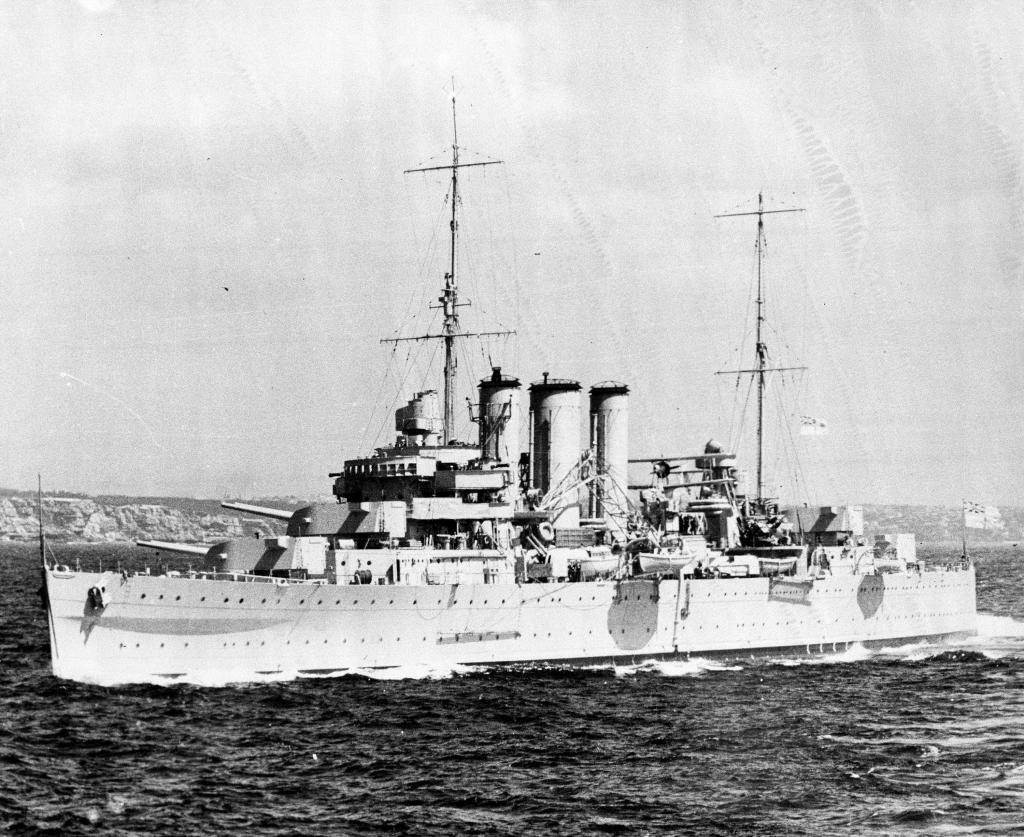
Heavy cruiser DORSETSHIRE departed Hong Kong for Singapore and duty with the 4th Cruiser Squadron in the East Indies Station. She left Singapore on the 22nd for Colombo.
In Washington, President Roosevelt discussed the Mexican oil controversy with Francisco Castillo Najera, the Mexican Ambassador, conferred with Senator Lister Hill of Alabama on plans for drought and flood relief in distressed areas, presided at a meeting of the Cabinet and prepared to leave during the night for a weekend visit to Hyde Park.
The Senate continued debate on the neutrality resolution, with Senators McCarran, Barkley, Austin, Borah and Vandenberg participating, and recessed at 5:03 PM until noon tomorrow.
The House received the Coffee bill to require Senate ratification of trade agreement treaties, received the Wolcott motion to curtail possible war powers of the President and the McDowell motion for a special committee to tabulate and report on the emergency powers of the President, was assured by Representative Rayburn, the majority leader, that ample debate would be permitted on neutrality legislation when it is passed by the Senate, and adjourned at 2:30 PM until noon tomorrow.
A movement to provide Federal compensation for American ship lines which suffer unusual losses as a result of curtailment of operations under the proposed Neutrality Act was started today among the Democratic authors of the measure. A proposal to introduce legislation to that end at the next regular session of Congress was virtually decided upon by members of the informal Democratic drafting committee as they sent to the Senate amendments relaxing the stringent shipping regulations as much as they dared at this time. Changes which they have proposed also would tighten still further the former credit features of the resolution.
Even after these amendments had been announced by Senator Pittman, chairman of the Foreign Relations Committee, Senator Barkley, majority leader, told the Senate during the course of a speech that the pending neutrality measure “involves the greatest sacrifice ever made by a nation in the history of mankind in order to avoid war.” The Administration spokesman asked the Senate to approve the sacrifice, however — not as a sign of cowardice, but as a means toward conserving the strength and courage of this nation “for the service of the democratic ideal here in America and throughout the world.”
Details of the plan for compensating American ship lines for extraordinary losses caused by restrictions of the Neutrality Law, which in effect would transfer part of their sacrifices to the taxpaying public, are to be worked out between now and the next session, according to those sponsoring the movement. The shipping lines to be most affected are those serving European ports, both on the Atlantic and the Mediterranean, and the eastern coast of Canada.
The amendments as filed today would bar roughly all sea traffic by American ships between the United States and ports in the Atlantic and tributary waters north of the 30th degree of North Latitude. The rest of the world, including ports in the Western Hemisphere south of the 30th degree North Latitude, the Pacific and Indian Oceans, the China Sea, the Bay of Bengal and the Arabian Sea, would be left open to American ships, subject to the President’s authority to designate “combat zones” into and through which they might not go.
Ports would be left open to American aircraft in all the Western Hemisphere and the other parts of the world as designated above. Neither American sea nor aircraft, however, would be permitted to transport to any country such articles of arms, munitions and implements of war as listed by the President in his proclamation of early September.
Those who disclosed to The New York Times the plan to compensate American ship companies for losses by virtue of curtailment of services under these restrictions insisted that no formula had been worked out; only the determination to do something about it. “We have got to compensate them in some way,” said one of the principal authors of today’s amendments. “We are not going to make up to them any unusual profits, but it is only fair that if we pass a law that will destroy or prevent the use of their property, we should provide just compensation. Many if not most of the ships involved are under mortgage to the Federal Government anyway.”
Two Republican members of the House of Representatives proposed legislation today to curtail possible discretionary powers of President Roosevelt in dealing with the European war situation, but there was no indication that such a policy had. the backing of the solid minority. Like the Democrats, the Republicans in the House are divided in their opinion of the Administration’s foreign policy, although they voted almost to a man against repeal of the arms embargo last June. Representative Wolcott of Michigan, ranking minority member of the Banking Committee, introduced a bill, which he defended in a speech from the floor, intended to prevent disguised lending by the government to any of the belligerents.
A sharp decrease in the number of Americans who think the United States should take up arms against Germany if the allied powers appear to be losing has shown itself since the first week of the European war, according to a survey of the American Institute of Public Opinion. Only 29% now support such aid.
U.S. President Franklin D. Roosevelt informed German émigré and physicist Albert Einstein of the establishment of the Advisory Committee on Uranium with Lyman J. Briggs, director of the U.S. National Bureau of Standards, as the committee head. Roosevelt was responding to a letter he had received on October 11, 1939 from Einstein warning of the importance of research on chain reactions and the possibility that this type of research might lead to developing powerful bombs.
Four American Navy flyers were killed when two bomber planes collided in mid-air near San Diego, California.
Former heavyweight boxing champion Gene Tunney criticized Charles Lindbergh’s radio address of October 13, especially his remarks about Canada. Tunney said he had great respect for Lindbergh but could not understand how he could “desert” England after being sheltered there. Tunney also said it took “great nerve and ambition” for Lindbergh to tell Americans how they should think after accepting an award from the Nazis while visiting Germany.
In the United States, Dr. Vannevar Bush was elected Chairman of the NACA to fill the post of Dr. Joseph Ames, who resigned due to ill health.
First Lady Eleanor Roosevelt urges aid for convicts. She asks for sympathy for those who have paid their debt to society and says medical care is also needed.
U.S. Farmers receive 40 cents of each dollar spent on 58 different foodstuffs.
A consumer guide assures Americans of plentiful food supplies during this winter. More meat will be available than any year since 1934.
The American fishing vessel Martha was wrecked on either Walrus Island (56°01′40″N 160°50′00″W) or Deer Island near Nelson Lagoon, Territory of Alaska, after a storm carried away her rudder. Her four crew survived.
Cincinnati release future Hall of Famer Al Simmons. He’ll sign next on December 10 with the Philadelphia A’s.
Japanese reports today asserted that Soviet Russia had presented the Chinese Government at Chungking with a “series” of demands for continuation of the sporadic aid which Russia has been giving China in the matter of war supplies.
General Shunroku Hata, Japanese Minister of War, told the Cabinet today that Japan must concentrate on settling the war in China. He reported promising developments for Japan in the movement to form a new Chinese Government under Wang Ching-wei that would sign a peace treaty, and said there were indications of internal conflict in the Chungking regime.
Official and diplomatic circles in Tokyo were rocked today by the speech of United States Ambassador Joseph C. Grew, in which he asserted frankly that American opinion deeply resented. the “bombings, indignities and manifold interference with American rights” in China at the hands of the Japanese Army. Japanese and foreign observers who said they were “astounded” at the outspoken address, one of the strongest ever made by a diplomat in Japan, expressed the belief that it had two possible meanings:
- That the United States was preparing definite action to oppose further Japanese “interference” in China.
- A strong indication that public opinion in Japan itself had turned against Japanese militarists.
“The ground in Japan must have been prepared in advance for such a powerful statement,” well informed sources said. “A year ago, it would have done more harm than good, therefore it would not have been made.” Ambassador Grew, who said his words came “straight from the horse’s mouth,” spoke yesterday before an audience of Japanese notables at a luncheon of the America-Japan Society, often a sounding board for authoritative discussion of American-Japanese relations.
Mr. Grew’s presentation of the American reaction apparently came as a complete shock to the audience, which included Admiral Baron Kan Suzuki, privy counselor; Renzo Sawada, former Vice Minister of Foreign Affairs and newly appointed Ambassador to France, and Count Aisuke Kabayama, member of the House of Peers. A score of other titled personages, financiers, industrialists and lawyers also heard the Ambassador, who recently returned from a visit to the United States and a meeting with President Roosevelt. “They (the American people) regard with growing seriousness the violation and interference with American rights by Japanese armed forces in China in disregard of treaties and agreements,” Mr. Grew stated.
“When such opinion tends toward unanimity it is a force which a government can not possibly overlook and will not fail to reflect on its policies and actions.” He added that it was his personal belief and the belief of the American Government and people that many of the injuries inflicted on United States interests “which have been done and are being done by Japanese agencies are wholly needless.”
“On that subject public opinion in the United States is unanimous,” he asserted, “and, mind you, I know whereof I speak, from personal talks with a very large number of people in diverse walks of life throughout our country, constituting a reliable cross-section of the American public.”
Dow Jones Industrial Average: 153.36 (-0.18)
Born:
Masabumi Kikuchi, Japanese jazz pianist, synthesizer player, and composer, in Tokyo, Japan (d. 2015).
Died:
Red Downs, 56, American baseball player and convicted armed robber.
Naval Construction:
The Royal Navy Flower-class corvette HMS Gladiolus (K 34) is laid down by the Smiths Dock Co., Ltd. (South Bank-on-Tees, U.K.).
The Kriegsmarine (German Navy) Type VIIB U-boat U-55 is launched by F. Krupp Germaniawerft AG, Kiel (werk 590).
The Royal Navy Havant-class destroyer HMS Highlander (H 44), formerly the Marinha do Brasil (Brazilian Navy) Jaguaribe, is launched by Thornycroft (Southampton, U.K.). Requisitioned by the Royal Navy on 4 September 1939.
The Nihon Kaigun (Imperial Japanese Navy) Kagerō-class destroyer Amatsukaze (天津風, “Heavenly Wind”) is launched by the Maizuru Naval Arsenal (Maizuru, Kyoto Prefecture, Japan).
The Royal Canadian Navy “C”-class destroyer (Flotilla leader) HMCS Assiniboine (I 18), formerly the Royal Navy HMS Kempenfelt, is commissioned. Her first commanding officer in Canadian service is Commander Edmond Rollo Mainguy, RCN.
 History Diaries