Communist China, in initial pronouncements on its detonation of a nuclear device, appears to have adopted an attitude of restraint. Analysts here said there had been no statements of unusual belligerence or the boasting that might be expected of an industrially backward country after it attained nuclear status. In evident desire to reassure the nonaligned and other nations that Peking is courting, the Chinese leadership is felt to have attempted to project an image of a government that takes a responsible and temperate view of its position as head of a nuclear power. This was reflected this morning in Peking’s congratulatory message to nuclear scientists and other workers on the atomic project cautioning them against “impetuosity.” Analysts said that Peking obviously anticipated protests, such as that lodged by Japanese Socialists, against further contamination of the atmosphere.
The Chinese Communists are seeking to offset this fear, which is shared by many Asians and Africans, by exhibiting restraint and insisting upon Peking’s need for nuclear in surance against the United States. It was noted here that in its statement on the detonation of an atomic device Friday, Peking asserted that it would not commit the “error of adventurism nor the error of capitulation. This was interpreted as a thrust against Nikita S. Khrushchev’s performance in the 1962 Cuban missile crisis. Peking, in its ideological journals, criticized Mr. Khrushchev at the time for the double sin of “adventurism” and then “capitulation” in withdrawing the Soviet missiles under pressure from the United States. Soviet propagandists retorted by accusing Peking of recklessness and willingness to risk nuclear war and hundreds of millions of lives to attain its ends. To support this assertion, analysts said, Moscow quoted out of context a 1957 speech made by Mao Tse‐tung, the Chinese Communist party chairman.
While advocating revolution, Peking has repeatedly denied the Soviet charge that it is prepared to invite nuclear war. But specialists on Chinese-Soviet affairs believe that the Moscow accusation has had the effect of giving Peking a widespread reputation of recklessness. The cautious attitude assumed by Peking toward United States activities in Vietnam has supported the view of some specialists here that Communist China is fearful of risking general war. The Chinese Communists have encouraged the North Vietnamese to send cadres and supplies to the Communist guerrillas in South Vietnam. However, Peking refrained from intervention after the Gulf of Tonkin incidents in which the United States retaliated against North Vietnam. It has also refrained, from extending a definitive public military commitment to the communist regime in Hanoi. At the same time, the Chinese Communist atomic explosion seems to have given the North Vietnamese Communists a psychological lift. This was seen here in the jubilant message of congratulations sent by President Hồ Chí Minh to Peking and the report by the Hanoi radio that North Vietnamese peasants were holding meetings to celebrate the Chinese feat.
Leftist revolutionary movements in Southeast Asia and elsewhere were expected to be encouraged, if for no other reason than a feeling that their chief mentor, Communist China, was now more powerful politically if not militarily. Communist China, through its development of nuclear power and the downfall of its ideological archenemy, Mr. Khrushchev, seemed certain to gain a more influential voice in the international Communist movement. Analysts also said the prospects that Communist China would be seated in the United Nations General Assembly had been enhanced, both by the nuclear test and by the Labor Party’s election victory in Britain. France’s recognition of Peking; and an energetic public relations campaign by Chinese officials in Africa has swung additional votes to Communist China. The vote in the United Nations last fall on a motion to seat Communist China was 57 to 41 with 12 abstentions.
The Albanian Communist party and Government leaders have sent Peking a message expressing “great joy” at the explosion of Communist China’s first atomic bomb, according to reports in Tirana newspapers. The reports said the message conveyed “congratulations and most cordial wishes on the occasion of that brilliant victory that strengthens the defense potential of China and of the whole Socialist camp.” The reports were received here in broadcasts by the Tirana radio.
Peking accused a United States warship today of intruding into territorial waters off Fukien Province four times in 24 hours, according to a Hsinhua press agency broadcast monitored in Tokyo.
A United States Army enlisted man was wounded slightly last night when a bomb exploded in a bar at the seaside resort of Cap Saint-Jacques (Vũng Tàu), 40 miles southeast of Saigon.
Communist North Vietnam charged today that “United States fighter‐bombers” from Laos and South Vietnam had bombed and strafed villages on the North Vietnamese side of the demilitarized zone between North and South Vietnam. According to the Hanoi radio, in a broadcast monitored here, the North Vietnamese Foreign Ministry charged that the attacks took place Friday and yesterday and “caused losses in human lives and property.”
Large posters of the members of the new Soviet regime were erected in Moscow this morning for the first time and they gave a clue to the relative strength and position of the leaders. The picture of Leonid I. Brezhnev, the new First Secretary of the party, had the place of honor. Next in order came the pictures of Aleksei N. Kosygin, the new Premier, and Anastas I. Mikoyan, the President. The picture of Mikhail A. Suslov, the party’s chief ideologist, was in fourth position and Nikolai V. Podgorny’s was fifth. The pictures were placed for tomorrow’s big homecoming celebration for the Soviet Union’s three most recent astronauts. A regime official, probably Mr. Brezhnev, is expected to mark the occasion with a speech in Red Square.
Since the shake-up Mr. Brezhnev has heen regarded as the probable heir to the greatest portion of the power formerly held by Premier Khrushchev. The arrangement of the posters today appeared to confirm him in that position, at least for the time being. Premier Kosygin and President Mikoyan appeared in the positions dictated by the power and importance of their offices, Western observers felt. The only mild surprise was that Mr. Suslov seemed to outrank Mr. Podgorny, who was thought to have vied with Mr. Brezhnev for the second position in the party while Mr. Khrushchev was still in power. Some Western observers felt that toward the end of his regime, Mr. Khrushchev had pushed Mr. Podgorny at the expense of Mr. Brezhnev. Mr. Suslov, according to informed sources, was the main speaker at the session of the Central Committee that deposed Mr. Khrushchev.
The East German Communists acknowledged today that the ouster of Nikita Khrushchev from Soviet leadership had shocked party members and ordinary citizens. “The news of the release of Comrade N. S. Khrushchev from his functions has caused deep emotion within our party and among our peoples,” the East German Politburo declared. Its statement was the first official declaration by any Soviet‐bloc Communist party since the ouster. The declaration was said by Western experts to reflect fears that the new Soviet leaders might change their course as well as misgivings over the effect the news might have on the latent hostility of the East German people.
Egyptian President Gamal Abdel Nasser’s campaign against the British in Aden is slowly mounting in intensity with the use of psychological and guerrilla warfare and terrorism. Cairo’s 1,000-kilowatt transmitters, reinforced by a relay station outside Taiz in Yemen, are beamed to the Aden crown colony and to the “Federation of South Arabia. Its broadcasts say that if the British would only recognize the Yemeni Republic and halt their support of the royalists in the mountains of northern and eastern Yemen, then all the fighting would end. The broadcasts also give full propaganda scope to the extremist South Arabian leader, Qahtan Ash‐Shaabi, who has eclipsed the moderates and is directing the activities of the guerrillas whom the British call “dissidents” and terrorists. Mr. Shaabi, a 40-year‐old graduate in engineering from Cairo University, comes from Lahej, one of most important of the South Arabian States. He was once adviser to its sultan. Unlike the moderates, who work openly through the Aden Trade Union Council and the People’s Socialists Party, he has anonymous agents. They are said to be spreading a network through the bureaucracy and even police organizations in British‐controlled territory.
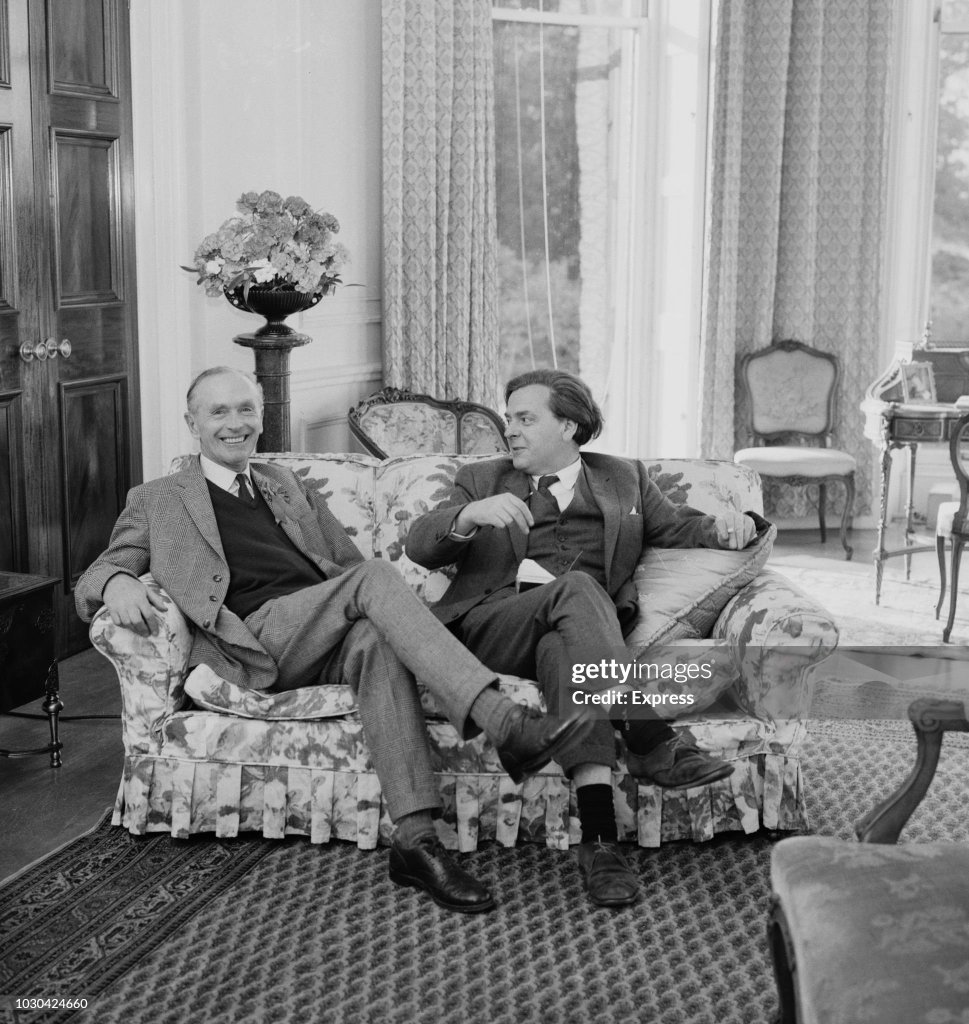
The delicate task of adjusting relations between Britain and the United States to the advent of the Labor Government has begun and, it became evident today, will be carried forward as swiftly as possible. President Johnson and Prime Minister Harold Wilson have already spoken by telephone and are believed to have arranged to meet in Washington after November 3, assuming Mr. Johnson wins. Today, Secretary of State Dean Rusk telephoned greetings to Patrick Gordon Walker, Britain’s new Foreign Secretary, and Defense Secretary Robert S. McNamara exchanged telegrams with his new British counterpart, Denis Healey.
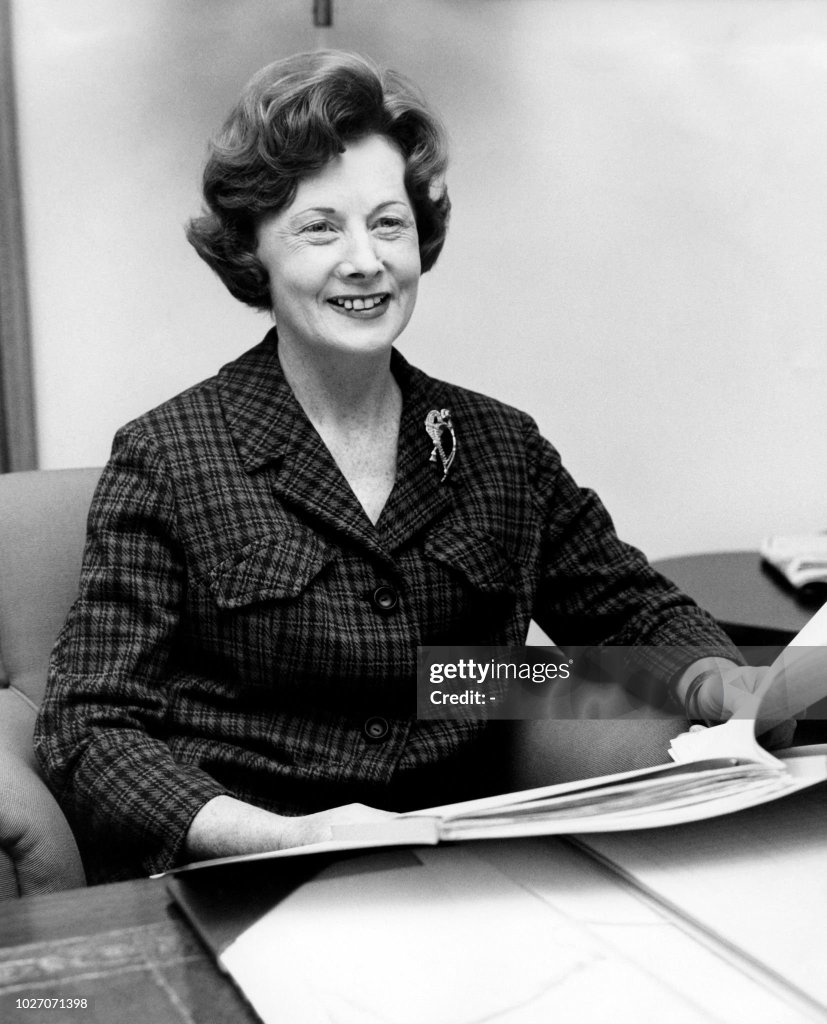
Barbara Castle was appointed as the British Minister for Overseas Development by Prime Minister Wilson, becoming the first female cabinet minister in the United Kingdom since Ellen Wilkinson’s service in 1945 as the Minister of Education. Baroness Castle of Blackburn, PC was a British Labour Party politician who was a Member of Parliament from 1945 to 1979, making her one of the longest-serving female MPs in British history. In 1968, Wilson promoted Castle to become First Secretary of State, the second-most senior member of the Cabinet.
Indonesia has proposed secret peace talks with the Malaysian federation, diplomatic surces here said today. The Malaysian Prime Minister, Prince Abdul Rahman, has said that “peace feelers” have been coming from Jakarta in the last two weeks. The sources said the proposal for secret talks were part of those “feelers.” However, Foreign Minister Subandrio of Indonesia said in Jakarta last night that his country would intensify her campaign to crush Malaysia. The Indonesians contend that the federation, made up of former British colonies, is a device to perpetuate British influence.
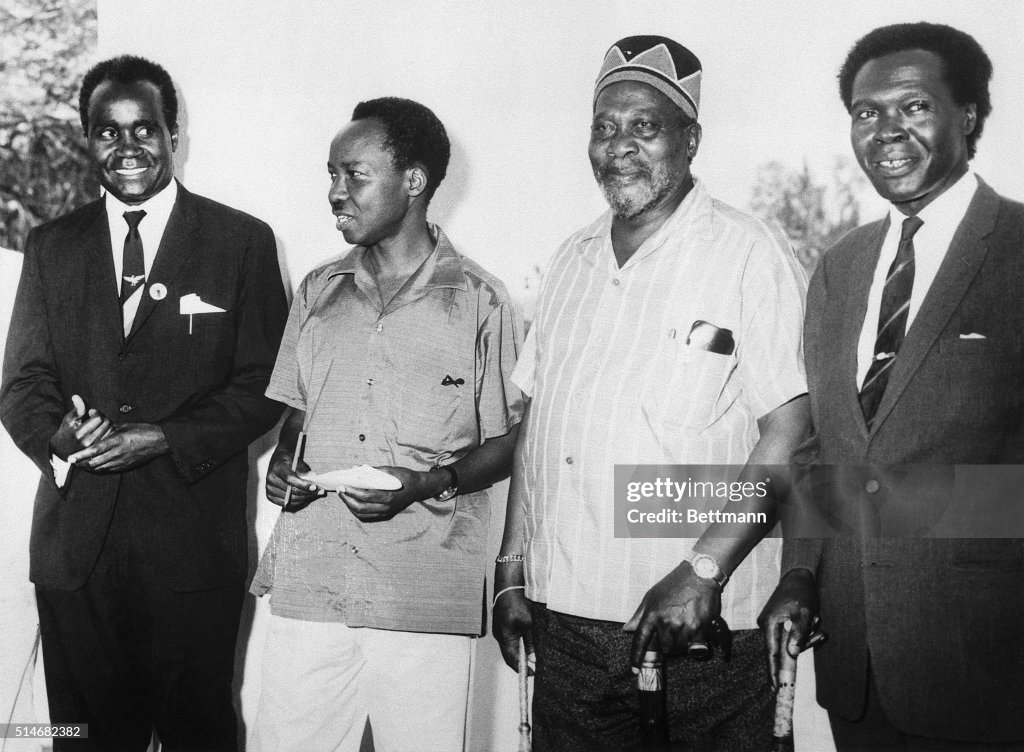
Joshua Nkomo, one of Southern Rhodesia’s leading African nationalists, is being kept in jail beyond his scheduled release date as the Government prepares to seek the views of Africans on independence for this British colony. The views of the four million Africans in Southern Rhodesia will be sought through their chiefs and headmen, with the Government asking their views on independence under the present Constitution. The colony, which has had self-government for 40 years, is ruled by the white minority. Mr. Nkomo, leader of the banned Peoples Caretaker Council, had been restricted to a specified area. Fourteen other African nationalists were moved from restriction centers to the same jail as Mr. Nkomo.
Charles Lwanga, and the 21 Uganda Martyrs who were killed for converting to Roman Catholicism in the 19th Century, were made saints of the Roman Catholic Church in a canonization by Pope Paul VI.
President Johnson told the people of the United States tonight that despite the Chinese Communists’ nuclear explosion and the change of Government in the Soviet Union, “the key to peace is to be found in the strength and the good sense of the United States.” It is this, he said, that “holds the balance firm against danger.” Mr. Johnson, reassuring and cautionary by turns in a radio and television address from the White House, offered several specific responses to the new developments in the world. He pledged to countries that lacked nuclear weapons “our strong support against some threat of nuclear blackmail” — from the Chinese Communists or anyone else.
He offered again to enter a “solid and verified agreement” to end nuclear tests in all environments, underground as well as in the atmosphere; and he said he was ready to join with the new Soviet leaders “and all the world” in an effort to halt the spread of nuclear weapons. “A good beginning, on both sides,” has been made in United States relations with the new Soviet leaders, Mr. Johnson said, and he added that he “would be ready to talk to anyone, when it would help the cause of peace.” The United States, he said. will continue its hope of “building new bridges” to reach “the forces in Eastern Europe that are working for greater independence.”
President Johnson, who had words of limited praise for Nikita S. Khrushchev, the deposed Soviet Premier, expressed mixed reactions to the advent of new men at the head of the Soviet Government. “There will be turmoil in the Communist world,” he said, causing the new leaders in the Kremlin to be “concerned primarily with problems of Communism.” He said: “This would not be all good, because there are problems and issues that need attention between our world and theirs, but it’s not all bad because men who are busy with internal problems may not be tempted to reckless external acts.”
Mr. Johnson implied at one point that the new Soviet leaders might not be able to sustain their power. “When Lenin died in 1924, Stalin took four years to consolidate his power,” he said. “When Stalin died in 1953, it was not Mr. Khrushchev who first emerged.” But he warned: “We must never forget that the men in the Kremlin remain dedicated, dangerous Communists” — a fact that he said required “steady vigilance among free men, and most of all among Americans.” Earlier in the day, the President sent official greetings to the new Soviet premier, Aleksei N. Kosygin. The message was brief and addressed to “Dear Mr. Chairman.” It read as follows: “I extend greetings to you on your designation as Chairman of the Council of Ministers of the Union of Soviet Socialist Republics. Our countries bear heavy responsibilities for the maintenance of world peace. It is my hope that our Governments will work constructively in attempting to resolve the urgent international problems facing us in the world. Lyndon B. Johnson.”
Senator Hubert H. Humphrey of Minnesota said today that the United States should bring the pressure of the world community on Communist China to require its acceptance of the treaty banning all but underground nuclear tests. Mr. Humphrey, the Democratic Vice‐Presidential nominee, also suggested that France, now a holdout, might be interested in subscribing to the treaty in view of Communist China’s atomic development. The Senator made these points in answer to questions at a news conference in Tampa. He also spoke to thousands at outdoor rallies in Tampa and St. Petersburg today. He was heckled in both places, chiefly by youngsters carrying Goldwater placards, but through humor he turned the heckling into an asset.
Throughout most of the South Blacks are prepared to deliver on November 3 what civil rights workers call the largest bloc vote in history. Intensive registration campaigns conducted by civil rights organizations and related groups appear to have assured a record Black vote in the South, except for Alabama. In South Carolina, North Carolina, Tennessee, Georgia, Louisiana and Mississippi, Blacks have pledged more than a million votes to President Johnson, according to a survey by The New York Times. Voter registration workers in the seven states praised the response of poor rural Blacks but decried what they described as apathy and complacency in the ranks of Black professional and middle‐class communities. Despite recent international and national developments, Southern Blacks appear collectively to be still determined to vote the Democratic ticket.
Dr. Reginald A. Hawkins, a dentist in Charlotte, North Carolina said: “The ouster of Khrushchev and the atomic bomb in Red China, plus a questionable scandal in the Administration, most certainly do not overshadow the civil rights bill for Blacks in the South and throughout the country.” “I still don’t think Mr. Goldwater will get 20 Negro votes in the state of North Carolina,” he said. Across the South, rural Blacks reflected the effectiveness of the grass‐roots approach used by registration officials. “Lordy, honey, I’m going to vote for L.B.J.,” said an old Black woman puffing on a corn cob pipe and stirring boiling clothes in a black iron kettle behind her two‐room shack, between Fort Motte and St. Matthews, South Carolina, in Calhoun County. “He’s a Southerner just like us colored folks, and the Good Lord must have sent him to lead us out of bondage,” she said. She did not know who Senator Barry Goldwater was, but she said, “I’m against that other man. He ain’t no good for us colored folks.”
Former President Herbert Hoover was in critical condition last night as a result of massive internal hemorrhaging. Mr. Hoover, who celebrated his 90th birthday on August 10, was stricken at 3:55 PM Saturday in his suite on the 31st floor of the Waldorf Towers, where he has lived for the last 30 years. The bleeding, which was in the upper intestinal tract, worsened during the night and at 8:45 yesterday morning his doctors issued their first bulletin. It said the blood was being replaced by transfusions and, although Mr. Hoover’s condition was critical, his heart was performing well. At mid‐afternoon they reported that the hemorrhaging appeared to be abating and that “replacement of blood by transfusions has kept pace with the losses, which have been large.”
Shortly before 9:30 last night, it was reported that there had been no change in Mr. Hoover’s condition. It was said that he continued to rest comfortably. The next medical bulletin was scheduled for “sometime after 8 AM” today. Neil MacNeil, a close associate of Mr. Hoover, said no further bulletins would be issued until this morning unless the former President’s condition suddenly worsened. He said Mr. Hoover slept most of the day, but was alert and “very kind” to his physicians and nurses when he wakened. The afternoon bulletin, issued shortly before 4 PM, said: “His blood pressure, pulse, and vital signs are stable, and he is comfortable and in no pain. The prognosis is extremely guarded, especially in view of the patient’s advanced age.”
New York Senator Kenneth B. Keating accused Robert F. Kennedy yesterday of waging an “arrogant” and “highly unprincipled” campaign against him, and called Kennedy “temperamentally and intellectually unfit”` to serve.
Robert F. Kennedy charged Senator Kenneth B. Keating yesterday with trying to run out on an agreement to meet him in a face-to-face debate.
The American Motors Corporation and the United Automobile Workers reached new labor agreements early this morning ending a three-day strike against the company’s automotive operations. The new contract will retain the company’s profit-sharing plan.
The New York World’s Fair closed its first season last night in a burst of fireworks blazing into the skies over Flushing Meadow, and with a shower of brightly illuminated waters playing from the fair’s huge fountains.
The new University of South Alabama was dedicated at Mobile, Alabama.
The New York World’s Fair closed for the year after a six-month run, and paid attendance of 33,373,446 people, with 200,076 passing through the turnstiles on the final day. It would reopen for a second six-month run on April 21, 1965.
Kevin Berry broke his own world record in the men’s 200m butterfly (long course) on the last day of the swimming competition at the Summer Olympics in Tokyo, Japan, with a time of 2:06.6. Berry beat American Carl Robie by 0.9 seconds.
NFL Football:
Cleveland Browns 20, Dallas Cowboys 16
Detroit Lions 10, Chicago Bears 0
Green Bay Packers 21, Baltimore Colts 24
Philadelphia Eagles 23, New York Giants 17
Pittsburgh Steelers 10, Minnesota Vikings 30
San Francisco 49ers 14, Los Angeles Rams 42
Washington Redskins 24, St. Louis Cardinals 38
Bernie Parrish ran back an intercepted pass 54 yards for a touchdown today to give the Cleveland Browns a 20-16 victory over the Dallas Cowboys, before a crowd of 37,456. Jim Brown regained his league rushing lead when he ran for 188 yards to make his total 608. He passed Don Perkins, the Dallas fullback, who played despite cracked ribs and made 96 yards. Perkins ran his total to 555. Brown raced 71 yards to the Cowboy 3 on the first offensive play of the game and set up a touchdown. He also contributed heavily in drives that led to field goals.
Milt Plum took over for the injured Earl Morrall today and fired a 12-yard pass to lead the Detroit Lions to a 10–0 victory over the Chicago Bears. Morrall suffered a fractured collarbone on the Lions’ eighth offensive play when Joe Fortunato and Doug Atkins threw him for a 16-yard loss. Chicago errors made the Lions’ task easier. Ron Bull’s fumble on the Bears’ 16-yard line was recovered by Alex Karras to set up Plum’s touchdown toss to Jim Gibbons. Wayne Walker kicked a 43-yard field goal, his ninth of thé season in 16 attempts, for the other Detroit points. Bill Wade, who quarterbacked the Bears for the first 55 minutes, took them across midfield only twice—to the Lion 39 in the first half before a field‐goal attempt failed, and to the 20 in the third quarter before Dick LeBeau intercepted Wade’s pass in the end zone. The Bears made only one yard on the ground in the first half and wound up with 29 rushing for the game. Detroit gained 103 on the ground, 58 of them by Danny Lewis.
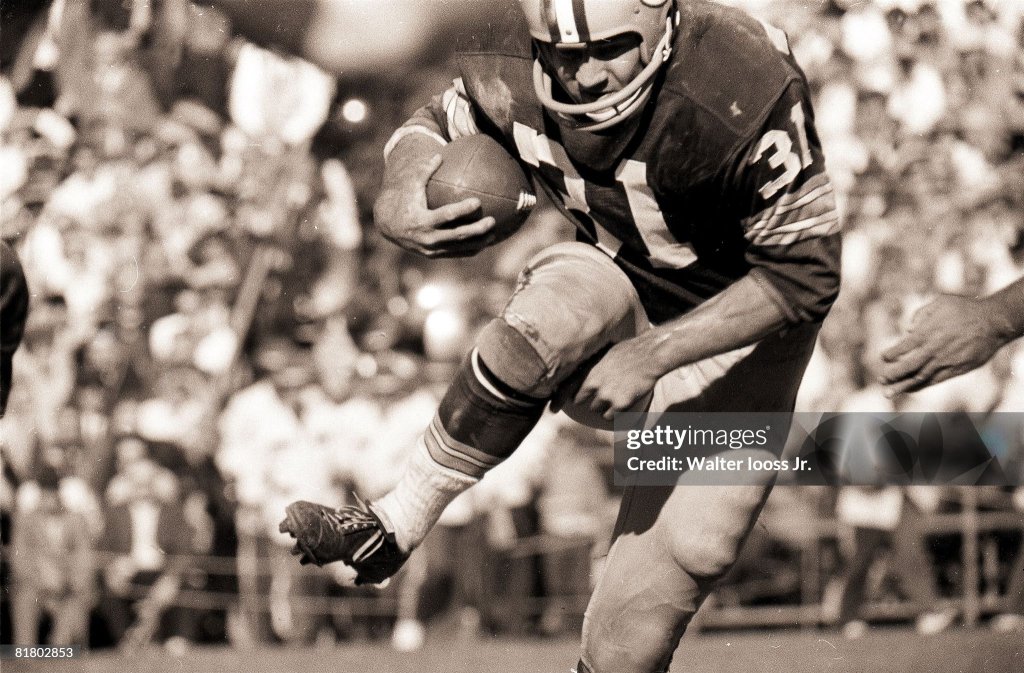
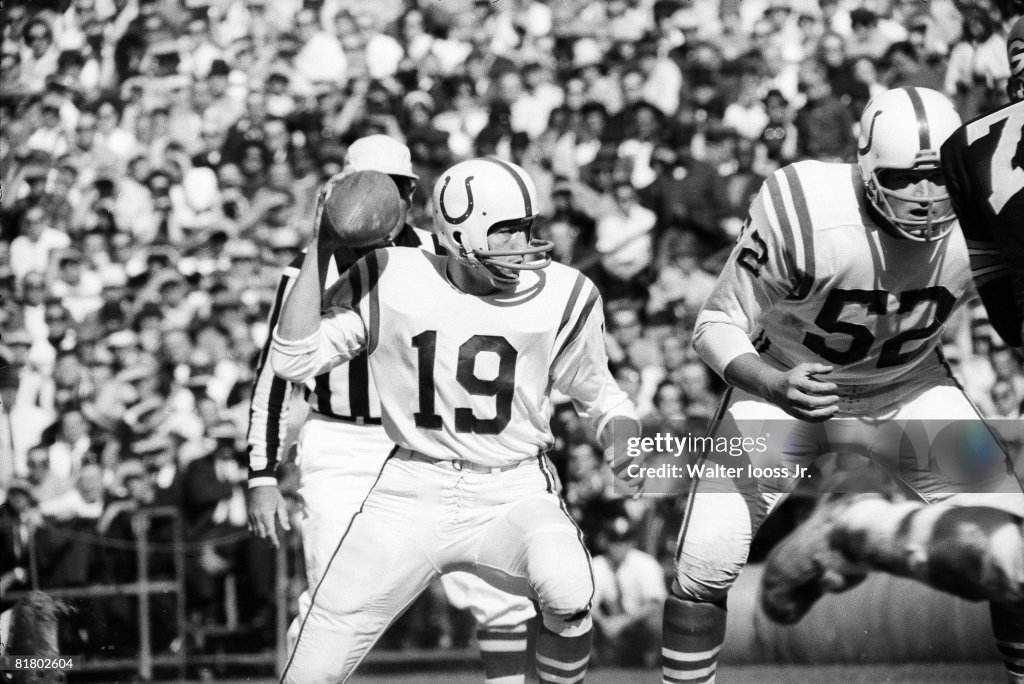
Lennie Moore’s second touchdown of the game, on a 5-yard run with one minute to play, gave the Baltimore Colts a 24–21 victory over the Green Bay Packers today. The triumph by the Western Division leaders, their second over Green Bay this season, was set up on a 36-yard runback on a blocked field goal attempt by Paul Hornung. Jerry Logan picked off the errant kick, deflected by Billy Ray Smith on the Colt 30, and returned it to the Packer 34. It took the Colts four plays to go the rest of the way, with Moore bulling over from the 5. Moore scored his first touchdown of the day in the third period on a 20-yard run. The close battle saw the Packers go in front, 21–17, early in the final period on a brilliant 65-yard punt return by Elijah Pitts. Green Bay held a 14–7 halftime advantage on a 16-yard run by Jim Taylor and a 42yard pass play from Bart Starr to Max McGee. The Colts had opened the scoring on a 4-yard plunge by Tony Lorick. The Colts came back in the third period” to take a 17–14 lead on a 40-yard field goal by Lou Michaels and Moore’s scoring scamper.
The New York Giants’ sad days and ways continued at Yankee Stadium yesterday when the home team lost to the Philadelphia Eagles, 23–17, before a 16th straight capacity crowd that numbered 62,987. It was the second loss of the season to the Eagles and the fourth in six games for the Giants. The team again proved conclusively that it was a loser this year, not up to the competitive level of the National Football League. On the first play from scrimmage, Dick James caught, then fumbled a pass from Tittle. Mike Morgan recovered for Philadelphia at the New York 4-yard line and Ollie Matson, who 12 years ago was a 400meter runner for the United States in the Olympic Games, scored standing up over his own right tackle. The game was 35 seconds old. Y. A. did not win it as he has so often in the past. The Giants, behind by 23–10, could score only one touchdown and that was helped by (A) a fumbled punt by Israel Lang of the Eagles; (B) an inadvertent block thrown by the referee on Don Burroughs, the Eagle safetyman who was just about to descend on Tittle before he completed a key pass to Joe Morrison; (C) a pass interference penalty against Nate Ramsey in favor of R. C. Owens of the Giants, which put the ball on the Eagle one‐yard line.
Bill Brown caught two touchdown passes from Fran Tarkenton today and bulled over on a line plunge for a third score to pace the Minnesota Vikings to a 30–10 National Football League victory over the Pittsburgh Steelers. The Vikings drove 63 yards with the second‐half kickoff and sent Brown ramming over tackle for the touchdown that put them in command, 20–10. Minnesota then tacked on Fred Cox’s 25-yard field goal and a touchdown on a 56-yard interception return in the fourth quarter. Much of the credit had to go to the slam‐bang Viking defensive play of the second half, which held the Steelers to a net gain of 35 yards rushing and passing in the last two periods. Carl Eller and Jim Marshall led a Minnesota defensive charge in the second half that dumped the Steeler quarterback Ed Brown, five times for a total loss of 45 yards.
Roman Gabriel threw four touchdown passes today — three of them to a rookie end, Bucky Pope — to lead the Los Angeles Rams to a 42–14 victory over the San Francisco 49ers. Gabriel, who won back his job from Bill Munson only last weekend, hit the 6-foot-5-inch Pope on scoring plays of 48, 68 and 18 yards. The strong Ram defense, bulwarked by David Jones, throttled the 49er ground attack.
Charlie Johnson’s third touchdown pass and Pat Fisher’s 39yard scoring return of an interception with 27 seconds left to play gave the St. Louis Cardinals a 38–24 victory over the Washington Redskins in a National League Football game today. The victory kept the Cardinals in a tie for first place with the Cleveland Browns in the Eastern Conference standing. Jim Martin’s 22-yard field goal with less than two minutes to play enabled Washington, the last‐place team in the Eastern Conference, to deadlock the score at 24-all. Johnson passed 12 yards to Bobby Joe Conrad for the touchdown that put the Cards ahead. Washington scored two quick touchdowns, sparked by a 77yard pass from Sonny Jurgensen to Charlie Taylor in the first six minutes of the game. But St. Louis rallied behind Johnson and Joe Childress and John David Crow. Childress was the leading ground‐gainer with 86 yards. He also caught two passes for 48 yards. Washington moved 56 yards in three plays in the fourth period for its third touchdown. Taylor ran 37 yards before Jurgensen passed to Bobby Mitchell for an 18-yard play.
AFL Football:
Buffalo Bills 35, Kansas City Chiefs 22
Denver Broncos 14, San Diego Chargers 42
The Buffalo Bills built a 28–0 lead on the passing of Jack Kemp and survived a Kansas City comeback today for a 35–22 victory. The triumph was the sixth for undefeated Buffalo in the American Football League. Eddie Wilson, a reserve back who didn’t play in the first four regular season games, led the Kansas City comeback that shaved the Buffalo lead to 28–22 late in the third quarer. The Chiefs gambled on a run with fourth down and a yard to go at their own 35 midway in the last quarter. Buffalo stopped Wilson for a yard loss on a rollout and promptly drove in for the clinching touchdown with Daryl Lamonica at quarterback. Kemp fired three touchdown passes, two to Elbert Dubenion, and scored once himself on a one‐yard keeper. The Buffalo defense, meanwhile, stopped the Chiefs cold until the third quarter.
John Hadl, starting his first game this year, passed for two touchdowns and ran for one today in leading the San Diego Chargers to a 42–14 victory over the Denver Broncost. The triumph gave the Chargers sole possession of first place in the Western Division of the American Football League.
Born:
Charles Stross, English science-fiction author (“Singularity Sky”, “Glasshouse”), in Leeds, England, United Kingdom.
Normand Lacombe, Canadian NHL right wing (NHL Champions, Stanley Cup-Oilers, 1988; Buffalo Sabres, Edmonton Oilers, Philadelphia Flyers), in Pierrefonds, Quebec, Canada.


 History Diaries