Reinhard Heydrich issued a decree commonly referred to as the Festsetzungserlaß, prohibiting all Romani and part-Romani from changing their registered place of residence. Reinhard Heydrich ordered all Gypsy populations to cease travelling or face a concentration camp.
The Ministerial Council for the Defence of the Reich issued the “Decree relating to a special Jurisdiction in Penal Matters for members of the SS and for members of Police Groups on Special Tasks” which, in effect, was to free the armed SS from the legal jurisdiction of the Wehrmacht.
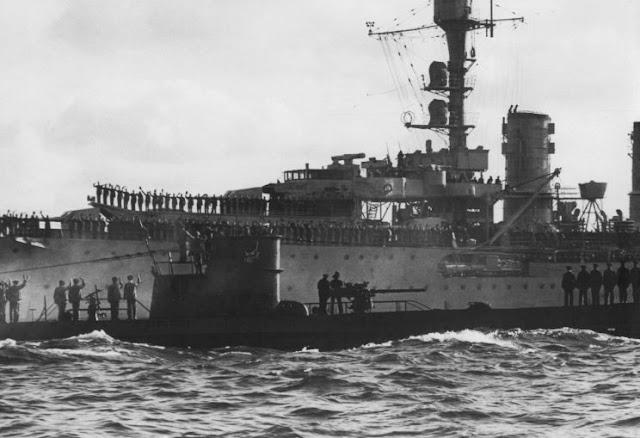
Kapitänleutnant Günther Prien “The Bull of Scapa Flow” returns to Wilhelmshaven to an epic hero’s welcome in U-47, saluted by the entire harbor for his sinking of the HMS Royal Oak.
The French report sharp infantry engagements on the front near Saarbrucken.
The Germans report “absolute quiet” on the Rhine Front. A lone German soldier was accidentally killed by falling shrapnel from a German anti-aircraft gun.
German Catholics defy a Nazi order. The Vatican has been informed that in some German dioceses priests refused to obey the governments’ order that the bells in all German churches be rung between noon and 1 o’clock for seven days to commemorate the occupation of Warsaw. In some places the bells were tolled as if for a funeral instead of being rung joyously.
Germany and Soviet Union conducted a prisoner exchange.
German destroyers lay mines by night off the Humber estuary.
Admiral Dönitz orders U-boats to attack all enemy merchant ships without warning on the ground that resistance was to be expected. This is due to Dönitz learning that British merchant ships are being armed and were giving information by radio to the Royal Navy and were under orders to attack U-boats on sight. [This is according to Dönitz’s testimony at the Nuremberg trials following World War II.]
Four German Luftwaffe Ju-88s strike at Scapa Flow and severely damage the old gunnery training ship and ex-battleship HMS Iron Duke, which is forced to be beached. There are 25 British naval casualties. One German aircraft is destroyed by an anti-aircraft battery on the island of Hoy.
There is a second raid on the Orkney Islands by ten planes, with no hits of importance by either side. There is a battle over the English Channel that claims two Luftwaffe planes.
Churchill appears in the House of Commons to explain the loss of the Royal Oak and explains that it was lying quietly at anchor when it was sunk in the middle of the night.
Franco restores Madrid as the capital; all government bureaus except the Foreign Ministry are back in the old quarters.
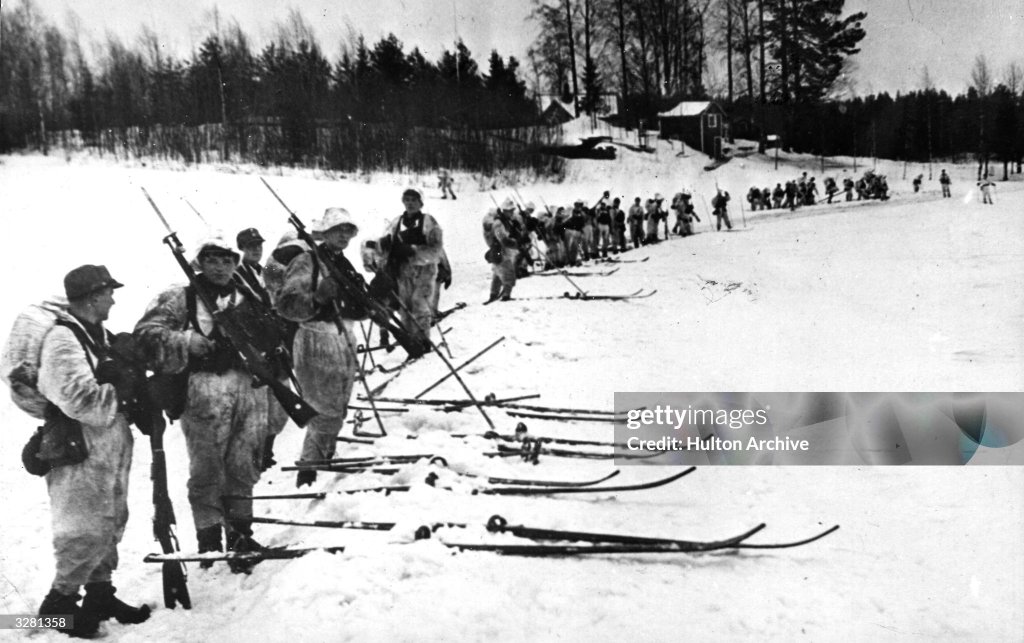
The heads of state of Finland, Norway, and Sweden met to discuss the tension between Finland and the Soviet Union. Meanwhile, Germany sent a message to Sweden noting that Germany would remain neutral should war break out between Finland and the Soviet Union, advising Sweden to do the same.
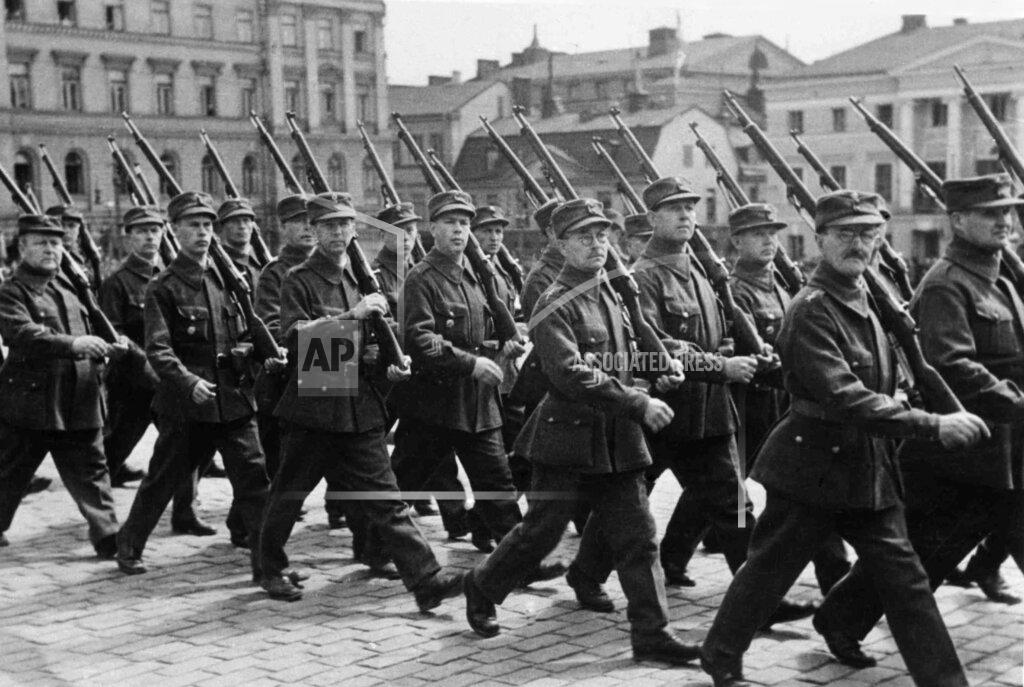
Marshall Mannerheim becomes Finnish Commander-in-chief, just like in World War I. Unlike then, though, he now has a real army to command. Finland is not yet at war, but Mannerheim’s appointment shows that nobody is under any illusions about what is likely to happen.
Switzerland passed a decree defining the legal status of emigrants and forbidding them to engage in activities that were political in nature or in breach of Switzerland’s neutral status.
Turkish representatives break off talks for a defense treaty with the Soviet Union. While the prolonged Turkish-Soviet negotiations end without agreement there are professions of mutual friendliness. Soviet representatives paid tribute to Turkish Foreign Minister Sarajoglu before his departure. Last minute Soviet proposals conflicted with Turkish engagements to Britain and France and these were rejected by Sarajoglu.
German armored ship Admiral Graf Spee transfers crew of British freighter Huntsman to tanker Altmark; Huntsman is then sunk with demolition charges at 16°S, 17°W.
Sailing with the unescorted Convoy HG.3, the British steam merchant City of Mandalay was torpedoed and sunk by the U-46, commanded by Herbert Sohler, west-northwest of Cape Finisterre off the west coast Spain in the eastern Atlantic Ocean (44°57′N 13°36′W). Of the ship’s complement, 2 died and 78 survivors were picked up by the American steam merchant Independence Hall. The 7,028-ton City of Mandalay was carrying general cargo, including tea, rubber, and sago and was bound for Glasgow, Scotland.
Sailing with the unescorted Convoy HG.3, the British steam merchant Clan Chisholm was torpedoed and sunk by the U-48 approximately 150 miles northwest of Cape Finisterre off the west coast Spain in the eastern Atlantic Ocean (approximately 44°57′N 13°40′W). Of the ship’s complement, 4 died and 74 survivors were picked up by the Norwegian whaler Skudd and the British troop transport Warwick Castle. The 7,256-ton Clan Chisholm was carrying tea, jute, pig iron and general cargo, including coconuts and cotton and was bound for Glasgow, Scotland.
Sailing with the unescorted Convoy HG.3, the British steam passenger ship Yorkshire was torpedoed and sunk by the U-37, commanded by Korvettenkapitän Werner Hartmann, about 160 miles west-northwest of Cape Finisterre off the west coast Spain in the eastern Atlantic Ocean (44°52′N 14°31′W). Of the ship’s complement and passengers, 58 died and 223 survivors were picked up by the American steam merchant Independence Hall. The 10,183-ton Yorkshire was carrying passengers, general cargo, including paraffin wax and was bound for Liverpool, England.
One of the developing problems of the convoy system is that U-boats are having an easy time with un-escorted convoys. The Yorkshire, the City of Mandalay and Clan Chisholm were all sailing in convoys that had no escorts.
The Kriegsmarine (German Navy) vorpostenboot V 804 Skolpenbank struck a mine and sank in the North Sea off Schiermonnikoog, Friesland, Netherlands.
Convoy OA.21 departs from Southend, while OB.21 departs from Liverpool. At Gibraltar, convoy OG.3 is forming. Convoy HX.5 departs from Halifax.
Shortly after midnight U-46 fired three torpedoes at a British cruiser, but all missed.
U.S. freighter Black Falcon, detained by the British since 6 October, is released.
U.S. freighter Cranford is detained by British authorities.
The War at Sea, Tuesday, 17 October 1939 (naval-history.net)
Light cruiser SHEFFIELD departed Loch Ewe for Northern Patrol in the Denmark Strait, arriving back on the 22nd after capturing German steamer GLORIA.
Four light cruisers were on Northern Patrol between the Orkneys and the Faroes, four AMCs between the Faroes and Iceland, and three AMCs in the Denmark Strait. The armed merchant cruisers were ASTURIAS, AURANIA, CALIFORNIA, CHITRAL, RAWALPINDI, SCOTSTOUN, and TRANSYLVANIA.
Convoy OA.21 of 21 ships departed Southend escorted by destroyers VANSITTART and WIVERN, which remained with the convoy until it dispersed on the 22nd.
Convoy OB.21 departed Liverpool escorted by destroyers WINCHELSEA and WITHERINGTON.
Convoy BC.10S of steamers BARON GRAHAM, BEAVERDALE, BELLOROPHON (Commodore), CITY OF DERBY DORSET COAST, EILDON, ERATO, FLORISTAN, GLAMIS, GLYCAON, MERLAND, PEMBROKE COAST, TASSO and VOLO departed the Loire, escorted by destroyers MONTROSE and VIVACIOUS, and arrived safely in the Bristol Channel on the 19th.
Anti-aircraft cruiser CALCUTTA departed Grimsby and arrived back on the 18th.
Destroyer BEAGLE attacked a submarine contact in 51 07.5N, 01 23.5E.
French large destroyer LÉOPARD, which had been covering minelaying in the Pas de Calais area, returned to Brest on the 17th. Large destroyer JAGUAR sailed from Dunkirk on 1 November and with large destroyer PANTHÈRE, which had been at Cherbourg under repair, also arrived at Brest, but on the 2nd.
U-19 laid mines off Inner Dowsing near Yarmouth during the night of the 16th/17th, on which three merchant ships were sunk.
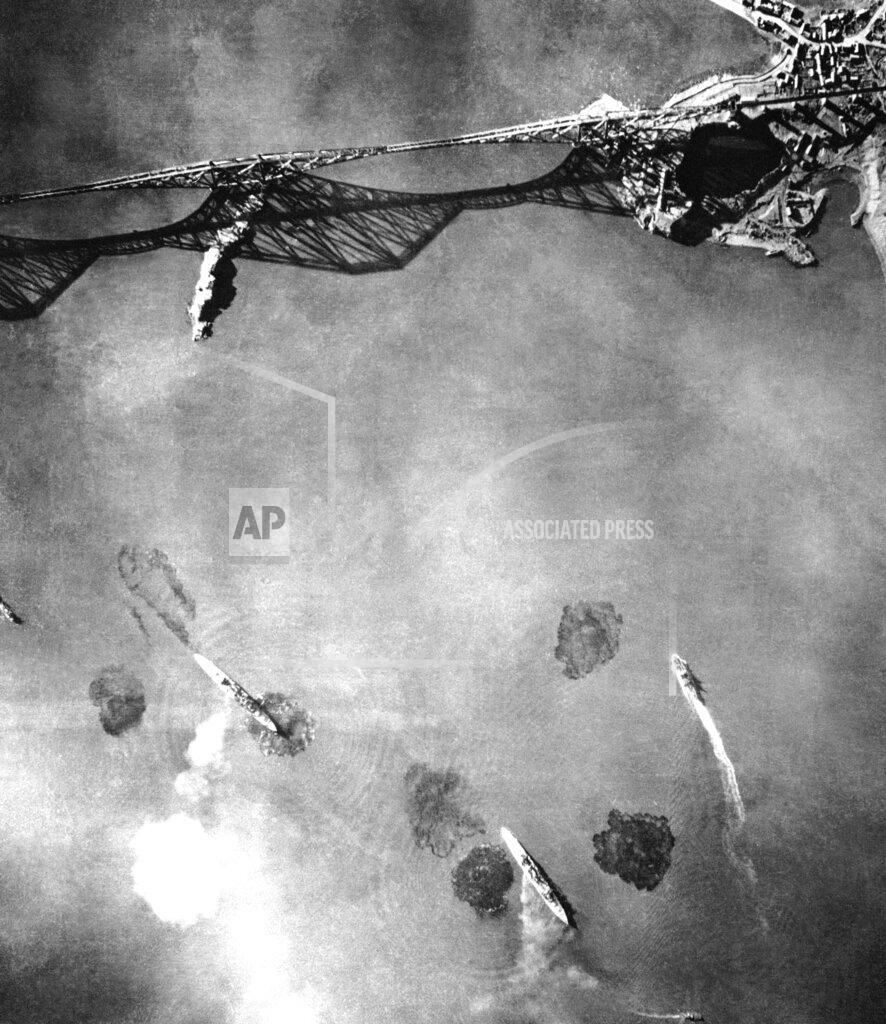
Three German aircraft bombed Scapa Flow, one of which was shot down by destroyer ESKIMO. Two near misses damaged old battleship IRON DUKE which took a heavy list and bomb blast damaged her electrical installations. She was towed into shallow water, settled onto the sea bed and ESKIMO provided electric power. Destroyers SOMALI and ASHANTI were also at Scapa Flow at the time of the raid, and later in the day, four more aircraft attacked, near-missing ASHANTI, but causing no damage.
Destroyer JUNO fired on German aircraft shadowing her SW of Farne Island. British aircraft came to her assistance and shot down a Dornier flying boat.
German destroyers HERMANN KÜNNE, FRIEDRICH ECKHOLDT, DIETHER VON ROEDER, KARL GALSTER and HANS LÜDEMAN, escorted by destroyer WILHELM HEIDKAMP sailed from Wilhelmshaven to lay mines in the North Sea off the Humber on the night of the 17th/18th. Seven merchant ships grossing 25,852 tons were sunk in the field.
On the 22nd, steamer WHITEMANTLE (1692grt) five to six miles east of Withernsea Light with the loss of 14 crew.
On the 23rd, Swedish steamer ALBANIA (1241grt) four miles north of Humber Light Vessel; two crew were lost and the survivors picked up by steamer CHANNEL FISHER (700grt).
On the 29th, Norwegian steamer VARANGMALM (3551grt) in 53 50N, 00 17E; one crew was lost and the survivors rescued by trawler CONIDA (413grt).
On the 30th, Finnish steamer JUNO (1241grt) in 53 45N, 00 17E with six crew lost.
On 3 November, Danish steamer CANADA (11,108grt) was mined in 53 40N, 00 17E and sank next day, two miles east of Holmpton; her survivors were rescued by Norwegian steamer RINGHORN (1298grt).
On 4 November, Norwegian steamer SIG (1342grt) was sunk in 53 43N, 00 17E, with the loss of three crew; her 16 survivors being picked up by fishing boat ELLEN M.
On 31 December, steamer BOX HILL (5677grt) from dispersed convoy HX.12, in 53 32N, 00 24E; twenty crew were lost, with five survivors rescued by destroyer IVANHOE and seven by another ship.
In addition to the losses by mines, two steamers were lost and one badly damaged when they collided with the sunken wreck of CANADA.
Steamer FIREGLOW (1261grt) hit the wreck on 12 November and was abandoned, but later refloated.
Steamer DRYBURGH (1289grt) departed Leith on 12 November and arriving off Withernsea on the 14th November, sank after colliding with the wreck; her crew was rescued by two destroyers.
On 15 November, Greek steamer GEORGIOS (2216grt) sank after hitting CANADA.
This was the first minelaying operation by German Commodore Bonte’s destroyers between the Thames and the Tyne. By February 1940, 1800 mines had been laid, and destroyer JERSEY torpedoed and badly damaged during one of the minelaying operations. All the German destroyers, except LEBERECHT MAAS, GEORG THIELE, PAUL JACOBI, THEODOR RIEDEL and HERMANN SCHOEMANN were employed in at least one operation.
German destroyers PAUL JACOBI, THEODOR RIEDEL, HERMANN SCHOEMANN and torpedo boats LEOPARD, ILTIS, WOLF conducted an anti-shipping patrol in the Skagerrak from the 17th to 19th.
U-37, U-46, and U-48 attacked convoy HG.3 off Cape Trafalgar while it was protected by aircraft. Steamer YORKSHIRE (10,184grt) was the convoy commodore ship with Rear Admiral D M T Bedford Rtd as commodore on board and she carried military families which had been embarked from steamer NEVASA (9213grt) at Gibraltar. U-46 attacked YORKSHIRE in 44 54N, 12 40W without success, but she was then sunk by U-37 in 44 52N, 14 31W with the loss of 58 lives, including 25 crew. Steamer CITY OF MANDALAY (7028grt) was also sunk by U-46, in 44 57N, 13 36W, with seven crew lost and 17 survivors being picked up by Norwegian whaler SKUDD IV. In 44-54N, 12-40W. Destroyers WAKEFUL, ELECTRA and ESCORT were ordered to attack a submarine reported near the convoy. The last steamer was CLAN CHISHOLM (7256grt), sunk by U-48, 150 miles 300° from Cape Finisterre in 45N, 15W with the loss of four crew. Survivors from all three ships, including Rear Admiral Bedford, were picked up by American steamer INDEPENDENCE HALL (5050grt) and taken to Bordeaux. ELECTRA and ESCORT had departed Dover on the 13th and joined the convoy on the 18th from OA.19. In addition, destroyers ARDENT and ACASTA left Dover on the 20th and joined.
Convoy HX.5 departed Halifax at 0900 escorted by heavy cruiser YORK and Canadian destroyers HMCS FRASER and HMCS ST LAURENT. RCAF flying boats accompanied the convoy until 1800/17th. ST LAURENT was detached at 0830/18th, FRASER at 1630/19th, and YORK at 1000/19th, arriving back at Halifax the same day. Light cruiser EMERALD departed Halifax on the 17th as ocean escort, and she arrived at Portsmouth on the 29th. YORK left Halifax again on the 22nd to support the convoy and search for German battleship DEUTSCHLAND. Destroyers GRAFTON, GALLANT, WESSEX escorted the convoy on the 28th and 29th, when it arrived at Liverpool.
Convoying in the Mediterranean was discontinued: (1) destroyer DUCHESS and sloop FOWEY, awaiting convoy Green 5, were sent from Gibraltar to Malta, arriving on the 20th, (2) destroyer DIANA and sloop DEPTFORD, en route to Port Said from Blue 5, were sent to relieve destroyers GRENVILLE and GIPSY on contraband patrol, (3) destroyer DUNCAN from Blue 4 was sent to escort battleship RAMILLIES, relieving destroyers GRAFTON and GALLANT, (4) destroyers DAINTY and DEFENDER departed Malta on the 18th to escort RAMILLIES, which reached Alexandria on the 20th, (5) French destroyers CASSARD and KERSAINT returned to Bizerte, and (6) destroyers DECOY and DELIGHT were at Malta. After refitting, DELIGHT reached Gibraltar on the 31st for escort duty, and DECOY, her refit completed on 3 November, left Malta to escort steamer NEVASA to Marseilles.
In Washington today, President Roosevelt entertained at luncheon members of the Intergovernmental Committee on Political Refugees and in addressing them pointed to the possible necessity of finding homes for perhaps 20,000,000 who might be made refugees by the current European war. He announced the resignation of Elmer F. Andrews as Wages and Hours Administrator and the assignment of Colonel Philip Fleming to fill the post. At a press conference he expressed doubt that the present expansion program would provide the United States with an adequate navy.
The Senate continued debate on the Neutrality Bill, with Senators Walsh, Danaher, Maloney and others participating, and recessed at 5:13 PM until noon tomorrow. The Monopoly Committee continued its inquiry into the oil industry.
In the House, Representative Daniel Reed demanded termination of all reciprocal trade treaties, Representative William Miller demanded elimination from the Congressional Record of a letter reputed to have been written by Colonel Edwin M. House during the World War, and Representative Dickstein criticized the Dies committee, and the House adjourned at 2:36 PM until noon tomorrow.
President Roosevelt issues a proclamation closing U.S. offshore waters and all U.S. ports to submarines of all belligerents.
Some uncertainty whether the current naval expansion program would provide, when completed, an adequate navy for the United States was expressed today by President Roosevelt in response to questions by reporters at a press conference. The President gave his opinion in an off-hand manner, coupled with many qualifications, the principal one of which was that conditions changed so much from year to year that a definite conclusion was hardly ever possible. The direct question put to him which started the discussion was whether, in his opinion, the United States needed a “two-ocean navy.”
The unofficial committee of Senate Democrats who framed the pending neutrality resolution will meet tomorrow to draft relaxing changes in the stringent shipping provisions in the interest of an early vote on the all-important arms embargo repeal.
On the assumption that the Senate will pass the Administration’s project for revision of the Neutrality Act, with liberalized shipping sections and iron-clad cash requirements for all purchases by belligerents, House leaders have begun quietly to sound out the situation on their side of the Capitol. Early results of their inquiries indicate that the Administration’s plans may have hard sledding, but will win through.
Benjamin Gitlow, who said he spoke from experience as a former member of the Communist party secretariat, told the Dies Committee today that the International Labor Defense and the International Workers Order were organized and controlled by the party.
An early cold spell hits New York City. Temperatures may drop to 32 degrees.
The United States liner President Harding, homeward bound with American refugees from the European war zone, reported to the Coast Guard just after 11 o’clock last night that many persons aboard had been injured in heavy weather and requested medical assistance.
The resignation of Elmer F. Andrews as Wages and Hours Administrator was announced today by President Roosevelt. Designation of Colonel Philip Fleming of the Army Engineering Corps to take over Mr. Andrews’s duties was announced simultaneously.
Fifty-six percent of the 70,000 to 80,000 men and women leaving prison gates this year will be back within five years if past experience holds true, James V. Bennett, director of the Federal Bureau of Prisons, said last night at the sixty-ninth annual convention of the American Prison Congress, in session this week at the Hotel New Yorker.
R.J. Thomas, president of the C.I.O.-United Automobile Workers of America, authorized tonight a strike in the main Dodge plant of the Chrysler Corporation, employing 22,000 persons, after conferences between corporation and union officials deadlocked.
Pneumonia cases in New York City rise about 50 percent over 1938, but deaths decline more than 8 percent. Better control and treatment of the disease is reported.
The Federal Government again reached high into the upper brackets of Louisiana political and judicial life today when it indicted twenty leading citizens, starting with former Governor Richard W. Leche, on a variety of fraud charges totaling $78,000.
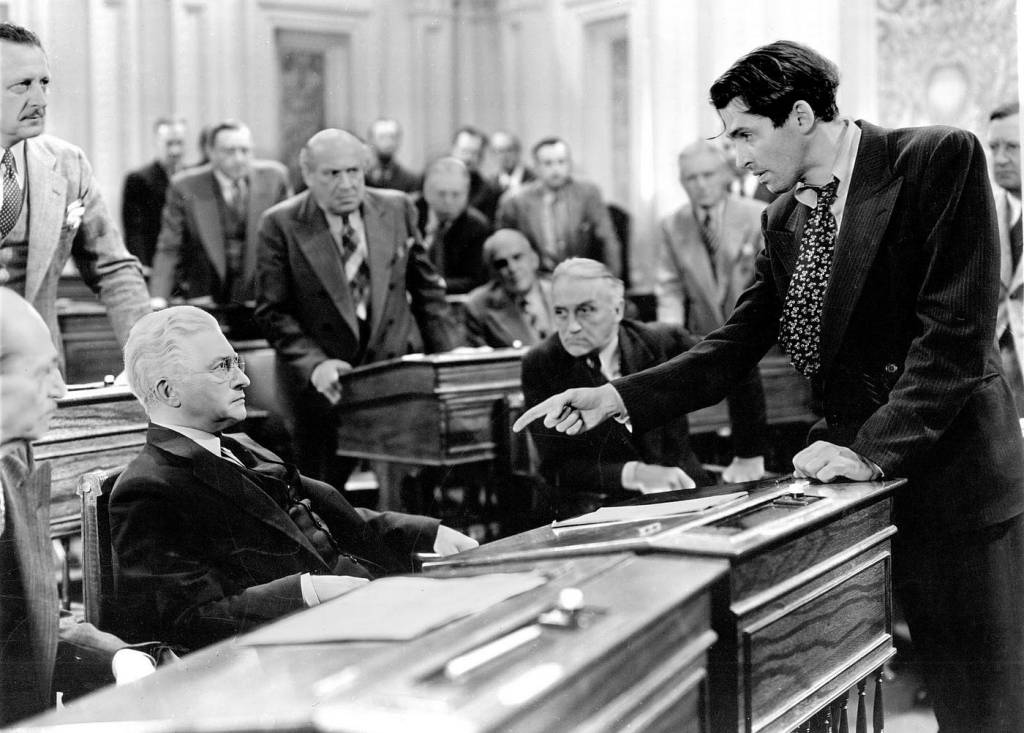
“Mr. Smith Goes to Washington”, directed by Frank Capra and starring James Stewart and Jean Arthur, is released
The courtroom drama play “Ladies and Gentlemen” by Charles MacArthur and Ben Hecht premiered in Santa Barbara, California.
Bucky Walters is voted National League MVP by the BBWAA, with Johnny Mize 2nd.
Red Sox player/coach Moe Berg appears with the panel of experts on the radio show “Information Please.”
General Andrew McNaughton is appointed commander of the 1st Canadian Infantry Division.
The Marquess of Linlithgow, Viceroy of India, today reaffirmed the view of the British Government that Dominion status, achieved by constitutional stages, is the natural destiny of India.
New instructions were issued recently to Japanese Army commanders in the interior of China concerning the protection of the lives and properties of American missionaries and other third power citizens.
Dow Jones Industrial Average: 154.56 (+3.72)
Born:
Torsten Hallman, Swedish former professional motocross racer and business entrepreneur, in Uppsala, Sweden.
Naval Construction:
The Royal Navy “T”-class submarine (First Group) HMS Tarpon (N 17) is launched by the Scotts Shipbuilding & Engineering Co. (Greenock, Scotland).
The Royal Navy armed merchant cruiser HMS Arawa (F 12) is commissioned. Her first commander is A/Captain George Robert Deverell, RN.
The Royal Navy “T”-class submarine (First Group) HMS Tribune (N 76) is commissioned. Her first commander is Lieutenant Commander George Philip Sevier Davies, RN.
 History Diaries