Communist China today hailed its first atomic test as a powerful blow against what Peking described as the United States policy of “nuclear blackmail.” In a message to the scientists, technicians and army personnel who conducted the explosion Friday in Western China, Peking declared that the test marked the country’s entry into “a new stage of modernization of its national defense.” The message, which cautioned atomic workers to guard against “conceit and impetuosity” was signed by the Central Committee of the Chinese Communist party and Mao Tse‐tung and by the governing State Council.
Peking also published a message of congratulations from President Ho Chi Minh of North Vietnam. It was the first acknowledgment of the Peking accomplishment from abroad to be published by Hsinhua, the official press agency. The North Vietnamese Communist leader’s message read: “This successful nuclear test which aims at increasing the national defense potential of the peoples of China against the policy of nuclear threat by the United States imperialists is a major contribution of the Chinese people and government to strengthening of the forces of the Socialist camp and the struggles for national liberation and in defense of world peace.”
Beaming reports of the Chinese accomplishment to Southeast Asia in Peking’s behalf, the Hanoi radio said that Nhân Dân, organ of the Vietnamese Communist party, announced the news of the atomic test under banner headlines on its front page. The statement of the Central Committee of the Chinese Communist party differed in two respects from an initial announcement of the atomic experiment as issued by Peking Friday. Today’s message to the atomic workers referred to Peking’s effort to break what it termed the “nuclear monopoly” of the United States. The Friday statement of the Government denounced the United States together with the Soviet Union and Britain for attempting to perpetuate a nuclear monopoly through the limited test ban treaty of 1963.
The earlier Government statement evidently had been prepared prior to the change of leadership in Moscow and the Labor party victory in the general elections in Britain. In what appeared to be a tentative overture for a new attempt to resolve ideological dispute, Peking early yesterday published a message of “warm greetings” to Leonid I. Brezhnev, the new Soviet party leader, and to Aleksei N. Kosygin, the new Premier. The Government statement also differed in that it referred to the explosion of an atomic bomb while today’s message limited itself to mentioning a nuclear test. The United States monitors of the Chinese Communist experiment have described it as the detonation of a crude nuclear device rather than a weapon.
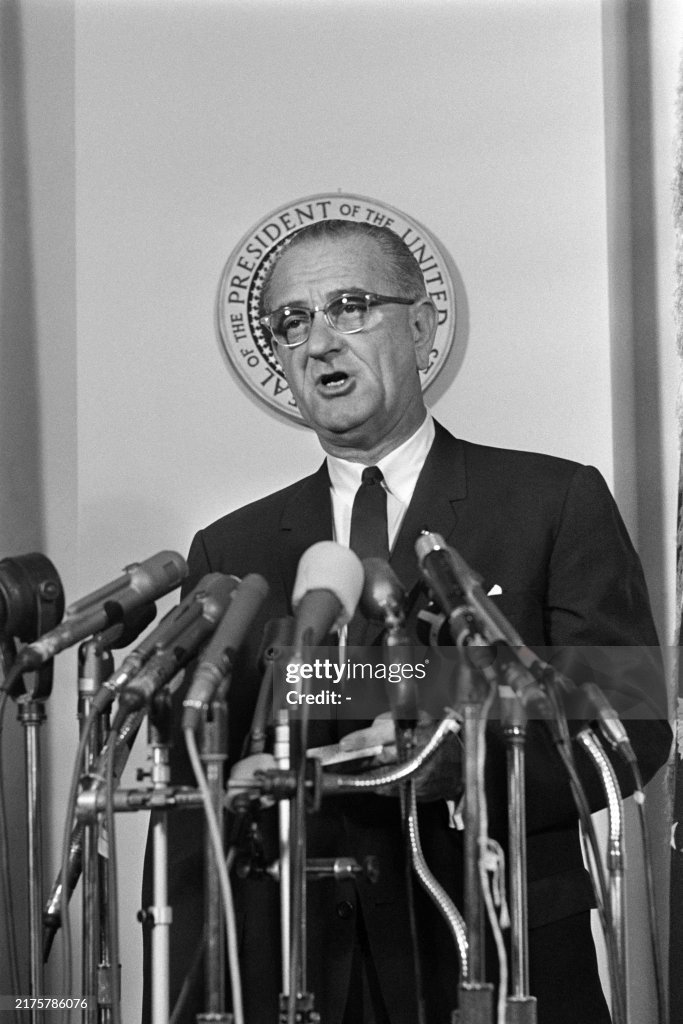
President Johnson has canceled a campaign trip and will address the nation tomorrow evening to report on the shake‐up in Moscow and Communist China’s explosion of a nuclear device. The White House scheduled the television and radio speech for 8:30 PM, Eastern daylight time, after a meeting today of the National Security Council that assessed both events. The President was given intelligence estimates ‘ anticipating further changes in the Soviet leadership and reporting confusion and discord throughout the Communist world.
The Administration sensed no immediate threat to the United States in any of these developments. The White House emphasized that President Johnson wished to inform the American people rather than warn them. The predominant judgment here is that the drama of Nikita S. Khrushchev’s overthrow has just begun. The transfer of power in the Soviet Union, the other major nuclear power, and the debut of China as at least a minor nuclear power require a formal and dispassionate assessment by the President, in the view of officials here. The White House press secretary, George E. Reedy, announced that Mr. Johnson would remain in Washington through Wednesday, thus canceling political appearances in Texas and Kansas early in the week.
The President plans to brief leading members of Congress from both parties Monday and to meet with the Cabinet Tuesday. It is not expected that Senator Barry Goldwater, the Republican Presidential candidate, will be invited to the Monday session. The idea of an address to the nation was attributed to the National Security Council, apparently designed to support the contention that Mr. Johnson would be speaking as President and not as a candidate. However, Dean Burch, Republican National Chairman, said his party would demand equal broadcast time to reply. “The National Security Council recommended to the President that while there is no present cause for national alarm and no immediate emergency, it was advisable that all responsible officials of the Government are fully informed and promptly informer,” Mr. Reedy said.
Maxwell D. Taylor, the United States Ambassador, was given a poignant insight into the whys of Vietnamese politics the other day., Talking socially with a middle‐aged politician, the Ambassador broached the subject of present political pressures from diverse groups on the Saigon Government and the possibly harmful effects of this agitation in the war against the Communist Việt Cộng insurgents. “You Americans view all this in the terms of your own country,” said the politician, not as a reproach but in an effort to let Americans understand what is going on in Vietnam. “You must realize that this period — these few weeks — is the first moment in my lifetime that we Vietnamese are able to participate in the normal political interplay your democratic countries have enjoyed for decades.
“First we were under French domination, then came the war and rule by the Japanese. After the war we had to choose between the French again or joining the Communists. Those of us in the South got our independence with a non‐Communist government but Diệm kept all political parties down just as the French had. When Diệm was overthrown it was the army that ran everything. They let us politicians talk in the open but nothing we said ever seemed to have any effect on the decisions of the military government. Now at last we are able to act as real citizens, not just as tools of one or another group which holds all the power, whether spokesmen of the people like it or not. There’s nothing disloyal about politics.”
Premier Nguyễn Khánh, appearing resentful that he had not been consulted during the drafting of a civilian constitution, said today that the version he had been shown left him with “a bad impression.” Speaking informally at Pleiku after a meeting with leaders of mountain tribesmen, the Premier caustically likened the secrecy of the High National Council to that of a College of Cardinals when selecting a Pope. General Khánh, wearing a mottled paratroop uniform, spoke solemnly in a mixture of French and English. Explaining his objections to the charter, the publication of which has been delayed, General Khánh said the document was inadequate for a country attempting to put down Communist insurgents. The 16 active members of the council, which was selected by the present regime to formulate the basis for a return to civilian control, have been revising their draft. In addition to the standard executive, legislative and judicial branches of government, the Premier said, there must be a fourth, the military.
Premier Nguyễn Khánh flew to Pleiku today to win the allegiance of restive United States‐trained mountain tribesmen who revolted against the Saigon regime last month. Before leaving Saigon, Premier Khánh said, “the United States has the means to win the war if it really wants to.” The Premier was reported to have offered the tribesmen some concessions. The tribal warriors in these central Vietnamese highlands 240 miles north of Saigon have long been resentful of the lowlanders and have resisted their rule.
Premier Nguyễn Khánh was asked today about the removal of Nikita S. Khrushchev from his Government and Communist party position. General Khánh said the thought occurred to him that the “K era had ended. “Kennedy had been assassinated, Khrushchev has been replaced and Khánh is going,” he explained. “But then I saw in the papers,” he said less seriously, “that Khrushchev was replaced as Premier by a man named Kosygin.”
The new Soviet leadership settled down today to a show of “business as usual” as Western observers searched unsuccessfully for clues as to who might emerge as the dominant figure in the regime. President Anastas I. Mikoyan, outwardly the most active of the three men now at the top of the hierarchy, flew to Kiev with the Defense Minister, Marshal Rodion Y. Malinovsky, for a celebration of the 20th anniversary of the liberation of the Ukraine from the Nazis in World War II. Western observers noted with some surprise that neither Leonid I. Brezhnev, the new Communist party leader, nor Nikolai V. Podgorny, another key figure in the party, went along. Both have held important party positions in the Ukraine. For Mr. Brezhnev, it was the third formal function from which he was absent in the last two days. He did not appear at a Kremlin reception last night for President Osvaldo Dorticos Torrado of Cuba nor did he go to the airport this morning to see the Cuban leader off. Soviet sources explained Mr. Brezhnev’s absence by saying he was too busy with his new responsibilities to attend such functions and that he had decided to leave protocol duties to President Mikoyan.
Władysław Gomułka, the Polish Communist leader, and Janos Kadar, the Hungarian Premier, called today for the restoration of world Communist unity as soon as possible. Their plea followed the removal of Nikita Khrushchev from power in Moscow. Mr. Gomułka said in a speech that both the Polish and Hungarian parties “advocate the convention of a world [Communist] parties conference — to strengthen the unity of tlie world Communist movement—to mobilize all parties to solidarity of action.” Mr. Kadar, who spoke after Mr. Gomułka, pledged support for a Communist conference to hold a “Marxist analysis of the developments in recent years.” The plea of the two leaders was regarded by observers here as the first official confirmation that Moscow will now give priority to achieving a friendlier relationship with the Chinese party leadership. But Mr. Kadar said Chinese policies had weakened “our movement,” to the detriment of socialism and peace.
President Johnson told the North Atlantic Alliance today that “the American commitment to the alliance is firm and real.” The statement came in an exchange of correspondence with Manlio Brosio, Secretary General of NATO, who recently visited the United States. Thanking the President for the hospitality extended to him, Mr. Brosio wrote that he found in. Mr. Johnson’s remarks to him “the most unequivocal assurances of American dedication not only to the ideal but also to the concepts of our alliance.”
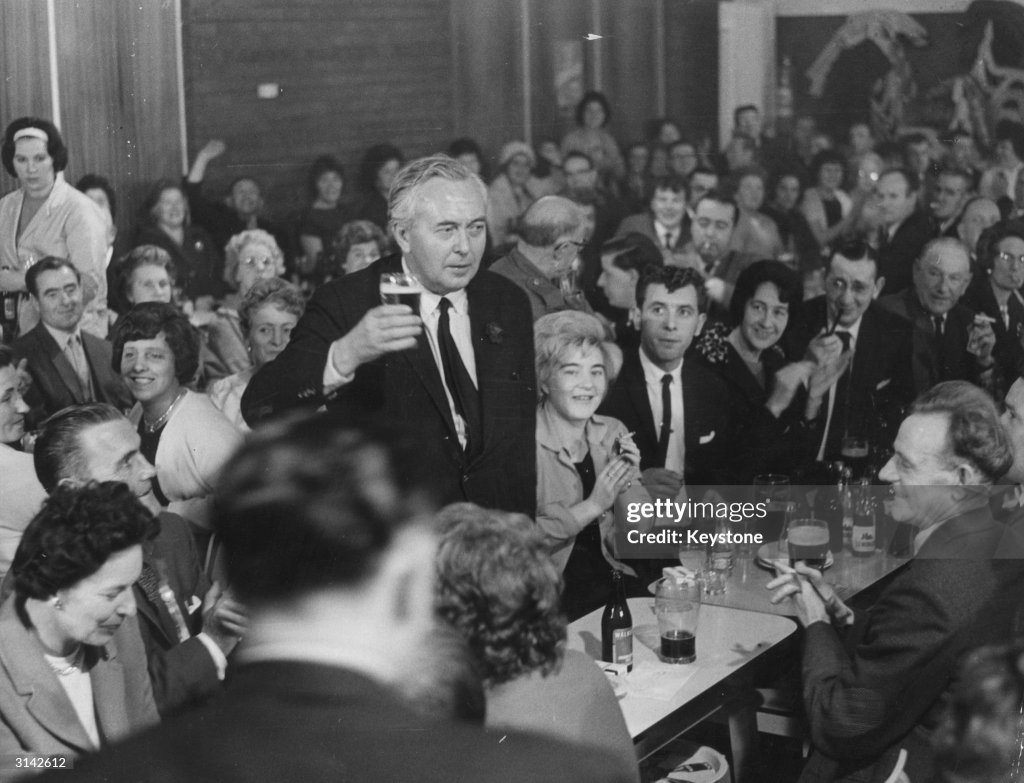
The government post of Secretary of State for Wales was created by Prime Minister Wilson, who appointed veteran Welsh Labour MP Jim Griffiths to the new position.
President Johnson, with some reservations, signed today legislation to facilitate eventual recovery of more than $1 billion worth of property of American citizens expropriated by the Castro Government of Cuba. The basic purpose of the bill, Mr. Johnson said in an accompanying statement, is to authorize the Foreign Claims Settlement Commission to determine the amount and validity of claims for property that he said had been taken from American nationals “in total disregard of their rights.” He expressed reservations on one part of the bill that vests ownership in the United States Government of certain assets of the Cuban Government now held in the United States. The President said this provision required further study, which could be followed by recommendations to amend the new law.
The President explained that the assets involved were already blocked and were of no use to Cuba. The proceeds from their sale, under the bill, would be used to pay expenses for administering the claims law. “The United States,” he said, “strongly adheres to the sanctity of property. The vesting of the property of foreign governments or nationals is not a step that we should undertake without serious consideration. “I am, therefore, requesting the Secretary of State to make a full study to determine the effect of the vesting provision on American interests abroad and its implications for the conduct of our foreign relations.”
The National Aeronautics and Space Administration will soon start recruiting scientists for space flights, including trips to the moon. Within the next few weeks, the space agency expects to issue a formal invitation for scientists to volunteer for astronaut training. By early next year, 15 to 25 scientists are expected to be added to the pool of astronauts, now composed exclusively of experienced jet pilots. Plans for recruitment of the scientist‐astronauts were well advanced before the Soviet Union included a scientist and a physician in the three‐man crew of the Voskhod spacecraft this week.
The effect of the Soviet move in sending the first trained scientific observers into space, however, has been to stimulate the interest of the space agency and the seientific community in including scientists in the United States manned space‐flight program. In moving to include scientists in space crews, the space agency is following a different, somewhat more conservative approach than the Soviet Union. The space agency is also moving more slowly—it is not expected that any scientists will make space flights until the early nineteen‐seventies. In contrast to the Soviet approach of sending the scientists along essentially as passengers, with little or no training in the operation of the spacecraft, the space agency’s plan, at least initially, is to train the scientists as astronauts.
Senator Barry Goldwater said today that Communist China had not yet become a “nuclear threat.” He expressed the belief that unless she received help, it would take her 25 years or more to develop a missile delivery system. The Republican Presidential candidate was winding up a 10-day swing with a full day of campaigning in Ohio. He spoke at Mansfield, Akron, Canton and Youngstown. At Mansfield Mr. Goldwater said that the big question in this year’s election was not which American politician’s thumb would be on the nuclear trigger but, rather, “Do you want one man’s thumb on your country?”
As Mr. Goldwater spoke in the town square of Mansfield, someone in the crow repeatedly tooted a compressed‐air horn in approval. Mr. Goldwater said that “the Chinese yesterday exploded an atomic device,’’ and added: “In 25 or 50 years they won’t be able to make a horn that good” He told the crowd, estimated by the police chief at 16,000 persons, that the device exploded by the Chinese was “not a bomb” but a nondeliverable device similar to the one exploded in the first American nuclear test, in 1945.
Mr. Goldwater declared that it was important to deny China technological and other assistance. In Mansfield he said that without such help it would take “at least” 25 years to develop a suitable missile. At the Canton airport Mr. Goldwater said: “If we trade with them, then maybe in our lifetime they can build a missile. If we don’t trade with them, and discourage our allies from trading with them, I don’t think anybody in this crowd will be around when they are able to build a missile.”
[Ed: Sigh. Probably should have listened to Barry on that one. The modern Chinese military monster was created with American money.]
Former Vice President Richard M. Nixon flew to southern Florida tonight and said that Senator Barry Goldwater would recognize and arm a Cuban exile government. Mr. Nixon arrived here in a DC‐3 plane he borrowed after a gasoline truck rammed his unoccupied campaign plane at the St. Petersburg airport, tearing an 8‐inch hole in the fuselage. No one was hurt. Mr. Nixon told 300 persons at the airport here that Mr. Goldwater “would recognize an exile government and give them the arms and airpower and everything but nuclear arms necessary to free their homeland.” Mr. Goldwater, the Republican Presidential nominee, would also meet with allied nations in an effort to convince them to cut off all aid to Cuba, Mr. Nixon said.
The Walter W. Jenkins case is likely to have a profound political effect in the Dakotas, a region that has not voted for a Democrat in a Presidential election since 1936. The change in the Soviet Union’s ruling hierarchy Thursday and the disclosure yesterday that the Chinese communists had set off a nuclear device could also have major significance on the election in North Dakota and South Dakota. Mr. Jenkins, a special assistant to President Johnson, resigned Wednesday after the disclosure that he had been arrested last week and in 1959 on morals charges. The question now, as yet unanswered by Republican or Democratic political leaders, is whether these events will offset the obvious worry in these states over what Senator Barry Goldwater of Arizona would do with such economic bulwarks as farm programs and rural electrification.
Senator Barry Goldwater will ask for equal television time to answer President Johnson’s message to the American people tomorrow night on the international situation. Dean Burch, the Republican National Chairman, said in Washington that the President’s speech at 8:30 PM “will necessarily have political overtones,” and under recent rulings of the Federal Communications Commission the Republican party will ask for equal time “if the major networks carry President Johnson’s speech.” The networks will do so. Both the National Broadcasting Company and the Columbia Broadcasting System said through spokesmen in New York that they would preempt prime time to carry the 15-to-30-minute address live from Washington. The American Broadcasting Company is planning either a delayed or a live broadcast. None of the networks had any decision to announce tonight as to whether they will grant the Republican party request. If they do, it would lead presumably to the first airing on a nationwide scale of a major campaign issue by both candidates since the campaign began.
James R. Hoffa, president of the International Brotherhood of Teamsters, said last night he would urge members to support President Johnson in the election. Referring to Senator Barry M. Goldwater, the Republican candidate, Mr. Hoffa said any “candidate who does not have the interests of the working people of the United States in his heart does not deserve the support of the people.” The teamster president said he would urge the endorsement of President Johnson by Detroit Council No. 43 of his union when the council met there today to take a stand in the election. Two thousand delegates are scheduled to attend the meeting of the council, of which Mr. Hoffa is the head.
Senator Hubert H. Humphrey compared President Johnson today to three Tennesseans who occupied the White House — Andrew Jackson, James K. Polk and Andrew Johnson. All were maligned for trying to be Presidents of all the people, all were great Presidents, and their attackers vanished into obscurity, Mr. Humphrey told a crowd in Knoxville. He flew here after the Knoxville speech. The Democratic Vice‐Presidential nominee said that he was striking back at the spokesmen for Senator Barry Goldwater, the Republican Presidential nominee. Republicans have been pressing the issue of morality in their attacks on the Administration since Walter W. Jenkins, special assistant to the President, resigned Wednesday after being arretted on a morals charge. “If your Presidents were similar in their determination to be Presidents of all the people,” Mr. Humphrey said to a crowd at the Knoxville airport, “they were also similar in another curious respect: they were all abused, they were all maligned, they were the targets of vicious personal abuse.”
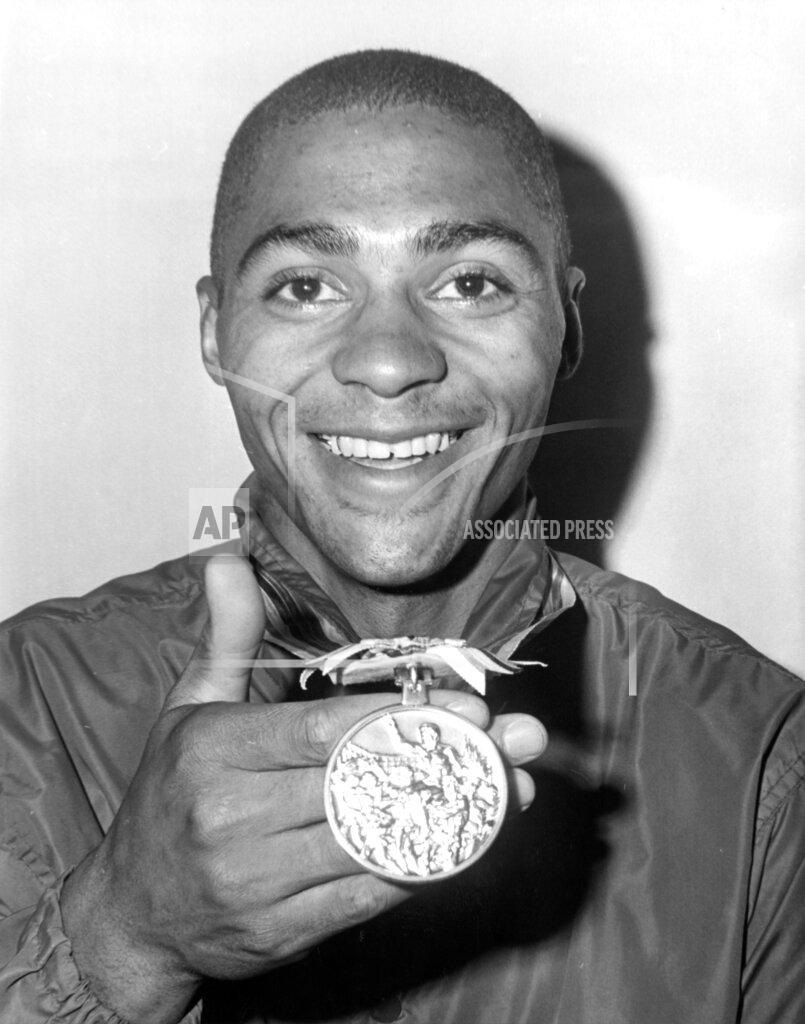
In the first ever Olympic women’s pentathlon Irina Press of the Soviet Union sets a world record 5,246 points to win the gold medal at the Tokyo Games.
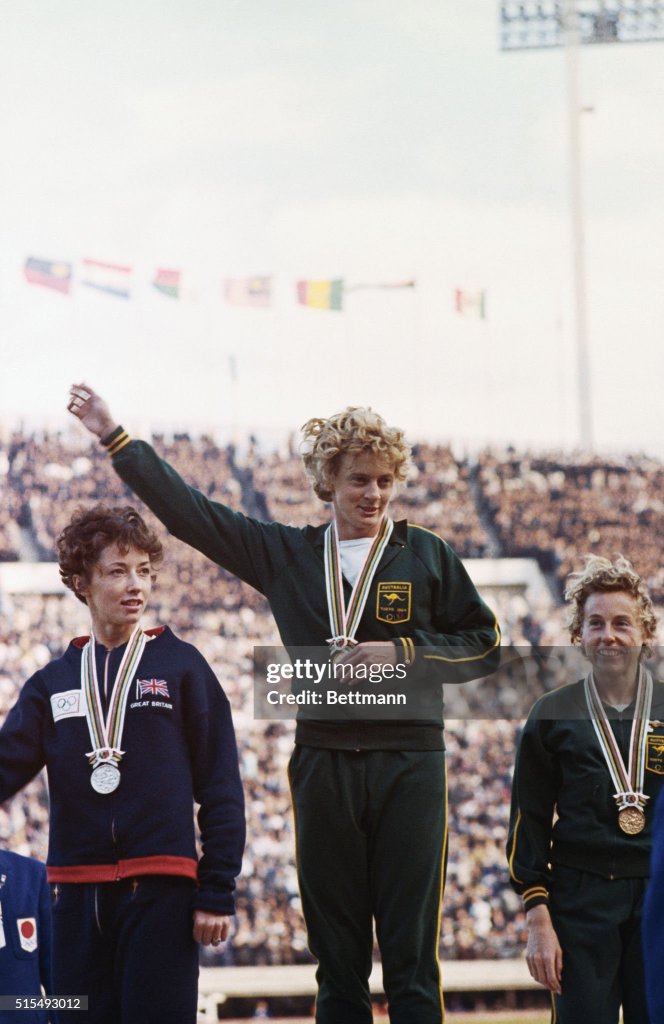
Australian athlete Betty Cuthbert takes her 4th career Olympic gold medal as she wins the women’s 400m at the Tokyo Games in Olympic record 52.0.
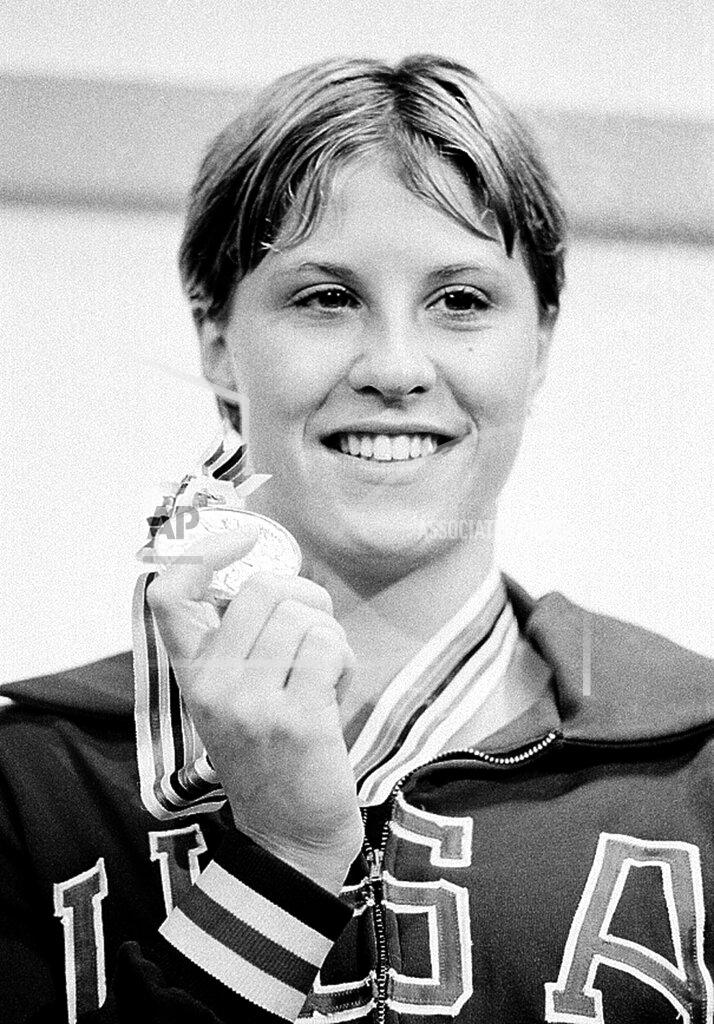
The United States won four gold medals yesterday and two Sunday at the Olympic Games in Tokyo, setting records in five of the events. Fred Hansen pole-vaulted 16 feet 9 inches, Dallas Long put the shot 66 feet 8 1/2 inches, Henry Carr captured the 200-meter dash in 20.3 seconds and Donna de Varona won the women’s 400-meter individual medley swim in 5 minutes 18.7 seconds yesterday, in an American sweep ahead of teammates Sharon Finneran (silver) and Martha Randall (bronze).
A World Series loss is enough reason for the New York Yankees to fire manager Yogi Berra (99-63).
Johnny Keane (93-69) stuns a St. Louis press conference by resigning as manager of the Cardinals. Johnny Keane, rumored in August to be replaced as the Cardinals’ manager by Leo Durocher before the Redbirds surged to win the World Series, surprises team owner Gussie Busch and GM Bob Howsam with a letter of resignation that he had written at the end of September during the height of the pennant race with Philadelphia, San Francisco, and Cincinnati. The former St. Louis skipper will take the Yankee job, which opens as the result of the firing of Yogi Berra.
AFL Football:
Houston Oilers 21, New York Jets 24
The New York Jets played two football games in Shea Stadium last night, and at the end it was the defensive specialists of Coach Weeb Ewbank who saved a 24–21 victory over the Houston Oilers. New York completely dominated the first half for a 24–0 lead and the 32,840 fans were probably wondering only how much the final margin of victory would be. Then George Blanda, a 14-year man in professional football, took charge. In the next 27 minutes, he pitched touchdown passes to Charlie Hennigan and Willard Dewveall. Charlie Tolar, the squat Oiler fullback, ran 40 yards for another score, and the Oilers were just three points short of a tie. But here the Jets defense reasserted itself. Billy Baird, the right safety, picked off a pass by Blanda on the Jet 45 with 2:43 remaining in the game. Dick Wood, the Jet quarterback who had sparked the first half attack, put his workhorse, Matt Snell, to work. The rookie fullback from Ohio State carried the ball six straight times as the seconds ticked away. One of Snell’s rushes was a 38‐yard burst through the middle to the 11. He got to the 1 after three more carries before the final gun went off.
Born:
David Cromer, American theatre director and actor (“The Band’s Visit”), in Skokie, Illinois.
Mike Tomlak, Canadian NHL centre and left wing (Hartford Whalers), in Thunder Bay, Ontario, Canada.
Bobby Riley, NFL wide receiver (New York Jets), in Nowata, Oklahoma.
Died:
Otto Wille Kuusinen, 82, Finnish-Soviet politician and writer
 History Diaries