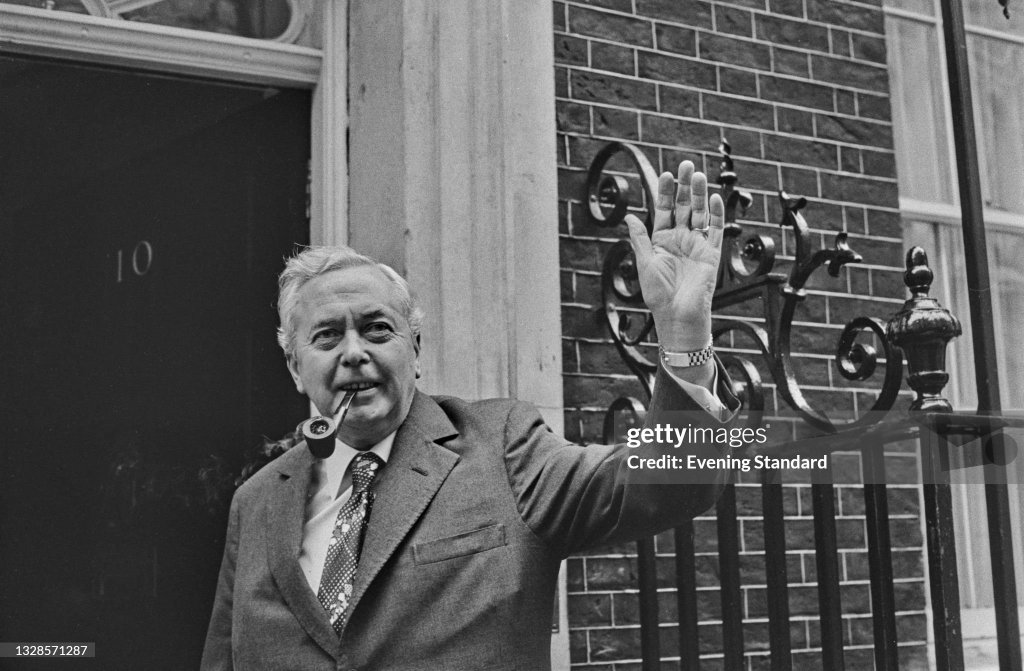
Defense Secretary James R. Schlesinger said the U.S. Army is only marginally adequate to meet its European commitments in the face of increasing Soviet forces. Speaking to the Association of the U.S. Army, a group of civilian friends of the Army, he called for rejection of mindless cliches, which have too frequently characterized American debate on military issues, along with the arguments of those advocating unilateral disarmament.
Congress defied warnings of another presidential veto by adopting in both houses an amendment that would cut off military aid to Turkey at once if she shipped American equipment to her forces on Cyprus. The House of Representatives first voted, 194 to 144, to attach such a restriction to a stopgap spending measure and then approved the measure itself, 287 to 30. The Senate approved it, 45 to 23, and sent It to the White House. The legislation would continue appropriations for a number of Federal departments and programs, including foreign aid, for which regular appropriation bills have not been enacted. Like a measure vetoed by President Ford on Monday, the new legislation contains a provision directing a cutoff of military aid to Turkey unless the President certifies to Congress that Turkey is in compliance with United States foreign aid laws prohibiting the use of American weapons for offensive purposes and that “substantial progress” has been made toward a Cyprus settlement.
The House of Lords, acting as Britain’s highest court, ruled that the nation’s 4,000 private workers’ clubs may bar people because of race. “No one has room to invite everyone to dinner,” a board of five lords ruled unanimously. “The law cannot dictate one’s choice of friends.” The government Race Relations Board called the decision “deplorable.”
At Armagh women’s jail in Northern Ireland, women prisoners, including supporters of both Roman Catholic and Protestant militants, released a prison warden and four women officers as hostages. The inmates were acting in support of men prisoners who set the Maze prison camp on fire to protest detention by the British authorities without any trial.
Soviet grandmasters Viktor Korchnoi and Anatoly Karpov agreed to adjourn their 13th game of the world chess challengers final after the 43rd move. Korchnoi, playing white, held the sealed 44th move, and both sides seemed evenly matched. Observers said it appeared the two were headed for their 11th draw. Karpov leads 2 to 0.
Israeli troops were busy on two fronts — scouring the rugged northwest countryside with the aid of jets and helicopters for a band of Arab guerrillas in the country since Saturday and rounding up 160 Orthodox Jews who made another attempt to settle on the West Bank in occupied Jordan. Some of the squatters resisted the troops for the first time since the settlement attempts began a week ago.
The Soviet Union is objecting to the cost of maintaining United Nations buffer forces between Israeli and Egyptian troops in the Sinai Peninsula, and between Israeli and Syrian troops on the Golan Heights. Yakov A. Malik, the Soviet representative, voiced objections here yesterday when members of the Security Council started informal consultations on the future of United Nations troop operations in the Middle East. He was also said to have demanded strict supervision by the Security Council of the United Nations military operations. Western participants in the meeting said today they had an impression that, the Soviet Union would not stand in the way of prolonging the United Nations military presence in the Middle East, but wanted more influence over it.
Heavy fighting has broken out between Ethiopian government forces and guerrillas of the Eritrean Liberation Front a short distance from the Eritrean provincial capital of Asmara, diplomatic sources said in Addis Ababa. They said government jets went into action against the separatists and the rumble of cannon fire could be heard in the city.
A debate over the issue of United States arms sales to Pakistan has broken out among American officials in India and Pakistan. The heart of the discussion rests on a single theme: Should the United States drop its embargo on arms sales to the subcontinent and ship weapons to Pakistan, thereby crippling chances of friendly American relations with India? Beyond this, the debate concerns several overlapping questions: How does the United States perceive its role on the subcontinent? Does the arms policy discriminate against Pakistan, a nation with close ties to the United States? Is Pakistan’s viability as a nation threatened because of the embargo and the concurrent flow of Soviet weapons to India and Afghanistan? The arms debate itself has been fueled by Prime Minister Zulfikar Ali Bhutto’s assertions that arms supplies are crucial for Pakistan because she is vulnerable to “aggression” by India and Afghanistan. The Pakistanis say that they merely want “a credible defensive posture” in the face of the Soviet arms shipments to India. The Prime Minister says that American arms sales would lessen Pakistan’s yearning to develop a nuclear device.
About 250 persons were missing in Bangladesh after bandits shot up a motor launch yesterday 150 miles north of Dacca and the boat capsized, newspapers said today. The reports, which could not be confirmed officially, said the bandits looted the boat, then fired into the hull with automatic weapons.
A fire swept through two floors of a nine‐story downtown hotel in Seoul, South Korea early today. The police said that 16 people had been killed and about 30 injured. Several died leaping from the fourth and fifth foors; others perished from burns or suffocation. The victims plunged from the 103‐room New Nam San Hotel Many ran to safety in their pajamas while firemen, dragged others from the building naked or unconscious. Some guests were asleep in their rooms, according to police reports, but about 50 people were in a night club on the hotel’s top floor at the time of the fire.
Japan is almost certainly headed for a depression, according to Eimei Yamashita, Vice Minister of International Trade and Industry. He said in Tokyo that trying to restrain inflation would bring “a kind of depression” in 1975. Mr. Yamashita called high oil prices “a fatal blow to the Japanese economy.”
Bishops of the Episcopal Church opened formal discussions on the dominant issue of their conference in Oaxtepec, Mexico: Should women be ordained priests? Straw polls showed that a majority of the 150 at the meeting of the House of Bishops favor ordination of women. The church, the independent American branch of the Anglican community, has 220 bishops. Any vote by the bishops, however, would have to be confirmed by the General Convention, the church’s policymaking body, of which the bishops form the upper house.
Ray Cline, who headed the State Department’s intelligence bureau in the Nixon administration, said he had been dubious about the ultimate wisdom of the United States covert intervention against President Salvador Allende of Chile. He confirmed in a telephone interview that the intervention had included Central Intelligence Agency financing of trade and labor groups which were striking against the administration of President Allende.
Leftist guerrillas claimed responsibility for stealing the remains of former Argentine President Pedro Aramburu, saying he was not fit to share the same cemetery with the late President Juan Peron. Peron’s body, now in the presidential complex, is to be placed in a planned pantheon for national heroes and Aramburu’s name was mentioned as a possible candidate. He was among the generals who overthrew Peron in 1955 but in 1970 he was kidnaped and slain by guerrillas.
Two major seismic events — an underwater earthquake somewhere between the Azores and Newfoundland, and the other a possible Soviet nuclear test an hour later — shook the earth’s crust and set shock recorders swinging around the world. There were no reports of disaster, however, and experts said they had no reason to believe the events were related.
Former White House counsel John Dean, now a federal prisoner for his own Watergate role, testified in the cover-up trial that John Ehrlichman had told him to destroy evidence. He said that he had been told that H.R. Haldeman had also ordered the destruction of evidence, and that John Mitchell and Robert Mardian had helped to devise a story explaining the transfer of campaign funds to one of the Watergate burglars.
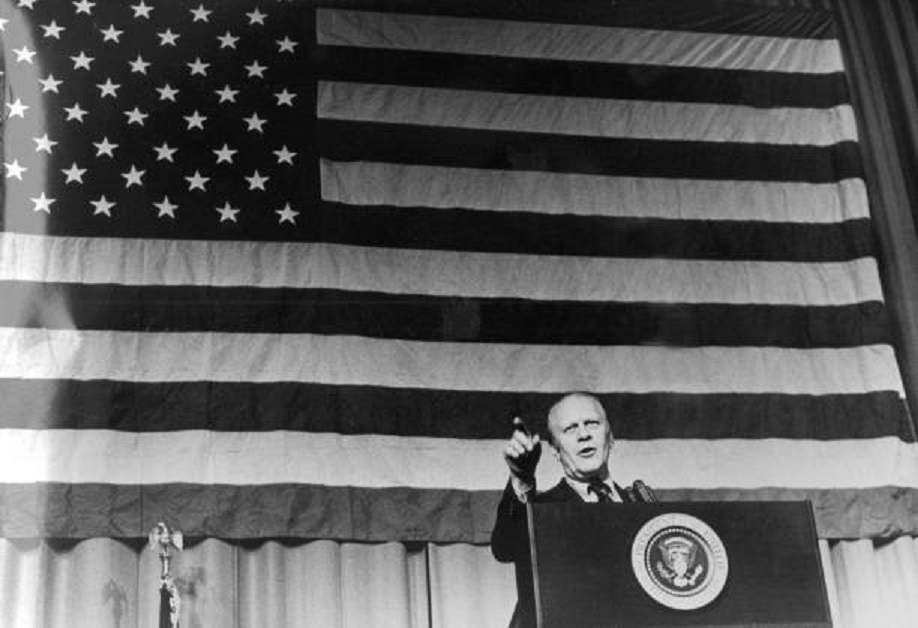
Campaigning for Republican candidates in the Middle West, President Ford said that massive Democratic victories in November could create a “veto-proof Congress” amounting to a “legislative dictatorship.” At most stops his reception was friendly but rarely uproarious.
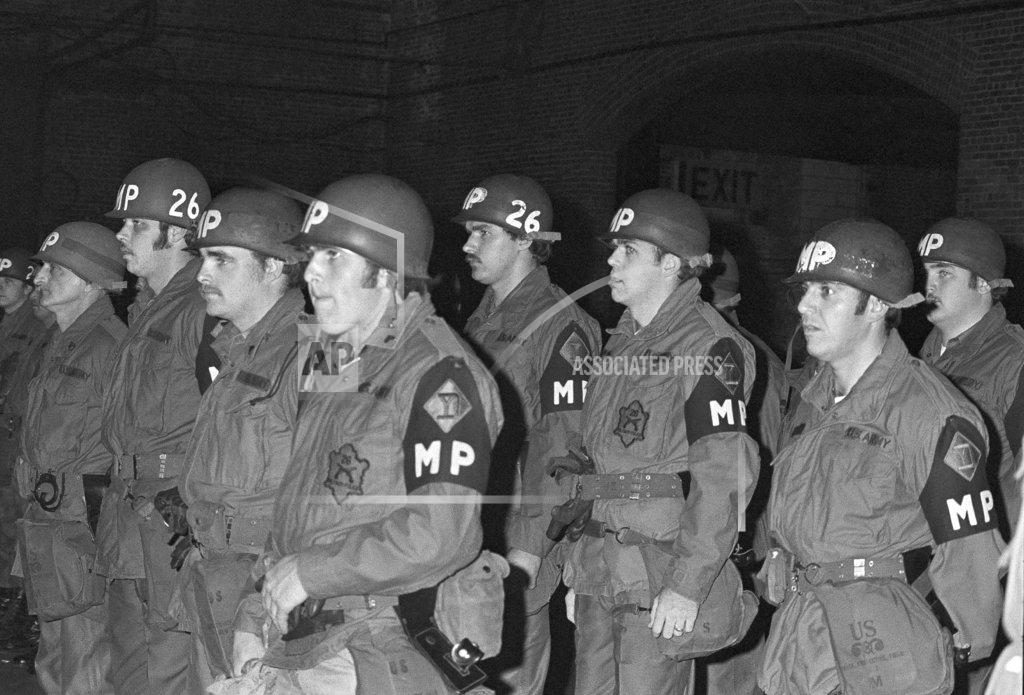
The Federal Bureau of Investigation arrested two white South Boston men and charged them with beating a black man in a mob incident 10 days ago — a civil rights offense. Boston’s racially tense schools were quiet under a heavy downpour, with 450 National Guardsmen on stand-by alert in their armories.
Howard Cannon, chairman of the Senate Rules Committee, said he would reconvene hearings on the nomination of Nelson Rockefeller for Vice President on November 13, after the elections. He said the Rockefeller tax audit was not expected before October 25 and the committee’s investigators were still looking into several matters, notably a $50,000 loan to L. Judson Morhouse in the late 1950’s which was given by “Rockefeller interests.”
Robert Collier, a former counsel to a House Judiciary subcommittee and Senate subcommittee on Investigations, was identified as sole officer and stockholder in Literary Productions, Inc., which arranged for the Rockefeller-financed derogatory biography of Arthur Goldberg. Mr. Collier said he acted at the request of John Wells, a close adviser of Nelson Rockefeller, but did not know of the book’s subject or of Laurance Rockefeller’s $60,000 investment in it.
A compromise drug-control bill containing a repeal of the controversial no-knock law was passed by the Senate and sent to President Ford. Without debate, the Senate accepted the House-passed legislation which would authorize $480 million for a three-year continuation of the bill. The no-knock feature lets federal judges issue warrants authorizing Justice Department agents to break into residences unannounced. Sponsors of the measure said the no-knock feature had been used only rarely and did not seem needed for effective enforcement of the law.
The government moved to curb defaults on federally insured college student loans, which have cost taxpayers an estimated $252 million. Among a series of proposals, the U.S. Office of Education threatened to “limit, suspend or terminate” participation by certain lending and education institutions failing to obey the new restrictions. About 4 million students have received more than $7 billion since the program beinsures loans of up to $2,500 a year. gan nine years ago. The government The General Accounting Office has reported that one out of every four student borrowers could be expected to default.
Two economists told Congress that President Ford’s economic proposals would do little to arrest the spiraling rate of inflation but would aggravate recession and increase unemployment. Joseph A. Pechman and Arthur M. Okun, both of the Brookings Institution, a privately financed economic research group, criticized Mr. Ford for not taking direct action to hold down prices and costs. Testifying before the Senate-House Economic Committee, the two predicted a long period of recession if Congress enacted the President’s proposal without major modifications.
Grumman Aerospace Corp. repaid in full a controversial $52 million loan it had received from the Navy to keep the firm afloat and enable it to continue production of the F-14 Tomcat fighter, the Navy announced. The loan, made in 1972, raised a furore in Congress when it was learned Grumman, of Bethpage, New York, had earned an extra $2.8 million for itself by investing the money in short-term notes. After Congress denied a new loan of $100 million, Grumman obtained a $200 million loan from several banks, including the Melli Bank of Iran. Iran is buying 80 F-14s.
A minister and 14 others who have been protesting the proposed use of certain school textbooks in Charleston, West Virginia, and surrounding Kanawha County were sentenced to 30-day jail terms, but some were released when they promised to obey court orders. They were arrested October 7 at the St. Albans school bus garage and accused of being in contempt of an injunction limiting pickets and banning interference with school personnel. Meanwhile, a 14-member review committee recommended to the Board of Education the return to the classrooms of some of the controversial textbooks — the D. C. Heath Co.’s “Communicating” series.
Scientists say a two-year study shows that estuarine and offshore drilling apparently does not harm the environment. The $1.5 million study was conducted by Gulf Universities Research, headquartered in Galveston, Texas. The organization — an alliance of 22 Gulf Coast universities and research institutions — was financed in its study by 83 sponsors and contributors, including major oil companies and firms involved in offshore drilling. A consensus report quoted 23 principal scientists as saying 79% of their investigation demonstrated “either no harmful impact or a beneficial impact” on the environment. The remaining part of the research is still under study, but basically did not demonstrate harmful impact.
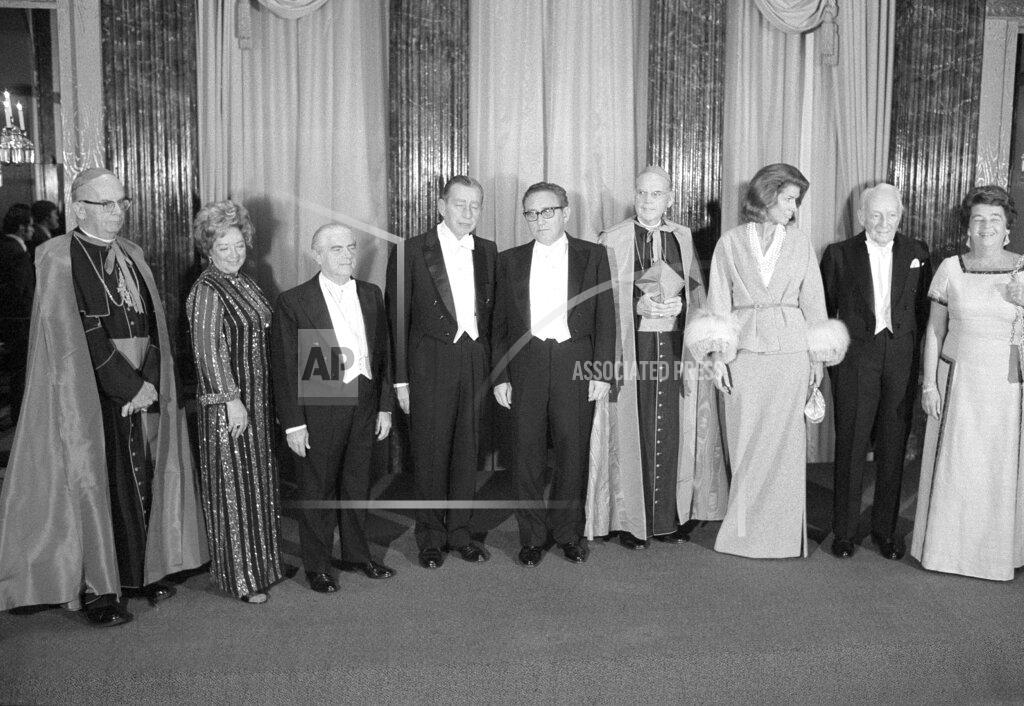
Two thousand people attended the funeral of television host Ed Sullivan at St. Patrick’s Cathedral in Manhattan, at which Terence Cooke, the Archbishop of New York, officiated. Among those present were Abraham Beame (the Mayor of New York City), Louis J. Lefkowitz (the Attorney General of New York), Ray Bloch, Van Cliburn, Walter Cronkite, Toots Shor and Risë Stevens.
The Philadelphia Bell of the World Football League, known for having claimed that almost 65,000 paid customers attended one of its home games in July, attracted a crowd of only 750 customers to the 102,000-seat JFK Stadium. A torrential downpour and a record of 6 wins and 9 losses were the primary factors.
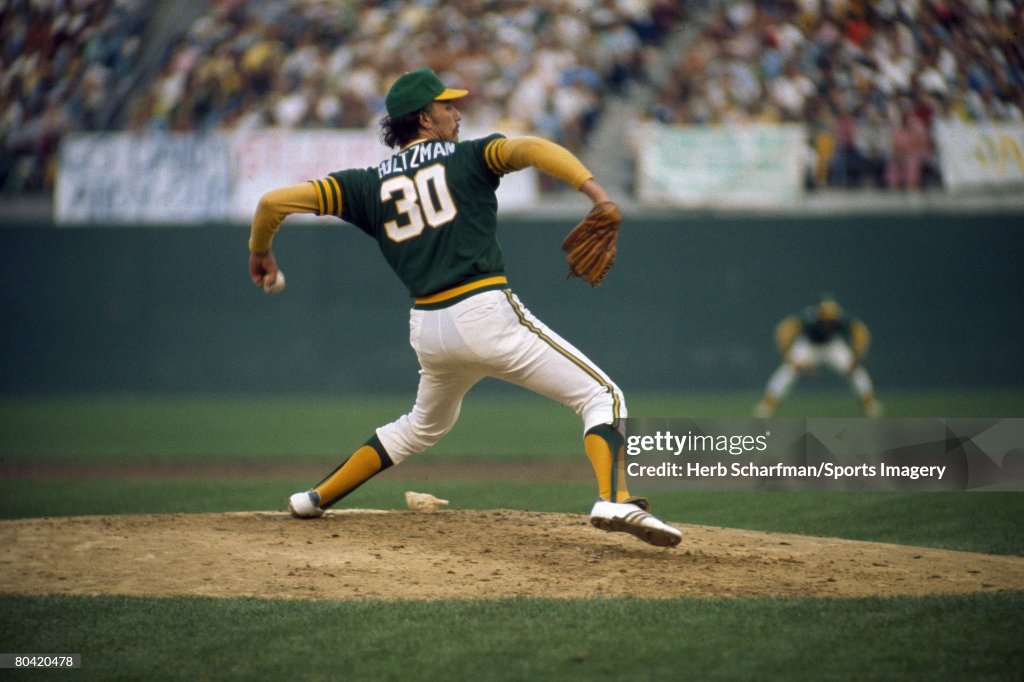
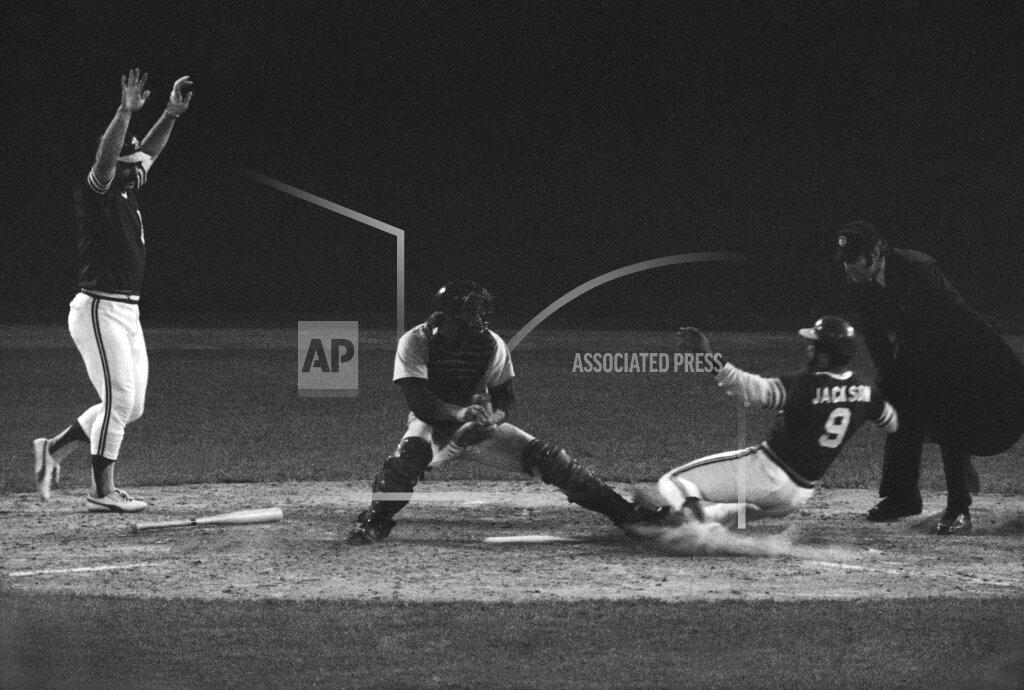
Oakland scores four runs in the 6th to wrap up the 4th game of the 1974 World Series, 5–2. Ken Holtzman, who hadn’t hit all season, belts a 3rd-inning home run and gets the win 5–2 with Rollie Fingers in relief. The A’s struck first on a solo homer by the surprising Ken Holtzman in the third. The Dodgers came right back in their half of the fourth on a two-run triple by Bill Russell. Holtzman settled into a groove after that, surrendering no runs before yielding to Rollie Fingers in the eighth. The A’s took control of the game with four runs in the sixth off Andy Messersmith. Bill North led off with a walk and went to second on a wild pickoff throw by Messersmith. Sal Bando singled home North to tie it. After a Reggie Jackson walk, a Joe Rudi sacrifice bunt, and an intentional walk to Claudell Washington, Jim Holt pinch-hit for Ray Fosse and singled in two runs. An RBI groundout by Dick Green capped off the rally. Fingers pitched the final 1+2⁄3 innings for his first save of the series.
Dow Jones Industrial Average: 642.29 (-16.11, -2.45%).
Born:
Jermaine Lewis, NFL wide receiver (NFL Champions, Super Bowl 35-Ravens, 2000; Pro Bowl 1998, 2001; Baltimore Ravens, Houston Texans, Jacksonville Jaguars), in Lanham, Maryland
Paul Kariya, Canadian National Team and NHL left wing (Olympic gold medal, 2002, silver medal, 1994; NHL All-Star, 1996, 1997, 1999-2003; Mighty Ducks of Anaheim, Colorado Avalanche, Nashville Predators, St. Louis Blues), in North Vancouver, British Columbia, Canada.
Roman Mars, American radio producer, host and podcaster (99% Invisible), born in Somerville, New Jersey.
Aurela Gaçe, Albanian singer; in Llakatund, Vlorë County, Albania.
Mark Holland, Canadian politician; in Pickering, Ontario, Canada.
Died:
Vlasta Děkanová, 65, Czechoslovak Olympic artistic gymnast.
Chembai (stage name for Chembai Vaidyanatha Bhagavatar), 78, Indian Carnatic music singer.
 History Diaries