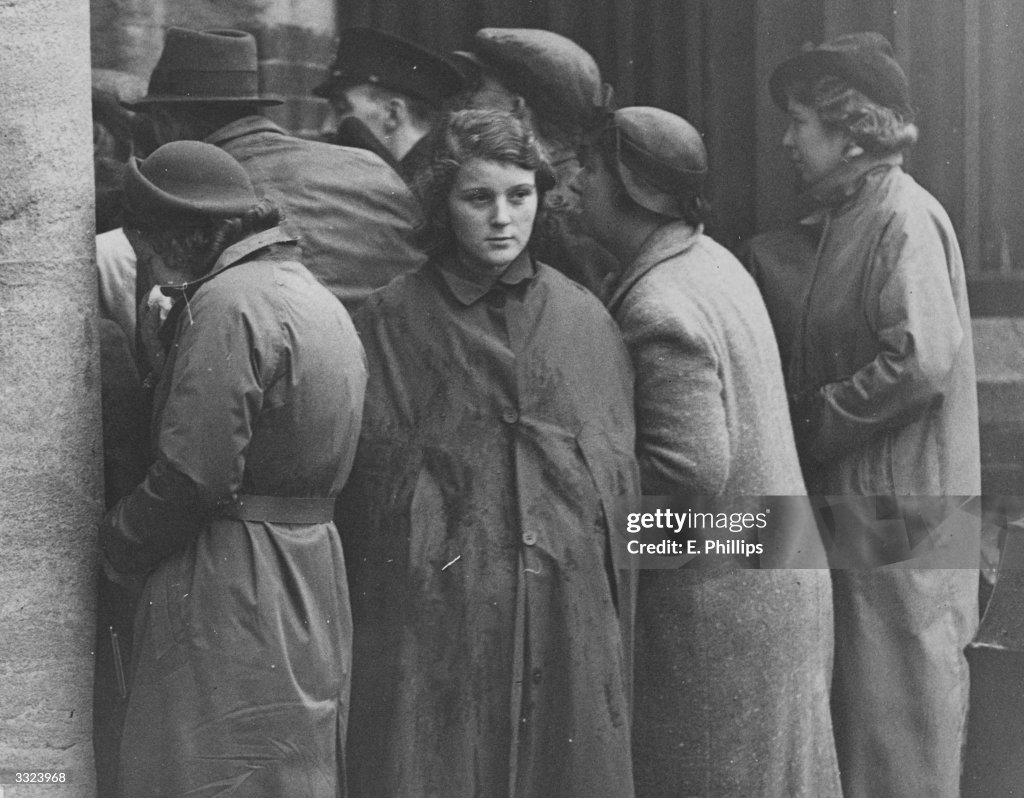
Of the 16,000 Polish civilians executed in the first six weeks of the war, 5,000 were Jewish. About 250,000 Jews escaped from the Germans into the Soviet Union. Some were immediately deported to labor camps in Siberia, where many of them later died.
There are reports of a typhoid and cholera break out in Warsaw.
Germany and Estonia signed an agreement on the resettlement of Baltic Germans.
The Polish minister in Kaunas protests to the Lithuanian government against the incorporation of Vilna, on the grounds that the Soviet Union has no right to dispose of this territory. The Lithuanians, however, had little choice in the matter, as the Soviets wanted to help enhance the reputation of the local communist party and threatened consequences if the territory was not accepted.
Germans await more restrictions as peace hopes vanish. Fish is now unobtainable.
On the Western Front, German forces are reported massing behind the lines. Reconnaissance forces are active on the whole front.
The first exchange of British and German consular officials takes place.
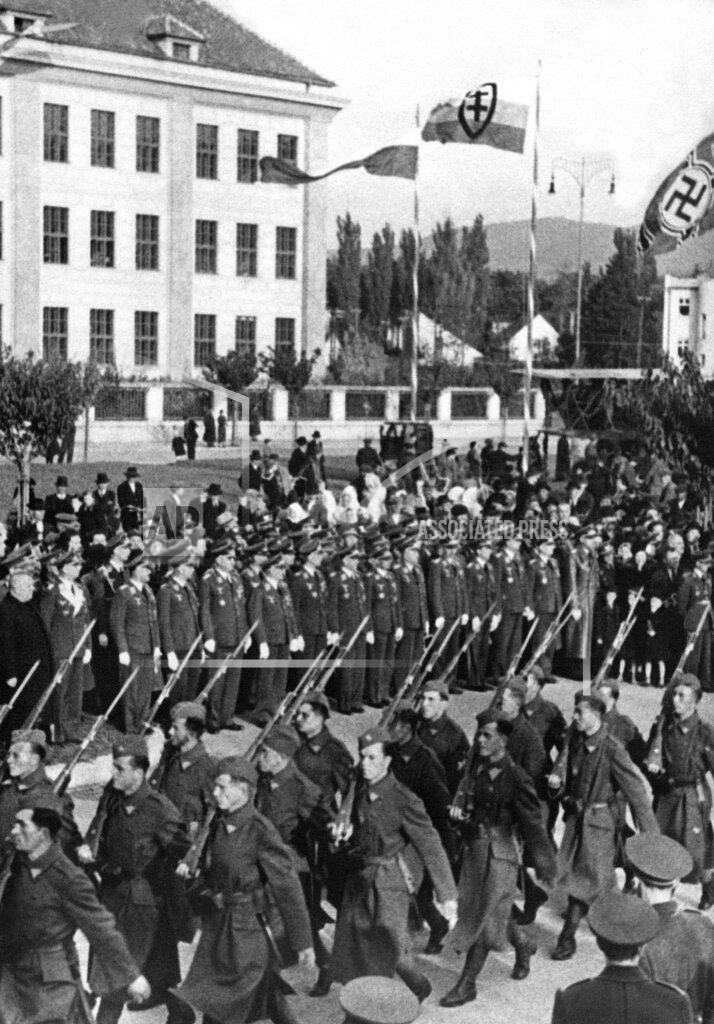
German puppet state Slovakia orders that Jews serve in forced labor.
The London press berates Charles Lindbergh; Hitler’s medal has gone to the colonel’s head, some say. Sections of the London press assailed Colonel Charles A. Lindbergh today for “apparently developing the Hitler mind” and for “puerile attempts to split our empire.”
The Admiralty publishes a list of the 414 survivors of the HMS Royal Oak.
Having previously lost both legs in an inter-war flying accident, Douglas Bader seeks to regain full flight status in the RAF.
British women are taking up their knitting needles in accordance with instructions from the admiralty. Basic specifications for every shape of garment from the sea-boot stocking to the Balaclava helmet have been issued and unending supplies are needed. A firm of wool experts is currently advising the admiralty on the production of detailed patterns, but in the meantime British knitters of all ages are urged to get clicking.
Turkey has taken precautionary military measures following reports of the massing of Russian troops in the Caucasus on the Turkish and Iranian frontiers.
A Soviet cruiser and ten smaller warships anchored in Tallinn Bay today.
The military imposes compulsory national service in Finland.
It was officially announced tonight that the Finnish Government considers the nation’s situation unchanged and that it remains “serious, but not threatening.”
German armored ship Admiral Graf Spee meets tanker Altmark and refuels.
The unescorted French steam merchant Vermont was sunk by gunfire by the U-37, commanded by Korvettenkapitän Werner Hartmann, in the eastern Atlantic Ocean (48°01′N 17°22′W). Of the ship’s complement, 2 of her 45 crewmen died. The 5,186-ton Vermont was carrying ballast and was bound for New Orleans, Louisiana.
The Norwegian cargo ship Wanja ran aground off North Ronaldsay, Orkney Islands, United Kingdom and was wrecked.
Convoy OA.20G departs from Scotland.
Convoy SL.5 departs from Freetown for Liverpool.
The War at Sea, Sunday, 15 October 1939 (naval-history.net)
Admiral Forbes departed Loch Ewe with battleships NELSON, RODNEY, battlecruiser HOOD, aircraft carrier FURIOUS, light cruisers BELFAST, AURORA and destroyers BEDOUIN, FEARLESS, FOXHOUND and FURY.
After light cruiser SOUTHAMPTON and destroyer MATABELE finished escorting steamer ST CLAIR (1637grt) from Lerwick to Aberdeen, arriving at 0945/14th, MATABELE left on the 14th and called at Scapa Flow. Destroyers MASHONA, PUNJABI, FIREDRAKE left Loch Ewe, also on the 14th, arrived at Scapa Flow later the same day, and then with MATABELE, sailed from Scapa Flow on the 15th to join Forbes at sea.
Destroyer FORESTER departed Scapa Flow on the 16th and also joined Forbes, FAME was boiler cleaning until the 22nd, and TARTAR repairing defects until the 23rd, both at Scapa Flow.
The sortie took the Fleet north of Iceland, 150 miles into the Arctic Circle, to block a reported sortie into the Atlantic by pocket battleship DEUTSCHLAND and to support the Northern Patrol. The destroyers refueled from the capital ships on the 17th.
Battlecruiser REPULSE with destroyers JERVIS, JERSEY, COSSACK and MAORI departed Rosyth on the 18th, with COSSACK and MAORI arriving back on the 19th and REPULSE, JERVIS and JERSEY joining Forbes at sea on the 20th. The two destroyers were detached for refueling at Sullom Voe on the 21st and afterwards carried out an anti-submarine patrol off Muckle Flugga. They then left the patrol area to search off the Norwegian coast for American steamer CITY OF FLINT.
JERVIS and JERSEY arrived at Rosyth on the 25th without making contact.
Five cruisers were on Northern Patrol between the Orkneys and the Faroes, four AMCs between the Faroes and Iceland, and four AMCs in the Denmark Strait. The armed merchant cruisers were ASTURIAS, AURANIA, CALIFORNIA, CHITRAL, RAWALPINDI, SALOPIAN, SCOTSTOUN and TRANSYLVANIA. Following this patrol, ASTURIAS proceeded to Halifax for escort duty and SALOPIAN to Plymouth en route for the South Atlantic.
Convoy HN.0 of five Polish, one French and one Greek steamer had departed Bergen on the 14th, and was met in the North Sea on the 15th by light cruiser SOUTHAMPTON, which left Rosyth on the 13th, and destroyers JERVIS, JERSEY, JACKAL, JANUS. Early on the 16th, SOUTHAMPTON, JERSEY, JACKAL and JANUS detached and destroyer MOHAWK joined. JERVIS and MOHAWK then escorted the convoy into Methil arriving on the 16th with SOUTHAMPTON reaching Rosyth the same day.
Light cruiser EDINBURGH was escorted by destroyer WHITLEY from the 15th to 23rd.
Light cruiser SHEFFIELD arrived at Loch Ewe.
Destroyer BROKE and sloop FLEETWOOD were U-boat hunting off Blyth and on the 16th, attacked a contact.
Destroyers COSSACK and MAORI attacked a submarine contact 6 miles 83° from Coquet Island.
Destroyer MOHAWK attacked a submarine contact 4 miles 340° from Flamborough Head.
Sloop STORK attacked a submarine contact 6.5 miles 15° from Scarborough Rock.
Patrol sloops KINGFISHER and PC.74 were submarine hunting off Liverpool, and were relieved on the 16th by escort vessel/minesweeper GLEANER.
Convoy OA.20G departed Southend escorted by destroyers KELLY and KINGSTON from the 15th to 17th, and by destroyers AMAZON and ANTELOPE from the 17th to 18th. Convoy OB.20G also left Liverpool escorted by destroyers WHIRLWIND and WALPOLE, the two convoys merging on the 17th as OG.3.
Convoy AXS.1 of one steamer departed Fowey, escorted by destroyer WAKEFUL and arrived at Brest on the 17th.
U-37 sank French steamer VERMONT (5186grt) 360 miles SW of Fastnet in 48 01N, 17 22W, with the loss of two crew, the 43 survivors being rescued by destroyer INGLEFIELD. Because of the submarine activity in the area of arriving convoy KJ.2, French destroyers L’INDOMPTABLE and LE MALIN conducted a sweep, and were joined by destroyers CYCLONE and MISTRAL sailing from Brest to assist. On the 17th, CYCLONE attacked a submarine contact. On the same day, destroyer VENOMOUS left Plymouth with the survivors of VERMONT for passage to Havre.
Battleship RAMILLIES departed Gibraltar escorted by destroyers GRAFTON and GALLANT for duty with the 1st Battle Squadron at Alexandria.
Convoy SL.5 departed Freetown escorted by destroyers HASTY and HOSTILE, and joined by French cruiser PRIMAGUET, destroyers MAILLÉ BRÉZÉ and VAUQUELIN, which left Dakar on the 19th and arrived at Casablanca on the 25th. Destroyers TIGRE, TARTU and CHEVALIER PAUL departed Toulon, also on the 19th, and reached Casablanca on the 22nd ready to relieve the French destroyers already with SL.5. They left on the 25th and joined that day. British destroyer GRENADE sailed from Gibraltar on the 24th, also to join the convoy. PRIMAGUET, escorted by CHEVALIER PAUL detached and reached Lorient on the 28th, while TIGRE and TARTU after being relieved by British destroyers, reached Brest on the 30th. The convoy arrived at Liverpool on 3 November.
Administration leaders are expected to call up all their reserves of strategy and strength this week in an effort to end the debate on the neutrality resolution, which will enter its third week tomorrow, and bring that measure to a vote. They will be acting, it is understood, upon the advice of seasoned legislators, among them Vice President Garner, to get the bill passed before possible changes in the situation in Europe and at home jeopardize its chances of passage. A willingness to compromise in some particulars in order to push through to passage the main provisions of the bill was attributed today to influential Senate leaders.
One compromise that is said to be in prospect would be designed to soften the impact of the bill, as it now stands, upon American shipping. Instead of an absolute ban upon movement of American ships in danger zones, the President would receive discretionary power to lift the ban with reference to areas remote from actual war zones, with the proviso that whenever conditions developed in those zones which might endanger American ships or their crews all exemptions would be removed and an absolute ban imposed.
If such a compromise is agreed upon, trade with countries which. have declared war but are far outside present combat zones, such as Australia, New Zealand, South Africa and Canada, will be permissible. It is understood that Democratic members of the Senate Foreign Relations Committee will meet this week to attempt to prepare an amendment which would modify the shipping restrictions imposed by the pending bill, particularly with reference to the Pacific. Administration leaders are said to have been convinced by a check-up of Senate sentiment that a compromise such as that suggested would be approved by the Senate.
Because of the fact that, in the drive for votes for repeal of the arms embargo and the enactment of the cash-and-carry policy, the votes of several Senators were pledged on the assumption that the provision requiring foreign purchasers to take title to American goods and transport them in their own ships would be ironclad, there are limits to which the compromisers can go. The opposition forces, however, are divided on the question of shipping restrictions and the administration leaders accordingly are confident that an acceptable formula can be worked out. It was reported also that a disposition to yield to opposition and abandon the provision of the bill which would permit the President to grant ninety-day credits to foreign purchasers of American goods was growing in Administration circles. Senator Byrd, Virginia Democrat, expressed his disapproval of this provision in a statement issued today. He asserted that if ninety-day credits were granted “longer and more credit will be extended” and conditions which existed in the last World War would again arise. “In my opinion,” Senator Byrd said, “cash-and-carry should literally mean what it says.”
Just what form the Administration drive will take to close debate, and bring about a vote was not disclosed. It was reported, however, that the leaders were ready to invoke almost any parliamentary weapon short of cloture to shut off the flood of oratory which has flowed since October 2 and to call all of their best behind-the-scenes manipulators into action in their determination to bring about an agreement to vote. Senator Barkley, the majority leader, was close-mouthed about his plans, except to forecast that voting on amendments probably would begin next week.
The advice of veteran legislators to “get on with the voting” is said to stem from lessons of experience which have taught them that long debate on public issues tends to generate doubts in the minds of the public. The isolationists also are aware of this and are counting upon it to turn the scales in their favor.
The danger that prolonged discussion in the Senate may have an adverse effect upon Administration strength in the House also was said to be a factor spurring the leaders to efforts to bring about early action. Representative Pat Boland of Pennsylvania, the Democratic whip, is said to be making a poll to determine the comparative strength in the House of the Administration and the isolationists. In the face of these reported moves and plans of the Administration, the opposition leaders stood firm in their determination to continue debate until they are through talking and to resist “pressure tactics” to end the discussion. One Senator said tonight that the opposition did not “want to filibuster” but was prepared to do so if “the Administration tries to crack down.”
Senator Clark of Missouri, an isolationist leader, said that there would “be no votes until every one who wants to speak has an opportunity to do so.” The opposition is scheduled to fire one of its heaviest guns this week when Senator Hiram Johnson of California, a veteran of the fight to keep the United States out of the League of Nations, will speak. He is on the program to speak on Tuesday. Senator Holt is due to oppose the bill on Wednesday and Senator Capper and others are understood to be awaiting an opportunity to take the floor.
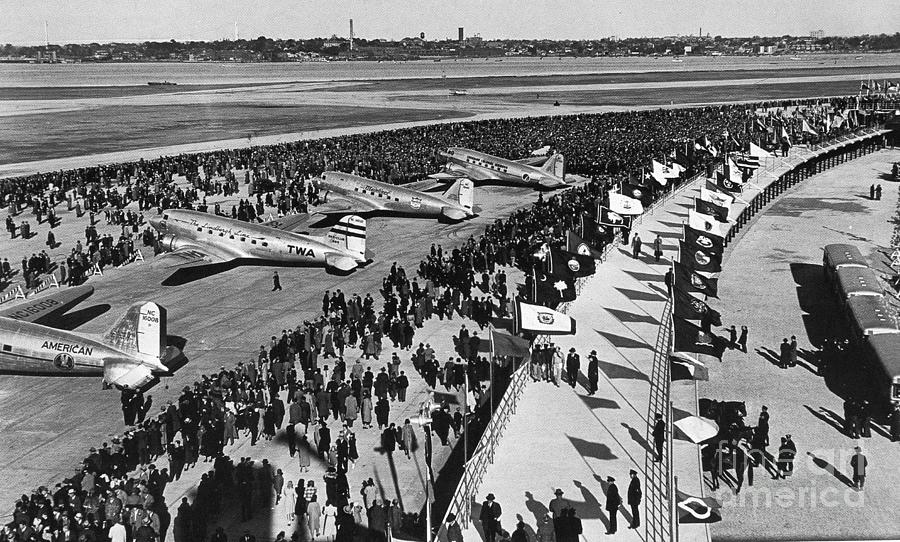
The New York Municipal Airport (later renamed LaGuardia Airport) was formally dedicated in New York. Three hundred twenty five thousand spectators see New York’s Mayor La Guardia dedicate the new airport to world service; 150 planes perform in a show at the opening ceremony. Standing on the observation platform in front of the administration building, with the vast crowd stretching to both sides along the half-mile concrete apron in front of the six giant hangars, the Mayor accepted the airport from the Work Projects Administration and dedicated it to the pursuits of peace. Conceived in 1935, when the Post Office Department declined to accept Floyd Bennett Airport in Brooklyn as the air mail terminus for the city, its construction was begun in September, 1937, and rushed to completion by the WPA in a little over two years at a cost of $40,000,000 to $45,000,000. It thus became WPA’s biggest project.
Already approved by most of the major air lines, which have rented hangar space, and unqualifiedly accepted by the pilots as the safest in the United States, the field awaits only official acceptance by the Civil Aeronautical Authority to begin operation as a transcontinental and transatlantic terminus. If any proof was needed of its worthiness of designation as the world’s greatest airport the 150 planes that landed and took off yesterday with only one minor mishap must have supplied it. Army and navy pilots who saw it for the first time said it was as fine a field as ever they had used.
Convinced that the New York World’s Fair has benefited the entire nation, President Roosevelt has assured Fair officials that, he will recommend to Congress at the January session that it appropriate enough funds for the Federal Government to cooperate next year by reopening and maintaining the Federal Building exhibit during the 1940 season, Harvey D. Gibson, board chairman of the exposition, announced yesterday.
U.S. Steel production is up to 90 percent of capacity. Continuation of the upward trend in steel ingot output, a slight reaction in the country’s scrap markets and growing pressure from consumers to be furnished with new steel price data reflected high points in the steel industry last week. A shortage of pig iron prevents operations at some finishing mills.
The U.S. Army formulates a profiteering curb. An appeals board would weigh disputes over costs.
Both the army and the navy are due to share in large-scale expansion within the next few months if plans prepared for submission to the President and to Congress are approved.
The Cuban post office tests the use of rockets to deliver mail between cities. The test is unsuccessful.
The 11th Japanese Army is now back to its starting point in the Battle of Changsha.
Japan is determined to create a new central government in China strong enough to bear its full share of the task of reorganizing East Asia, General Nobuyuki Abe, the Premier, said today in an interview. The reorganization of East Asia must be carried out by Japan and China without the aid of outside nations, he stressed. The new Chinese Central Government, to be headed by Wang Chingwei, former Chinese Premier, will be launched next month and will be pledged to cooperation with Japan.
The Premier did not elaborate his remarks, but it was assumed he meant that the “new China” will be bound to Japan by a military alliance, as is Manchukuo, thus creating a Far East military bloc of three nations with a combined total population of at least 300,000,000. All diplomatic affairs of the empire must be regarded in the light of Japan’s aim for an early termination of the China conflict, the Premier said.
Asked by reporters who interviewed him in his week-end villa at the Kamakura seashore resort whether he would go to China for the inauguration of the new China regime, the Premier said the question had not been decided. It was possible, he said, that he might make the trip and that the War Minister, General Shunroku Hata, might accompany him.
Japan intends to carry forward “against all obstacles” the reorganization of East Asia, General Abe said. The new Chinese regime under Wang Ching-wei will be her partner. The reorganization, however, will be carried out on a “neutral” basis. The rights of third powers will be respected and an effort will be made to convince the world of the “sincerity” of Japan’s aims, which are the preservation of peace in East Asia, the establishment of prosperous conditions for all the people and cooperation with all nations for international stability, the Premier said.
The Premier suggested that no formal international negotiations will be necessary to achieve the Japanese program which will be worked out slowly on a basis of deeds rather than words. Domei, the Japanese news agency, said that Mr. Wang’s secretary, F. H. Chou, was conferring with officials here regarding the formation of the new regime for China. Mr. Chou was quoted as saying that the new regime would welcome all officials of Generalissimo Chiang Kai-shek’s Nationalist Government in Chungking who wished to place themselves at its disposal. It was said the new government would base its policy on the principles of the late Dr. Sun Yat-sen, founder of the modern Chinese State, and “will pursue a moderate social policy.”
A war office spokesman derided Chinese claims of victories in Central China. He said that up to today Japanese forces in the Central China area around Hankow had taken all fortified positions in the so-called Chinese ninth war zone including the mountain region south of Kiukiang on the border between Hupeh and Kiangsi provinces. He said Chinese armies estimated at 530,000 men had been dispersed after 30,500 of them had been killed and 3,730 captured. The spokesman said conditions on the Manchukuo-Soviet frontier continued quiet and that the work of delimiting the border between Manchukuo and Soviet-controlled Outer Mongolia was progressing.
In connection with Russo-Japanese relations, which Germany reportedly is attempting to “improve” as a preliminary to a Russo-Japanese non-aggression treaty, Dr. Naka Funada, former legal adviser of the Cabinet, said in a statement today that “the Japanese policy towards Russia should be reexamined.” Dr. Funada has just returned from Europe after attending the International Parliamentary Conference at Oslo and visiting Germany, the Baltic States, Finland, and Moscow. Russia, he said, has made remarkable progress in the fields of economic and military affairs and Japan must consider the Soviet State of today in an entirely new light.
While he did not say so, he probably was hinting at a belief held by many Japanese that this country’s interest lies in encouraging Russian expansion in Europe. These Japanese believe that Joseph Stalin has abandoned the Communist International as an instrument for foreign intrigue and no longer upholds the theory of an international dictatorship of the proletariat. They see Russia becoming more and more a purely military dictatorship operating on the basis of a “purely realistic” foreign policy. Mr. Stalin’s cooperation with Germany, these Japanese argue, is based solely on mutual self-interest and is likely to continue indefinitely because Moscow and Berlin would benefit from the weakening, or possible destruction, of the British and French empires. Since Japan would benefit from elimination of British-French domination of East Asia, it is argued, she should keep herself free to cooperate with the Russo-German group at any time it may be in the interest of the empire to do so.
Premier Abe intimated in an interview published today in Japanese-language newspapers that Japan would take steps to negotiate a new commercial treaty with the United States. The United States on July 26 notified Japan that the American-Japanese commerce and amity treaty of 1911 would be terminated six months from the date of notification.
“It may not be possible temporarily to extend the 1911 treaty once it is abrogated,” the Premier was quoted as saying, “but it may be possible to negotiate a new one as a provisional measure at least.” He said several possibilities were being considered but he declined to give any details. With United States Ambassador Joseph C. Grew back at his post, it was expected that trade discussions would start soon.
Born:
Carmelo Bossi, Italian boxer (Olympic silver 1960; Lineal, WBC, WBA super welterweight title 1970-71), in Milan, Italy (d. 2014).
Lou Klimchock, MLB pinch hitter, third baseman, and second baseman (Kansas City A’s, Milwaukee Brewers, Washington Senators, New York Mets, Cleveland Indians), in Hostetter, Pennsylvania.
Naval Construction:
The Royal Navy armed merchant cruiser HMS California (F 55) is commissioned. Her first commanding officer is Captain Cuthbert John Pope, RAN.
The Royal Navy armed merchant cruiser HMS Jervis Bay (F 40) is commissioned. Her first commanding officer is Captain (retired) Arthur Gerald Harris, RN.
The Royal Navy armed merchant cruiser HMS Laurentic (F 51) is commissioned. Her first commanding officer is Captain (retired) Eric Paul Vivian, RN.
The Royal Navy armed merchant cruiser HMS Montclare (F 85) is commissioned. Her first commanding officer is Captain (retired) Herbert Malcolm Spreckley, RN.
The Royal Navy armed merchant cruiser HMS Mooltan (F 75) is commissioned. Her first commanding officer is Captain (retired) George Ernest Sutcliff, RN.
The Royal Navy armed merchant cruiser HMS Scotstoun is commissioned. Her first commanding officer is Captain (retired) Sydney Keith Smyth, RN.
The Koninklijke Marine (Royal Netherlands Navy) minelayer HrMs (HNMS) Rigel is commissioned.
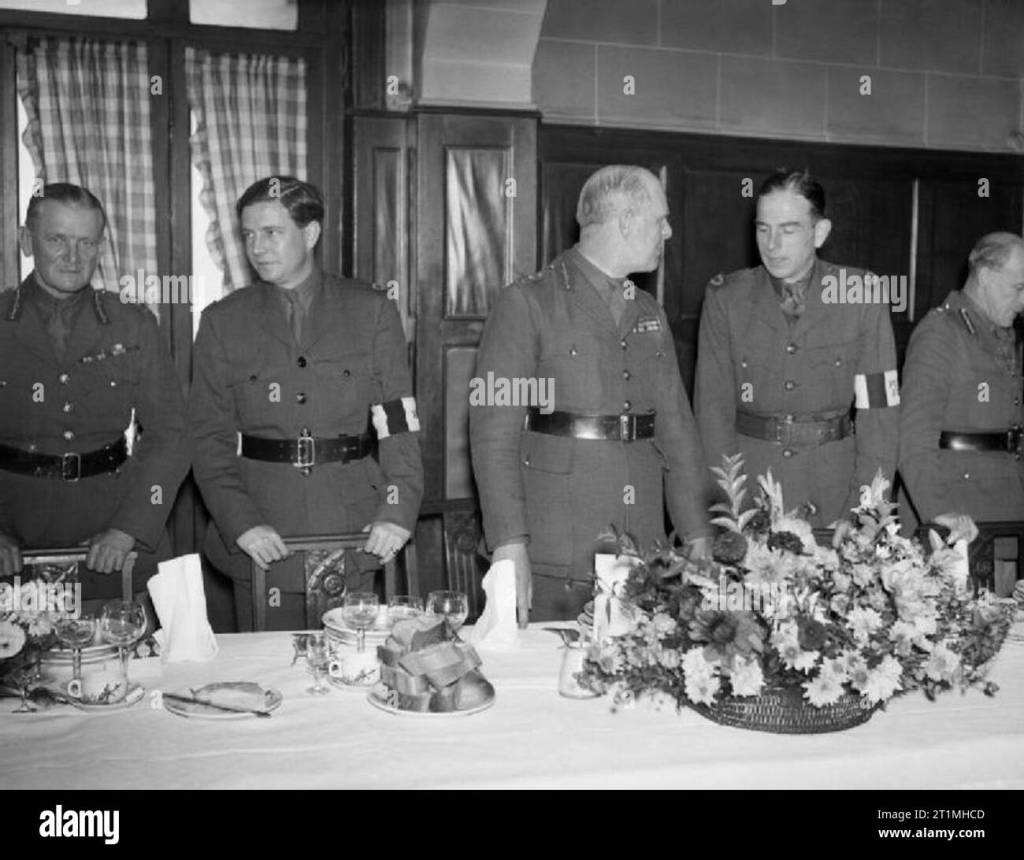
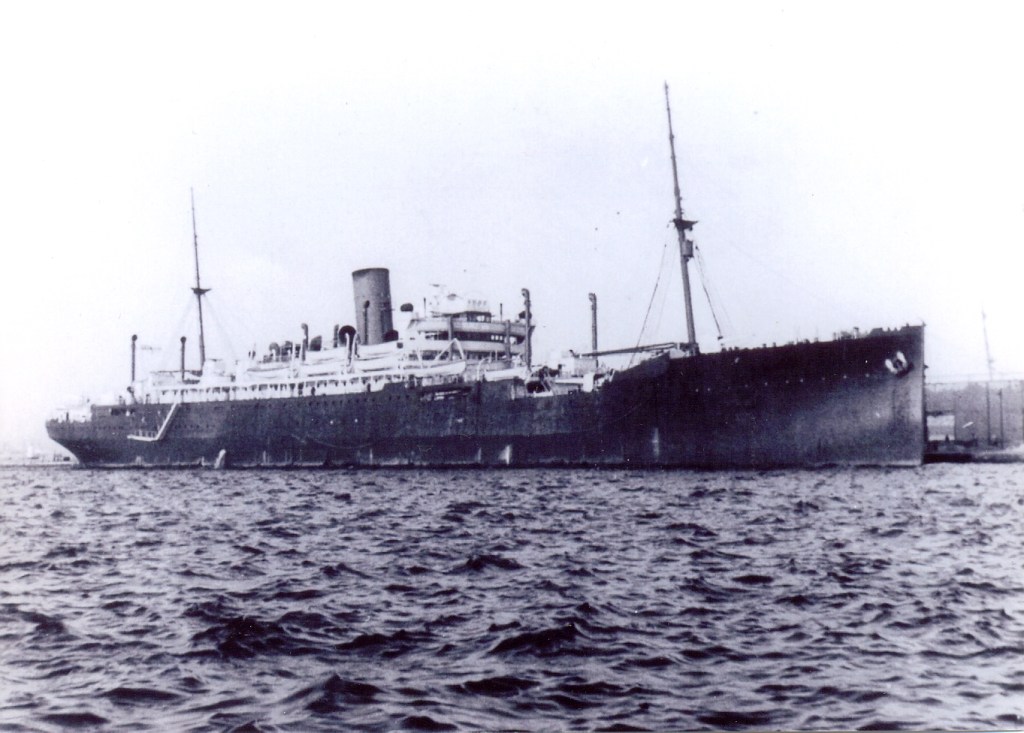
On 25 August 1939 the passenger ship Jervis Bay of the Aberdeen & Commonwealth Line Ltd, London was requisitioned by the Admiralty and converted to an armed merchant cruiser. Conversion was completed on 15 October 1939.
After her acquisition and commissioning, Jervis Bay was initially placed under the Commander-in-Chief, South Atlantic. She was involved in an unfortunate incident on 13 October 1939 while at Rosyth, ramming the old S-class destroyer HMS Sabre (H 18). Sabre was under repair for over six months. Jervis Bay then became a convoy escort in May 1940, based at the Royal Naval Dockyard, Bermuda. Given brief repairs at Halifax, Nova Scotia, she became the sole escort for the 37 merchant ships of Convoy HX.84 from Bermuda and Halifax to Britain (Jervis Bay escorted a convoy from Bermuda which merged at sea with a convoy from Halifax, since larger convoys suffered fewer losses than smaller ones due to the relatively smaller defensive perimeter of the larger surface area).
Lost 5 November 1940.
On 5 November 1940, HMS Jervis Bay (A/Captain Edward Stephen Fogarty Fegen, RN) was shelled and sunk in position 52º41’N, 32º17’W by the German pocket-battleship Admiral Scheer while engaging the superior enemy ship in a heroic, if hopeless, fight to give the 37 merchants in the convoy HX.84 a chance to escape, because the armed merchant cruiser was the sole escort. Her sacrifice allowed many ships of the convoy to scatter and escape in the night. In the end, the German cruiser was only able to sink five merchant ships, and the remainder of the convoy escaped. Captain E.S.F. Fegen (RN) was posthumously awarded the Victoria Cross.
Citation: “For valour in challenging hopeless odds and giving his life to save the many ships it was his duty to protect. On the 5th of November, 1940, in heavy seas, Captain Fegen, in His Majesty’s Armed Merchant Cruiser Jervis Bay, was escorting thirty-eight Merchantmen. Sighting a powerful German warship he at once drew clear of the Convoy, made straight for the enemy and brought his ship between the raider and her prey, so that they might scatter and escape. Crippled, in flames, unable to reply, for nearly an hour the Jervis Bay held the German’s fire. So she went down; but of the Merchantmen all but four or five were saved.”
190 men were lost, while 65 survivors were picked up by the Swedish merchant Stureholm that had turned back during the night to search for survivors.
 History Diaries