It is October 16th in Moscow, but still the 15th in Washington, as the shocking news of Nikita Khrushchev’s ouster reaches Washington. He was replaced by Leonid I. Brezhnev, 57 years old, as First Secretary of the Communist party and by Aleksei N. Kosygin, 60, as Premier. Mr. Khrushchev, who is 70, even lost his seat in the Presidium of the Central Committee of the party, the third most important position he held in the leadership. This indicated that he had fallen into disgrace. The changes were announced by Tass, the Soviet press agency, a few minutes after midnight on the 16th. The Tass statement did not contain a single word of praise for the ousted leader. Unofficial but reliable sources later reported that Aleksei I. Adzhuhei, Mr. Khrushchev’s son-in-law, had been deposed as chief editor of the Government newspaper Izvestia. Mr. Khrushchev’s whereabouts was not known. Nor was it known whether he was at liberty or under surveillance. Western diplomats assumed, however, that the changeover had been made peacefully.
A prosecution statement today at the opening of the trial of the leaders of the unsuccessful coup credited two American generals with having preventing bloodshed. In recounting its version of events on September 13 and 14. the prosecution said: “If it had not been for the intervention of Generals Westmoreland and Stilwell, there would have been bloodshed.” General William C. Westmoreland, commander of United States forces in Vietnam, and Major General Richard Stilwell, his chief of staff, worked throughout the coup attempt to prevent, by persuasion, an attack on Tân Sơn Nhứt Air Force base by rebels. They also worked to prevent air attacks on coup forces in Saigon by loyalists at the base, where nearly 4,000 Americans also are stationed.
The Vietnamese generals charged with attempting to overthrow Premier Nguyễn Khánh’s Government last month testified in court today that they had planned only a show of force, not a coup d’état. While 20 officers and civilians went on trial for a crime that carries the death penalty, a 24‐year‐old Việt Cộng terrorist who had tried to assassinate Secretary of Defense Robert S. McNamara last May was executed by a firing squad. Nguyễn Văn Trỗi shouted, “Down with the Americans,” as military policemen raised their rifles.
Observers predicted that only Brigadier General Lâm Văn Phát would receive a death sentence in the subversion trial and that the sentence would be commuted. A score of defense attorneys wearing long black robes with white cravats were turned down when they asked the court to throw out all charges because the men were not caught “red handed.” But the five military justices did agree to a defense request that witnesses be permitted to testify. Premier Nguyễn Khánh, Deputy Premier Nguyễn Xuân Oánh, and Air Commodore Nguyễn Cao Kỳ were among the officials the lawyers asked the court to call. The trial is expected to last a week. As they were led into the crowded courtroom today, the generals, colonels and seven civilians tried to appear relaxed and jovial. Several smiled reassuringly to their families.
Before direct testimony began, Major General Dương Văn Đức told newsmen he thought it was unjust to hold the trial. “I believe in the supreme court of conscience,” the general declared. Gesturing to the junior officers who had joined with him, General Đức called them “national heroes.” The general denied reports that he had ended the coup attempt because of Commodore Kỳ’s threat to use his air force against the general’s tanks and ground troops. “I wanted to avoid bloodshed,” General Đức said. “I am very proud of my decision.”
When he took the stand later, however, General Đức denied that he had ever intended to overthrow the government. He acknowledged that he had been deeply concerned about some of the Premier’s policies, including his decision to release from banishment at Dalat five generals who had opposed Premier Khanh’s own coup of January 30. General Đức testified that when Deputy Premier Oánh had asked to see him on September 13 he had gone to Saigon with the Mekong Delta troops he commanded. He described this movement of soldiers into the capital as “a show of force to emphasize my ideas.” He said, “If I had intended to overthrow the Government, I would have arrested Government officials, which I did not do.”
After Commodore Kỳ had given assurances in Premier Khanh’s name that the Premier would heed General Đức’s demands, the general said, he had pledged renewed support and returned to his 4th Corps headquarters without suspecting that he would later be arrested. General Đức took full responsibility for the actions of a subordinate, Colonel Huỳnh Văn Tồn, the commander of the 7th Division based at Mỹ Tho. General Đức and later Colonel Tồn, who is also on trial, testified that the general had ordered the 7th Division to accompany him to Saigon.
Two American soldiers escaped with slight injuries last night when one of them picked up a grenade thrown at them and pitched it into a ditch, where it exploded. The two, Pfc. Gerald D. McMenonin of Philadelphia, and Pfc Walter Sayaya of Detroit, were riding together in a pedicab in Sa Đéc, 85 miles southwest of Saigon, when the incident occurred.
Defense Department records showed today that 204 Americans have been killed in combat in South Vietnam Since January 1, 1961. There were eight deaths in the week ended October 12. The Pentagon said 130 of the victims died as a result of air action. In addition, the department said, 1,188 Americans had been wounded in Vietnam as of October 12 and 91 had died of noncombat causes. This made the over‐all death toll of Americans 295. Seven other men were reported missing in action and two more were listed as missing for other than combat causes. Six Americans have been removed from the missing list and nine are listed as “detained,” indicating they are being held prisoner by the Communists.
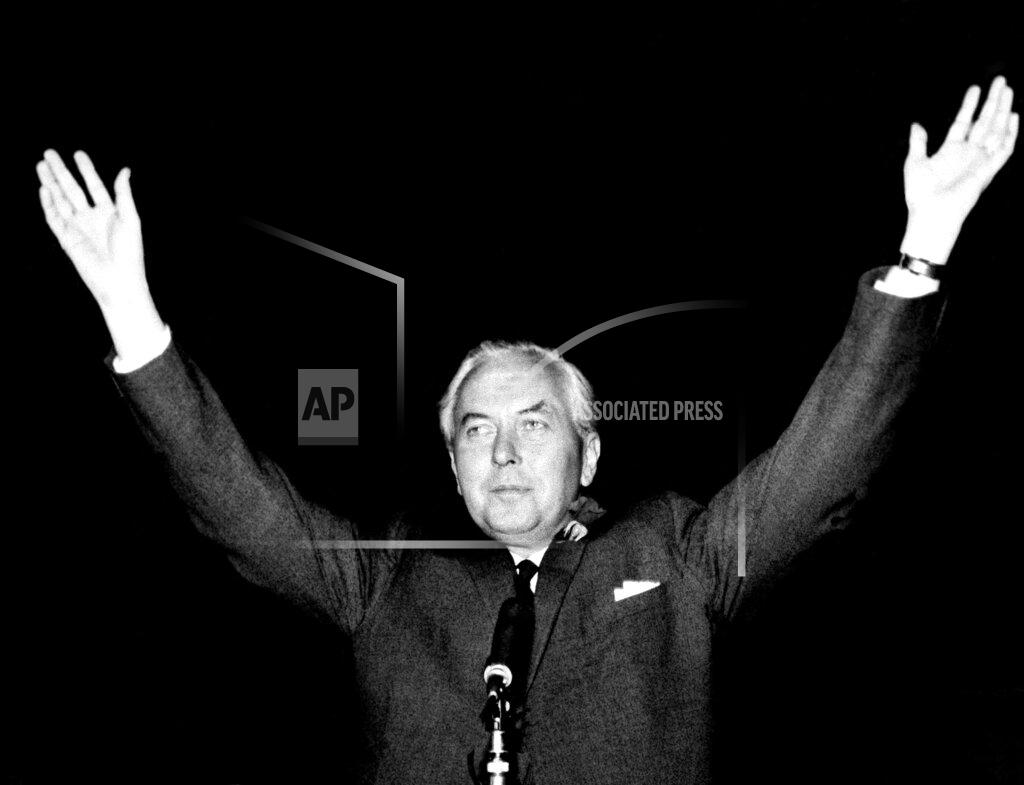
Elections were held for the 630 seats of the United Kingdom’s House of Commons, and brought an end to 13 years of rule by the Conservative Party, led by Prime Minister Alec Douglas-Home. Prior to the dissolution of Parliament, the Conservatives had 365 seats and Harold Wilson’s Labour Party had 258. Sixty-six Conservative MPs were voted out of office, and the party gained only five for a net loss of 61 seats. Labour replaced 65 of the 66. After the votes were counted, Labour had only two more than the 315 seats needed for a majority, with a slim lead of 317 to Conservative’s 304 and Liberal’s nine.
British sources reported today that Yemeni tribesmen at Bayda killed 15 and wounded 42 among a group of 60 leaders of dissident forces operating in South Arabia. According to information reaching the British, the tribesmen were not royalists but were anti‐Egyptian. The Egyptians have established a string garrisons to support dissident operations across the border in the South Arab Federation. According to the report a Major Mustafa Hamuda, who is in charge of dissident operations, called the sixty leaders to a meeting Tuesday after he returned from consultations in Cairo. Tribesmen armed with mortars and bazookas attacked as they began.
A fear of violence permeated Aden today on the eve of legislative elections. The legislature will form an executive to negotiate on the terms of the independence Britain has promised this crown colony and protectorate, on the future of the British base here and on Aden’s status in the South Arabian Federation. Excitement ran high in spite of the fact that only 8,000 people are entitled to vote in a population of 220,000 in Aden. The electorate is limited to males aged 21 or more who were born or whose fathers were born in Aden and who could satisfy a special tribunal that they possessed an “adequate” standard of written and spoken Arabic. These provisions excluded about 80,000 Yemeni immigrants who form the bulk of the dock workers at the British base as well as most of the immigrants from other parts of the South Arabian Federation and the Eastern Aden Protectorate.
The Congolese Government has intercepted a rebel radio message seeking authority for the execution of “a certain number” of Europeans and Americans held hostage in Stanleyville, capital of the so-called Congolese People’s Republic. The sender was identified as a Colonel Opepe, a former Congolese army officer who defected to the rebels. The message was addressed to the rebel commander, General Nicholas Olenga. The Government’s radio monitors here were unable to pinpoint the exact point where the message originated. The message raised fears here for the fate of the 800 whites in Stanleyville. The whites have been held hostage against the threat of air raids since Stanleyville was captured more than two months ago. Infrequent and very brief telegrams have been received here from the Belgian consul indicating that none of the Europeans had been harmed thus far.
Prime Minister Lester B. Pearson said today that incidents during Queen Elizabeth’s tour of Canada, which ended Tuesday, had “underlined in a humiliating way” the existence of a small group seeking to “divide and destroy” the country. Nevertheless, Mr. Pearson defended the Government’s decision to proceed with the visit despite threats by Quebec separatist groups and demands that the tour be canceled. He said the Queen’s presence in Canada had given pleasure to millions. “To cancel this visit,” he said, referring to the separatists, “would have been their triumph and our humiliation.” The Prime Minister appealed to French-Canadians and English-Canadians to overwhelm the separatist minority, and he stressed his belief that national unity was strengthened rather than weakened by the coexistence of English‐speaking and French‐speaking cultures.
Premier George Papandreou announced tonight four changes in the Cabinet. Nikolas Bacopoulos, Minister of Social Welfare, has been appointed Minister of Justice to replace Polychronis Polychronides, who takes over the Ministry of Public Order. The new Minister of Social Welfare is N. Exarchos, a former Under Secretary for Public Order, and Andreas Kokevis is appointed Minister of Health after the promotion of his department to an independent ministry. The new Ministers will be sworn in tomorrow by King Konstantine.
An East German doctor has defected to West Germany by way of Cyprus. The defection, the first such incident on Cyprus involving a citizen of a Communist state, occurred last Monday. The doctor was granted political asylum by the West German Embassy and flew to Frankfort the next day. The defector was identified by an embassy official as Dr. Herbert Walter, 40‐year‐old chief of the eye, ear, nose and throat division of the East Berlin Buch Polyclinic, one of Europe’s largest hospitals.
Terrorists fired machine guns at the residence of the Israeli Ambassador, Eliashiv Ben Horin, Sunday night, it was disclosed today by the Israeli Embassy. An employee of the embassy, Rachel Mizrachi, was shot in the leg. The embassy had tried to keep the attack out of the newspapers, but the facts became generally known today. At least eight bullets entered the house. This was the first time the embassy residence has been attacked, although there have been attacks on Jewish organizations here in the past. Yesterday terrorists threw homemade bombs at a Jewish school in Caracas.
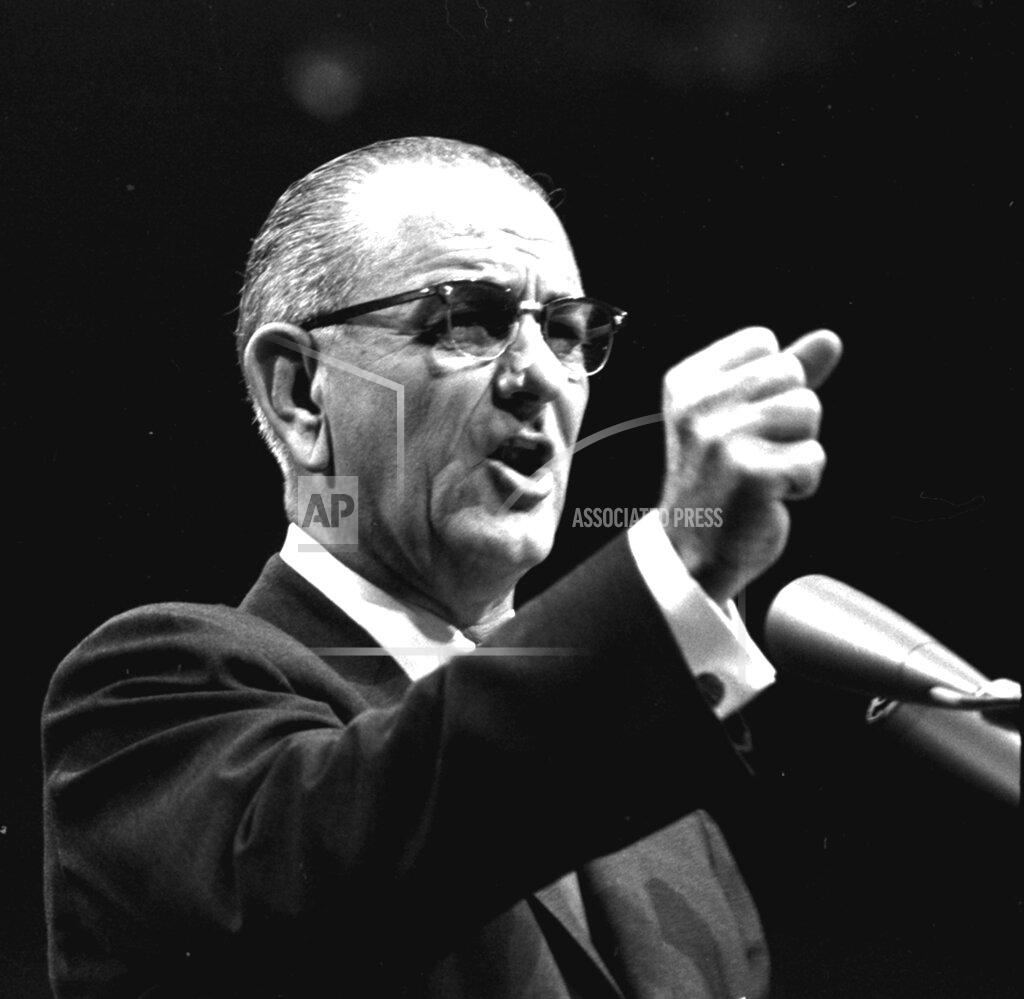
President Johnson said tonight that until late yesterday he had had no information of any kind that “had ever raised a question” about the personal conduct of Walter W. Jenkins, his friend and special assistant. The President made the statement, his first public comment on the Jenkins case, as he flew back here from a day of campaigning in New York. In effect, he was denying Republican allegations that he had covered up knowledge of Mr. Jenkins’s two arrests on morals charges. The disclosure of these arrests, yesterday has shaken the Johnson Administration and the Democratic Presidential campaign. Mr. Jenkins’s resignation as special assistant to the President was announced in New York last night after the disclosure of his police record. Mr. Johnson also disclosed in his statement tonight that he had requested the resignation of Mr. Jenkins.
The text of Mr. Johnson’s statement follows: “Walter Jenkins has worked with me faithfully for 25 years. No man I know has given more personal dedication, devotion and tireless labor. Until late yesterday no information or report of any kind to me had ever raised a question with respect to his personal conduct. Mr. Jenkins is now in the care of his physician and his many friends will join in praying for his early recovery. For myself and Mrs. Johnson I want to say that our hearts go out with the deepest compassion for him and for his wife and six children — and they have our love and prayers. On this case as on any such case, the public interest comes before all personal feelings. I have requested and received Mr. Jenkins’s resignation. Within moments after being notified last night, I ordered Director J. Edgar Hoover of the F.B.I. to make an immediate and comprehensive inquiry and report promptly to me and the American people.”
Mr. Hoover, the director of the F.B.I., said today that President Johnson had ordered the bureau to make a full investigation of the circumstances in the Jenkins case. Mr. Hoover said the inquiry was under way.
The Walter W. Jenkins case inspired high hopes in the camp of Senator Barry Goldwater yesterday and dismay among supporters of President Johnson. But by nightfall, reports from Moscow that Premier Khrushchev has been replaced led many political observers to speculate that the possible anti‐Johnson impact of the Jenkins disclosure might be nullified by the effect of an international crisis upon the voters. A leading Republican put it this way: “That Lyndon Johnson is lucky. The arrest of his man Jenkins accented the whole Bobby Baker corruption mess, which is Barry Goldwater’s strongest issue. But then comes this Khrushchev thing, taking the headlines and accenting Barry’s greatest weakness, international affairs and the ‘trigger happy’ charge.”
Two Washington lawyers, close friends and unofficial advisers of President Johnson, sought yesterday to influence the handling of the Walter W. Jenkins case by newspapers here. One editor said that the lawyers, Clark Clifford and Abe Fortas, made “what I regarded as a plea” against publishing an article about Mr. Jenkins’s arrest on disorderly conduct charges. Mr. Clifford and Mr. Fortas paid calls during the day on editors of The Washington Evening Star, The Washington Daily News and The Washington Post. Affirming the visits, Mr. Clifford said he and Mr. Fortas had not been acting in any way on behalf of President Johnson but on behalf of Mr. Jenkins, a close friend.
He said they had made no specific plea to the editors to withhold the news but engaged, rather, in a general discussion of whether the facts were well enough established for printing and whether additional information should not be sought. The Star and The News, which are afternoon papers, did not publish anything about the case in yesterday’s editions. The Post carried an account this morning, and the two other papers did so this afternoon. Spokesmen for The Star and The News said they had the facts yesterday but decided not to publish them. A spokesman for The Post said a decision had not been reached by that paper until United Press International carried the news on its wires shortly after 8 PM.
Senator Barry Goldwater has indicated he will not seek to make a campaign issue of Walter W. Jenkins. But he said he would not hesitate to talk about any breach of security the case might involve. A source familiar with the Republican Presidential candidate’s views reported those sentiments today. The source said Mr. Goldwater’s instincts were to keep his mouth shut about Mr. Jenkins, who was arrested on a morals charge and resigned as a special assistant to President Johnson. It appeared that, despite an official silence, Mr. Goldwater and his staff regarded the Jenkins case as the most important development of the campaign. It also appeared they had not really decided how to deal with the case over the remaining two and a half weeks before the election.
Representative William E. Miller of New York said today that President Johnson owed the American people an explanation of Walter W. Jenkins’s occupancy of “a position in one of the highest councils of our Government.” Mr. Miller, the Republican Vice‐Presidential candidate, said that “very, very serious questions” had been raised because Mr. Jenkins, special assistant to the President, “apparently was cleared for highly classified information.” Mr. Jenkins might have attended meetings of the Cabinet and of the National Security Council. Mr. Miller said. “If this type of man had information vital to our survival, it could be compromised very quickly and very dangerously,” he said. Mr. Jenkins resigned last night after the disclosure that he had been arrested on morals charges last week and in 1959.
Richard M. Nixon demanded today that President Johnson tell the American people immediately all that he knows about the morals charges placed against a key Presidential aide who resigned last night. The former Vice President, campaigning in Indiana for the Republican national ticket, asked why Mr. Johnson’s “two closest associates” had turned out to be “bad apples.” He said that Americans would “not stand for immorality in the White House.” Mr. Nixon alluded in a Courthouse Square‐speech to the disclosure that Walter W. Jenkins, a special assistant to the President and a Johnson aide for 20 years, twice had been arrested on morals charges. He was also alluding to Robert G. Baker, former Secretary to the Democratic Senate majority, whose business affairs are under Senate scrutiny.
The Administration was surprised but not alarmed by the change of leadership in Moscow today. Analysts of Soviet affairs were almost unanimous in the view that Premier Khrushchev had suddenly been forced to step down for reasons of personality and policy, not merely age and health. But the survival and promotion of prominent Khrushchev lieutenants, officials said, seemed to preclude any radical policy changes in the near future, at least in East‐West relations. In New York, President Johnson said that the shift in the Kremlin “may or may not be a sign of deep turmoil or a sign of changes to come.” He commented at the end of his prepared remarks at a Liberal party rally. “For ourselves, the need is clear — we should keep steady on our goals,” he said. “Peace is the mission of the American people and we are not about to be deterred. We will be firm and restrained. We can meet any test but our quest is always for peace.”
President Johnson characterized Senator Barry Goldwater last night as one of, “a few lonely voices” whose principles would endanger the safety of the country and the world’s hopes for peace. In a television broadcast, he hailed the signing of the nuclear test‐ban treaty a year ago as “a momentous step along the road to peace.” He said, however, that had the country listened to Senator Goldwater, who Voted against the treaty, “we would have continued the upward spiral of tension and danger and the contamination of the world around us.” The speech was taped a week ago, and was televised nationally over the CBS‐TV network.
Rumors of impending changes in the Kremlin swept Wall Street yesterday. By 1:30 PM a rolling tide of uneasiness had driven prices on the New York Stock Exchange to their deepest loss since the assassination of President Kennedy last November 22. Trading volume ran to 6.5 million shares, well below the record of 14.7 million shares churned up in the big market break of May 29, 1962, but much of it came in a concentrated burst after the noon hour. By 2:30 PM the tape lagged 27 minutes behind activity on the floor of the stock exchange. Many brokers felt yesterday’s market break followed a classic pattern. As one diagnosed it, the small investors were doing much of the selling. “They can’t see anything, they can’t touch anything and they’re nervous. They’re selling and the professionals are bargain‐hunting,” he observed.
The TFX, the plane that launched 3,000 pages of Congressional inquiry, was rolled out the factory door into public view today. The twin‐jet plane, which has revolutionary movable wings and now is called the F‐111, is scheduled to make its first flight by the end of the year. The rollout ceremony was attended by a dais full of civilian and military dignitaries, headed by Secretary of Defense Robert S. McNamara. Mr. McNamara has been at the center of the political storm that has enveloped the F‐111 program since his office overruled the unanimous judgment of top military officers in choosing the company to make the plane. Today, finally able to introduce the plane itself into evidence, the defense chief said to the public jury: “The plane is the greatest single step forward in combat aircraft in several decades.”
[Ed: LOL. The turkey will eventually become an outstanding strike aircraft. But there “is not enough thrust in all of Christendom” to ever make it a capable carrier fighter. Bean counter Bob should have kept his mouth shut.]
Craig Breedlove’s jet-powered car Spirit of America, set a new world record for fastest speed on land, as he became the first person to drive an automobile at more than 500 miles per hour. Racing on the Bonneville Salt Flats in Utah, he averaged 526.26 miles per hour (almost 847 kph); the previous mark of 468.72 mph had been set only two days earlier. On his way back down the 10-mile Bonneville track, however, Breedlove deployed the parachute that was supposed to stop his car after it completed one mile, and, in his words, “It ripped to shreds, I was going so fast.” He coasted for two more miles and tried the second parachute, and it ripped as well. He then pushed on the disc brakes and left skid marks of 6 miles (9.7 km) long until they burned out, and was still at 350 miles an hour as he reached the end of the track; he continued three more miles, striking two telephone poles, skidded sideways into a dike, went airborne for 30 feet and landed in 18-foot deep waters— and walked away, uninjured.
At the Summer Olympics, Yelena Gorchakova of the Soviet Union shattered the women’s world record for the javelin throw with a mark of 62.40 meters (204 feet, 8½ inches), beating the old record of 59.78m (196′ 1½”).
Soviet rower Vyacheslav Ivanov wins his third consecutive Olympic men’s single sculls gold medal at the Tokyo Games; also the reigning World and European champion.
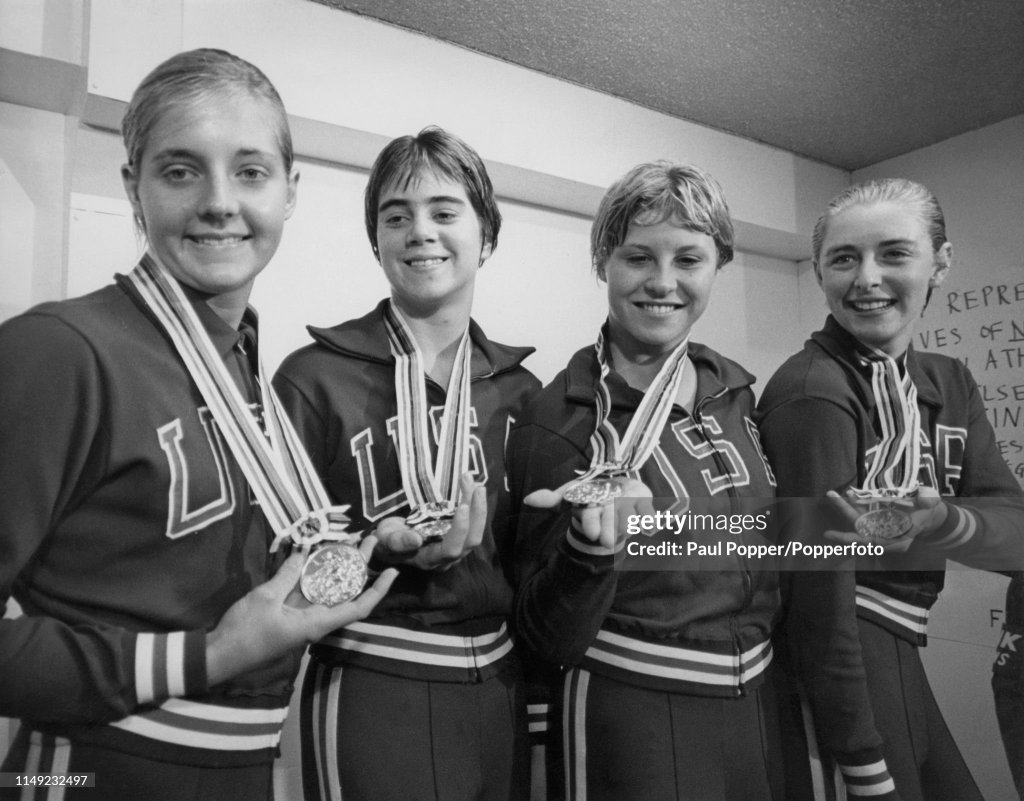
US women’s 4 x 100m freestyle relay team of Sharon Stouder, Donna de Varona, Lillian Watson & Kathy Ellis swims world record 4:03.8 to beat Australia by 3.1s and win the gold medal at the Tokyo Olympics.
American Al Oerter wins his third of 4 consecutive Olympic men’s discus titles at the Tokyo Olympics; beats Czech Ludvík Daněk by 0.08m.
American Don Schollander swims a world record 4:12.2 to win the 400m freestyle gold medal at the Tokyo Olympics; second of Schollander’s 4 gold medals at the Games.
Australian swimmer Ian O’Brien sets world record 2:27.8 to beat Soviet Georgy Prokopenko by 0.4s and win men’s 200m breaststroke gold medal at the Tokyo Olympics.
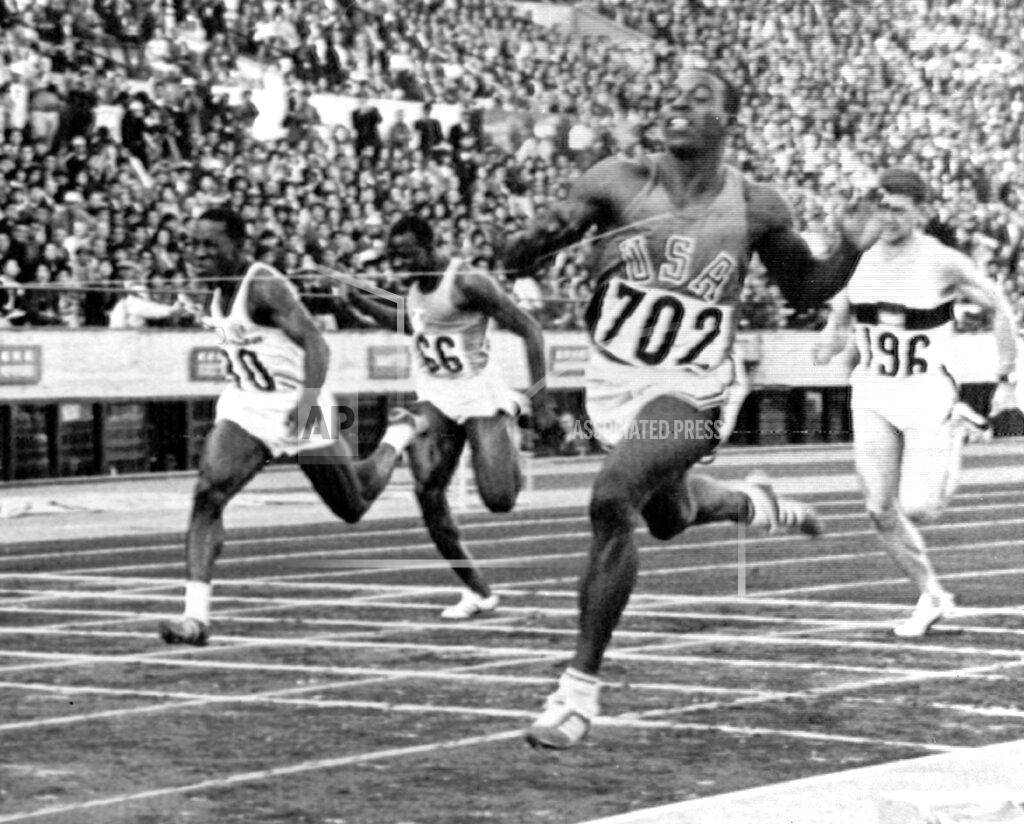
American sprinter Bob Hayes equals world record 10.0s to beat Cuba’s Enrique Figuerola by 0.2s and win the men’s 100m gold medal at the Tokyo Olympics.
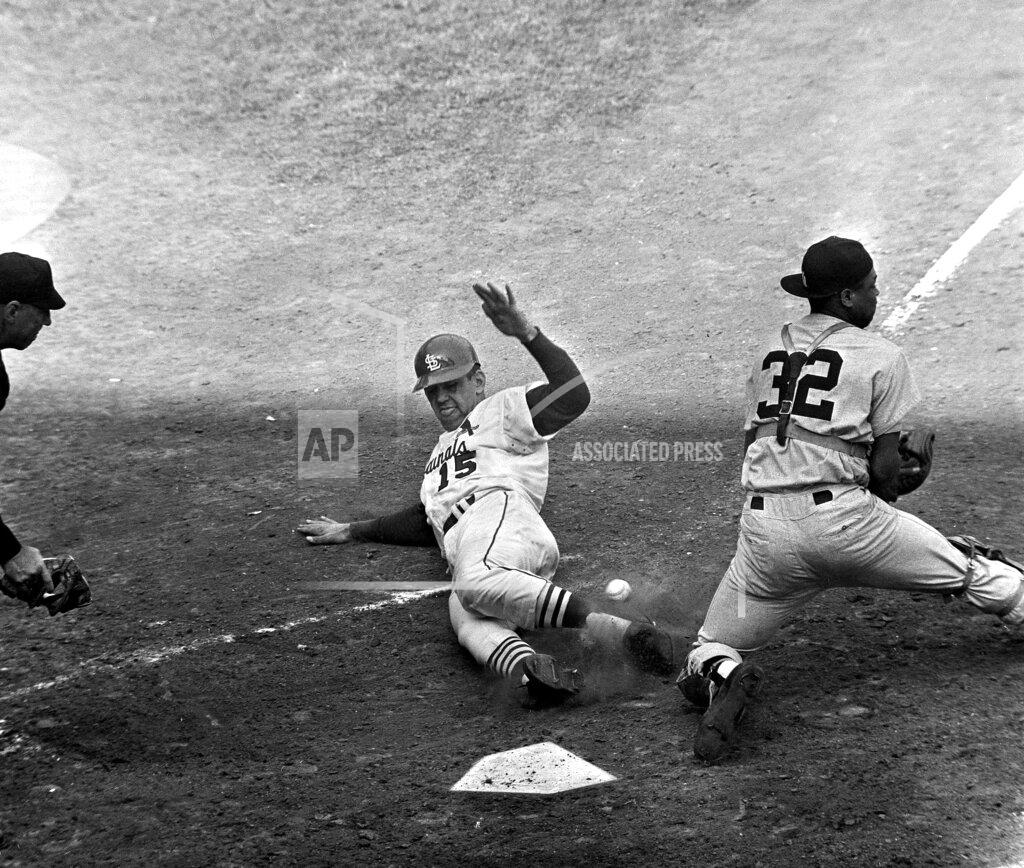
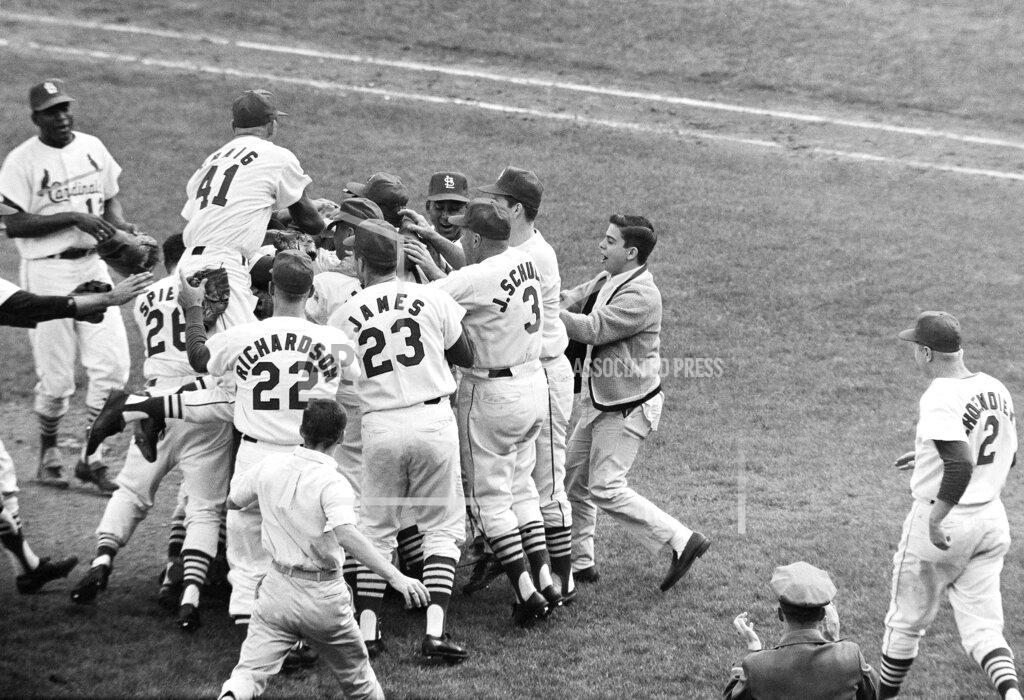
The St. Louis Cardinals defeated the visiting New York Yankees, 7–5, to win the World Series in seven games, ending the Yankees’ long run of successes. “Something had to give” in Game 7, as the Yankees had lost back-to-back World Series only once (to the New York Giants in 1921–22), and were in danger of doing so again, having lost to the Dodgers in 1963; and the Cardinals had never lost a World Series Game 7.
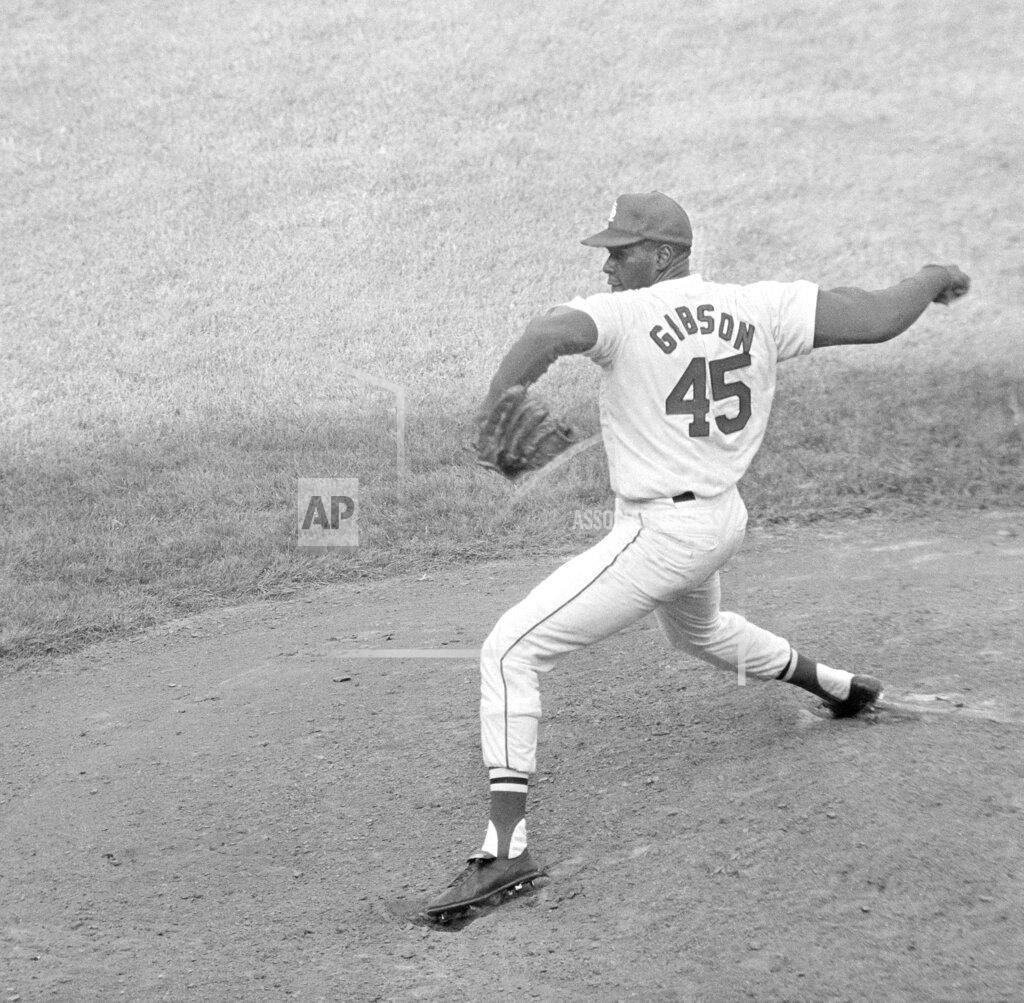
Bob Gibson pitched his third start in this Series on two days rest. He was tired but deliberately worked fast to hide his fatigue from the Yankees. In the bottom of the fourth the Cardinals scored three times. Again the Yankees botched a double play when Linz’s throw to first went wide, and Bill White scored. McCarver then scored from third on a double steal. Al Downing came in for the fifth after Stottlemyre developed shoulder stiffness, and Lou Brock hit his first pitch for a home run. Two more runs made it 6–0.
Mantle cut the gap in half with a three-run homer in the sixth, adding to his own record for total home runs in the World Series. Ken Boyer responded with a home run in the seventh that pushed the lead to 7–3. Bobby Richardson broke a World Series hit record in the seventh with his 13th hit, later tied by Brock in 1968 and Marty Barrett in 1986. Gibson continued to tire, but manager Keane left him in. Ken Boyer’s brother Clete hit a home run for New York with one out in the ninth, making the score 7–4. Pinch-hitter Johnny Blanchard struck out. Linz hit another home run, pulling New York to within two, 7–5, but the next batter, Richardson, popped up to second baseman Dal Maxvill and the Cardinals won the Series.
Bob Gibson won the Series MVP award for his 2–1 record, 3.00 ERA, and 31 strikeouts in 27 innings pitched. Jim Bouton, pitching for the Yankees, started two games and won them both, compiling a 1.56 Series ERA. Six years later, he would write the classic baseball memoir, Ball Four. After the series, the Yankees fired manager Yogi Berra and replaced him with the Cardinal manager, Keane, who quit St. Louis due to his differences with Cardinal owner Gussie Busch. Yogi Berra would go on to join the New York Mets, the following season and be re-united with Casey Stengel as a player/coach.
Tim McCarver (who finished second in MVP voting to Gibson) batted .478 in the series and recorded 11 hits, 5 RBIs and a home run and scored 4 runs. The 1964 Cardinals were the only team between 1962 and 1972 to win the World Series when owning home-field advantage.
Game 7 was the last postseason game to be played at the first Busch Stadium, and the last such game to be played in St. Louis until 1967 (at Busch Memorial Stadium, which opened during the previous season), when the Cardinals defeated the Boston Red Sox to win their next world championship. The first non-World Series postseason games to be played in St. Louis occurred in 1982, when the Cardinals defeated the Atlanta Braves in the NLCS and the then-American League Milwaukee Brewers in the World Series. The Cardinals also ended their first season at the current Busch Stadium with a World Series win over the Detroit Tigers in 2006; the Yankees (then in their first season at the current Yankee Stadium) did the same thing in 2009 by defeating the Philadelphia Phillies in that year’s World Series.
After appearing in 15 World Series (winning ten) in the 18 seasons from 1947 to 1964, the Yankees went into decline as many of their stars either moved on to other teams or retired. They did not reach the World Series again until 1976, when they were swept by the Cincinnati Reds in four games, and next won a World Series in 1977, when they beat the Los Angeles Dodgers in six games.
Dow Jones Industrial Average: 868.44 (-6.74)
Born:
Roberto Vittori, Italian air force officer and ESA astronaut (Soyuz TM-34/33, Soyuz TMA-6/5, STS-134 [Endeavour]), in Viterbo, Lazio, Italy.
John Barfield, MLB pitcher (Texas Rangers), in Pine Bluff, Arkansas (d. 2016, shot in a dispute over a woman).
Rick Bayless, NFL running back (Minnesota Vikings), in Ramsey County, Minnesota.
Lisa Ullén, Korean-Swedish jazz pianist and composer, in Seoul, South Korea.
Died:
Cole Porter, 73, American composer and lyricist (“Anything Goes”; “Night And Day”; “I’ve Got You Under My Skin”), of kidney failure.
Games Slayter, 67, American engineer and inventor of fiberglass.
Nguyễn Văn Trỗi, 24, Vietnamese bomber, was executed by a firing squad after being convicted of a plot to assassinate U.S. Defense Secretary Robert McNamara in 1963.

 History Diaries