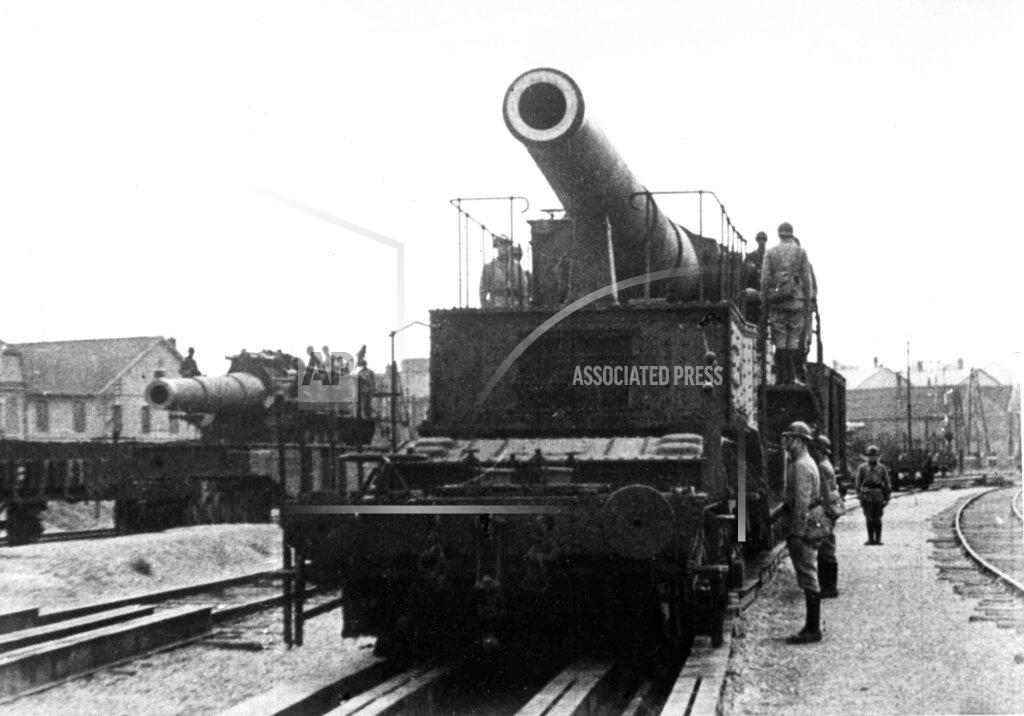
With the offer for peace rejected by the French on 7 October and by the British on 12 October, Germany announced that the western powers desired war, and Germany could not be blamed for military action on the German-French border.
On the Western Front, skirmishes are reported east of the Moselle River. French forces demolish three bridges over the Rhine River. Activity along the line dies down this day.
Difficulties in Danube River transport appeared tonight likely to slow up Rumanian shipments of oil and grain to Germany despite the anxiety of the Reich to secure these materials.
General Wilhelm List was named the commanding officer of the German 12th Army.
French Communist deputies stand by the peace note; five approve a call to accept Hitler’s terms.
In Bletchley, three people die when two express trains collide in the blackout.
A dissident Liberal group headed by David Lloyd George today criticized Prime Minister Chamberlain’s answer to German peace overtures and demanded that the government define its war aims and indicate a “willingness” to negotiate a war settlement.
Finland mobilizes citizens for duty. An emergency law is invoked after the Soviet demands are studied. After a study by officials here of the Soviet proposals to Finland, President Kyosti Kallio put into effect today an emergency law requiring national service by all civilians.
Soviet and Finnish representatives continue to meet to discuss border revisions.
The King of Sweden invites the sovereigns of Denmark and Norway and the president of Finland to a conference. King Christian of Denmark, King Haakon of Norway and President Kyosti Kallio of Finland will confer in Stockholm, Sweden, next Wednesday following an invitation from King Gustaf of Sweden.
In Lebanon, the Grand Mufti of Jerusalem, Haj Amin, escapes from French custody dressed as a woman.
German submarine U-47 penetrates defenses of British fleet base at Scapa Flow, Orkney Islands, shortly before midnight and attacks. Her initial spread of torpedoes causes no damage to battleship HMS Royal Oak and aircraft repair vessel HMS Pegasus. The surfaced U-47 fired off a salvo of three torpedoes, only one of which exploded when it hit an anchor chain, and U-47 remained undisturbed on the surface of the Fleet anchorage to reload torpedoes as October 13th ended and the 14th began.
Dispersed from convoy OB.17, the British steam merchant Stonepool was damaged by gunfire from the U-42 south of Bantry Bay, Ireland. The 4,803-ton Stonepool was carrying coal and general cargo. After ten minutes, the U-42 was forced to dive by the accurate returned fire, leaving the deck gun crew in the water. When the Germans surfaced again to pick up their men, the steamer sent distress signals which brought the destroyers HMS Ilex (D 61) and HMS Imogen (D 44). The U-42 was shortly thereafter sunk by the destroyers.
A straggler from Convoy OB.17, the British steam merchant Heronspool was torpedoed and sunk by the U-48, commanded by Kapitänleutnant Herbert Schultze, 260 miles southwest of Cape Clear in the eastern Atlantic Ocean (50°13′N 14°48′W). The survivors were picked up by the American passenger ship President Harding. The 5,202-ton Heronspool was carrying coal and was bound for Montreal, Quebec.
A straggler from Convoy OB.17, the French steam merchant Louisiane was stopped by gunfire and after the crew abandoned ship was torpedoed and sunk by the U-48 260 miles southwest of Cape Clear (50°14′N 15°05′W). One crewman died. The 6,903-ton Louisiane was carrying general cargo and was bound for Havana, Cuba.
The Norwegian coaster Gressholm struck a mine and sank in the North Sea 90 nautical miles (170 km) north west of Texel, North Holland, Netherlands ( 53°55′N 2°55′E) with the loss of three of her 11 crew. The survivors were rescued by the Finnish ship Emmi.
The U-40, commanded by Kapitänleutnant Wolfgang Barten, was sunk in the English Channel, in position 50.41,6N, by a mine. Of the ship’s complement, 45 died and 3 survived.
The U-42, commanded by Kapitänleutnant Rolf Dau, was sunk by depth charges from the destroyers HMS Imogen (D 44) and HMS Ilex (D 61) southwest of Ireland, in position 49.12N, 16.00W, after an unsuccessful attack on the British steam merchant Stonepool. Of the ship’s complement, 26 died and 20 survived.
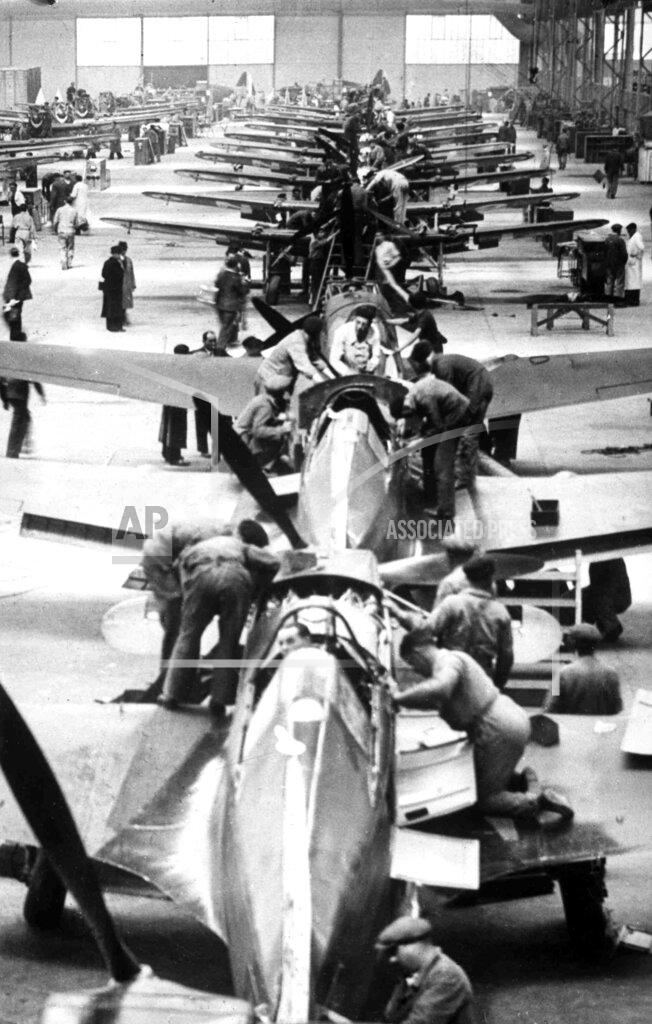
Royal Air Force No 66 squadron receives it first Spitfire.
U.S. freighters SS Iberville & SS Oakman are detained by British authorities.
The War at Sea, Friday, 13 October 1939 (naval-history.net)
Aircraft carrier FURIOUS sailed at 0140 from Scapa Flow for Loch Ewe, escorted by destroyers FEARLESS and FOXHOUND, and arrived later that day.
Light cruiser SOUTHAMPTON and destroyers MATABELE, JERVIS, JUPITER, JACKAL and JANUS departed Scapa Flow for patrol at 1016.
Light cruiser BELFAST arrived at Scapa Flow at 1500.
Light cruiser CALYPSO departed Scapa Flow for Northern Patrol, and arrived at Sullom Voe on the 20th.
Light cruisers DELHI and CALEDON arrived at Scapa Flow.
Convoy OA.19 of 13 ships departed Southend escorted by destroyers ELECTRA and ESCORT until the 17th, when they detached to convoy HG.3.
Convoy OB.19 departed Liverpool escorted by destroyers VANOC and WARWICK from the 14th to 16th.
U-40, which departed Wilhelmshaven on the 10th for her second war patrol, was mined and sunk at 0200 in the Dover Strait in the Folkestone-Gris Nez deep minefield. Thirty-eight crew including commanding officer Kptlt Wolfgang Barten were lost, with destroyers BRAZEN and BOREAS picking up three survivors and five bodies at 0945/13th, 9 miles 155° from the S Goodwin Light Vessel.
Destroyers ILEX and IMOGEN encountered U-48 on the surface 400 miles west of Land’s End at 1016, and drove her down with gunfire, but without inflicting any damage.
U-42, which departed Wilhelmshaven on 30 September for her first war patrol, damaged steamer STONEPOOL (4803grt) from dispersed convoy OB.17 with gunfire in 48 40N, 15 30W. The escorts had left to join inward convoy HX.3, but returned and counter-attacked. Destroyers IMOGEN and ILEX delivered the fatal attack, 290 miles SW of Fastnet in 49 12N, 16 00W at 1928. Twenty-five crew were lost and ILEX picked up three officers and 14 ratings. IMOGEN escorted the STONEPOOL to Barry, and both destroyers reached Plymouth on the 15th
U-48 sank French steamer LOUISIANE (6903grt) from dispersed convoy OB.17, 240 miles SW of Fastnet in 50 14N, 15 05W, with one crewman lost and survivors rescued by destroyer IMOGEN.
Destroyer KELLY, escorting a convoy in the English Channel, attacked and claimed to have sunk a submarine. She and sister ship KINGSTON arrived at Dover on the 15th.
Destroyer SABRE, at anchor at Rosyth, was rammed by armed merchant cruiser JERVIS BAY and sank to deck level. She was taken to Grangemouth for repairs, completing on 6 May 1940.
Destroyer AFRIDI, in company with GURKHA, attacked a submarine contact 3.4 miles 173° off Beachy Head. Salvage ship TEDWORTH conducted diving operations and discovered it had been a wreck.
Destroyer ECLIPSE, escorting convoy BC.9S from Quiberon Bay to Barry with sister ship EXMOUTH attacked a submarine contact off the Lizard, in 49-38N, 5-45W.
Anti-submarine trawlers BLACKBURN ROVERS (422grt) and GRIMSBY TOWN (422grt) attacked a submarine contact in 51-16N, 5-48W.
Patrol sloops PC.74, KINGFISHER and anti-submarine trawler LADY BERYL (417grt) were submarine hunting off Liverpool.
Norwegian steamer GRESSHOLM (619grt) was sunk by a mine 90 miles NW of Texel in 53 55N, 02 55E; three crew were lost and eight survivors rescued by Finnish steamer EMMI.
Convoy HG.3 of 25 ships departed Gibraltar escorted by destroyers KEPPEL and WISHART. After attacks on the 17th while it was only under aircraft protection, destroyers ELECTRA and ESCORT joined the convoy on the 18th from OA.19, leaving on the 19th with the Channel section of HG.3 after being relieved. Destroyer KEITH joined that same day, the 19th and stayed until the 21st. Before then, French destroyers LE TRIOMPHANT and LÉOPARD had been with the convoy from the 17th, arriving back at Brest on the 20th. Destroyers ACASTA, WAKEFUL and anti-submarine trawler LORD WAKEFIELD joined on the 20th and remained until the 21st, destroyer WREN joined the same day, and the convoy arrived at Liverpool, still on the 21st.
Aircraft carrier GLORIOUS, battleship MALAYA, destroyers BULLDOG and DARING were detached from the Mediterranean Fleet for operations in the East Indies, arriving at Aden on the 13th.
Heavy cruisers SUSSEX and SHROPSHIRE arrived at Simonstown after sailing from the Mediterranean via the Suez Canal.
Light cruiser DURBAN departed Simonstown for Mauritius.
New Zealand light cruiser HMNZS ACHILLES left Valparaiso to join Commodore Harwood on the South America Station. She refueled from British tanker ORANGEMOOR off Coquimbo on the 15th, passed the Straits of Magellan on the 19th and arrived in the Falklands on the 21st. Leaving on the 23rd after refueling; ACHILLES rendezvoused with heavy cruiser EXETER off Lobito Island on the 26th. They joined heavy cruiser CUMBERLAND on the 27th and all three operated together until 5 November.
President Franklin D. Roosevelt rejects a plea by Adolf Hitler for mediation between Britain, France and Germany. Any possibility that President Roosevelt might intervene as a peacemaker in Europe on the unofficial suggestions from Germany was dissipated today by the Chief Executive himself. He indicated clearly at his press conference that he had no disposition to act on the basis of evidently inspired press dispatches, and disclosed at the same time that he had received no official requests from the Berlin government or any other belligerents for his intervention in behalf of peace.
Although the President stood on the technical ground of lack of formal solicitation from Germany, Secretary of State Cordell Hull and other high officials have made it plain that this government will not put its hand into European hostilities as mediator unless and until approached by all the interested nations, if then. Aside from the caution that has modified the President’s humanitarian instincts in connection with any attempt at settlement of the European war, the Administration is faced with the political problem of repealing the arms embargo which, some officials feel, might be complicated by any activities on his part relative to present hostilities.
The realities of this situation were stressed early this week when mere unsubstantiated reports of intended peace overtures from this side of the Atlantic began to intensify the task of the Administration’s leadership in the Senate to bring the embargo repeal issue to an early vote. More by his silence than by what he had to say at his press conference, Mr. Roosevelt made clear his intention to make no move either through proffered mediation or otherwise unless called upon officially by one or all of the belligerent nations.
Asked for comment on Chancellor Hitler’s announced plan to begin the war “in earnest,” the President only smiled faintly and said he had nothing whatever to say on the subject. Apparently believing that some formal requests for his intervention may have been received here during the preceding twelve hours, a reporter reminded the President of his statement last Tuesday that no official proposal had been received and that he could not take official notice of inspired press dispatches from Berlin and asked if that statement still held good. Yes, the President replied. That is true.
Always reluctant to discuss international affairs at his press conferences, the President was even more so today. That he was aware of the gravity of the European picture since last midnight, when a German Government spokesman announced after conferring with Chancellor Hitler that President Roosevelt was the only one who could head off another “bloodbath” on the Continent, was taken for granted by his press conference.
Charles Lindbergh made another radio address in favor of American isolationism and questioned Canada’s right to be involved in the war. “We must protect our sister American nations from foreign invasion, both for their welfare and our own”, Lindbergh said. “But, in turn, they have a duty to us … We desire the utmost friendship with the people of Canada. If their country is ever attacked, our navy will be defending their seas, our soldiers will fight on their battlefields, our fliers will die in their skies. But have they the right to draw this hemisphere into a European war simply because they prefer the Crown of England to American independence?”
As a recent Gallup poll showed, Lindbergh’s position is incredibly popular at this time with the American public. In general, they do not want to get involved in a European war.
Also today in Washington, President Roosevelt said, at a press conference, that the United States note to the Soviet Republic on behalf of Finland was a personal communication to President Kalinin. The President also said that the Administration was considering use of a part of the national gold reserves for investments in Latin America and to aid in stabilizing the banking structure there.
The Senate, continuing debate on the neutrality bill, heard Senator Taft support, and Senator Nye oppose the program and recessed at 5:06 PM until noon tomorrow. The Temporary National Economic Committee continued hearings on practices in the oil industry.
The House heard Representative Celler urge that the United States hold Germany and the Soviet responsible for debts owed by Poland to this country, and Representative Woodruff speak on war profits, and adjourned at 7:49 PM until noon tomorrow.
Acting upon the direct advice of Vice President Garner, Administration leaders in the Senate were canvassing the possibilities tonight for compromise on the shipping and short-term credit provisions of the neutrality resolution as a way to hasten the final vote. The Vice President’s advice, which was confined strictly to tactics, was that the Administration grant any necessary concessions: short of surrendering the main goal of embargo repeal, in order to bring a quick conclusion of the matter in Congress.
Mr. Garner is understood to have urged this course upon the Senate leaders after they had failed today in their first attempt to limit debate, and before Colonel Charles A. Lindbergh re-entered the radio discussions with a four-point program of his own for maintaining America’s peace, including retention of an embargo on “offensive” armaments. While the floor managers were seeking a way to speed the debate to a close, Senator Taft, Republican of Ohio, supporter of the Administration in this instance, and Senator Nye of North Dakota, arch-critic of the Administration’s foreign policy, were presenting their views on embargo repeal. Senator Taft spoke for almost an hour, while Mr. Nye spoke for more than four hours.
Advice to hasten the vote was not new counsel for the practical-minded Vice President. He had stated it before, both to the Congressional leaders and to President Roosevelt himself. But he was reported to have renewed it with vigor today as new rumors reached the Senate of the possibly narrowing margin for embargo repeal in the House. After the leaders failed in their attempt to obtain an agreement on limitation of debate, they decided to hold a full session tomorrow and, probably, to begin longer daily meetings — from 10 AM to 5 or 6 PM — next week. A proposal for restricting the discussion, beginning next week, to one hour to each Senator on the resolution itself and one hour on each amendment was presented to the isolation forces by Senator Barkley, majority leader. The repeal opponents rejected it at a short meeting.
Senator Barkley was reported to have told one Senator, in urging a debate limitation agreement, that “many people” wanted to know when a vote could be expected. The Senator is said to have replied: “Just tell those ‘many people’ up at 1600 Pennsylvania Avenue (the White House) that the vote will come after debate is closed and not before.” Colonel Lindbergh’s radio address shared a place alongside the Senate speeches of Senators Taft and Nye. Among other things, it cleared away a question as to the famous aviator’s actual position on embargo repeal.
President Franklin D. Roosevelt issued a proclamation that made it illegal for submarines from certain countries to enter U.S. ports. The proclamation prohibited submarines from France, Germany, Poland, and the United Kingdom, India, Australia, Canada, New Zealand, and the Union of South Africa from entering US ports. The only exceptions were submarines from these countries that were forced to enter by chance or unavoidable accident.
A former Communist, Maurice L. Malkin of New York, testifies to the Dies House Un-American Activities Committee that Red workers spy on U.S. factories for the Soviet Union. One example given was the Brooklyn Navy Yard.
General Motors will hold an exhibition of their 1940 models today in New York.
Alfred Hitchcock movie “Jamaica Inn” is released, starring Charles Laughton. It is about an orphan who learns that her guardians are pirates and bandits.
Eighty-seven Japanese planes bombed four West China centers today. Nanchwan, fifty miles southeast of Chungking, was attacked by eighteen planes, which are reported to have destroyed a third of the city. Huge fires spread rapidly and were still raging tonight. The New Life Movement rushed doctors and medicine to the city, which has no hospital. Thirty-six planes bombed Liangshan, northeast of Chungking; eighteen attacked Yuanling and fifteen attacked Chenchi. Both towns are in West Hunan. The damage was not reported. Sian, the capital of Shensi Province, was raided yesterday for the third successive day. The destruction was reported to have been “not extensive.”
China’s defenders declared tonight that they had capitalized on the collapse of the Japanese offensive in Hunan Province by pushing the invaders northward in Hunan, Kiangsi and Southern Hupeh to the lines Japan held before the campaign began more than a month ago. The immediate objective of the Chinese push is the recapture of Yochow, middle Yangtze Valley stronghold, which is the gateway to Hunan Province. The Japanese have held the city for nearly a year. The Japanese, silent on Chinese assertions of big gains, concentrated on air attacks in Shensi Province in the northwest, bombing Sian, the capital, for the third successive day and reporting that army and navy planes had joined in extensive raids on Chinese communication lines.
Missionaries estimated the three-day casualties in Sian at about 1,000, but said the toll would have been much greater except for the habit of the residents, who leave the city each dawn, sleep in the fields and return at night to conduct their business affairs. Japanese officials reported in Shanghai that railway stations were destroyed by bombers in the cities of Hwahsien and Weinan, east of Sian, cutting communications with the capital. They said army planes heavily bombarded a Chinese military academy, which they had discovered south of Sian through their intelligence service.
Chinese press dispatches asserted the Chinese troops were sweeping northward through Hunan Province toward Yochow, where Tungting Lake meets the Canton-Hankow Railway, and alleged that the Japanese garrison at Yochow was loading military stores on warships in preparation for retreat. They also reported the recapture, on the north bank of the Yangtze, of Hwangmei, which the Japanese took sixteen months ago almost at the start of the Yangtze Valley invasion. The Chinese said Japan had suffered 14,000 casualties in Hunan in the past four weeks.
Through the intervention of Premier Nobuyuke Abe, the dispute in the Foreign Office has been settled on terms that amount to complete victory for the 150 striking officials.
Australian newspapers warmly endorse British Prime Minister Chamberlain’s speech, which Premier R.G. Menzies announces was fully discussed in advance with Commonwealth officials, who strongly supported it.
Dow Jones Industrial Average: 150.85 (-0.49)
Born:
Melinda Dillon, American actress (Close Encounters; Slap Shot; A Christmas Story), born in Hope, Arkansas (d. 2023)
Larry Bowie, NFL guard (Minnesota Vikings), in Pike, West Virginia (d. 2012).
T. J. Cloutier, poker player, in Albany, California.
Died:
Ford Sterling, 55, American film actor.
Naval Construction:
The Royal Navy armed merchant cruiser HMS Moreton Bay (F 11) is commissioned. Her first commanding officer is Commander Edmund Mount Haes, RN.
 History Diaries