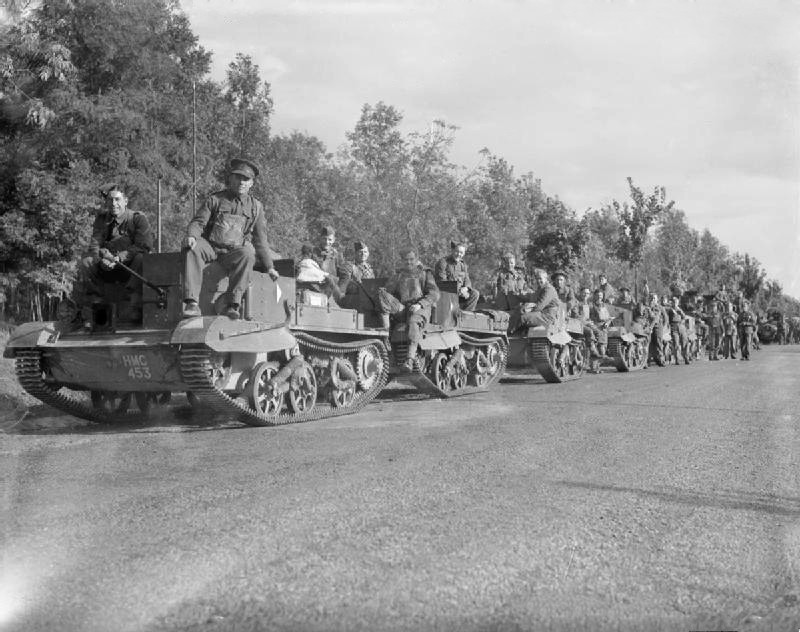
Heavy artillery duels and probing attacks on French outposts continue on the Western Front. Whatever may be the ultimate object, the German command continues to test the French defenses along almost the entire Western Front. Scouting parties, which it is sending out in greater number and with greater frequency, have been reported this week in almost every sector.
The radio station in Berlin, Germany reported the false rumor of the fall of the British government, and that the new government was to offer Germany peace terms. “Old women in the vegetable markets tossed their cabbages into the air, wrecked their stands in sheer joy and made for the nearest pub to toast the peace”, reported journalist William Shirer.
Ethnic Germans are being “returned” to Germany from the Baltic states.
Wilhelm von Leeb wrote a note to Walther von Brauchitsch and other German Army leaders, noting that Germany should not invade neutral Belgium due to moral reasons.
The War Office in London moves to increase weekly production of mustard gas from 310 to 1200 tons. Britain now has 158,000 troops deployed in France, according to the British Secretary of War, Leslie Hore-Belisha.
Secretary of War Baron Leslie Hore-Belisha reports to the House of Commons on the state of the BEF. Reporting to the House of Commons this afternoon, Leslie Hore-Belisha, Secretary for War, disclosed not only that a mechanized army of 158,000 men, together with 25,000 lorries, tanks and similar appurtenances of modern warfare had been sent to France in the five weeks following the outbreak of hostilities, but also that the garrisons in the Middle East and elsewhere had been “strongly reinforced” in both materiel and men.
His reference to reinforcements in the Middle East was especially interesting because it is in that sphere of the empire that Russia could be expected to attempt to create a diversion in the event her entry into the war on the Nazi side — an eventuality that appears to be becoming less likely as Russian diplomacy unfolds. Mr. Hore-Belisha did not elaborate on that part of his statement, the first he has made to the Commons on the part that the army is playing in the war.
Profiting by the successes and failures of other Ministers who have preceded him, the War Secretary spoke neither too extensively nor too briefly and both in phraseology and in delivery his speech was regarded as a success. The House interrupted several times to applaud, especially when he said that, while Britain had more than fulfilled her commitment to France regarding the size of the expeditionary force than could be sent in a specified time, the contingents already in France were not the last that would be sent there.
In a by-election in Clackmannan and East Sterling, the Labour Party candidate receives 15,645 votes, the Pacifist candidate only 1,060.
The Polish government-in-exile foreign minister, August Zaleski, consults with the British prime minister and Lord Halifax.
Meanwhile, a commercial agreement is signed by the British and Soviet governments by which timber will be imported in exchange for rubber and Cornish tin.
Communists oust their leader in Britain. The party, embarrassed by its switch to pacifism, deposes the general secretary, Harry Pollitt.
Albania will supply iron; asbestos, chrome, copper and tar are also available in the new Italian colony.
A Moscow anti-religious paper reports “liquidation” of Polish priests by Red troops. The Moscow newspaper Bezbozhnik [the Godless], organ of the anti-religious movement, indicated today that a large number of Roman Catholic and Greek Orthodox priests were “liquidated” when Soviet Russian troops marched into White Russia and the Western Ukraine in partitioned Poland.
Writing on the new Soviet-Lithuanian treaty for the transfer to Lithuania of the city and district of Vilna for mutual assistance, the newspaper Pravda asserts today that the Soviet policy is eliminating for one after another of the weak neighboring States the danger of attack by imperialist powers.
Russia demanded rights to establish airfields on Finnish territory from Finland as well as ceding of large amounts of Finnish soil; Finland rejected the demands.
U.S. President Franklin D. Roosevelt wrote to Soviet President Mikhail I. Kalinin of his hope that “the Soviet Union will make no demands on Finland which are inconsistent with the maintenance and development of amicable and peaceful relations between the two countries, and the independence of each.”
In large towns of Finland, machine guns and anti-aircraft guns are being mounted. Voluntary evacuations continue. Paasikivi arrives in Moscow.
Despite an official tendency to believe the worst these days, British Foreign Office experts and other careful students of Russian policy do not believe Joseph Stalin will force a war over Finland. [Ed: They are of course, Dead Wrong.]
Submarine rescue vessel USS Pigeon (ASR-6), driven aground at Tsingtao, China, by a severe typhoon on 31 August, is refloated.
U.S. passenger liner Iroquois arrives safely in New York harbor, having been accompanied for three days by Coast Guard cutter USCGC Campbell and Navy destroyers USS Davis (DD-395) and USS Benham (DD-397). Iroquois will later be acquired by the Navy on 22 July 1940 and will be converted to a hospital ship. As USS Solace (AH-5) she will play an important role at Pearl Harbor.
U.S. freighter Black Gull, detained by the British since 6 October, is released.
U.S. freighter Sundance is detained at London, England, by British authorities.
U.S. freighter Black Tern is detained at Weymouth, England.
The War at Sea, Wednesday, 11 October 1939 (naval-history.net)
Destroyer BEAGLE attacked a submarine contact in 51 17N, 01 42.7E.
Destroyers WINCHELSEA and WALPOLE with convoy KJ.1B attacked a submarine contact 11 miles from Great Ormes Head, later determined to be a wreck.
Convoy OA.18 of nine ships departed Southend and dispersed on the 17th, possibly escorted by destroyers MONTROSE and VIVACIOUS which departed Milford Haven on the 9th.
Convoy OB.18 departed Liverpool escorted by destroyers VERSATILE and MACKAY until the 14th.
Convoy BC.10F of troopship ULSTER PRINCE departed the Loire escorted by destroyers EXPRESS and ENCOUNTER, and arrived safely in the Bristol Channel on the 12th.
Three cruisers were on Northern Patrol duty, while light cruiser SHEFFIELD was on a special patrol between Iceland and Greenland.
Heavy cruiser DEVONSHIRE departed Alexandria for Malta, arriving on the 13th for repairs to her rudder, which were completed on the 21st. She left on the 24th and arrived back at Alexandria on the 26th.
Destroyers HARDY, HASTY, HOSTILE, HEREWARD and HERO departed Malta on the 2nd and Gibraltar on the 5th for duty with the South Atlantic Command at Freetown. HEREWARD and HERO, escorting liner ATHLONE CASTLE, arrived at Freetown on the 11th, while HARDY, HASTY, HOSTILE joined aircraft carrier ARK ROYAL and battlecruiser RENOWN in 11-50N, 21-00W, also on the 11th. These ships arrived at Freetown on the 12th and after replenishment put back to sea on the 14th for patrol duties.
Convoy Blue 4 departed Port Said with 29 ships on the 11th, escorted by destroyers DAINTY and DUNCAN. Minesweeper SUTTON brought two ships from Alexandria on the 12th to join the convoy. DUNCAN departed at 0545/16th to refuel at Malta and rejoined in the Malta Channel at 1415/16th with French destroyer KERSAINT.
DAINTY and minesweeper SUTTON left in the Malta Channel on the 16th, and DUNCAN and KERSAINT were relieved by destroyers GRAFTON and GALLANT on the 17th. The two G-class destroyers remained until the 18th when Mediterranean convoying was discontinued. The convoy arrived safely at Gibraltar on the 21st.
Destroyer DIANA arrived at Suez from Singapore to reinforce the Mediterranean Fleet.
Submarine SEAL, passing through the Mediterranean en route to the Home Fleet, escorted damaged destroyer GARLAND which was towed by netlayer PROTECTOR, from Alexandria to Malta where they arrived on the 11th. General submarine movements at this time follow:
Group 1, PORPOISE, CACHALOT, SEAL departed Malta on the 11th, escorted by PROTECTOR as far as Galita Island. PROTECTOR returned to Malta to meet Group 2, SEALION, SALMON, SHARK and SNAPPER and escorted them later the same day to Galita Island. Both groups reached Gibraltar on the 15th and left on the 16th for Portsmouth, with Group 1 arriving on the 20th and Group 2 on the 22nd.
SNAPPER went directly into dock with engine problems which had caused problems on passage from Gibraltar. Repairs completed on the 28th and she went to Sheerness for docking from 2 to 11 November. CACHALOT and SEAL were shortly sent to Halifax to escort convoys, while PORPOISE arrived at Chatham on the 24th for refitting.
SEALION, SALMON, SHARK were almost immediately deployed off the Dogger Bank on a patrol line, which ended on 4 November when they were ordered to Rosyth. SEALION, SALMON, SHARK, SNAPPER, along with SUNFISH, STERLET of the 2nd Submarine Flotilla and depot ship CYCLOPS, formed the 3rd Submarine Flotilla. The Flotilla was based at Harwich and began operations in late November.
Convoy HGF.3 departed Gibraltar with steamer NARKUNDA (16,632grt) the only ship in the convoy.
Petty Officer T E Clark was killed when his Sea Gladiator of 802 Squadron from aircraft carrier GLORIOUS crashed in Lake Maruit, Alexandria.
Heavy cruiser CORNWALL departed Colombo on patrol and arrived back on 3 November.
Light cruiser LIVERPOOL departed Bombay to search for German raiders in the Seychelles area, Amirante Group, and Providence, Farquhar, Aldabara anchorages. The patrol ended on 13 November when she arrived at Colombo.
Today in Washington, President Roosevelt addressed delegates to the postmasters’ convention from the south portico of the White House and held a number of conferences with Senators, Representatives and others on various phases of the pending Neutrality Act amendments.
The Senate continued debate on the neutrality resolution and recessed at 5:27 PM until noon tomorrow. The Monopoly Committee continued its study of the oil industry.
The House heard debate on the Administration’s neutrality and labor policies and adjourned at 1:27 PM until noon tomorrow. The Dies Committee heard W. G. Krivitsky, a former chief of the Soviet’s military intelligence service in Europe, testify regarding activities of Communists in the United States.
Debate in the Senate over repeal of the arms embargo took a sudden turn. toward bitterness today when Senator Clark of Missouri shouted that the Administration was resorting to “warlike” moves for the purpose of “inflaming the people and making them war-minded.” An element of candor, which likewise had been lacking in the debate, was furnished by Senator Burke of Nebraska, who put foremost among his reasons for supporting embargo repeal his hope and belief that it would aid the powers allied against “Hitlerism.”
Senator White of Maine threatened to vote against the Pittman resolution, embargo repeal and all, because of his fear that cash-and-carry commerce with belligerents would restrict exports from the United States to Great Britain and France at a time when they needed them most. While discussion was going on in the Senate, Administration leaders turned their attention to the House of Representatives, feeling from yesterday’s test vote on the Tobey motion that a safe majority for the Neutrality Bill could be counted upon in the upper chamber. In the House the lines were admitted to be tighter, so much so that some Administration leaders had begun to wonder if their hardest fight might not be ahead.
Meanwhile, a movement was gaining headway for a relaxation of the drastic curtailment of operations of the American merchant marine to be expected under the “carry” terms of the Pittman resolution. In making his charge of “warlike” moves on the part of the Administration, Senator Clark questioned the “limited national emergency” proclaimed by the President. He insisted that it was “a proclamation of national emergency without any limitations whatever.”
One of the most disquieting results of the proclamation, the Senator argued, was the order transferring control of the Panama Canal Zone from the Governor of the Canal Zone to the army. The code under which the order was issued, he continued, “shows that it vests authority in the President only when there is a state of war in which the United States is engaged or when war is imminent.”
“The Executive Order therefore amounts to a certificate by the President either that a state of war exists in which we are engaged or that war is imminent,” he said. But he contended that the activities of the War Department, and particularly of Louis Johnson, Assistant Secretary of War, were “far more dangerous” than anything done by the President, for they were “far more calculated to alarm and inflame our people; and perhaps deliberately intended for that purpose.”
Senators Gerald P. Nye of North Dakota and Rush Holt of West Virginia and Representative Francis Case of South Dakota appealed to an audience of about 3,200 persons in Carnegie Hall last night to do everything possible to bring about the defeat of the arms embargo repeal bill being debated in the Senate. The meeting was arranged by the Citizens National Keep America Out of War Committee, of which L. M. Bailey is director. Mr. Bailey said the committee was composed of the same persons who joined committees to defeat the court plan and the reorganization plan. In the manner in which it apportioned its applause, however, the audience showed a pro-Hitler leaning. When speakers denounced Britain and France — as they did — they were cheered, and when they denounced Hitler — as they did — the applause was considerably less in volume. Senators Nye and Holt repeated the isolationist argument. The sale of arms to the belligerents, they said, was the first step toward getting the United States into war. The ninety-day credit clause in the pending repeal bill was attacked as rendering the bill’s supposed “cash and carry” provision without meaning.
U.S. President Franklin D. Roosevelt received the Einstein–Szilárd letter. U.S. President Franklin D. Roosevelt had a meeting with Alexander Sachs, an economist and writer who had a friendly relationship with Roosevelt, where Sachs delivered and discussed a letter written by Hungarian émigré and physicist Leo Szilard and signed by German émigré and physicist Albert Einstein on August 2, 1939 warning of the importance of research on chain reactions and the possibility that this type of research might lead to developing powerful bombs. Roosevelt would establish the Advisory Committee on Uranium the next day.
The AFL is against the United States joining the war. They believe that the use of armed forces should be reserved in case of invasion only.
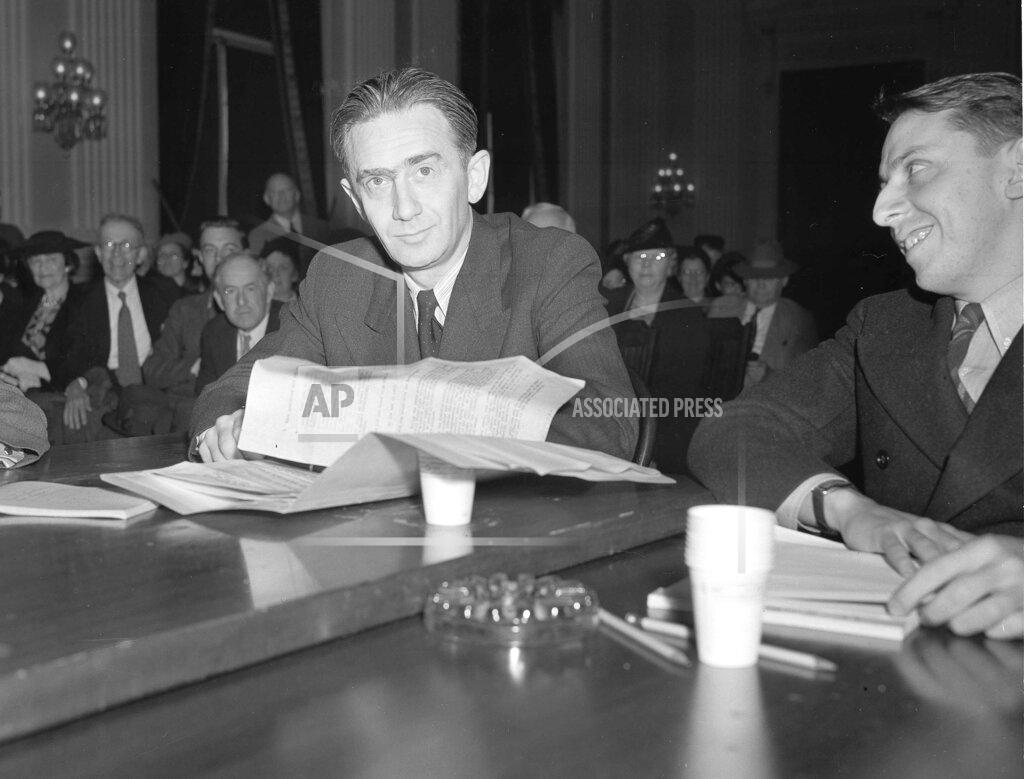
Communist parties in all parts of the world, including the United States, are merely agents of Joseph Stalin and his government of the Soviet Union, declared Walter G. Krivitsky, who described himself as the former chief of Soviet military intelligence in Western Europe, in testimony today before the Dies committee investigating un-American activities.
The committee, which has been seeking to prove that the American Communist party is merely an agent of Moscow, heard “General” Krivitsky, who said that he was born Samuel Ginsberg in the Western Ukraine in 1899, assert that agents of the Soviet secret police, the OGPU [later NKVD and finally KGB], were sent out by Moscow to see that Stalin’s wishes were carried out by Communist parties in other countries. Officials of local Communist parties and trusted party members aided in obtaining military and political information for the Soviet military intelligence and OGPU agents, he said. “Stalin gives his instructions to Communist international representatives,” the witness stated, adding that “of course he is the actual head of the Communist party in this country.”
On the basis of what he testified was his first-hand knowledge of the inside workings of Soviet espionage and party machinery in other countries, gleaned while on intelligence duty in Russia and abroad, the witness said that he had no hesitation in asserting that the OGPU “has its agents planted in all institutions, governmental and industrial,” of the United States. He added that the OGPU “undoubtedly has its agents in the army and navy” of this country. Questioned as to whether all members of the Communist party of the United States were required to give aid and assistance to the OGPU, the witness answered: “Yes, if they can meet the qualifications required by the OGPU and military intelligence.”
[Ed: Krivitsky would be found dead in 1941 in a hotel room with not one but three (!) suicide notes. It is very probable that he was actually murdered on Stalin’s orders.]
President Roosevelt appeals to the CIO for peace. He says the country wants an end to separation in the labor movement.
With all Detroit plants of the Chrysler Corporation and its subsidiaries already closed down or closing, Richard T. Frankensteen, regional director of the CIO and head of the Chrysler division of the CIO’s United Automobile Workers, announced today that a general strike vote would be taken in all Chrysler locals of the union in the next five days. The strike is threatened because the company has refused to arbitrate grievances which it says are trumped up for a show of force by the union. Almost 20,000 workers in the main Dodge plant went home again today for the fourth consecutive working day as the company reiterated its charges that a union-inspired slowdown made operations impossible. More than 30,000 were idle in other plants because of a shortage of materials customarily supplied by the Dodge plant.
Speaking before an audience of 15,000 Polish-Americans last night, former President Herbert Hoover declared that Poland was not dead and would rise again.
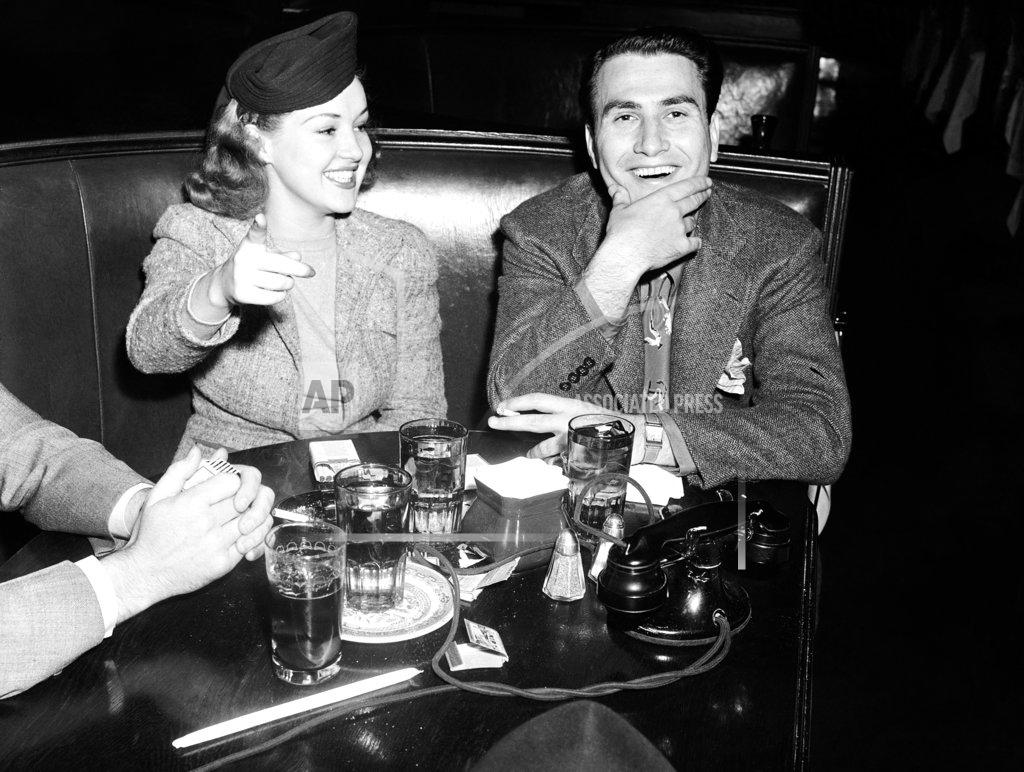
Actress Betty Grable and actor Jackie Coogan divorce. Grable states that Coogan was quarrelsome, adversely affecting her acting career, and that he once sold their furniture to buy a car to leave town.
Robert G. Elliot, New York executioner, dies. He executed nearly 400 people during his career, the most notable being Bruno Richard Hauptmann, the convicted kidnapper and murderer of Charles Lindbergh’s baby.
The NAACP organized its Legal Defense & Education Fund.
The U.S. Navy’s budget for the fiscal year 1941, delivered to the Bureau of the Budget yesterday, is one of the largest, if not the largest, in the peacetime history of the United States. Congress voted to the navy for the current fiscal year $773,049,151, a peacetime peak. For the fiscal year 1941 the total is expected to be more than $900,000,000, depending in part at least on world conditions when the bill comes up early in the regular session of Congress. The principal item in the appropriation for the fiscal year beginning next July 1 will be for naval replacements, that is, new fighting craft, battleships, cruisers, destroyers and submarines, and for continuing construction of ships now building.
Samson Raphaelson’s play “Skylark” starring Gertrude Lawrence premieres in NYC.
Bucky Harris signs to manage the Washington Senators again.
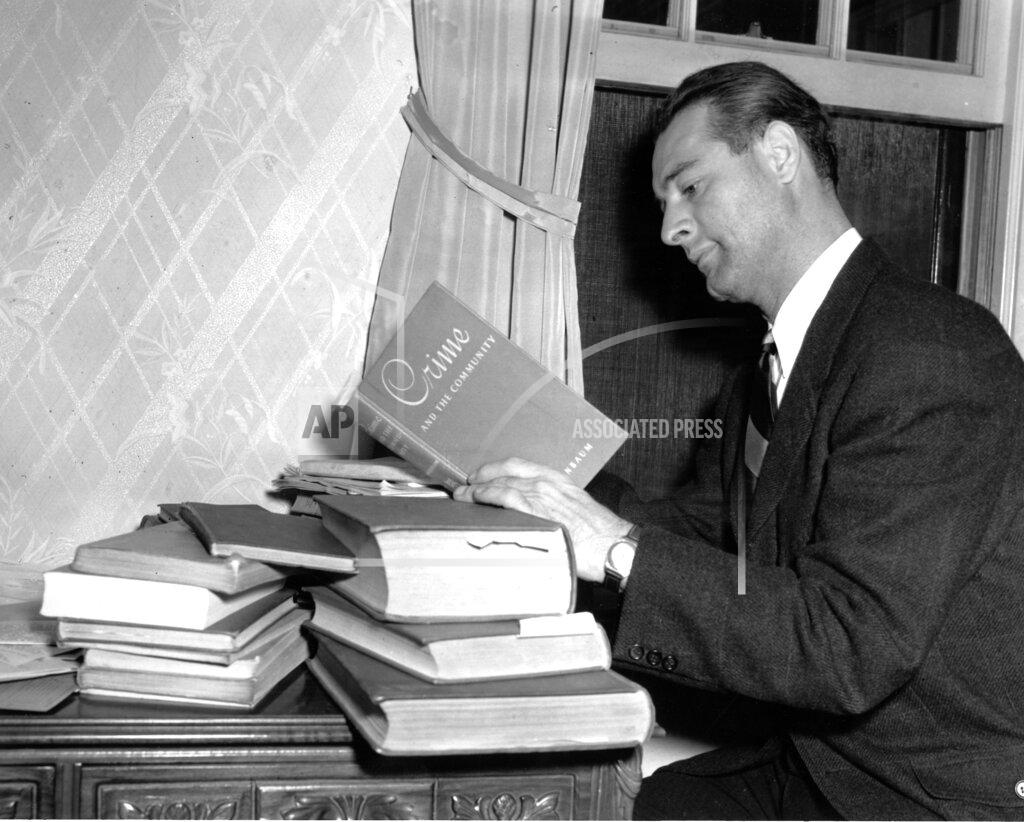
Lou Gehrig is appointed New York City Parole Commissioner by Mayor Fiorello LaGuardia.
In Los Angeles, Bob Feller is paid $2,000 to pitch against the Philadelphia Colored Royal Giants. Feller fans 14 in 7 innings and leaves with the score, 2–2, after which the Royal Giants score 3 to win, 5–2, with Terris McDuffie winning over Lee Stine.
Japanese in China hold a U.S. Marine. Repercussions are feared. Two Japanese railway policemen were wounded today by two United States marines in an altercation that American naval authorities feared might have serious repercussions in the relations of the armed forces of the two powers in China. Both Japanese and American officials maintained tight-lipped silence on the incident, the first to develop since Admiral Thomas C. Hart succeeded Admiral Harry E. Yarnell as commander of the American Asiatio Fleet. It was learned, however, that the Japanese considered it to be of a “serious nature.”
Marcell Szymansky, a private in the marines, was held by the Japanese police. Another marine, identified as John V. Armonia, was said to have left the scene after the clash, in which one Japanese was wounded in the thigh when he drew a sword. The other Japanese was struck on the head with the butt of a revolver. The difficulty developed while the marines were standing guard over freight cars containing supplies on a siding near Tientsin. Two investigations were under way by American officials; one by Admiral Hart and the other by a board named by Lieutenant Colonel William G. Hawthorne, marine commander. Railway police in the Tientsin area are under direction of the Japanese forces occupying North China. The United States maintains two marine companies each in Tientsin and Peiping.
Unconfirmed reports from Tientsin reporting a clash between United States Marines and Japanese caused tension in Shanghai this afternoon. One report was that two marines were engaged in an altercation with members of a Japanese naval landing party. Another version declares the clash occurred between the marines and the Chinese police service under the puppet Japanese-sponsored regime. American marine, naval, and consular circles were not informed and Japanese sources reported ignorance of details of the supposed affair. Semi-official British sources at Tientsin report the affray occurred at a railway station between two United States marines from Peiping guarding a shipment of freight. One is declared to have shot a Chinese police officer, inflicting a serious thigh wound, then escaped and reached his barracks. The other marine was arrested and is still held incommunicado by puppet officials.
The Chinese push forward in a Hunan attack, and report that the counteroffensive has regained territory held by the Japanese for nearly a year. Initial success for a Chinese counter-offensive against Japanese forces in Hunan Province was reported today by Chinese dispatches that said the attack was being carried into territory held by Japan for almost a year. Chinese said they were attacking Japanese forces on the outskirts of Yochow, gateway to Hunan Province from the Yangtze River. Yochow is eighty-eight miles north of Changsha, Hunan capital, from which Japan’s columns were thrown back last week.
All territory lost to Japan in the last two weeks was reported to have been regained by the Chinese, with additional areas on the Hankow-Canton Railway north of Changsha. A Japanese offensive against Changsha, launched shortly after Japan reached an armistice with Russia in fighting on the frontier of Manchukuo. failed after having reached the outskirts of the city. Semi-official Japanese dispatches saying that “the Japanese temporarily have halted their campaign to prepare for their next attacks” lent credence to the Chinese claims. A Chinese Army spokesman said the Hunan campaign had cost the Japanese more than 30,000 dead, and the Chinese more than 20,000. The Japanese asserted, however, that a “fatal blow” had been dealt to 400,000 Chinese troops in the Hunan region.
Japanese announcements said that four successful air raids had been carried out on Sian, capital of Shensi Province, which the Japanese described as the pivotal point in shipping Russian arms into China. The Japanese said freight cars had been blown up, a railway station set afire and military establishments damaged by the Sian raids. The Japanese Army announced that its forces had withdrawn from Chungshan, the birthplace of the founder of the Chinese Republic, Dr. Sun Yat-sen, “as a mark of respect” for his memory. An army spokesman said that if the town again became a base of anti-Japanese operations a still more effective blow would be dealt.
All secretaries and section chiefs of the Japanese Foreign Office, numbering 113, have resigned, Tatsuo Kawai, the Foreign Office spokesman, joined them, but the other bureau chiefs remain at their posts.
Dow Jones Industrial Average: 151.34 (+0.68)
Born:
Maria Bueno, Brazilian tennis player (7 Grand Slam singles titles), in São Paulo, Brazil.
Austin Currie, politician, in Dungannon, Northern Ireland, United Kingdom (d. 2021).
Franklin Sonn, South African union leader (South African workers), in Vosburg, South Africa.
Naval Construction:
The Royal Navy Bangor-class (Turbine engined ) minesweeper HMS Ilfracombe (J 95) is laid down by William Hamilton & Co. (Port Glasgow, Scotland); completed by Whites M.E.
The Royal Navy Flower-class corvette HMS Clematis (K 36) is laid down by Charles Hill & Sons Ltd. (Bristol, U.K.); completed by Richardson, Westgarth & Clark.
The Royal Navy Hunt-class (Type I) escort destroyer HMS Cotswold (L 54) is laid down by Yarrow Shipbuilders Ltd. (Scotstoun, Scotland).
The U.S. Navy submarine tender USS Griffin (AS-13), first of her class of 2, is launched [as SS Mormacpenn] by the Sun Shipbuilding & Drydock Co. (Chester, Pennsylvania, U.S.A.).
The Sjøforsvaret (Royal Norwegian Navy) Sleipner class destroyer HNoMS Balder is launched by the Horten Navy Yard (Oslo, Norway). Balder was fitting out at Horten. She was captured by the Germans on 10 April 1940. She was commissioned by the Kriegsmarine on 26 July 1940 as Leopard.
The Royal Indian Navy auxiliary patrol vessel HMIS Haideri is commissioned. Her first commanding officer is T/Lieutenant Alexander Begg Kelly, RINR.
The Royal Canadian Navy patrol vessel HMCS MacDonald (Z 07), acquired from the RCMP, is commissioned. Her first commanding officer is Lieutenant Albert Rudolph Ascah, RCNR.
The Royal Navy armed merchant cruiser HMS Cathay (F 05) is commissioned. Her first commanding officer is Captain (Retired) Bertram William Lothian Nicholson, DSO, RN.

 History Diaries