
The U.S. House of Representatives narrowly defeated a compromise measure that would have enabled the President to delay until December 15 a cutoff of military aid to Turkey. After the 187 to 171 vote, Republican congressional leaders said that the President would definitely veto a resolution continuing appropriations for foreign aid, which contains the disputed provision suspending aid to Turkey.
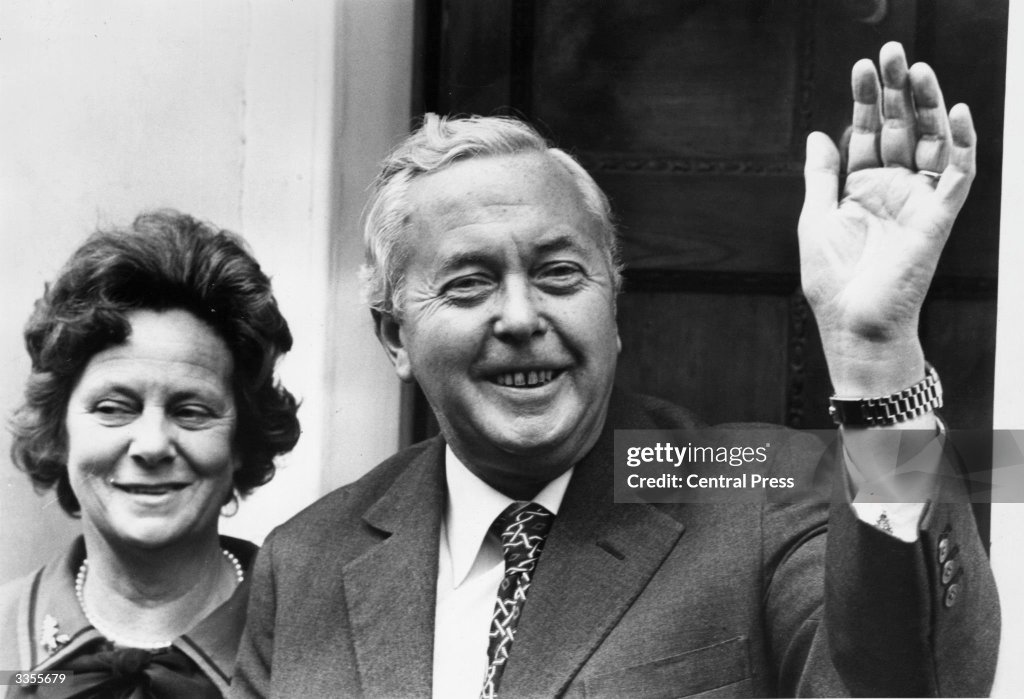
British Prime Minister Harold Wilson and his Labor party have been returned to power by the voters but by a margin far short of the seats Mr. Wilson had hoped for in the 635-member House of Commons. Final returns from Britain’s second general election in eight months showed Labor with a bare three-seat majority over the combined strength of Conservatives, Liberals and other parties.
Three bombs exploded tonight in two London military clubs, sending scores of men and women in evening dress fleeing into glass‐strewn streets. One person was injured. The police said no warning had been given of the blasts, two of which caused superficial damage at the Victory Club for ex‐servicemen, off Edgware Road near Marble Arch, and another which ripped to pieces a lounge in the exclusive Army and Navy Club in Pall Mall. The police declined to speculate on who may have been responsible for the explosions, which followed blasts last Saturday in Guildford, Surrey, south of here, in which five persons were killed and 65 were injured in two bars frequented by off‐duty service personnel. At the Army and Navy Club, every pane of glass on the ground floor was shattered and curtains were blown into the street. A spokesman for the police said the room where the bomb had been planted had been demolished. Several small fires were quickly extinguished and dozens of members and guests, were evacuated.
At the Victory Club a man was slightly injured when two bombs went off inside the building. The club was packed at the time when veterans of both World Wars. A club member said later: “The explosions were about five seconds apart. There was absolutely no warning. The ceiling of the entrance hall came crashing down and one of the lights was blown on top of us.” Tonight’s blasts were the latest in a series aimed at British servicemen. Last weekend there was the Guildford attack. In February 12 persons died and more than a dozen were injured when a bomb exploded aboard a bus carrying service personnel to a camp in Yorkshire.
The Protestant voters of Northern Ireland expressed their determined opposition to sharing power with Roman Catholics by returning to office all but one of their candidates in the British elections. Of the 12 seats allocated to the province in the British Parliament, the Protestants won 10, a loss of one. The main Catholic grouping, the Social Democratic and Labor party, though it polled well, won only one seat. The Protestant coalition —known as loyalists because of their professed loyalty to Ulster’s union with Great Britain —could scarcely have been expected to improve on its performance in February. Nevertheless, all but one of its candidates increased their margins of victory.
The Soviet leader, Leonid Brezhnev, has urged that the Middle East peace talks in Geneva be reconvened at the earliest date, contending that further delay would mean sitting “on a powder keg which might blow up at any moment.” He charged that Israel and “her traditional foreign patrons” were trying to evade the resumption of such negotiations.
The Soviet Union has repeatedly rejected requests that United States newsmen be permitted to view the launching of Soviet astronauts during next year’s joint space effort. But Russian newsmen will be able to view the liftoff of the American astronauts from Cape Canaveral. Space agency officials who recently completed negotiating press policy for the historic mission said the Russians had refused to budge on the issue of opening their launching site United States reporters. “However, I don’t think we should change our open policy and specifically ban Russian correspondents from the Cape even if ours can’t go to Baikonur,” said John P. Donelly, the chief United States negotiator, Mr. Donnelly is the National Aeronautics and Snace Admimission from lift‐off to splashdown, something they have never done before. But reporters wishing to cover the flight in the Soviet Union will have to do so from a press site at the Intourist Hotel Moscow.
In a sweeping attack on the Western press, a senior Soviet commentator has charged major American, British, French and West German newspapers —and especially The New York Times — with conducting a “violent campaign” against détente. Yuri Zhukov, a prominent commentator for Soviet television and the Communist Party newspaper Pravda, accused The Times of “gross lies” in reporting United States Defense Department assertions that seven Soviet divisions had been put on an alert during the Cyprus crisis last summer and after the Arab‐Israeli war last October. Mr. Zhukov, in a 20‐page attack in the Moscow monthly magazine Znamya also scoffed at the idea that The Washington Post disclosures on Watergate were the result of journalistic enterprise of reporters. He charged that they came as a result of an “order of powerful monopolies” dissatisfied with the Nixon Administration’s policy of improving relations with the Soviet Union.
The chief of Portuguese military security said today that the United States Central Intelligence Agency was a “grave problem” for his country. Brigadier Otelo Carvalho said ini an interview in the weekly magazine O Século Illustrado, that as soon as the Portuguese Communist leader, Alvaro Chunhal, entered the provisional government set up after the military coup April 25, the C.I.A. “immediately foucused their attention on us… The Americans have a morbid terror of Communism and as you know have a series of specific organs to fight against it,” he said. “The C.I.A., which uses the the most incredible methods — and you only have to look at the example of Chile — is probably the most dangerous, but it is not the only one: NATO is another example of an organization created specifically to fight Communism.” Brigadier Carvalho said Portuguese military intelligence officers were “taking the measures they deem necessary.”
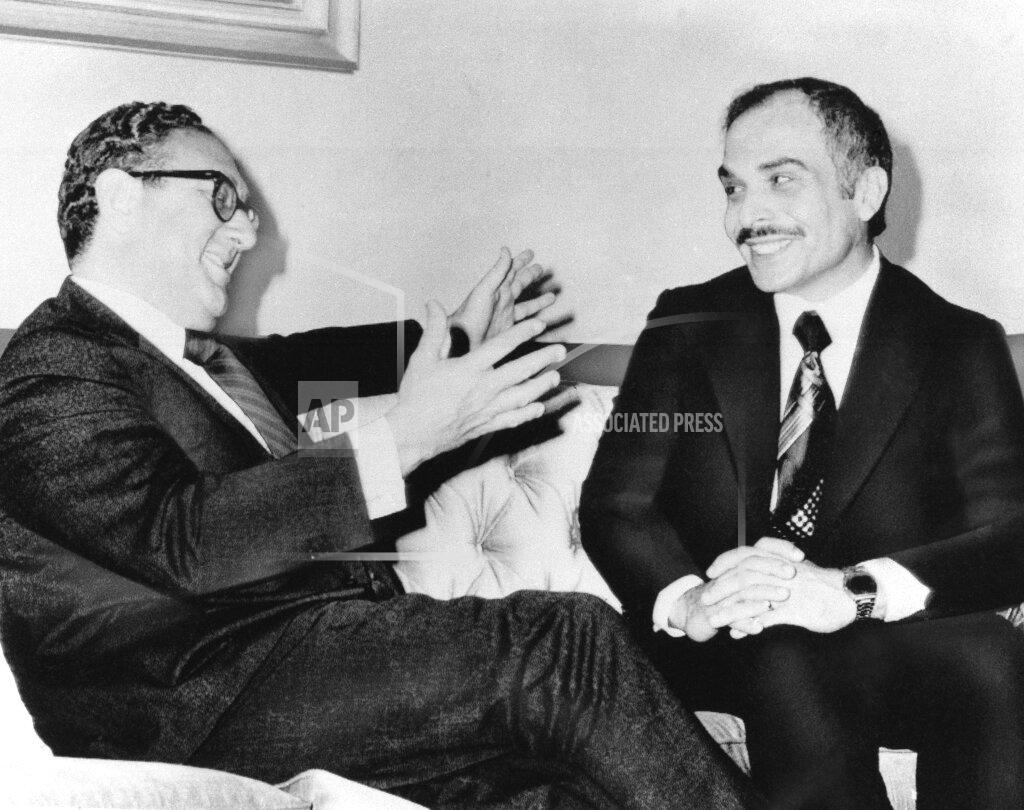
Secretary of State Kissinger’s departure from Cairo this morning was delayed half an hour after one of his bodyguards was accidentally wounded as the Air Force 707 jet was taxiing for its take‐off. A submachine gun, locked in its carrying case in the rear, was apparently jarred and discharged a single shot that grazed the head and wounded the forearm of Walter Bothe, a Secret Service agent who has been a member of Mr. Kissinger’s security detail for two years. Dr. Martin Wolfe, the State Department doctor aboard the plane, gave Mr. Bothe first aid and reported that he was “in very good condition.” Mr. Kissinger bantered with Mr. Bothe, with whom he has had a joshing relationship for some time. “You had to do this while newsmen were around, didn’t you?” the Secretary said.
The earth in northern India is parched. The wheat crop has withered. The tough farmers, who eke out a living on the flat plains of the Rajasthan desert, are alarmed. “The families eat one meal now,” says Chandra Das, a 50‐year‐old father of six. Beside him, Panna, a farmer in a gold turban, crouches and points to his wheat and barley fields, a silent landscape with dry and dangling crops. Last year, Panna’s five acres yielded more than 1,700 pounds of grain. This. autumn, he has 440 pounds. “The crops are burnt,” he says in Rajasthan. “Touch them. They come apart they are so dry. There is no rain, no water.” The failure of the rains in northern India has left the state of Rajasthan stricken. Perhaps 200,000 head of cattle — used for ploughing and some food — have migrated from western districts in the state because water and fodder are, in short supply. Villagers are migrating to towns hunting for work. Drinking water is scarce.
A South Vietnamese Government spokesman said today that the Saigon police had denied involvement in the attack yeserday on a correspondence of CBS. The correspondent, Haney Howell, remained hospitalized today. A plainclothes man had kicked him in the abdomen during a street protest yesterday. Witnesses, including several other American newsmen, said that dozens of uniformed policemen had stood by and watched the attack, then made no effort to apprehend the assailant. There were numerous plainclothes policemen in the area, helping to control crowds. Also attacked but not badly hurt were Barry Hillenbrand of TIME magazine and John Spragens of Pacific Basin Report, an economic news service.
In a gesture of cooperation with President Ford, the House of Representatives passed by a vote of 329 to 20 today a resolution setting $300‐billion as the “target” spending ceiling for the Federal budget for the fiscal year 1975. Mr. Ford had asked Congress for the target limit in his address before Tuesday’s joint session that dealt with the economy. The House Rules and Appropriations Committees moved the legislation out yesterday, and the latter’s report noted that “it is clearly recognized that such an effort will be most difficult and will involve many hard decisions.” But the measure the House passed today, actually a House concurrent resolution, has no force of law, and some Congressmen said the chamber was compounding a myth in thinking that the ceiling could be held to $300‐billion because the question of where the cuts would come has yet to be determined.
Representative George H. Mahon, Democrat of Texas who is chairman of the Appropriations Committee, asserted that with its passage Congress could “get a better handle” on the problem of how to keep the budget in line. “If you want to hold the budget to $300‐billion [by passing a strict ceiling bill], I invite the members to go on record as saying where the cuts should be made,” Mr. Mahon said. The challenge prompted Representative H. R. Gross, the Iowa Republican who serves as a one‐man fiscal watchdog committee, to cite the foreign aid bill, which he termed “the Israel – South Vietnam relief bill.” as a place where cuts might be made. Other fiscal conservatives, mainly Republicans sought to have the target ceiling set at $297‐billion, but their efforts were beaten back, by 195 to 150.
Vice President-designate Nelson Rockefeller has made public a letter sent to the Senate Rules Committee in which he acknowledged making gifts since 1957 to 18 present or former public officials and members of his staff totaling more than $1.77 million. Mr. Rockefeller said in the letter he had paid federal and state taxes on the gifts amounting to about $840,000.
The constitutional amendment providing for the appointment of a Vice President should be repealed because it is unworkable, Senator Howard H. Baker Jr., Republican of Tennessee, said today. Mr. Baker, campaigning here for Senator Henry Beilmon, Republican of Oklahoma, said be planned to vote for cofirmalion of Nelson A. Rockefeller as Vice President but did not expect to see the process specified in the 25th Amendment used again. “I think we’ve got a problem on our hands,” Mr. Baker told a news conference. “I would not be at all surprised to see this the last Vice President ever chosen in this way. I do not think it is going to work, in the long term,” he continued. “This amendment ought to be repealed and I think we’ve got to find a different way to select a Vice President in the case of a vacancy.”
Attorney General William B. Saxbe today ordered a 30-day extension of furloughs for draft evaders who were in prison until President Ford announced his “earned re-entry” program.
The publishers of a derogatory biography of Arthur Goldberg have disputed Nelson Rockefeller’s statement that his brother Laurance invested $60,000 in the book purely as a business venture. The book was published when Mr. Goldberg was running as the Democratic candidate for Governor against Mr. Rockefeller in 1970.
Papers made public by Judge John Sirica contend that both John Ehrlichman and H.R. Haldeman urged former President Nixon in the summer of 1972 to make “a full and complete disclosure” of the Watergate affair. The two former Nixon aides make numerous other assertions in the papers, which seek to place much of the blame for the Watergate cover-up on Mr. Nixon, who cannot be prosecuted for it because of President Ford’s pardon.
Five white antibusing activists and five black community leaders met secretly in City Hall this afternoon and screamed at each other for nearly three hours. Mayor Kevin H. White and his aides called the meeting in hopes that bringing the contending forces together might eventually result in some kind of agreement and organization to help calm the racial violence that has plagued the first four weeks of court‐ordered busing for school integration here.
Among the whites at the meeting were leaders of the citywide antibusing organization called ROAR (for Return Our Alienated Rights), from the South Boston, Hyde Park and East Boston neighborhoods. Among the blacks were Mrs. Ellen Jackson, who has been prominent in fighting for better schools for more than a decade. There were no elected officials. Sources close to the situation said that the meeting had been marked by fierce passions, shouts and racial slurs. At points some persons walked out but were persuaded to go back into the meeting room. After the meeting, there were some indications, these sources said, that the groups would meet again.
The country’s electric utility companies, hit by rising costs and slower growth in energy consumption, have cut back their construction budgets by 18 percent over the next four years. Nuclear energy has been hard hit, with little more than half the planned nuclear power capacity postponed or canceled.
Two of the nation’s largest banks, the First National City Bank and the First National Bank of Chicago, have cut their prime interest rate from 11¾ percent to 11½ percent, effective early next week. The move is expected to be followed by similar reductions at other large banks.
A vice president of the Northrop Corporation, the Los Angeles based aerospace company, has admitted that the defense contractor maintained a political slush fund of up to $12 million including an illegal contribution of $150,000 to the 1972 Nixon re-election campaign.
A panel of outside experts has advised the Food and Drug Administration that the so‐called Dalkon Shield appears to be about as safe as other commonly used intrauterine contraceptive devices. Intrauterine devices, usually known as IUDs, are used by about six million American women, according to the agency. The A. H. Robins Company, manufacturer of the Dalkon Shield, estimates that as many of two million women in this country use or have used its product. In August the drug agency’s Ad Hoc Obstetrics and Gynecology Advisory Committee reported that intrauterine devices in general were a safe and reliable means of contraception.
New York Representative Hugh L. Carey said yesterday that school busing was now an “outmoded tool” in New York City and that the emphasis should be on providing quality education for all children.
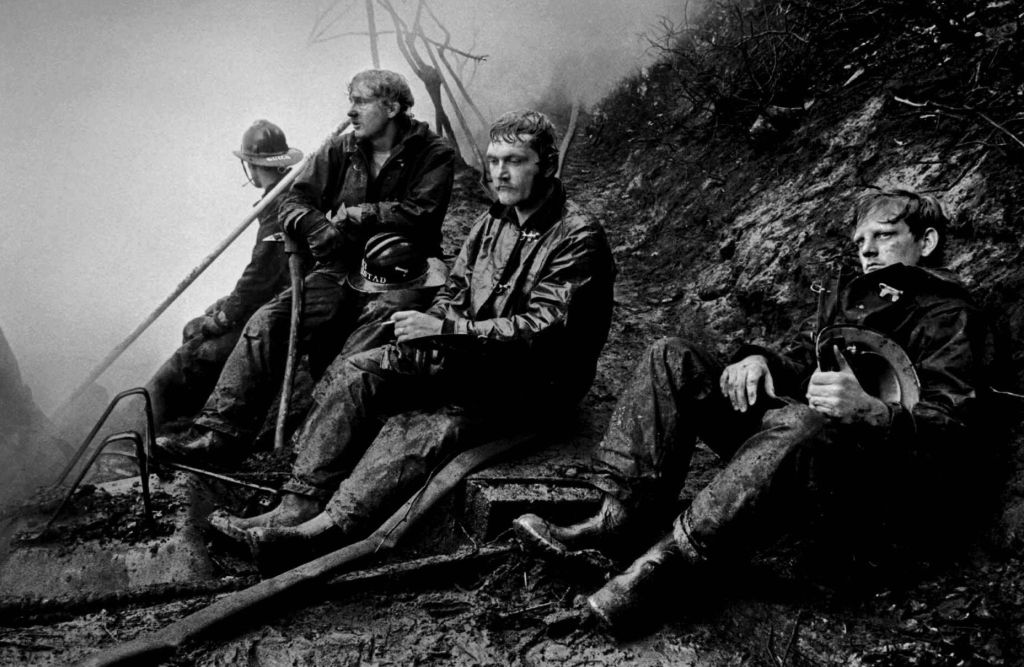
In Burien, Washington, Seattle Times photographer Jerry Gay took the Pulitzer Prize-winning photograph “Lull in the Battle,” depicting 4 firefighters resting after fighting an early-morning house fire.
One of the first popular crime horror films, “The Texas Chain Saw Massacre” (as billed in the credits and in its copyright registration), more popularly written as “The Texas Chainsaw Massacre,” premiered in theaters. Produced and directed by Tobe Hooper, the low-budget ($140,000) movie, with a cast of unknowns (starring Marilyn Burns and Paul A. Partain), returned more than 200 times its investment, grossing $30,900,000 worldwide.
Columbia Records releases “Streetlife Serenade”, singer-songwriter Billy Joel’s third studio album.
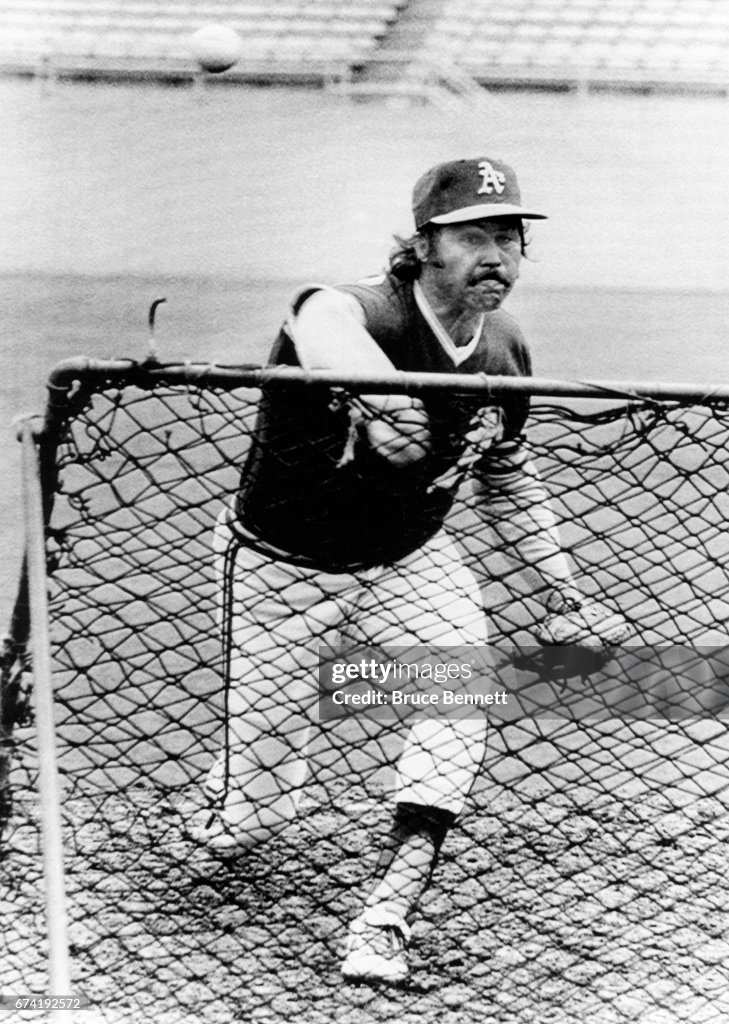
It is revealed that Oakland ace Catfish Hunter has charged owner Charlie Finley with a breach of contract. As pre‐World Series workouts go, the Oakland A’s staged a tumultuous one today, even by their well‐established uninhibited standards. There was a clubhouse fistfight between Rollie Fingers and John Odom that resulted in a five‐stitch scalp wound for Fingers when his head hit the sharp edge of a locker cubicle. There was Jim (Catfish) Hunter’s representative, on the field while the A’s were still holding a clubhouse meeting, explaining why he thought the star pitcher’s contract had been voided and expressing Hunter’s fervent hope that the whole subject be dropped until the World Series ends. There was Reggie Jackson, recovering from an injured leg, running around the bases with awesome fluidity, but still scheduled to see a doctor before being certified usable for the first game.
Dow Jones Industrial Average: 658.17 (+10.09, +1.56%).
Born:
Jason Arnott, Canadian NHL centre (NHL Champions, Stanley Cup-Devils, 2000; NHL All-Star, 1997, 2008; Edmonton Oilers, New Jersey Devils, Dallas Stars, Nashville Predators, Washington Capitals, St. Louis Blues), in Collingwood, Ontario, Canada.
Radoslav Hecl, Slovak NHL defenseman (Buffalo Sabres), in Partizanske, Czechoslovakia.
Jesús Sánchez, Dominican MLB pitcher (Florida Marlins, Chicago Cubs, Colorado Rockies, Cincinnati Reds), in Nizao, Dominican Republic.
Mike Duvall, MLB pitcher (Tampa Bay Devil Rays, Minnesota Twins), in Warrenton, Virginia.
Rachel Barton Pine, American violinist, in Chicago, Illinois.
Terje Håkonsen, Norwegian snowboarder, in Vinje, Norway.
Died:
Allan D. Cruickshank, 67, American ornithologist and writer, died of progressive kidney failure.
Steve Hamas, 67, American football player who became a professional boxer.


 History Diaries