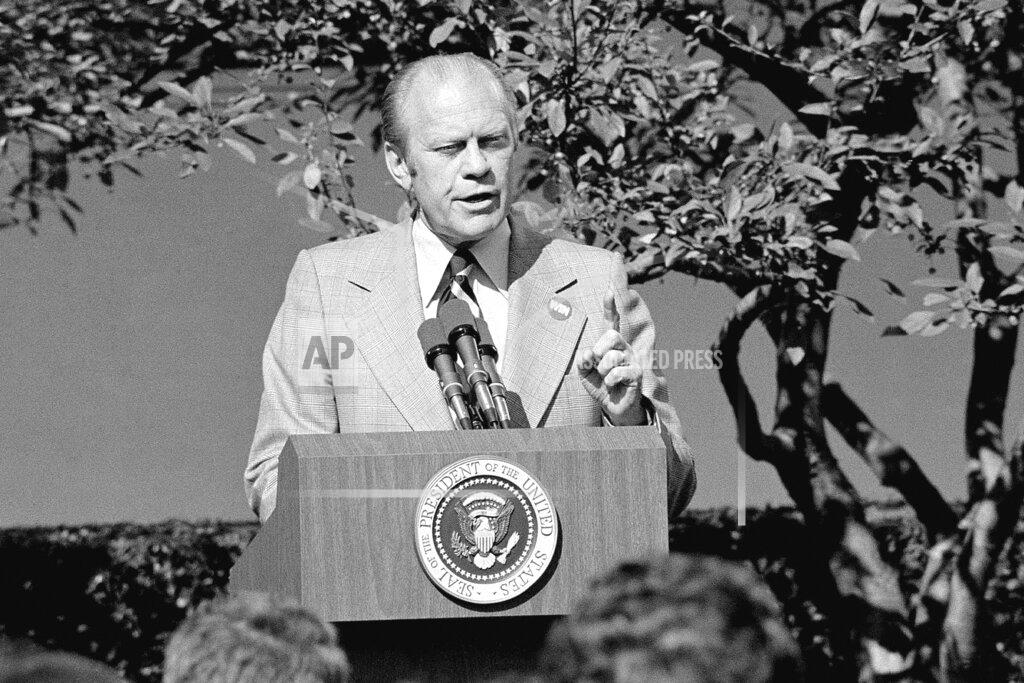
Leonid Brezhnev, the Soviet leader, is believed to be pressing for a meeting with President Ford this fall while the President is in Asia. Some Soviet sources have leaked word that preparations for a meeting, preferably in Vladivostok after Mr. Ford visits Japan in November, are under way; other sources said the decision to meet would depend on the results of Secretary of State Kissinger’s visit to Moscow this month.
The Soviet Union, according to well‐placed sources in Washington, has developed a mobile intercontinental ballistic missile and has built 151 new silos for emplaced ICBM’s. These developments, which could have far‐reaching effects on the nuclear balance between the Soviet Union and the United States, have been known in the Defense Department for some time. They have not been made public, the sources said, because the Defense Department does not wish to appear to be exacerbating relations between Washington and Moscow while the second round of the strategic arms limitation talks is under way. Secretary of State Kissinger, the sources believe, wants to restrain, through the talks, Soviet development of strategic weapons systems. What has already been done strikes many experts as violations of the spirit if not the letter of the 1972 interim agreement linking development of strategic arms. The Soviet deployment of a mobile intercontinental missile raises diplomatic and military problems for the United States, the sources said.
The Senate voted, 62 to 16, to send legislation cutting off military aid to Turkey to the White House. It later eased this challenge to President Ford’s threat of a veto by passing an amendment, which goes to the House, giving the President authority until December 15 to suspend the provisions of the foreign aid laws with respect to Turkey. He would have to determine that the suspension would help settle the Cyprus problem.
President Ford and Polish Communist Party leader Edward Gierek agreed to work toward increased bilateral contact in a broad range of matters, including trade and scientific exchanges. They also pledged efforts to reduce tensions between Communist and capitalist countries. The statements were issued at the end of Gierek’s two-day official visit to Washington, the first ever by a Polish leader.
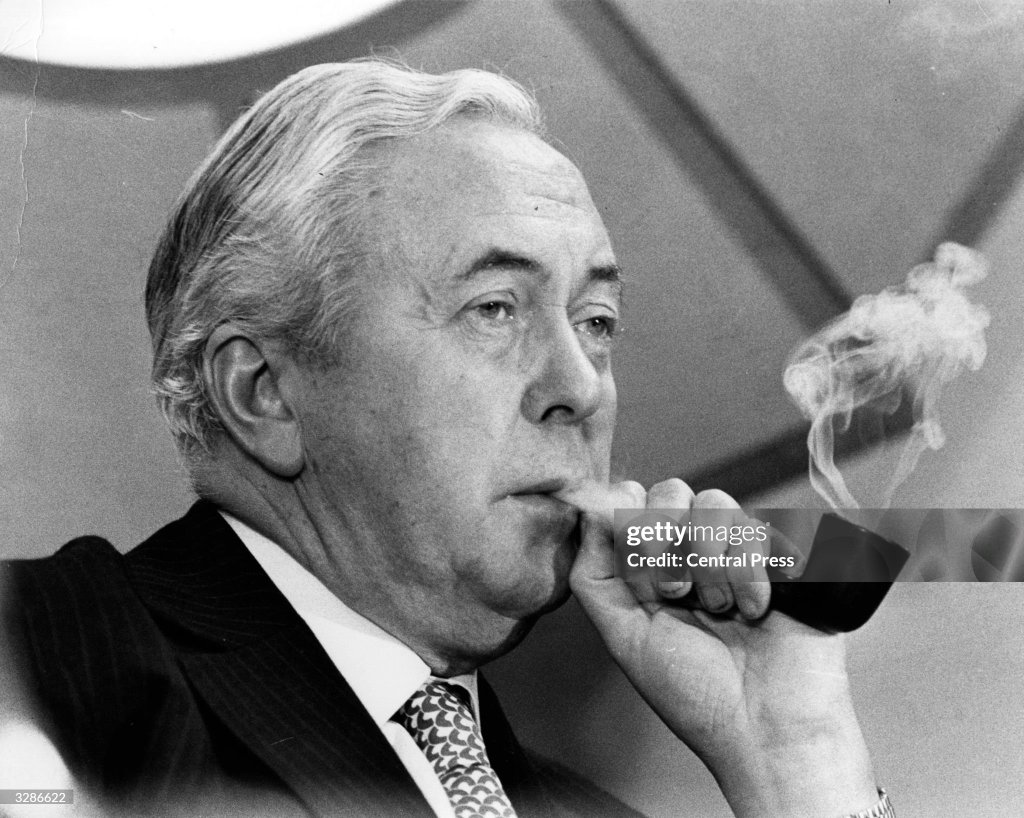
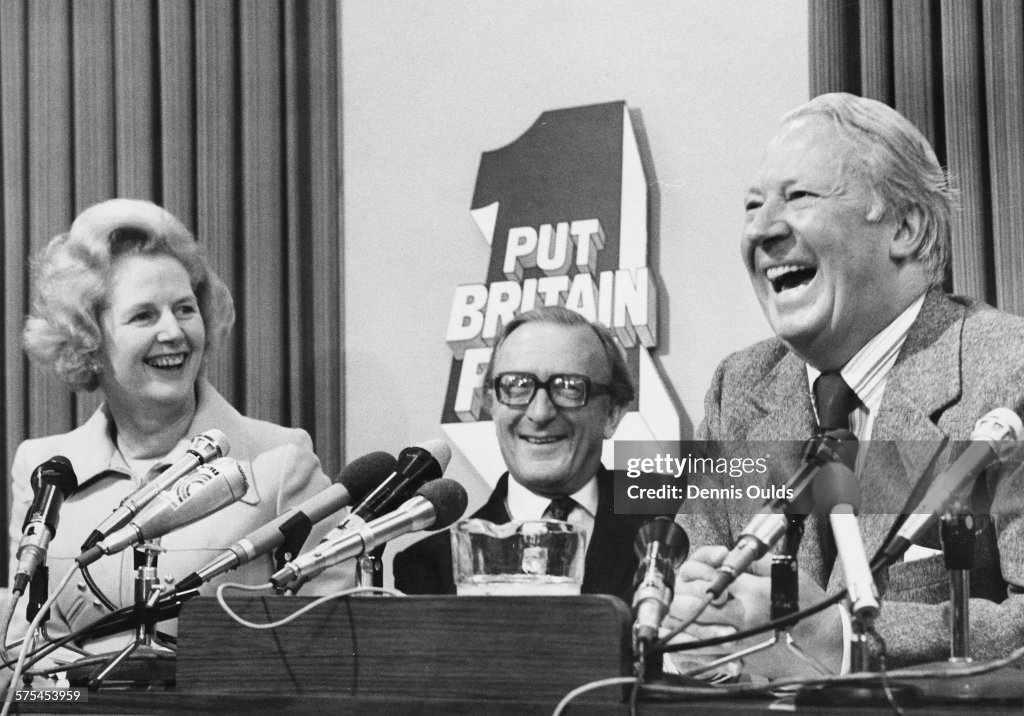
The British election campaign came to a close tonight, with the governing Labor party holding a clear lead in the polls but with many voters professing to be undecided. The three‐week campaign, the second this year, left Prime Minister Harold Wilson confident that he would achieve this time what escaped him in the February voting — a majority in the House of Commons. He now heads the first minority Government here in more than 40 years. Conservative party politicians, led by Edward Heath, who was ousted as Prime Minister in February, privately expressed worry about their chances but cautioned that the polls had been wrong before. For the record, Mr. Heath said he, too, was confident of victory. Tonight, the party leaders delivered their final campaign statements. It could well be the last one for either Mr. Heath or Mr. Wilson. Whoever loses is generally expected to step down.
Greece’s caretaker cabinet abolished martial law a few hours after it took over from the civilian government which resigned Tuesday, a senior official announced. Imposed April, 1967, when the army seized power, martial law was lifted throughout the country, except for areas bordering Turkey. It had been lifted for two months last year, but was reimposed in November. The current cabinet will supervise elections November 17 — the first in a decade.
A former West German cabinet minister charged that the country’s intelligence service had been involved for years in spying on the country’s top political leaders and other prominent citizens, compiling what he regarded as illegal dossiers on 54 persons, including two former chancellors. Horst Ehmke, testifying before a parliamentary investigating committee, said those under surveillance included leaders of all political parties and persons prominent in academic, military and other fields.
Thousands of workers went on strike in Barcelona and two other Spanish cities today, many over new labor Contracts. Strikes are illegal in Spain. An estimated 8,000 workers struck at Seat, the leading Spanish automobile firm, in Barcelona to protest the arrest of 47 workers who had tried to hold a labor meeting earlier in the week. The 2,500 workers at Hispano Olivetti, the typewriter firm, went on strike in Barcelona and were suspended by the company. Strikes were also reported in at least 10 small factories in the Barcelona area. In the city of Valladolid, in the north‐central part of the country, a strike by workers at the Fasa‐Renault automobile company had been reported officially over yesterday as workers entered the plant. But labor sources said that about 2,000 assembly workers were refusing to work. Some 2,500 striking workers at the General Electric plant in Bilbao remained off the job after being suspended.
The luxury liner France sailed into the port of La Havre controlled by its striking crew and with its future still undecided. The world’s longest liner docked after the crew voted to end its month-long occupation and leave a 121-man “security” force aboard. The crew — 900 at full strength, but diminished by the strike — lined the decks and chanted, “the fight goes on.”
Viktor Korchnoi looked in a good position to win his first game against young chess star Anatoly Karpov when they adjourned the ninth game of their playoff series for a shot at the world title. Korchnoi, 43, had a pawn advantage when the 23-year-old Karpov sealed his 42nd move to be opened on today’s resumption in Moscow.
Secretary of State Kissinger arrived in Cairo on his first overseas mission for President Ford, who saw him off. He seemed confident that his Middle East trip would produce agreement on a time, place and format for the next round of Arab-Israel negotiations. He began discussions with President Anwar Sadat aimed at producing momentum toward a settlement.
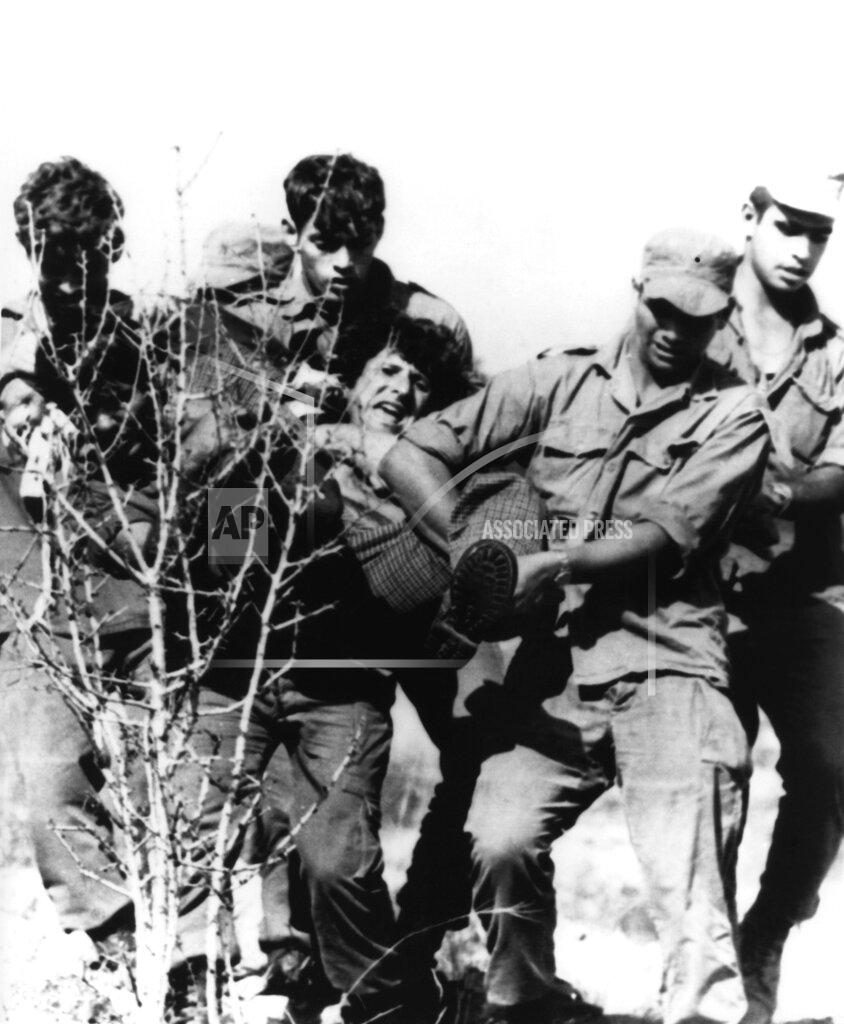
Israeli police and army units turned back an organized challenge to the government’s policy of restricting Israeli settlement in the occupied area on the West Bank of the Jordan River. About 500 of an estimated 5,000 would-be settlers broke through police barricades but were forcibly removed by Israeli soldiers. They were trying to dig in before Secretary of State Kissinger arrived in Israel on Saturday.
Secretary of State Kissinger returned to the Middle East tonight, expressing confidence that he would achieve his goal for an agreement on the timing and format for the next round of Arab-Israeli negotiations. Two hours after his Air Force Boeing 707 landed at the Calm airport, following a 12‐hour flight from Washington, Mr. Kissinger drove to President Anwar el‐Sadat’s residence, in the Giza section of the capital to begin discussions aimed at providing momentum toward Middle East settlement. Following the 75‐minute meeting, an American spokesman said there had been general review of the Middle East situation “in a very friendly atmosphere.”
Thousands of students, newspapermen and others staged a mass march through downtown Saigon and called for peace and an end to press censorship in what was called the largest anti-government demonstration there since the cease-fire. The Rev. Trần Hữu Thành, popular leader of a Roman Catholic anti-corruption movement, also joined the demonstration.
A Defense Department appropriations bill calling for spending of $82.5 billion was signed into law by President Ford. But Mr. Ford said the $700 million provided in the bill for South Vietnam was inadequate and he may have to ask Congress for supplementary funds. The Administration originally had requested an overall figure of $87.05 billion for the current fiscal year.
Premier Long Boret of Cambodia told the General Assembly today that it would be “playing with fire” to expel the present Government of Marshal Lon Nol and seat instead the Chinese‐backed government‐in‐exile of Prince Norodom Sihanouk. Many governments have been confronted with attempts at armed subversion by leaders living abroad, the Cambodian declared, and then said: “Once having set a precedent, what regime can be sure that a coalition of its enemies will not some day exclude it from the United Nations?” About 60 of the 138 delegatons remained outside the hall during the address, including China, the Soviet bloc, Algeria and a number of other third-world countries.
About 5,000 South Korean Roman Catholics demonstrated against President Park Chung Hee today in the largest anti-government outburst since Mr. Park declared martial law two years ago. The demonstration against, Mr. Park came two days after a speech accusing him of extreme infringement of human rights was delivered by the opposition party leader, Kim. Young Sam. In addition, small groups of Korean university students, after months of fear and apathy, have begun sit‐in fasts to dramatize their opposition to the government. Any of these acts would have been punishable by death before Mr. Park lifted two emergency decrees on August 24. But President Park warned yesterday that he would not tolerate demonstrations in the streets or demands that his power, be curbed.
President Ford announced he will meet with Mexican President Luis Echeverria October 21 “to discuss a wide range of subjects of interest to both countries.” Ford said the meeting will take place at Nogales, Arizona, and the two presidents will visit both sides of the border.
Seven hostages held since September 27 in the Venezuelan consulate here were freed tonight by their seven guerrilla captors, who went immediately to Las Americas airport and left by air for political asylum in Panama. The hostages, several of them shouting and sobbing, were greeted by relatives and friends outside the building. A noisy United States delegation, headed by Ambassador Robert A. Hurwitch, rushed up to hug Barbara A. Hutchison, the director of the United States Information Service here, whose kidnapping had preceded the consulate seizure. “Thanks for everything you have done for me,” Miss Hutchison told. Mr. Hurwitch.
President Ford said he was “very confident” that his anti-inflation proposals could reduce inflation meaningfully by early next year if Congress and the people respond. His third press conference also elicited a statement that there was no illegality or impropriety in Vice President-designate Nelson Rockefeller’s gifts to former associates. He said Mrs. Ford’s surgery had not changed his mind about running for President in 1976. Other White House sources said later the administration’s budget proposals in January would be the next major battleground against inflation.
President Ford, obviously still intent on seeking a full term in 1976, flew here tonight to implore Pennsylvania Republicans to help head off a Democratic landslide this fall. The President’s own political plans for 1976 were disclosed at a news conference in the White House Rose Garden just two hours before he flew here to address some 1,400 Republicans at a $150‐a‐plate dinner. Unlike the unfriendhy reception he received just two nights ago in Burlington, Vermont, where groups of students protested his pardon of former President Richard M. Nixon, Mr. Ford was loudly applauded and cheered as he walked into the Philadelphia Sheraton Hotel. There were no signs of demonstrators, either inside or outside the hotel, possibly because of tight police security, including policemen patrolling on horseback. At the news conference in Washington, Mr. Ford was reminded by a reporter that he said a month or so ago that he would probably run for a full term as President in 1976.
The House Ways and Means Committee reacted mildly to President Ford’s tax proposals, with Democratic criticisms and Republican support relatively subdued. Other congressional critics were harsher, with the Senate majority leader, Mike Mansfield, saying he did not think Congress could complete action on them this year.
Secretary of Labor Peter J. Brenhan gave a joint Congressional hearing details today of President Ford’s unemployment proposals, and they were immediately attacked as insufficient by legislators of both parties. Mr. Brennan said that the Administration proposed to spend up to $5.25‐billion additional in special unemployment assistance benefits and community improvement project funds in the “unlikely event” that the unemployment rate hit 7 percent. The Secretary said this would assist as many as 3.83 million of the 6.3 million who would be unemployed at the 7 percent rate, but he also disclosed means by which benefits would be either denied or delayed. Mr. Brennan emphasized that it would be “the first time” that the jobless benefits would be extended to such groups of workers as migrant farm laporers and domestics.
President Ford, in an unusual comment on a court order, said he disagreed with the school desegregation order of a federal judge in Boston. But he added at his news conference that he thought it “of maximum importance that the citizens of Boston respect the law,” and said he hoped it would not be necessary to involve federal enforcement agencies.
The House Rules Committee held back the $11.8 billion mass transit bill from the floor of the House of Representatives in a move that surprised its proponents. The legislation would give New York City $170 million of the $200 million sought by city officials to save the 35-cent fare. House leaders pledged they would seek to revive the bill after the November election.
Power plays within Congress over two competing mass transit bills delayed for at least a month any action on the heavily lobbied legislation. The House Rules Committee did not reconsider its 6–6 vote Tuesday by which it refused to clear for floor action a $10.9 billion compromise bill written by House and Senate Banking conferees. Instead, Chairman Ray J. Madden (D-Indiana) said the committee would put off the bill until after the long election recess in hopes the Senate would hold hearings on a separate measure which originated in the House Public Works Committee and was later passed by the House. He said he wanted the two versions consolidated.
Forty-two percent of persons interviewed by the Gallup Poll expressed a “lot” or “some” interest in the congressional elections next month. The figure represents a drop of 7 percentage points from that recorded in a comparable period before the last off-year elections of 1970. Traditionally a low turnout has been of greater concern for the Democrats than Republicans, although in some elections at the height of the Watergate controversy, the GOP turnout was lower than that of the Democrats.
The Senate Foreign Relations Committee declined to act on the controversial nomination of Peter M. Flanigan to be ambassador to Spain — thereby raising the possibility that the appointment made by former President Richard M. Nixon might quietly die a procedural death. Flanigan denied at a hearing last week allegations that as a White House aide he participated in the alleged sale of ambassadorships through campaign fund solicitation for Mr. Nixon. He also denied allegations that he was involved in the Justice Department’s decision to allow an International Telephone & Telegraph Corp. merger.
Violence returned to Charleston, West Virginia, and Kanawha County as one school was dynamited, a fire was set at another and coal mines were shut down by pickets protesting classroom textbooks. A charge set off at Wet Branch Elementary School blew out the door and some windows. A fire at Campbells Creek Elementary School burned part of the front door. But both incidents occurred early in the morning before pupils had arrived and no one was hurt. The Kanawha Coal Operators Association estimated that 80% of the area’s mines were shut down by pickets, idling 3,000 workers. Protests have been going on since early September by groups that say some of the school textbooks are anti-American, un-Christian and would undermine moral values.
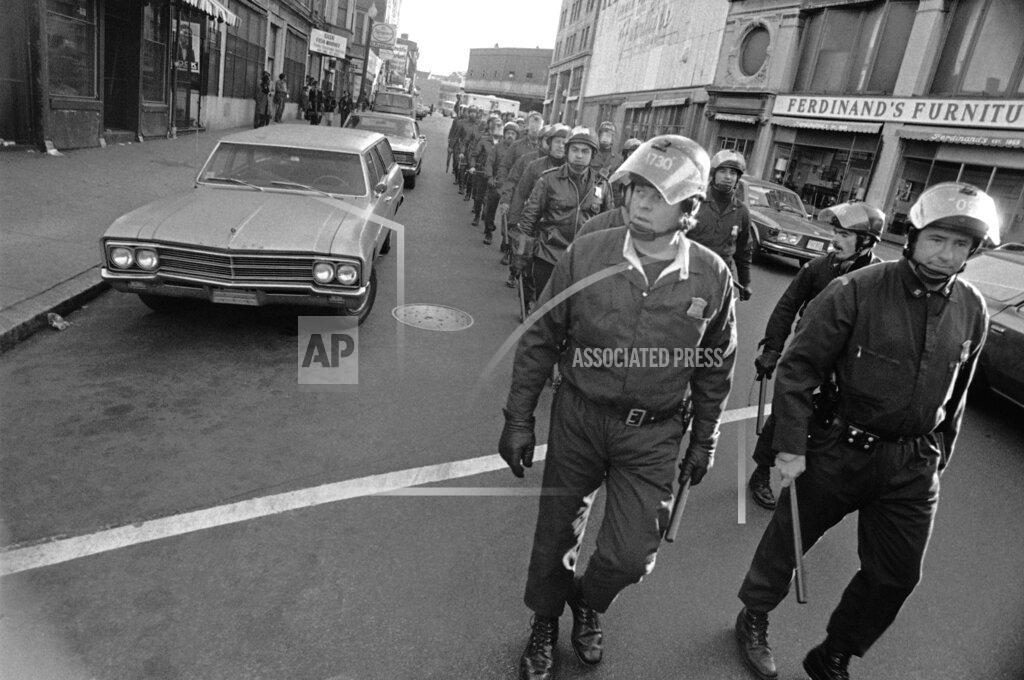
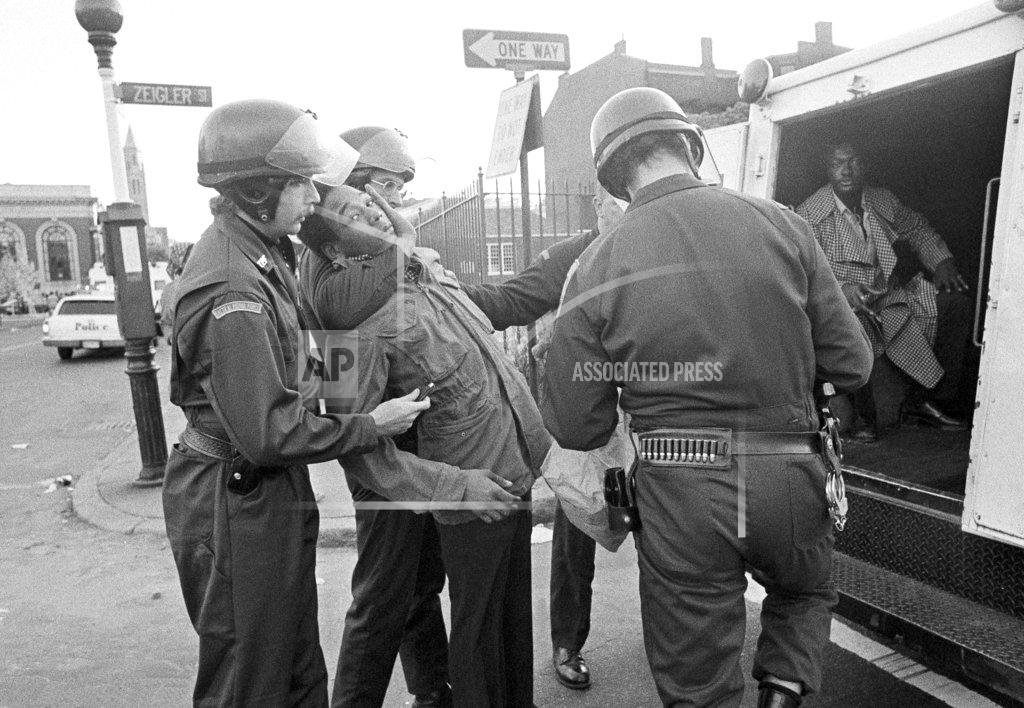
Unrest continues in Boston due to “busing”. Three hundred state police, 100 Metropolitan District Commission police and their supervisory personnel will be placed under the command of Police Commissioner Robert J. diGrazia at 6 A.M. tomorrow, the Mayor’s office said tonight. The police were made available by Gov. Francis W. Sargent at the request of Mayor Kevin H. White after United States District Court Judge W. Arthur Garrity Jr. ordered Mr. White to exhaust potential aid from local law enforcement agencies to check violence associated with school busing. Earlier today, Federal Judge W. Arthur Garrity rejected Mr. White’s request for at least 125 United States marshals to control violence that has erupted in the city since Judge Garrity’s order that black and white students be bused to achieve racial balance.
The judge’s ruling followed another day of disturbances in the city, mainly in predominantly black Roxbury where, the instead to rely on local and state law enforcement agencies. Even as the court was meeting, black youths in the Roxbury neighborhood were throwing rocks at cars carrying whites for the second day. Tactical Patrol Force, policemen were rushed in to quell the disturbance, which occurred in the vicinity of the Dudley Square bus station. There also were reports of looting in the area. In turning down Mayor White’s plea for Federal marshals, Judge Garrity ordered a “gradual escalation” of force as necessary, up to and including a request for military troops. The additional policemen, who include 50 motorcycle officers, are to be under the command of the city’s police force. The Mayor said he did not want to use policemen from suburban forces or National Guard troops.
The Food and Drug Administration announced the recall of 50,000 pairs of silicone breast implants and 2,000 pairs of silicon testicle implants because of defective, non-sterile, packaging that could result in infections. The products were distributed during the last year by the Dow Corning Corp. nationally and in Tokyo, Brussels, Canada, and Australia. There is no cause for alarm among those who have received an implant and experienced no complications a short time after surgery, the agency said. Dow Corning notified surgeons and distributors of the nonsterile problem on Aug. 26.
Casper W. Weinberger, secretary of health, education and welfare, blocked imminent approval of a controversial long-acting contraceptive because of lingering suspicions that it might cause cervical and breast cancer in women. He told Rep. L. H. Fountain (D-North Carolina), chairman of a House government operations subcommittee, that the congressman’s fears about the safety of Depo Provera “are significant and demonstrate a justifiable concern over possible cancer-causing agents.” Weinberger said he would call a public hearing to be held before the Federal Drug Administration’s obstetric and gynecology advisory committee.
Doctors at the Bethesda Naval Hospital said today they continued to be “pleased” with the recovery of Betty Ford from breast cancer surgery. Dr. William Fouty said that Mrs. Ford was “very active” and that her spirits and condition were excellent.
The IBM 3850 computer accessory, the first to use compact cartridges for nearline storage, was introduced by the IBM company. The 3850 Mass Storage System could store a then-record 50 megabytes of memory on a small 4 inches (100 mm) long cartridge with a 70 inches (1,800 mm) long spool of magnetic tape, useful for holding infrequently used programming and data. Each cartridge could be loaded, when necessary, at a cost cheaper than maintaining data in a computer hard drive.
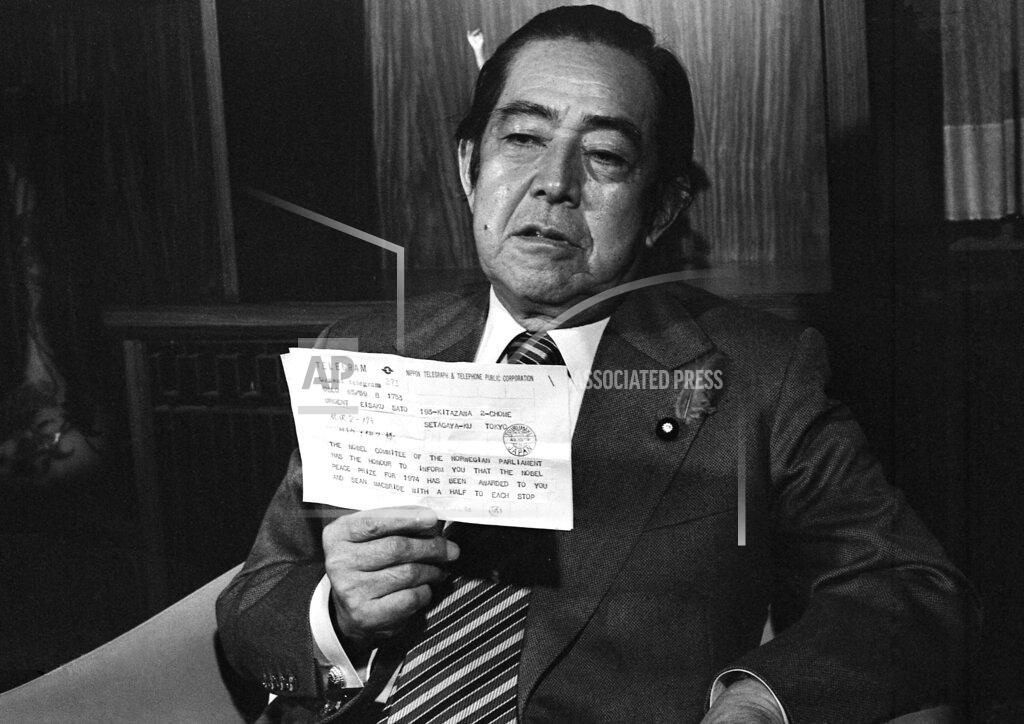
The 1974 prize for economic science in memory of Alfred Nobel, the Swedish industrialist, was awarded to Prof. Gunnar Myrdal of Sweden and Prof. Friedrich von Hayek of Austria.
Washington Capitals play their first NHL game, losing 6–3 to the New York Rangers at the Madison Square Garden; this is the start of a 37 game road losing streak for Washington.
The A’s get just one hit, but draw 11 walks, 9 off loser Mike Cuellar, in beating the Orioles 2–1. Cuellar walks Gene Tenace in the 6th to force in a run, and Reggie Jackson doubles in the winning run in the 7th. The fourth game belonged to the A’s, although their offense was able to produce only one hit for the afternoon. Cuellar pitched a no-hitter for 4⅔ innings, but walked four consecutive batters to give Oakland a run. During his stint on the mound, the Oriole lefty walked no less than nine batters and was removed while yet to give up a hit. The run that was to prove decisive came in the seventh off reliever Ross Grimsley. Sal Bando walked and Reggie Jackson stroked a double off the left-field wall to plate Bando. The Orioles almost pulled the game out of the bag in their last turn at bat. With one out and Rollie Fingers pitching in relief of Hunter, Paul Blair walked and Bobby Grich singled. A force play provided the second out of the inning but Boog Powell’s single drove in one run, finally ending a thirty-inning scoreless streak. Fingers, however, was equal to the occasion and fanned Don Baylor on a fast ball to clinch another league crown for Oakland. Pitching dominated the four-game set, the A’s batted a meager .183, but the Orioles were even lower at a paltry .177. After Game 1, superior Oakland pitching held Baltimore to just one run and twelve hits over the next three games, hitting a very weak .135 (12 for 89), with no extra-base hits.
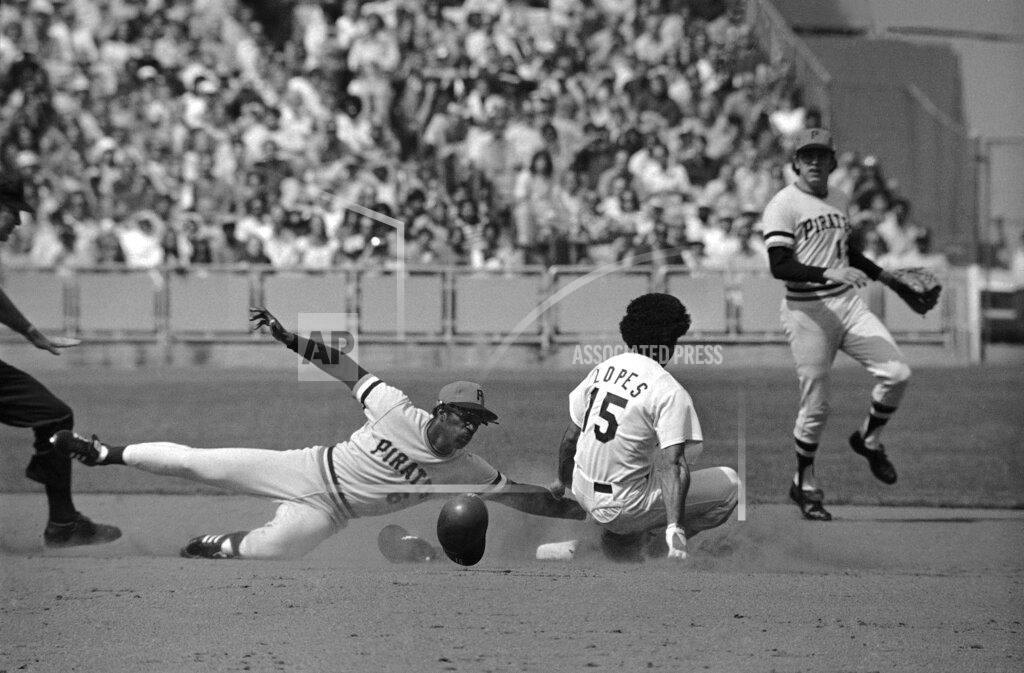
Los Angeles advances to the World Series with a 12–1 win over the Bucs. Steve Garvey has 2 singles and 2 doubles, and scores 4 runs as Don Sutton wins his 2nd League Championship Series game and 11th in a row. Don Sutton and Jerry Reuss, as in the opener, were the opposing pitchers in the fourth game. Sutton was just as good as he ever was, permitting but one run (on Willie Stargell’s home run in the seventh) and three hits and striking out seven in eight innings of work before allowing the ubiquitous Mike Marshall to close. Reuss and three relievers, on the other hand, were hammered. Davey Lopes walked to lead off the first, stole second and scored on Jim Wynn’s double. In the third, Steve Garvey’s home run after a walk made it 3–0. In the fifth, Garvey’s second home run of the game, also after a walk off of Ken Brett, extended the lead to 5–0. Next inning, Steve Yeager drew a leadoff walk off of Larry Demery, moved to second on a sacrifice bunt and scored on a triple by Davey Lopes, who himself scored on second baseman Rennie Stennett’s errant throw to third. Next inning, after a leadoff single and walk, Dave Giusti relieved Demery and allowed RBI singles to Bill Russell and Don Sutton to extend the Dodgers’ lead to 9–1. In the eighth, Giusti allowed a one-out single and walk before Joe Ferguson’s RBI single made it 10–1 Dodgers. After an intentional walk loaded the bases, Russell’s two-run single capped the game’s scoring at 12–1 as the Dodgers advanced to the 1974 World Series with the largest margin of victory in a championship series game.
Dow Jones Industrial Average: 631.02 (+28.39, +4.71%).
Born:
Kavika Pittman, NFL defensive end (Dallas Cowboys, Denver Broncos, Carolina Panthers), in Frankfurt, West Germany.
Keith Booth, NBA small forward (NBA Champions-Bulls, 1998; Chicago Bulls), in Baltimore, Maryland.
Courtney Duncan, MLB pitcher (Chicago Cubs), in Mobile, Alabama.
Kieren Hutchison, New Zealand actor (“Shortland Street”), in Auckland, New Zealand.
Died:
Oskar Schindler, 66, Sudeten German businessman and humanitarian, profiled in the 1993 film Schindler’s List for saving 1,200 Jews from death in the Kraków-Płaszów concentration camp during the Holocaust.
Theodore Foley, 61, American Roman Catholic priest and Superior General of the Congregation of the Passion of Jesus Christ, commonly called “The Passionists”, died in Rome after contracting an illness on a trip to Asia.
Slim Williams (born Clyde Charles Williams), 93, American explorer and promoter of the Alaska Highway.
 History Diaries