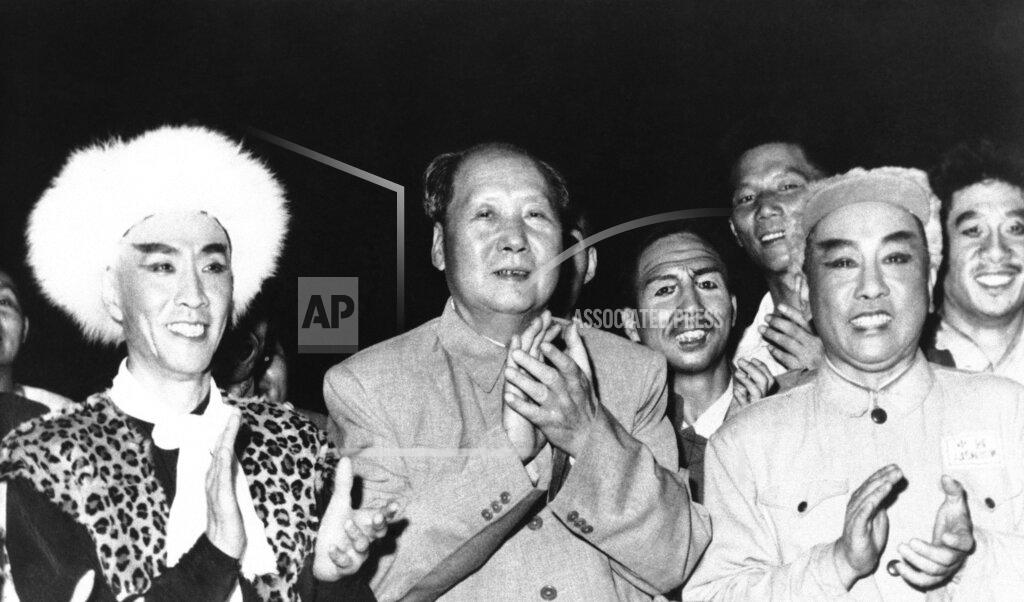
[God help the first one to stop clapping…]
Secretary of State Dean Rusk, in a news conference, insists that the administration’s decisions about the conflict in Vietnam have ‘nothing to do’ with the election and denies that information is being withheld. Secretary of State Rusk said today that the Administration’s decisions about South Vietnam had “nothing to do” with the Presidential election. Contrary to widespread speculation, Mr. Rusk said, “we are not concealing anything or postponing or marking time or refusing to make the decisions that are required.” Whether the United States becomes more deeply involved in the war, he added, depends upon the future conduct of North Vietnam and Communist China. “I do want to make it very clear, however,” he said, “that we are not going to pull away from our commitments to the security of Southeast Asia, and specifically South Vietnam.” Secretary Rusk spoke at a news conference at which there were repeated references to the election. He also made the following points on diplomatic issues:
- The United States hopes and believes that Indonesia and Malaysia can settle their differences without violence. It should be understood that any attack on the Philippines would be “an attack on the United States,” he said.
- Washington has nothing to do with the efforts of Premier Moise Tshombe of the Congo to gain a seat at the Cairo conference of nonaligned nations. But it is of some concern that delegates to an international conference try to determine who shall represent one of the invited governments and thus complicate “the very structure of international affairs.”
- The Cairo conference might well consider Communist China’s expected explosion of a nuclear device in the atmosphere, especially since the nonaligned countries have shown so much interest in stopping tests. India asked the conference yesterday to take up the issue.
- India’s decision to develop nuclear energy only for peaceful purposes contrasts with that of Communist China and deserves praise as a “great contribution to world peace and the welfare of humanity.”
The Vietnam issue was raised at the news conference with a reference to reports here and in Saigon that the Administration was considering a “major turn” in policy but was deferring a decision until after Election Day, November 3.
The United States tacitly cautioned Indonesia today that an attack on the Philippines would be considered an attack on this country. The Philippines has become increasingly concerned over Indoneslan infiltration. The reassurance to the Philippines was voiced by Secretary of State Dean Rusk at his news conference when he was asked whether the United States shared the Philippines’ concern that she might become “a target for Indonesian infiltration, or interference of some sort.” Mr. Rusk replied: I point out that our own defense arrangements with, the Philippines are very far-reaching, are without qualifications, and that if there is an attack on the Philippines from any quarter, that is an attack on the United States.
“And I would think,” he added “that it would be very reckless, indeed, for anyone to suppose that there is any doubt whatever about our commitment to the security of the Philippines.” Mr. Rusk’s comments were made against the background of conferences in Washington earlier this week between President Johnson and President Diosdado Macapagal. The Philippine President was reported to have expressed his country’s growing concern over Indonesian activities in Southeast Asia. In a communiqué issued Tuesday the two Presidents announced that both countries had agreed to study “their mutual requirements for security, to review existing programs, and to consider changes heeded to achieve increased capability and flexibility in the Philippine response to aggression and threats, of aggression.”
Senator Thruston B. Morton, Republican of Kentucky, charged both national parties today with “not bringing in the election issues sufficiently.” “We should have a constructive debate on Vietnam,” he told a news conference. “It is all right to say we should stay there, but the American people are entitled to know more about why we should remain,” he said.
A Pentagon spokesman said today that it was possible that the crew of a United States helicopter fired on friendly South Vietnamese troops during a battle with Communist Việt Cộng yesterday. But he denied a report that South Vietnamese troops had brought down the helicopter. The battle took place near Đức Hòa, 12 miles west of Saigon. Government forces were reported to have lost 83 dead, 43 wounded and 20 missing. They said they had killed or wounded 70 guerrillas. If the United States helicopter crew hit any South Vietnamese Government troops the Pentagon spokesman said, it was the result of a mix‐up In which Government and enemy forces were closely engaged. The spokesman added that “not many” Government troops could have been hit.
He gave the following version of the incident based on military dispatches from Saigon: “On the basis of preliminary reports, two helicopters were among those supporting this operation. Việt Cộng ground fire shot down the lead helicopter, which had five United States military aboard. It crashed and was on fire. The second helicopter coming in was providing supporting fire. When the Việt Cộng swarmed the downed helicopter, the second helicopter moved in with suppressive fire in order to permit government troops on the ground to get to the downed helicopter for possible rescue. The Việt Cộng and Vietnam forces were so closely engaged that it is possible some of the suppressive fire went among the friendly troops. However, the report that Vietnam troops fired on the second helicopter and brought it down is erroneous. Because of the number of hits it had taken from Việt Cộng fire, the second helicopter landed, made repairs and flew out later. General Thắng, chief of operations of the Republic of Vietnam Army, said in Saigon there was no mistake in identification of troops on the ground. He said that the Army of the Republic of Vietnam is convinced that most of its casualties were from Việt Cộng fire. It is clear that if any government troops were hit by fire from the United States helicopter there were not many.”
Prince Norodom Sihanouk, the Cambodian head of state, returned from Communist China today. He said Peking had promised Cambodia “substantial” new military and other aid. He also said he had reached agreement with Communist North Vietnam and the South Vietnamese “National Liberation Front” — the parent movement of the guerrilla organization — on the question of Cambodian‐Vietnam border raids.
The Republic of China (Taiwan) entered the Vietnam War with the first contingent of 15 uniformed army officers, led by Lt. General Teng Ting-yuan.
President Gamal Abdel Nasser of, the United Arab Republic gave permission to the Congolese. Premier, Moise Tshombe, to leave the United Arab Republic tonight. Mr. Tshombe has been detained three days in a palace guesthouse while the Ieaders of the nonaligned countries held a conference here that Mr. Tshombe had sought to attend. The Cairo announcement followed a day of intense diplomatic efforts to end a situation that had its implications. Cairo first tried to keep Mr. Tshombe from landing to attend the conference and then, when he landed, sought to get him to leave. The authorities in Leopoidville, angry at the treatment their Premier was receiving, put guards around the Egyptian and Algerian Embassies there. The Cairo authorities ceased their efforts to get rid of Mr. Tshombe and pronounced him a hostage, producing a stalemate.
Mr. Tshombe’s special plane was reported to be in Athens — two hours away — ready to go to Cairo to pick up the Premier. The plane had been diverted to Athens in the initial effort to keep Mr. Tshombe out of Cairo. Most of the delegates in the conference had objected to his plans to attend on the ground that the move was “inopportune.” Many of the leaders consider Mr. Tshombe a tool of imperialism, or of capitalism, or of the West, because he led the secession of Katanga Province when the Congo was first independent. Mr. Tshombe now heads the Congo Government’s efforts, military and diplomatic, for unity. While obviously angry over his treatment, Mr. Tshombe was apparently enjoying the awkward position President Nasser and the other leaders are in. Congolese aides are saying that the incarceration has created popularity for Mr. Tshombe in. Leopoldville, the very thing President Nasser and the others wanted to avoid.
United States policies toward Cuba, Vietnam, the Congo, South Africa, and even American domestic racial problems, came under heavy fire today from speakers at the world conference of nonallgned powers. Informed sources said tonight the final conference communiqué would call upon Washington to halt its economic embargo against Cuba and “enter into negotiations” with the Castro Government with the aim of putting relations “on a normal footing.” This has been one of Premier Fidel Castro’s contentions lately and the fact that the provisionally approved draft of the final communiqué contained this statement reflected active lobbying by Cuba’s President, Osvaldo Dorticos Torrado, and her Foreign Minister, Raul Roa, among the delegations here. According to conference sources the Cubans pressed for a strong condemnation of the United States boycott but the Yugoslavs, among others, succeeded in softening the tone of the resolutions.
The West German Government quietly bought the release of 800 political prisoners in recent months in a men‐for‐butter swap with East Germany, a government spokesman announced today. A spokesman for the All-German Ministry said the Bonn Government had sent “millions of dollars” worth of consumer goods to the East Germans since mid-summer, in exchange for the freedom of the political prisoners. He mentioned butter as one example of the kind of goods sent to the Communist state. The ministry is now hoping for a second arrangement under which East German children whose parents fled to the West would be allowed to follow their parents across the border. The East German Government hag indicated it might be amenable to another barter arrangement.
African rebels were reliably reported today to have attacked two military posts in Portugese Mozambique. The attacks occurred at Mueda, an army garrison in the north, and at Metangula, a patrol base on the shore of Lake Malawi in the west, according to information reaching journalists in Southern Rhodesia. After the attacks, Portugese troops were reported to have found a cache of rebel arms that were said to include a number of Soviet-made Weapons. In both cases, the rebels were believed to have crossed into Mozambique from neighboring Tanganyika to the north.
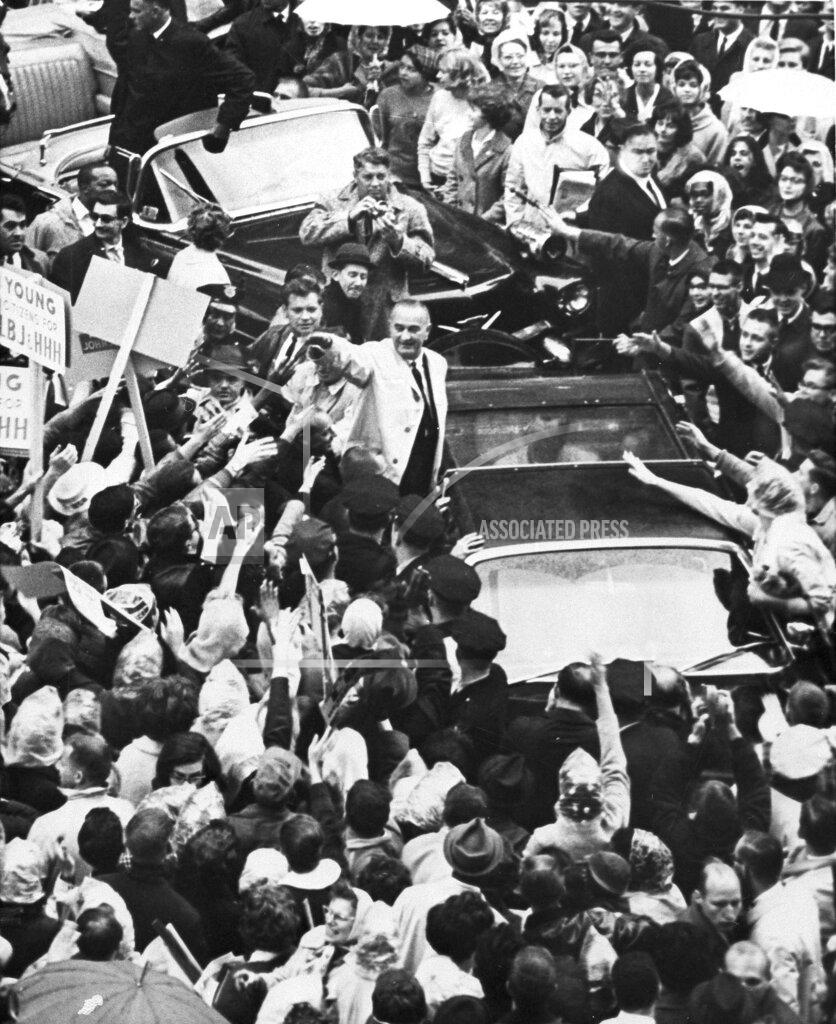
President Johnson carried into Indiana and Ohio today his campaign to achieve what he hopes will be “the greatest Democratic landslide in American history.” In Indiana he was greeted, as he was yesterday in Iowa and Illinois, by large and enthusiastic crowds. A noon‐hour crowd estimated by police officials at 40,000 filled much of the Circle in Indianapolis around the Soldiers and Sailors Monument. Many more thousands spilled down the streets leading out of the Circle opposite the speaker’s stand. When the President set out for lunch at the Indianapolis Athletic Club, the milling thousands pressed in on his car and brought it to a stop again and again.
At his first stop this morning in Lake County, Indiana, crowds totaling between 30,000 and 35,000, according to police estimates, met the President at the Gary Airport, lined the main street of East Chicago and filled the grounds of Washington High School, where he spoke. In the Presidential primary last May, Governor George C. Wallace of Alabama carried Lake County against Governor Matthew Welsh, who was running as a favorite son stand‐in for the President. Governor Wallace’s victory was attributed largely to white backlash against the civil rights bill and Black demonstrations.
But the President did not avoid the civil rights question in his speech today. “We believe in equal rights for all Americans and special privileges for none,” he declared. The applause was not so heavy, however, as it was when he said: “You better go vote on November 3 if you don’t want Social Security voluntary.” When the President reached downtown Cleveland at 5:30 this afternoon, thousands of people pushed into Euclid Avenue between Ninth Street and Public Square. But rain was falling, the President was slightly behind schedule, the offices had closed, and the crowd was smaller than had been expected after the turnout in much smaller cities.
Senator Barry Goldwater returned to warmer political latitudes today and said he wished the Democratic party would change its name to the “Socialist” party because “that’s what they are.” As he campaigned from the Texas plains to the Rio Grande to his home town of Phoenix he found receptive conservative audiences for such assertions. Meantime, a source intimately familiar with the Republican Presidential candidate’s thinking said that Mr. Goldwater believed the “gut issue” of the campaign to be President Johnson’s integrity. In Mr. Goldwater’s view this issue can be graphically stated: Would you want to buy a used car from Lyndon? The gibe was not original with Mr. Goldwater. It was used during the 1960 Presidential campaign — by the Democrats, against the Republican candidate, Richard M. Nixon.
Mr. Goldwater began the day by flying from Washington to Lubbock, Texas, where his motorcade wound past huge grain elevators rising out of a tableflat plain. At the municipal auditorium a capacity crowd of 11,000 persons roared “viva, olé” as he took the stand. The Senator heaped scorn on Mr. Johnson, saying: “When he comes out here and puts high-heeled boots on and a ten‐gallon hat and calls you pardner, he sounds like a conservative banker. But back in Washington when he wears plain old shoes and says how do you do, he speaks an entirely different language. He’s a radical liberal.” He added that “whether he likes it or not, or even knows it, he’s backing Socialism.”
We Love Hubert,” the heart-bedecked sign proclaimed. “Everyone Loves Hubert,” another sign said. The place was the University of Toledo field house earlier this week. It was crammed with 7,500 exuberant teen‐agers and collegians. The object of their affection was Senator Hubert H. Humphrey, the Democratic Vice‐Presidential candidate. It was a scene that has been repeated time after time in Mr. Humphrey’s travels around the country: The youthfully worded, amateurishly lettered signs (“We Dig Hubert”), the bright, clean, expectant faces, the Mouses and skirts and sport shirts and khakis, the deafening cheers and the quick laughter. The scene was typical of one of the interesting sidelights of the campaign — the unabashed affection that Mr. Humphrey is arousing among the young people.
They squeal at him, mob him, steal watches off his wrist, tear cufflinks from his shirtsleeves, delay his tight schedule while the girls insist on kissing him goodbye. And they listen to him. Mr. Humphrey loves every minute of it. He seems to gain sustenance from the young crowds. He makes it obvious that he enjoys young audiences. “This kind of thing doesn’t happen unless you want it to happen,” said a close associate of the Senator. “This preoccupation with youth has always been true of him.”
Savannah, a Southern port city of great age and elegance, greeted the First Lady with a roaring welcome from the throats of about 10,000 persons massed around the live oaks of the central square. The size of the crowd was estimated by the police.The teenaged Goldwater hecklers were here, too. They first appeared yesterday at Columbia, South Carolina, and showed up again at last night’s rally in a Charleston shopping center, drawing infuriated responses from the Democratic politicians on the platform. Today in Savannah the appeals were dignified and on the positive side. Governor Carl B. Sanders introduced Mrs. Johnson as a lady who “embodies the finest ideals of Southern womanhood,” and asked the small knot of hecklers to “show the First Lady of the land real, genuine Southern hospitality.”
Mrs. Johnson evoked bursts of cheers when she described her husband as “a tomorrow-man, a builder‐man, a going-ahead man; a man unafraid to run that race with racing time that must be run by all men and all nations who do not wish to be left in the slack waters of history.” Her younger daughter, Luci Baines, who took oyer as backstop speaker for the rest of the trip while 20‐year‐old Lynda Bird flew back to classes in Washington, asked the throng of young people not to vote “emotionally.” Mrs. Johnson’s train then headed south toward Tallahassee, Florida. There she spent the night after a rally at Florida State University.
The FBI foiled a plot by the United Klans of America to bomb the Evers Hotel in Philadelphia, Mississippi, where the remaining civil rights workers associated with the Council of Federated Organizations (COFO) had been staying. Agents went to the home a Klansman and seized a cache of dynamite that he had stockpiled there, after having been tipped off by an informer.
A House subcommittee said today that Secretary of Defense Robert S. McNamara had let budgetary considerations delay the development of a Communications satellite system for the military. Seldom if ever has Mr. McNamara been subjected to such strong Congressional criticism as he was in the subcommittee’s analysis of his handling of the program. Mr. McNamara has a reputation as a bold, decisive administrator, but the subcommittee termed him “too timid and uncertain” in exploiting satellite technology for military communications.
The Military Operations subcommittee of the House Government Operations Committee issued the report. It complained that Mr. McNamara had let his economizing efforts “throttle” the development of a system that both he and the Joint Chiefs of Staff had declared essential to national security. The subcommittee also criticized the highly centralized control that Mr. McNamara has established over military research and development. It said that too tight control could dry up initiative in the military, disrupt planning, diffuse responsibility and delay decisions. In the satellite program, the subcommittee found that this control had resulted in “overmanagement and underperformance.”
[Ed: Good, old Bean Counter Bob. Worst SecDef ever.]
President Johnson signed today a bill extending the Food for Peace program for two years, but he said that two provisions of the measure were unconstitutional and would be ignored.Mr. Johnson signed the bill while flying from Gary, Indiana to Indianapolis on a political campaign tour. He issued a statement saying that Acting Attorney General Nicholas deB. Katzenbach had advised him that two provisions were unconstitutional because they would give Congressional groups veto power over Executive actions. The President said one provision would give either the House or Senate Agriculture Committees the power to veto the disposition of certain foreign currency obtained through overseas sales of surplus foods. The other would prohibit the President from making certain low‐interest loans under the law without obtaining agreement from an advisory committee composed in part of members of Congress, he said. He said that Presidents Dwight D. Eisenhower and John F. Kennedy, faced with similar legislation, had taken positions identical to his.
One hundred angry white parents tried to storm a Queens, New York City public school yesterday morning but were held back by the police. For a few minutes the situation seemed ominous, as the police grappled with shoving and shouting housewives. However, order was quickly restored and there were no arrests. The incident occurred outside Public School 121 in South Ozone Park after the principal had refused to admit two youngsters who had been assigned to another school. “They can put me in jail but they can’t make me send my daughter to the other school,” said Mrs. Rae Revelli, one of the mothers.
The John Birch Society, the Ku Klux Klan and the White Citizens Councils were listed by the 10th National Assembly of United Church Women today as organizations whose doctrines “breed suspicion, division and hatred.” The assembly also named the Christian Crusade, the Christian Freedom Foundation, the Church League of America and the Communist party in a resolution deploring extremism.
The United Auto Workers’ president, Walter P. Reuther, predicted today that striking locals would begin “substantial movement” this weekend toward ending their work stoppage at General Motors plants. Mr. Reuther said the momentum of local negotiations was picking up among the 110 bargaining units that still have not reached plant‐level agreements. The strike began September 25.
Gilroy Roberts becomes first US chief engraver to retire (than die).
The Beatles recorded “She’s a Woman” at the EMI Studios in Abbey Road. On the same day, drummer Ringo Starr passed his driving test.
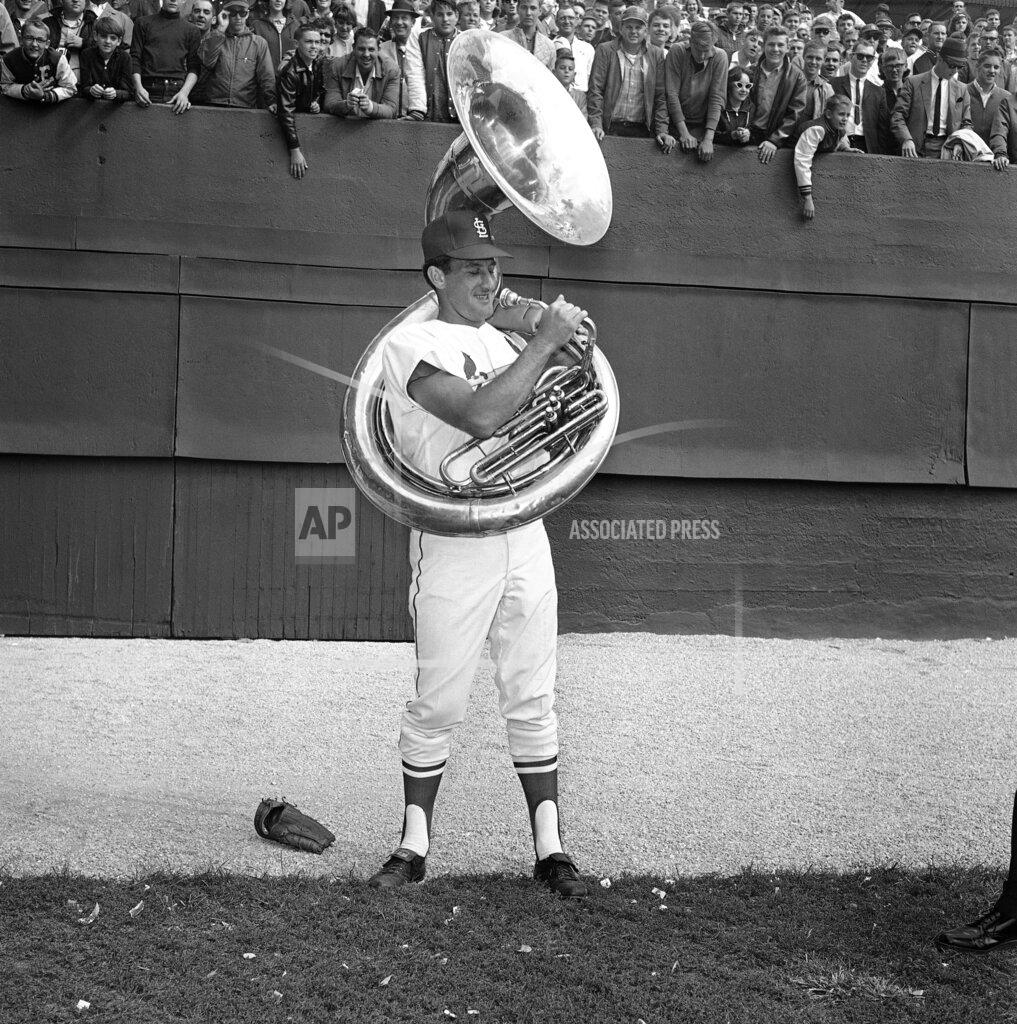
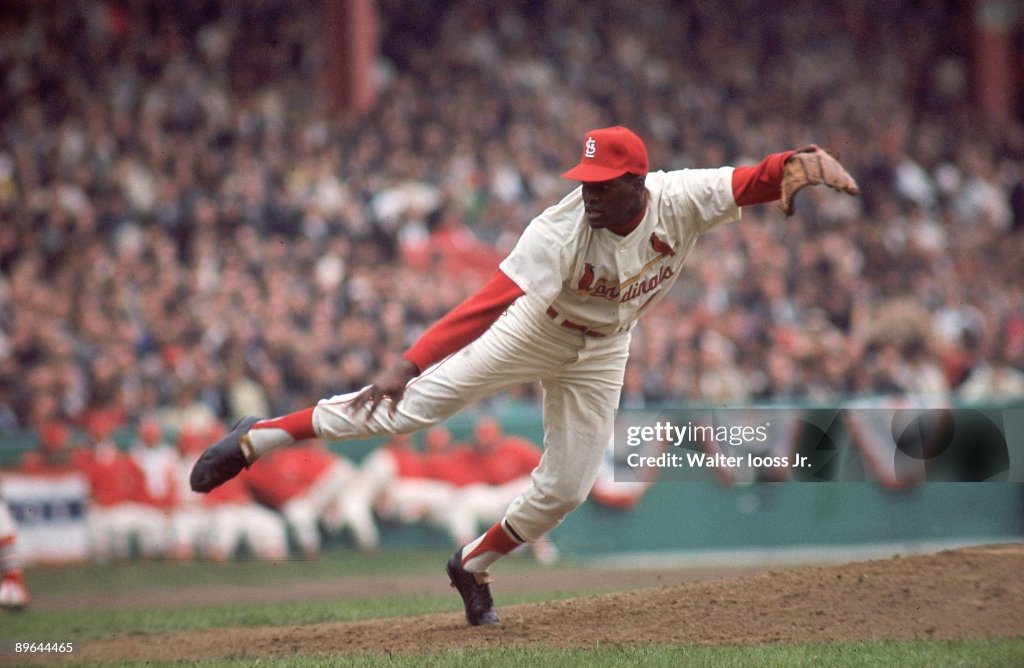
Rookie Mel Stottlemyre beats the St. Louis Cardinals’ Bob Gibson 8–3 in game two to even the World Series. The Yankees score 4 in the 9th after Gibson is taken out for a pinch hitter. Stottlemyre, called up from the minors in August, dominated for New York and the Cardinal bullpen wilted in the late innings. The Cardinals struck first in the third on Curt Flood’s groundout with runners on second and third, but the Yankees tied the game in the fourth on Clete Boyer’s bases-loaded sacrifice fly off Bob Gibson. After a walk and hit-by-pitch in the sixth, Tom Tresh’s RBI single put the Yankees up 2–1. Next inning, Phil Linz hit a leadoff single, moved to third on a wild pitch, and scored on Bobby Richardson’s single. After moving to third on a single, Richardson scored on Mickey Mantle’s groundout. Lou Brock’s groundout in the eighth with runners on second and third shaved the lead to 4–2, but the Yankees blew the game open in the ninth. Linz’s leadoff home run off Barney Schultz made it 5–2 Yankees. After a one-out single, Gordie Richardson relieved Schultz and allowed an RBI double to Mantle. After an intentional walk, Joe Pepitone’s RBI single and Tresh’s sacrifice fly made it 8–2 Yankees. The Cardinals got a run in the bottom half when Dick Groat hit a leadoff triple and scored on Tim McCarver’s single, but Stottlemyre retired the next two hitters to end the game as the Yankees’ 8–3 win tied the series heading to New York.
Dow Jones Industrial Average: 874.9 (+1.12)
Born:
CeCe Winans [Priscilla Marie Winans], American 23-time Dove and 12-time Grammy Award-winning gospel singer, in Detroit, Michigan.
Brent Pease, NFL quarterback (Houston Oilers), in Moscow, Idaho.
Jakob Arjouni, German crime fiction author who wrote under the pseudonym Jakob Bothe, in Frankfurt, West Germany (d. of pancreatic cancer, 2013).
Martin Marquez, English television actor, in Coventry, England, United Kingdom.
Died:
Charles Hodge, NYU professor (Answers for Americans).


 History Diaries