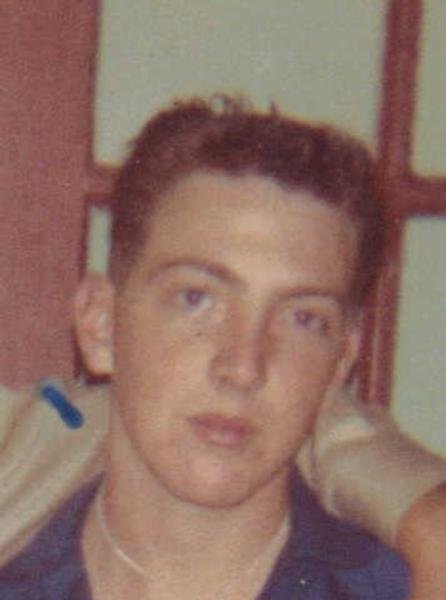
Private First Class Bain was an Infantryman assigned to 1st Battalion, 14th Infantry Regiment, 25th Infantry Division, US Army Pacific. He was temporarily assigned to the 118th AHC as a door gunner. PFC Bain was single and 18 years old when he died and had been in the Army for just over a year.
Việt Cộng ground fire brings down a U.S. helicopter and five U.S. servicemen are killed. The armed helicopter had been sent to Hậu Nghĩa to assist in an encounter with Communist guerrillas. Witnesses reported that ground fire had set fire to the helicopter in the air. The remote possibility that some of the crewmen had survived made pilots in accompanying aircraft reluctant to strafe the area. Three unidentifiable bodies were recovered from the wreckage of the helicopter, an UH-1B that was struck 12 miles west of Saigon. The downed helicopter carried three American officers, two American enlisted men and a Vietnamese observer. Because the six bodies had not all been recovered by tonight, the six airmen were listed as missing but presumed dead. The deaths raise to 199 the number of Americans killed in South Vietnam since January, 1961. Of that total, 92 have been killed this year.
The occupants of a second lost aircraft — a United States Army pilot and a Vietnamese observer — parachuted safely before their fixed‐wing Mohawk light bomber crashed. They were recovered by helicopter along with one of two .50‐callber machine guns the pilot had jettisoned after his plane was hit. The attack occurred as the Mohawk flew over Kiến Phong, 50 miles southwest of Saigon.
South Vietnam General Trần Thiện Khiêm, a member of the government triumvirate leaves on a ‘goodwill mission’ to various Asian nations; in fact, he is being forced into exile. Khiem had been a member of the military triumvirate created August 27 to govern the country for two months. Pressure from young officers and from Buddhist leaders is reported to have led to his removal. General Khiem’s plans called for him to visit Germany and England. The commercial flight he boarded was headed for Hong Kong and Tokyo.
The United States Ambassador, Maxwell D. Taylor, flew briefly into the Mekong River delta, south of Saigon, to inspect military and economic progress in the city of Mỹ Tho and the province of Kiến Hòa. An aide said the Ambassador had carried away a, “fairly positive” impression from his tour, which covered areas with heavy Việt Cộng infiltration. “Unless there was a complete distortion of the maps by both the Americans and the Vietnamese,” the aide added, “the news was reassuring. We don’t say we’ve cleared great areas. But no one down there is pessimistic or depressed, and they’re looking forward to progress.”
Communist China appears to have dropped its proposal for an international conference to end the war in South Vietnam. Analysts here attributed this to the recent deterioration of political conditions in South Vietnam. Peking may feel that an early collapse of the Saigon Government would give the Vietcong a more direct avenue to power than would such a conference. The most definitive indication of a policy change was detected by analysts in the communiqué published Monday in Peking at the conclusion of the state visit of Princa Norodom Sihanouk, the Cambodian Head of State. The communique called for international conferences to deal with the problems of the Indochinese states of Laos and Cambodia. However, it insisted that the “question of South Vietnam should be solved without foreign interference by South Vietnamese people themselves.” As a first step the communiqué demanded that United States military forces be withdrawn to “facilitate the peaceful reunification of Vietnam.” There was no suggestion that the guerrilla war in South Vietnam could be terminated through international negotiation.
Prince Souvanna Phouma, Premier of Laos, has called for new Laotian peace talks next week to end foreign intervention in Laos by North Vietnamese Communist troops. The prince, who is neutralist leader of the coalition Government, said he had cabled his half‐brother, Prince Souphanouvong, leader of the pro‐Communist Neo Lao Hak Xat, the political arm of the Pathet Lao, to meet him in Paris October 15. The two princes and Prince Boun Oum, the right‐wing leader, held inconclusive talks in Paris last month. The Premier has accused North Vietnam of sending 20 battalions of troops into Laos to help the pro‐Communist Pathet Lao fight right‐wing and neutralist forces.
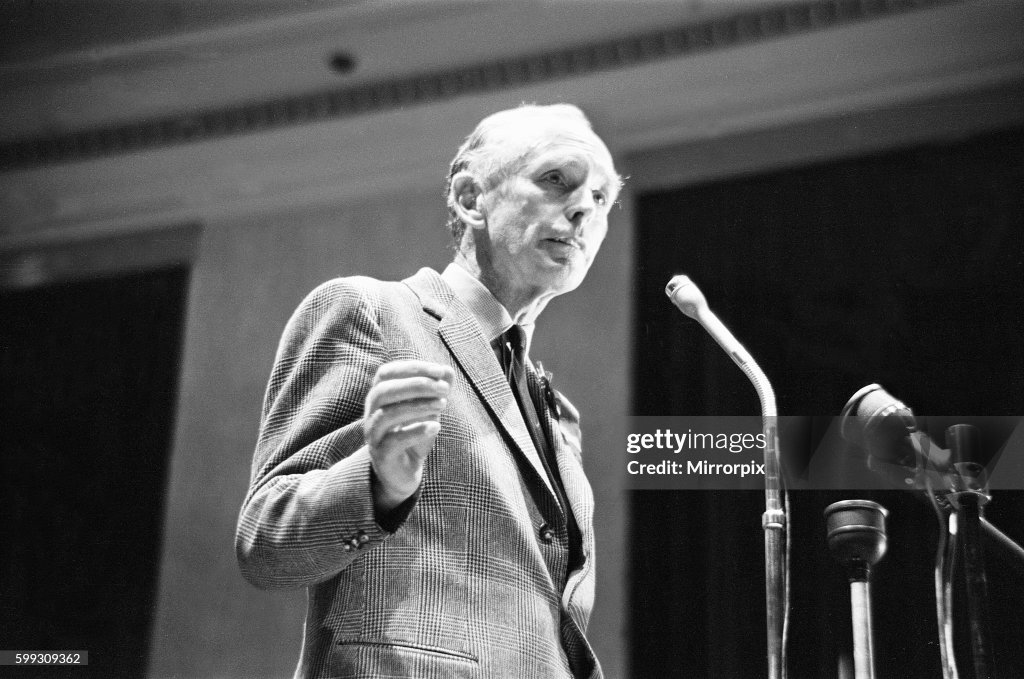
Former Vice-President Richard M. Nixon claims that Vietnam will be lost within a year and all of Southeast Asia within three years if the United States does not quickly change its policy. “The choice here is either winning the war in South Vietnam or fighting a much bigger one in Southeast Asia,” he said. “Now is the time,” he added, “to halt creeping Communist aggression.”
Nixon accused President Johnson today of “political demagoguery” and “irresponsibility” in his dispute with Senator Barry Goldwater over the use of nuclear weapons. Mr. Nixon proposed that the President and the Republican Presidential candidate confront each other in a public debate, possibly on television, on the issue of whether the commander of the North Atlantic Treaty Organization should ever have authority to unleash nuclear weapons. The former Vice President, stumping the Midwest for Mr. Goldwater and other Republican candidates, addressed a gathering of Cook county precinct captains here. Earlier he spoke at Mattoon and Aurora, Illinois.
“President Johnson’s attack on Senator Goldwater on the NATO nuclear weapons issue is political demagoguery at its worst,” Mr. Nixon said, continuing: “It is Johnson’s not Goldwater’s, position on this issue which is reckless and irresponsible. There are 26 NATO divisions, including six American divisions, in Europe. They face over 100 Communist divisions. Our NATO divisions would be at a terrible disadvantage except for the fact they are equipped with battlefield atomic weapons.” He said Communist troops were aware of this and the knowledge had kept the peace between Eastern and Western Europe. Then he declared: “Responsibility for authorizing the use of atomic weapons rests solely with the President of the United States.”
The United Arab Republic held Premier Moïse Tshombe of the Congo a diplomatic hostage today in Cairo because of the sealing off of the Egyptian Embassy in Leopoldville. Mr. Tshombe was informed by a representative of President Gamal Abdel Nasser that he could not leave the country until the Congolese Government withdrew police cordons it put around the Egyptian and Algerian Embassies in Leopoldville yesterday. Despite press reports from the Congo that restrictions on the embassies had been eased, theve was no indication late tonight that the United Arab Republic was prepared to let Mr. Tshombe leave. René Bavasa, the Congolese chargé d’affaires in Cairo, said Mr. Tshombe had been told of restrictions on his movements by Mohammed Fayek, director of President Nasser’s Office of African Affairs. Mr. Bavasa said Premier Tshombe had wired President Kasavubu to find out what the situation was in Leopoldville, but he denied rumors that Mr. Tshombe had ordered an end to the Congolese restrictions against the embassies.
In the fighting in Congo, Forty South African mercenaries and 20 truckloads of Congolese National Army troops recaptured the key lake port of Uvira today, sealing off the Congo rebels’ access to neighboring Burundi. Observers here consider the taking of Uvira the Government’s biggest victory since the rebellion broke out five months ago. Today’s successful attack was also viewed as a major psychological defeat for the rebels, who had proclaimed Uvira the first capital of their “Congolese Peoples Republic.” The rebels later transferred their headquarters to Stanleyville after its capture two months ago. With the capture of Uvira, the Government forces cut the road to Bujumbura, Burundi’s capital, only 40 miles across the border. The rebels have been recelving support from the Chinese Communists through Burundi.
Prime Minister Lal Badaliur Shastri of India appealed today to the conference of nonaligried nations to send a mission to Peking to urge Communist China not to carry out a nuclear test. Mr. Shastri, in his first speech to an international forum, recalled that the first conference of nonaligned countries — in Belgrade three years ago — had sent envoys to the United States and the Soviet Union, asking an end to nuclear tests. He continued: “This conference should consider recent disturbing indications that China is about to explode a nuclear device. I would propose that we might consider sending a special mission to persuade China to desist from developing nuclear weapons.” A week ago, Secretary of State Dean Rusk said that the United States believed that Communist China was almost ready to detonate a nuclear device. Mr. Shastri said that such reports indicated a “threat to humanity.” He reminded his listeners that India was using atomic energy only for peaceful purposes and went on: “I venture to take this opportunity of appealing through this conference to China to accept a similar discipline.” The Indian leader also raised the problem of the disputed Himalayan boundaries, saying, “Despite our acceptance of proposals made by nonaligned powers assembled at Colombo [in 1963], we have been unable to get a friendly response from China.”
The government of Southern Rhodesia announced that when Northern Rhodesia achieved independence as Zambia, the colony would officially refer to itself as Rhodesia.
A Japanese born in Hiroshima the day the first atom bomb was dropped on the city, August 6, 1945, ran into the Olympic stadium today bearing a reproduction of the games torch in a big final rehearsal for Saturday’s opening ceremony. The Japanese, Yoshinori Sakai, climbed the 164 feet of steps to ignite the flame in the Olympic bowl. The flame was then extinguished for the last time before Saturday’s ceremony. Flag‐bearers from many of the competing nations marched round the red cinder track and snapped to attention before the box in which Emperor Hirohito will sit. The rehearsal, the fifth to be held, lasted an hour. Schoolchildren occupied some of the 75,000 seats.
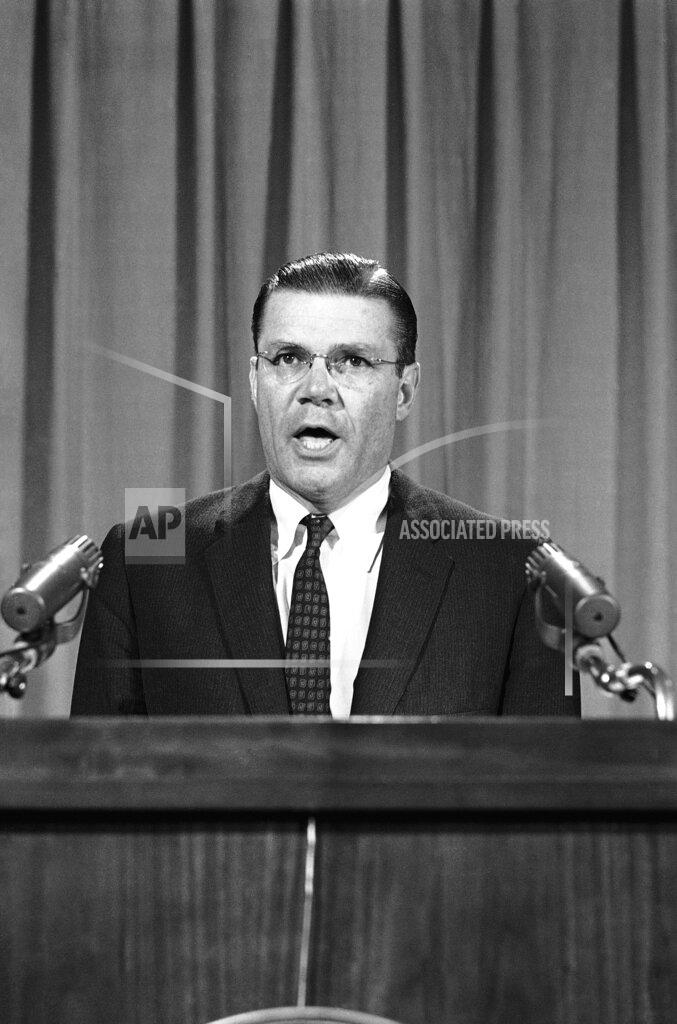
Secretary of Defense Robert S. McNamara issued a chart today showing Administration plans to increase strategic nuclear warheads and maintain their total megatonnage power at present levels over the next five years. The chart was intended to rebut charges by Senator Barry Goldwater that the Administration was deliberately planning a 90 percent phaseout of nuclear weapon delivery capability. In retorting, the Defense Secretary again accused the Republican candidate of making a statement “so misleading, so politically irresponsible and so damaging to our national security that it cannot be allowed to stand on the record.” Mr. McNamara’s language was similar to that he employed when he denounced Senator Goldwater’s statement during the New Hampshire primary last January that United States intercontinental missiles were undependable. At that time the Defense Secretary issued a rebuttal through his press office. Today he summoned newsmen to the conference room next to his office. Appearing in shirtsleeves, he read his statement to them. Mr. McNamara observed that the national defense program, “both before and during this Administration,” had been conducted on a bipartisan basis and “for this reason I do not believe it should be the subject of partisan debate.”
“But this [Goldwater] statement, like the Senator’s repeated charges that the United States is engaged in ‘unilateral disarmament’, threatens the credibility of our nuclear deterrent,” Secretary McNamara said. The fact is, he continued, “that over the next five years the number of warheads in our force structure will increase and the megatonnage will remain substantially the same.” Senator Goldwater has said that the withdrawal of bombers from the strategic forces and their replacement with missiles carrying small warheads was one basis for his prediction of a nucleat megatonnage reduction. The Defense Secretary told newsmen that the force structure in 1969 would still have 700 heavy bombers and that “these bombers can continue to operate in the nineteen‐seventies, depending on future decisions.”
[Ed: Remember when the Democrats made “misleading and irresponsible” completely bogus charges about a “missile gap” to boost the Kennedy-Johnson ticket in 1960? Pepperidge Farms Remembers…]
Walter Jenkins, one of the most hard-working aides to U.S. President Johnson’s staff, was arrested in the men’s room of the YMCA in Washington, D.C. and charged with disorderly conduct after being caught engaged in homosexual intercourse. The FBI leaked the story to the Republican National Committee, although Johnson’s opponent in the presidential election, Barry Goldwater, chose not to publicize it, and two Republican newspapers, the Chicago Tribune and the Cincinnati Enquirer, declined to publish the story. Jenkins resigned on October 14, after the Washington Star informed him that it would report the incident.
President Johnson signed today the $3.25 billion forelgn‐aid appropriation bill. It is the smallest amount for the program in five years. The bill provides money for one more year of economic and military assistance to United States allies around the world. It was $266 million below what the Administration had asked. The aid bill includes $1.05 billion for arms assistance, $773 million for development loans to the poorer nations, $509 million for the Alliance for Frogress in Latin America and $401 million to bolster the defense economies of countries bordering on the Sino‐Soviet bloc.
Mr. Johnson also signed a separate bill to authorize extension of the aid program for another year. In another action the President signed a $1.1 billion appropriations bill that will put $800 million into his anti‐poverty program. The supplemental funds bill — financing activities that were approved too late for regular appropriation measures — was the last measure item considered by Congress before it adjourned.
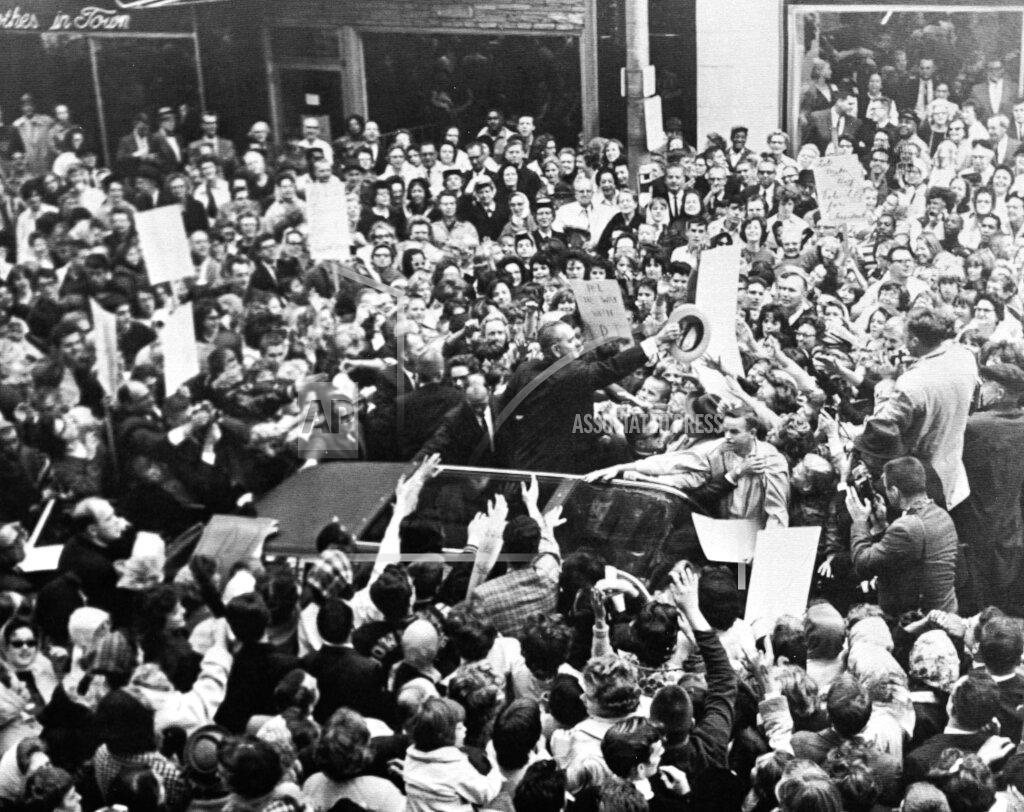
The ground mist still floated over the tobacco fields at Durham, North Carolina, as Representative Hale Boggs of Louisiana stabbed a finger toward the sun from the back platform of Mrs. Lyndon B. Johnson’s campaign train. You see that risin’ sun?” the House majority whip said. “It’s symbolic of this campaign. All over this country Lyndon Johnson is winning. He’s winning in New York. He’s winning in Vermont. He’s winning in Arizona. And he’s winning in North Carolina.” It was only 7 AM, and Mr, Boggs, who has proved a real crowd rouser on this eight‐state whistle‐stop tour of the South with the First Lady, was just trying out his voice before ripping into Senator Barry Goldwater. The heavily Black crowd of about 5,000 roared approval at the end of every sentence.
Mr. Boggs’s words and the mere smiling presence of the President’s wife set crowds wildly cheering throughout the day as the “Lady Bird Special” wound southward through North and South Carolina. The closing event of the day was a rally tonight in this historic — and conservative — port city that tends to live in its past. Several thousand persons or more turned out at every one of the dozen stops on this second day of the tour, no matter how small the community. As yesterday, they continued to be more impressive in both size and noise than those that greeted Lyndon Johnson in the same section during the 1960 campaign.
However, Mrs. Johnson was also booed by groups of young Goldwater backers for the first time on this trip, in Columbia, South Carolina. They also booed Senator Olin D. Johnston and Governor Donald Russell. There were chants of “We want Barry,” and Mr. Russell rose to say he hoped the audience would not do anything that would reflect on the “fair name of South Carolina.” The Goldwater backers continued booing. To quiet them, the First Lady said: “My friends, this is a country of many viewpoints. I respect your right to express your viewpoints. Now it’s my time to express mine.” Afterward, a woman waving a Johnson banner said, “We could weep.”
Two surging receptions in the Republican suburbs of New Jersey marked a campaign swing through generally hostile territory today for Senator Barry Goldwater. In West Orange, nearly 10,000 shouting, stamping partisans jammed the West Essex Armory, with hundreds shut outside and pounding on the doors. In this community, 10,000 others roared a welcome to the Republican Presidential candidate while still more clamored to get into the packed armory here. During a 14‐hour day of New Jersey campaigning, Mr. Goldwater moved north 150 miles from Atlantic to Bergen County, ignoring the split in his own party’s ranks in the state and concentrating his four appearances in Republican strongholds.
George Meany, president of the American Federation of Labor and Congress of Industrial Organizations, said today organized labor feared for its own survival and that of the nation if Senator Barry Goldwater were elected President. Meany said the “hopes and values” of working men and women “can vanish if political power should fall into the hands of union‐hating extremists, racial bigots, or woolly‐minded seekers after visions of times long past.”
The Dallas police chief said yesterday that an agent of the Federal Bureau of Investigation had asked him to deny that the FBI had failed to warn the police about Lee Harvey Oswald. The Warren Commission report on President Kennedy’s assassination criticized the FBI for such a failure. In a letter to the Warren Commission made public yesterday, Police Chief Jesse Curry said the request came from Gordon Shanklin, agent in charge of the Dallas FBI office on November 22, the day of the assassination.
Chief Curry told newsmen that day that although the FBI had known about Oswald, they had passed on no information to the Dallas police. “Within a few minutes of my statement to the press,” Mr. Curry said in the letter, Mr. Shanklin was on the phone. Mr. Curry said the FBI did not want to admit publicly that it had known about Oswald before the assassination, and asked him to retract his statement. Mr. Curry did not retract the statement. The FBI later acknowledged that it had had Oswald under investigation. Mr, Shanklin today refused to confirm or deny that he had made the phone call or the request.
Sixty-five Queens, New York parents, most of them accompanied by young children, were arrested yesterday after they had forced their way into Public School 149 in Jackson Heights for the third straight day in an attempted sit-in to protest integration.
“See How They Run” was broadcast on the NBC television network at 9:00 p.m. as the first “made-for-television movie”, a feature-length motion picture designed to accommodate commercial breaks in its two hours. NBC ads in American newspapers announced it with the phrase “First Time on any Screen Anywhere!” and celebrated the “world premiere” of the suspense thriller, starring John Forsythe, Senta Berger, Franchot Tone, Jane Wyatt and Leslie Nielsen. Critics praised the “experiment” as a solution for the shortage of good quality motion pictures available for TV, though one noted, “You can call it a movie if you wish. A more accurate description, despite the sumptuous and expensive production, might be that it was really more or less a two-hour television show.”
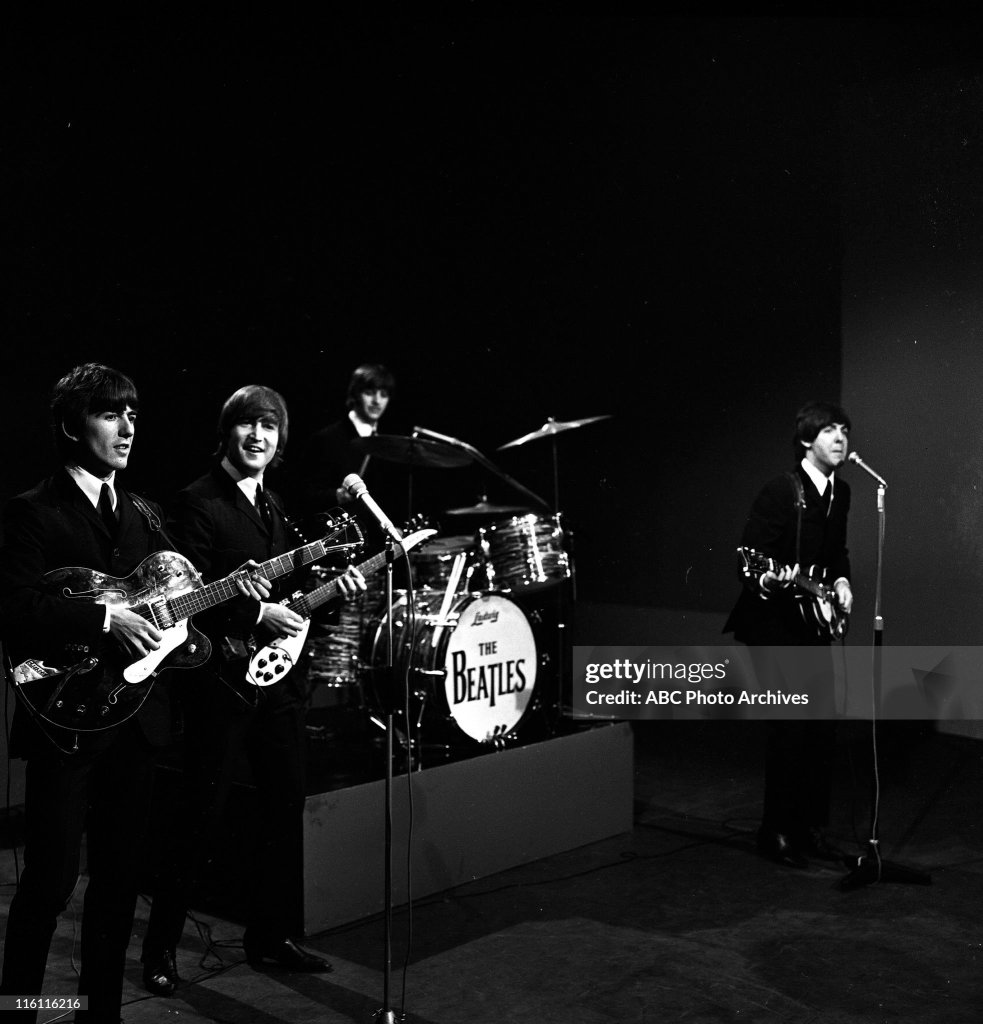
The Beatles appear on an episode of “Shindig” (ABC-TV) in the U.S.
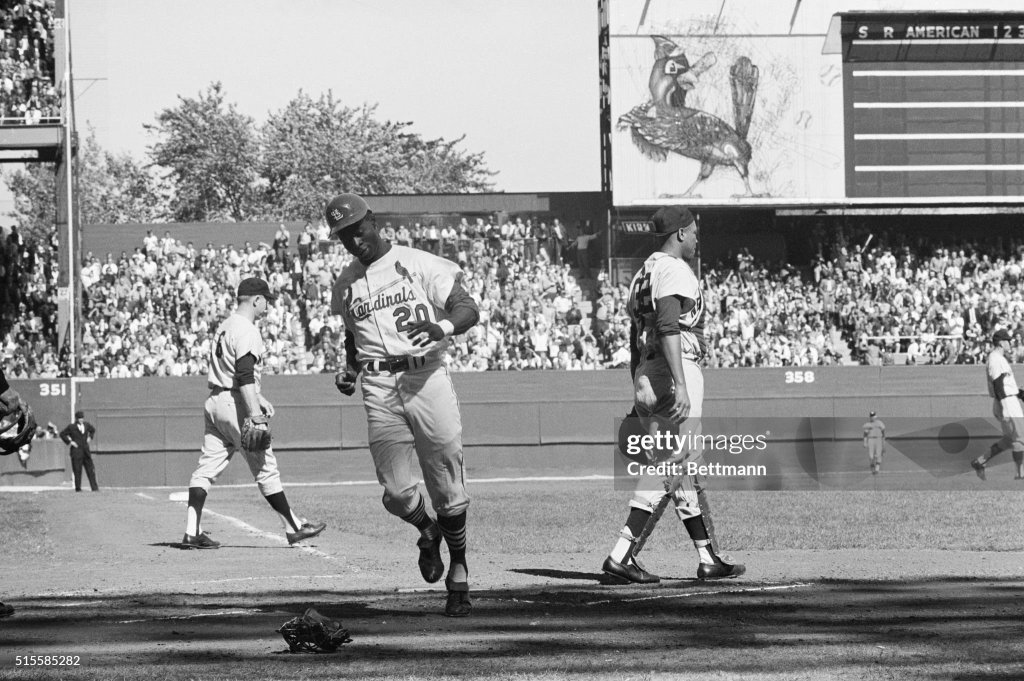
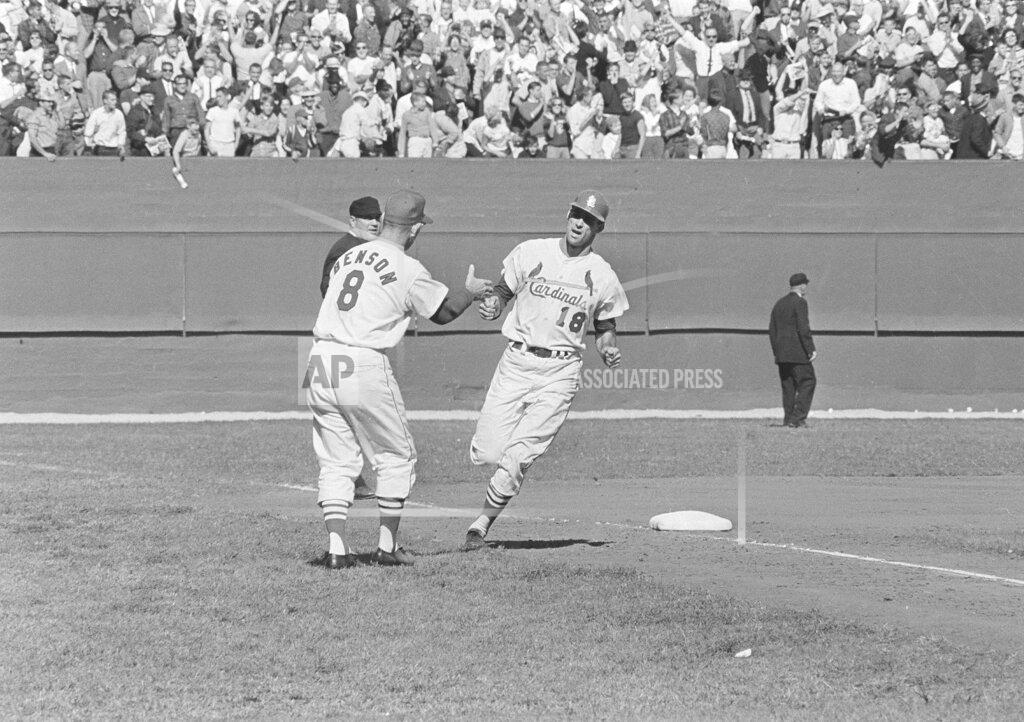
The 1964 World Series opens in St. Louis. Ailing Whitey Ford struggles as St. Louis wins the World Series opener 9–5 at Busch Stadium. Mike Shannon homers in a 4-run, St. Louis 6th inning. Tom Tresh loses Flood’s triple in the rally. Ray Sadecki and Barney Schultz combine for the win. The Cardinals’ scouting report indicated that injuries had taken their toll on Mickey Mantle’s defense and that he could be run on. They acted on this intelligence, taking extra bases repeatedly and scoring from second on singles in the second and sixth innings. The Cardinals also believed that they should swing early in the count against Whitey Ford, and this strategy also paid off, as Ray Sadecki, Carl Warwick, and Mike Shannon all drove in runs on the first or second pitches of their at-bats.
The Cardinals struck first in the bottom of the first off Whitey Ford on Ken Boyer’s sacrifice fly after two one-out singles, but Tom Tresh’s two-run home run after a single off Ray Sadecki put the Yankees up 2–1 in the second. They made it 3–1 when Clete Boyer singled, stole second, and scored on Ford’s single. The Cardinals cut the lead to 3–2 in the bottom of the inning when Mike Shannon hit a leadoff single, moved to second on a groundout, and scored on Sadecki’s single. Tresh’s RBI double in the fifth after two two-out singles made it 4–2 Yankees, but the Cardinals sent eight men to the plate in the sixth inning. Shannon’s home run after a single tied the game, then after Tim McCarver doubled, Al Downing relieved Ford and allowed a two-out RBI single to Carl Warwick and a single to Curt Flood to put the Cardinals up 6–4. The Yankees cut the lead to one in the eighth when Johnny Blanchard doubled and scored on Bobby Richardson’s single off Barney Schultz, but the Cardinals padded their lead in the bottom half, loading the bases off Rollie Sheldon on two walks and an error, then Flood’s RBI single and Lou Brock’s two-run double off Pete Mikkelsen put them up 9–5. Schultz retired the Yankees in order in the ninth for the save. Ford pitched with severe pain and numbness in his arm for much of the 1964 season, and that day he was again in pain and missing with sliders inside. Shannon came up looking for sliders and hit one 500 feet. This was the last World Series appearance by Ford, whose shoulder had been injured during the season. Ford had pitched in 22 World Series games with the Yankees, compiling ten victories, going back to the sweep of the Philadelphia Phillies in 1950, and set a record which still stands by pitching 33⅔ consecutive scoreless innings across three different World Series (1960–62).
Dow Jones Industrial Average: 873.78 (-1.36)
Born:
Sam [Samantha] Brown, English singer-songwriter (“Stop!”), in Stratford, England, United Kingdom.
Dan Savage, American sex-columnist and author, in Chicago, Illinois.
Rich Delucia, MLB pitcher (Seattle Mariners, Cincinnati Reds, St. Louis Cardinals, San Francisco Giants, Anaheim Angels, Cleveland Indians), in Reading, Pennsylvania.
Jim Bruske, MLB pitcher (Los Angeles Dodgers, San Diego Padres, New York Yankees, Milwaukee Brewers), in East St. Louis, Illinois.
David Bruce, Canadian NHL left wing (Vancouver Canucks, St. Louis Blues, San Jose Sharks), in Thunder Bay, Ontario, Canada.
Dwaine Turner, NFL nose tackle (Houston Oilers), in Houston, Texas.
Died:
Eugen Varga, 84, Hungarian-born Soviet economic adviser

 History Diaries