Leonid Brezhnev, General Secretary of the Communist Party of the Soviet Union, attended the East German Republic Day Parade of 1974, a military parade on Karl-Marx-Allee in East Berlin, commemorating the 25th anniversary of the establishment of East Germany. The United States, Great Britain and France, which did not recognize the right of East Germany to have soldiers in East Berlin, condemned the parade.
For the second time in less than two weeks the U.S. House of Representatives has voted to cut off military aid to Turkey after having overwhelmingly rejected a milder restriction on aid sought by President Ford and Secretary of State Kissinger. The voice vote directs a cutoff of military aid to Turkey until the President certifies to Congress that progress has been made toward settlement of the Cyprus conflict.
A 12-nation group including the United States, Japan, Canada, Norway and all Common Market countries except France had worked out a draft agreement on oil-sharing designed to meet future emergencies and shortages, the pact’s author said in Copenhagen. He is Gunnar Riberholdt, head of the Danish Foreign Ministry’s energy office. The agreement, which may be in force by mid-November, calls for emergency measures to be automatically set in motion if normal oil deliveries to the group as a whole or to one or more members fall by more than 7%, Riberholdt said.
The Armed Forces Movement, wielding effective power in Portugal, picked two prominent army officers to replace former President Antonio de Spinola and one of his conservative supporters on the seven-man ruling military junta, according to official disclosure. The two are Brigadier Carlos Soares Fabiao and Lieutenant Colonel Pedro Lopes Pires. Two other vacancies on the junta will be filled by air force officers, but those two were not named.
The Government of Premier Konstantine Karamanlis will resign tomorrow and open the way for a caretaker regime to conduct Greece’s first parliamentary elections in more than 10 years, a Government spokesman said today. Mr. Karamanlis, who assumed power when the military dictatorship collapsed in July, during the Cyprus crisis, will then be named to head an interim government until the voting on November 17, the spokesman, Panayotis Lambrias, told reporters. Several key ministers, including Foreign Minister George Mayros and Defense Minister Evangelos Averoff Tossizza, will remain with him in the caretaker government. Within 45 days after the election, the spokesman said, a plebiscite will he held on the future of King Konstantine, the 34‐year‐old monarch who has been living in exile in Britain. When the 1952 constitution was reinstated in July, the Royal powers in it were temporarily vested in the Greek president, General Phaidon Gizikis, who took office last November under the military junta that fell in July, and who was retained amid controversy by the Karamanlis Government.
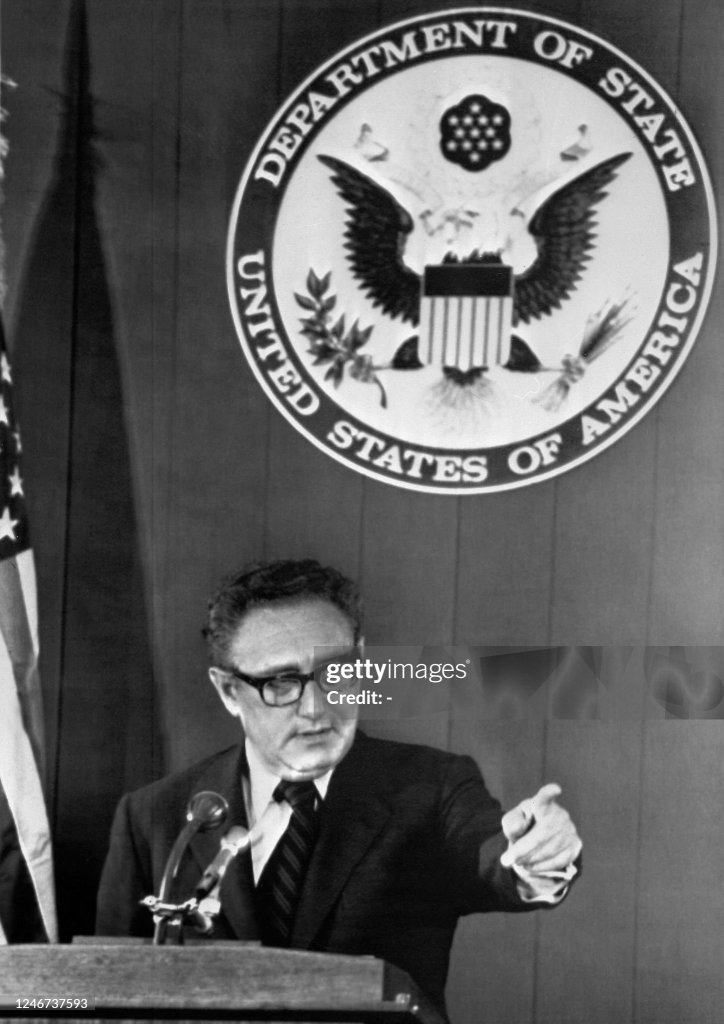
Secretary of State Kissinger plans to meet with three key Senators tomorrow to see if they can salvage a compromise granting trade benefits to the Soviet Union in return for a liberalization in Moscow’s emigration policies. The session with Senators Henry M. Jackson, Democrat of Washington, Jacob K. Javits, Republican of New York, and Abraham A. Ribicoff, Democrat or Connecticut, originally scheduled for today, will follow Mr. Kissinger’s acknowledgement at a news conference this morning that the Administration had withdrawn support for a statement that Moscow would allow at least 60,000 Jews and others to emigrate in the first year of a new trade bill. The abrupt Administration decision produced a crisis in the negotiations under way, for many months, for a formula to assure increased emigration in, return for trade concessions. In his news conference, Mr. Kissinger said, however, that he remained hopeful of a solution.
A Communist rocket and mortar barrage on the Mekong Delta district capital of Giáo Dục, 65 miles southwest of Saigon, killed 12 persons and wounded 30 others, the South Vietnamese military command reported. Most of the casualties were civilians. Despite the attack, the command noted that during the past 24 hours the fighting dropped to its lowest point in three months.
King Bhumibol Adulyadej promulgated Thailand’s ninth Constitution, but issued a memorandum objecting to its provision that the president of the Privy Council countersign the monarch’s order appointing senators.
A new nuclear controversy broke out in Tokyo today in the wake of reports from Washington quoting a retired American admiral as having told Congress that United States Navy ships carrying nuclear weapons had entered Japanese ports. Premier Kakuei Tanaka and other Government leaders, including the director of the defense agency, Sadanori Yamanaka, held a meeting at the Premier’s residence to discuss the reports. The Premier, in a request made through the Japanese Embassy in Washington, asked the United States Government for an explanation, United Press International reported. All of Tokyo’s leading newspapers devoted much of their front pages today to reports saying that the retired officer, Rear Admiral Gene Robert LaRocque, had testified September 10 that American warships had not unloaded their nuclear arms before entering Japanese ports. If true, such action would run counter to pledges by Japanese officials that there were no United States nuclear weapons in Japan and could be construed to violate the United States‐Japanese mutual security treaty. The treaty requires consultation before any major changes in the equipment of United States forces in Japan, and the introduction of nuclear arms is considered such a change.
The new leader of South Korea’s major opposition party, Kim Young Sam, threatened today to lead his party into struggle on the streets unless Pres ident Park Chung Hee revised the nation’s constitution. In the most vigorous and wide‐ranging open criticism of Mr. Park since the President declared martial law two years ago, Mr. Kim said that he did not advocate violence to change the constitution, which gives the President unlimited power. “But if the Government continues to suppress the problems of constitutional revision with high‐handed means,” Mr. Kim said, “there will be demands for democracy outside the normal political arena. In that event, I sternly proclaim here that I and my New Democratic party will have no recourse but to stand in the forefront of the national ranks and struggle.”
Until recently, a statement like Mr. Kim’s, which came in a policy address before the National Assembly, could have been punished by death. Even now the Government has enough power to silence Mr. Kim for expressing such thoughts openly. But President Park appears to have relented somewhat lately and his opponents have become more aggressive in their anti-Government stand.
The Philippines formally informed the United States and its allies in the Assn. of Southeast Asian Nations of its decision to recognize Peking soon. President Ferdinand E. Marcos said formal negotiations towards the normalization of relations with China were expected to begin when a mission of Philippine senior officials visits Peking late this month.
Riot police and warring tribes confronted each other uneasily across a wide valley in New Guinea’s troubled highlands after police volving 1,100 tribesmen armed with used tear gas to break up clashes inbows and arrows, spears and clubs. At least one person was killed in the attack — latest in an old land dispute — of three clans on the Nauru clan but there may have been more deaths since the combatants carried away their casualties.
President Joaquin Balaguer said the Dominican Republic would give the guerrillas who seized the Venezuelan consulate freedom to leave the country if they would release their seven hostages, including American Barbara Hutchison. He said the decision — the government’s “final offer” — was based on humanity and because three of the hostages were women. The safe conduct could be overseen by the ambassadors of the United States, Spain and Venezuela, he said in a nationwide radio-television address. He rejected the guerrillas’ demands for the release of imprisoned comrades.
An Argentine army major was killed outside his home in a suburb of Buenos Aires by terrorists firing automatic weapons, but police reported that the officer’s 19-year-old son, firing a .22-caliber rifle, killed one terrorist and wounded two others, one seriously. A fourth gunman escaped. Major Jaime Jimeno, 52, was the fourth officer murdered in terrorist attacks since a Marxist-Leninist guerrilla organization called the People’s Revolutionary Army declared last month that it would assassinate 16 officers of the Argentine army.
The United States has agreed to sell Chile 18 Northrup F-5E fighters and 16 Cessna A-37 attack planes, United States officials said today.
An official of the colonial Government ruling Angola predicted today that a coalition of African guerrilla movements and political parties, black and white, would be formed before the end of the year to take control of this Portuguese colony.
When President Ford addresses a joint session of Congress tomorrow afternoon, he will present a “package” program for controlling inflation by July 4, 1976, according to the White House press secretary, Ron Nessen. The President’s proposals, Mr. Nessen said, must be looked at and carried out as a “package, not as a shopping list for picking and choosing.”
President Ford’s testimony to Congress about his pardon of former President Nixon may be postponed to avoid prejudicing potential jurors in the Watergate cover-up case. The President is scheduled to testify to the House Judiciary Committee’s subcommittee on criminal laws this Thursday, but this may be put off if the jury for the Watergate trial has not been selected.
The chairman of the Federal Trade Commission has attacked a number of federal regulatory agencies, including the Civil Aeronautics Board and the Interstate Commerce Commission, charging them with protecting the industries they regulate in an unhealthy relationship that raises the cost to the consumer unnecessarily and thus contributes to inflation.
The Senate has voted to end four national emergencies dating from the Depression and to curb the authority of the President to govern by emergency proclamation. The action, by voice vote and without debate, reflected a continued effort by Congress to regain powers that its members have ceded to the White House over several decades.
The Ford administration has announced a limited system of controls over large grain export sales to prevent sudden, excessive drains on diminished supplies and to avert a recurrence of last weekend’s “very embarrassing” cancellation of two large deals with the Soviet Union. The plan calls for advance approval of sales above 50,000 tons of wheat, corn, sorghum, soybeans and soybean meal.
Wilbur Mills, Chairman of the Ways and Means Committee of the U.S. House of Representatives for almost 17 years, had his political career ended by a bizarre incident of public intoxication. Mills was drunk when police pulled over the car he was riding in, along with his extramarital mistress, Fanne Foxe. Although he won re-election as a Congressman from Arkansas, he compounded his reputation for drinking irresponsibly on November 30 as reporters followed him and would resign on December 1.
Spurred by the Watergate affair, the Senate passed and sent to the House legislation to end four existing states of national emergency, one dating back to 1933, and to curb a President’s sweeping powers in an emergency situation. The bill, designed to prevent possible executive abuses, would kill or modify 470 statutes still technically in effect but not exercised, such as establishment of detention camps or seizure of private property. The bill also would establish procedures under which Congress could terminate future states of emergency by a majority vote not subject to veto.
Members of a House judiciary subcommittee were reported to be heavily in favor of postponing President Ford’s testimony Thursday on his pardon of former President Richard M. Nixon if the Watergate coverup jury has not been impaneled by then. The concern was that the publicity Mr. Ford’s appearance would generate might be prejudicial to jurors if they have not already been sequestered. Rep. Wiley Mayne (R-Iowa) said he was the only member to object strongly to a delay. Chairman William L. Hungate (D-Missouri) said the subcommittee “will make a decision one way or the other” today.
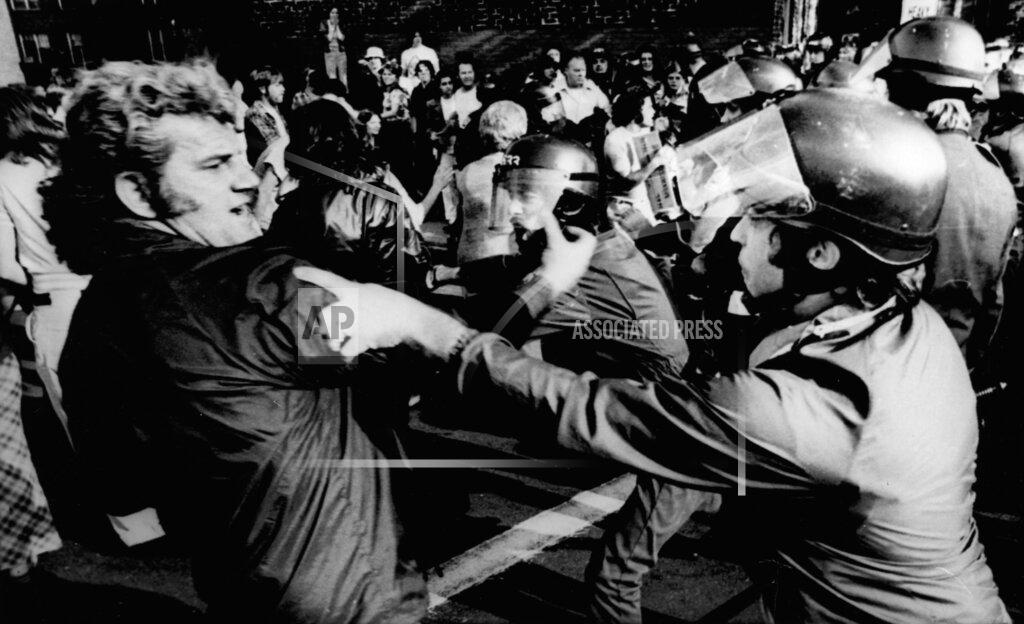
There were more disorders in south Boston where court-ordered busing of school children entered its fourth week. The tensions are not only racial but are also developing into confrontations between whites and the Police Tactical Patrol Force. A black motorist was beaten by a crowd of whites before being rescued by a police official. Fifteen persons were arrested and scattered fights reported in various sections of the troubled area.
A white youth died after being shot through the neck from a bus filled with black students that was being stoned by whites in Destrahan, Louisiana. Four other students, also white, were injured. The dead youth, Timothy Weber, 13, of Norco, was shot while standing by his parents. Another student underwent surgery for a stab wound. The disturbance, involving about 400 students, was believed triggered by a fight at a football game, police said.
A young father of two was sentenced in Phoenix to nine to 10 years in prison for involuntary manslaughter in the deaths of five men who perished last May in the desert on the Gila Bend Gunnery Range after being left without food or water. Testimony at the trial of Lewis J. Dykes, 27, indicated he had recruited the victims and seven other men to steal spent brass shell casings from the Air Force reservation. Witnesses said Dykes abandoned the men when the theft operation was spotted by a helicopter.
Angry parents stepped up a crusade against certain school textbooks by trying to block bus garages in Charleston, West Virginia. Eighteen persons were arrested. Violence over the issue first erupted last month. Sign-carrying, flag-waving parents, led by preachers who blasted the textbooks, now undergoing review, as “filthy, rotten and anti-American,” picketed school bus sites around the county. Officials said 80.4% of the 45,000 pupils in the system were present. They said attendance was 12% below normal.
A special New York state grand jury investigating the petroleum industry said that the country’s major oil companies had access to each other’s inventories, knew in advance that fuel shortages would exist last year, yet failed to produce sufficient consumer products despite the capability to do so. In its findings, reported to a Supreme Court Justice, the grand jury does not explicitly charge the oil companies with conspiring to create last winter’s fuel shortages. The jury said the companies’ failure to produce sufficient gasoline and fuel oil in the first six months of 1972 made the nation vulnerable to a cutoff. State Attorney General Louis J. Lefkowitz went a step further, saying, “It remains a matter of speculation whether the Arabs would have imposed the embargo at all” if the relatively small 1972 shortages had not existed.
High pesticide levels have been discovered in the fat of deer in an Oregon area recently sprayed with DDT, the U.S. Forest Service reported. An exception in the ban against DDT was made last summer to attack a tussock moth invasion in Pacific Northwest forests. Since the sprayings, an analysis of four deer killed by automobiles showed 8 to 31 parts per million (ppm) of DDT in their fatty tissues, a U.S. Forest Service spokesman said. Federal standards allow no more than 5 ppm of DDT in meat sold in stores. The spokesman said DDT levels could go as high as 123 ppm, but that high DDT levels created no known health hazard to humans.
Congress should grant “amnesty” to businesses by untangling anti-pollution laws that overlap and conflict, Rep. John Rhodes (R-Arizona) said. The Industrial Revolution created pollution over a 200-year period, he added, and “we cannot shut down America in a vain attempt to restore overnight the panorama that greeted the pioneers.” Government should be “a helper instead of a tyrant as far as business goes,” Rhodes said in his speech before the American Mining Congress in Las Vegas.
NFL Monday Night Football:
New York Jets 17, Miami Dolphins 21
The New York Jets extended the Miami Dolphins right to the end of their game here tonight but lost, 21–17. It was close. On the New York team’s next‐to‐last offensive play, Tim Foley, the Miami cornerback, knocked the ball out of Jerome Barkum’s hands as Barkum went for a pass from Joe Namath at the Dolphin 2‐yard line. On the Jets’ last offensive play, with 13 seconds remaining, another Namath pass went off the hands of the leaping Barkum, and Jake Scott intercepted the deflected football for Miami. This was a two‐part game, played in muggy 85‐degree heat before a crowd of 60,727 in the 80,000‐seat Orange Bowl. There were 20,000 noshows. Miami had all the best of Part I, which was the first half, while the Jets were very much alive and kicking in Part II, the second half. Two big plays in the final period decided the contest. Hubert Ginn, an obscure reserve running back for the Dolphins, sprinted around right end and raced 41 yards for a touchdown that put Miami ahead, 21‐10. Then Namath struck. He completed the longest touchdown pass play in Jet history, 89 yards to Richard Caster, his tight end. Caster caught the ball among four Dolphins and ran 55 yards more for the score, which left New York 4 points behind with 6 minutes remaining. But the Jets came up just short on their last-minute drive.
Dow Jones Industrial Average: 607.56 (+23.00, +3.93%).
Born:
Shannon MacMillan, American women’s soccer football midfielder, 1996 Olympic gold medalist, 2000 Olympic silver medalist, and 1999 World Cup champion with 177 caps for the U.S. national team; in Syosset, New York.
Benjamin Oberman, American pairs skater (with partner Naomi Grabow), in Denver, Colorado.
Alexander Polinsky, American actor (Adam-“Charles in Charge”), in San Francisco, California.
Allison Munn, American actress (“That ’70s Show”, “One Tree Hill”), in Columbia, South Carolina.
Amit Agrawal, Indian inventor and mechanical engineer leading the development of diagnostic microdevices; in Allahabad, Uttar Pradesh, India.
Franco Simon (stage name for Franco Simon Neelankavil), Indian composer and vocalist for Malayalam language films; in Thrissur, Kerala, India.
Charlotte Perrelli [Nilsson], Swedish singer; in Hovmantorp, Sweden.
Died:
Henry Cadbury, 90, American Bible scholar and Quaker who co-founded the American Friends Service Committee (AFSC), died of a cerebral hemorrhage following a fall down the stairs at his home. In 1947, Cadbury accepted the Nobel Peace Prize in Oslo when it was awarded to the AFSC and the British Friends Service Council.
Kenneth Leslie, 81, Canadian poet, songwriter and political activist.
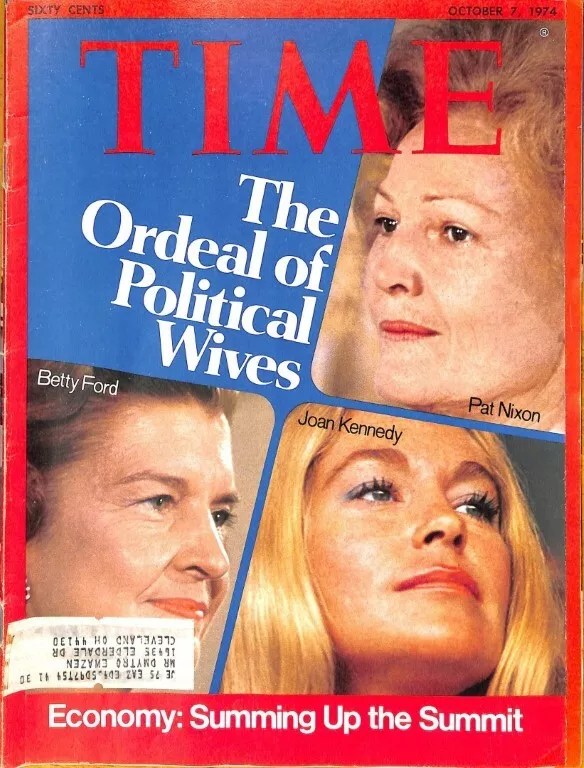

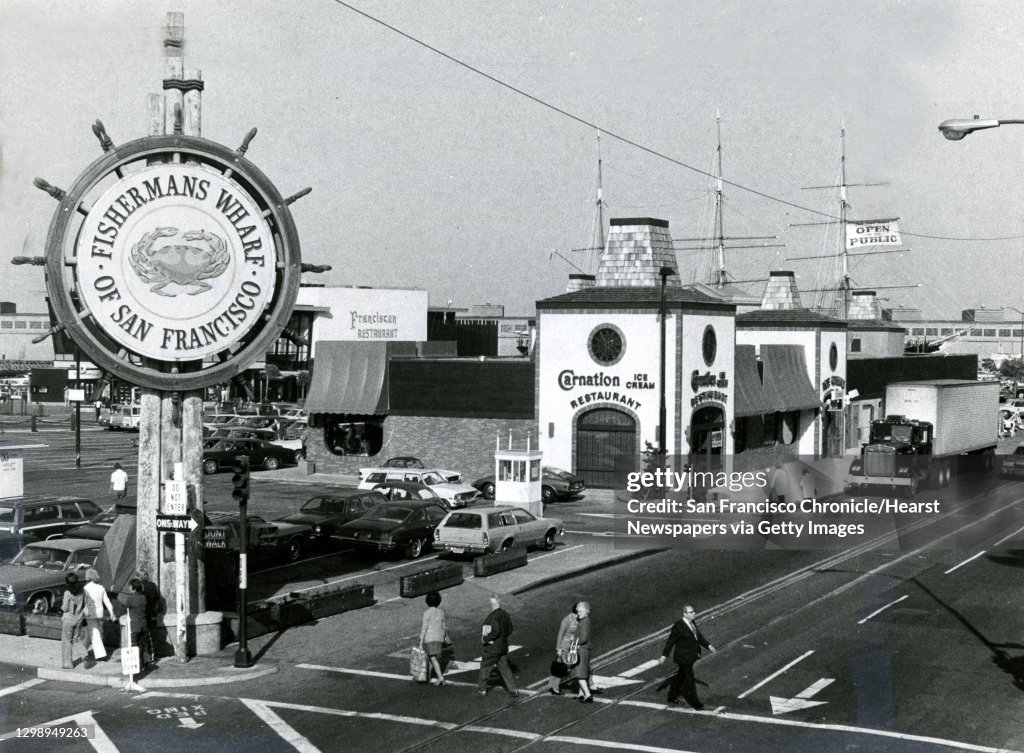
[Ed: The Franciscan Restaurant, in the background, is still there. One of the last of the old Fisherman’s Wharf restaurants. The ice cream place is long gone. A Boudin’s Bistro is in a new building on the site.]

 History Diaries