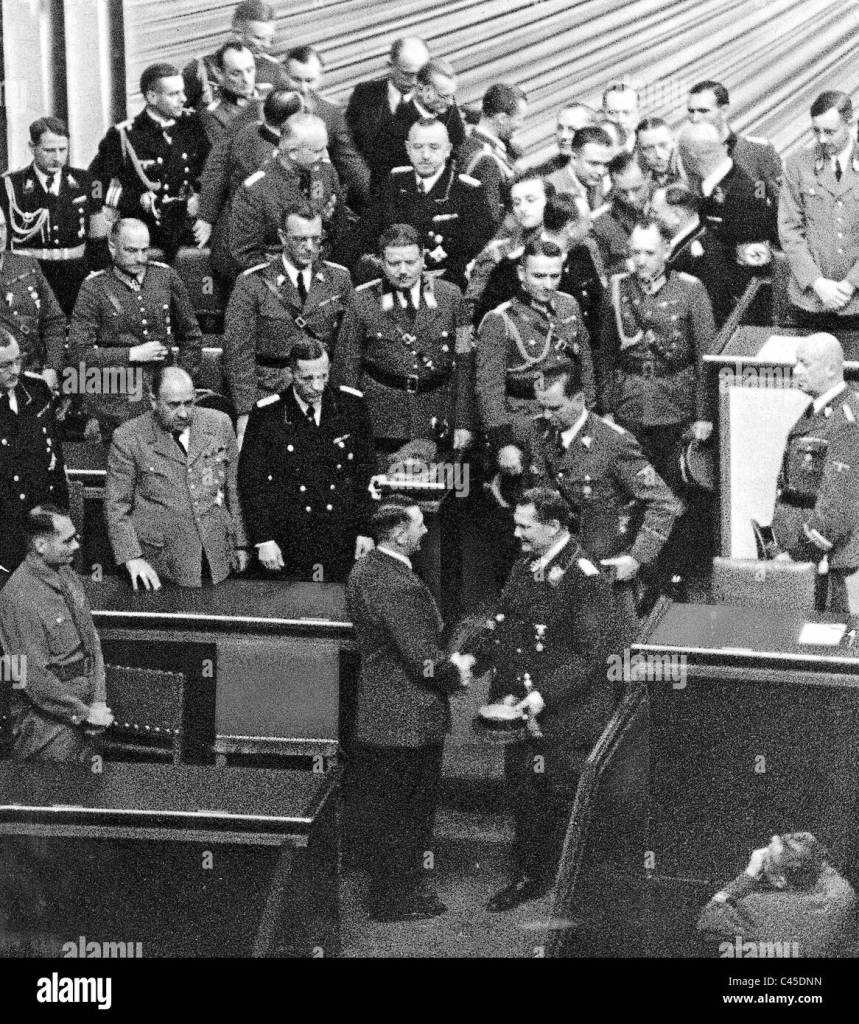
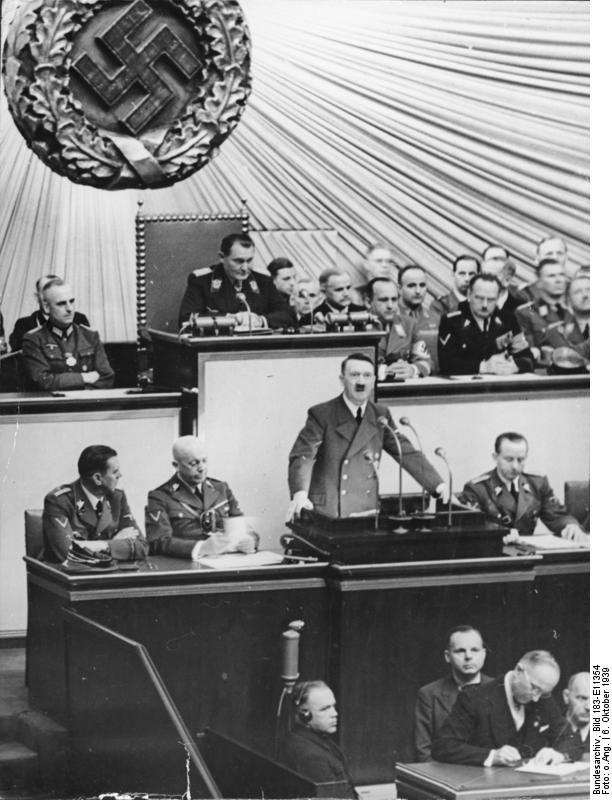
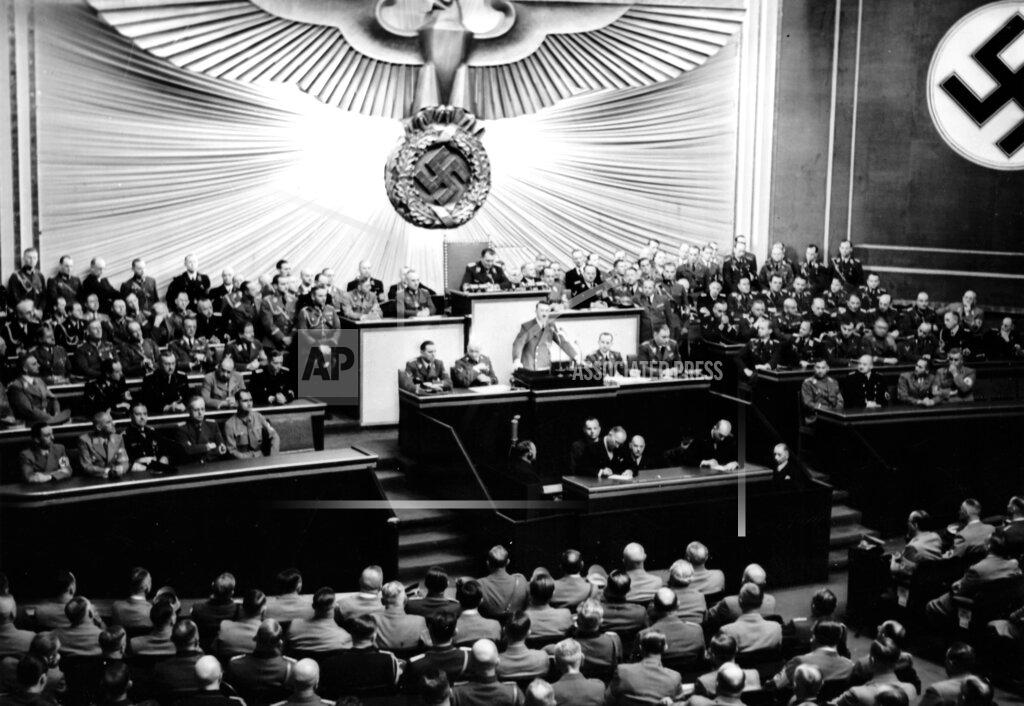
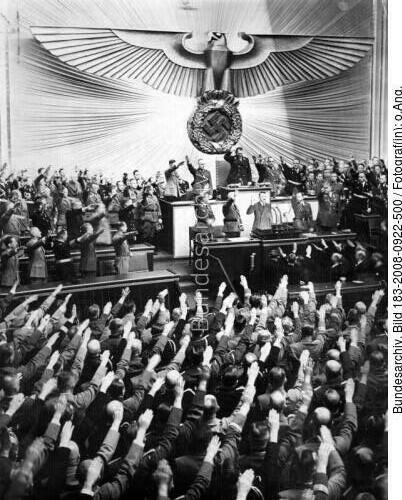
Hitler addressed a special session of the Reichstag. After speaking at great length about the victory over Poland he then proposed an international security conference, hinting at desire for an armistice by saying that such a conference would be impossible “while cannons are thundering.” Hitler declares that up to now he has only corrected the unjust Versailles Treaty and that he has no war aims against Britain and France. He blames warmongers like Churchill for the present state of affairs and Hitler calls for a new European conference to end the war, and to settle Germany’s differences with England and France. Hitler declares to the Reichstag that Germany has “no further claims against France,” and adds, “Nowhere have I ever acted against British interests.” Both Britain and France will refuse.
Last organized Polish resistance ceases at Kock as Major General Franciszek Kleeberg and the last remnants of the Polish Army, about 8,000 men, surrendered to German forces. General Kleeberg’s ceremonial surrender took place at the Jabłonowskich Palace in Kock.
“The Phony War” or “Sitzkrieg” now begins in earnest. For months there will be little happening on the Western Front, though the war at sea, particularly the growing Battle of the Atlantic, rages. When the long quiet ends, it will quickly build to a devastating crescendo.
It was officially announced today that Lieutenant General Hiroshi Oshima, Ambassador to Berlin, has been recalled. The army was consulted yesterday before the order was issued.
“Criminal mentality” was the British Admiralty’s official comment tonight on the suggestion made to Washington by Grand Admiral Erich Raeder, head of the German Navy, that an American ship, the Iroquois, was to be sunk in circumstances resembling the loss of the Athenia.
The British hold the League of Nations as dead. The peace machinery has collapsed, they inform the Secretary General.
To the British, Adolf Hitler was unconvincing in the role of Europe’s pacifier in the tableau he staged before the Reichstag today to boast of the success of Nazi arms in the East and to urge that the democracies let him call off the war in the West. The general feeling here was that Herr Hitler’s oratory had done little to restore European peace, which was destroyed when his generals invaded Poland. The Hitler peace plan had two major defects, said a Ministry of Information statement:
In the first place, something more is needed than the unsecured promises of the head of the German Government, which in the past have proved worthless, to induce the French and British to lay down the arms they took up reluctantly.
The second fault of Herr Hitler’s scheme to dictate peace before the war had really begun on the Western Front, where the British armies are gathering now, was said to be its utter failure to make any suggestion of reparation for the wrongs done to Poland and Czecho-Slovakia. While Herr Hitler declared he was making a final effort to spare the democracies and his own country the horrors of war, the belief existed here that the last word had not been said in the cause of peace.
It was inconceivable to many that even Herr Hitler could be so unaware of the temper of the British and French peoples that he thought he could impose upon them such one-way terms. It was thought here that Prime Minister Neville Chamberlain, having stated Great Britain’s minimum demands as the end of threats of German aggression and security for small States, Herr Hitler was having a go at stating the German demands so that a possible intermediary might find common ground for a meeting of the belligerents.
Another war council is held in France.
French military authorities investigating the reorganized Communist party and activities of its members tonight were seeking Maurice Thorez, former general secretary of the Communist party, on a charge of desertion from the army. For four days now he has been reported absent at rollcall of the military unit to which he was called for service.
Soviet press editorials today on the newly concluded mutual assistance pact between Russia and Latvia make a particular point of emphasizing the Soviet Government’s attitude toward smaller States in respect to their independence. “The Soviet-Latvian mutual assistance pact,” writes Izvestia, “is the outcome of friendly relations based on mutual trust in which the Soviet Union’s respect for the independence of other States was a model. The Soviet Union never exploited the position of being a great and strong power confronting small countries.” The editorial asserts the doctrine of the freedom and equality of peoples, on which this State is declared to be founded, extends to other States, whether great or small and whether having the same or different State structures.
It is also asserted that the Soviet Union, “in days when the flames of war are about to envelop the entire European Continent and when aggressive imperialist powers are ever goading one country against another to seek and continue war,” has assured peace not only for herself but also for her neighbors, whose peoples and governments consequently are deeply grateful “to this great Socialist State.”
[Ed: BWAHAHAHAHAHAHA… Meanwhile, on the Finnish border…]
The Finns mobilize their standing military forces, about 21,000 men.
The British motor merchant Lochgoil struck a mine and was damaged in the Bristol Channel five nautical miles (9.3 km) off the Scarweather Lightship (Trinity House) (51°24′N 4°00′W). The 9,462-ton Lochgoil was carrying general cargo, including AA guns. There were no casualties. She was beached in Mumbles Bay. Lochgoil was on a voyage from Vancouver, British Columbia, Canada to Newport, Monmouthshire. She was refloated on 28 November, repaired and returned to service as Empire Rowan.
The British cargo ship Mahratta (6,690 GRT, 1917) ran aground on the Fork Spit, Goodwin Sands, Kent and was wrecked. Her crew were rescued by the British hoveller Lady Haig.
U.S. freighters Black Gull and Black Falcon are detained by British authorities.
U.S. freighter Exeter, detained at Marseilles, France, the previous day, is released. She subsequently reports having been examined several times by French naval authorities.
The War at Sea, Friday, 6 October (naval-history.net)
Light cruisers CARDIFF and DELHI departed Scapa Flow for Northern Patrol, arriving back on the 13th. At this time, six cruisers were at sea on Northern Patrol.
Steamer LOCHGOIL (9462grt), carrying anti-aircraft guns, was damaged five miles off Scarweather Lightship (Swansea) in 51 24N, 04 00W on a mine laid by U.32 on 17 September. She ran herself aground in Mumbles Bay to prevent sinking, was salved on 28 November and drydocked at Swansea.
Convoy BC.9S of nine steamers, including BARON GRAHAM (Commodore), CERVANTES and TASSO, departed the Bristol Channel escorted by destroyers WESSEX, VANESSA (SO), VENETIA and VISCOUNT, and safely arrived in the Loire on the 8th.
Convoy SA.11 of one steamer departed Southampton, escorted by destroyer VIVACIOUS, arriving at Brest on the 7th.
Convoy FN.17 departed Southend and reached Methil on the 8th, while FS.17 departed Methil and arrived at Southend on the 8th.
Destroyer ICARUS departed Malta after completing her collision repairs, left Gibraltar on the 8th and arrived at Plymouth on the 11th.
Light cruiser CAPETOWN, due to be assigned to the Northern Patrol, left Gibraltar for Malta at 1730/6th, and arriving on the 8th, commenced repairs which completed on the 21st.
American destroyer USS BORIE (DD-215, LCDR R M Morris) off the north coast of St Thomas, Virgin Islands, reported a submarine on the surface, which submerged on her approach. It turned out to be one of the French submarines in the Caribbean.
Today in Washington, the Senate’s debate of the Neutrality Bill continued with a fiery oratorical duel between Senator Thomas of Utah, supporter of the bill, and Senator Downey of California, an “isolationist” opponent of the measure. Despite increased verve, interest seemed on the wane and the Senate gallery, crowded earlier in the week, was only about half filled. With many Senators already out of town, the Senate adjourned at 4:56 PM until noon on Monday.
Impatience with oratory and a desire for early action on the Neutrality Bill were evidenced in the Senate today by an adjournment of the debate over the weekend and a compromise proposal by isolationists. The sentiment for action instead of words was further evidenced by the half-filled gallery and empty Senate seats which raised the question of whether even a quorum was present.
The Administration’s leaders were quick to react to the isolationist “peace” offering, which served only to emphasize that the bill’s opponents were interested mainly in preventing repeal of the embargo provision of the present act, and would like a law for strictly “cash-on-the-barrel-head” payments instead of the proposed extension of ordinary commercial ninety-day credits.
Action on a proposal by Senator Tobey of New Hampshire, Republican, to divide the bill and act separately on the cash-and-carry feature was promised by leaders of the Administration forces in answer to the “isolationist” overture. A test, with both sides confident of their strength, was expected on Monday. Administration supporters, regretting the isolationist proposal of peace, took the attitude that since they had the votes no compromise was necessary.
The isolationist olive branch was extended by Senator Borah, the group’s leader, following a meeting this morning of twelve Senators. “We are still willing, as has been our position from the first,” Senator Borah declared, “to accept the Administration bill if the Administration will leave in the law the embargo on arms, ammunition and implements of war and provide for cash instead of credit on other commodities. But we will not yield to the repeal of the arms embargo, and it is not necessary if neutrality is the sole objective.”
Denial that modification of the Neutrality Act — termed a strictly domestic statute — would be intervention by the United States in the European war, and a countercharge that repeal of the embargo would mean the eventual underwriting by Americans of billions in munitions for England and France, highlighted the fourth day of debate. The orators, Senator Thomas of Utah, Administration supporter, and Senator Downey of California, isolationist, speaking with increased fire and verve, failed to enliven the capital’s apparently failing interest in the debate. After the two Senators together had occupied the floor for five hours, the membership had so melted away that leaders hesitated to test a quorum.
Senator Thomas replied to contentions raised by Senator Borah in the opening day’s debate and wound up with the declaration: “Surely no one even in the loosest manner can assume that a modification of an American domestic law is an act against the sovereignty or the authority of another State.”
The Dies Committee of the House resumed its hearing on activities of the German-American Bund.
Congressman Martin Dies reports a list of Reds in the capital. Representative Dies of Texas announced tonight that a document disclosing Communist activities in the Washington Navy Yard, the Government Printing Office and other Federal departments here had been seized by the Committee on un-American Activities, of which he is chairman. He says the document links high Navy yard and printing office workers to Communists.
A Gallup poll was published in the United States asking, “What should be the policy in the present European war? Should we declare war and send our army and navy abroad to fight Germany?” 95% of Americans polled said no.
Judge Saul S. Streit in General Sessions yesterday set October 30 for the start of the trial of Fritz Kuhn, German-American Bund leader, before Judge James G. Wallace in that court on an indictment alleging he stole about $14,500 from the bund. The court at the same time granted another request of Assistant District Attorney Herman J. McCarthy to impanel 200 blue-ribbon talesmen.
New York Mayor La Guardia was greatly applauded today when he appealed to the American Federation of Labor’s convention to heed the urgent words of President Roosevelt and end the four years of intra labor strife with the Congress of Industrial Organizations.
Cigarette sales decreased 50 percent in New York City. Merchants blame the combined state and city taxes with a 3-cent-per pack increase.
The comedy film “Ninotchka” starring Greta Garbo and Melvyn Douglas was released. The film was marketed with the tagline, “Garbo Laughs!”
The Battle of Changsha ended in Chinese victory. Chinese forces repel Japanese forces to win the First Battle of Changsha. Over 40,000 Japanese troops are estimated to have died in the 11-day battle in which the Japanese expeditionary force suffers its first major setback against Chinese Nationalist forces since the fighting began 2 years ago. As well as heavy troop losses, the 120,000-strong Japanese force has also lost large quantities of arms as it was ambushed by Chinese troops defending Changsha, the capital of Hunan province.
The defeat of the Japanese forces in Northern Hunan is being hailed in Chungking as “the biggest single Chinese victory in the war.” The Chinese troops continued today their shattering counter-offensive against Japanese troops who a week ago were almost at the gates of Changsha.
Dow Jones Industrial Average: 150.61 (+0.13)
Born:
Doug Bereuter, American politician (Rep-R-Nebraska, 1979-2004), in York, Nebraska.
John LaFalce, American politician (Rep-D-NY, 1975-2003), in Buffalo, New York.
Ellen Travolta, American actress (“Grease”, “General Hospital”), older sister of John Travolta, in Englewood, New Jersey.
Jack Cullen, MLB pitcher (New York Yankees), in Newark, New Jersey.
Melvyn Bragg, broadcaster (“The South Bank Show”, 1978–2010), author and parliamentarian, in Carlisle, Cumbria, England, United Kingdom.
Naval Construction:
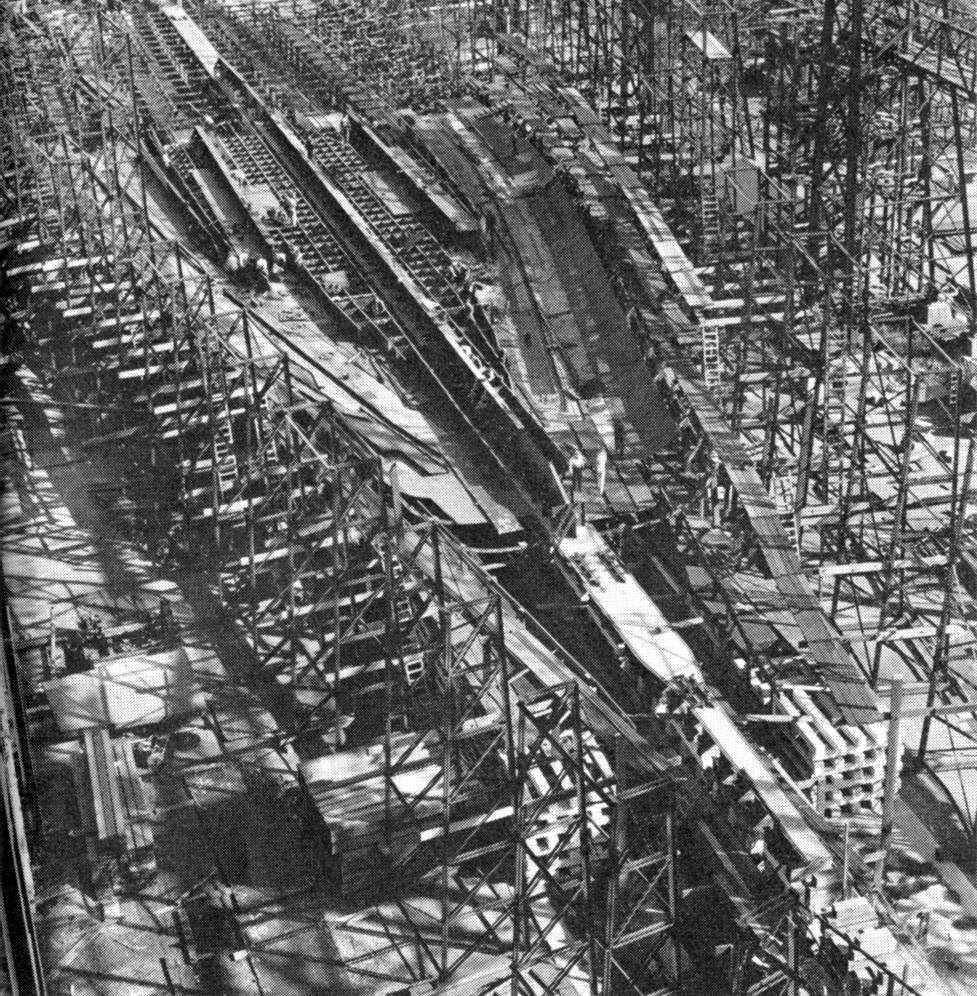
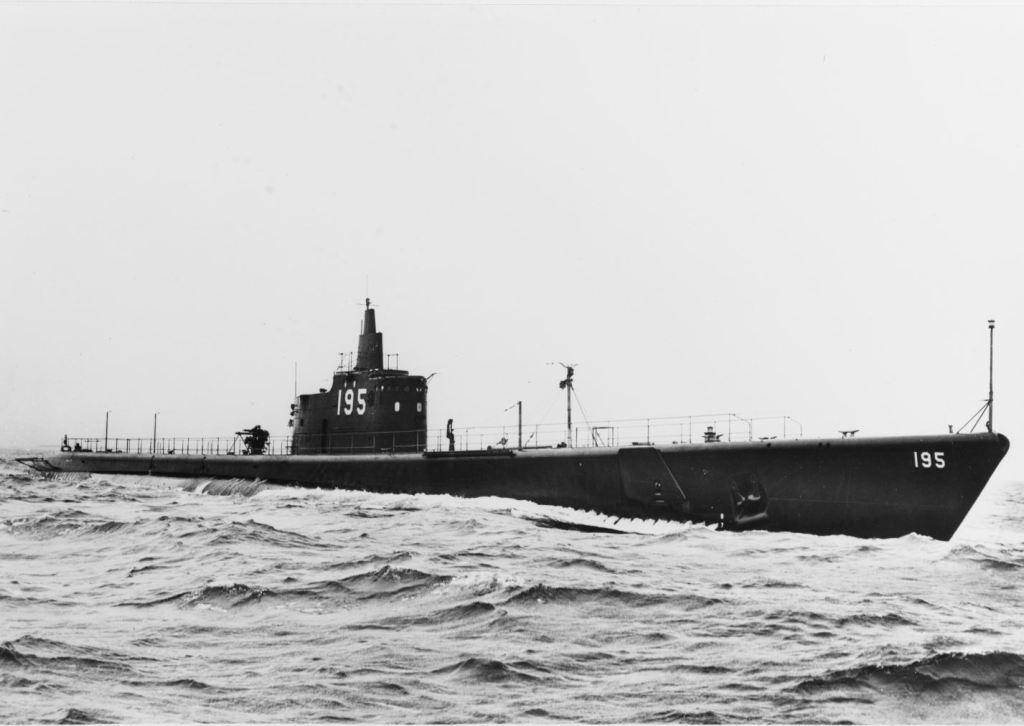
The U.S. Navy submarine USS Mackerel (SS-204), first of her class of 2, is laid down by the Electric Boat Co. (Groton, Connecticut, U.S.A.).
The Royal Australian Navy auxiliary minesweeper HMAS Olive Cam is commissioned.
The Royal Australian Navy auxiliary minesweeper HMAS Goolgwai is commissioned.
The Royal Australian Navy auxiliary minesweeper HMAS Korowa is commissioned.
The Kriegsmarine (German Navy) vorpostenboot V 207 Otto Bröhan (later V 206 Otto Bröhan) is commissioned.
 History Diaries