South Vietnam filed a complaint with the International Control Commission today charging infiltration by two North Vietnamese Army companies. These groups subsequently were reported to have suffered heavy losses in a pitched battle in Quảng Trị Province last month. The United States Military Assistance Command earlier denied that the Communist force was an integrated North Vietnamese unit. Saigon’s protest to the commission, which is charged with patrolling the frontier between the two parts of Vietnam, noted the appearance of the two companies on September 18. “These units belonged to the North Vietnam Regiment 246 and were the main Communist forces that infiltrated into the Triệu Phong area of Quảng Trị,” the protest letter said.
An American military spokesman was unable to explain the apparent conflict between the Vietnamese and American intelligence reports of the incident. He said he was aware of no change in the official American estimate that the two units had not infiltrated recently and that they were considered units of the South Vietnamese rebel army as contrasted with integral units of the Army of North Vietnam. This subtle distinction has political significance. If, as South Vietnam contends, the Communist units were operating as parts of North Vietnam’s army, their presence would amount to invasion across an internationally guaranteed frontier.
A labor dispute at an American‐controlled textile mill, which had threatened to shake further the Government of Premier Nguyen Khanh, appeared resolved today. Vietnamese labor leaders had twice scheduled and then postponed protest marches against the Vimytex mill, the largest producer of textiles in South Vietnam. The demonstration has now been called for Thursday. But officials of the United States Embassy expressed cautious optimism that concessions made today by the plant’s general manager would end the matter without a potentially explosive march through the streets. The manager has agreed to pay all employes their full wages for a period last August when he locked them out of the plant. He has also said he would begin rehiring union officers he had discharged as troublemakers.
Prince Norodom Sihanouk, Head of State of Cambodia, said today that Communist China had granted “new and most important” economic and military aid to his kingdom. The Prince made this statement in a farewell speech in Peking after an eight‐day state visit. He said the visit had brought his kingdom closer to Communist China than ever before. “We are indeed not only friends but brothers in arms,” the Cambodia leader said. Describing Communist China as “our No. 1 friend,” the Prince declared: “I regret that I was not born a proletarian.” The text of his speech was transmitted abroad by Hsinhua, the Chinese Communist press agency, after Prince Sihanouk had been seen off by President Liu Shao‐chi and Premier Chou En‐lai in an elaborate ceremony at the Peking airport. There was no mention of any specific aid agreement in the joint communiqué issued last night after the political, military and economic talks between the Peking leaders and a large Cambodian delegation that had attended the October 1 National Day celebrations in the capital.
The Pentagon made public today the transcript of an interview in which Secretary of Defense Robert S. McNamara forecast that in 10 to 20 years “tens of nations” would be capable of having usable nuclear weapons. Not only will the cost of production go down dramatically, but the cost of the delivery systems, such as planes and missiles, will also go down, the Defense Secretary predicted. The proliferation of nuclear weapons, Mr. McNamara said, “is one of the most important problems we face.” The interview was broadcast Saturday by station WKBK‐TV in Chicago. Irv Kupcinet, who conducts a regular interview program, was the interviewer. In another observation in the interview, Mr. McNamara repeated his estimate that the United States had four times as many intercontinental ballistic missiles as did the Soviet Union. The Defense Secretary offered no figures, but it is understood that the United States now has 819 such missiles, excluding the 272 Polaris missiles carried by nuclear‐powered submarines. The Soviet Union is believed to have fewer than 200.
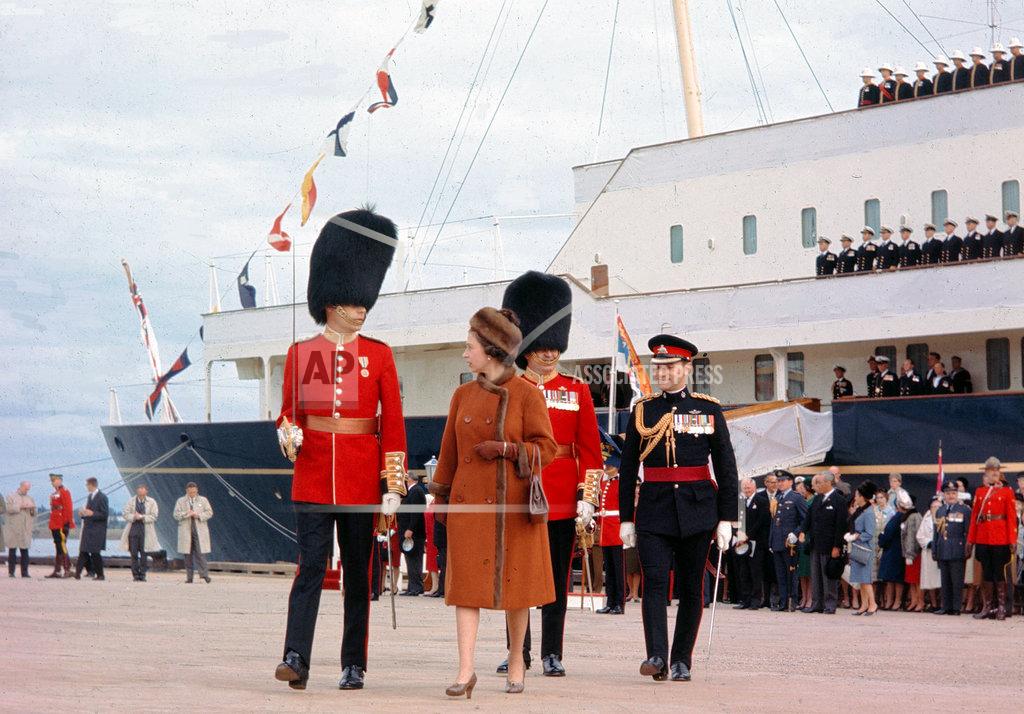
Queen Elizabeth II began “her most guarded day in history” with unprecedented security measures as she visited Charlottetown, Prince Edward Island in Canada in the centennial celebration of the 1864 Charlottetown Conference. Because of fears of an attack on the British monarch, members of the Royal Canadian Mounted Police patrolled the streets and stood on the roofs of buildings, and four Royal Canadian Navy destroyers and a minesweeper escorted the royal yacht. Fluent in French as well as English, the Queen addressed the crowd in both of Canada’s languages.
Walter Ulbricht, the Communist Party leader of East Germany, announced an amnesty for 10,000 political prisoners who were to be released before December 20. Ulbricht said that his government would “pardon those who by their conduct in prison had shown that they had learned their lesson.” He made the announcement at a ceremony marking the 15th anniversary of the founding of the Communist state. The amnesty will cover political prisoners who committed “serious crimes” against East Germany as well as other prisoners, he said. In the last two months East Germany has quietly freed and returned to West Germany about 1,000 Westerners held in prison on political charges.
The East German Government, meanwhile, in a protest against the escape of 57 East Berliners to West Berlin by tunnel last weekend, warned the West Berlin city government that such “provocations” could endanger the new East‐West agreement under which West Berliners can visit relatives in the East with day passes. However, East German officials said privately that the Government was not expected to interrupt the pass agreement despite the incident, in which an East German guard was shot and killed. More than 200,000 West Berliners have already obtained visas for family reunions next month and at Christmas.
Chancellor Ludwig Erhard indicated today that West Germany and the United States were considering whether to create alone a fleet of nuclear‐armed surface ships. “A beginning has to be made,” he said of the United States proposal for a jointly manned and financed allied fleet of surface vessels carrying Polaris missiles. “We hope,” he added, “that the doors will stay wide open for other European countries to join.” The proposal for a multination fleet of 25 nuclear‐missile ships is under reluctant consideration by some European allies of the United States and West Germany.
The Soviet Union today accused four military attachés — three of them Americans and one of them a Briton — of espionage. In notes handed to the British and United States Embassies, it asserted that the four officers, while riding on a train in Siberia, had taken “more than 900 photographs on numbered films” and had made notes of “railway stations, bridges, tunnels, radar installations, air fields, locations of military detachments” and other military objectives. The Soviet notes hinted that the four might be expelled from the Soviet Union. The United States Embassy later issued a statement saying that it “did not accept the validity of the Soviet charges.” The Soviet accusation came less than 24 hours after the British and American Governments announced they had made sharp protests to the Soviet Government against searches and confiscations to which the four officers were subjected by Soviet authorities in Khabarovsk, Siberia, on September 28.
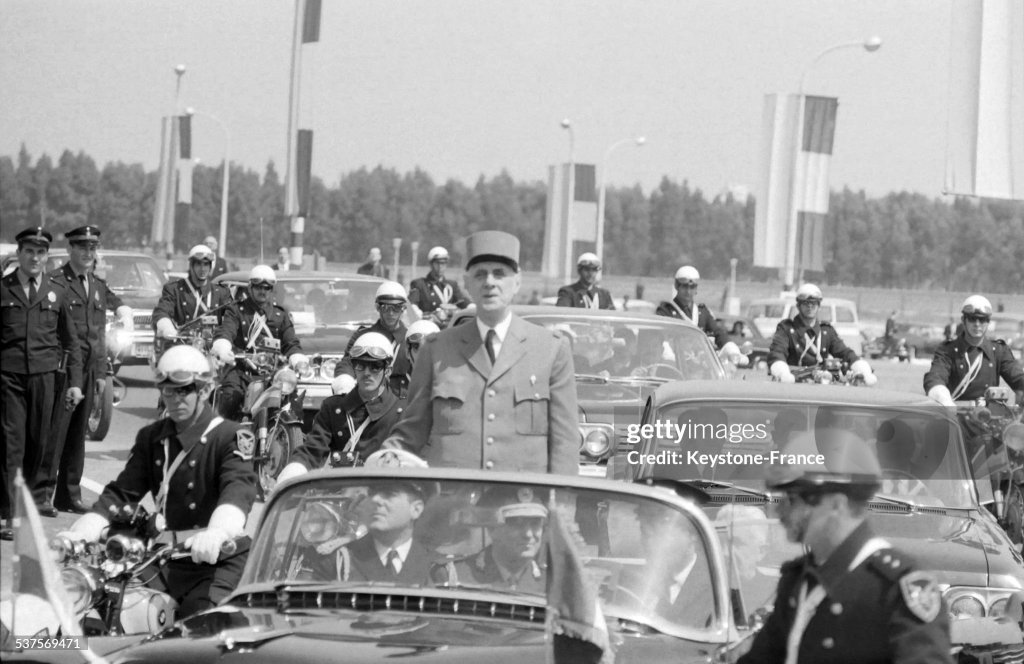
Bloody clashes between Argentine Government forces and followers of the exiled dictator Juan D. Perón were set off here today by the visit of President de Gaulle. Twenty‐nine persons were injured, including 19 demonstrators and 10 policemen, some by rifle and submachine gun fire as the Perónists attempted to approach the Palace of Justice, where the French President was going after touring an automobile factory. The Peronists asserted that two had been killed. General de Gaulle flew to Asunción, Paraguay, this afternoon leaving bitterness and extreme tension behind as a main result of what was to have been a goodwill visit. He also left behind a humiliated Government that had been unable to prevent the Perónists, recruited mainly in the Argentine working class, from using the visit to demonstrate in favor of Mr. Perón, who now lives in Spain.
A big friendly crowd greeted the French leader, who arrived in Argentina last Saturday, as he rode with President Arturo U. Illia in a closed limousine from the airport through Cordoba to the Industria Kaiser Argentina factory. Large groups chanted “Perón, Perón,” as the car went along the main street. Scuffling broke out when the police attempted to drive them off by charging them. A woman who tried to approach the car with flowers was fended off by motorcycle policemen who swerved into the car and broke one of its windows. President Illia was reported to have suffered a slight cut on the hand.
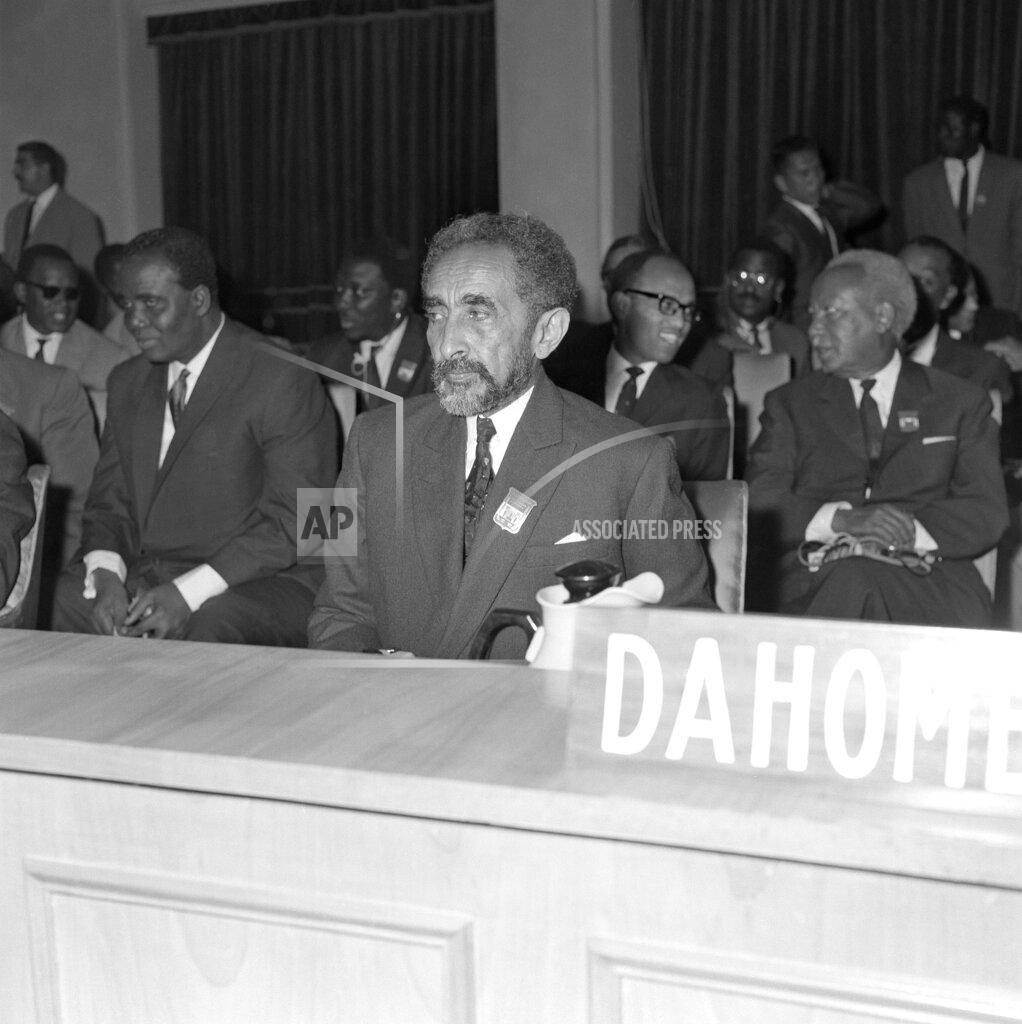
Premier Moise Tshombe of the Congo was held under guard by Egyptian security forces today. He announced that he would leave Cairo tomorrow morning. The authoritative Cairo newspaper Al Ahram said the Government had told Mr. Tshombe that he would be held until a “siege” of the United Arab Republic Embassy in Leopoldville was lifted, Reuters reported. Premier Tshombe’s announcement that he would depart came as he protested to President Gamal Abdel Nasser against his confinement. He has been kept in a palatial guesthouse since he arrived before dawn in an effort to attend the conference here of nonaligned countries.
Mr. Tshombe’s letter to Mr. Nasser demanded that the measures taken against him be lifted. These measures included the surrounding of the guesthouse by the police and presidential guards, the stationing of armed paratroopers there, harassment of the Congolese chargé d’affaires when he tried to visit Mr. Tshombe and a ban on telephone calls by the Premier.
The bishops of the Vatican Ecumenical Council approved measures for unity with non-Catholic Christians. Among items passed were a resolution of the Roman Catholic Church’s need for “an examination of conscience” (2,120 to 46); an acknowledgment that the Church also had responsibility for the disunity with their “separated brethren (2,076 to 92); to allow Catholics and other Christians to participate in common prayer in certain circumstances (1,872 to 292); and to take steps “to further Christian unity and inter-faith understanding” (2,099 to 62).
The Soviet Union launched Kosmos 47, an unmanned test-flight of a prototype Soviet Voskhod spacecraft, a week before the actual Voskhod 1 manned mission, According to one historian, the timetable for putting the three-man Voskhod capsule into space was hastened in order to move ahead of the two-man Gemini capsule being developed by the United States, and Soviet premier Nikita Khrushchev “placed so high a priority on space spectaculars that he felt it essential to fly a multimanned spacecraft before Gemini”; a three-man mission, by necessity, had to be very short because extra seats could only be accommodated by having less life support.
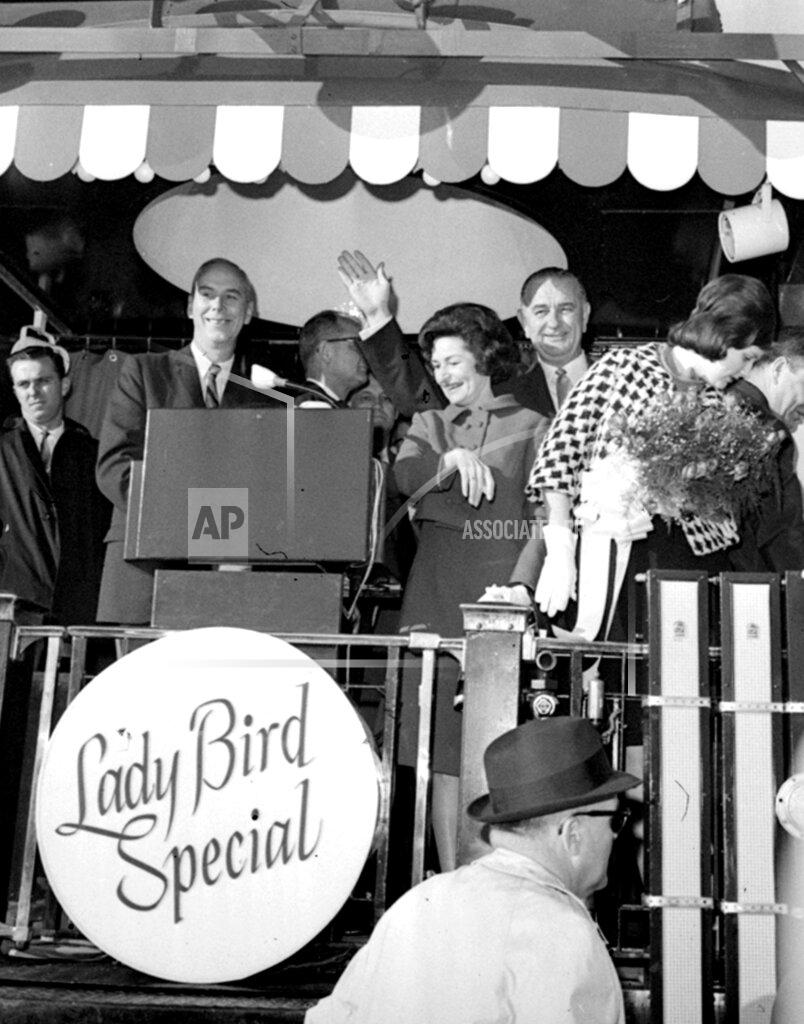
The grinning faces stretched down the railroad tracks as far as anyone could see, many more black faces than white, as Mrs. Lyndon B. Johnson’s campaign train pulled into the depot at Suffolk, Virginia, this afternoon. The weather and the welcomes got warmer as the President’s wife rolled south on the first day of her four‐day whistlestop tour of the old Confederacy in support of her husband’s Presidential candidacy. There were 13 stops and 13 speeches through Virginia and North Carolina.
Tonight Mrs. Johnson met the President here in Raleigh after he had arrived by plane. The President told an audience at North Carolina State College that the farm policy of Senator Barry Goldwater, the Republican Presidential nominee, would bankrupt one out of five farmers and cut net farm income in half. Those who had been on the Southern campaign train four years ago with the Democratic Vice‐Presidential nominee and his wife said the crowds that flocked to cheer Mrs. Johnson today were larger and more enthusiastic than those who had come to see Lyndon Johnson in 1960. “Gawd almighty, they weren’t out like this for Lyndon last time,” said one member of the 1960 campaign entourage as the 19‐car train pulled into Suffolk.
It was lunchtime, and 8,000 people in the town of 10,000 swarmed onto the tracks behind the First Lady’s red, white and blue observation car. Workmen clambered onto sheds, lay on their stomachs on the roofs of freight cars and dangled from ladders to hear Mrs. Johnson say: “I have come here to tell you about my husband and his record.” She said the President would have liked to come, but the “massive job” of the Presidency had kept him in Washington.
Mr. Johnson saw his wife off on her 1,700‐mile trip at the old‐fashioned depot in Alexandria, Virginia, across the Potomac from the capital. Unlike Suffolk, where homemade signs waved above the throng, Alexandria displayed printed banners, and posters had been distributed in advance. The shrill keening of plastic train whistles given the children filled the air. In Alexandria, where Augustus C. Johnson is the underdog Democratic candidate for Congress, the placards read “Bind up the nation’s wounds with Johnson & Johnson.” In Alexandria the First Lady made her only plea of the day for enforcement of the Civil Rights Act. She quoted “a great Southerner, Robert E. Lee,” who “said it best when he advised his fellow Southerners: Abandon all these local animosities and make your sons Americans.”
President and Mrs. Johnson won important demonstrations of support yesterday from Southern Democratic leaders, including some who had been lukewarm in the past. The surprisingly large crowds that greeted Mrs. Johnson’s campaign train and the thousands who turned out in Raleigh, North Carolina tonight for both the President and her seemed to convince the politicians that they were making a popular choice. The lone exception in this enthusiastic rallying behind the Johnson campaign was Dan K. Moore, North Carolina’s Democratic gubernatorial nominee who met the President at the Raleigh‐Durham airport on his arrival from Washington. Mr. Moore’s wife spoke from the rear of Mrs. Johnson’s “Lady Bird Special” in support of the Johnson candidacy as her train traveled from the Virginia state line to Raleigh. But Mr. Moore sat silent here on the platform at Reynolds Coliseum last night while Governor Terry Sanford and Senators Sam J. Ervin and B. Everett Jordan pledged the President their backing and that of North Carolina. Mr. Moore had said he would vote for the national ticket, but, apparently by choice, he decided against going any further.
Representative William E. Miller swung his Republican VicePresidential campaign into the closely contested South today. He came to North Carolina in his chartered jet while Mrs. Lyndon B. Johnson was bcgining a Democratic whistle‐stopping foray through the state. In bright, fall weather, the upstate New York Congressman punched home to gathering after gathering of enthusiastic supporters the theme that the main campaign issue was “capitalism versus socialism.” He depicted President Johnson as an opportunistic politician rather than a statesman — “incredibly unprepared for the future.”
Democratic optimism that Georgia will maintain her unbroken record of support for that party’s Presidential candidate in the coming election has vanished. There is now a growing conviction within political circles that Senator Barry Goldwater will win the state’s 12 electoral votes unless Democratic leaders join in a crash campaign. “I think Georgia is in the Goldwater column today,” said James L. Bentley Jr., the State Controller General. “If we can get away from this ‘take-it-for-granted’ attitude and get to work, we can still carry it. Otherwise, we will lose.”
Senator Barry Goldwater indicated today that he was prepared to devote the four remaining weeks of his Presidential campaign to the broad general issue of liberalism vs. conservatism. The Republican nominee said that he would not discuss “nitpicking issues,” propose solutions to specific problems or tailor his proposals to areas of the country where he was campaigning. “I don’t have any desire or particular interest in getting down to what will make this particular district or that particular district respond to me,” he told 350 editors and publishers of United Press International at their annual conference here. “I want to deal with the problems that are recognized by people in all parts of the country,” he said. “I know people are concerned with the basic issues, and we’re going to continue our campaign, as we have, along these lines.” Earlier in the day, he flew to Pennsylvania for three open-air rallies in the suburbs of Philadelphia. In the evening he appeared on a half‐hour telecast that was recorded yesterday, answering voters’ questions.
Governor Rockefeller referred to Senator Barry Goldwater tonight as “a man of courage and integrity who has not ducked the issues.” The Governor, in an address to Republican candidates and county leaders, mentioned the Presidential nominee three times by name. His references seemed somewhat warmer than heretofore. “We are pledged to support our candidates,” Mr. Rockefeller said, “from Barry and Bill [Representative William E. Milter, the Vice‐Presidential nominee] right down the line all the way, and that’s what we’re going to do.” A rift between Rockefeller and Goldwater forces in the state came into the open Monday when Goldwater campaign leaders accused the Governor of withholding support from the nominee. The Governor spoke at the end of a daylong cross‐state tour.
Thousands of enthusiastic Blacks in Columbus, Ohio today gave Senator Hubert H. Humphrey one of the warmest receptions of his campaign. They lined the streets of the Black neighborhood in the chilly dusk to cheer the Democratic Vice-Presidential candidate as he passed by waving from his open convertible. The size and warmth of the demonstration for Mr. Humphrey, who managed the civil rights bill in the Senate, was considered particularly significant because voter registration in the Black sections of this and other Ohio cities has been heavier by far this year than previously. A large Black vote is a key element in the strategy of Democrats for carrying Ohio, which, with 26 electoral votes, is the fourth-most-important in the nation. It has gone Republican in five of the last six Presidential elections.
The Mississippi Election Commission rejected today as “wholly insufficient” petitions seeking to place three Blacks on the ballot November 3. The predominantly Black Freedom Democratic Party had sought to qualify two Blacks as independent candidates for Congress and another for the state Senate race. But after a commission meeting, Attorney General Joe Patterson said “all the petitions were wholly insufficient.” He said none had the required number of signatures certified as registered voters.
“Cambridge Circus” opens at Plymouth Theater NYC for 23 performances.
Dow Jones Industrial Average: 875.14 (-2.01)
Born:
Tom Jager, American swimmer (Olympic gold medal, 4×100 m freestyle, 1984, 1988, 1992; 4×100 m medley, 1984, 1988; silver medal, 50m freestyle, 1988; bronze medal, 50m freestyle, 1992), in East St. Louis, Illinois.
Pokey Reddick, Canadian NHL goaltender (NHL Champions, Stanley Cup-Oilers, 1990; Winnipeg Jets, Edmonton Oilers, Florida Panthers), in Halifax, Nova Scotia, Canada.
Joel Baillargeon, Canadian NHL left wing (Winnipeg Jets, Quebec Nordiques), in Quebec City, Quebec, Canada (d. 2022).
Louis Cheek, NFL tackle and guard (Miami Dolphins, Dallas Cowboys, Philadelphia Eagles, Green Bay Packers), in Galveston, Texas.
Paul Jetton, NFL guard (Cincinnati Bengals, New Orleans Saints), in Houston, Texas (d. 2016).
Greg Richardson, NFL wide receiver (Minnesota Vikings, Tampa Bay Buccaneers), in Mobile, Alabama.
Ricky Berry, NBA shooting guard (Sacramento Kings), in Lansing, Michigan (d. 1989, suicide).
Manuela Gretkowska, Polish writer and politician, in Łódź
Died:
Richard Scheibe, 85, German sculptor (Adler mit Hakenkreuz).
 History Diaries