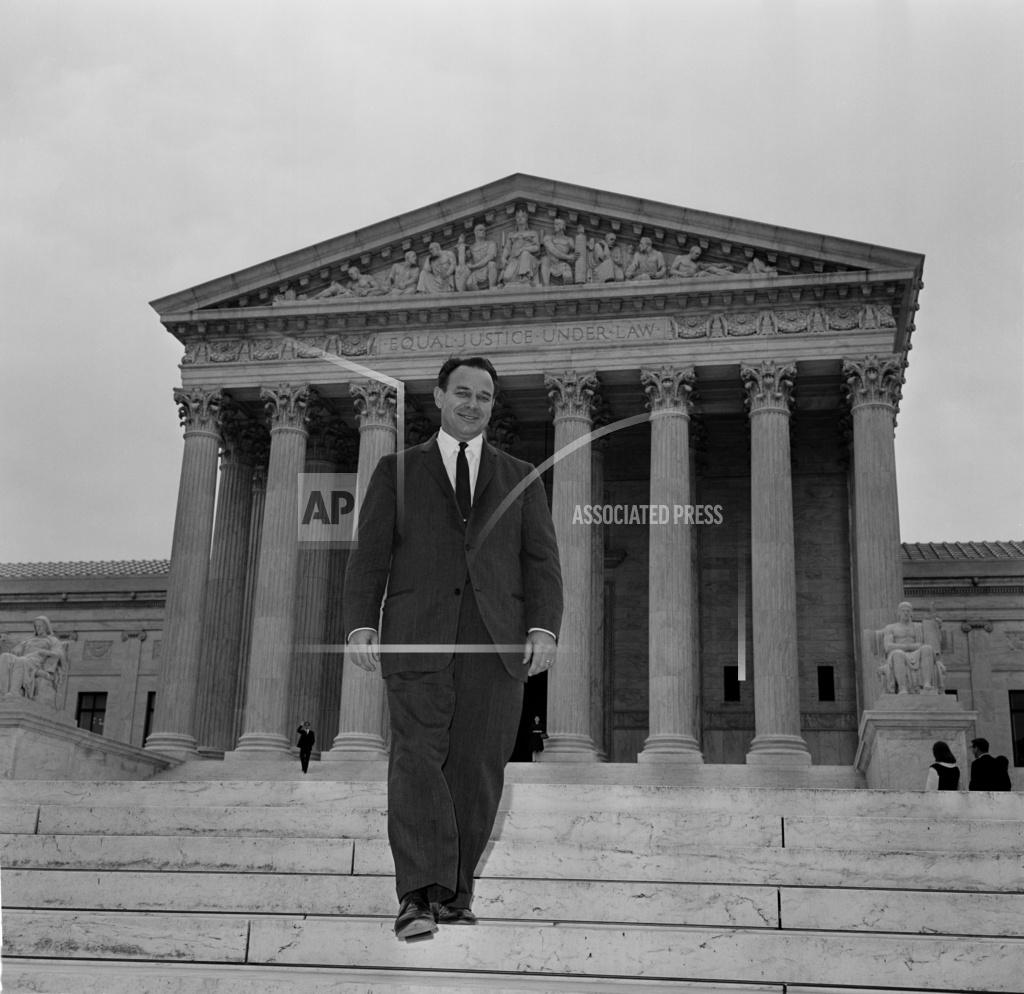
U.S. Senator Gaylord Nelson (D-Wisconsin), disturbed by growing reports that Johnson administration is preparing to extend U.S. operations in Vietnam, states that Congress did not intend the Gulf of Tonkin Resolution (7 August) to endorse escalation. He writes in a letter to the New York Times, “I would hope that those aides within the Administration who are urging that our Government ‘provoke an incident’ that might expand the war in Vietnam would carefully review the legislative history which defines, limits and interprets the sense of Congress in approving the resolution. For as I believe most Senators feel, our basic mission in Vietnam is one of providing material support and advice. It is not to substitute our armed forces for those of the South Vietnamese Government, nor to join with them in a land war, nor to fight the war for them.”
China’s Communist Party Chairman Mao Zedong received a delegation of officials from North Vietnam, including its Prime Minister, Phạm Văn Đồng, and predicted that the U.S. effort could be defeated. Noting that the U.S. had 18 army divisions and that it could only spare three in Asia, Mao concluded that it was “impossible for the United States to send many troops to South Vietnam.” Historian Michael Lind would write nearly 50 years later, “The significance of these conversations can hardly be exaggerated. We now know that the nightmare of American strategists had come true in the summer and fall of 1964.”
A leading Buddhist‐oriented political movement drew up a moderate platform this weekend deploring anti‐American demonstrations and pledging support to Major General Nguyễn Khánh’s caretaker Government. The group, the month‐old People’s Council for National Salvation, meeting in Huế, also pledged to purge Communist infiltrators from its ranks. Anti‐Government agitation has spread recently through Central Vietnam — where Huế is — in the name of the organization. But evidence has come to light indicating that Việt Cộng agents have participated in the demonstrations. As officials of the group, most of them professors at Huế University, were meeting, an anti‐American demonstration in Đà Nẵng, 40 miles to the southeast, forced a “gray alert.” American servicemen were required to stay off the streets as a precaution. The demonstration was of a type that is becoming familiar: a lynch mob in reverse. The crowd demanded the release of someone in detention and the question of the prisoner’s guilt or innocence was of no concern.
In this case, according to reports reaching Saigon, two American civilians, employees of the Agency for International Development, caught a 16‐year‐old boy Saturday about to break into their house. They turned him over to the police. By nightfall, 200 persons had gathered in front of the Americans’ house demanding the boy’s immediate release. The Vietnamese authorities turned the boy free. The origin of the demonstrators and their connection with the boy were not known. The council meeting in Huế came out against anti‐American demonstrations although the council reserved the right to criticize American diplomatic policy when it was considered wrong. The resolution called United States servicemen “comrades in arms” in the struggle against the Communists and said it hoped for a continuation of American aid to strengthen the Vietnamese economy.
“There were red ants all over me, crawling in my nose and ears and covering my face; that’s probably what saved me,” first Lieutenant Paul Jemison said today. The 24‐year old officer from Alexandria, Louisiana, described in an interview how he had played dead for half an hour yesterday to become the only man in a battalion’s headquarters detachment to escape a Communist ambush. “The ants didn’t sting me, but I could hardry control the urge to scratch,” Lieutenant Jemison said. “The ants probably convinced them I was dead.” The lieutenant was returning, with the detachment from a security operation 15 miles north of Saigon when attacked by elements of a Việt Cộng battalion. All 20 of the men with him were killed. With the exception of one other American, Sgt. Eddie L. Smith of St. Louis, all were South Vietnam Government soldiers. Lieutenant Jemison said that by the time the Việt Cộng reached him they had apparently killed the others, shooting the wounded to insure no survivors. He said some one wrenched his arm from under his body and stripped off his ring and watch.
Republican presidential candidate Barry Goldwater announces that if he is elected he will ask ex-President Eisenhower to visit Vietnam and report on the situation there; Eisenhower’s aides, however, quickly announce that he has not committed himself.
A narrow tunnel under the Berlin Wall was shut down, but not before 23 men and 31 women had escaped to West Berlin during the previous 48 hours. One border guard, East German Army Corporal Egon Schultz, was killed by gunfire, either by a stray bullet fired by his fellow guardsmen, or by someone on the western side. The tunnel began beneath a building on East Berlin’s Streilitzer Strasse, running 35 feet beneath the wall and then another 450 feet “to the cellar of an abandoned bakery at 97 Bernauerstrasse in the Wedding district” in the French zone of East Berlin.
Their escape, the largest of its kind since the Communists built the wall in August, 1961, to seal off East Berlin, came to light today. The East German Defense Ministry said Corporal Egon Schultz was killed by gunfire today at 12:15 AM as he and other guards were investigating the East Berlin entrance to the tunnel at Strelitzerstrasse. According to the West Berlin city government, 23 men, 31 women and three children escaped through the narrow route in small groups of two and three between Saturday and this morning. The East German Defense Ministry charged, in a statement issued by the press service ADN, that agents and murderers had penetrated into East Berlin from “the NATO base of West Berlin” and that one of these “armed bandits” killed the corporal.
The United States Army began rotating today two infantry battalions over the autobahn link, between Communist‐surrounded West Berlin and West Germany. The Army said that 55 vehicles and 320 men of the 2nd Battalion, 21st Infantry had moved into the city to replace the 3rd Battalion, 19th Infantry.
Turkey has conditionally agreed to open the Kyrenia road on Cyprus to civilian traffic and place the 650‐man Turkish contingent on the island under United Nations control, reliable sources said today. These sources said the decision was taken this morning at a meeting of the National Security Council presided over by Premier İsmet İnönü. The Cyprus Government of President Makarios has refused to allow the rotation of the Turkish garrison unless the Turks and the Turkish Cypriotes surrender control of the strategic road, which leads north from Nicosia to the port of Kyrenia.
President Johnson greeted President Diosdado Macapagal of the Philippines today with assurances that the United States was determined never again to do “too little too late” in the Pacific. Indicating the United States tone for two days of conferences that will touch heavily on Southeast Asian crises, notably the war in Vietnam and the Malaysian-Indonesian dispute, the President told his guest, “We have peace and prize it, but we prize freedom and honor more.” The reception was on the South Lawn of the White House, where the President and Mrs. Johnson welcomed Mr. and Mrs. Macapagal, who had arrived by helicopter from Williamsburg, Virginia. President Macapagal is on a 12‐day state visit designed to emphasize the friendship between his country and the United States.
The State Department said today that a group of Soviet officials forcibly entered two hotel rooms occupied by United States and British military attachés in the Siberian city of Khabarovsk late last month and confined them there while conducting an hour‐long search. Some of the officers’ personal belongings were confiscated. Robert J. McCloskey, the State Department spokesman, said a strong protest, first in Moscow and later in Washington, had been addressed to the (Soviet Union. Britain also protested. William R. Tyler, Assistant Secretary of State for European Affairs, called in the Soviet Ambassador, Anatoly P. Dobrynin, September 30. He asked a thorough investigation followed by a full report and assurances that such incidents would not be repeated. He also demanded disciplinary action against the 15 Soviet officials involved, as well as the return; of the confiscated belongings. So far Moscow has not replied.
Rebel ambushes against a white mercenary group today slowed the Congolese Government’s drive toward Stanleyville. Rebel resistance around this jungle town was aimed at mercenaries under the command of Lieutenant Gerry Wilson of Johannesburg. Lieutenant Wilson, who is 25 years old, is the only member of the 42‐man group, which calls itself the Fifth Commando Group, who ever had heard a shot fired in anger before signing up. He saw action in Cyprus with the Royal Horse Guards. Only 15 of his men were in the army previously and they served in peacetime. The group is headed toward Bumba, a town between Lisaia and Stanleyville which the rebels have proclaimed to be the capital of the “Congolese People’s Republic.”
The conference of Non-Aligned Nations began in Cairo, with representatives from 47 nations that considered themselves to be unaligned with either the United States or the Soviet Union. Congolese rebel Moise Tshombe arrived in Cairo, uninvited, after his charter jet was diverted to Athens and after he had returned to Cairo as the passenger on an Ethiopian Airlines, creating a diplomatic crisis.
Queen Elizabeth II of the United Kingdom and her consort The Duke of Edinburgh began an 8-day visit to Canada, starting with their landing at RCAF Station Summerside in Prince Edward Island on a chartered Boeing 707. The couple spent the night on board the royal yacht, HMY Britannia.
An Indian Foreign Office spokesman today denied a Chinese Communist charge that Indian troops had crossed the border into Chinese‐occupied Tibet from Sikkim last month. The spokesman also branded as “baseless and a complete fabrication” a Chinese allegation that Indian troops had built 18 “military structures” on the Chinese side of the border southeast of Nathula Pass.
The West African nation of Gambia issued its own, distinct national currency, the Gambian pound, in preparation for its independence on February 18, 1965; the new notes replaced the existing colonial currency, the British West African pound.
Trans-Canada Air Lines began a nationwide campaign with full page newspaper advertisements headlined “TAKE A LOOK AT AIR CANADA”, to announce a new name that would work equally well in English or French. The first airplane with the Air Canada logo would fly Queen Elizabeth back to the United Kingdom on October 13.
In a long and weighty argument session, which opened its new term today, the Supreme Court considered the power of Congress to forbid racial segregation in motels and restaurants. Counsel for two businesses in the South said that Congress had intruded into essentially local and personal affairs in the public accommodations title of the Civil Rights Act of 1964. The Government said the act was well within established national power over interstate commerce. Indications were that the Court would like to settle the constitutional question promptly and finally. The Justices reacted skeptically to suggestions that they put off decisions at least in part. “It is of the utmost public importance that this question be settled,” Justice John Marshall Harlan said, “so that an individual will know where he stands.”
Two cases were before the Court, carrying opposite conclusions by different threejudge Federal District Courts. In a case involving the Heart of Atlanta Motel in Atlanta, the public accommodations title was found constitutional by the lower court. It was held invalid in a suit brought by Ollie’s Barbecue, a restaurant in Birmingham. The dominant issue in the argument was Congress’s power to regulate these establishments under the Constitution’s interstate commerce clause. The Solicitor General, Archibald Cox, representing the Government, relied entirely on that clause to sustain the statute. Opposing counsel mentioned other matters but came down to the view that Congress had gone beyond its commerce authority.
President Johnson has warned that “the liberties of the individual may be submerged” in the transformations of modern society unless “we discipline ourselves in government with the highest order of responsible self‐restraint.” Mr. Johnson’s statement was made in the October issue of Civil Liberties magazine, a publication of the American Civil Liberties Union, United Press International reported yesterday. Mr. Johnson said in his statement, “Our society is undergoing great transformations today—from rural to urban, from scarcity to abundance, from lives of drudgery to lives of leisure. “But while the flood of change is rising, there is a peril — and a very real one — that the liberties of the individual may he submerged.”
Exactly four weeks before Election Day, November 3, Lyndon B. Johnson is the most overwhelming choice to win the Presidency since Thomas E. Dewey at the same stage of the 1948 campaign. Therein may lie a warning to the Democrats. Yet, even Mr. Dewey never enjoyed the kind of lead that every reliable indicator now gives Mr. Johnson—and Mr. Dewey’s upset by Harry S. Truman was a tame event compared with the shock that would hit political analysts, poll‐takers and party officials if Senator Barry Goldwater were to manage a victory this year. Here is the situation that emerges from reports of correspondents of The New York Times, from a study of voter polls and from other data concerning 48 states and the District of Columbia (no extensive reports from Alaska were available) :
- Seventeen states and the District of Columbia, with a total of 252 electoral votes, only 18 short of the necessary majority, apparently are sure to go to Mr. Johnson; 14 others are leaning strongly toward him.
- Two states, Mississippi and Alabama, are generally considered certain to vote for Mr. Goldwater; eight others are tending toward him.
- In eight states, including four in the South, the race is about even.
Senator Barry Goldwater is still substantially behind President Johnson as the election campaign moves on, and Mr. Goldwater’s advisers are not in agreement as to how to close the gap. Some campaign sources believe that only an unforeseeable break can win for the Republican Presidential nominee. Others hope to see him try a change in style or content in his campaign.
The rift between the Rockefeller and the Goldwater forces in New York State broke wide open yesterday. Goldwater campaign leaders accused Governor Rockefeller, of withholding support from Senator Barry Goldwater, the Republican Presidential nominee. They said they had been forced “to go our own way alone.”
Senator Hubert H. Humphrey, refreshed by a day’s rest in San Francisco, took off like a whirlwind across the country today, winding up in stanchly Republican Nebraska with a fierce attack on Senator Barry Goldwater. Mr. Humphrey, in remarks at a Democratic rally here tonight, said that the choice offered by the Republican Presidential nominee was between “the unquestionable disaster of his initial statements or the probable catastrophe of his later clarifications.”
A Republican study group urged President Johnson yesterday to give assurance that the commander of the North Atlantic Treaty Organization could use tactical nuclear weapons on his own in certain circumstances. The group’s statement collided at once with a comment by former President Dwight D. Eisenhower that such arrangements should be secret. General Eisenhower appeared at a news conference at the Waldorf‐Astoria Hotel in which the Republican National Committee made public the report of the group headed by his former Secretary of Defense, Neil H. McElroy. The former President praised the McElroy group. But when asked if the NATO commander had had the right to use such weapons during his Administration, he said that this was “part of the secret security arrangements of the United States.” The report ended with these recommendations:
First, the President should assure NATO members of United States policy and abilities, including assurance that the commander could use tactical nuclear weapons to defend Western Europe under circumstances that might preclude consulting the President. This would also assure that sole Presidential control did not extend to “battlefield nuclear weapons.”
Second, the President should assure the American people that efforts to prevent “remote possibilities of accidental or unauthorized firings of nuclear weapons” would not impair “deterrent capability” or response to nuclear attack.
Third, the President should tell the American people “the identity, by name and office, of those now designated to succeed the President in control over the entire nuclear apparatus” in case of his death or disability.
The General Motors Corporation and the United Automobile Workers reached tentative agreement today on a new national labor contract that both hoped would hasten the end of a strike against the company. Louis G. Seaton, G.M. vice president of personnel staff, and Walter P. Reuther, union president, announced the three-year accord this morning after an all‐night bargaining session.
Negotiations, suspended for a week, resumed today in the Detroit newspaper strike. It was the 84th day of the strike. Members of Governor George Romney’s public commission named to help in talks met with representatives of the publishers and the two striking craft unions.
President Johnson rode in the White House bubble‐top limousine today for the first time since it had been almost completely rebuilt after President Kennedy’s assassination. The black, 1961 model Lincoln Continental limousine, in which Mr. Johnson took President Diosdado Macapagal of the Philippines for a noontime parade in downtown Washington, has been reinforced with armor plate and made bulletproof according to Secret Service specifications. A White House spokesman said that the car’s glass panes and top could now withstand a direct hit from a 30‐caliber rifle. Once famous for its three interchangeable roofs—of metal, of convertible fabric and of plastic for the bubble top—the Presidential limousine is now a permanently closed vehicle. The roof directly over the back seat and the back panel are made of glass, but a black metal detachable cover can be slid over them to assure protection and privacy.
The San Francisco Fire Department Museum is dedicated.
Dow Jones Industrial Average: 877.15 (+4.5)
Born:
Denean Howard, American runner (Olympic silver medal, 4X400m relay, 1988), in Sherman, Texas.
Terry Mathews, MLB pitcher (Texas Rangers, Florida Marlins, Baltimore Orioles, Kansas City Royals), in Alexandria, Louisiana (d. 2012, from a heart attack).
Leonard Jackson, NFL linebacker (Los Angeles Raiders, Chicago Bears), in Pine Bluff, Arkansas.



 History Diaries