The Battle of Kock continues. Due to the 13th Motorized Infantry Division’s failure, German General von Wietersheim was forced to use the 29th Motorized Infantry Division. General Otto ordered the 93rd Motorized Infantry Regiment to move from the Wieprz river to Dęblin. The 66th Motorized Infantry Regiment would attack Adamów and Wola Gułowska, and the 33rd Motorized Infantry Regiment would clear the area to the north of Kock.
General Kleeberg suspected that the main combined attack of the 13th Motorized Infantry Division and the 29th Motorized Infantry Division would be on Adamów and Krzywda. He thought there was a chance to destroy the 13th Motorized Infantry Division as they had already sustained heavy casualties and materiel losses. The ‘Zaza’ cavalry division and the 50th Infantry Division would defend their positions, the 60th Infantry Division would attack the 13th Motorized Infantry Division. The Podlaska Cavalry Brigade would oppose the 29th Motorized Infantry Division.
In the morning, the main elements of 13th Motorized Infantry Division attacked the ‘Zaza’ cavalry division and the 50th Infantry division. By 12:00 noon part of the 66th Motorized Infantry Regiment had captured Zakępie and advanced on Adamów where they were halted by the 1st Battalion of the 180th Infantry Regiment.
About 11 hours apart, first from the west and then the east, forces from the 66th Motorized Infantry Regiment attacked the ‘Olek’ and ‘Wilk’ battalions who were defending Czarna. The defenders sustained heavy casualties from artillery fire and ‘Wilk’ was forced to withdraw to the eastern edge of the Adamów forest. ‘Olek’, moving to Adamów, later deployed to Gułów. Between 10:00 and 11:00 formations of the 66th Motorized Infantry Regiment attacked formations of cavalry from the 5th Uhlan Regiment who then withdrew from Wola Gułowska and Adamów to the south-east.
At about 12:00 the 66th Motorized Infantry Regiment attacked the 2nd Squadron of the 2nd Uhlan Regiment in Zarzecze which withdrew with heavy casualties. The commander of the regiment moved the 4th Squadron south from Helenów to try to assist the 2nd Squadron while the 3rd Squadron held the enemy to the west of Wola Gułowska. The 3rd and 4th Squadrons, with elements of the 10th Uhlan Regiment fought near the Turzystwo village cemetery and the church in Wola Gułowska. Ground was lost and regained repeatedly until an attack by the 2nd Battalion, 184th Infantry Regiment and the Uhlan Squadron enabled the Polish to dig in.
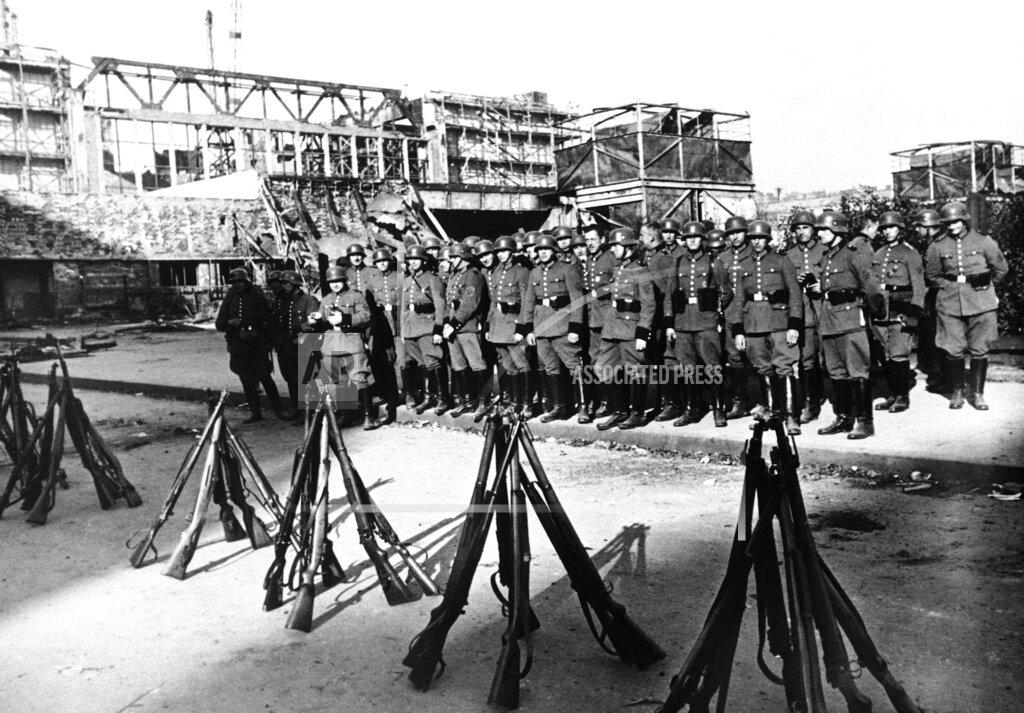
Adolf Hitler issued a secret decree granting an amnesty to all crimes committed by German military and police personnel in Poland between September 1 and October 4. The decree justified the crimes as being natural responses to “atrocities committed by the Poles.”
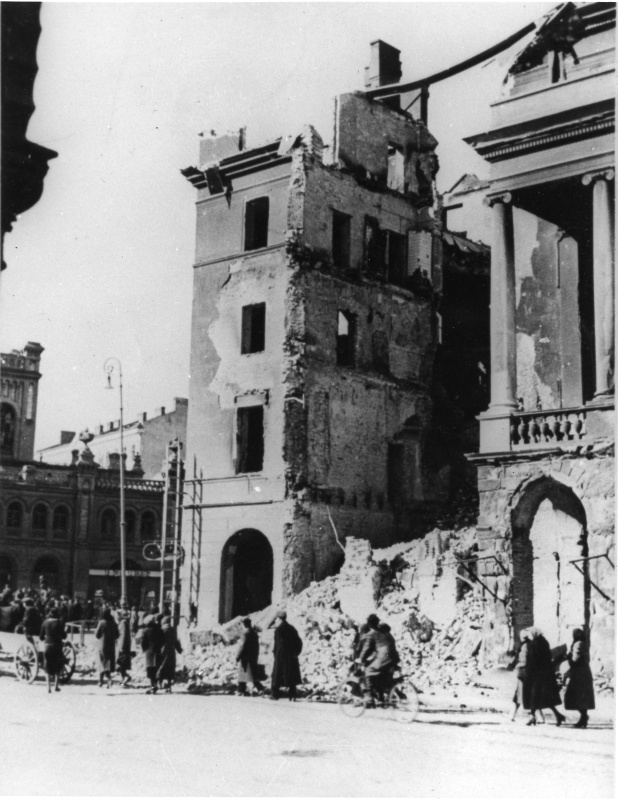
While his new Bolshevist partner is busy imprisoning and exterminating the bourgeoisie and nobility in Eastern Poland, Chancellor Hitler prepared to enter Warsaw tomorrow as a triumphant conqueror but also in the supposed role of savior of his share of Poland for the general peace.
Nikita Khrushchev (Secretary of the Ukrainian Communist Party) announces the “Communization” of eastern Poland.
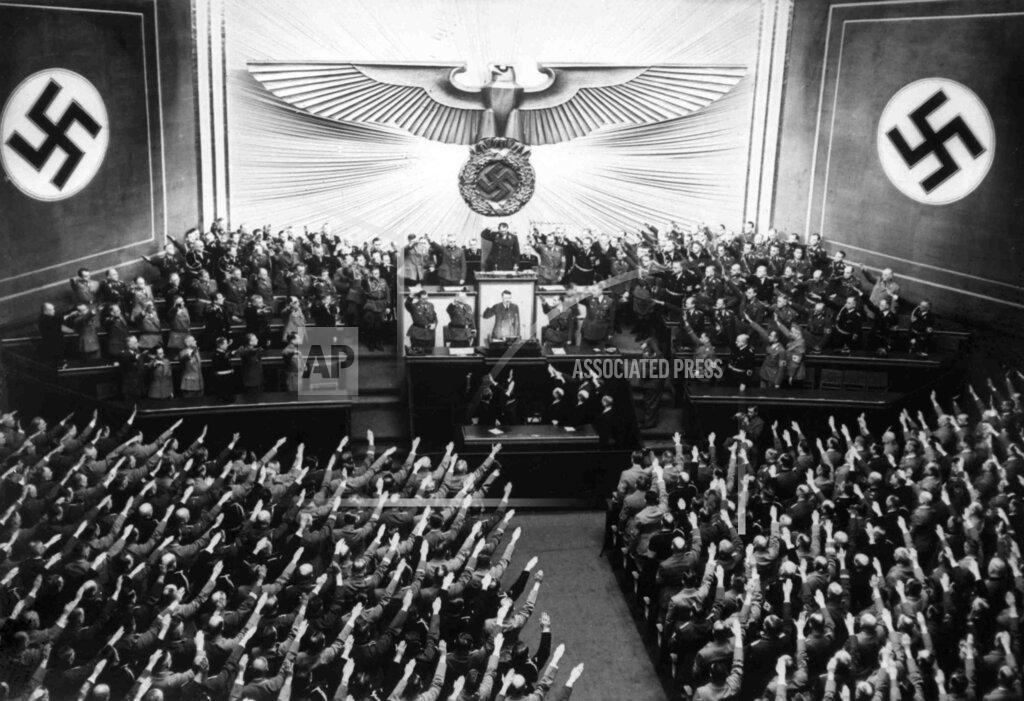
The Reichstag is summoned to meet on Friday, October 6th.
Members of the Glamorgan Agricultural Committee met to voice concerns about “gossip and goings-on” between Land Army girls and soldiers billeted around the farms in the area. A strict 9 o’clock curfew was urged for the girls, aged 17 to 40. Alderman David Davis defended the women, saying: “They are good-looking English girls with the right spirit. Good girls do not need looking after.”
Britain taxes parents six shillings per week for the care of evacuated children. Parents of three-quarters of a million evacuated school children will be required to pay toward their maintenance, which, at an average cost of 9 shillings a head on billeting allowances alone, is costing the State about 350,000 a week.
Premier Édouard Daladier rejects an imposed peace. He says France wants more than a truce between two aggressions. In words as firm as those of British Prime Minister Chamberlain in the House of Commons yesterday, Premier Daladier today outlined to the Foreign Affairs Committee of the Chamber of Deputies the attitude of the French Government toward any peace proposal that may be made by Germany and Russia.
The French win a small tank battle in the Borg Forest, in the Moselle River Valley. This is not so surprising. In small actions, the French tanks are able to use their superiority to win. The problem will come later, when French tanks find themselves fighting at impossible odds against hundreds of German tanks, in one piecemeal defeat after the next.
It was made clear today, in a roundabout but apparently official way, that Italy will wait until she sees how the British Government is going to react to the confidential soundings for peace now going on before any initiative will be taken by Rome.
Turkish uneasiness over the delay in the discussions being carried on at Moscow by Foreign Minister Shukru Saracoglu found open expression today in the Turkish press.
U.S. Naval Attaché in Berlin reports that Grossadmiral Erich Raeder, Commander in Chief of the German Navy, has informed him of a plot wherein U.S. passenger liner Iroquois, that had sailed from Cobh, Ireland, with 566 American passengers on 3 October, would be sunk (ostensibly by the British) as she neared the east coast of the United States under “Athenia circumstances” for the apparent purpose of arousing anti-German feeling. Admiral Raeder gives credence to his source in neutral Ireland as being “very reliable.”
U-35 lands the 28-man crew of the torpedoed Greek transport, SS Diamantis, on the Kerry coast, in the southwest.
The British fishing vessel Mopsa ran ashore on Aberdeen beach, abreast the Beach Ballroom due to the blackout. The crew of nine were rescued. It was found impossible to free the vessel from the sands, and she was broken up where she lay.
The unescorted British steam merchant Glen Farg was torpedoed and sunk by the U-23, commanded by Kapitänleutnant Otto Kretschmer, northeast of Scotland in the North Sea. Of the ship’s complement, 1 died and 16 survivors were picked up by the destroyer HMS Firedrake. The 876-ton Glen Farg was carrying general cargo, including pulp, carbide, paper, and ferro-chrome and was bound for Grangemouth, Scotland.
U.S. freighter Black Hawk, detained by British authorities since 19 September, is released
The War at Sea, Wednesday, 4 October (naval-history.net)
Destroyers FEARLESS and FOXHOUND arrived at Scapa Flow.
Submarine SWORDFISH began a refit at Dundee completed on 12 February 1940, and arrived at Blyth on the 13th. The same day, she proceeded to Scapa Flow, via Rosyth, to work up.
French heavy cruisers ALGÉRIE, DUPLEIX and destroyers MAILLÉ BRÉZÉ and VAUQUELIN departed Oran for Dakar, arriving on the 14th.
French submarine BÉVÉZIERS departed Cherbourg for Brest, escorted by large destroyer JAGUAR.
U-23 sank steamer GLEN FARG (876grt) 60 miles SSW of Sumburgh Head in 58 52N, 01 31W with the loss of one man. Destroyers FAULKNOR and FIREDRAKE, submarine hunting in the area, were dispatched to her location with FIREDRAKE picking up six survivors who were taken to Kirkwall.
German destroyers HERMANN SCHOEMANN, FRIEDRICH IHN, ERICH STEINBRINCK and torpedo boats GREIF, FALKE, ALBATROS operated in the Skagerrak and Kattegat on contraband control duties. Swedish steamers BRITT (1544grt) and MERCIA (1184grt) were taken in prize by German warships 12 miles south of Hano in the Baltic and taken to Rendsburg. They were renamed LEBA and TRAUTE FAULBAUM, respectively, for German service.
Convoy KJ.3 departed Kingston escorted by light cruiser ORION, which was relieved by heavy cruiser BERWICK on the 8th, and later Australian light cruiser PERTH, both of which were relieved on the 15th in 39 58N, 43W by cruiser EFFINGHAM. PERTH then proceeded towards Bermuda, suffering weather damage in a hurricane en route, but arriving safely. Light cruisers NEWCASTLE and GLASGOW joined the escort on the 22nd and remained until the 24th.
On the 22nd, French battlecruiser DUNKERQUE, light cruisers GEORGES LEYGUES, MONTCALM, and destroyers L’INDOMPTABLE, LE MALIN and LE TRIOMPHANT departed Brest, with local escort by destroyers CYCLONE and MISTRAL. The battleship group joined the convoy on the 24th, but later that day, the cruisers were detached to escort convoy HX.5. On the 25th, the battleship and destroyers arrived back at Brest, again with local escort by CYCLONE and MISTRAL. The cruisers arrived back on the 28th, this time local escort was by destroyers MOGADOR and VOLTA.
British destroyers WOLVERINE and VERITY joined the escort on the 24th, GREYHOUND and GLOWWORM from the 25th to 26th, and VOLUNTEER and VERSATILE from convoy OB.23 on the 25th. KJ.3 arrived off southern Ireland on the 25th, with EFFINGHAM reaching Devonport on the 26th for boiler cleaning, and the convoy arriving on the 28th with WOLVERINE, VERITY, VOLUNTEER and VERSATILE.
Destroyers INGLEFIELD and IVANHOE departed Gibraltar to return to Plymouth after escort duty with convoy SO.19.
Submarine SEAL arrived at Alexandria from the Red Sea.
Light cruiser BIRMINGHAM departed Singapore on patrol and arrived back on the 22nd.
Light cruiser DURBAN departed Capetown for Simonstown, arriving on the 6th.
New Zealand light cruiser LEANDER departed Wellington for Auckland.
President Roosevelt held separate conferences with Secretary Woodring and Louis Johnson, assistant Secretary of War. He also conferred with Robert Bruere, chairman of the Maritime Labor Board.
The Senate heard Senators Connally and Vandenberg debate the Neutrality Bill, received a motion from Senator Tobey to recommit the bill and a resolution from Senator Johnson of Colorado asking the President to join other neutrals in urging an immediate armistice in the European war, and recessed at 5 PM until noon tomorrow. The House was in recess.
Another packed Senate and nearly 1,000 visitors, who filled the galleries, heard a contest today between two of the Senate’s oratorical gladiators-Tom Connally, Democrat, of Texas, and Arthur H. Vandenberg, Republican, of Michigan. They did not stage. the toe-to-toe encounter, however, which most delights Senatorial audiences. Each, conscious of the weighty question, delivered a set speech. Only Senator Connally yielded for an interruption.
Retention of the automatic arms embargo, In addition to “cash-and-carry” commerce in all other materials between the United States and warring nations, was demanded by Senator Vandenberg as a minimum guarantee of America’s “insulation” from the European war. Senator Connally spoke for two and one-half hours in support of the Administration in its effort to amend the Neutrality Act.
The Michigan Senator declared that the issue of embargo repeal was the “acid test” of a peace or war attitude in the United States. He maintained that enactment of the pending proposal, which Senator Connally helped to write, would be inevitably construed, here and abroad, as little short of entry by the United States into the war itself.
Two other developments shared the spotlight. One was a resolution presented by Senator Johnson of Colorado and referred to the Foreign Relations Committee, requesting the President, acting for the United States, to join with other neutrals in an effort to end the conflict in Europe.
The other was a proposal by Senator Tobey of New Hampshire, offered in the form of a motion, to separate the two questions in the pending Pittman resolution — embargo repeal and cash-and-carry trade — so that restrictions may be put at once upon American shipping.
In a short address at the close of the session Senator Tobey argued that it might be weeks before a vote could be reached on the embargo issue. Meanwhile, he said, American ships would be plying the seas to and from belligerent ports and would be subjected to the possibility of submarine and other naval attack. He asked that the cash-and-carry trade restrictions on commerce with belligerents be voted upon at once.
Senator Barkley, majority leader, promised a vote on the Tobey motion on Monday. Senator Connally brushed aside all suggestions that the proposed embargo repeal was intended to do anything but “restore” the neutrality of the United States. He contended that it was necessary to lift the arms ban, which had been voted in time of peace, in order not to favor Germany against France and Great Britain now that the world faced the realities of war.
The Texan, who later received personal telephonic congratulations from President Roosevelt on his speech, insisted, however, that the one object of the whole Administration plan was to guarantee the neutrality of the United States. He declared that this country “is a thousand times more likely to be dragged into the war than if it (the embargo) did not exist.”
Senator Downey provoked a sharp retort from Mr. Connally with a question as to whether the Texan would be willing to vote for embargo repeal if Germany, instead of France and England, were the likely beneficiary. “That question is an insult,” shouted Mr. Connally. “The Senator from California is trying to draw me into the position of favoring England and France. I will say to him that we are not here representing ourselves alone but the people of the United States.”
“Had the Senator rather I withdraw the question?” Mr. Downey asked. Senator Connally countered with the accusation that Mr. Downey was setting himself up as the “moral censor” of the Senate.
Congressman Martin Dies says he will unmask Reds in high office, saying he “doesn’t mean small fry… I mean that Communists have risen high in the government and hold important key positions. This is particularly true of the New Deal agencies. Radicals gravitiated to them naturally.” The Congressional committee on un-American activities will file a report within two months revealing hundreds of Communists in the Federal Government, said Representative Martin Dies of Texas, chairman, who came to Chicago to obtain evidence against local organizatons and individuals.
Information pointing to the prospect of unrestricted warfare on the seas led Secretary Hull to issue a warning today to American merchant ships to avoid Atlantic and Baltic waters adjacent to the countries that are at war in Europe.
Bainbridge Colby, Secretary of State in the post-war Cabinet of President Wilson, said in Jamestown, New York tonight that the discretionary power over international affairs now delegated to President Roosevelt is “a trust too great to be reposed in any individual” and declared that “a comprehensive survey of these extraordinary powers must lead to their sensible revision.” He spoke at a dinner of the Chamber of Commerce.
More U.S. citizens come home from Europe. Eighty-seven arrived in New York on the American Export Line’s Excalibur. A Maryland doctor, Oscar Levine, says he was beaten and imprisoned by Nazis in Vienna.
The U.S. Army orders $6 million worth of light tanks for defense. The American Car and Foundry Company has received the order, amounting practically to $6,000,000, for the building of the 329 high-speed, twelve-ton tanks decided on by the army.
The Soviet Union increases purchases in the United States. Soviet spokesmen have assured American authorities within the past week that sizable Russian purchases will be made in this country, officials revealed today.
Although Supreme Court Justice Aaron J. Levy refused yesterday to reduce the $50,000 bail fixed for Fritz Kuhn, leader of the GermanAmerican Bund, James Wheeler-Hill, national secretary of the Bund, said last night that he expected to procure his chief’s release shortly.
The Golden Gate International Exposition in San Francisco will close on October 29 rather than December 2 because of low gate receipts.
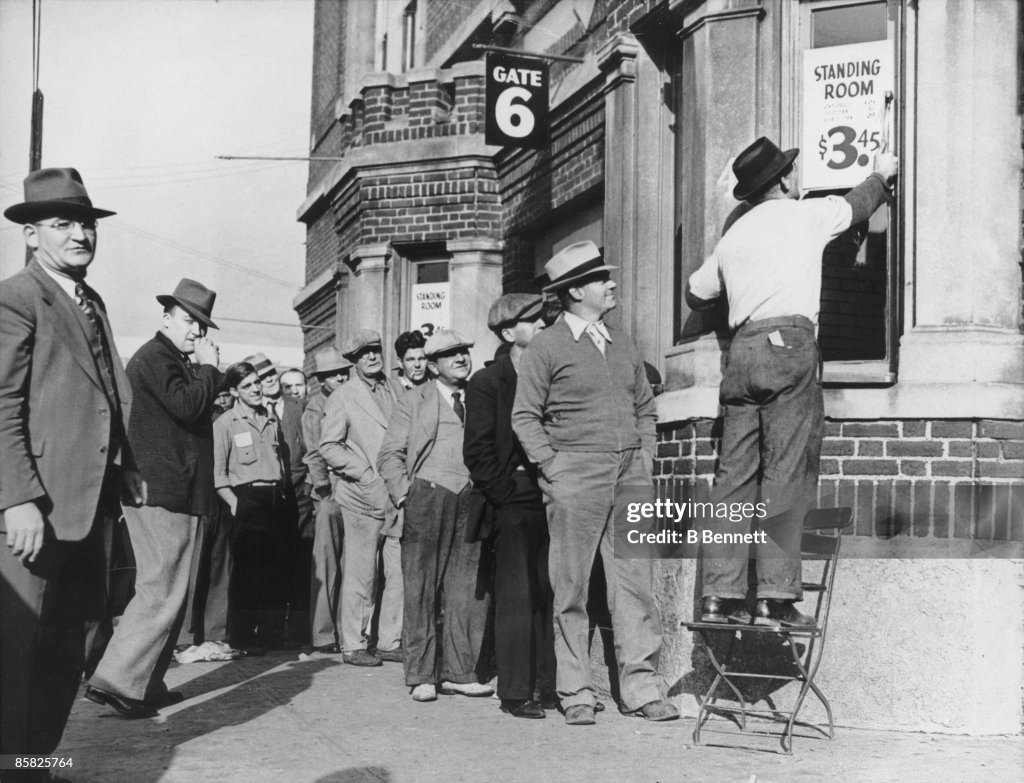
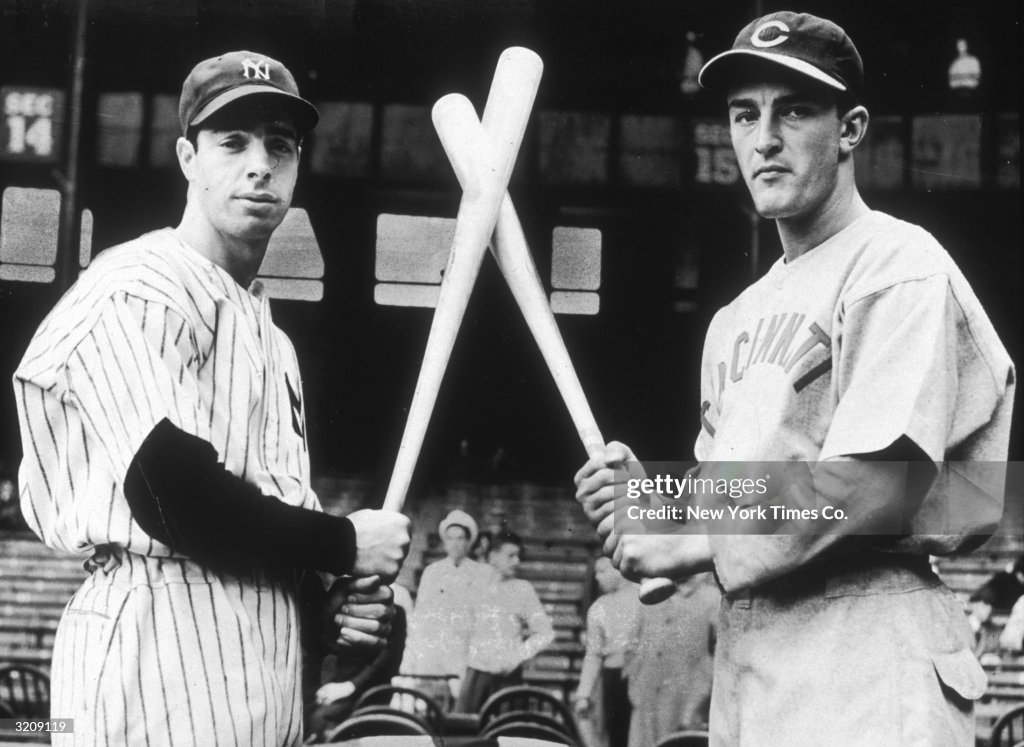
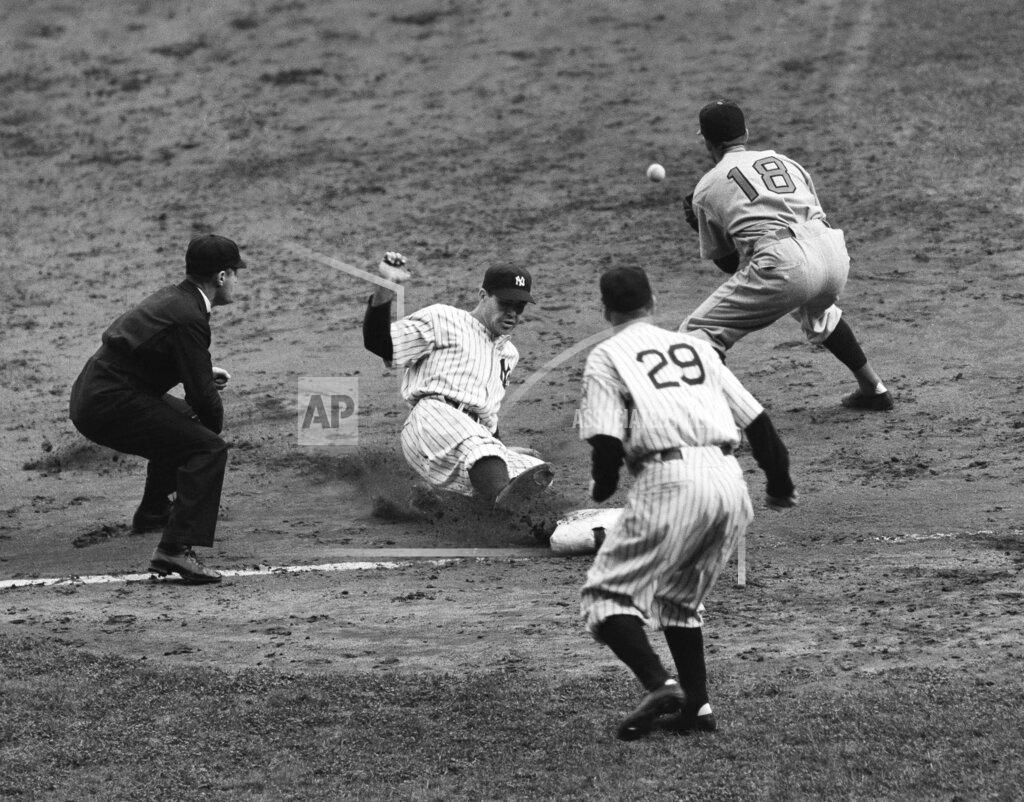
The World Series, with the Yankees as heavy favorites, begins in New York, featuring the three-time defending champion New York Yankees against the Cincinnati Reds, who were making their first Series appearance since winning the scandal-tainted 1919 World Series.. The pitching of Red Ruffing for New York and Paul Derringer for Cincinnati, who both pitched complete games, produces a tense, low-scoring duel that is tied 1–1 until the last of the 9th. The Reds struck first in the fourth inning when Ival Goodman walked with two outs and scored on Frank McCormick’s single, but the Yankees tied the game in the fifth inning Joe Gordon singled and scored on Babe Dahlgren’s double. In the bottom of the ninth inning with one out and the score tied 1–1, Charlie Keller tripled. The Reds walked Joe DiMaggio, but Bill Dickey ended it with a walk-off single to center.
Heavy fighting in Hunan and Kiangsi Provinces, with an apparent Japanese withdrawal from an onslaught on the city of Changsha, was disclosed tonight in conflicting communiqués from Chinese and Japanese Army officials. Both sides reported heavy casualties for the enemy, the Japanese asserting that 25,000 Chinese were slain, and the Chinese reporting 20,000 Japanese dead. Independent sources, however, said that both. claims were excessive, but did indicate bitter battles. The Japanese in addition said that about 5,000 Chinese had been killed in scattered battles in South China in the past month.
While the Chinese asserted that they had unleashed a withering counter-drive in Hunan, pushing the invaders back fifty miles from Changsha, the provincial capital, the Japanese military spokesman here mysteriosuly stated that no attempt might be made to capture the city as it had “no military significance.” A few days ago the Japanese asserted that their lines were within the city’s outskirts, but the Chinese said that the offensive had been reversed by increasingly strong counter-thrusts. The Japanese offensive westward in Kiangsi also apparently had slumped, the invaders making no mention of it, while the Chinese reported that the drive was stopped dead at a north-south line about fifty miles west of the Kiukiang-Nanchang railway, now destroyed.
[Ed: The first casualty of war is the Truth. “Japan never intended to take that city, anyway.” Riiiight. Pull the other one, it has bells on it.]
The entire staff of the commercial department of the Tokyo Foreign Office went on strike last night against the Cabinet’s decision to merge its members with the new Ministry of Trade.
Dow Jones Industrial Average: 150.25 (+0.02)
Born:
Henson Moore, American politician (Rep-R-Louisiana, 1975-1987), in Lake Charles, Louisiana.
Ted Davidson, MLB pitcher (Cincinnati Reds, Atlanta Braves), in Las Vegas, Nevada (d. 2006).
Ivan Mauger, motorcycle speedway rider, in Christchurch, New Zealand (d. 2018).
Naval Construction:
The Nihon Kaigun (Imperial Japanese Navy) Katori-class light cruiser Kashii (香椎 練習巡洋艦, Kashii renshūjunyōkan) is laid down by Mitsubishi shipyards (Yokohama, Japan)
The Royal Indian Navy auxiliary patrol vessel HMIS Sandip is commissioned. Her first commanding officer is T/Lieutenant Harold Aubrey Tod, RINR.
The Royal Australian Navy auxiliary minesweeper HMAS Tongkol is commissioned.
The Royal Navy armed merchant cruiser HMS Chitral (F 57) is commissioned. Her first commanding officer is Captain (retired) Alfred Geoffrey Peace, DSO, RN.

 History Diaries