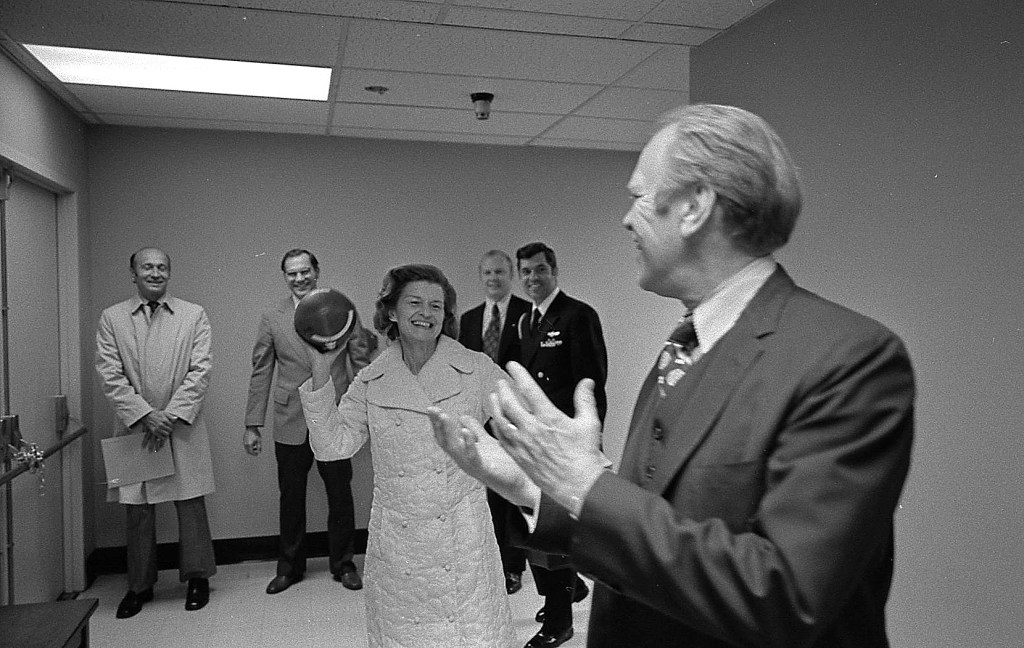
The administration has put a hold order on two new contracts for the sale of 125 million bushels of wheat and corn to the Soviet Union. Officials described the action as an anti-inflation move to discourage speculation that could drive grain prices up at a time when crop prospects have been diminished by bad weather. With the hold order was a directive by President Ford that for the time being he expects no large contracts for grain to be signed without specific prior approval by the White House. The two new contracts, at today’s prices, are worth about half the value of the approximately $1‐Billion in American grain sales to the Soviet Union in 1972. The Russians then purchased some 400 million bushels of wheat, about a fourth of the United States crop. Although the new sales are less than a third of the 1972 deal, the increase in grain prices since then has raised the value of the contracts that were halted today to roughly $533‐million, as reflected by closing prices on commodities markets this afternoon.
Military units in and around Lisbon were back on alert today as left‐leaning air force officers met to pick two new men for the ruling military junta and the country prepared for major celebrations tomorrow marking the anniversary of the Portuguese republic. The air force officers are members of the Armed Forces Movement, which is now the power behind the scenes in Portugal. They met at the Lisbon Military Staff College to choose replacements for two generals dropped from the junta after the downfall of President António de Spinola Monday. Army officers in the movement last night elected another two men to the seven‐man junta to replace General Spinola and one of his close supporters.
Italian President Giovanni Leone announced plans today for broad consultations with political leaders on the crisis created by the resignation of the Government yesterday. With the end of Premier Mariano Rumor’s center‐left coalition after 105 days in office. President Leone is expected to hear a great deal of support for yet another centerleft government. The parties in the government that resigned yesterday were the ChristianDemocratic, the Socialist and the Social Democratic parties, with support in Parliament from the Republicans. On Monday President Leone will consult with former Presidents Giovanni Gronchi and Giuseppe Saragat, then the presidents of the two chambers of Parliament, as well as six former Premiers. On Tuesday and Wednesday, he will meet with leaders of all the parliamentary parties; only then will he he able to announce his decision on how to proceed toward formation of Italy’s 37th postwar government.
The conservative New Democracy (Néa Dimokratía) political party was founded in Greece by former Prime Minister Konstantinos Karamanlis after the end of rule by the nation’s military junta.
Israel’s Foreign Minister Yigal Allon says that his country, if attacked, would strike back with all its military might rather than be drawn into a war of attrition. “We would not confine ourselves to counter-attrition,” Mr. Allon said before he left New York for home after 10 days in this country. The Foreign Minister, who is also Deputy Premier, was discussing the possibility of a new Israeli‐Arab war as positions in the Middle East seemed to be hardening again and Secretary of State Kissinger was preparing to revisit the area. While Mr. Allon implicitly threatened heavy counterblows if Israel were attacked, he pledged moderation in the talks with Arab states that he said his Government was seeking. “Now is the best chance to get a political settlement in the Middle East,” the Minister said. “War is behind us and the fear of another war is in front of us.”
Sheik Ahmed Zaki Yamani, the Saudi Arabian Minister of Petroleum Affairs, assured the West today that his country would not respond to the energy‐conservation moves of oil‐consuming nations by cutting production, and that conservation would lead lower prices. John C. Sawhill, the Federal Energy Administrator, who participated with the minister in a panel discussion, eagerly applauded the assurance. “You have just given a ringing endorsement for a conservative program, and I appreciate that,” Mr. Sawhill said. But oil executives among the 300 persons who listened to the two‐hour discussion dismissed Sheik Zaki’s assurance as formalistic and meaningless. They said that if consumption fell, oil companies would load less oil into their tankers, in effect making the cutback that Sheik Zaki forswore. The executives deemed it significant that the Saudi minister did not promise to initiate a price cut.
At least five of, India’s 22 states are facing serious food scarcities because of drought. Amid growing criticism of the New Delhi Government — and the silence of food officials — bleak reports are reaching the capital of widespread hunger in Orissa, Gujarat, Rajasthan, Madhya Pradesh and West Bengal. Other stricken states in northern India are Uttar Pradesh and Bihar. “The food situation has become desperate,” said the prestigious Economic and Political Weekly. “The management of the food economy is in a shambles.”
India and Iran cemented their links today and announced efforts to “expand and deepen” their economic relationship. A joint communiqué, issued this evening following a visit of the Shah of Iran, said that both nations sought to maintain “very close and friendly relations.” The communiqué added that “considerable progress” had been made in the newly developing economic and technical links between India and Iran. The Shah, Mohammed Reza Pahlevi, arrived in New Delhi on Wednesday on the last part of a 17‐day tour that was designed to strengthen Iran’s diplomatic muscle in Asian and Pacific nations. The trip covered Singapore, Australia, New Zealand and India. Although India’s relations with Iran have been uneasy in the past—largely because Iran and Pakistan, both predominantly Moslem, are close friends—the visit here of the, Shah and his wife, Empress Farah, delighted Prime Minister Indira Gandhi and the press of this predominantly Hindu nation. The newspapers here lauded the “tremendous progress” and the “new era” in Indian‐Iranian ties.
In fact, India, facing serious food shortages and in economic disarray, sorely needs the help of Iran, one of the largest producers of oil in the world. India’s oil bills have severely drained the nation’s economy and have jolted development efforts in the last year. Mrs. Gandhi has defended the Arab oil producers because, in her words, the Persian Gulf nations were “exploited” in the past. But the quadrupling of oil prices in the last year has impaired fertilizer production and spurred the worst inflation in India’s history.
In tennis, India has defaulted from the final round of the Davis Cup competition upon learning that South Africa had qualified for the championship series. Opposition to South Africa’s apartheid policy was given in New Delhi as the reason behind the default. Notice of the withdrawal was made in New Delhi by R. K. Khanna, the secretary of the All‐India Lawn Tennis Federation, yesterday upon learning that South Africa had reached the final round by gaining an unbeatable 3–0 lead over Italy. In announcing one of the strongest moves in international sports against South Africa’s separation of races policy, Mr. Khanna said, “The principle of opposing apartheid is more important than a tennis championship.” The statement reflected government approval.
South Vietnamese military sources said today that the Government had apparently lost one of its last bases between the Central Highlands city of Kon Tum and the coast, thereby opening an important logistics corridor to the Communists. The district capital of Chương Nghĩa, about 25 miles northeast of Kon Tum, reportedly came under what one officer called “carpet artillery shelling” by the North Vietnamese Monday. The shelling intensified during the last four days. Radio contact on normal channels with the militiamen at Chương Nghĩa, was lost, though reconnaissance aircraft could still communicate with the survivors, officers said.
Asked about the situation, Lieutenant Colonel Lê Trung Hiền, Saigon’s military spokesman, said, “we do not consider the camp is lost.” He was vague on the question of whether troops were still inside, however. “There are friendly units outside to avoid the shelling,” he said, adding: “I suppose there are still some small units inside.” The camp itself was not considered militarily vital, but it was at least an inconvenience to the North Vietnamese, whose new road passes nearby on its way froth the Communist strongholds in the west to the coastal areas in Quảng Ngãi and Bình Định provinces.
Deng Xiaoping, who had fallen into disfavor during the Cultural Revolution in China after serving as a high-ranking government official in the 1950s, was named as the Primary Vice Premier of the People’s Republic of China by Premier Zhou Enlai, with the approval of Communist Party Chairman Mao Zedong, and would later become the paramount leader of the People’s Republic.
President Park Chung Hee said today that North Korea was likely to step up provocations against the South, making the next four or five years a critical period in relations between the two countries. In an address to the National Assembly, he said. North Korean provocations in the last year had culminated in an abortive attempt on his life. South Korea alleges that a Korean gunman who lived in Japan acted under orders from North Korean agents when he fired at President Park here on August 15. The President’s wife was killed in the attack.
President Ferdinand E. Marcos said today that Philippine and Chinese diplomats would begin talks in Peking late this month on establishing full diplomatic relations. He said the Philippines would also seek full diplomatic ties with the Soviet Union, but did not say when talks would begin. However, the President has said he would like to establish relations with the two countries simultaneously.
At the first meeting they have had, the leader of the terrorists holding seven hostages in the Venezuelan consulate told the United States Ambassador that the condition of the hostages was deteriorating, that their morale was bad and that “something should be done soon.” This was disclosed tonight by a spokesman for Ambassador Robert A. Hurwich, about four hours after the Ambassador met the terrorist leader, Radhames Mendez Vargas, for six minutes outside the consulate.
Venezuela, which ships over half its oil to United States markets, will reduce production levels by around 10 per cent in 1975, according to budget figures disclosed today. At the same time a Mines Ministry spokesman said Venezuela would neither open its production to its full 3.7 million barrel per day potential nor make arbitrary cutbacks, hurting consumers. The South American producer now has a daily output of around three million barrels following cutbacks this year totaling some 360,000 barrels per day.
President Ford will present to a joint session of Congress next Tuesday an economic program that will require “sacrifices from the American people” the White House announced. The President will not propose an increase in the gasoline excise tax and remains “firmly opposed” to gasoline rationing, according to Ron Nessen, the White House press secretary.
Unemployment increased sharply in September, rising to 5.8 percent of the work force, the Labor Department reported. This is the highest level of unemployment since April, 1972 and an increase of four-tenths of a percentage point in the past month. The gloomy picture includes 2.8 million persons involuntarily working only part-time, the highest level since 1961.
The Department of the Interior is pushing a Nixon administration plan to begin sales of offshore oil leases off Alaska and in the Atlantic Ocean next year. The plan is aimed at leasing 10 million offshore acres. New Jersey’s Governor Byrne expressed his concern over reports that the plan included a number of oil-drilling leases along the New Jersey coast.
The Senate voted 56 to 7 to direct the White House to retain custody of the presidential papers and tapes of Richard Nixon and prevent the destruction of any Watergate tape recordings. The action was the most decisive step taken by Congress to nullify an agreement giving Mr. Nixon control of tapes and documents covering his five years in the White House.
The Ford Administration and the Joint Congressional Committee on Atomic Energy have agreed to a major slash in an urgently requested security program designed to lessen the chances of the theft of nuclear materials. The new program was proposed by the Atomic Energy Commi,ssion last May, after the General Accounting Office completed two studies asserting that existing commission security measures were inadequate and several scientists published reports concluding that a band of dedicated terrorists could transform a small amount of plutonium or uranium into a homemade bomb.
The sharp increase in over‐all security was recommended by the A.E.C. in a supplemental budget request for the current fiscal year forwarded to the Office of Management and Budget on May 20. The request included $87‐million to hire 300 more guards, install new alarm and detector systems, construct improved fencing and tamperproof shipping cases and the purchase of additional equinment to track nuclear materials should they be stolen. Three-and-a-half months later, September 3, the Office of Management and Budget sent to Congress a recommendation for an $18‐million security program, $69‐million less than that urged by the A.E.C.
President Ford indicated today that he would give strong support in Congress to a six‐year, $11.8‐billion mass transit bill, which appeared likely to clear a major parliamentary obstacle in the house. The legislation, approved yesterday by a House‐Senate conference, would provide New York City with $170‐million of the $200‐million that city officials have said is needed to save the 35‐cent fare. The city also would receive $125‐million this year for capital expenditures. Ron Nessen, the President’s press scecretary, told newsmen that if the legislation remained unchanged, the President “would strongly support the bill and be happy to sign it into law.” The bill provides almost $8‐billion in operating subsidies and nearly $4‐billion in capital funds.
A Colorado joint venture of four oil companies has announced it is suspending plans to start construction of the nation’s first commercial shale oil plant. Colony Development Operations had planned to start construction of the plant in northeast Colorado next spring. Colony, a joint venture of the Atlantic‐Richfield Oil Company, the Oil Shale Corporation, the Shell Oil Company and Ashland Oil, Inc., blamed “current double‐digit inflation, tight money and the absence of a national energy policy, which establishes clearly the role of oil from shale in the national energy picture.” Its decision to put off the plant in the Parachute Creek section of Garfield County, Colorado, was clearly a blow to shale prospects, already under question by some on economic and environmental grounds.
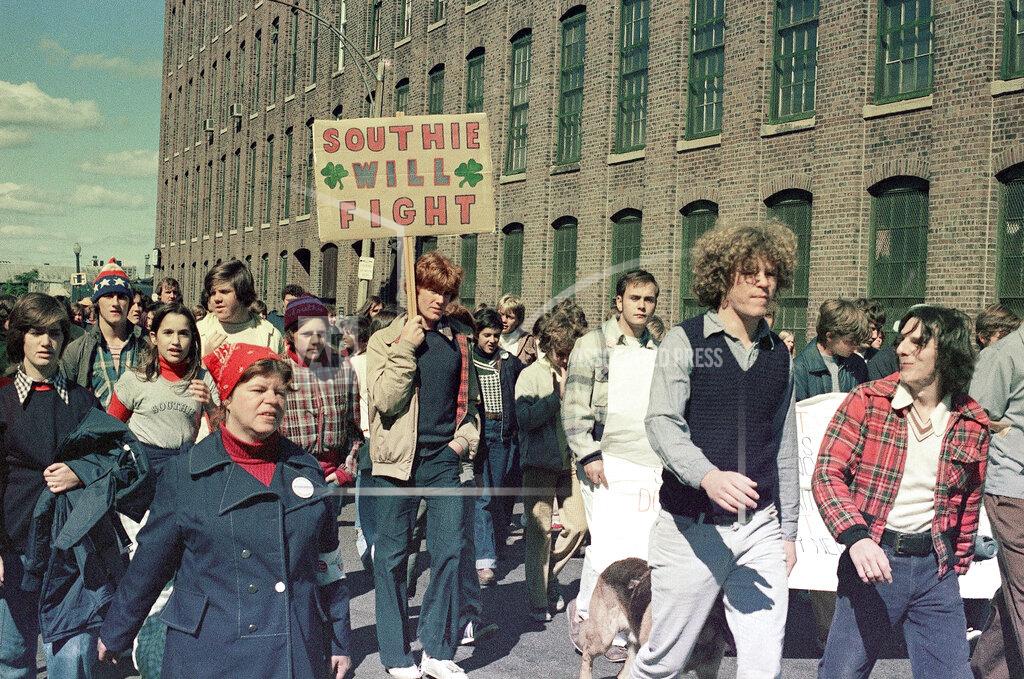
Thousands of whites marched through South Boston today protesting court‐ordered busing for school integration. The demonstration against the busing plan also included a one‐day citywide school boycott that cut school attendance in half. The parade marked the end of the third tense full week of the busing program ordered by Federal Judge W. Arthur Garrity, who ruled that the local school authorities operated a deliberately segregated system. There have been efforts in many of the schools to ease the racial tension. At Hyde Park High. School, which has been closed once and has had policemen stationed in the building, a biracial committee of students has been working with outside mediators to seek calm. But the last weeks have also seen scattered incidents, fights in the schools and rumors in the neighborhoods, all reflecting the underlying tensions and Fears among both blacks and whites.
On Wednesday, for instance, a shoving in the cafeteria at South Boston High School set off a lunch‐tray hurling, spaghetti‐tossing brawl that emptied the school. The resistance to busing has been particularly strong in the white, largely Irish, workingclass enclave of South Boston, whose schools have been merged with the black Roxbury area. There is similar resentment in other ethnic neighborhoods who fear they will he included in a later revision of the plan. The demonstrators, who eventually numbered some 5,000, began gathering early this morning on a bright, crisp fall day at Marine Park, near the neighborhood’s beach.
The Federal Aviation Administration has uncovered evidence of sporadic, isolated slowdowns by air traffic controllers around the country that have delayed thousands of air travelers recently. An agency spokesman said yesterday that only a few of the F.A.A.’s more than 14,000 controllers, who direct airline pilots from radar control centers on the ground, appeared to have been involved. But coupled with delays caused by airport construction in several cities and recent radar system failures, the job action has substantially snarled air traffic near New York, Chicago, Washington, Miami, Los Angeles and several other cities, the agency said. At La Guardia Airport alone, more than 60 planes were delayed up to an hour Thursday — a day when the weather was clear.
According to reliable sources, the dissident traffic controllers are protesting an airline crackdown on free-flight privileges for the controllers. Airlines assert the privileges were being abused. The airline industry has protested the delays to the F.A.A. and contended that they were causing the consumption of hundreds of thousands of gallons of extra fuel daily. “There is not a concerted, widespread action, said Dennis Feldman, an official of the F.A.A. in Washington, “but there have been some delays caused by a sporadic slowdown of some controllers.” He said an agency investigation had determined that some controllers were slowing the pace of arrivals and take‐offs at airports by spacing jets farther apart than necessary; by ordering pilots to make detours that add unnecessarily to travel time; and issuing other orders causing delays.
The transfer from the Passaic County jail of a major defense witness in the Rubin (Hurricane) Carter murder case was demanded by the New Jersey Attorney General after the prisoner, Alfred Bello, said his life had been threatened. Mr. Bello, still in the county jail, may not be transferred until next Monday.
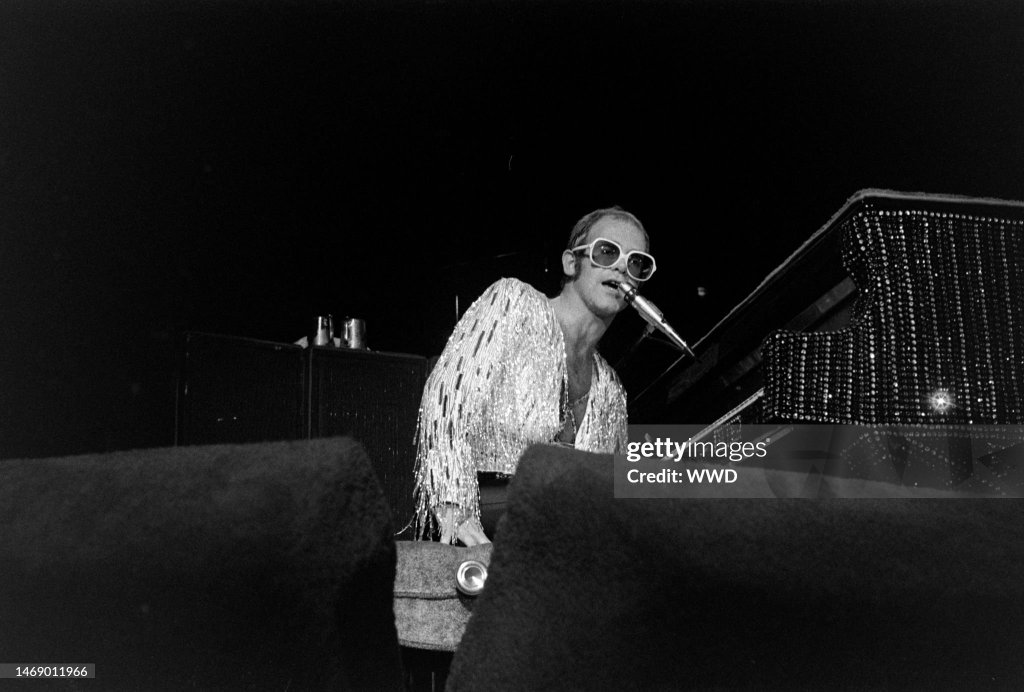
Apple Records releases John Lennon’s fifth studio album, “Walls & Bridges” in UK; features No. 1 single “Whatever Gets You Through the Night” (with Elton John) and “#9 Dream”.
Dow Jones Industrial Average: 584.56 (-3.05, -0.52%).
Born:
Glen Steele, NFL defensive tackle (Cincinnati Bengals), in Ligonier, Indiana.
Tom Askey, NHL goaltender (Mighty Ducks of Anaheim), in Kenmore, New York.
Paco León, Spanish actor, director and AIDS activist, know for “Aída,”, born in Seville, Spain
Died:
Anne Sexton, 45, American poet and writer, winner of the Pulitzer Prize for Poetry (“Live or Die”), committed suicide by carbon monoxide poisoning.
Robert Lee Moore, 91, American mathematician.



 History Diaries